

Shipping Switchgear from China
- Verified & Reviewed · Last updated April 2026
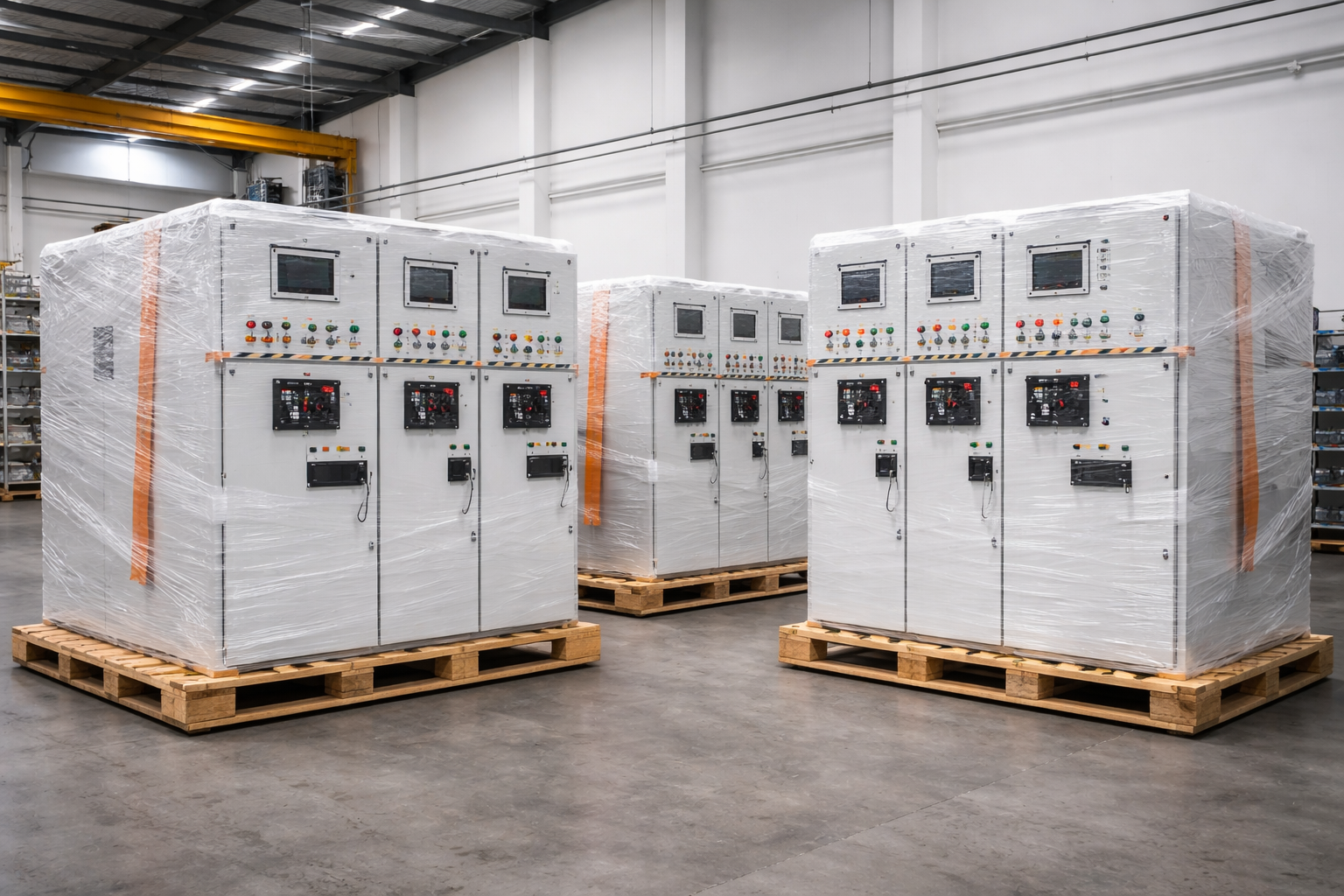
Shipping switchgear from China involves more than basic freight booking. Because switchgear is often heavy, high in value, and used in critical power distribution systems, buyers need to consider shipping cost, transit time, export packaging, compliance requirements, and final delivery arrangements.
This guide explains how to ship high voltage switchgear, medium voltage switchgear, and low voltage switchgear from China, covering sea freight, air freight for urgent parts, shipping costs, packaging standards, customs documents, and import compliance for international projects.
Shipping cost
Transit time range
Compliance standards
- Experienced China-based logistics specialists
Table of Contents
What Is Switchgear and Why It Matters
Switchgear is used to control, protect, and isolate parts of an electric power system. It helps manage power distribution, maintain safe power flow, and protect electrical circuits from overload, failure, and short circuit conditions. In daily use, switchgear allows operators to isolate electrical equipment, de energize equipment before maintenance, and clear faults downstream before the problem spreads through the wider system.
In modern electrical systems, switchgear may include:
Circuit breakers
Electrical disconnect switches
Fuses
Relays
Control cabinets
Busbar systems
Metering sections
Switches and protection modules
These switchgear systems are widely used in substations, electrical grids, industrial plants, commercial developments, and utility projects. Without reliable switchgear, the electrical supply and power supply to major facilities can be unstable, unsafe, or difficult to manage.
Types of Switchgear Commonly Shipped from China
Chinese manufacturers and suppliers export a wide range of switchgear products for different voltage levels, industries, and installation conditions.
High Voltage Switchgear
High voltage switchgear is commonly used in substations, power plants, utilities, and power transmission projects. It is designed for demanding applications where stable control, strong protection, and fault interruption are required. Because high voltage equipment is often larger and more specialized, it usually needs stronger export packaging and more careful transport planning.
Medium Voltage Switchgear
Medium voltage switchgear and MV switchgear are widely used in factories, industrial parks, mining operations, infrastructure projects, and regional power distribution systems. This category is one of the most common in international sourcing because it is suitable for many industrial and commercial applications.
Low Voltage Switchgear
Low voltage switchgear is used in commercial buildings, workshops, warehouses, and factory distribution rooms. While lower in voltage level, it still plays an essential role in electrical power control and protection. Buyers often source low voltage switchgear from China for general industrial and commercial projects.
Gas Insulated and Air Insulated Switchgear
Gas insulated switchgear is often selected for compact installations where space is limited. Air insulated switchgear is commonly used in projects where easier maintenance and inspection are important. Both types of insulated switchgear are available from China, and both are widely used in modern power systems.
Indoor and Outdoor Switchgear
Indoor switchgear is suitable for protected environments such as control rooms, equipment rooms, and enclosed plant buildings. Outdoor switchgear is designed for field use, utility yards, and exposed substations. The right choice depends on the installation environment, rated voltage, and local operating conditions.
Main Shipping Methods for Switchgear from China
The best shipping method depends on cargo size, urgency, destination, and budget. For most buyers, sea freight is the most practical option, while air freight is mainly used for urgent parts or smaller units.
Sea Freight
Sea freight is the most common solution for shipping switchgear from China. It is suitable for high voltage switchgear, medium voltage switchgear, low voltage switchgear, and complete electrical equipment shipped for large projects.
There are two main sea freight options:
FCL Shipping
FCL is usually the best option for large switchgear systems and project cargo. Because the cargo stays in one container, there is less handling and usually less risk of damage. FCL is suitable for heavy cabinets, sensitive equipment, and larger shipments that require reinforced packing.
LCL Shipping
LCL can work for small shipments, spare switchgear components, and trial orders. However, it involves more cargo handling during consolidation and deconsolidation, so it is not always suitable for heavy or fragile electrical equipment.
Air Freight
Air freight is generally used for urgent parts, compact electrical equipment, or time-sensitive replacement items. For example, a vacuum circuit breaker, protection module, or control section may be shipped by air when a project faces downtime or urgent installation deadlines.
Door-to-Door Shipping
Door-to-door shipping can simplify the process for international buyers. A freight forwarder can arrange pickup from Chinese factories, export customs clearance, international transport, destination handling, and final delivery. This is especially useful when buyers purchase from multiple suppliers in China.
How Much Does It Cost to Ship Switchgear from China
The cost of shipping switchgear from China usually includes ocean freight, port and handling charges, import duties and taxes, and final inland delivery. Because switchgear is often heavy, bulky, and high in value, the total landed cost is usually higher than the freight rate alone.
In most cases, switchgear is shipped by FCL or LCL sea freight, while air freight is mainly used for urgent parts or smaller electrical equipment.
Switchgear Shipping Cost and Transit Time Overview
| LCL Sea Freight | Typical Cost Range | Typical Transit Time | Best For |
|---|---|---|---|
| LCL Sea Freight | $50 to $110 per CBM | 25 to 50 days | Small shipments, spare parts, and trial orders |
| 20ft FCL | $1,800 to $2,800 | 20 to 45 days | Medium project cargo and multiple switchgear cabinets |
| 40ft FCL | $2,300 to $4,200 | 20 to 45 days | Large switchgear systems and heavy project shipments |
| Air Freight | $4 to $25 per kg | 3 to 10 days | Urgent parts and compact electrical equipment |
Port and Handling Charges
Besides freight, buyers should also budget for local charges at origin and destination, such as:
documentation and customs filing fees
cargo insurance
For reference, terminal handling is often around $150 to $500 per container, while documentation fees may be around $150 to $300. Insurance is usually about 0.2% to 0.5% of cargo value.
Import Duties and Taxes
Import duties can be a major part of the total cost. The final rate depends on the product type, destination country, and declared HS code. In some cases, switchgear products under HS 8537.10 may face a base duty of around 2.7%, and additional tariffs may also apply in certain markets.
Buyers should also consider customs clearance fees, VAT or GST where applicable, and possible inspection charges.
Inland Delivery
After customs clearance, there may still be local delivery costs from the port to the warehouse or project site. These may include trucking, unloading, crane or forklift use, and possible storage charges if clearance is delayed.
For larger shipments to substations, factories, or power plants, inland delivery can become an important part of the final shipping cost.
Transit Time for Shipping Switchgear from China
Transit time depends on shipping method, route, and customs clearance. Sea freight is slower but more cost-effective for large cargo, while air freight is faster but more expensive.
Sea Freight Transit Time
Sea freight usually takes around 20 to 45 days port to port. Once factory pickup, export customs, transshipment, destination customs clearance, and inland delivery are included, total lead time often reaches 30 to 60 days.
Air Freight Transit Time
Air freight is much faster and usually takes around 3 to 10 days in total. It is mainly suitable for urgent parts, smaller equipment, and critical project shipments.
Common Delay Factors
Delays often happen because of:
Incomplete shipping documents
Wrong HS code declaration
Missing compliance documents
Port congestion
Vessel schedule changes
Customs inspections
Inaccurate cargo dimensions
Delivery site access problems
If the final destination is a substation, industrial plant, or remote project site, the unloading schedule should be confirmed before shipping.

Export Packaging Requirements for Switchgear
Strong packaging is one of the most important parts of switchgear logistics. Even high quality switchgear can be damaged if the export case is weak or poorly designed.
Common Packaging Methods
Switchgear is commonly packed in:
Reinforced plywood cases
Heavy wooden crates
Steel-base transport frames
Vacuum moisture-proof packing
Shock-resistant inner support structures
Why Packaging Matters
Switchgear contains components such as circuit breakers, switches, control modules, relays, and power conductors. During international transport, these components can be affected by shock, vibration, compression, and moisture. Poor packaging may lead to internal loosening, cabinet deformation, or damage that affects installation and future operation.
Packaging Checklist
Before shipment, buyers should confirm:
Final packed dimensions
Gross weight
Lifting points
Moisture protection
Internal fixing method
Outer shipping marks
Fumigation status for wooden packing if required
Proper packaging is especially important for industrial and commercial projects where equipment must arrive ready for installation.
Compliance Standards and Import Requirements
Compliance is a major part of importing electrical switchgear. Because switchgear is used in electrical systems, electrical grids, substations, and power plants, many countries require proof that the product meets relevant safety and technical rules.
Common compliance requirements may include:
IEC standards
CE requirements
UL certification
CSA certification
Utility-specific technical rules
Project tender specifications
These international standards are important because they help ensure the equipment is suitable for the destination market and safe for long-term use.
If switchgear does not meet the required standards, buyers may face customs delays, extra inspections, site rejection, installation problems, or additional testing costs.
HS Code and Shipping Documents for Switchgear
The correct HS code for switchgear depends on the product type, rated voltage, and actual function. Different products may use different classifications, so buyers should confirm the final code based on the exact equipment specifications and the customs rules of the destination country.
HS Code Reference for Switchgear
8537.10: switchgear below 1000V
8537.20: switchgear above 1000V
8535.21 / 8535.30: high voltage disconnect switches or circuit breakers
8537.10.91: relay and control panels in some markets
Accurate classification matters because it affects customs clearance, duty calculation, and possible additional tariffs. In some markets, switchgear imported from China may be subject to both base duty and extra trade measures depending on the declared HS code.
Main Shipping Documents for Switchgear
Bill of lading or air waybill: main transport document for sea freight or air freight
Commercial invoice: shows product description, cargo value, currency, and trade terms
Packing list: includes package count, dimensions, gross weight, and net weight
Certificate of origin: may be required for customs clearance or duty preference
Product technical datasheet: helps confirm equipment type and voltage level
Test reports or certifications: required in some markets for regulated electrical equipment
Fumigation certificate: needed if wooden packing is used and required by the importing country
To reduce customs risk, the product name, model, quantity, voltage level, and packing details should remain consistent across all shipping documents.
Key Technical Points Buyers Should Confirm Before Shipping
Before booking freight, buyers should confirm the technical scope of the equipment carefully. This helps avoid problems in customs, transport, installation, and final operation.
Important points include:
Rated voltage
Current rating
Insulation type
Short circuit capacity
Cabinet dimensions
Single bus or other busbar arrangement
Indoor or outdoor application
Control power requirements
Transformer connection details
Protection configuration
Installation environment
These details also help the supplier, technical team, and freight forwarder decide the right packaging and transport method.
How to Choose the Right Switchgear Supplier and Freight Forwarder
Choosing the right supplier and freight forwarder is important when importing switchgear from China. A reliable manufacturer should be able to provide clear specifications, proper export packaging, and the necessary compliance documents for international shipment.
When selecting a switchgear supplier, buyers should check:
export experience with similar products
ability to provide test reports and certifications
packaging capability for heavy electrical equipment
accurate packed dimensions and weight
technical support during order confirmation
For logistics, it is also important to work with a freight forwarder that understands switchgear shipments. This includes cargo handling, container loading, export customs procedures, and final delivery planning.
Tonlexing supports switchgear shipments from China with services such as:
factory pickup
packaging review
FCL and LCL shipping
air freight for urgent parts
export customs coordination
destination delivery planning
cargo tracking
Good coordination between the supplier and freight forwarder can help reduce delays, avoid damage, and keep the shipment process more efficient.
Frequently Asked Questions
It depends on cargo size, weight, shipping method, destination, and packaging. LCL shipments may cost around $50 to $300 per CBM, while air freight may cost around $4 to $25 per kg.
For most large shipments, sea freight FCL is the best option because it reduces handling and is more suitable for heavy electrical equipment.
In most cases, complete high voltage switchgear is more suitable for sea freight. Air freight is usually used only for smaller parts or urgent replacement items.
The main documents usually include the invoice, packing list, bill of lading or air waybill, and any required test reports or compliance certificates.
Because switchgear contains sensitive electrical components, weak packaging can cause damage during transport and affect installation or operation later.
More Shipping Guides
Get a Switchgear Shipping Quote from China
- Suitable for heavy and project cargo
- FCL, LCL, and urgent air freight options
- Support for packaging, customs, and delivery planning
Get tailored shipping solutions, practical cost guidance, and professional support for your switchgear shipment.