Related Guide
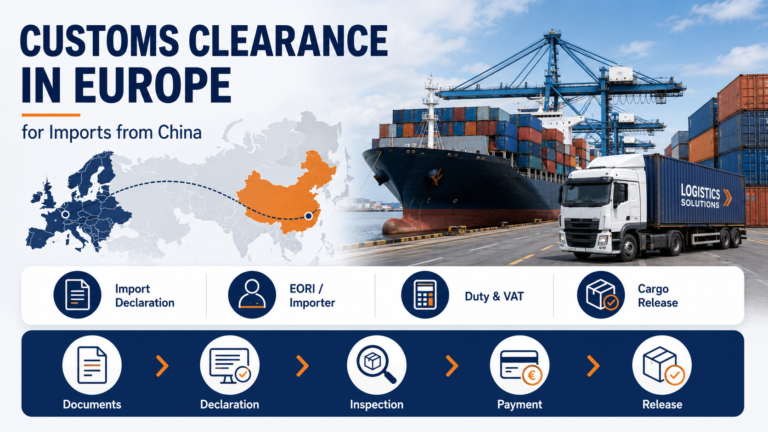
Customs Clearance in Europe for Imports from China
Customs Clearance in Europe for Imports from China Verified & Reviewed · Last updated July 2026 Customs clearance in Europe for imports from Chin...
Read guide →An added benefit for eligible new customers shipping with Tonlexing.
Check Eligibility & Get a Quote →Subject to cargo eligibility, insurer approval and policy terms.
Coverage and insured value depend on the cargo, route and written insurer confirmation before shipment. Policy exclusions, deductibles and claims terms apply. The US$500,000 figure is a maximum coverage limit, not a guaranteed claim payment. Insurance premiums are not represented as free unless expressly confirmed in your quote.


Goods shipped from China may need to move from an EU entry port to an inland customs office before import clearance. T1 transit allows eligible non-Union goods to travel under customs supervision, such as from Rotterdam to Germany, with import duties and VAT suspended during transit.
Once T1 is discharged, importers complete the required customs formalities at the destination. This arrangement helps businesses coordinate inland delivery, manage shipping costs and avoid delays.
T1 Transit Procedure
NCTS & MRN
EU Customs Clearance
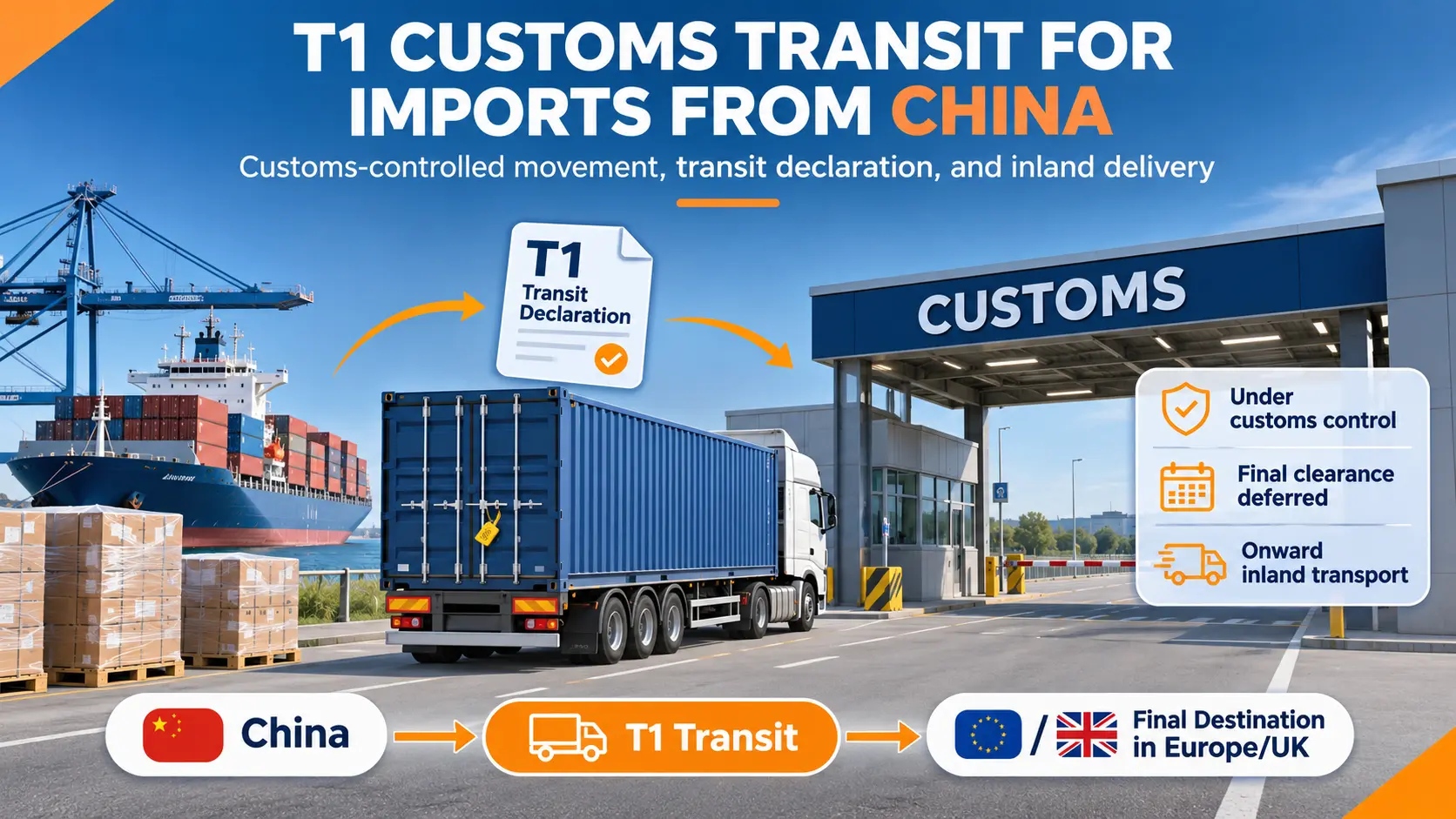
T1 is an external customs transit procedure that allows non-Union goods to move under customs supervision within the EU and between countries participating in the Common Transit Convention (CTC).
For Chinese imports, this procedure is useful when goods enter Europe through one country but need to undergo import clearance in another.
For example, goods shipped from China may arrive at Rotterdam before continuing to Germany. They retain their non-Union customs status during the transit movement rather than being released into free circulation at the port of arrival.
There are two main frameworks for these movements:
Union Transit: Used for eligible movements between customs offices within the EU. The external transit procedure, identified by T1, mainly applies to non-Union goods.
Common Transit: Supports movements between the EU and participating CTC countries, as well as between those countries. These include Iceland, Norway, Switzerland, the UK, Türkiye, Serbia, Ukraine, Georgia, Moldova and Montenegro, among others.
China is not a member of the Common Transit Convention. Therefore, T1 is not a Chinese export declaration. For the typical China-to-Europe shipment, the transit arrangement is organised within the relevant European customs system.
T1 allows applicable import duties, taxes and trade policy measures to remain suspended while the goods travel under the authorised procedure. However, the importer must still complete the appropriate customs formalities at the destination.
T1 is particularly useful when the entry port and the intended customs clearance location are different.
The decision depends on the goods’ customs status, shipping route and the importer’s preferred destination for completing formalities.
A common situation occurs when goods arrive at a major European seaport but need to be transported to an inland location before import clearance.
Examples include:
China → Rotterdam → Duisburg, Germany
China → Antwerp → an inland destination in Germany
China → Rotterdam → a distribution facility in another EU country
An importer arranging shipping from China to Rotterdam may prefer to complete import formalities closer to its warehouse or distribution centre.
T1 provides a way to move eligible non-Union goods inland without paying applicable import charges at the entry port.
This arrangement can be useful for businesses that already work with an inland customs broker or an authorised consignee. It also allows importers to coordinate port handling and inland transportation as separate stages of the logistics process.
T1 can also support transportation across borders when non-Union goods need to move between participating territories.
For example, cargo arriving in the Netherlands may continue to Germany or another European destination before import clearance.
Businesses arranging shipping from China to Germany should confirm the intended route and destination arrangements before the cargo arrives.
For movements beyond the EU, the relevant CTC arrangements must be checked to ensure that the destination and transit route are covered.
This is particularly important when goods pass through multiple countries before reaching the final destination. The customs offices involved and the required transit information should be confirmed before transportation begins.
Some importers prefer to receive cargo at an inland facility rather than complete all formalities at the seaport.
An authorised consignee can receive goods under an approved transit arrangement and complete the required arrival formalities at authorised premises.
Alternatively, goods may be presented at a designated customs office before entering customs warehousing or another permitted arrangement.
An ordinary warehouse does not automatically have the authority to receive and discharge T1 movements. Importers should verify the facility’s authorisation before arranging transportation.
The T1 customs transit process involves several stages, from confirming the route to completing the movement at the destination. Each stage requires coordination between the importer, carrier and relevant customs representatives.
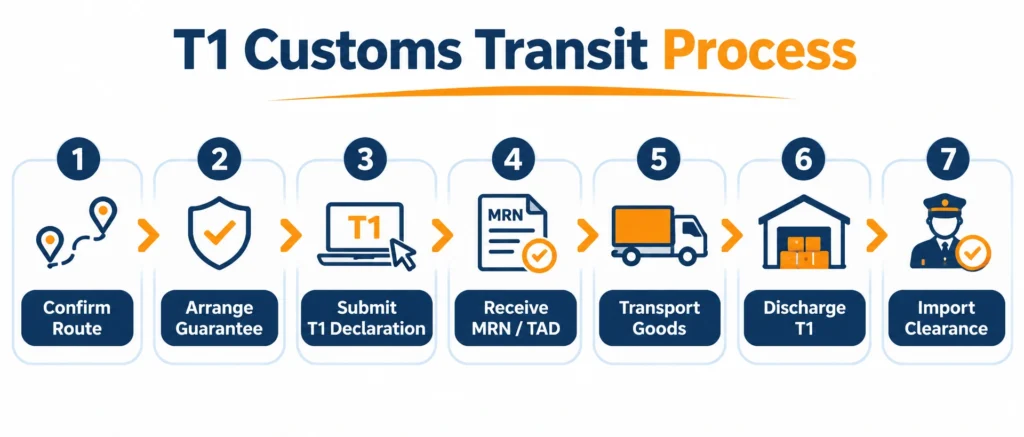
Before arranging the declaration, the importer or logistics provider should confirm:
Port or customs office of departure
Destination customs office or authorised consignee
Consignor and consignee details
Cargo description, weight and quantity
Transport arrangements
Intended transit route
For example, cargo arriving at Rotterdam for delivery to Duisburg needs a suitable destination office or authorised consignee in Germany.
The receiving facility should be confirmed before the shipment leaves the entry port. This helps avoid incorrect destination details and unnecessary changes to the transportation plan.
A financial guarantee is normally required to cover potential import duties, VAT and other charges that could become payable if the transit movement is not properly completed.
Depending on the arrangement, the guarantee may be:
An individual guarantee for one movement
A comprehensive guarantee covering multiple movements
Another guarantee arrangement accepted by the customs authorities
Certain authorised arrangements may qualify for a guarantee waiver or reduction.
The holder of the transit procedure must ensure that the guarantee is valid and sufficient. Importers should confirm whether the customs broker, transit agent or another authorised party will provide it.
Guarantee charges may also form part of the overall shipping costs, depending on the service provider and the value of the goods.
The T1 declaration is submitted electronically through the New Computerised Transit System (NCTS) by the holder of the procedure or an authorised representative.
The declaration normally includes:
Description and classification of the goods
Package quantities and gross weight
Consignor and consignee information
Transport details
Departure and destination offices
Transit route
Guarantee information
The customs declaration form must contain accurate shipment information. Differences between the declared cargo and supporting documents may lead to additional checks or delays.
Before submission, the responsible party should check that the declaration matches the commercial invoice, packing list and transport information.
After the declaration is accepted, NCTS generates a unique Movement Reference Number (MRN).
The system makes the relevant Transit Accompanying Document (TAD) or MRN information available to identify the accepted movement.
The MRN allows customs authorities to access the declaration and track the shipment throughout its transit.
The carrier must have the required transit information available during transportation and present it when requested by the relevant authorities.
Once released for transit, the carrier can move the cargo along the authorised route.
During transportation:
The MRN or TAD information must remain available.
Goods must remain under the applicable transit conditions.
Customs seals must remain intact where applied.
The cargo must reach the destination within the assigned time limit.
The customs office of departure sets the time allowed for the movement, taking account of the itinerary, transport method and other relevant factors. There is no universal T1 shipping time applicable to every route.
If an unexpected incident or delay occurs, the carrier and procedure holder should follow the applicable reporting requirements.
At the destination, the goods must be presented to the designated customs office or an authorised consignee.
The arrival notification is submitted through the relevant electronic system. The receiving party may be required to verify package quantities, cargo condition and declaration details.
The destination office then communicates the required arrival and control information through NCTS.
Once the necessary checks and electronic confirmations are completed, the transit movement can be discharged and the corresponding guarantee released.
Simply delivering the goods to a warehouse does not automatically complete this step. The required electronic customs formalities must also be completed.
After T1 has been properly discharged, the goods can proceed to import customs clearance or another permitted arrangement.
For release into free circulation, the importer or appointed customs broker generally needs to:
Submit the import declaration.
Confirm the correct commodity code and customs value.
Provide the necessary supporting documents.
Pay or account for applicable import duties and VAT.
Complete any required inspections or regulatory checks.
Businesses arranging customs clearance from China to Germany should confirm the local requirements before the goods arrive.
For shipments entering through the Netherlands, importers can also review the requirements for customs clearance in the Netherlands.
The transit movement and final import declaration are separate customs stages, even when coordinated as part of one logistics process.
Accurate documentation is essential for preparing a T1 declaration and avoiding delays during transportation. The main documents and information include:
Commercial Invoice: Shows the seller, buyer, goods description, declared value and country of origin.
Packing List: Provides package quantities, dimensions, gross weight and net weight.
Bill of Lading or Air Waybill: Confirms the international shipping details and identifies the cargo.
Commodity Code and Customs Value: Support goods classification and subsequent import duty calculations.
EORI Number: Identifies relevant economic operators involved in EU customs formalities, where required.
Customs Guarantee Reference: Provides details of the financial guarantee covering potential customs liabilities.
Transit Declaration and MRN: The T1 declaration is submitted through NCTS. Once accepted, the system generates an MRN and the corresponding Transit Accompanying Document (TAD).
Importers should ensure that cargo descriptions, package quantities and weights are consistent across all documents. Additional permits or certificates may be required for certain regulated goods.
Checking the necessary documents with a customs broker or transit agent before shipping can help prevent declaration errors and costly delays.

T1 transit costs depend on the service provider, shipment details and guarantee requirements. Although there is generally no separate government filing fee, freight forwarders and customs brokers charge for arranging the declaration and related services.
Typical charges may include:
T1 Declaration Fee: Approximately €25–€80 per declaration, depending on the provider and destination country.
Additional HS Code Fees: Some brokers charge €2–€10 for each additional commodity code line.
Transit Guarantee Fee: Depends on the secured customs duties and taxes, guarantee provider and shipment risk. Some providers charge a percentage of the guaranteed amount.
Discharge and Handling Fees: Often included in the service package, but separate destination handling charges may range from €15–€35.
These figures are indicative rather than fixed rates. Importers should confirm the service charges and any additional costs before booking.
Under T1, applicable import duties and VAT remain suspended while goods move under customs supervision. Payment depends on what happens after the transit procedure is discharged.
Release for Free Circulation: When goods complete import customs clearance at their destination, applicable import duties and VAT become payable under local regulations.
Postponed VAT Accounting: Eligible importers in countries offering this arrangement may report import VAT through their periodic VAT returns instead of paying it immediately at customs clearance. Import duties generally remain payable.
Customs Warehousing or Re-export: If goods are placed under an authorised customs warehousing procedure, import duties and VAT remain suspended while they stay under that procedure. If they are re-exported without being released into free circulation, EU import duties and import VAT generally do not become payable.
Important: T1 must be formally discharged within the time limit set by the customs office of departure. Failure to complete the procedure can result in customs debt, additional charges and claims against the transit guarantee.
Importers should consider declaration fees, guarantee charges, inland transportation and final import taxes when calculating total landed costs.
These customs arrangements differ in their purpose and the customs status of the goods.
| Procedure | Main Purpose | Customs and Tax Treatment |
|---|---|---|
| T1 Transit | Move non-Union goods under customs supervision | Applicable import duties and charges are suspended during transit |
| Direct Import Clearance | Release goods at the entry port or another permitted import location | Applicable import duties and taxes are assessed during import clearance |
| T2 Transit | Move eligible Union goods while maintaining their Union customs status | Preserves Union status during the transit movement |
| Customs Warehousing | Store non-Union goods under customs supervision | Applicable import duties and import taxes are generally suspended while goods remain under the procedure |
For shipments from China, T1 is suitable when goods need to move inland before import clearance. Direct clearance is an alternative when goods are ready for release at the entry port, while customs warehousing is useful when storage is required before release or re-export.
Errors in transit declarations, missing documents and delays can lead to additional costs or customs complications. Importers should pay attention to the following issues:
Incorrect Declaration Details: Inconsistent cargo descriptions, quantities or weights can trigger customs checks. Verify all information against the commercial invoice and packing list before submission.
Insufficient Customs Guarantee: An invalid or inadequate guarantee may prevent the shipment from being released. Confirm the guarantee coverage before filing the T1 declaration.
Missed Transit Deadlines: Goods must reach the designated destination within the time limit set by the customs office of departure. Allow sufficient transportation time and report unexpected delays.
Destination or Delivery Errors: Sending goods to an incorrect customs office or an unauthorised facility can delay the discharge process. Confirm the receiving arrangements before dispatch.
Failure to Discharge T1: Missing arrival notifications or incomplete destination formalities can leave the transit procedure open. Ensure that the destination office or authorised consignee completes the required procedures.
Damaged Customs Seals: If seals are applied, they must remain intact during transportation. Report any damage or cargo discrepancies to the relevant authorities immediately.
Proper document checks, reliable transport arrangements and communication with the customs broker can help prevent these problems and keep shipments moving smoothly.
A freight forwarder coordinates international transportation, documentation and destination delivery. This is particularly important when Chinese goods enter Europe through one country but need to continue to another.
The logistics process may involve the exporter, shipping company, carrier, port operator, transit agent, customs broker and final consignee.
Choosing the right freight forwarder can help businesses coordinate these activities more efficiently.
A logistics provider can assist with:
Arranging ocean freight, air freight and suitable shipping methods from China.
Coordinating arrival notices and port handling.
Checking commercial invoices, packing lists and transport documents.
Working with local brokers or transit agents on T1 arrangements.
Organising inland transportation to the final destination.
Monitoring shipment progress and coordinating delivery schedules.
Tonlexing provides international freight forwarding services for businesses importing from China, helping coordinate shipping arrangements, documentation and destination logistics.
Before booking, confirm the transit route, guarantee arrangements and customs responsibilities.
T1 is an external transit procedure for moving mainly non-Union goods under customs supervision. The Transit Accompanying Document (TAD) and its MRN identify the accepted movement. It is not the same as an import declaration or a customs clearance document.
No. T1 is generally used when eligible non-Union goods need to move to another destination before import clearance. If the importer clears the goods directly at the entry port, a separate transit movement may not be necessary.
No. T1 suspends applicable import charges during the authorised movement. Once the goods reach their destination and the transit is discharged, the importer must complete the next required arrangement and pay or account for applicable taxes when releasing the goods for free circulation.
The duration depends on the route, transport arrangements, documentation and any required inspections. The customs office of departure sets the time limit for completing the movement. There is no universal T1 transit period for all shipments.
The holder of the transit procedure or an authorised representative can submit the declaration through NCTS. Importers commonly work with a customs broker or logistics provider to coordinate the filing, guarantee and transportation arrangements. The holder remains responsible for meeting the transit obligations.
Useful freight, customs and importing resources related to this shipping guide.
Customs Clearance in Europe for Imports from China Verified & Reviewed · Last updated July 2026 Customs clearance in Europe for imports from Chin...
Read guide →
Customs Clearance in the Netherlands Verified & Reviewed · Last updated June 2026 Customs clearance in the Netherlands is required when goods ent...
Read guide →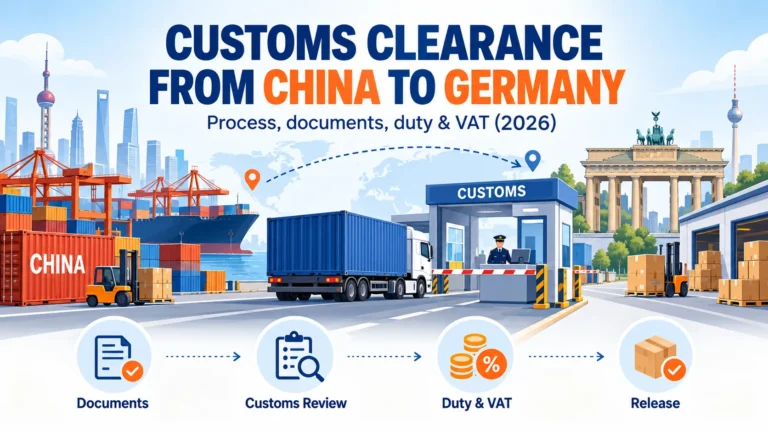
Customs Clearance from China to Germany Verified & Reviewed · Last updated October 2026 Customs clearance from China to Germany involves preparin...
Read guide →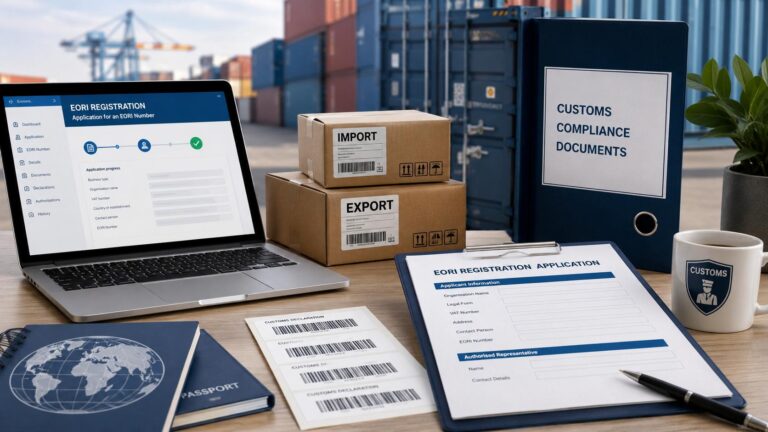
EORI Number Explained: Do You Need It to Import from China? Verified & Reviewed · Last updated July 2026 An EORI number is usually required when...
Read guide →Shipping from China to Rotterdam Verified & Reviewed · Last updated June 2026 Shipping from China to Rotterdam costs vary depending on the shippi...
Learn more → Useful Resource Shipping from China to DuisburgShipping from China to Duisburg Verified & Reviewed · Last updated June 2026 Shipping from China to Duisburg is a popular logistics solution for...
Learn more →WhatsApp us