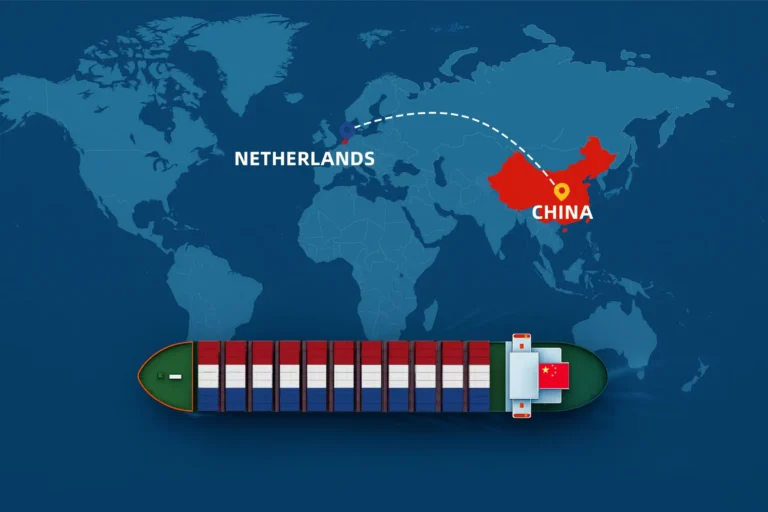
Related Guide
Shipping from China to the Netherlands
Shipping from China to the Netherlands – Sea, Air & DDP in 2026 Reliable shipping from China to the Netherlands for importers, distributors, and...
Read guide →

Customs clearance in the Netherlands is required when goods enter the country from outside the European Union. Importers must prepare the correct customs declaration, EORI number, HS code, commercial invoice, and shipping documents before the cargo can be released.
This guide explains how Dutch customs clearance works, including import duties, VAT, customs clearance fees, parcel clearance, restricted goods, DMS declarations, Article 23 VAT deferment, and common reasons for customs delays.
Customs declaration
Import duties / VAT
Parcel clearance
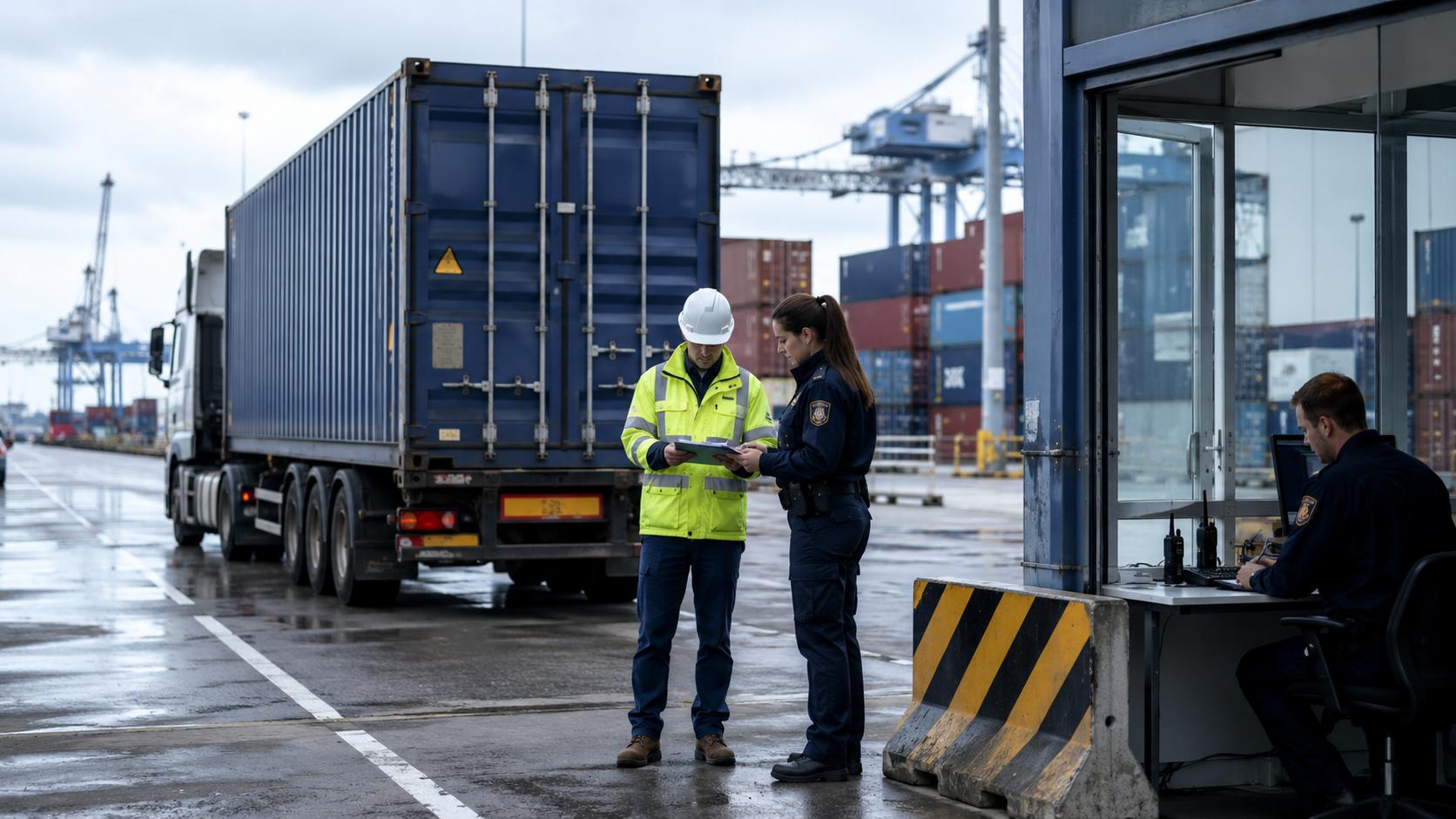
Customs clearance in the Netherlands means declaring imported goods before they can be released for delivery or further movement within the European Union. The process confirms what the goods are, how much they are worth, where they come from, and which duties, VAT, or other taxes apply.
For commercial imports, the process is usually handled by the importer, customs broker, freight forwarder, or courier. For personal parcels, the postal operator or express carrier normally submits the declaration and contacts the receiver if a payment request or additional information is needed.
Goods from outside the EU may first enter temporary storage until a customs procedure is approved. For most commercial imports, the goal is release for free circulation, which allows the goods to enter the EU market after the required checks and payments are completed.
The clearance process follows a structured sequence. The exact steps depend on the shipping method, cargo value, product type, and whether the goods are selected for inspection.
Before cargo arrives, the carrier may submit an Entry Summary Declaration, often called ENS, through the Import Control System 2, or ICS2. This supports safety and security screening before the goods reach the EU border.
For commercial imports, the importer or broker may submit the import filing through the Dutch DMS system. If goods arrive through a Dutch port, a Container Release Message, also known as CVB, may be required before the import declaration can be completed after unloading.
The importer, broker, freight forwarder, or courier submits the customs declaration with the required shipment details.
The declaration normally includes:
EORI number
HS code
Commercial invoice
Packing list
Bill of Lading or Air Waybill
CIF value or customs value
Origin details
Cargo information
Requested procedure
Accurate data is important because it affects product classification, duties, VAT, customs regulations, and the final release decision.
After the declaration is submitted, the authorities review the cargo information. They may check the HS code, declared value, origin, document codes, import restrictions, and product certificates.
Most entries are processed electronically, but some cargo may be selected for document checks, X-ray scanning, physical inspection, or compliance review. Regulated goods, unclear descriptions, low declared values, or missing paperwork can increase the chance of additional checks.
Once the entry data is accepted, import duties, VAT, excise duties, consumption tax, or other taxes may be calculated.
The amount payable depends on:
HS code classification
CIF value
Product category
Origin
Applicable tariffs
Trade measures
Product-specific rules
Importers usually need to pay the required charges before release, unless a deferred payment arrangement applies.
Before cargo can be released, all required charges must be settled or secured. These may include VAT, import duties, clearance fees, inspection costs, storage fees, or excise duties for certain products.
After approval and payment confirmation, the goods can be delivered within the Netherlands, moved to a warehouse, sent to an Amazon FBA facility, or distributed to other EU countries.
Different parties may handle customs clearance depending on the shipment type and delivery method. The importer remains responsible for accurate information, but the declaration may be submitted by another party.
| Shipment Type | Who Usually Handles Clearance |
|---|---|
| Commercial sea freight | Customs broker or freight forwarder |
| Air freight | Broker, forwarder, or airline handling agent |
| Express shipments | Courier company such as DHL, UPS, or FedEx |
| Postal parcels | Postal operator or PostNL |
| Importer-managed shipments | Importer’s own customs team |
| Export goods | Exporter, broker, or logistics provider |
For business shipments, using a customs broker is often safer because the broker can check HS codes, customs value, documents, import duties, VAT, and product restrictions before the goods arrive.
To complete customs clearance in the Netherlands, importers must prepare accurate shipping and commercial documents before the goods arrive. Missing or incorrect paperwork is one of the most common causes of customs delays.
The documents most commonly required include:
Commercial Invoice – Shows the seller, buyer, product description, quantity, unit price, total value, currency, Incoterms, and country of origin.
Packing List – Provides package quantity, carton details, dimensions, gross weight, and net weight.
Bill of Lading or Air Waybill – Confirms the carrier, shipping route, and transport details.
EORI Number – Required for businesses submitting customs declarations within the European Union.
HS Code – Used to classify products, determine import duties, and identify any import restrictions.
Certificate of Origin – May be required to verify where the goods were manufactured.
Product Certificates – Often required for regulated goods such as food, medicines, chemicals, batteries, and electronics.
Customs Value Declaration (Form DV 1) – May be required for higher-value shipments to support the declared customs value.
Additional supporting documents may also be needed depending on the product type, including:
Health certificates
CE Marking documentation
Product test reports
Import licenses
Inspection certificates
Before submitting a customs declaration, make sure all documents are consistent and that product descriptions, quantities, values, and origin information match across the invoice, packing list, and transport documents. Accurate documentation helps reduce inspections, avoid delays, and speed up cargo release.
An EORI number is required for businesses that import or export goods through the Netherlands. EORI stands for Economic Operators Registration and Identification. It is used for exchanging data with customs and identifying companies involved in international trade. Dutch Customs states that an EORI number is needed when filing customs declarations, applying for authorisations, or having a declaration submitted on your behalf.
You normally need an EORI number when you:
Submit a customs declaration
Import goods from outside the EU
Export goods to non-EU countries
Use a broker
Apply for authorisations
Arrange transit or special procedures
Without a valid EORI number, the entry process can be delayed or rejected.
Companies involved in regular international trade may also consider authorised economic operator options. AEO status can support simplified procedures, reduce the frequency of inspections, and show that the company is part of a secure logistics chain. AEO status is usually more relevant for larger importers, exporters, brokers, and logistics companies.

When importing goods into the Netherlands from outside the EU, importers may need to pay import duties, VAT, and customs clearance fees. These are different charges and should be calculated separately.
Import duties are government charges on imported goods. The amount depends on the HS code, CIF value, origin, and applicable tariffs.
The CIF value usually includes:
Goods value
Freight cost
Insurance cost up to the EU border
Some products have low or zero duty rates, while other goods may be subject to higher tariffs, anti-dumping measures, or other trade controls. High-emission goods may also be affected by CBAM requirements, depending on the product category and current EU rules.
VAT is charged on most imported goods entering the Netherlands. The Netherlands has three VAT rates: 0%, 9%, and 21%, with 21% as the standard VAT rate for many goods and services.
In most cases:
Import VAT = (CIF Value + Import Duties) × VAT Rate
If the importer is not using Article 23, they normally need to pay tax before the goods are released.
Customs clearance fees are service charges, not government taxes. They may be charged by the broker, courier, postal operator, freight forwarder, terminal, port, airport, or warehouse handling the cargo.
Common clearance fees include:
Broker fee
Courier handling fee
Documentation fee
Demurrage or detention if release is delayed
For parcel orders, carriers such as PostNL, DHL, UPS, or FedEx may collect these charges before delivery.
Personal parcels from outside the EU also go through customs clearance in the Netherlands. This often applies to online shopping orders from China, the UK, the US, and other non-EU markets.
For parcels, the postal operator or courier usually submits the declaration. Dutch Customs explains that online purchases from outside the EU may require VAT, purchases of €150 or more may be subject to import duties, and the carrier may charge clearance fees.
Parcel delays often happen because:
The invoice is missing
The declared value is incorrect
The product description is unclear
The recipient does not complete the payment request
The package contains restricted goods
Extra information is required
The receiver does not respond in time
If the carrier sends a message asking for invoice details, payment, or additional information, the customer should respond through the official tracking page, courier account, or PostNL app as soon as possible. A second message may appear if the parcel status changes or if an extra charge is still required.
Some goods are subject to stricter customs regulations in the Netherlands. These products may require extra records, permits, inspections, or tax payments before release.
Common restricted or regulated goods include:
Alcohol
Tobacco and cigarettes
Food products
Medicines
Chemicals
Plants and seeds
Animal products
Counterfeit goods
Excise goods
Alcohol, tobacco, cigarettes, and certain fuel or energy products may be subject to excise duties or consumption tax. Food, medicines, agricultural goods, chemicals, and industrial electronics may require health certificates, CE Marking records, labels, product test reports, or import licenses.
Certain products cannot be cleared with standard commercial paperwork alone. Some products may also be subject to other customs regulations, depending on their use, material, safety risk, or relation to EU product compliance rules. Other goods may pass standard entry checks, but regulated products should be reviewed before shipping.
A customs broker helps importers prepare and submit the customs declaration. For business shipments, using a broker can reduce errors and make the release process more predictable.
A broker can provide assistance with:
HS code review
Duty and VAT calculation
Paperwork checking
Import and export declaration
Communication with the authorities
Inspection support
Advise on product classification, taxes, and import rules
For first-time importers, regulated products, high-value cargo, or goods from multiple suppliers, using a broker is usually safer than handling the filing alone.
Customs clearance usually takes 1–3 business days for parcels and air freight if paperwork is complete. Sea freight may take 2–5 business days depending on port handling, data accuracy, payment status, and whether Customs selects the cargo for document checks, physical inspection, or audit.
You may need to pay import duties when goods enter the Netherlands from outside the EU. The amount depends on the Harmonized System (HS) Code, CIF value, customs value, origin, and product category. In the EU, standard customs duties often range from 0% to 12%, depending on the product classification.
A Container Release Message, also called CVB, may be required when goods arrive through a Dutch port. It connects unloaded container information with the import declaration after the goods are unloaded, helping Customs verify the shipment before the container is released.
A parcel may be delayed because the courier needs payment, invoice information, product details, or additional checks. You should check the courier tracking page or PostNL app for a payment request, message, or document request.
Yes. Export goods leaving the Netherlands for non-EU destinations may require an electronic export declaration in DMS. Export commercial invoices should show the sale value and support 0% VAT treatment when the exit customs office confirms that the goods have physically left EU territory.
ENS means Entry Summary Declaration. The carrier may submit ENS data through the EU Import Control System 2, or ICS2, before the vessel or aircraft arrives. This helps Customs review safety and security risks before arrival.
DMS is the Dutch electronic declaration system. The importer or customs broker may file a standard electronic declaration through DMS to request release for free circulation.
Useful freight, customs and importing resources related to this shipping guide.
Shipping from China to the Netherlands – Sea, Air & DDP in 2026 Reliable shipping from China to the Netherlands for importers, distributors, and...
Read guide →
Shipping Cost from China to Netherlands (2026 Guide) Verified & Reviewed · Last updated June 2026 Shipping cost from China to the Netherlands in...
Read guide →
Sea Freight from China to Netherlands Verified & Reviewed · Last updated May 2026 The Netherlands is a key logistics hub in the European Union. W...
Read guide →
DDP Shipping from China to Netherlands Verified & Reviewed · Last updated June 2026 DDP shipping from China to the Netherlands provides an all-in...
Read guide →Customs Clearance in Europe for Imports from China Verified & Reviewed · Last updated July 2026 Customs clearance in Europe for imports from Chin...
Learn more → Useful Resource Import Duties from China to EuropeImport Duties from China to Europe Verified & Reviewed · Last updated July 2026 Import duties from China to Europe depend on the HS code, customs...
Learn more →WhatsApp us