

Top Air Freight Companies in the United States
- Verified & Reviewed · Last updated January 2026
When people search for the top air freight companies in the United States, they’re usually looking for fast transit, reliable capacity during peak seasons, and cargo handling that protects shipment quality. The best choice depends on what you’re shipping, where it’s going, your delivery deadline, and any compliance requirements (battery, DG, temperature control, etc.).
This guide explains how U.S. air freight works, which air cargo carriers and forwarders fit different shipping scenarios, and how to choose the best air freight services for your business. You’ll also find a comparison table, a practical selection checklist, and clear guidance for both general cargo and specialized shipments.
Carrier comparison / Top providers
Services & coverage
Selection checklist
- Experienced China-based logistics specialists
Table of Contents
What Counts as an Air Freight Company in the USA
In the United States, air freight is delivered through carrier-led capacity. Most “air freight companies” fall into oane of these roles.
Main carrier types
Integrated carriers
- Operate aircraft and ground networks
- Offer door-to-door pickup and delivery
- Best for time-definite shipments and high shipment frequency
Dedicated cargo airlines
- Operate freighter aircraft
- Focus on airport-to-airport lift and charter capacity
- Best for heavy, oversized, and project cargo
Passenger airlines with cargo divisions
- Carry cargo in passenger aircraft belly capacity
- Best for airport-to-airport shipments on high-frequency routes
Supporting partners that impact performance
Aviation ground support
- Ramp handling and aircraft loading
- ULD build-up and breakdown
- Warehouse receiving, screening, and staging
Trucking partners
- Airport drayage and feeder trucking
- Linehaul between cities when uplift is limited
Important note for complex shipments
For complex shipments, a licensed logistics provider can manage:
Routing and booking coordination
Documentation checks
Customs clearance readiness
Exception handling communication
Capacity still comes from air cargo carriers, so choosing the right carrier and the right service level is the foundation.
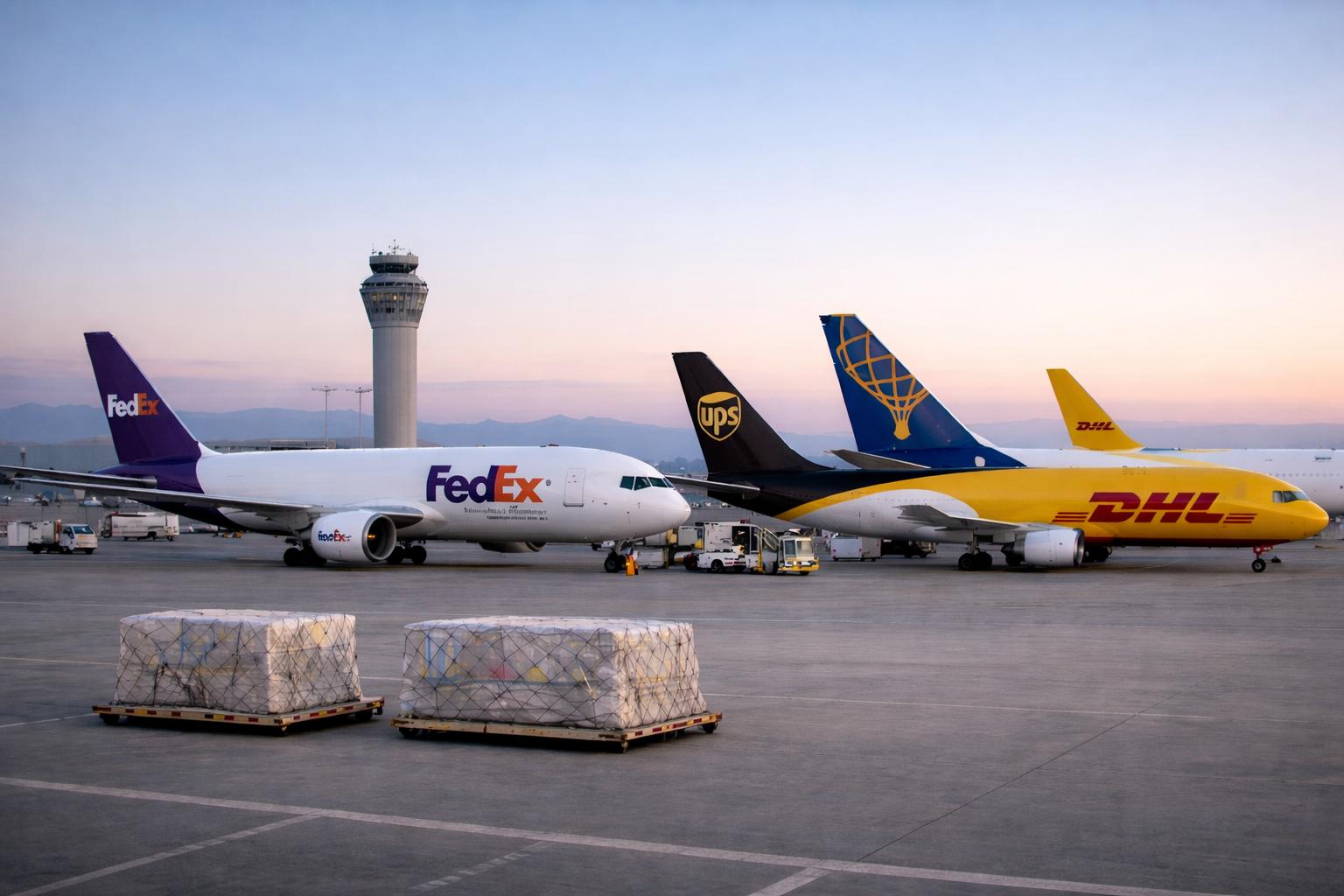
Top Air Cargo Carriers in the United States
This section stays carrier-focused.
| Provider | Carrier Type | Best-fit Use Case |
|---|---|---|
| FedEx Express | Integrated carrier | Door-to-door express and time-definite delivery |
| UPS Airlines | Integrated carrier | Reliable domestic air network and express shipping |
| Atlas Air | Dedicated cargo airline | Charter capacity and heavy or oversized cargo |
| United Cargo | Passenger airline cargo | Airport-to-airport on major global routes |
More carrier options by category
Dedicated cargo airlines
- Kalitta Air
Passenger airline cargo divisions
- American Airlines Cargo
- Delta Cargo
How to choose quickly
Choose integrated carriers for door-to-door speed and simplicity
Choose dedicated cargo airlines for charter, heavy freight, and special cargo
Choose passenger airline cargo for frequent airport-to-airport schedules
Air Freight vs Ocean Freight: When Air Wins
Comparing air freight and ocean freight helps clarify the best shipping solution.
Choose air when you need:
Faster transit for urgent replenishment
Higher reliability for deadlines and product launches
Better protection for high-value goods
Less inventory tied up in transit, which can improve operational efficiency
Choose ocean when you ship:
Non-urgent bulk cargo
Low-value, high-density goods that can absorb longer transit
Projects where cost dominates speed
A practical strategy is to use ocean for baseline supply and air as a surge tool when demand spikes.
Core Air Freight Services You Can Buy in the USA
Most U.S. air freight services fit into a few practical levels:
Express door-to-door for the fastest delivery with end-to-end pickup and final delivery
Airport-to-airport for shipments where you can manage local trucking and want more routing flexibility
Deferred air for lower cost when the timeline is flexible
Charter and special handling for heavy or oversized cargo, temperature-controlled freight for pharmaceutical logistics and perishables, and regulated shipments that require acceptance screening
For many shippers, the best approach is matching service level to deadline first, then optimizing price.
How Pricing Works: Competitive Pricing Starts with Chargeable Weight
Air freight pricing is simple at the core, but many costs hide in details.
Pricing foundation
Chargeable weight drives pricing
- Billed as the higher of actual weight or volume weight
Lane conditions change rates
- Capacity and seasonality significantly impact spot rates
Surcharges are common
- Fuel surcharges
- Security surcharges
- Handling surcharges for special cargo
What to prepare before requesting quotes
Exact dimensions and weight
Number of cartons or pallets
Origin and destination airports or cities
Ready date and delivery deadline
Cargo description and handling needs
How to get predictable landed cost
Ask for a quote that separates:
Linehaul
Surcharges
Origin handling
Destination handling
Pickup and delivery costs
A clean breakdown prevents surprises when your shipment arrives.
Ensuring Timely Delivery: What Actually Improves Reliability
Ensuring timely delivery is rarely about choosing the biggest name. It is about reducing avoidable risks across pickup, routing, handling, and communication.
What improves reliability in real operations
Pickup discipline
- Schedule pickup earlier to protect flight cutoffs
- Confirm cargo ready time and avoid last-minute changes
Smarter routing
- Use direct flights when possible
- Reduce transfers to limit handling events
Terminal execution
- Strong aviation ground support shortens receiving, screening, and build-up time
- Priority handling helps time sensitive shipments move through the warehouse faster
Documentation accuracy
- Clear labels improve scanning and reduce mis-sorts
- Clean paperwork prevents security or compliance holds
Exception management
- Proactive communication keeps all parties aligned
- Fast escalation reduces delays when disruptions happen
Quick reliability checklist before you ship
Confirm pickup window and cutoff time
Verify weight, dimensions, and labels
Ensure invoice and packing list match
Choose the routing with fewer touchpoints
Set an escalation contact for exceptions
Bottom line: a reliable partner is the one that runs consistent processes, responds quickly to disruptions, and provides clear milestone updates from pickup to delivery.
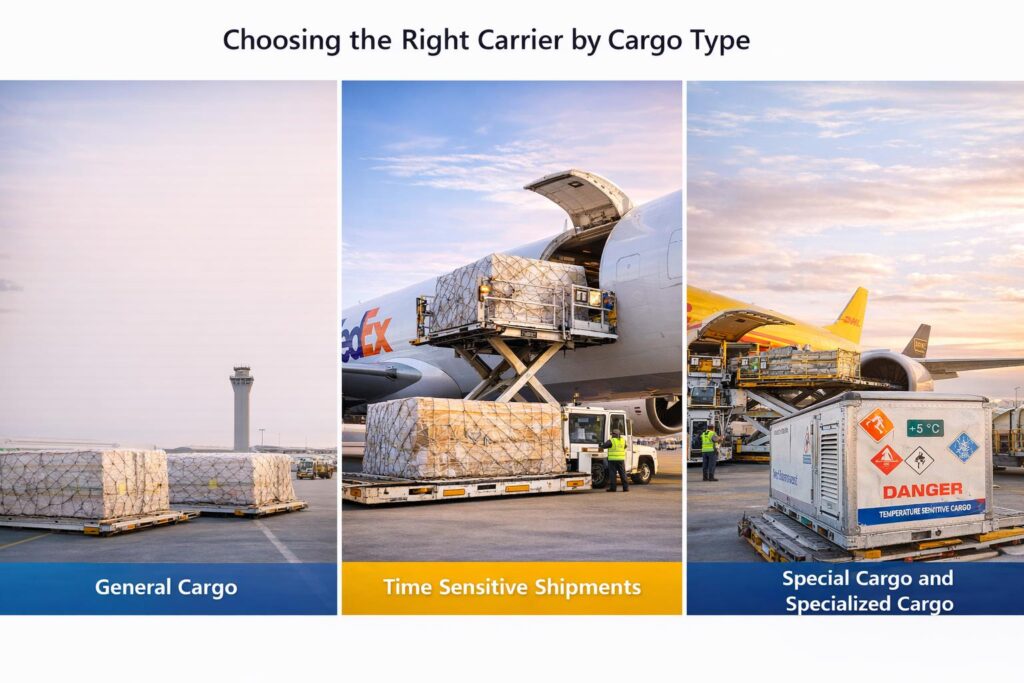
Choosing the Right Carrier by Cargo Type
Different cargo types require different networks, cutoffs, and handling controls. Start with cargo profile, then match the carrier model and service level.
General cargo
- Best for integrated networks and frequent schedules
- Works well with standard airport handling and predictable uplift
- Focus on routing stability, cutoff windows, and tracking visibility
Time sensitive shipments
- Use express or time-definite services
- Prioritize late cutoffs, reliable pickups, and direct routing where possible
- Reduce transfers to limit handling events and missed connections
Special cargo and specialized cargo
- Common examples include batteries, perishables, high-value items, and regulated goods
- Typical requirements include:
Specific packaging rules and compliant labeling
Acceptance screening before uplift
Temperature or security controls when required
Unique handling processes at terminals, including priority build-up and controlled storage
if your cargo requires special handling, confirm acceptance capability for the exact lane and station before you book.
International Shipping: Customs Clearance Without Delays
For international shipping, delays usually come from documentation gaps and compliance issues, not aircraft speed. The goal is simple: make your shipment “clearance-ready” before it reaches the airport.
What to get right before uplift
Match commercial invoice data to the packing list, including quantities, weights, and values
Use correct HS codes and clear product descriptions for international trade
Confirm consignee and importer requirements, including any licenses or local rules
Plan for inspection risk and local procedures that may affect release timing
Prepare customs brokerage steps in advance where required, so clearance does not start late
Best practice
Standardize documents for repeat shipments
Review paperwork early and fix inconsistencies before tender
Keep supporting files ready if customs requests them
If your team is not set up for customs workflows, use a licensed provider that can manage customs clearance and compliance documentation consistently.
Tonlexing supports exporters by coordinating routing, documentation readiness, and carrier selection across a global network, with a focus on execution quality and shipment visibility.
Supply Chain Solutions: Air Freight as a Planning Tool
Air freight is no longer only a last-minute fix. In modern supply chain solutions and global logistics, it is a planned lever to protect availability, reduce disruption risk, and support timely delivery when speed directly impacts sales or service levels.
When air freight makes sense
Peak seasons: reduce stockouts and keep best-selling SKUs available
New markets and launches: meet short launch windows and promotional deadlines
Ocean disruptions: recover timelines when ocean freight is delayed
Fast-moving commercial goods: protect revenue and prevent cancellations
How mature shippers use air for operational efficiency
Use ocean freight for baseline supply and air freight for surge or recovery shipments
Prioritize air for high-velocity, high-value, or deadline-driven items, not everything
Keep documents and packaging ready to prevent avoidable holds in handling and clearance
Geographic Coverage and Gateway Strategy in the United States
Geographic coverage matters because U.S. air cargo performance depends on gateway strength and flight frequency. The right gateway plan reduces rollovers, protects capacity in peak season, and improves on-time delivery.
Choose origin gateways with frequent uplift so you have more schedule options and fewer missed connections
Keep a backup gateway for the same lane to protect capacity when space tightens
Align warehouse timing with airport cutoffs so cargo arrives early enough for receiving and screening
Confirm destination handling capability for special cargo, especially when special handling is required
Example: life science shippers near San Diego often prioritize time-definite air freight services and strict handling rules. Electronics moving to South Korea often prioritize frequent uplift and predictable cutoffs.
How to Evaluate a Provider: A Practical Checklist
Use this checklist to compare air cargo carriers and service partners:
Deadline fit: service level, pickup window, and cutoff times match your timeline
Lane strength: reliable coverage on your routes, with backup options when space is tight
Visibility: tracking and milestone updates you can share with customers
Handling: proven capability for special cargo, including regulated or temperature needs
Accountability: clear claims policy, insurance choices, and defined escalation contacts
Peak stability: consistent performance and transparent capacity rules in busy seasons
Process: clear SOPs for pickup, documents, and handover to reduce errors
Tonlexing helps businesses compare shipping solutions across carrier options while keeping execution simple, consistent, and aligned with business needs.
Frequently Asked Questions
For door-to-door speed, integrated air cargo carriers are commonly chosen. For charter, heavy lift, and oversized shipments, dedicated cargo airlines are often the better fit. For airport-to-airport moves on major lanes, passenger airline cargo divisions can be a strong option. The best choice depends on cargo type, deadline, and handling requirements.
Air cargo carriers provide the aircraft capacity and move the freight. Air freight services describe what you buy, such as express, deferred, airport-to-airport, or charter, plus any special handling requirements.
Protect cutoffs with early pickup, choose direct routings when possible, and reduce transfers to limit handling events. Keep labels and documents accurate, and confirm terminal receiving hours and capability for your cargo. Reliable milestone updates and proactive communication also reduce delay impact.
Use air freight for time sensitive shipments, high-value goods, and fast moving commercial goods where delays create real business loss. Use ocean freight for bulky, non-urgent cargo where cost matters more than speed.
Confirm acceptance rules for the exact lane and station, not just the carrier name. Verify packaging and labeling requirements, temperature or security needs, and whether terminals can support special handling processes such as controlled storage and priority build-up.
Pricing is typically based on chargeable weight, which is the higher of actual weight and volume weight. Total cost is influenced by lane capacity, seasonality, service level, and common surcharges such as fuel, security, and special handling. For predictable cost, request a quote that separates linehaul, surcharges, and origin and destination handling.
For most international shipping, customs brokerage is required or strongly recommended to complete customs clearance smoothly. Clean documents, correct HS codes, and importer readiness are the main factors that prevent holds. If your team does not manage customs workflows often, using a licensed provider can reduce clearance delays.
Provide exact dimensions and weight, carton or pallet count, cargo description, origin and destination city or airport, ready date, and your delivery deadline. Also note any special handling needs such as temperature control, regulated goods, or high-value security. Clear inputs lead to faster quoting and fewer pricing surprises.
Related China to USA Air Freight & DDP Guides
Get an Air Freight Quote in the United States
Fast transit options for urgent shipments
Capacity planning during peak seasons
Support for compliance (DG, batteries, temperature-sensitive cargo)
Get tailored air freight options, transparent pricing, and expert support for your shipment.