

If you’re comparing USPS vs UPS vs FedEx, you’re not alone. These three major carriers dominate U.S. parcel delivery, but they price differently, scan differently, and handle exceptions differently.
In 2025, the “best” choice is rarely a brand preference. It’s a math + risk decision.
Your final price is shaped by package weight, box size, destination zone, and add-ons like fuel surcharges and residential fees. And your customer experience is shaped by delivery speed, tracking events, and how the carrier performs when something goes wrong.
This guide explains USPS vs UPS vs FedEx using the real factors that change outcomes, including shipping costs, ground shipping, overnight shipping, and the most common extra fees—so you can pick the best shipping carrier for each order with confidence.
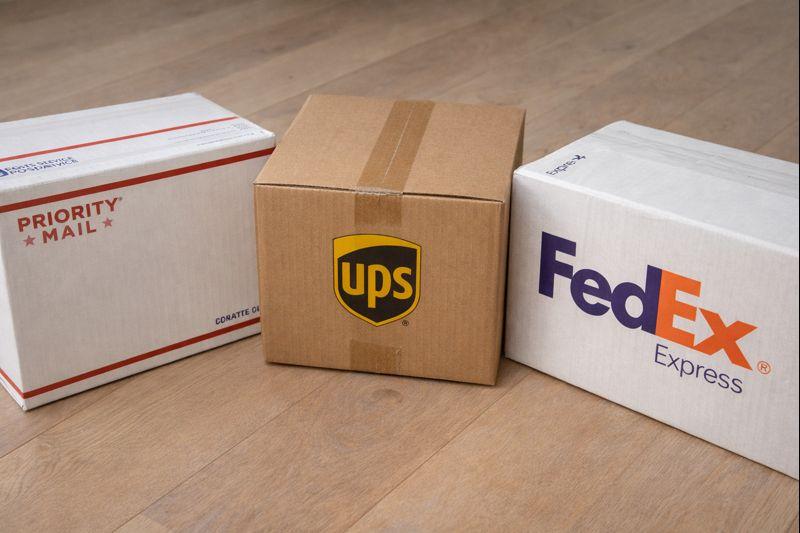
USPS vs UPS vs FedEx: Quick Comparison
USPS (United States Postal Service) tends to win when your shipments are light and small. It also wins when you need delivery to every mailbox, including many rural areas and PO Boxes.
UPS (United Parcel Service) tends to win when packages are heavier, business processes matter, or you want consistent scans. It’s often a “go-to carrier” for predictable ground shipping on standard cartons.
FedEx tends to win when you need strong express options for time sensitive shipments and competitive pricing on certain lanes. FedEx also has multiple services that can work well for residential deliveries.
Here’s a rule of thumb for choosing between USPS, UPS, and FedEx:
- Small + light → start with USPS
- Medium + bulky → compare UPS and FedEx
- Urgent → compare UPS and FedEx express services first, then check USPS Express if it fits
USPS vs UPS vs FedEx Comparison (Costs, Speed, Best Use)
| Item | USPS (United States Postal Service) | UPS (United Parcel Service) | FedEx |
|---|---|---|---|
| Best for | Lightweight packages, PO Boxes, nationwide residential reach | Heavy packages, consistent ground operations, B2B workflows | Time sensitive shipments, competitive express lanes, many residential deliveries |
| Typical cost advantage | Often most cost effective carrier for small packages | Often strong value for heavier cartons (after DIM/fees) | Competitive fedex rates on select lanes (ground + express) |
| Speed options | Ground Advantage, Priority Mail, Priority Mail Express | Ground, 2nd Day, Next Day (overnight services) | FedEx Ground, 2Day, FedEx Standard Overnight, FedEx Priority Overnight |
| Tracking | Good, varies by service | Very reliable tracking, consistent scans | Very reliable tracking (especially express services) |
| Coverage | Delivers to every address; PO Box friendly | Strong nationwide; PO Box limitations | Strong nationwide; PO Box limitations |
| Common “gotchas” | Some lanes slower delivery; fewer time guarantees | DIM weight + fuel surcharges + extra fees | DIM weight + address corrections + extra fees |
| Best “default” start | Shipping small packages + flexible delivery windows | Ground shipping for heavier boxes | Express delivery needs + certain home delivery lanes |
Shipping Carrier Costs: What You’re Really Paying For
When people talk about shipping carrier costs, they usually mean the label price. But the real cost of shipping is broader. It includes:
- Transportation linehaul
- Local last-mile delivery labor
- Network density (how many packages are already moving through that ZIP)
- Risk management (claims, damages, disputes)
- Operational complexity (pickup, scans, surcharges, address fixes)
This is why shipping costs can change dramatically even when your box looks “similar” to last week’s.
Shipping Rates: The 5 Inputs That Change Your Quote
When you compare shipping rates, make sure you always enter the same five inputs:
- Package weight
Actual scale weight matters—but it’s not the only weight that matters. - Box dimensions
UPS and FedEx pricing is heavily affected by dimensional weight. A large, light box can price like a heavier shipment. - Destination zone
A local shipment is not priced like a cross-country shipment. Delivery distance is a major driver of shipping carrier costs. - Address type
Residential deliveries may trigger extra fees for some UPS/FedEx services. USPS delivers to residences as part of its national network. - Service speed
The biggest step changes happen between:- economy ground
- standard ground
- 2-day
- overnight shipping
UPS vs FedEx vs USPS: How Pricing Works in Plain English
USPS pricing logic
USPS tends to be competitive for small parcels. It’s also strong when your destination is rural. USPS is widely used by small sellers because the entry cost can be lower. USPS also provides convenient options such as free package pickup in many areas (availability varies by location and service).
UPS and FedEx pricing logic
UPS and FedEx are priced like carrier networks optimized for parcel logistics at scale. They can be very competitive when:
- The carton is not too small to trigger minimums
- The box is not too large to trigger high DIM weight
- You ship enough volume to access better rates
If you ship frequently, the math changes again due to volume discounts. That’s why frequent shippers often negotiate pricing or use a platform to rate-shop.
Overnight Shipping: UPS vs FedEx (and Where USPS Fits)
When the question becomes overnight shipping, the comparison gets narrower.
Most shippers shortlist:
- UPS Next Day options
- FedEx express options, including FedEx Priority Overnight and FedEx Standard Overnight
- USPS Priority Mail Express (where it matches the required delivery window)
In real operations, overnight services are less forgiving. A late pickup, bad label, or wrong address matters more. For urgent shipments, your shipping strategy should include address validation and earlier cutoffs.
Bulk Shipping, Shipping Discounts, and Better Rates for Frequent Shippers
If you ship daily, your carrier choice should not be per-package guessing. It should be a repeatable system. That’s where bulk shipping tools and shipping discounts matter.
Most fast-growing stores use shipping software to:
- Auto-rate-shop across USPS, UPS, and FedEx
- Apply rules by package weight and destination
- Print labels in batches for bulk fulfillment
- Track exceptions early with consistent scan data
This approach creates a consistent decision framework and is one of the simplest shipping strategies for scaling. It also helps you compare the real shipping carrier costs after surcharges.
International Shipping Services: A Quick Note Before You Choose
This guide focuses on domestic parcel shipping. But many readers comparing USPS vs UPS vs FedEx also ship across borders.
All three carriers offer international shipping services. All three can handle many international shipments.
The best choice depends on:
- Your destination country
- Declared value and product type
- Customs clearance expectations
- Whether you need door-to-door tracking detail
If you plan on shipping internationally at scale, you should evaluate the lane end-to-end rather than selecting a carrier only by brand.
Shipping Costs Breakdown: What You’re Paying for
Most people compare the label price and stop there, but real shipping costs are driven by three layers:
- Base transportation charge (zone + billed weight)
- Accessorials (residential, delivery area, address correction, additional handling)
- Service guarantees (time-definite networks cost more to operate)
This is why two “similar” boxes can have very different shipping costs once the carrier audits dimensions or adds a surcharge. When you compare USPS vs UPS vs FedEx, always compare “all-in” totals, not just the first quoted rate.
Dimensional Weight: The #1 Reason UPS and FedEx Get Expensive
For UPS and FedEx, the billed weight can be the greater of:
- actual scale weight, or
- dimensional weight (based on box size)
That means a light but bulky carton can jump into a higher billed bracket. This is where UPS vs FedEx becomes more about packaging discipline than brand.
If you want lower shipping costs, start by tightening packaging:
- right-size cartons
- avoid oversized void fill
- measure and store dimensions in your shipping system
This single step often reduces surprise invoice adjustments and protects your profit.
Surcharges You Must Check
UPS and FedEx networks add charges that many shippers underestimate, especially on residential lanes:
- Fuel surcharges (common in many rate structures)
- Residential fees (varies by service)
- Delivery-area fees (remote ZIPs)
- Additional handling / oversized rules
- Address correction fees
These fees are why the cheapest quote becomes the most expensive invoice later. If you’re rate-shopping between UPS and FedEx, you need the final billed total, not only the checkout label.
Quick Surcharge Checklist (Use This Before You Lock In a Carrier)
| What to check | Why it matters | Fast fix |
|---|---|---|
| DIM vs actual weight | Changes billed weight | Store accurate box dimensions |
| Fuel surcharges | Can swing totals | Compare all-in, not base rates |
| Residential + delivery area | Adds fees on certain ZIPs | Identify your top ZIP clusters |
| Additional handling/oversize | Triggers big jumps | Adjust packaging + box selection |
| Address correction | Avoidable margin leak | Validate addresses before printing |
Explore more shipping guides:
- Fastest Courier from China to USA
- How to Track Your Package with China Post
- SF Express: Shipping Costs, Delivery Times, and Tracking Guide
- How Much Does SF Express Cost? Delivery Times, Tracking, and Shipping Guide
- How Long Does It Take to Ship from China

USPS Shipping Breakdown: Ground Advantage, Priority Mail, and Express Options
A practical USPS shipping breakdown starts with the three services most businesses actually use:
USPS Ground Advantage
- Best for value-focused shipments when speed is flexible
- A common baseline for shipping small packages when you want predictable cost
USPS Priority Mail
- Compare USPS Priority Mail when buyers care about speed but you don’t need air
- It’s often the “middle” option that balances speed and cost across many parcels
- In many workflows, this is the real decision point: Priority Mail vs UPS Ground vs FedEx Ground
Priority Mail Express
- For urgent shipments, compare Priority Mail Express against private-carrier air
- Use it when the lane meets your deadline and the cost fits your margin
Ground Shipping: USPS Ground Advantage vs FedEx Ground vs UPS Ground
Ground is where most shipments live—and where the “USPS vs UPS vs FedEx” debate is most practical.
USPS Ground Advantage
USPS Ground Advantage is positioned for economical delivery on non-urgent parcels. It can be a cost effective option for small packages when delivery speed is flexible. If your customers accept a slightly slower delivery, USPS Ground Advantage may be a good fit.
FedEx Ground vs UPS Ground
Both ground products can be excellent, but they win in different patterns.
FedEx Ground strengths
- Often competitive on many lanes and carton profiles
- Predictable operations for many standard shipments
- Strong integration with business shipping workflows
Shippers often track fedex rates closely in Q4 because promotions and lane changes can make big differences.
UPS Ground strengths
- Strong operational consistency and scan cadence
- Widely used for commercial and B2B shipping processes
- Dependable for heavier cartons where process control matters
When customers ask “UPS vs FedEx Ground shipping,” the honest answer is: run a lane test with your top ZIP codes and carton sizes, because the winner changes by profile.
Priority Mail: why it’s still the benchmark for many small packages
USPS Priority Mail hits a practical sweet spot for small packages: typically faster than economy ground, yet often more cost-effective than air. It’s also popular for operational simplicity: Priority Mail Flat Rate can reduce packing decisions when items fit the box and the lane supports the value.
Priority Mail Express
For critical shipments, you’ll start thinking about time-definite commitments. Not every service is “guaranteed” the way customers interpret the word, so always verify lane eligibility and cutoff rules. A simple hierarchy many shippers use:
- Carrier express air products
- Then USPS Priority Mail Express (where it meets the needed window)
Express Services and Overnight Shipping: What “Fast” Really Means
For time-critical orders, focus on service design—not marketing labels.
- Private-carrier express services are built on time-definite networks
- Overnight shipping is usually the most expensive tier because it compresses the network timeline
- Overnight delivery success depends heavily on pickup cutoff times and address accuracy
If your promise is strict, compare:
- UPS air products vs FedEx air products (a classic UPS vs FedEx decision)
- Then check USPS Express where it meets your time requirement
Also note: some markets sell “fast” without strict commitments. Always verify whether the service is time-definite on your lane.
Saturday Delivery, Free Saturday Delivery, and Flexible Delivery Windows
Weekend behavior matters for customer satisfaction.
- Saturday delivery can increase conversion for time-sensitive orders
- Some options advertise free Saturday delivery, but availability depends on service and ZIP code
- For certain residential orders, flexible delivery windows (customer rescheduling options) can reduce failed deliveries and returns
This is a hidden UX factor in USPS vs UPS vs FedEx comparisons—because missed deliveries create costs you don’t see on the label.
Reliable Tracking and Timely Delivery: Why Scans Matter
Cost isn’t the only KPI. For many brands, reliable tracking reduces customer tickets and “where is my order?” emails. Better tracking also helps you prove delivery during disputes.
Do these basics regardless of carrier:
- Print high-quality labels (no smudging)
- Place labels on a flat surface (not on seams)
- Ensure the first acceptance scan is captured
Good tracking supports timely delivery decisions and helps you detect problems early.
How to Compare Shipping Rates the Right Way
If you want to compare shipping rates like a pro, standardize your test:
- Pick 10–20 real destination ZIP codes (your top lanes)
- Test 3 box sizes and 3 weights (your real profiles)
- Compare all-in totals including surcharges and pickup fees
- Record transit-time reliability, not only average speed
- Repeat quarterly (rates and surcharges change)
When you do this, “USPS vs UPS vs FedEx” stops being opinions and becomes a simple operating decision.
A Practical Shipping Policy for Small Businesses: Cutoffs, Address Rules, and Exception Handling
For small businesses, shipping strategy fails when it’s too complicated to execute daily. Use a simple policy that your team can follow under pressure.
Cutoff times (make them visible)
Define one cutoff for same-day processing and one for “urgent” shipments. If an order misses the cutoff, it ships next business day. Clear cutoffs reduce overnight failures and customer disputes.
Address quality rules
Require: unit number (if applicable), correct ZIP, phone/email for notifications, and standardized formatting. Most avoidable fees and delays start with incomplete addresses—fixing this upstream is cheaper than paying correction charges later.
Signature policy for high-value orders
Don’t signature-everything. Set one threshold (example: higher-value items, fragile items, or repeat fraud ZIP clusters). This prevents expensive disputes while keeping most orders frictionless.
Returns workflow (keep it consistent)
When a package is refused, undeliverable, or returned:
- verify the address
- confirm the customer’s preference (reship vs refund)
- document the reason (address issue, failed attempt, customer not available)
A repeatable return process reduces losses more than switching carriers.
Quarterly lane review
Every quarter, review your top lanes, your top box profiles, and your exception rate. Rates change, but patterns (DIM exposure, rural performance, address issues) usually repeat—and that’s where your real savings live.
Small Businesses: The Practical Decision Rules That Work
For small businesses, complex carrier strategies fail because the process is too hard to execute daily. Use simple rules:
- If it’s small/light → test USPS first
- If it’s heavy/bulky → test UPS Ground and FedEx Ground
- If it’s urgent → compare express first, then USPS Express if it fits
- If it’s a PO Box → prioritize USPS delivery compatibility
Keep rules simple and train your team. Complexity kills consistency.
Bulk Shipping, Shipping Volume, and Volume Discounts
If you ship at scale, unit economics change.
With higher shipping volume, you can unlock better pricing structures and operational perks such as scheduled pickups and account-level support. Many frequent shippers negotiate volume discounts once shipping volume is consistent month-over-month.
This is where USPS vs UPS vs FedEx becomes a commercial negotiation, not just a checkout decision.
Shipping Software: How Frequent Shippers Reduce Costs Automatically
Most frequent shippers don’t “pick a carrier.” They pick a system. Good shipping software lets you:
- Auto-rate shop across USPS, UPS, and FedEx
- Apply rules by weight/zone/service
- Batch-print labels for bulk shipping
- Track exceptions and late scans early
This reduces human error and helps you keep a consistent strategy while controlling shipping costs.
Regional Carriers and When They Beat the Major Shipping Carriers
In some U.S. lanes, regional carriers can outperform the major shipping carriers on cost or speed—especially if your orders concentrate in specific states.
They’re not always the answer, but they’re worth testing if:
- You deliver heavily in one region
- You want faster ground outcomes without paying air rates
- You need competitive pricing on dense metro routes
For many brands, a hybrid setup (regional + national carrier) produces the best blended cost.
Specialized Shipping Solutions: When Standard Parcel Isn’t Enough
Some products don’t fit normal parcel economics. That’s where specialized shipping solutions matter, such as:
- High-value shipments requiring signature or enhanced visibility
- Oversized, fragile items that trigger additional handling rules
- Operational workflows that need extra controls
A good carrier strategy isn’t “one carrier for everything.” It’s choosing the right service profile for the right product category.
Hazardous Materials: What You Need to Know Before You Ship
Some items are regulated due to safety rules (e.g., batteries, aerosols, chemicals). These are hazardous materials and require strict compliance.
If you ever ship hazardous materials, do not guess. Each carrier has its own acceptance rules, labeling requirements, documentation, and packaging standards for hazardous materials.
In practice:
- Confirm whether your SKU is regulated
- Follow the carrier’s published requirements
- Use compliant packaging and documentation
- Train staff and audit labels
This protects you from penalties, rejections, and safety incidents.
Media Mail: A USPS Option People Misuse
Media Mail can be a cost saver for eligible media items, but it has strict eligibility rules. If the contents don’t qualify, the shipment can be upgraded, delayed, or charged additional postage.
Use it only when your product truly qualifies—otherwise it can backfire and increase support tickets.
FedEx Costs, FedEx Rates, and What to Watch
If you’re tracking fedex costs, pay attention to:
- Billed weight (DIM vs actual)
- Accessorial fees (residential, delivery area, handling)
Also, remember fedex rates can vary by account, lane, and seasonal adjustments. If you’re a frequent shipper, compare published rates vs negotiated rates quarterly to avoid slow cost creep.
Express Delivery vs Ground: How to Decide Without Overpaying
When buyers ask for “fast,” it doesn’t always mean “overnight.”
A simple framework:
- If the customer needs it tomorrow → consider air and express delivery
- If they need it in a few days → ground or Priority Mail may be enough
- If you’re unsure → offer two quotes (ground + fast)
This keeps your promise without paying for speed you don’t need.
Final Decision Guide: USPS vs UPS vs FedEx in One Minute
Use this as your operational close:
- Start with package weight and box size
- Compare ground options for normal orders
- Use express services only when the deadline demands it
- Validate addresses to avoid costly fees
- Use shipping software to rate-shop at scale
- Test regional carriers if your orders are concentrated
- For regulated items, follow compliance rules—don’t improvise
At the end of the day, USPS vs UPS vs FedEx is a system decision. The best shipping carrier is the one that hits your cost target and delivers consistently for your actual lanes.
FAQ
Which is cheaper: USPS vs UPS vs FedEx?
It depends on package weight, box size, destination zone, and the service you choose. For many small packages and lightweight packages, USPS often stays cost effective. For heavier or bulky cartons, UPS and FedEx can win once dimensional pricing is applied.
Is it cheaper to send a 5 lb package USPS or UPS?
For a compact 5 lb box on a shorter lane, USPS can be competitive. For longer-distance zones or larger cartons, UPS can become more cost effective, especially when USPS pricing climbs or dimensional weight affects private-carrier pricing differently. Always compare final all-in shipping rates.
UPS vs FedEx: which is faster?
Both can be fast. For urgent lanes, compare the specific product level (2-day, next-day, priority). If speed is critical, verify cutoffs and lane eligibility for overnight delivery.
What’s the best shipping carrier for small businesses?
For small businesses, the best shipping carrier is usually the one that matches your top order profiles. Start with USPS for lighter items, compare UPS and FedEx for heavier cartons, and use shipping software to automate rate-shopping as volume grows.
How do I reduce shipping costs without lowering service?
Reduce dimensional weight, avoid address corrections, and pick the slowest acceptable speed. The biggest savings often come from avoiding extra fees and using clear rules, not from switching carriers randomly. This is the fastest path to lower shipping costs while keeping customers happy.