

What is dunnage in shipping? Dunnage is the protective material you add around cargo to fill empty spaces, reduce movement, and prevent damage during the shipping process—especially inside a shipping container, truck, railcar, or air freight unit.
In simple terms, dunnage refers to extra packing materials like kraft paper, corrugated paper, bubble wrap, air pillows, dunnage bags, packing peanuts, wood blocks, foam pads, and reusable separators. These dunnage materials are used to fill gaps, create stability, and deliver adequate protection when goods travel by road, rail, and cargo ships.
This guide is built for importers, manufacturers, and logistics teams in the shipping industry who want proper dunnage, lower claims, and higher customer satisfaction.
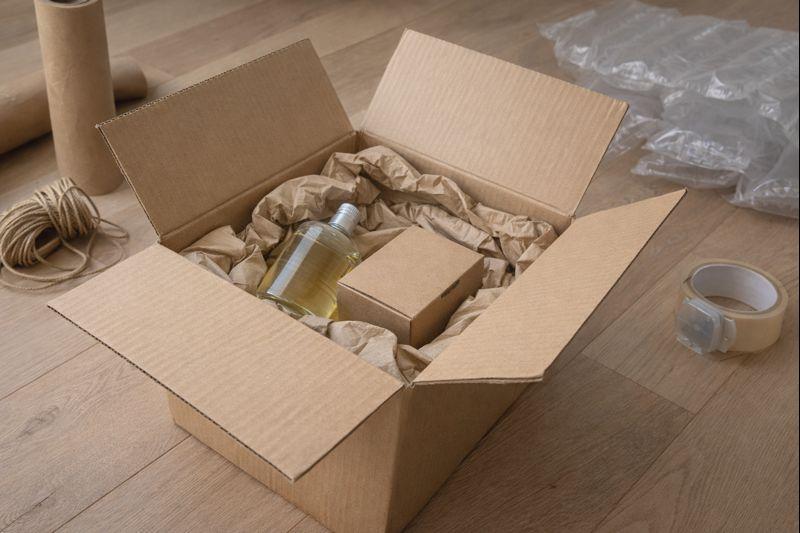
Dunnage Definition
Dunnage is any add-on used to stabilize cargo during transportation. Dunnage refers to the protective layers, separators, and supports that stop products from shifting, rubbing, tipping, or collapsing.
Most damage happens when cargo moves inside shipping container loads, mixed pallets, or LCL shipments. The goal of damage protection dunnage is to prevent those small movements that turn into big problems (crushing, scuffing, punctures, broken corners).
The best dunnage materials work like a system: fill voids, brace loads, and protect surfaces—without wasting time or budget.
What Dunnage Is Used for in the Shipping Process
In the shipping process, dunnage supports four jobs:
Fill empty spaces
When pallets don’t fit tightly, empty spaces appear. Smart dunnage materials help fill voids so cargo stays stable.
Create barriers and separation
You can create barriers between cartons, between pallets, or between cargo and container walls. This reduces rubbing and edge damage.
Shock absorption
Good shock absorption reduces vibration damage during trucking, rail transfers, and ocean voyages on cargo ships.
Surface and corner protection
A layer of protective material (like bubble wrap or paper pads) prevents abrasion—especially for finished goods and coated parts.
Dunnage vs Packaging (Why Packing Materials Aren’t Enough)
Packaging protects the product; dunnage protects the shipment.
- Protective packaging = the carton, crate, inserts, and retail pack.
- Dunnage materials = the extra packing materials used during the packing process and loading to stop movement in transit.
Even strong cardboard boxes can fail if loads shift inside a shipping container or if you stack incorrectly. That’s why proper dunnage is part of professional logistics—not an afterthought.
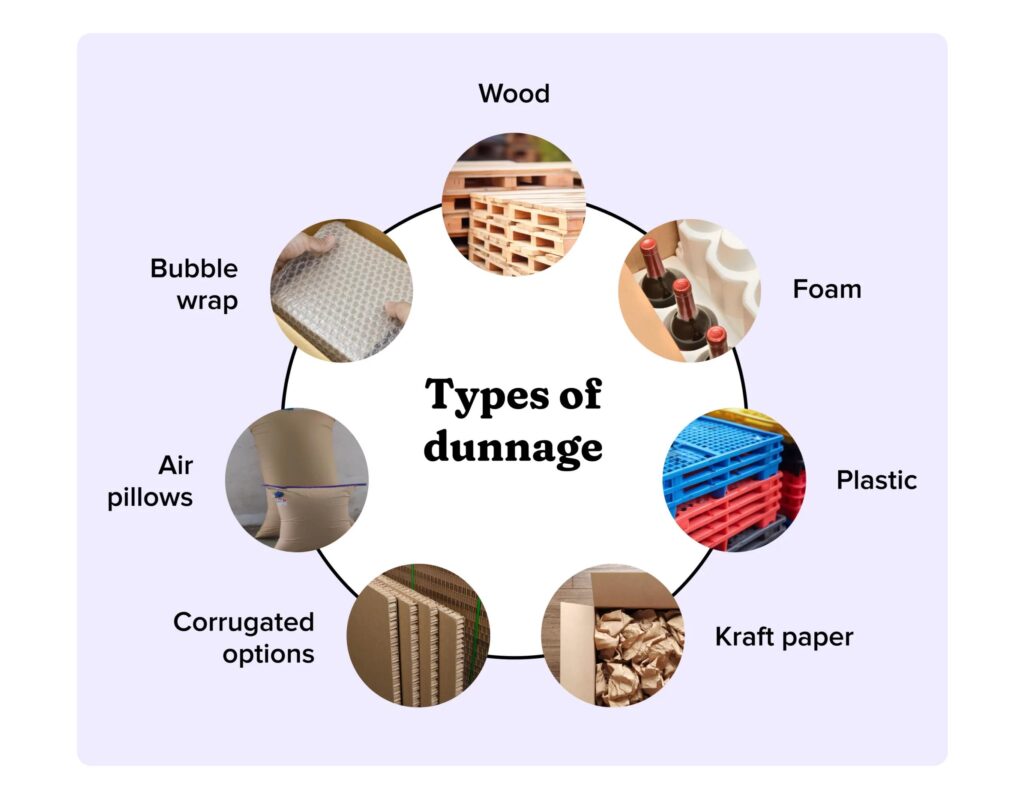
Common Dunnage Materials
Here are common dunnage materials you’ll see in daily operations:
- Paper: kraft paper, corrugated paper, recycled paper, crumpled sheets
- Air: air pillows, dunnage bags
- Foam and wrap: foam pads, foam dunnage, bubble wrap
- Loose fill: packing peanuts, paper fill
- Wood: blocks and bracing, including wood dunnage
- Plastics: plastic dunnage, reusable boards, solid plastics
These dunnage materials come in many forms and various materials depending on weight, fragility, moisture risk, and destination handling.
Types of Dunnage: The Most Used Dunnage Types in Modern Shipping
Choosing the right dunnage isn’t about adding “more padding”—it’s about matching the dunnage material to the risk (shock, vibration, abrasion, or shifting). Below is a practical map of the most common types of dunnage used today, and what each one is best at.
Paper Based Dunnage Materials
Paper-based dunnage materials are popular because they’re lightweight, flexible, and often recyclable—ideal for carton packing and mixed shipments.
- Kraft paper (void fill + wrapping)
A go-to for filling empty space and preventing scuffs. Use kraft paper to wrap items, separate products, or line pallet tops and layer breaks. It’s one of the easiest ways to reduce rubbing at low cost. - Corrugated paper (layer pads + separators)
Adds structure. Use corrugated pads between cartons, between layers, or under strapping points to reduce wear and compression damage—especially useful in LCL where different cargo may share space. - Recycled paper / crinkle paper / shredded cardboard
Great for quick cushioning and void fill. Works best when you can manage humidity and compression, since paper can lose performance if it gets damp or crushed.
Air Options: Air Pillows and Dunnage Bags
Air solutions are clean and fast, but they must be placed correctly to be effective.
- Air pillows (cartons + light cushioning)
Best for e-commerce and lightweight cartons. Place air pillows in void areas so products can’t shift during the shipping process. Some shippers reuse them in closed-loop lanes to reduce long-term shipping costs. - Dunnage bags (pallet gaps inside a shipping container)
Inflatable dunnage bags are designed to lock pallet rows in place inside a shipping container—especially when you can’t load wall-to-wall. For ocean freight, they’re one of the most effective options for stabilizing heavy voids quickly.
Foam Dunnage and Bubble Wrap
These are your best tools for surface protection and vibration control.
- Bubble wrap (abrasion + cushioning)
Ideal for delicate finishes, coated parts, and painted goods. Don’t expect bubble wrap alone to stop load movement—pair it with blocking, pads, or air fill to control shifting. - Foam dunnage (edges + vibration protection)
Use foam corners, sheets, or custom inserts when vibration is a real risk or when edge damage ruins resale value. Foam is especially useful for fragile or high-finish SKUs.
Loose Fill: Packing Peanuts (Including Biodegradable Options)
Loose fill is common in parcel shipping, but it has limits.
- Packing peanuts fill irregular gaps well, but can be messy and migrate if the carton isn’t well sealed. Use them for lightweight items, not heavy or sharp goods.
- Biodegradable packing peanuts offer a more sustainability-friendly option and can be a strong selling point for eco-focused customers.
Wood Dunnage (Blocking and Bracing)
Wood dunnage is the workhorse for heavy cargo and industrial exports. Use wood for:
- Blocking heavy bases
- Bracing tall crates
- Supporting uneven footprints
- Protecting cargo from forklift impact
It’s strong, but it adds weight and may require compliance (e.g., heat-treated wood) depending on trade lane rules.
Plastic Dunnage and Solid Plastics (Reusable and Clean)
Plastic dunnage is best when repeatability, cleanliness, and reuse matter.
Reusable boards, dividers, and edge guards made from solid plastics are common in automotive, electronics, and medical distribution. They resist moisture, hold shape, and keep load performance consistent—just make sure the cost makes sense based on your return cycle and reuse rate.
Explore more shipping guides:
- How to Import Construction Products and Materials from China
- How to Prepare a Material Safety Data Sheet (MSDS)
- How to Import Stainless Steel Sheets from China
- How to Import and Ship Lithium Batteries from China
- Guide to Importing and Shipping Packaging Machines from China
- Shipping Cost from China to Every Country
Proper Dunnage in a Shipping Container (Ocean Freight Best Practices)
A shipping container is a tough environment. During long-distance ocean freight, cargo faces constant vibration, slight tilting, and repeated compression, so “good enough” packing often turns into shifting, rubbing, and moisture damage. Here’s a clean, practical best-practice flow you can follow.
Step 1: Start with floor dunnage
Begin at the bottom. Floor dunnage (liners, anti-slip sheets, or base boards) helps prevent pallets from skating and keeps cartons off surfaces that may hold moisture or residue.
Best uses: cartons on pallets, mixed loads, humid seasons, older containers.
Step 2: Plan your pallet layout and stack pallets safely
Build a layout that minimizes empty space and keeps weight stable.
- Load heavy pallets first and keep weight balanced left-to-right.
- If stacking pallets, do it only when the bottom pallet and cartons are rated to carry the load and the stack is square and stable.
- Avoid “soft” SKUs (light cartons, weak corrugate) on the bottom—this is a common cause of crushed cartons and claims.
Step 3: Fill gaps and lock the load
Gaps create momentum. Once pallets can move, damage accelerates fast.
- For large voids (between pallet rows), dunnage bags are usually the most reliable way to lock the load.
- For small voids, use kraft paper, corrugated pads, or air pillows to reduce micro-movement and keep cartons tight.
Step 4: Create barriers to stop rubbing
Even if the load doesn’t shift much, cartons can still rub and wear through.
Use layer pads, sheets, or panels wherever contact is likely:
- between different products
- between cartons and container walls
- under strapping lines
Corrugated paper layer pads are a simple, low-cost barrier that works well in mixed loads.
Step 5: Add moisture strategy for ocean legs
Ocean containers often sweat. If your cargo is humidity-sensitive, plan for moisture control:
- leave small airflow gaps where possible
- use desiccants (and make sure cartons aren’t pressed tightly against damp walls)
- avoid loading damp cartons or pallets (this amplifies condensation)
When you combine load locking + anti-rub barriers + moisture control, you dramatically reduce damage risk, inspections, and delivery delays—this is what “proper dunnage” looks like in real ocean freight.
How to Choose the Right Dunnage Material
Choosing the right dunnage is not about buying the most stuff—it’s about using the right dunnage material for the risk.
Define your cargo risk
Ask:
- Is it heavy, sharp, or irregular?
- Are you shipping fragile items or sensitive items?
- Is surface finish critical?
For sharp or heavy items, use rigid blocking and strong separation—often wood dunnage or durable solid plastics.
Match dunnage materials to handling reality
In many lanes, your cargo gets re-handled. Choose dunnage materials that survive transfers.
- Parcel and cartons: air pillows, packing peanuts, kraft paper, bubble wrap
- Palletized export: dunnage bags, pads, corner boards, corrugated paper
- Heavy cargo: bracing with wood dunnage, separators, or engineered supports
Decide on one specific dunnage material (or a system)
A specific dunnage material is rarely enough by itself. Usually, you combine:
- void fill (paper or air)
- separation (pads, sheets)
- restraint (straps, bracing)
The best dunnage solutions are systems, not single items.
Confirm specific dimensions before ordering
For repeat loads, measure pallet widths, void spaces, and container geometry. Many failures happen when air bags, pads, or boards don’t match specific dimensions.
If your loads include very specific dimensions (odd machinery footprints or custom crates), consider custom dunnage or custom dunnage solutions to reduce risk and speed loading.
Validate “proper dunnage” with a quick test
After loading, do a shake-test mindset: if you can see movement, you don’t have proper dunnage.
Using the right dunnage and the right dunnage material reduces claims, rework, and surprise fees.
Dunnage for Fragile Items, Sensitive Items, and Medical Equipment
Different cargo types require different dunnage materials.
Fragile items and delicate electronics
For fragile items, use layers:
- surface wrap (bubble wrap)
- cushioning (foam dunnage or paper pads)
- void control (air pillows or paper)
For delicate electronics, keep anti-static requirements in mind and avoid uncontrolled loose materials that can cause contamination.
Sensitive Items: Finish, Hygiene, and Moisture Risk
For finish-sensitive or hygiene-sensitive products, prioritize clean and stable materials.
Good options:
- Sealed air pillows (low dust, easy handling)
- Reusable separators / dividers made from solid plastics (clean, consistent shape, moisture resistant)
- Corrugated pads as clean barriers between units or cartons
If moisture is a concern, add a simple ocean-proof strategy:
- keep cartons off container walls where possible
- use desiccants when needed
- avoid loading damp pallets/cartons
Medical Equipment Shipments
Medical equipment usually requires higher consistency and protection, especially for high-value or calibration-sensitive items.
Best practice setup:
- Structured separators (pads, panels, solid plastic dividers) to prevent contact damage
- Stronger corner and edge protection (corner boards, foam corners)
- Controlled cushioning (foam + pads, plus void control so nothing shifts)
For high-value medical equipment, a mixed system is common:
- foam for vibration + edges
- air for void control
- structured pads/panels for separation and stability
This is also where custom dunnage often makes sense—less movement, faster packing, fewer claims.
Shipping Costs: Cheap vs Expensive Dunnage Materials
Dunnage can feel like an extra line item, but it often reduces total shipping costs by preventing damage.
What makes dunnage “expensive”?
Some expensive dunnage materials include engineered foams, heavy-duty separators, and reusable systems made of solid plastics. These are often also the most expensive dunnage materials upfront.
However, the “real cost” depends on:
- damage rate and claim history
- rework, returns, and reputational loss
- re-handling delays at destination
When expensive dunnage materials are worth it
For high-value cargo, expensive dunnage materials can be the cheapest option overall. This is especially true for medical equipment, fragile finished goods, and export machinery.
When to stay simple
For stable SKUs in strong cartons, paper solutions like kraft paper, corrugated paper, and recycled paper can offer strong value with manageable shipping costs.
Warehouse Handling: Dunnage Racks and Reuse
If you use many dunnage materials, warehouse organization matters.
Dunnage racks
Dunnage racks keep paper, bags, and pads clean and accessible. When teams can grab the right item fast, they’re more likely to apply proper dunnage every time.
Reuse strategy
Some dunnage materials—especially plastic dunnage, solid plastics, and certain dunnage bags—can be reused if lanes are controlled. If your operation supports returns, reuse can cut shipping costs and waste.
Quick Dunnage Options Checklist
Use this checklist to select dunnage options during loading:
- Use dunnage materials to eliminate empty spaces
- Add separators to create barriers between cargo types
- Add shock absorption layers for long-distance routes
- Use dunnage bags for pallet gaps in a shipping container
- Use bubble wrap or foam dunnage for surface protection
- Use kraft paper/corrugated paper for layer pads and void fill
- Use wood dunnage for heavy bracing
- Use solid plastics or plastic dunnage for reusable, clean separators
- Document specific dimensions for repeat loads
- Confirm the right dunnage solution before sealing the container
This is how you consistently protect shipments, reduce breakage, and keep customers happy.
FAQs: What People Ask About Dunnage Materials
What is dunnage in shipping, and why do I need it?
What is dunnage in shipping? It’s the extra protective and stabilizing material that prevents movement, reduces vibration, and protects cargo in transit. You need it when voids, stacking pressure, or handling risk exists.
What are the types of dunnage I should know?
The most common types of dunnage include paper (like kraft paper and corrugated paper), air (air pillows and dunnage bags), wrap (bubble wrap), foam (foam dunnage), wood (wood dunnage), and reusable plastic systems (plastic dunnage and solid plastics).
Which common dunnage materials work best for fragile items?
For fragile items, combine bubble wrap, cushioning (foam or paper), and void fill (air pillows or paper). This mix helps protect fragile items and improves shock absorption.
Are packing peanuts still used?
Yes. Packing peanuts are still used for light cartons and odd shapes, and biodegradable packing peanuts are increasingly common.
What’s the best dunnage for a shipping container?
Inside a shipping container, the best dunnage materials are those that stop lateral movement: dunnage bags, anti-slip layers, and structured pads. Add paper or air pillows to handle smaller voids and protect corners.
Final Takeaway: The Right Dunnage Beats More Dunnage
Good logistics isn’t about adding random packing materials. It’s about choosing proper dunnage, using the right dunnage, and standardizing your dunnage solutions so every load ships the same way.
If you tell me your cargo type (cartons/pallets/crates), weight range, and whether it’s FCL/LCL, I can tailor a “container loading + dunnage materials” SOP that matches your lane and reduces damage.