

20ft 40ft Container Shipping Costs from China to France
- Verified & Reviewed · Last updated June 2026
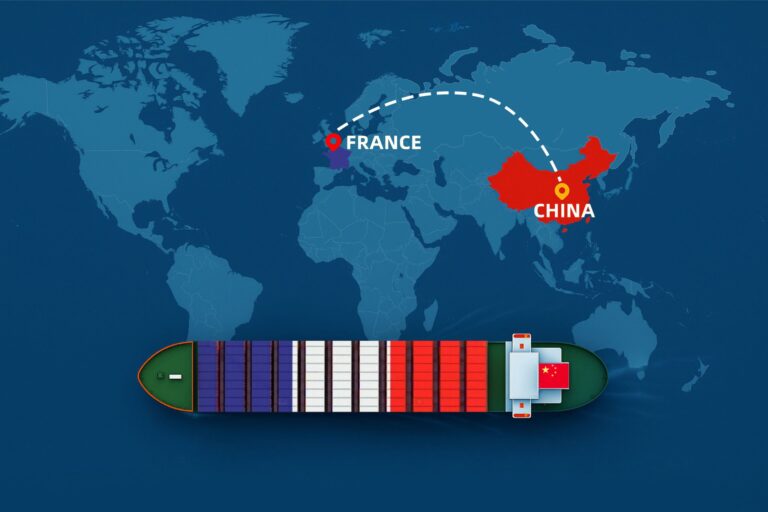
20ft 40ft Container Shipping Costs from China to France vary depending on sea freight rates, container size, shipping route, transit time, port congestion, and total destination charges.
This guide explains 20ft 40ft Container Shipping Costs from China to France, covering major French ports such as Le Havre, Marseille-Fos, and Dunkirk, and detailing what is included in container shipping quotes, including ocean freight, port handling, customs clearance, inland delivery, and optional door-to-door or DDP shipping services.
Shipping method / Mode
Transit time range
DDP / Door to Door
- Experienced China-based logistics specialists
10,000+ international shipments handled Global sea, air & DDP shipping solutions 24/7 shipment tracking & customer support
Table of Contents
How Much Does It Cost to Ship a Container from China to France?
The cost to ship a container from China to France depends on whether you use a 20ft container, 40ft container, or 40HQ container. A 20ft container is often used for smaller heavy cargo, while a 40ft or 40HQ container is better for large-volume goods that need more loading space.
As a general reference, sea freight shipping from China to France is usually priced by container type for FCL shipments. LCL sea freight is priced by cubic meter and is more suitable for smaller shipments that do not require a full container.
| Container Type | Average Price Range | Best For | Estimated Transit Time |
|---|---|---|---|
| 20ft Container | US$2,550–US$4,250 | Heavy cargo, machinery, tiles, hardware | 25–45 days |
| 40ft Container | US$3,050–US$5,850 | Furniture, retail goods, cartons, light industrial cargo | 25–45 days |
| 40HQ Container | US$3,300–US$6,200 | Bulky cargo, e-commerce goods, high-volume products | 25–45 days |
| LCL Sea Freight | US$80–US$180 per cubic meter | Smaller shipments and trial orders | 30–50 days |
These average price ranges usually refer to base ocean freight or port-to-port container transport. Door-to-door shipping, customs clearance, cargo insurance, destination charges, import fees, and inland delivery in France will increase the final shipping costs.
20ft Container Shipping Cost from China to France
A 20ft container from China to France usually costs US$2,550 to US$4,250 by sea freight. This container size is ideal for compact cargo with higher weight, especially when the goods do not need the full volume of a 40ft container.
A 20ft container is often selected for machinery, tools, hardware, stone products, ceramic tiles, spare parts, metal goods, industrial materials, and other dense cargo. It offers a lower total freight cost than a 40ft container, but the average price per cubic meter may be higher if the container is not fully used.
A 20ft container is suitable when:
Your goods are heavy but not very bulky
Your cargo volume is around 20–28 cubic meters
You want better cargo control than LCL sea freight
You need a full container but do not require 40ft space
Your shipment has a clear delivery plan and fixed container load
For smaller heavy cargo, a 20ft container can be a cost effective container shipping service from China to France.
40ft and 40HQ Container Shipping Cost from China to France
A 40ft container from China to France usually costs US$3,050 to US$5,850 by ocean freight. A 40HQ container usually costs slightly more, but it provides extra height and more usable space for bulky goods.
Although a 40ft container has a higher total shipping cost than a 20ft container, it often provides a lower average price per cubic meter. This makes it a better option for larger shipments, especially when the cargo volume is high and the goods are lightweight or medium-weight.
A 40ft or 40HQ container is commonly used for:
Furniture and home products
Textiles and garments
Packaging materials
E-commerce inventory
Retail products
Lighting products
Electronics and appliances
Large commercial cargo
For many importers, full container load shipping is more efficient than LCL because the entire container is used for one shipment. This reduces consolidation handling, lowers cargo mixing risk, and gives more predictable delivery time.
Main Sea Freight Routes from China to France
The shipping route has a direct impact on freight rates, transit time, port handling, and the total cost to ship. Most ocean container shipments depart from major ports in China and arrive at Le Havre, Marseille-Fos, Dunkirk, or other destination ports in France.
The best route usually depends on your supplier’s location in China and your final destination in France. Choosing the closest suitable departure port can reduce domestic trucking costs and help avoid unnecessary handling fees.
Major Ports in China
China has several major hubs for container shipping and ocean freight. The right port depends on where your supplier is located and which carrier has suitable vessel space.
Common departure ports include:
Guangzhou Nansha
Qingdao
Xiamen
Tianjin
Shanghai and Ningbo are often used for cargo from eastern China. Shenzhen and Guangzhou are common for suppliers in Guangdong. Qingdao and Tianjin are practical options for factories in northern China.
Major Ports in France
France has several important destination ports for container transport. Le Havre is commonly used for cargo going to Paris and northern France, while Marseille-Fos is suitable for southern France and Mediterranean distribution.
Common destination ports include:
Le Havre
Marseille-Fos
Dunkirk
Rouen
Montoir-de-Bretagne
If your final destination is Paris, Lyon, Lille, Toulouse, Bordeaux, Marseille, Nantes, or another inland city, the total shipping costs will also include inland trucking, destination charges, customs clearance, and possible unloading fees.
Sea Freight Transit Time from China to France
Sea freight from China to France usually takes 25 to 45 days from port to port. Door-to-door delivery normally takes longer because it includes supplier pickup, export customs, port handling, ocean freight, customs clearance in France, and final delivery.
Transit time can change depending on carrier schedules, port congestion, weather, port strikes, transshipment, customs inspection, and peak season demand. During busy periods, delivery time may be longer than normal.
| Shipping Service | Estimated Transit Time |
|---|---|
| Port-to-port sea freight | 25–45 days |
| Door-to-door sea freight | 35–55 days |
| LCL sea freight | 35–55 days |
| Rail transport | 18–28 days |
| Air freight | 3–10 days |
| Express shipping | 3–7 days |
FCL is usually faster and more predictable than LCL because the container does not need to be consolidated with other shipments. LCL may involve extra warehouse handling at both origin and destination.
FCL vs LCL Sea Freight from China to France
When shipping goods from China to France, many importers need to choose between full container load and LCL sea freight. The right option depends on cargo volume, cargo value, budget, and required delivery time.
Full container load is usually better for large shipments because your goods use the entire container. LCL sea freight is better for smaller shipments because you only pay for the space you use.
When Full Container Load Is Better
Full container load is suitable when your cargo volume is large enough to use a 20ft, 40ft, or 40HQ container. Even if the container is not completely full, FCL can still be more cost effective when the cargo value is high or when you want safer handling.
FCL is a good choice when:
You need the entire container for your goods
Your cargo volume is large or heavy
You want faster port handling
You want to reduce cargo mixing risk
You need more predictable delivery time
For regular importers, FCL often provides better control over the shipping process and lower average price per unit.
When LCL Sea Freight Is Better
LCL sea freight allows smaller shipments to share one ocean container with other cargo. It is usually suitable for shipments from 1 cubic meter to around 12 or 15 cubic meters.
LCL can lower the entry cost for smaller importers, but it may involve more handling, longer transit time, and additional warehouse fees. If your shipment is close to a full 20ft container, it is worth comparing LCL costs with FCL container rates.
LCL is useful when:
Your cargo volume is too small for a full container
You are testing a new supplier
You need a lower cost for small orders
Delivery time is flexible
You can accept extra consolidation handling

What Affects Shipping Costs from China to France?
Shipping costs vary widely depending on several factors. Two shipments using the same container size may still have different freight rates because the cargo details, shipping company, season, route, and destination country requirements are different.
Understanding these key factors helps importers estimate freight cost more accurately and avoid hidden charges.
Container Size and Container Type
Container size is one of the biggest cost factors. A 20ft container has a lower total price, while a 40ft or 40HQ container usually offers better value per cubic meter.
Standard dry shipping containers are cheaper and easier to book. Special container types, such as refrigerated containers, open-top containers, flat racks, and dangerous goods containers, cost more because they require special equipment and handling.
Cargo Details and Cargo Value
Cargo details affect container loading, customs clearance, cargo insurance, and transport risk. Heavy cargo, oversized cargo, fragile products, batteries, liquids, branded goods, and high-value cargo may require special handling or extra shipping documents.
Important cargo details include:
Product name and HS code
Cargo volume in cubic meter
Gross weight and package quantity
Cargo value
Packaging method
Loading address in China
Final destination in France
Accurate cargo information helps the logistics partner calculate the freight cost correctly and avoid customs delays.
Fuel Prices and Market Demand
Fuel prices are a major variable expense in container shipping. When bunker fuel prices rise, many carriers increase fuel surcharges, which directly affects ocean freight rates and total shipping costs.
Market demand also has a strong impact. During peak seasons, shipping rates may increase by 30% to 50%, especially before Chinese New Year, summer restocking, and year-end holiday demand.
Destination Charges and Handling Fees
Base ocean freight does not represent the full shipping cost. Importers also need to pay destination charges, terminal handling fees, customs clearance fees, import fees, and inland delivery costs.
Terminal handling fees may range from US$150 to US$400 per container, depending on port, terminal, carrier, and service type. These additional fees should be checked before booking because they can significantly affect the final cost.
Customs Clearance and Import Duties in France
Once your container reaches a French port, the next critical step in the international shipping process is customs clearance. Understanding how the French system handles imports helps avoid delays, penalties, and unnecessary costs.
How Customs Clearance Works in France
All international shipments arriving in France must be declared to french customs (Douane Française). This process includes the submission of required documentation and the payment of any applicable import duties, taxes, and fees.
Key documents required for customs clearance:
Commercial invoice: Must clearly state the goods description, value, currency, incoterms, and consignee details
Packing list: Lists the quantity, weight, and volume of each item
Bill of lading (B/L): Issued by the carrier, proving shipment
Certificate of origin (if applicable): May be needed for preferential duty treatment
The customs clearance process is typically handled by your freight forwarder or customs broker, who will submit these documents electronically through France’s online clearance system (Delta G or Delta X).
Calculating Import Duties and VAT
France, as part of the EU, applies import duties based on the product’s HS Code, country of origin, and customs value (CIF = cost + insurance + freight). On top of that, a 20% VAT is generally applied to most goods unless a specific exemption applies.
Example:
- CIF value: $10,000
- Import duty (e.g. 5%): $500
- Subtotal: $10,500
- VAT (20%): $2,100
- Total payable to French customs: $2,600
Importers can recover VAT if they are VAT-registered businesses within the EU.
DDP Shipping Option
To simplify compliance, many importers prefer Delivered Duty Paid (DDP) shipping, where the seller or freight forwarder handles customs clearance, duty payments, and final delivery. While DDP services include a service fee, they reduce risk and administrative burden.
Door-to-Door Shipping and DDP Services from China to France
For importers seeking simplicity and peace of mind, door-to-door shipping and Delivered Duty Paid (DDP) services offer a complete logistics solution — covering everything from factory pickup in China to final delivery in France.
What Is Door-to-Door Shipping?
Door-to-door shipping refers to a full-service logistics model where the freight forwarder manages the entire shipping process, including:
Pickup from supplier or warehouse in China
Export customs clearance
Ocean freight or rail freight booking
Import customs clearance in France
Delivery to the consignee’s warehouse or destination
This service eliminates the need for importers to coordinate with multiple logistics providers, customs agents, or trucking companies. It’s ideal for first-time shippers or businesses with limited supply chain experience.
DDP: Delivered Duty Paid Shipping to France
DDP shipping takes things a step further. In this model, the seller or freight forwarder assumes all responsibility for the shipping goods, including:
Shipping fees
Import duties and taxes
Customs clearance
Final-mile delivery in France
The buyer pays a flat rate, and the cargo arrives fully cleared with no hidden surprises. This is especially useful for eCommerce or B2B buyers looking to avoid regulatory complexity.
Tonlexing offers reliable door-to-door and DDP shipping services from all major Chinese ports to France, helping clients manage every aspect of their international shipment with full transparency and support.
Who Should Use Door-to-Door or DDP?
These services are ideal if:
You’re new to international trade
You want to avoid dealing with french customs procedures
You need timely delivery without local logistics coordination
You want predictable, all-inclusive pricing with no unnecessary expenses
Choosing a Reliable Freight Forwarder for France Imports
A trustworthy freight forwarder is the cornerstone of successful international trade. Whether you’re moving a single 20ft container or arranging frequent container shipping services from China to France, working with a skilled partner can save time, reduce costs, and ensure compliance.
Why the Right Freight Forwarder Matters
The logistics process from China to France involves multiple steps — export handling, booking, customs clearance, inland transportation, and final delivery. A reliable freight forwarder helps coordinate the entire shipping process, ensuring nothing is missed and all paperwork is properly handled.
Benefits of working with a vetted logistics provider:
Access to discounted shipping rates
Guidance on documentation and international shipping regulations
Real-time cargo tracking
Proactive delay management
Dedicated customer service team
Qualities of a Good Freight Forwarder
When selecting a freight forwarding company, look for:
Proven experience in container shipping to France
Solid track record with shipping companies and customs brokers
Transparent pricing with full breakdown of transportation costs
Multilingual support (Chinese/French/English)
Options for door to door shipping, DDP, and rail freight if needed
Tonlexing is an experienced freight forwarder specializing in shipments from China to France. We handle FCL, LCL, DDP, and door-to-door logistics, offering customized solutions for small businesses and enterprise clients alike.
Frequently Asked Questions
How much does it cost to ship a container from China to France?
The cost to ship a container from China to France usually ranges from US$2,550 to US$4,250 for a 20ft container and US$3,050 to US$5,850 for a 40ft container by sea freight. The final price depends on container size, shipping route, fuel prices, port congestion, customs clearance, and destination charges.
How much does it cost to ship a 20ft container from China to France?
Shipping a 20ft container from China to France usually costs US$2,550 to US$4,250. It is suitable for heavy but compact cargo such as machinery, tools, hardware, tiles, and industrial goods.
Is sea freight cheaper than air freight from China to France?
Yes. Sea freight is usually much cheaper than air freight for large shipments and full container load cargo. Air freight is faster, but air freight costs are much higher and are mainly used for urgent or high-value goods.
How long does sea freight take from China to France?
Sea freight from China to France usually takes 25 to 45 days port to port. Door-to-door shipping may take 35 to 55 days, depending on pickup location, carrier schedule, customs clearance, and final delivery address.
What is the cheapest way to ship goods from China to France?
For large shipments, sea freight is usually the cheapest and most cost effective option. For smaller shipments, LCL sea freight may be cheaper because you only pay for the space you use. For urgent shipments, air freight or express shipping may be better despite higher costs.
Related Logistics Guides
Useful freight, customs and importing resources related to this shipping guide.

Related Guide
Shipping Cost from China to France (2026 Guide)
Shipping Cost from China to France (2026 Guide) Verified & Reviewed · Last updated June 2026 Shipping cost from China to France typically starts...
Read guide →
Related Guide
How Long Does It Take to Ship from China to France?
France is one of the largest import markets in Europe, and trade with China has been growing rapidly over the last two decades. Whether you are a...
Read guide →
Related Guide
Sea Freight from China to France
Sea Freight from China to France Verified & Reviewed · Last updated April 2026 Sea freight from China to France is one of the most practical ship...
Read guide →
Useful Resource
Air Freight from China to France
If you’re looking for a fast and reliable way to transport goods from China to France, air freight is one of the most efficient international shi...
Learn more → Useful Resource DDP Shipping from China to FranceDDP Shipping from China to France Verified & Reviewed · Last updated June 2026 DDP shipping from China to France is an all-inclusive door-to-door...
Learn more →