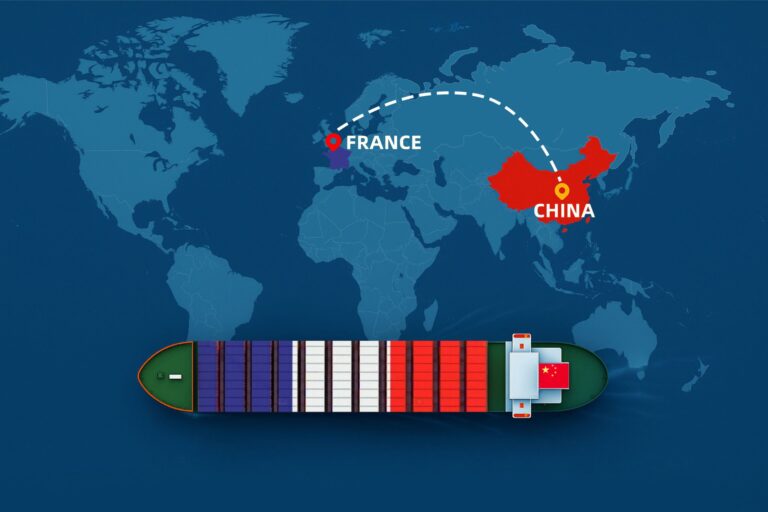


Freight Forwarder from China to France
- Verified & Reviewed · Last updated April 2026
Freight Forwarder from China to France services help importers manage shipping costs, transit times, customs clearance, and door-to-door delivery more efficiently.
This guide explains how Tonlexing supports shipping from China to France, covering sea freight, air freight, rail freight, DDP shipping, and customs clearance. It also outlines shipping costs, transit time, and how to choose the right freight solution for different types of cargo.
Freight forwarding service
Transit time & costs
DDP / Door to Door
- Experienced China-based logistics specialists
10,000+ international shipments handled Global sea, air & DDP shipping solutions 24/7 shipment tracking & customer support
Table of Contents
Why Work with a Freight Forwarder from China to France
When shipping from China to France, importers often face several linked tasks at once. The supplier may be inland in China, the cargo may need consolidation before export, and the shipment may move by sea freight, air freight, rail freight, or a door-to-door solution. After arrival in France, customs clearance, duties, VAT, and inland delivery still need to be handled correctly.
At Tonlexing, we help importers simplify this process by coordinating pickup, export handling, freight booking, customs clearance, and final delivery under one shipping plan. This reduces communication gaps, improves shipment visibility, and helps businesses avoid unnecessary delays.
A professional freight forwarder is especially valuable when:
cargo comes from multiple suppliers
the shipment includes bulky or high value goods
delivery timing is important
customs clearance may be more complex
the importer wants better control over overall cost
For businesses importing regularly into France, Tonlexing is not just a freight booking provider. We support the full shipping process with practical logistics solutions designed for stable delivery and better cost control.
How to Choose the Best Freight Forwarder from China to France
Choosing a forwarder based only on the cheapest quote often creates problems later. The better approach is to evaluate route knowledge, service scope, pricing transparency, and customs capability.
Experience with China–France Shipping
Not every provider handles China to France shipping with the same depth of experience. A forwarder that regularly manages cargo between China and France is more likely to understand transit patterns, customs expectations, common delivery issues, and realistic timing.
This matters even more when the shipment includes industrial equipment, electrical equipment, branded products, high value shipments, or commercial cargo with compliance requirements.
Transparent Pricing and Additional Fees
A strong quotation should show more than the base freight rate. It should explain what is included, what is excluded, and what additional fees may arise later.
Importers should check whether the quote covers supplier pickup, export handling, main freight transportation, customs clearance, duties and taxes if applicable, local delivery, and possible storage or special handling costs. A good provider helps you compare the overall cost, not just the first number on the quote.
Customs Clearance Capability
For France shipping, customs knowledge is essential. A forwarder that understands customs clearance, product descriptions, HS code handling, and local requirements can help avoid unnecessary delays.
If the provider cannot clearly explain how French customs works, that is usually a warning sign.
Communication and Door-to-Door Support
Good service is not only about transport booking. It also depends on communication quality during the shipment. Importers should look for a provider that replies clearly, checks details carefully, and can support door to door service when needed.
This is especially useful for first-time importers and small businesses that want one team to manage the shipment from pickup to final delivery.
Shipping Methods from China to France
There is no single best shipping method for every shipment. The right solution depends on cargo volume, urgency, product type, budget, and delivery requirements.
For most importers, the main shipping modes are sea freight, air freight, rail freight, multimodal transport with road freight support, and express or door-to-door shipping.
Sea freight is usually the first choice for larger commercial cargo and goods where a lower cost matters most. Air freight is more suitable for urgent shipments and air cargo with higher value or tighter delivery deadlines. Rail freight often sits between sea and air in terms of speed and cost. Road freight usually supports pickup, inland transfer, or final delivery.
Sea Freight from China to France
For many importers, sea freight from China to France is the most practical and cost-effective option. It is particularly suitable for heavy cargo, bulky goods, regular B2B shipments, and products where freight cost needs to stay under control.
Sea freight supports many cargo categories, including consumer products, machinery, packaging materials, industrial equipment, and electrical equipment.
FCL vs LCL Shipping
Sea freight usually comes in two main forms: FCL shipping and LCL shipping.
FCL shipping means one shipper books a full container. This is often the better choice for larger shipments, stable cargo volumes, and importers that want more handling control. A full container load can reduce cargo mixing and improve predictability.
LCL shipping means the cargo shares a shipping container with other shipments. An LCL shipment is often suitable for smaller orders that do not justify booking an entire container.
In general:
choose FCL shipping when volume is large or cargo needs more control
choose LCL shipping when the order is smaller and flexibility matters more
When Sea Freight Is the Most Cost-Effective Option
Sea freight is usually the best fit when the shipment is heavy, bulky, non-urgent, or planned in advance. It is often the most cost-effective option for importers focused on long-term cost efficiency rather than speed.
Sea freight rates are influenced by route demand, seasonality, carrier space, updated sea freight rates, and fuel prices. The best shipping route is not always the one with the lowest basic rate. In many cases, it is the one that offers better stability and fewer hidden costs.
Air Freight from China to France
Air freight from China to France is the preferred solution for urgent shipments, spare parts, high value shipments, promotional launches, and goods that cannot wait for sea transit.
It is commonly used for electronics, urgent commercial stock, product samples, fashion replenishment, replacement parts, and other time-sensitive cargo.
When Air Freight Makes Sense
Air freight is the right choice when speed matters more than the lowest transport cost. It is often used by importers that need shorter transit time, faster stock replenishment, and more predictable arrival planning.
For some businesses, air freight is not used for the entire order. Instead, part of the shipment moves by air and the rest moves by sea. This can be one of the most practical customized solutions.
Major Air Cargo Gateways and Cost Factors
China has several major air cargo hubs, including Beijing Capital International Airport and Shanghai Pudong International Airport. These airports play an important role in international trade and support a large share of outbound air cargo to Europe.
Air freight pricing is usually affected by chargeable weight, cargo dimensions, airline space, route structure, scheduled flights, fuel surcharges, and changing fuel prices. For urgent shipments, some forwarders also offer DDP air freight, though this depends on cargo type and destination delivery requirements.
Rail Freight and Road Freight to France
Rail freight from China to France can be a useful middle option for importers that need a balance between speed and cost. It usually sits between sea freight and air freight in both transit time and price.
Rail transport is often considered when sea freight is too slow, air freight is too expensive, and the importer wants a practical balance between speed and lower cost.
Road freight is usually not the main long-haul solution from China to France, but it still matters in many shipments. It may be used for factory pickup, inland transfer, or final delivery after customs clearance in France. On the destination side, terms such as truck load and full truck load may matter for cargo moving to warehouses, project sites, or multiple commercial addresses.
Door-to-Door Service and DDP Shipping from China to France
Many importers do not want to coordinate factories, carriers, customs brokers, and delivery providers separately. That is why door to door service is one of the most requested options in France shipping.
A strong door shipping solution normally includes:
factory pickup in China
export handling
main transport
import coordination
customs clearance
last-mile delivery
What Door-to-Door Service Includes
Door-to-door service is designed to simplify the shipment for the buyer. Instead of handling each stage separately, the importer works with one provider that manages the flow from start to finish.
This is especially useful for e-commerce sellers, small and medium importers, first-time buyers, and companies without a dedicated logistics department.
When DDP Shipping Is the Right Choice
DDP shipping is often attractive for buyers that want a simpler import process. Under Delivered Duty Paid arrangements, the provider manages transport and the agreed import structure so the buyer receives a more streamlined delivery experience.
DDP can make sense when the importer wants:
predictable landed cost
fewer operational steps
simpler destination handling
less direct involvement in customs procedures
At the same time, DDP is not always the best fit. Some companies prefer to pay duties and VAT themselves for accounting or compliance reasons. A reliable forwarder should explain whether Delivered Duty Paid, standard door-to-door, or another structure is more suitable.
Shipping Costs from China to France
Shipping costs from China to France depend mainly on the shipping method, cargo volume, urgency, and final delivery requirements. In most cases, sea freight offers the lowest cost for large shipments, while air freight and express shipping are better for urgent cargo.
Sea freight is usually the most cost-effective option for container shipments and heavy goods. Current reference rates are about:
20GP: USD 1,600–2,100
40GP / 40HQ: USD 2,800–3,500
LCL: around USD 30/CBM
Typical sea freight transit time is around 25–45 days.
Air freight is faster but more expensive. Current reference levels are about:
Over 1,000 kg: around USD 5.55/kg
Under 500 kg: around USD 4.00–10.00/kg
Typical air freight transit time is around 5–7 days.
Rail freight is a middle option between sea and air in both cost and speed. Current reference rates are about:
20GP: USD 3,000–5,000
40GP / 40HQ: USD 6,000–7,000
Typical rail freight transit time is around 12–16 days.
Express shipping is mainly used for samples and small parcels:
Up to 0.5 kg: EUR 50–100
Up to 5 kg: EUR 150–300
DDP express: around USD 10.5/kg
The final cost may also be affected by fuel surcharges, customs clearance, duties, VAT, and last-mile delivery in France.
Shipping Methods Comparison
| Method | Best For | Transit Time | Cost Level |
|---|---|---|---|
| Sea Freight | Heavy cargo and large-volume shipments | 25–45 days | Low |
| Air Freight | Urgent and high-value cargo | 5–10 days | High |
| Rail Freight | Cargo needing balanced speed and cost | 15–25 days | Medium |
| DDP Shipping | Buyers wanting a simpler shipping process | Depends on mode | Medium to High |
Transit Time from China to France
Transit time depends on the shipping method, origin city, customs handling, final delivery address, and whether the service is port-to-port or door-to-door.
In general:
express shipping is the fastest
air freight is much faster than sea freight
rail freight is a middle-speed option
sea freight takes longer but often offers better cost performance for large shipments
Transit can also change because of customs inspections, route congestion, carrier schedules, incomplete shipping documents, delivery appointments, and seasonal pressure.
A shipment to Paris, Lyon, Marseille, Lille, or other major cities in France may have different timing depending on the entry point and inland delivery arrangement.

Customs Clearance in France
For many importers, customs clearance is the most sensitive stage of the shipment. Even when transport goes smoothly, the cargo can still be delayed if customs information is incomplete or inconsistent.
France, like the rest of the European Union, requires proper import procedures. Importers should pay close attention to customs duties, VAT, product classification, and any regulatory requirements that apply to the goods.
Key Customs Requirements in France
A forwarder handling France imports should understand French customs requirements in practical terms. This includes:
correct product descriptions
HS code alignment
invoice accuracy
importer details
tax-related information
compliance requirements for regulated goods
For some products, especially industrial equipment or electrical equipment, document review needs to be more careful before departure.
Shipping Documents and Common Clearance Issues
Typical shipping documents for France imports include:
commercial invoice
packing list
bill of lading or air waybill
HS code information
consignee and importer details
additional compliance documents when required
Many clearance problems start with vague cargo descriptions, inconsistent quantities, missing values, or invoice details that do not match the actual shipment. Good forwarders help with navigating customs by checking documentation before cargo departure.
What Goods Commonly Ship from China to France
The China–France route supports a broad range of commercial cargo. Common examples include consumer goods, packaging materials, machinery parts, furniture, industrial equipment, and electrical equipment.
In practice, shipping mode often depends on the cargo itself:
bulky and lower-value goods usually fit sea freight
urgent commercial goods may move by air freight
medium-speed stock movements may fit rail freight
high value shipments often require stronger timing and document control
An experienced forwarder adds value by matching the shipping method to the cargo rather than using the same plan for every shipment.
France as a Gateway to the European Market
France is not only a major import destination. It is also an important gateway into the European market. Some businesses import into France and then distribute cargo to neighboring countries or other parts of the European Union.
This makes France attractive for companies that want regional access, especially those serving wholesalers, distributors, and B2B buyers across European countries. France can also be strategically useful for routes linked to southern Europe and connected inland markets.
In this context, logistics planning becomes more than a France-only decision. The shipment may be entering France as the destination country, but the commercial plan may involve wider regional distribution and broader global trade operations.
How the Shipping Process Works Step by Step
Importers often want to understand how the shipment actually moves in practice. While details vary by cargo type and service model, the shipping process usually follows a clear sequence.
From Supplier Pickup to Export Handling
The process starts when the cargo is ready at the supplier in China. At this stage, the forwarder may confirm dimensions, packing details, cargo volume, and pickup timing. If goods come from more than one supplier, consolidation may be arranged.
Once cargo is ready, the forwarder handles booking, pickup, and export-side coordination. This may include local trucking, warehouse handling, export filing, and preparation of the required shipping documents.
Main Transport, Customs Clearance, and Final Delivery
After export handling, the cargo moves by sea, air, rail, or a combined freight transportation plan. Once the goods arrive in France, import-side processing begins.
This stage may include:
document review
customs clearance
duty and tax handling
local handling
final delivery to the consignee
If the shipment moves under a door service or DDP arrangement, the buyer usually has fewer direct operational steps to manage.
Frequently Asked Questions
How do I choose a freight forwarder from China to France?
Look for a provider with real China–France route experience, transparent pricing, customs clearance capability, clear communication, and flexible service options such as sea freight, air freight, rail freight, and door-to-door shipping.
What is the cheapest shipping method from China to France?
For most commercial cargo, sea freight is usually the cheapest option. LCL shipping may work for smaller volumes, while FCL shipping is often better for larger shipments that can use a full container load.
How long does shipping from China to France take?
Transit time depends on the shipping method, origin city, customs handling, and final delivery arrangement. Air freight is much faster than sea freight, while rail freight usually offers a middle option.
Is DDP shipping available from China to France?
Yes, many providers offer DDP shipping from China to France. It can be useful for buyers who want a simpler delivery structure and more predictable landed cost, but the cargo type and import setup should always be checked first.
What documents are needed for customs clearance in France?
The main shipping documents usually include a commercial invoice, packing list, transport document, HS code details, and importer or consignee information. Some products may also need extra compliance documents.
Related China–France Shipping Guides
Related Logistics Guides
Useful freight, customs and importing resources related to this shipping guide.
Related Guide
Shipping Cost from China to France (2026 Guide)
Shipping Cost from China to France (2026 Guide) Verified & Reviewed · Last updated June 2026 Shipping cost from China to France typically starts...
Read guide →
Related Guide
Sea Freight from China to France
Sea Freight from China to France Verified & Reviewed · Last updated April 2026 Sea freight from China to France is one of the most practical ship...
Read guide →
Related Guide
Air Freight from China to France
If you’re looking for a fast and reliable way to transport goods from China to France, air freight is one of the most efficient international shi...
Read guide →
Useful Resource
DDP Shipping from China to France
DDP Shipping from China to France Verified & Reviewed · Last updated June 2026 DDP shipping from China to France is an all-inclusive door-to-door...
Learn more → Useful Resource How Long Does It Take to Ship from China to France?France is one of the largest import markets in Europe, and trade with China has been growing rapidly over the last two decades. Whether you are a...
Learn more →