

Shipping containers play a crucial role in international trade between China and Ghana. As Ghana continues to expand its economy and strengthen commercial ties with China, more businesses rely on international shipping for construction materials, electronics, machinery, textiles, and commercial cargo. Full container load (FCL) shipping using 20ft and 40ft containers has become the most cost-effective solution for medium to large shipments, providing a stable transportation mode that supports Ghana’s rising import demand.
The growth of global demand, seasonal demand fluctuations, and changes in fuel prices have a significant impact on container shipping costs. Importers shipping from major Chinese ports such as Shanghai Port, Ningbo, Shenzhen, and Qingdao must understand how shipping expenses vary depending on the chosen shipping route, destination port in Ghana, and logistics processes involved. For many businesses, finding a top-tier logistics partner or experienced freight forwarder is essential for smooth operations, accurate transit times, and a predictable shipping process.
This guide explains everything importers need to know about 20ft & 40ft container shipping costs from China to Ghana, including real freight rates, loading and shipping containers, container types, customs clearance fees, and how to reduce container shipping costs through smart planning.
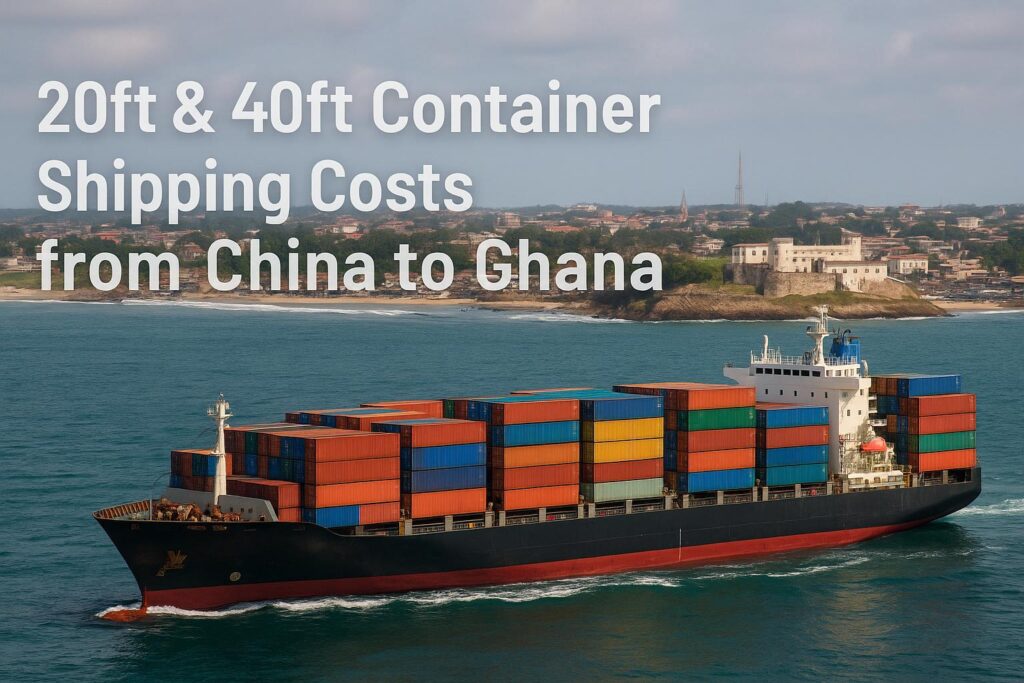
How Much Does It Cost to Ship a 20ft or 40ft Container from China to Ghana?
Shipping costs between China and Ghana can vary depending on fuel prices, shipping lines, container space availability, port congestion, and seasonal market changes. While freight rates change month to month, the following price ranges represent the most accurate 2025 estimate for FCL container shipping rates to Ghana Tema Port and Takoradi Port.
Estimated 2025 Container Shipping Costs (FCL)
| Container Type | Estimated Cost Range (USD) | Notes |
|---|---|---|
| 20ft Standard Shipping Container (20GP) | $1,550 – $2,550 | Common for small and medium commercial cargo |
| 40ft Standard / High Cube Container (40GP / 40HQ) | $1,650 – $3,850 | Ideal for large shipments and bulk cargo |
These prices reflect the average cost to ship across major shipping companies and shipping lines operating between China and West Africa.
Why 40ft Containers Are More Cost Efficient
A 40ft container costs only 20–35% more than a 20ft container, yet provides double the container load capacity. This makes it a more cost-efficient option when transporting containers with bulky items, heavy machinery, or high-volume commercial shipments.
Additional Expenses to Consider
When calculating total transportation costs, importers must also account for:
- Terminal handling charges (THC)
- Export documentation fees
- Customs clearance fees at destination
- Cargo insurance or insurance costs
- Handling fees for loading and unloading containers
- Fuel surcharges imposed by shipping lines
These extra shipping expenses often influence the final container shipping costs, especially during peak international trade seasons.
How Long Does It Take to Ship a Container from China to Ghana?
The average transit times for FCL sea freight depend on the shipping route, the carrier, and whether the container is transshipped at a major hub such as Singapore, Port Klang, or Jebel Ali.
Typical Transit Times → China to Ghana
| Route | Transit Time |
|---|---|
| China → Ghana Tema Port | 28–38 days |
| China → Takoradi Port | 30–42 days |
Transit times can increase due to port congestion, seasonal demand spikes, customs inspections, or delays during loading and unloading containers.
FCL vs. LCL Transit Time
Full container load (FCL) shipping is faster and more predictable because:
- The same container is sealed at origin and opened only at the destination port.
- There is no need to consolidate shipments with other importers.
- There is lower risk of delays caused by mixed cargo handling.
This makes FCL the preferred option for businesses with urgent commercial cargo or time-sensitive shipments.
Main Shipping Routes and Major Ports for China → Ghana
Shipping containers from China typically depart from major Chinese ports such as:
These ports offer frequent ships operated by global shipping companies, ensuring stable access to container space and reliable schedules.
Ghana’s Main Destination Ports
- Ghana Tema Port – The primary hub for international shipments and the busiest port in West Africa.
- Takoradi Port – Ideal for bulk cargo, construction materials, and shipments destined for western Ghana.
The chosen shipping route and destination port can affect shipping costs, transit time, and total logistics expenses.
What Affects Container Shipping Costs from China to Ghana?
Several factors influence container shipping costs, including:
Fuel Prices & Fuel Surcharges
As fuel represents a major portion of ocean freight costs, changes in oil prices directly affect shipping rates.
Container Space Availability
During peak seasons, demand for shipping containers increases, leading to higher rates.
Shipping Lines and Route Efficiency
Different carriers offer different rates depending on routing and transit times.
Port Handling & Terminal Charges
Charges for loading and unloading containers can vary at both origin and destination ports.
Customs Clearance Requirements
Additional customs clearance fees may apply depending on cargo category and import duty regulations.
Cargo Type & Container Type
Oversized cargo may require flat rack containers or special equipment, increasing total shipping costs.
Insurance & Risk Management
Cargo insurance protects against loss or damage, adding a small but important cost.
20ft vs. 40ft Containers: Specifications & When to Choose Each
Before loading and shipping containers from China to Ghana, importers must understand how standard shipping containers differ in size, cargo capacity, and loading efficiency. Selecting the right container type ensures better cost efficiency, accurate freight planning, and optimal use of container space.
20ft Standard Container (20GP)
- Internal Volume: ~33 CBM
- Payload Capacity: ~28,000 kg
- Suitable for smaller commercial cargo, heavy machinery, or compact shipments.
- Often used when the cargo does not fully utilize the space of a 40ft container.
40ft Standard Container (40GP)
- Internal Volume: ~67 CBM
- Payload Capacity: ~28,800 kg
- Ideal for larger shipments, bulky cargo, furniture, and construction materials.
- Offers better cost efficiency per CBM for Ghana shipping containers.
40ft High Cube Container (40HQ)
- Internal Volume: ~76 CBM
- Used for high-volume shipments, e-commerce goods, and tall cargo.
- Most common choice for large-scale importers in West Africa.
Flat Rack Containers (for oversized cargo)
When transporting containers that include machinery, vehicles, or oversized cargo that cannot fit inside standard containers, flat rack containers provide flexibility for special loading arrangements.
Best Shipping Methods from China to Ghana (FCL, LCL, Air Freight, DDP)
Importers have several international shipping options depending on urgency, cargo type, and total shipping costs. Below is a comparison to help businesses choose the right method.
Full Container Load (FCL) — Best for Medium to Large Shipments
FCL is the preferred method for most Ghana importers because:
- The same container is sealed at origin and delivered to the destination port.
- Lower risk of damage since cargo is not mixed with other importers.
- Faster transit times and fewer delays.
- Better value for large shipments where container load is fully utilized.
FCL is the most stable form of container shipping service, especially for commercial cargo arriving at Tema or Takoradi.
Less Than Container Load (LCL)
LCL shipping combines multiple small shipments into one container. This is suitable when cargo volume is below 15–18 CBM.
However, LCL may involve higher handling fees and longer logistics processes due to:
- Consolidation at origin
- Deconsolidation at destination
- More complex customs clearance
LCL is cost-effective for small importers but is not ideal for time-sensitive international shipments.
Air Freight (Fastest but More Expensive)
Air freight is used for urgent, high-value, time-sensitive shipments.
Advantages:
- Transit time: 3–7 days from China to Kotoka International Airport in Accra
- High security
- Reliable schedules
However, air freight costs significantly more than ocean freight. Importers mainly use it for small electronic items, samples, or products with high profit margins.
There is also a segment of Ghana air freight users who combine air cargo with local door-to-door delivery for higher convenience.
Door-to-Door Shipping (DDP)
Door-to-door services include:
- Pickup from the Chinese supplier
- Export documentation
- International shipping
- Customs clearance in Ghana
- Final delivery to the importer’s warehouse
This shipping method reduces the importer’s workload and ensures smoother international logistics. It is especially useful for first-time importers or businesses shipping frequently from China to Ghana.
Explore more shipping guides:
- How Long Does It Take to Ship from China to Ghana?
- Air Freight from China to Ghana
- Shipping Cost from China to Ghana
- 20ft & 40ft Container Shipping Costs from China to Nigeria
- 20ft & 40ft Container Shipping Costs from China to South Africa
Customs Clearance in Ghana: What Importers Need to Know
Customs clearance is a crucial step in the shipping process and can influence shipping costs, transit time, and overall logistics efficiency.
Required Documents for Customs Clearance
- Bill of Lading
- Packing List
- Commercial Invoice
- Export documentation from China
- Import duty and tax declaration
- Product certificates (if required for regulated goods)
Smooth customs clearance helps avoid:
- Delays
- Additional handling fees
- Storage charges at destination port
- Customs inspection penalties
Customs Clearance Fees & Import Duty
Customs clearance fees vary depending on:
- Cargo type
- Container type
- Import duty category
- Whether inspection is required
Importers must also prepare for import duty, VAT, and other related Ghana Revenue Authority charges.
An experienced freight forwarder can help minimize customs risks and ensure compliance with Ghana’s port regulations.
Complete Breakdown of Container Shipping Expenses
To understand the full container shipping rates from China to Ghana, importers should consider all cost elements involved in moving the cargo.
Main Costs Included in FCL Shipping
- Ocean freight (base rate)
- Fuel surcharges imposed by shipping lines
- Terminal handling charges at origin and destination
- Container loading and unloading containers
- Transportation costs from supplier to port
- Customs clearance fees in Ghana
- Cargo insurance to protect against loss or damage
- Port handling fees at Tema or Takoradi
- Local delivery fees if choosing door-to-door service
These costs combined determine the final container shipping costs for any importer shipping from China to Ghana.
Why Importers Choose an Experienced Freight Forwarder
Choosing the right logistics partner is essential to reduce delays, optimize routing, and prevent unnecessary shipping expenses. A freight forwarder with deep experience in China–Ghana trade helps importers:
- Select the most cost-effective shipping companies
- Secure better shipping lines and container space
- Handle export documentation and customs clearance
- Consolidate shipments to reduce container load costs
- Navigate port congestion efficiently
- Provide accurate freight rate updates during peak seasons
Working with a top-tier logistics partner ensures faster transit times, minimized risk, and better control over the entire logistics process.
How to Reduce Container Shipping Costs from China to Ghana
Importers often look for practical ways to reduce container shipping costs without compromising delivery reliability. While freight rates may vary depending on market conditions, several strategic actions can help lower transportation costs significantly.
Ship During Off-Peak Seasons
Seasonal demand has a major impact on container shipping costs. Shipping lines generally raise rates during:
- July–October (high global demand)
- November–January (pre–Chinese New Year rush)
Shipping during quieter months helps importers secure better freight rate offers and more available container space.
Optimize Container Load to Maximize Space
Many importers underutilize container space, which increases the cost per CBM. Efficient packing, pallet optimization, and load planning reduce wasted space inside 20ft and 40ft shipping containers.
An experienced freight forwarder can assist in loading and shipping containers more efficiently, ensuring every CBM is used.
Consolidate Shipments from Multiple Suppliers
If purchasing from different Chinese suppliers, consolidating shipments into the same container can minimize LCL fees and lower overall shipping expenses. This is an excellent option for e-commerce sellers or small importers who require frequent restocking.
Many shipping companies and logistics partners offer consolidation services across major Chinese ports.
Compare Shipping Routes and Shipping Lines
Different carriers offer different schedules and freight rates. Route efficiency and fuel prices also influence costs.
For example:
- Shanghai → Tema may be cheaper than Shenzhen → Tema
- Some routes have fewer transshipments, reducing risk and transit times
Choosing the right shipping companies and chosen shipping route can prevent unnecessary charges and delays.
Use Door-to-Door Services for Predictable Total Costs
Door-to-door shipping reduces unexpected charges such as:
- Local handling fees
- Customs clearance delays
- Destination port service charges
This mode provides a more predictable cost structure and simplifies international logistics for importers.
Invest in Cargo Insurance
Although not mandatory, cargo insurance protects against loss or damage during ocean freight. Insurance costs are minimal compared to potential financial losses.
Insurance is particularly recommended when transporting containers with electronics, machinery, or fragile commercial cargo.
Key Factors That Influence Shipping Rates to Ghana
Shipping costs between China and Ghana vary depending on several external and internal factors. Understanding these influences helps importers plan better and avoid cost surprises.
Fuel Prices and Fuel Surcharges
Fuel price increases directly impact ocean freight. Shipping lines adjust surcharge levels based on global oil markets.
Port Congestion at Tema and Takoradi
Ghana’s growing import volume can cause port congestion, increasing waiting times and terminal handling charges.
Container Space Availability
Global demand fluctuations affect the availability of shipping containers at major Chinese ports. During high demand, the cost to ship may increase by 15–30%.
Customs Clearance Complexity
Special cargo categories, controlled goods, or incomplete documentation can increase customs clearance fees or slow down logistics processes.
Cargo Type and Packaging
Bulk cargo, oversized cargo, or hazardous materials may require:
- Flat rack containers
- Additional handling fees
- Special loading and unloading containers
This affects the final container shipping costs.
Distance from Supplier to Port
Domestic trucking from the factory to the origin port affects transportation costs, especially for inland suppliers far from major Chinese ports.
Recommended Shipping Strategy for Ghana Importers
Based on current trends in international trade and logistics, Ghana importers can follow these best practices:
For Small & Medium Businesses (< 15 CBM)
- Use LCL or air freight
- Consolidate shipments
- Choose door-to-door for simplified logistics
For Medium & Large Businesses (15–76 CBM)
- Always choose FCL (20GP or 40HQ) for maximum cost efficiency
- Optimize the container load to avoid unused space
- Coordinate shipping frequency to avoid peak season
For Heavy Machinery or Oversized Cargo
- Use flat rack containers
- Work with a top-tier logistics partner familiar with West Africa trade
- Ensure adequate cargo insurance
Frequently Asked Questions (FAQ)
How much does it cost to ship a 20ft container from China to Ghana?
Typically $1,550–$2,550, depending on season, shipping lines, and port congestion.
How much does it cost to ship a 40ft container from China to Ghana?
Around $1,650–$3,850, offering the best cost-per-CBM for large shipments.
What is the transit time from China to Tema Port?
Most FCL shipments take 28–38 days, depending on the chosen shipping route.
Which port in Ghana is better: Tema or Takoradi?
- Tema Port: Best for commercial cargo and international shipments
- Takoradi Port: Better for bulk cargo and shipments going to western Ghana
Can air freight be used for shipments to Ghana?
Yes. Air freight arrives in 3–7 days at Kotoka International Airport, ideal for urgent cargo.
What factors affect shipping costs the most?
Fuel prices, container availability, seasonal demand, port handling fees, and route efficiency.
Do I need cargo insurance?
Insurance is strongly recommended to protect against damage or loss during ocean freight.
Can I consolidate shipments from multiple suppliers?
Yes. Consolidation helps reduce container shipping costs and increases loading efficiency.
What documents are required for customs clearance in Ghana?
Commercial invoice, packing list, bill of lading, export documentation, and import duty declaration.
Is door-to-door shipping available from China to Ghana?
Yes. This service includes pickup, shipping, customs clearance, and delivery to your warehouse.
Which Chinese ports are most commonly used for Ghana shipments?
Shanghai, Ningbo, Shenzhen, Qingdao, and Guangzhou.
Does LCL shipping take longer than FCL?
Yes. LCL involves consolidation and deconsolidation, increasing total transit time.
Final Conclusion
Shipping 20ft and 40ft containers from China to Ghana remains one of the most important international logistics channels for West African importers. Understanding shipping costs, container types, customs clearance processes, and the factors that influence freight rates helps businesses plan effectively and avoid unexpected expenses.
By choosing the right container type, optimizing the container load, consolidating shipments, and partnering with an experienced freight forwarder, importers can significantly reduce shipping expenses and ensure smooth, reliable delivery to Ghana Tema Port or Takoradi Port.
As global demand, fuel prices, and shipping lines continue to influence container shipping rates, staying informed is the best way to maintain cost efficiency and stay competitive in international trade.