Related Guide
Shipping from China to Morocco
Shipping from China to Morocco – Sea, Air & Door-to-Door in 2026 Fast, reliable shipping from China to Morocco for B2B importers,industrial cargo...
Read guide →

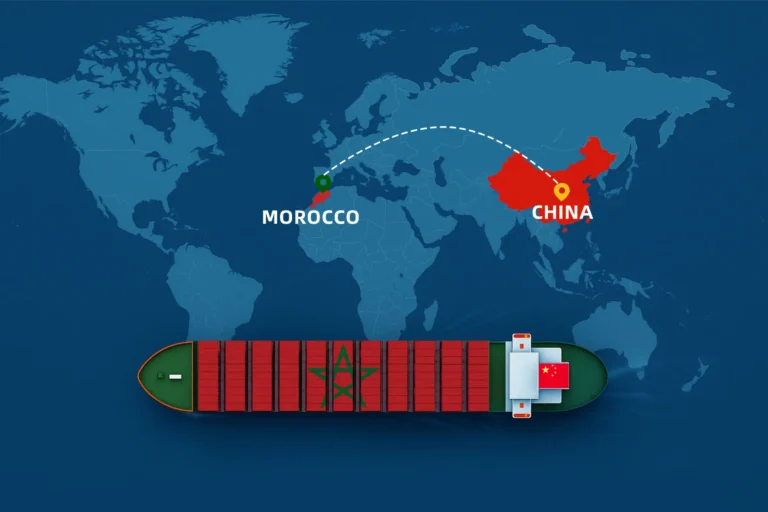
Shipping a container from China to Morocco is widely used for machinery, furniture, electronics, textiles, and general cargo, with sea freight being the most cost-effective method for medium and large shipments.
This guide explains container shipping costs from China to Morocco, including key pricing factors such as container size, cargo volume, shipping routes, and destination ports like Casablanca, Tangier Med, and Agadir, as well as what is included in a typical shipping quotation such as ocean freight, local charges, and customs clearance.
Shipping method / Mode
Transit time range
DDP / Door to Door
These estimated shipping costs are general planning ranges. Actual container shipping rates and container shipping prices can change based on seasonal demand, carrier space, oil prices, port congestion, container availability, and specific shipment details.
| Shipping Option | Estimated Cost | Best For |
|---|---|---|
| 20ft Container FCL | USD 1,000–3,800 | Heavy cargo, machinery, dense goods |
| 40ft Container FCL | USD 2,500–5,200 | Larger commercial shipments |
| 40HQ Container FCL | USD 2,700–5,600 | Bulky goods, furniture, light cargo |
| LCL Sea Freight | From USD 45–120 per CBM | Smaller shipments below container load |
The base ocean freight usually covers port-to-port transport only. Importers should also consider local charges, customs clearance, import duties, destination handling fees, and inland delivery when calculating the total shipping cost.
Container size plays a key role in both shipping costs and loading efficiency. The right choice depends on cargo weight, cargo volume, packaging, shipment size, and how the goods are loaded into the container.
Standard shipping containers include 20-foot and 40-foot containers. For higher-volume but lighter goods, many importers also choose 40HQ containers. Selecting the right container helps reduce unused container space and improves total cost efficiency.
A 20ft container shipping cost from China to Morocco typically ranges between USD 1,000 and USD 3,800. This option is commonly used for dense or heavy cargo where weight limits are reached before space is fully used.
Typical cargo includes:
Machinery and industrial equipment
Steel products and hardware
Building materials and tiles
Auto parts
Stone and metal goods
A 20ft container is often the most practical choice when shipment weight is high but volume is limited.
A 40ft container shipping cost from China to Morocco usually ranges from USD 2,500 to USD 5,200. It is widely used for commercial shipments with higher cargo volume and offers better cost efficiency per CBM compared to smaller shipments.
Common cargo includes:
Furniture and home goods
Electronics and appliances
Textiles and garments
Packaging materials
General consumer goods
For most importers, a 40ft container provides a better balance between cost and loading capacity.
A 40HQ container is similar to a 40ft container but provides additional height for increased loading space.
It is often used for lightweight but bulky goods such as:
Sofas and furniture
Plastic products
E-commerce goods
Display equipment
Large cartons of light products
In many cases, 40HQ containers reduce the average cost per unit when cargo volume is high but weight is low.
Container shipping prices can vary from one Chinese port to another. The difference usually comes from local handling charges, sailing frequency, carrier demand, container availability, and the selected shipping route.
The table below gives estimated container rates from major ports in China to Morocco.
Origin Port in China | Destination Port in Morocco | 20ft Container | 40ft / 40HQ Container | Estimated Transit Time |
|---|---|---|---|---|
Shanghai | Casablanca / Tangier Med | USD 1,200–3,600 | USD 2,700–5,200 | 28–45 days |
Ningbo | Casablanca / Tangier Med | USD 1,200–3,700 | USD 2,700–5,200 | 28–45 days |
Shenzhen | Casablanca / Tangier Med | USD 1,300–3,800 | USD 2,800–5,300 | 28–45 days |
Guangzhou | Casablanca / Tangier Med | USD 1,300–3,800 | USD 2,800–5,300 | 28–45 days |
Qingdao | Casablanca / Tangier Med | USD 1,400–3,900 | USD 2,900–5,500 | 30–48 days |
Tianjin | Casablanca / Tangier Med | USD 1,400–4,000 | USD 3,000–5,600 | 30–50 days |
Xiamen | Casablanca / Tangier Med | USD 1,300–3,800 | USD 2,800–5,400 | 28–45 days |
These estimates do not always include terminal handling charges, customs fees, document fees, storage, inspection, or inland transportation. Before booking, importers should ask for a full quotation instead of only comparing the base sea freight rate.
Shipping routes from China to Morocco are built on well-established global ocean freight networks connecting East Asia with North Africa. Most container shipments move through stable international sea lanes depending on carrier schedules, vessel availability, and destination port conditions.
China has several major export hubs, and Morocco has key import ports that together form the core structure of this trade route.
Most container shipments to Morocco start from China’s major coastal export hubs. These ports provide strong carrier networks, frequent sailings, and stable container availability, which helps reduce delays and improve schedule reliability.
Common origin ports include Shanghai, Ningbo, Shenzhen, Guangzhou, Qingdao, Tianjin, and Xiamen. Each port serves different industrial regions in China and supports large volumes of international trade.
Key advantages of using major Chinese ports:
High sailing frequency to North Africa and Europe-connected routes
Stable container availability during peak and off-peak seasons
Multiple carrier options for flexible pricing and routing
Better coordination for FCL and LCL shipments
Container shipping from China to Morocco usually follows two main routing models depending on carrier planning, vessel space, and seasonal demand.
Direct or semi-direct services are used when shipping space is available. These routes are generally faster and provide more stable transit schedules. They are often preferred for urgent or high-volume shipments.
When direct capacity is limited, transshipment routes are used. Cargo may be transferred at major hub ports before continuing to Morocco. Although this may extend transit time slightly, it often improves container availability and helps stabilize sea freight rates.
Typical transshipment hubs include:
Singapore
Algeciras
Mediterranean hub ports such as Valencia or Tanger-connected hubs
Comparison of routing types:
Routing Type | Transit Time | Cost Stability | Space Availability |
|---|---|---|---|
Direct / Semi-direct | Faster | Medium | Limited during peak season |
Transshipment Route | Slightly longer | More stable | Higher availability |
Most shipments from China arrive at Morocco’s key container ports, which handle the majority of international imports and regional distribution.
Casablanca Port is the main commercial gateway and handles a wide range of general cargo. Tangier Med is a modern deep-water port with strong global connectivity and is widely used for transshipment and distribution across North Africa. Agadir serves southern Morocco and is used for selected cargo flows depending on shipping schedules.
These ports are all connected to inland logistics networks, which makes them suitable for different types of commercial cargo.
The average transit time from China to Morocco is usually between 25 and 45 days for sea freight. However, the final shipping timeline depends heavily on the selected route, carrier schedule, and seasonal port conditions.
Several factors influence transit time:
Direct vs transshipment routing
Port congestion in China or Morocco
Carrier vessel schedules
Customs clearance and unloading speed
In general, direct routes are faster but less flexible in space availability, while transshipment routes offer more stable container access but may extend total shipping time slightly.
Sea freight from China to Morocco is the most widely used shipping method for commercial cargo, industrial goods, and bulk shipments. It is more cost-effective than air freight and can accommodate a wide range of products, including machinery, furniture, textiles, electronics, building materials, spare parts, tools, and general cargo.
Importers typically choose between FCL and LCL shipping based on shipment size, cargo volume, delivery time, and overall budget. Selecting the right shipping method helps optimize both cost and logistics efficiency.
FCL shipping means a full container is used for one shipment only, without sharing space with other cargo. This option is suitable for shipments that require better stability, lower handling risk, and more predictable delivery.
FCL shipping is commonly used for:
Machinery and industrial equipment
Furniture and building materials
Large-volume commercial goods
High-value or fragile products
Compared with LCL shipping, FCL generally provides faster handling and more stable transit schedules, making it a preferred option for larger shipments.
LCL shipping is used when cargo does not require a full container. Multiple shipments are consolidated into one container, and costs are calculated based on cargo volume measured in CBM.
LCL shipping is suitable for:
Small commercial shipments
Sample products and trial orders
Spare parts and low-volume cargo
E-commerce or mixed goods shipments
Although LCL is a cost-effective solution for smaller shipments, it involves additional handling processes such as consolidation at origin and deconsolidation at destination, which may result in slightly longer transit time compared to FCL shipping.
Shipping costs from China to Morocco are influenced by several logistics and market factors. The final price is not fixed and can vary depending on cargo details, shipping routes, and global freight conditions. Importers usually need to consider the full shipment structure instead of focusing only on the base ocean freight rate.
In most cases, small changes in cargo type, container selection, or route planning can lead to noticeable differences in total shipping cost.
Container size is one of the most important cost factors in international shipping. It directly affects how efficiently cargo space is used and how the total shipping cost is distributed.
20ft containers are typically used for heavy or dense cargo
40ft and 40HQ containers are more suitable for larger shipments
Poor container utilization can increase overall cost per unit
Choosing the right container size often has a bigger impact on cost efficiency than minor rate differences.
Shipping routes and port selection also affect pricing because different ports have different handling charges and carrier availability.
Major factors include:
Origin ports in China may have different carrier rates and schedules
Casablanca and Tangier Med often differ in destination charges
Inland delivery distance can change the final landed cost
A well-planned route usually helps improve both cost and transit reliability.
Ocean freight rates change frequently based on global supply and demand. This is one of the main reasons why container shipping costs are not stable throughout the year.
Key influences include:
Seasonal demand fluctuations
Container availability in China
Fuel price changes
Carrier capacity and space allocation
During peak shipping periods, rates may increase due to limited container space.
The type of cargo being shipped can also affect the total cost, especially when special handling is required.
Standard goods are generally easier and cheaper to transport, while special cargo may increase shipping complexity.
Examples include:
Oversized cargo requiring flat rack or open top containers
Sensitive or fragile goods requiring extra handling
Regulated products requiring additional documentation
These factors can increase both handling cost and shipping time.
Beyond ocean freight, destination-related costs in Morocco also impact the total shipping cost. These are often not included in the initial freight quotation.
They may include:
Customs clearance fees
Import duties and taxes
Terminal handling charges
Inland trucking to final destination
For accurate budgeting, importers should always request a full door-to-door quotation.
Customs clearance in Morocco is a mandatory step for all shipments imported from China. Goods must be cleared by Moroccan customs before being released from ports such as Casablanca or Tangier Med. The process mainly depends on accurate documentation, correct cargo classification, and declared shipment value.
Every shipment entering Morocco needs basic commercial documents. These documents help local authorities verify cargo details, shipment value, HS code, and consignee information.
Common documents include:
Packing List
Bill of Lading or Air Waybill
Certificate of Origin, if required
Import License, if required for regulated goods
Accurate documents are important for smooth release and can help avoid unnecessary storage or handling fees.
Import duties and taxes in Morocco are calculated based on the CIF value, which includes the cost of goods, insurance, and freight. This CIF value is the main basis used by Moroccan customs to determine the total import tax amount.
In general, the final tax burden depends on product type, HS code classification, and customs valuation. Different categories of goods may be taxed at different rates depending on Moroccan import regulations.
Customs duties usually range from 0% to 30% or higher, depending on the product HS code
Finished consumer goods typically face higher duties than raw materials or semi-finished products
Import VAT is generally 20%, calculated on CIF value plus customs duty
A small para-fiscal tax (around 0.25%) may also apply in some cases
These charges are standard for most imports entering Morocco and should always be included when calculating the total landed cost of shipping from China.
Some goods may require inspection before or after arrival in Morocco. This depends on product category and regulatory requirements.
Certain products may require inspection at origin in China
Some shipments may be checked upon arrival at Moroccan ports
Compliance documents may be required for regulated goods
Products such as electronics, textiles, food-related items, and industrial goods may be subject to stricter checks.
Door-to-door shipping is suitable for importers who want one freight forwarder to manage the full shipping process. This service can include supplier pickup in China, export clearance, sea freight, Morocco customs support, port handling, and inland delivery to the final destination.
It is especially useful for new importers or businesses that do not want to coordinate several shipping companies, customs brokers, and trucking providers.
A complete door-to-door service may include:
Pickup from supplier or warehouse in China
Export customs clearance
FCL or LCL sea freight
Destination port handling in Morocco
Customs support
Inland delivery to warehouse or business address
The cost depends on cargo volume, cargo weight, container size, pickup address, delivery city, customs requirements, and whether duties and taxes are included.
Sea freight is the best choice for most container shipments because it offers lower shipping rates and more capacity. It is suitable for large shipments, regular imports, commercial cargo, and goods that are not extremely urgent.
Air freight offers much faster delivery but is more expensive. It is usually used for samples, urgent spare parts, high-value goods, or time-sensitive shipments. Air freight is charged by actual weight or volumetric weight, whichever is higher.
Shipping Method | Cost Level | Transit Time | Best For |
|---|---|---|---|
Sea Freight FCL | Lower | 25–45 days | Full container load cargo |
Sea Freight LCL | Medium | 30–50 days | Smaller shipments |
Air Freight | Higher | 5–9 days | Urgent or high-value goods |
For most importers, sea freight remains the right shipping method. Air freight is better when time is more important than cost.
Shipping from China to Morocco involves multiple steps such as supplier pickup, export customs clearance, ocean freight, and destination handling. Working with an experienced freight forwarder helps reduce risk and improve overall shipping efficiency.
Tonlexing provides end-to-end container shipping services from China to Morocco, covering FCL and LCL shipments through stable carrier networks and key ports in both countries.
We handle the full logistics process from China to Morocco, so importers do not need to coordinate multiple service providers.
Supplier pickup in China
Export customs clearance
Sea freight (FCL & LCL)
Destination port handling in Morocco
Customs coordination
Door-to-door delivery
This helps simplify the entire shipping process from origin to final delivery.
We work with stable carriers to ensure consistent sailing schedules and reliable container space.
Regular departures from major China ports
Coverage of Casablanca, Tangier Med, and Agadir
Flexible routing based on cost and transit time
Optimized solutions for different shipment sizes
This allows better balance between cost, speed, and space availability.
Shipping costs from China to Morocco change based on market conditions, so accurate quotations are essential.
Competitive container shipping rates
Clear breakdown of origin and destination charges
Route optimization to reduce unnecessary cost
Support for both small and large shipments
The focus is always on total landed cost, not just ocean freight.
We handle a wide range of commercial cargo shipped from China to Morocco.
Machinery and industrial equipment
Furniture and building materials
Electronics and consumer goods
Textiles and general cargo
Oversized or project cargo
Each shipment is planned based on cargo type and shipping requirements.
Customs clearance is a key step in shipping to Morocco. We help ensure documents are prepared correctly before shipment departure.
Commercial invoice and packing list review
HS code guidance
Certificate of origin support
Customs coordination in Morocco
This helps reduce clearance delays and unexpected costs.
The cost to ship a 20ft container from China to Morocco usually ranges from USD 1,000 to USD 3,800. The final price depends on the origin port, destination port, cargo type, shipping season, and current sea freight rates.
The cost to ship a 40ft container from China to Morocco usually ranges from USD 2,500 to USD 5,200. A 40ft container is often more cost effective for larger shipments because it offers more container space and a lower average cost per CBM.
The average transit time for sea freight from China to Morocco is usually 25 to 45 days, depending on the shipping route, carrier schedule, and destination port. Seasonal congestion and transshipment routes may slightly extend the total shipping time.
Shipping costs are influenced by several factors, including container availability, seasonal demand, freight rates, and global market conditions. In peak seasons, container prices may increase by 20% to 40% due to higher demand.
The base ocean freight usually only covers port-to-port transportation. It does not include destination charges such as customs clearance, terminal handling fees, inland delivery, or local taxes unless it is a door-to-door service.
Useful freight, customs and importing resources related to this shipping guide.
Shipping from China to Morocco – Sea, Air & Door-to-Door in 2026 Fast, reliable shipping from China to Morocco for B2B importers,industrial cargo...
Read guide →
Morocco is a vital trade partner for China, with increasing imports of electronics, textiles, automotive parts, industrial machinery, and consume...
Read guide →
International trade between China and Morocco has grown steadily in recent years, making shipping an essential link in the global supply chain. M...
Read guide →
Sea freight is the most cost effective shipping method for large volumes and container load cargo. It is ideal for businesses looking to reduce s...
Read guide →Air freight from China to Morocco has rapidly become one of the most important international shipping routes for African and Middle Eastern suppl...
Learn more → Useful Resource DDP Shipping from ChinaDDP shipping from China includes customs clearance, import duties, and final delivery. It is a convenient door to door service with clear and pre...
Learn more →WhatsApp us