

Shipping containers from China to Pakistan is one of the most active international shipping routes in South Asia. With Pakistan importing large quantities of electronics, machinery, textiles, construction materials, and commercial goods from China every year, businesses rely heavily on container shipping, competitive freight rates, and stable container shipping costs to keep their supply chains running smoothly.
In 2025, the demand for 20ft and 40ft containers continues to grow as more companies shift from small LCL shipments to full container load (FCL) options. Whether you are a first-time importer or an experienced trader handling larger volumes, understanding the real ocean freight rates, shipping route options, and customs clearance requirements helps reduce delays, improve operational efficiency, and maintain cost control.
This guide explains everything you need to know about 20ft & 40ft container shipping costs from China to Pakistan—including shipping times, major ports, logistics process, how freight forwarders calculate prices, and how to get competitive rates for your next shipment.
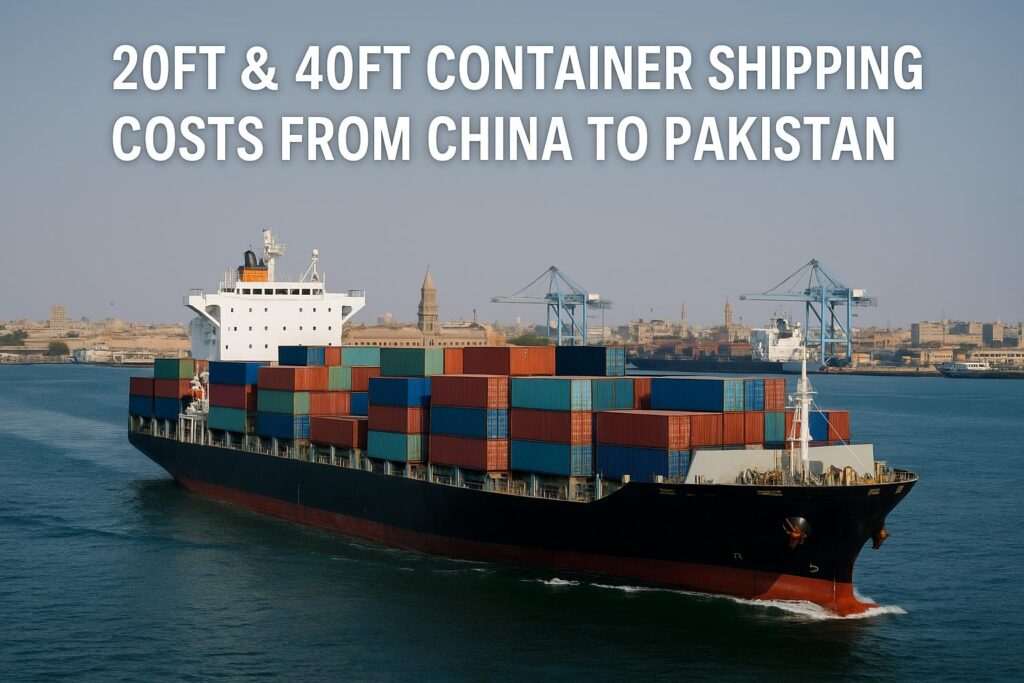
How Much Does It Cost to Ship a 20ft & 40ft Container from China to Pakistan?
The cost to ship a container from China to Pakistan varies depending on several key factors, including demand, fuel prices, carrier capacity, port conditions, and the selected shipping route. Although prices vary depending on the season and container type, most importers will fall within the ranges below.
2025 FCL Container Shipping Rates (Estimated)
| Container Type | Average Cost (USD) | Average Transit Time |
|---|---|---|
| 20ft Container (FCL) | $1,050 – $1,550 | 12–18 days |
| 40ft Container (FCL) | $1,550 – $2,050 | 12–18 days |
| 40ft High Cube | $1,600 – $2,050 | 12–18 days |
These container shipping rates remain relatively stable in 2025 compared with previous years, though sudden surges can occur due to:
- fuel price increases
- weather conditions
- port congestion at Karachi Port or Port Qasim
- IMO cargo restrictions
- seasonal demand (especially before Ramadan & Chinese New Year)
For special cargo such as oversized machinery, flat rack containers or open-top containers may be required, which typically cost 20%–40% more than standard container sizes.
Why 20ft & 40ft Container Costs Differ
Although both containers follow the same shipping route, the 40ft container provides almost double the container load capacity at only a slightly higher price, making it the preferred option for:
- large quantities
- heavier cargo
- full container load shipments
- cost-effective transport
A 20ft container is suitable for:
- smaller shipments
- low-density cargo
- single-supplier loads
- businesses testing new products
Choosing the correct container type can significantly affect total shipping costs, supply chain efficiency, and final delivery time.
How Freight Forwarders Calculate Shipping Costs
Professional freight forwarders consider several elements when preparing shipping quotes for China–Pakistan trade lanes:
Ocean freight rates
Base cost charged by shipping lines.
Container type and cargo volume
20ft, 40ft, 40HQ, flat rack, special containers.
Port of loading (China)
Shanghai, Ningbo, Shenzhen, Qingdao, Tianjin, etc.
Port of discharge (Pakistan)
Most shipments enter through Karachi Port, Pakistan’s busiest seaport.
Logistics services included
- inland transportation
- packing list & commercial invoice validation
- customs clearance
- door to door delivery
- cargo tracking
- final delivery to warehouse
Additional services
- customs exams
- IMO cargo handling
- storage & demurrage
- documentation
- insurance
These combined cost elements explain why shipping prices from China to Pakistan can fluctuate and why accurate prices require an instant quote from a freight forwarder.
Key Factors That Affect 20ft & 40ft Container Shipping Costs
Shipping a 20ft or 40ft container from China to Pakistan involves multiple variables that can significantly affect total shipping costs, transit time, and operational efficiency. Understanding these key factors will help importers plan better, reduce unexpected charges, and gain more control over their logistics process.
Container Type & Container Load
The first major factor is the container type selected for your shipment. Common options include:
- 20ft full container load (FCL)
- 40ft FCL
- 40ft High Cube (HQ)
- Flat rack for oversized equipment
- Special cargo containers for heavy machinery or IMO cargo
A 40ft container offers nearly double the cargo space compared with a 20ft, but with only slightly higher freight rates, making it more cost effective for larger volumes or heavy-duty commercial shipments.
For smaller shipments, some importers choose LCL shipments, but delays, extra handling, and consolidation fees often make FCL a better long-term choice.
Shipping Route & Port Selection
Your shipping route plays a major role in the final transportation costs and delivery schedule.
Main China → Pakistan Routes Include:
- Shanghai → Karachi Port
- Ningbo → Karachi Port
- Shenzhen (Yantian/Shekou) → Karachi Port
- Qingdao → Karachi Port
Since Karachi Port handles the majority of Pakistan’s container imports, choosing a route with stable carrier schedules helps ensure:
- faster loading
- fewer delays
- predictable average transit time
Alternate routes involving transshipment may be cheaper but often increase shipping time and risk.
Ocean Freight Rates & Carrier Capacity
Ocean freight rates vary week to week depending on:
- global carrier space
- seasonal demand
- fuel prices
- market conditions
- vessel availability
During high-demand periods (e.g., pre-Chinese New Year), carriers raise freight rates and reduce promotional pricing, which impacts all importers.
When stable rates return in low-season months, many businesses book inventory in advance to maintain cost control.
Port Conditions at Karachi Port
Karachi Port and Port Qasim are Pakistan’s primary entry points for international shipping. Congestion at these ports can cause:
- vessel delays
- slower customs clearance
- extended final delivery
- storage or demurrage charges
Choosing a shipping company with strong port handling capabilities improves the logistics process and reduces risks.
Customs Clearance & Customs Duties
Pakistan customs procedures require accurate documentation, including:
- commercial invoice
- packing list
- HS code declaration
- taxation documents
- import permits (specific categories)
Incorrect paperwork may trigger customs exams, which can add:
- extra inspection fees
- cargo delays
- storage costs
A reliable customs broker or experienced freight forwarder minimizes these risks and speeds up the entire shipping process.
Inland Transportation in China & Pakistan
Your pickup and delivery locations influence total shipping costs, especially when:
- cargo is far from the Chinese port
- delivery to Pakistani inland cities requires trucking
Cities such as Lahore, Islamabad, Faisalabad, Peshawar, Sialkot, and Multan involve added inland transportation charges after the container reaches port.
Door to door delivery is available, but cost varies depending on:
- road distance
- road restrictions
- cargo weight
- delivery deadlines
Cargo Type & Special Requirements
Certain goods require:
- temperature control
- special packaging
- dangerous goods certificates (IMO cargo)
- heavy-lift equipment
These services add to the total shipping costs and may restrict the carriers available for your route.
Weather Conditions & Buffer Days
Monsoon season, typhoons, and peak-winter storms can affect sea transport, causing:
- vessel rerouting
- slower handling
- extra buffer days required for planning
Most businesses shipping during these periods add a few days to ensure the cargo reaches its destination on time.
Shipping Routes, Transit Time & Major Ports
Understanding the major China–Pakistan shipping corridors helps businesses select the most efficient and cost effective option for their logistics needs.
Major Chinese Ports Used for Shipping to Pakistan
China has several high-capacity ports that offer frequent sailings to Pakistan:
Shanghai Port
China’s largest export port with stable container availability and competitive freight rates. Best for electronics, machinery, and large-scale commercial shipments.
Ningbo Port
Known for fast loading times and excellent operational efficiency. Often preferred for exporters seeking stable schedules and lower shipping costs.
Shenzhen / Guangzhou (South China)
Yantian, Shekou, Nansha are vital for exports from manufacturing hubs in:
- Guangdong
- Fujian
- Guangxi
A top choice for door to door delivery to Pakistan.
Qingdao & Tianjin (North China)
Ideal for steel, industrial parts, building materials, and heavy cargo.
Major Ports in Pakistan
Karachi Port
Handles the majority of container shipping from China. Strengths include:
- advanced container terminals
- faster customs processing
- better carrier options
- high weekly sailing frequency
Because of its central role, Karachi Port appears frequently in shipping quotes and routing plans.
Port Qasim
Used for specific cargos and companies requiring alternate entry points.
Slightly less congested than Karachi Port.
Gwadar Port
A growing deep-sea port with long-term development potential under the CPEC program.
Average Transit Time from China to Pakistan
Transit time depends on the origin port, carrier, and route structure.
| Route | Average Transit Time |
|---|---|
| Shanghai → Karachi | 12–16 days |
| Ningbo → Karachi | 13–17 days |
| Shenzhen → Karachi | 12–18 days |
| Qingdao → Karachi | 14–19 days |
Additional days may apply for:
- port congestion
- customs exams
- weather issues
- inland transportation in Pakistan
The total time from pickup to final delivery usually ranges between 18–28 days, depending on your logistics needs.
FCL vs LCL Shipping from China to Pakistan
Choosing between full container load (FCL) and LCL shipments is one of the most important decisions when planning your logistics from China to Pakistan. Both options serve different shipping needs, and the choice can significantly affect total transportation costs, transit time, and overall supply chain performance.
FCL (Full Container Load)
Best for businesses shipping:
- large quantities
- higher cargo value
- time-sensitive goods
- shipments exceeding 12–15 CBM
Key Features of FCL:
- You rent an entire 20ft or 40ft container.
- Fixed freight rates regardless of how full the container is.
- Reduced handling → less risk of cargo damage.
- Faster customs clearance.
- More stable container shipping costs.
This option offers better cost control and operational efficiency for regular Pakistan importers.
LCL (Less than Container Load)
Suitable for:
- smaller shipments
- testing shipments
- cargo under 12 CBM
Key Features of LCL:
- You share a container with other buyers.
- Costs are based on weight/volume.
- Handling time increases.
- Higher risk of customs exams due to mixed cargo.
- Often delays the entire shipping process.
Although LCL is convenient for small or occasional shipments, most Pakistan-bound importers move to FCL to avoid long delays at Karachi Port.
Container Types & Container Sizes for China–Pakistan Shipping
Understanding container type is important for selecting the right solution for your cargo.
Standard Containers
20ft Container
- Capacity: 33 CBM
- Ideal for general consumer goods, tools, textiles, and medium-weight cargo
40ft Container
- Capacity: 67 CBM
- Most cost-effective for larger volumes
40ft High Cube (40HQ)
- Capacity: 76 CBM
- Suitable for lightweight but high-volume items
- Popular for furniture, plastic products, and e-commerce goods
Special Containers
Flat Rack Containers
Used for machinery, vehicles, steel structures, and oversized special cargo.
Reefer Containers
Temperature-controlled units for perishable goods.
Open-Top Containers
Used for tall cargo that cannot fit inside a standard container.
Selecting the correct container type ensures safety, efficiency, and reduced transportation costs.
Explore more shipping guides:
- Shipping Cost from China to Pakistan
- DDP Shipping from China to Pakistan (2025 Guide)
- Air Freight Shipping of Plastic Molds from Guangzhou, China to Pakistan
- 20ft & 40ft Container Shipping Costs from China to Saudi Arabia
- 20ft & 40ft Container Shipping Costs from China to Iran
Step-By-Step Shipping Process from China to Pakistan
A clear understanding of the logistics process helps avoid delays and unnecessary charges.
Step 1 — Requesting Shipping Quotes
Importers usually start by requesting an instant quote from a reliable freight forwarder. You will need to provide:
- cargo details
- container size (20ft/40ft)
- pickup address in China
- delivery location in Pakistan
- shipping needs (FCL, LCL, or door to door)
Step 2 — Inland Transportation in China
Cargo is transported from the supplier’s warehouse to the port via:
- trucking
- rail transport
- feeder vessels (if needed)
This step depends on distance and cargo type.
Step 3 — Export Customs Clearance (China)
Your freight forwarder prepares:
- commercial invoice
- packing list
- customs declaration
Once approved, your cargo is cleared for loading.
Step 4 — Container Loading & Sea Transport
The container is sealed at the warehouse or port and shipped to Pakistan through sea freight, following the selected shipping route.
During sailing, you can monitor cargo tracking updates provided by the carrier or your logistics partner.
Step 5 — Arrival at Karachi Port or Port Qasim
On arrival, the container undergoes:
- customs inspection
- customs duties assessment
- port handling
- unloading
Reliable customs brokers help complete this process quickly.
Step 6 — Final Delivery
Once cleared, your cargo proceeds to:
- Karachi
- Lahore
- Islamabad
- Faisalabad
- Multan
- Peshawar
- Sialkot
Delivery is via truck or multimodal transportation.
Documents Required for Container Shipping from China to Pakistan
Accurate documentation avoids delays, customs exams, and unnecessary penalties. You will typically need:
Commercial Invoice
Shows cargo value, HS code, and transaction details.
Packing List
Lists weight, CBM, dimensions, and container load details.
Bill of Lading (B/L)
Official shipping document issued by the carrier.
Certificate of Origin (if needed)
Helps determine customs duties.
Import License (specific categories)
Some regulated items may require special clearance.
Proper documentation ensures the cargo reaches your warehouse faster.
Cargo Tracking & Visibility
Modern carriers provide real-time cargo tracking through:
- shipping company tracking portals
- forwarder dashboards
- automated notifications
- “one dashboard” digital systems
This allows importers to view:
- vessel position
- estimated arrival
- customs status
- delivery progress
Improved visibility helps businesses optimize their supply chain and plan inventory more accurately.
How to Reduce 20ft & 40ft Container Shipping Costs from China to Pakistan
Shipping costs from China to Pakistan can fluctuate based on market demand, carrier capacity, and external factors. However, importers can take several practical steps to maintain cost control, obtain more competitive rates, and optimize their overall logistics process.
Below are proven strategies used by successful Pakistan importers:
Book Shipments Early During Peak Seasons
Before Chinese New Year and Ramadan, freight rates rise quickly due to strong demand. Booking in advance ensures:
- stable rates
- guaranteed container space
- fewer delays
This is especially important if your cargo must arrive before a specific final delivery date.
Use the Most Suitable Container Type
Choosing between a 20ft or 40ft container can greatly influence overall shipping costs:
- 40ft containers offer nearly twice the space for only slightly higher prices
- 20ft containers are ideal for smaller shipments
Using the correct container load helps avoid wasted space and reduces cost per cubic meter.
Optimize Packaging to Maximize Container Load
Many importers pay more than necessary because their goods are packed inefficiently.
Improved packaging can:
- increase loading efficiency
- reduce container count
- lower transportation costs
- prevent damage during sea transport
This directly improves supply chain performance.
Use FCL Instead of LCL for Medium-Volume Cargo
Even if your shipment does not fully fill a container, FCL shipping may still be cheaper than LCL due to:
- lower handling charges
- fewer customs exams
- simpler customs clearance
- faster transit time
LCL is convenient, but delays at Karachi Port can be significant.
Choose the Best Shipping Route
Different shipping routes can vary in both cost and transit time:
- direct routes are faster but more expensive
- transshipment routes are cheaper but slower
Your freight forwarder will recommend the most cost effective option based on your schedule.
Work with Reliable Freight Forwarders
Experienced freight forwarders offer better:
- shipping quotes
- carrier options
- customs clearance support
- operational efficiency
This ensures your shipment arrives safely, on time, and at the best possible rate.
Consolidate Cargo from Multiple Suppliers
Many Pakistan importers buy from several suppliers in China. Consolidation offers:
- lower inland transportation costs
- reduced export fees
- more stable container shipping costs
A single consolidated shipment is almost always cheaper than multiple small shipments.
Plan for Weather Conditions & Add Buffer Days
Bad weather can delay sea freight schedules. Adding buffer days helps avoid last-minute cost increases and ensures the cargo reaches the destination on time.
Door to Door Delivery from China to Pakistan
Door to door delivery is a convenient service for importers who want an end-to-end logistics solution without managing multiple agents.
Your freight forwarder handles:
- pickup in China
- export customs
- ocean freight
- Pakistan customs clearance
- payment of duties & taxes (if applicable)
- inland transportation to your warehouse
This service is ideal for businesses with limited logistics resources or those looking to simplify the entire shipping process from factory to destination.
Additional Services for Pakistan-Bound Shipments
To support different shipping needs, freight forwarders also offer:
Cargo Insurance
Protection against loss, damage, or unexpected accidents.
Warehousing & Storage
Short-term or long-term storage solutions in China and Pakistan.
Packaging & Palletizing
Ensures safer handling and reduces the risk of customs exams.
Dangerous Goods Handling
Required for chemicals, batteries, and other IMO cargo.
Cargo Tracking
Real-time shipment updates through digital platforms or one dashboard systems.
These logistics services help importers maintain a stable and efficient supply chain.
Frequently Asked Questions (FAQ)
How much does it cost to ship a 20ft container from China to Pakistan?
Most 20ft container shipping costs range between $1,050 – $1,550, depending on the season, shipping company, and container availability.
How much does it cost to ship a 40ft container?
A 40ft container typically costs $1,550 – $2,050 to Pakistan via sea freight.
What is the average transit time?
The average transit time is 12–18 days, depending on the route and carrier schedule.
Which ports in Pakistan receive containers from China?
Most FCL shipments arrive at:
- Karachi Port
- Port Qasim
- Gwadar Port (limited services)
Karachi Port is the primary hub for container shipping.
Do I need a customs broker for clearance?
Yes, an experienced customs broker is highly recommended to avoid delays, reduce customs exams, and streamline the clearance process.
Can I ship cargo door-to-door to Pakistan?
Yes. Door to door delivery is available, including pickup in China and final delivery to any major Pakistan city.
What documents are required?
You generally need:
- commercial invoice
- packing list
- bill of lading
- certificate of origin
Your freight forwarder will assist with all documents.
How do I get a shipping quote?
Simply provide:
- cargo details
- container size
- pickup and delivery addresses
- shipping needs (FCL/LCL/door to door)
Your forwarder will provide an instant quote with updated freight rates.
What factors affect shipping prices?
Key factors include:
- fuel prices
- carrier capacity
- port congestion
- customs clearance
- weather conditions
- freight forwarder service quality
Is FCL more cost effective than LCL?
Yes. For shipments over 12 CBM, full container load is generally more cost effective.
What happens if customs selects my cargo for inspection?
Customs may charge inspection fees, and your final delivery may be delayed by a few days.
Can I track my container?
Yes. Most shipping companies and forwarders offer cargo tracking tools or online dashboards.
Are there hidden costs?
Reliable forwarders will list all charges in advance, including:
- terminal handling
- customs duties
- inland transportation
- additional services
No hidden fees should appear.
Conclusion: Best Way to Ship 20ft & 40ft Containers from China to Pakistan
Shipping a 20ft or 40ft container from China to Pakistan is one of the most reliable and cost effective solutions for businesses importing commercial products, machinery, textiles, and building materials. With stable container shipping rates, efficient shipping routes, and professional freight forwarders, Pakistan importers can build strong, predictable logistics operations.
Whether you need door to door delivery, FCL shipments, or detailed cost analysis, choosing the right partner helps you:
- reduce shipping costs
- improve operational efficiency
- ensure faster customs clearance
- simplify the entire logistics process
If you want the most accurate instant quote for your next shipment, simply provide your cargo details and we will assist you with every step from China to Pakistan.