
Amazon GWD vs AWD vs 3PL

Amazon GWD, AWD, and independent 3PLs offer different solutions for inventory storage, FBA replenishment, and fulfillment. Each option varies in warehouse location, costs, and inventory control.

This 2026 guide compares storage fees, handling costs, multi-channel fulfillment, and key differences to help Amazon sellers choose the right solution.

Amazon GWD

Amazon AWD

3PL Fulfillment

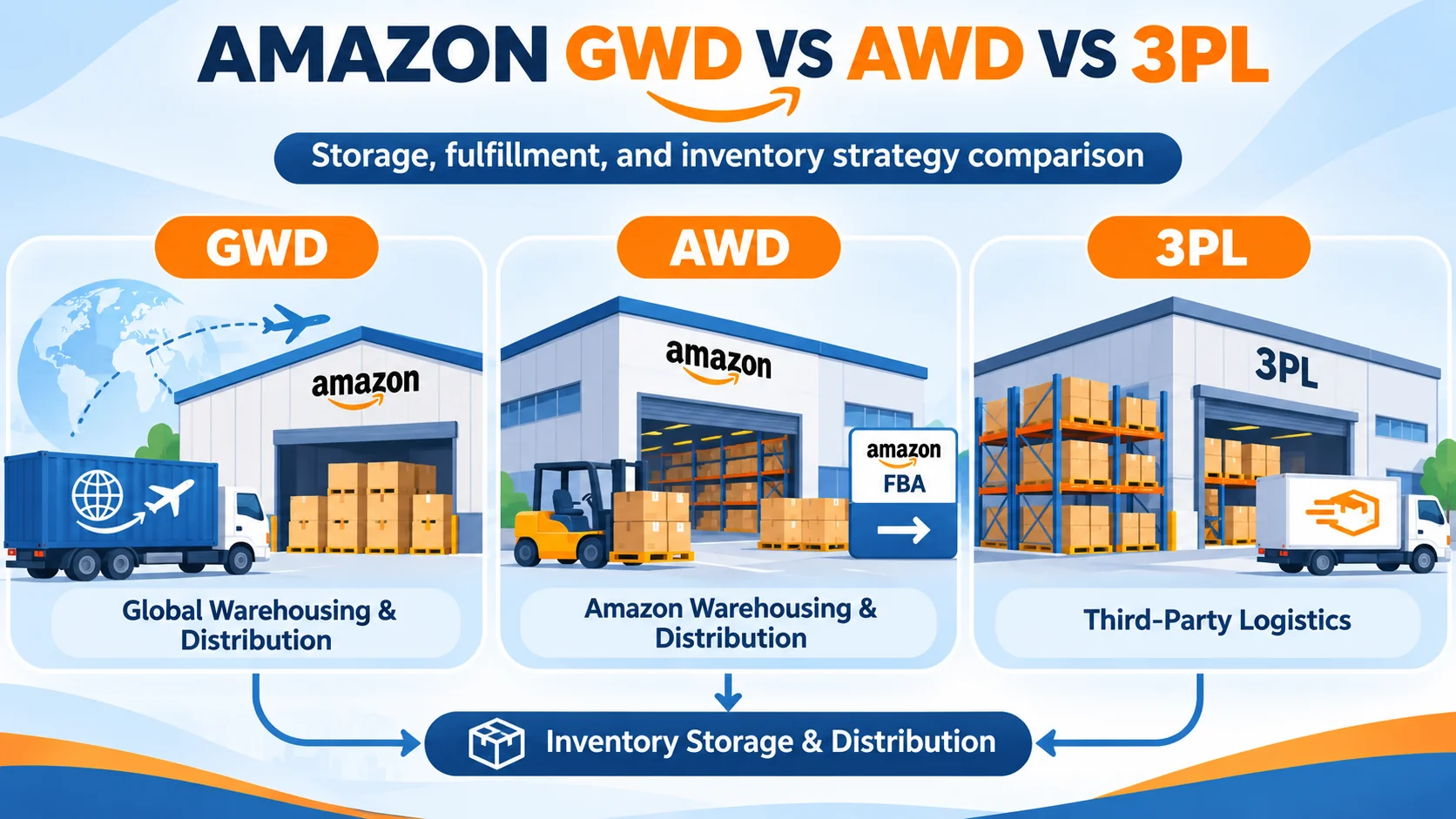
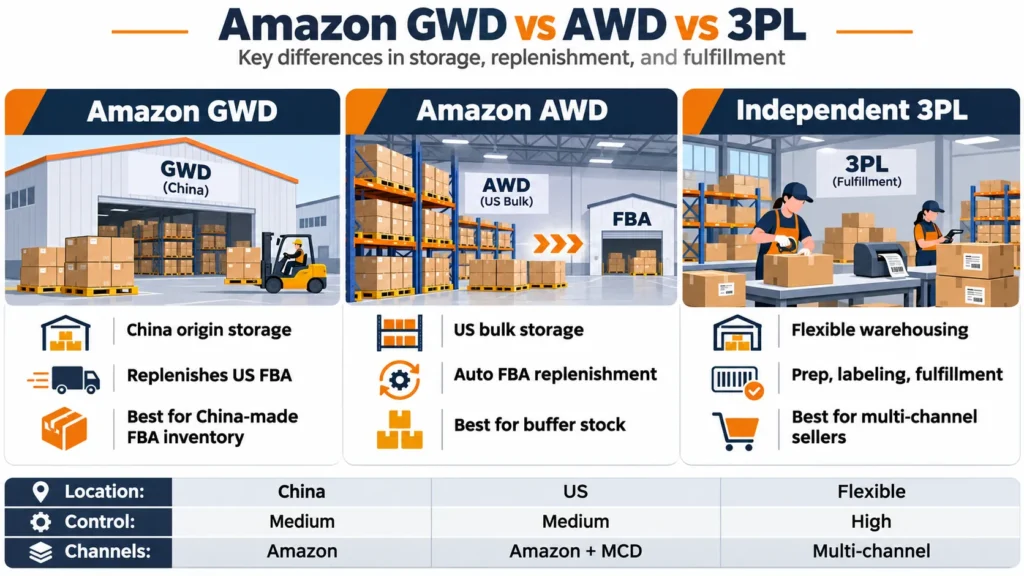
Amazon GWD vs AWD vs 3PL comparison showing warehouse locations, inventory storage, FBA replenishment, and fulfillment differences
10,000+ international shipments handled    Global sea, air & DDP shipping solutions    24/7 shipment tracking & customer support

Table of Contents

Amazon GWD vs AWD vs 3PL: Key Differences

The three options differ in warehouse location, inventory movement, pricing, and fulfillment flexibility.

FeatureAmazon GWDAmazon AWDIndependent 3PL
Warehouse locationChina, near manufacturersUnited StatesUS or other markets
Main purposeOrigin-side inventory storageUS bulk inventory storageStorage and fulfillment
Main destinationUS FBAFBA and eligible off-Amazon destinationsFBA, Shopify, Walmart, DTC
ReplenishmentAmazon-managed programAutomatic or manualSeller-controlled
Prep and labelingMust be arranged before FBAMust be arranged before FBAAvailable from providers
Multi-channel flexibilityLimitedAvailable through MCDHigh
Best forChina-based FBA sellersSellers with predictable FBA demandMulti-channel businesses

The most important distinction is the inventory starting point. GWD keeps stock close to the manufacturer, AWD holds inventory closer to US customers, and a 3PL can support different stages of the supply chain.

What Is Amazon GWD?

Amazon Global Warehousing and Distribution (GWD) is an origin-side warehousing program that allows eligible sellers to store products in China before shipping inventory to Amazon’s US fulfillment network.

Instead of sending all finished goods overseas immediately, sellers can hold stock near their suppliers and arrange replenishment according to demand. Amazon integrates GWD with its logistics network, including Amazon Global Logistics (AGL), to coordinate cross-border transportation.

How Does Amazon GWD Work?

The typical inventory process is:

  1. Products are manufactured and prepared at a Chinese factory.

  2. Inventory is delivered to an Amazon GWD warehouse in China.

  3. Products remain in storage until replenishment is needed.

  4. Amazon coordinates eligible shipments through AGL.

  5. Inventory is transported to US FBA fulfillment centers.

As of November 2026, Amazon operates GWD warehouses in Shenzhen, Shanghai, and Ningbo. 

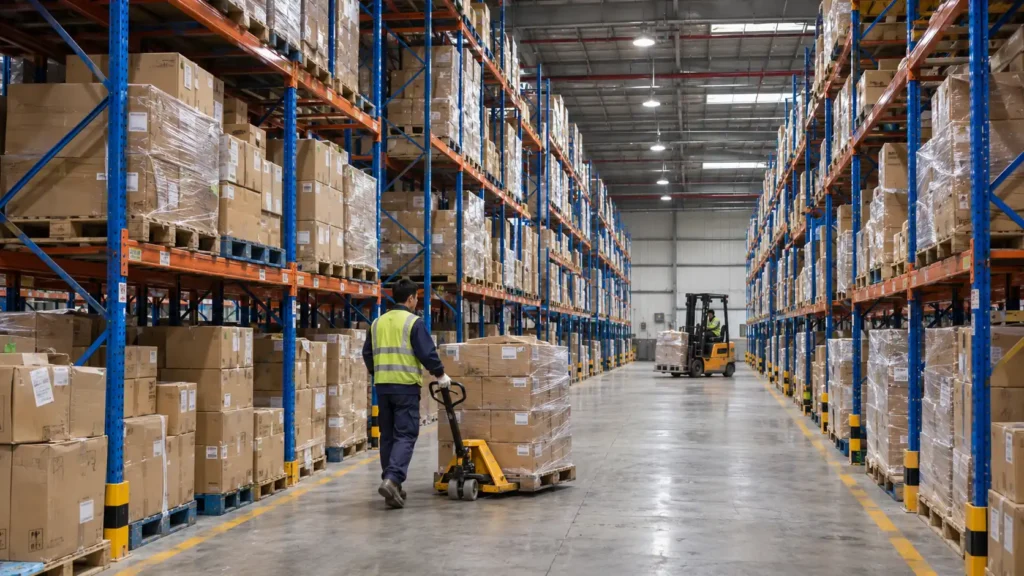
China warehouse storage and cargo consolidation with palletized goods ready for export

Advantages and Limitations of GWD

GWD is useful for sellers manufacturing in China who want to delay cross-border inventory movement and avoid sending their entire production volume to the US at once.

Its main advantages include:

  • Lower origin-side storage costs compared with many destination-market options.

  • Inventory storage close to Chinese manufacturers.

  • Integrated logistics coordination through AGL.

  • Flexible replenishment based on sales demand.

However, GWD is not a general-purpose warehouse. It currently focuses on replenishment to US FBA, and eligible products must meet Amazon’s size, weight, packaging, and category requirements. Dangerous goods, refrigerated products, and certain high-value or restricted items are not supported.

What Is Amazon AWD?

Amazon Warehousing and Distribution (AWD) is a bulk inventory storage program designed to hold products in the destination market before they enter Amazon FBA.

Unlike GWD, which stores inventory in China, AWD allows sellers to send bulk stock to US distribution centers. Amazon then manages storage and can automatically replenish FBA fulfillment centers as inventory levels change.

How AWD Storage and Replenishment Work

The typical process starts when sellers ship products from China or another supplier to an AWD warehouse in the United States.

After receiving inventory, Amazon stores the products and manages replenishment through automatic or manual transfers to FBA. This reduces the need for sellers to create individual restocking shipments whenever FBA inventory decreases.

AWD is particularly useful for sellers with consistent sales volumes and predictable demand. Instead of keeping all available stock in FBA, they can maintain a larger buffer inventory in AWD and move products into fulfillment centers as needed.

Can AWD Support Multiple Sales Channels?

Yes. Through Multi-Channel Distribution (MCD), AWD can distribute inventory in bulk to off-Amazon destinations, including a seller’s own warehouse, third-party warehouses, wholesalers, and distributors.

However, MCD is different from direct-to-consumer fulfillment. It moves inventory in bulk rather than automatically picking, packing, and shipping every individual Shopify or Walmart order.

This makes AWD more flexible than a traditional Amazon-only storage solution, although it does not replace all the services provided by an independent 3PL.

How Does an Independent 3PL Work?

An independent third-party logistics provider operates outside Amazon’s warehousing network. Sellers can use a 3PL to receive, store, prepare, and distribute inventory according to their own business requirements.

A 3PL warehouse can be located in China, the United States, or another destination market. This makes it possible to use third-party storage before international shipping or after products have cleared customs.

What Services Can a 3PL Provide?

Depending on the provider, services may include:

  • Supplier cargo collection and warehouse receiving.

  • Pallet and carton storage.

  • Inventory inspection and stock management.

  • FBA prep and FNSKU labeling.

  • Kitting, bundling, and custom packaging.

  • Picking, packing, and direct order fulfillment.

  • Replenishment to Amazon FBA and other distribution centers.

For example, a seller purchasing from several Chinese manufacturers can use a China warehouse to consolidate products before international shipping. Explore our China warehouse consolidation service for more information.

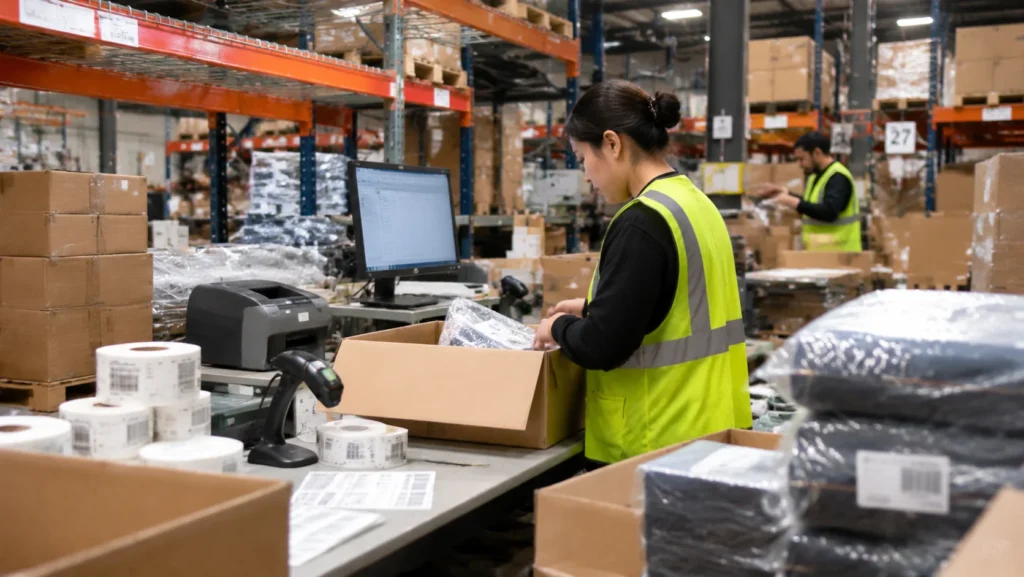
Independent 3PL warehouse worker preparing and labeling products for Amazon FBA fulfillment

Why Do Sellers Choose Independent 3PLs?

The biggest advantage of an independent 3PL is operational flexibility. Sellers can decide when inventory moves, how much stock goes to each channel, and which preparation services are required.

A 3PL is particularly useful for businesses selling through Amazon, Shopify, Walmart, eBay, and their own websites.

The trade-off is that storage, receiving, handling, and fulfillment fees vary between providers. Sellers also need to monitor warehouse performance, inventory accuracy, and service agreements rather than relying entirely on Amazon’s integrated system.

How Much Do GWD, AWD, and 3PL Cost in 2026?

The total cost of using GWD, AWD, or an independent 3PL depends on more than monthly storage rates. Sellers should also consider inbound placement, warehouse handling, and transportation to Amazon FBA.

Storage Costs: GWD vs AWD vs 3PL

Storage fees vary by warehouse location and season. The following figures provide a reference for comparing typical monthly costs.

Fee CategoryAmazon GWDAmazon AWDIndependent 3PL
Storage (Jan–Sep)$8.79/CBM/month; Ningbo $7.91$0.48–$0.57/cu ft/month$0.50–$0.65/cu ft/month
Storage (Oct–Dec)Published rate generally unchangedRegional base rate appliesMay rise to $1.20–$2.50/cu ft/month
Inbound processing$0.20/carton, plus applicable export declaration$1.40/box; eligible palletizable shipments may qualify for discountsReceiving and unloading fees vary
Outbound processing$0.30/carton, plus applicable declaration charges$1.40/boxPicking, handling, or pallet-out fees vary
Transfer to FBAAGL transportation charged separately$1.40/cu ft base transportation rateDomestic freight charged separately
FBA placementDepends on the applicable placement arrangementIncluded under eligible AWD arrangementsAmazon placement charges may apply

GWD offers relatively low-cost storage at the origin, allowing sellers to keep inventory close to Chinese manufacturers. AWD provides US-based bulk storage with regional pricing, while independent 3PL rates can increase significantly during peak shipping periods.

Inbound, Handling, and Transfer Fees

Beyond storage, the main cost differences come from how inventory enters and leaves each warehouse.

  • Amazon GWD: Inbound placement is generally free when using AGL under the applicable program terms. Handling is included in the sea freight arrangement, while cross-border transportation to the US is charged separately.

  • Amazon AWD: No separate inbound placement fee applies under the AWD program. Automatic transfers to FBA simplify replenishment and reduce additional coordination.

  • Independent 3PL: Receiving and handling charges vary by provider. Non-consolidated inbound shipments may incur additional fees of approximately $0.21–$0.68+ per item, while pallet handling may cost around $3–$15 per pallet.

Which Option Has the Lowest Total Cost?

GWD is attractive for sellers storing China-origin inventory before international shipping. AWD is convenient for businesses that need US bulk storage and regular FBA replenishment. Independent 3PLs may have higher handling costs, especially during peak season, but offer more control over inventory and multi-channel distribution.

When comparing quotations, include storage, receiving, preparation, handling, and transportation costs. A lower monthly storage rate does not necessarily mean a lower total fulfillment cost.

Which Option Should You Choose?

The right solution depends on product origin, inventory turnover, sales channels, and the level of control your business requires.

Amazon GWD vs AWD vs 3PL comparison showing China origin storage, US bulk storage, and third-party fulfillment

Choose GWD for China-Origin FBA Inventory

GWD is a suitable option when products are manufactured in China, meet Amazon’s eligibility requirements, and are primarily intended for the US FBA network.

It allows sellers to store inventory near their suppliers and replenish Amazon when needed, reducing the need to move all stock overseas in advance.

Choose AWD for US Buffer Stock

AWD is better suited to sellers who already import products into the United States and need a cost-effective bulk storage solution.

Its automatic replenishment and MCD capabilities are useful for businesses with predictable inventory demand that want to manage stock across Amazon and eligible off-Amazon destinations.

Choose a 3PL for Multi-Channel Fulfillment

An independent 3PL is generally the better choice when sellers need customized packaging, product preparation, direct order fulfillment, or greater control over inventory distribution.

It is also useful for products that do not qualify for Amazon’s storage programs or businesses that sell through multiple platforms.

FBA Prep and Labeling Requirements in 2026

Amazon ended its US FBA prep and item-labeling services on January 1, 2026. This change applies to inventory entering US FBA, including eligible shipments routed through AWD and AGL.

Sellers must now arrange the required preparation before products reach FBA fulfillment centers. This can be completed at the factory, through an independent 3PL, or by another qualified service provider.

Important preparation requirements include:

  • Correct product packaging and protection.

  • FNSKU or other applicable product labels.

  • Carton identification and shipment information.

  • Outer-box dimensions and weight compliance.

  • Pallet preparation when required.

See our guides to FNSKU labels for Amazon FBA and Amazon FBA outer-box and pallet requirements before arranging delivery.

Frequently Asked Questions