
Related Guide
Shipping from China to Houston
Introduction – Why Houston is a Key Destination for Freight from China Houston is one of the most important gateways for international trade in t...
Read guide →An added benefit for eligible new customers shipping with Tonlexing.
Check Eligibility & Get a Quote →Subject to cargo eligibility, insurer approval and policy terms.
Coverage and insured value depend on the cargo, route and written insurer confirmation before shipment. Policy exclusions, deductibles and claims terms apply. The US$500,000 figure is a maximum coverage limit, not a guaranteed claim payment. Insurance premiums are not represented as free unless expressly confirmed in your quote.


Container transloading in Houston transfers cargo from ocean containers to domestic trucks or rail. Services include unloading, palletizing, sorting, and shipment splitting.
For businesses shipping from China to Houston, transloading helps connect port pickup with inland distribution. Costs depend on cargo type, handling needs, and delivery destination.
Container Unloading
Palletizing & Sorting
Inland Delivery
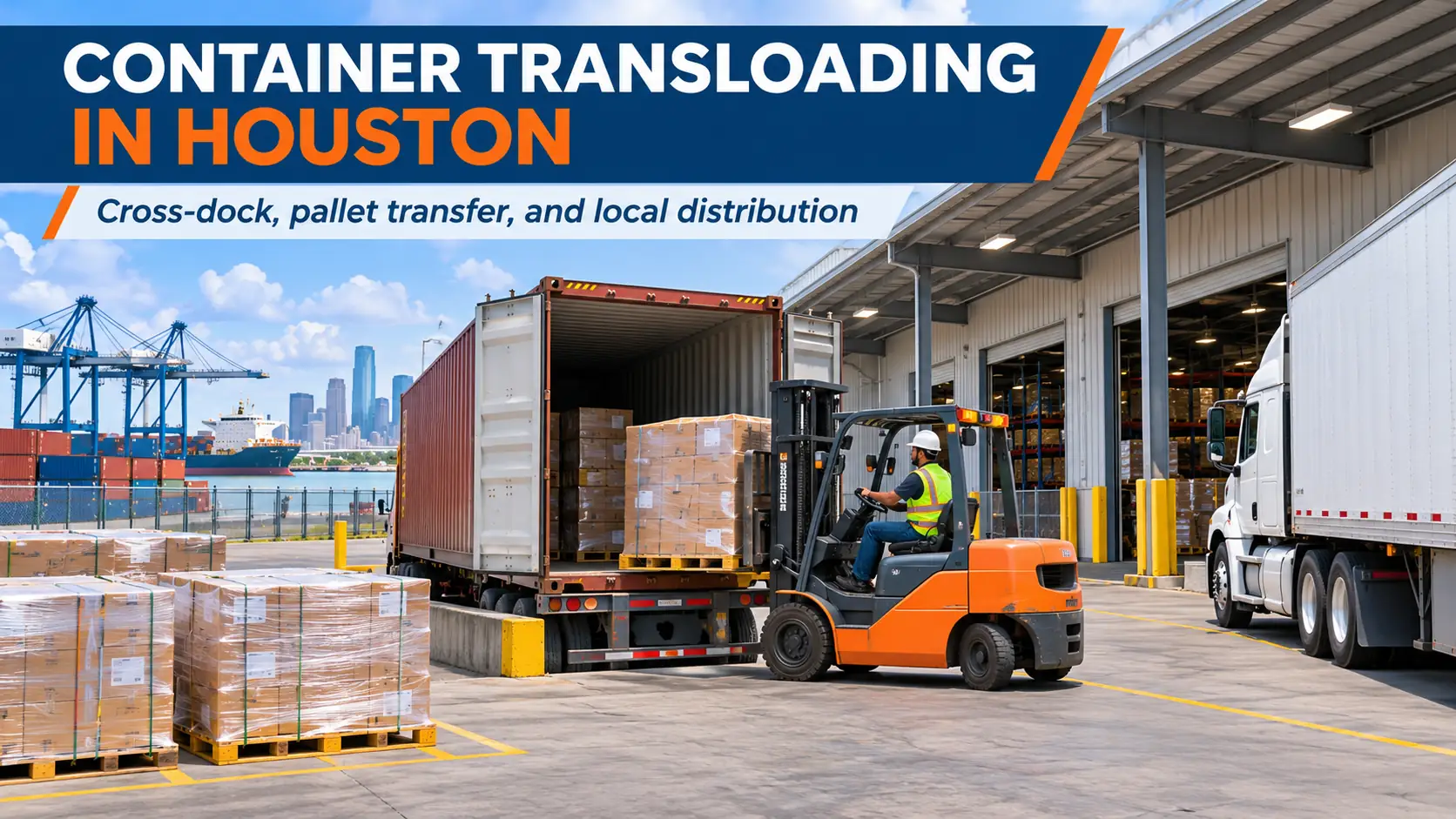
Container transloading is the process of transferring cargo from one transportation unit to another. For shipments arriving at Port Houston, this typically means unloading goods from an international ocean container and reloading them into domestic equipment, such as dry vans or flatbed trailers.
Common transloading operations include:
Container-to-trailer transfer: Moving cargo from an ocean container into domestic trailers for inland delivery.
Floor-loaded unloading: Removing loose cartons or individual pieces and preparing them for further handling.
Palletizing: Organizing goods onto pallets for easier loading, storage, and transportation.
Shipment splitting: Dividing one container into multiple outbound shipments for different customers or destinations.
Cross-docking: Transferring inbound freight to outbound trucks with minimal storage time.
Short-term staging: Holding cargo temporarily while outbound transportation is arranged.
Unlike traditional warehousing, transloading focuses on transferring freight between transportation equipment or modes. Some facilities also provide storage, inventory handling, and other value-added services.
Houston is an important freight gateway on the U.S. Gulf Coast. Port Houston operates two major container terminals, connecting international ocean freight with regional trucking and inland transportation networks.
The location also provides access to major Texas distribution markets and selected inland rail routes, making it a practical transloading location for importers moving cargo beyond the port.
Port Houston’s two container terminals serve different locations in the Houston area:
Bayport Container Terminal: Located in Pasadena, Texas, serving containerized cargo moving through the southeastern Houston port area.
Barbours Cut Container Terminal: Located in La Porte, Texas, with container handling, storage, and intermodal rail facilities.
The terminal listed on the arrival notice determines the container pickup location and initial drayage route. Before selecting a transloading facility, compare its actual distance from the relevant terminal rather than relying only on general claims about being near the port.
Trucking is commonly used to move containers from Houston terminals to nearby transloading facilities and regional destinations.
For longer inland routes, rail may offer another transportation option. Barbours Cut has direct rail access and intermodal connections to selected U.S. markets. Combining rail transport with local trucking can help businesses plan freight movements based on delivery requirements, capacity, and transportation costs.
The most suitable option depends on the final destination, cargo characteristics, transit time, and availability of domestic equipment.
Houston transloading facilities offer different handling capabilities depending on their equipment, warehouse space, and cargo requirements.
Common services include:
Container unloading: Removing palletized or floor-loaded cargo from 20ft and 40ft ocean containers.
Cargo inspection and counting: Checking piece counts, visible damage, and shipment details against the packing list.
Palletizing and labeling: Preparing loose cartons or individual products for domestic transportation.
Sorting by SKU or destination: Separating cargo for different customers, distribution centers, or delivery locations.
Cross-docking: Moving inbound freight directly to outbound trailers to minimize storage time.
Short-term storage: Staging cargo when outbound trucks or delivery appointments are not immediately available.
Outbound loading: Transferring freight into dry vans, flatbeds, or other suitable domestic equipment.
Weight distribution: Arranging cargo to support safe transportation and applicable road-weight limits.
Not every facility handles all cargo types. Oversized equipment, hazardous materials, refrigerated goods, and unusually heavy freight may require specialized equipment or additional handling arrangements.
Container transloading in Houston involves several coordinated steps, from port pickup to final dispatch.
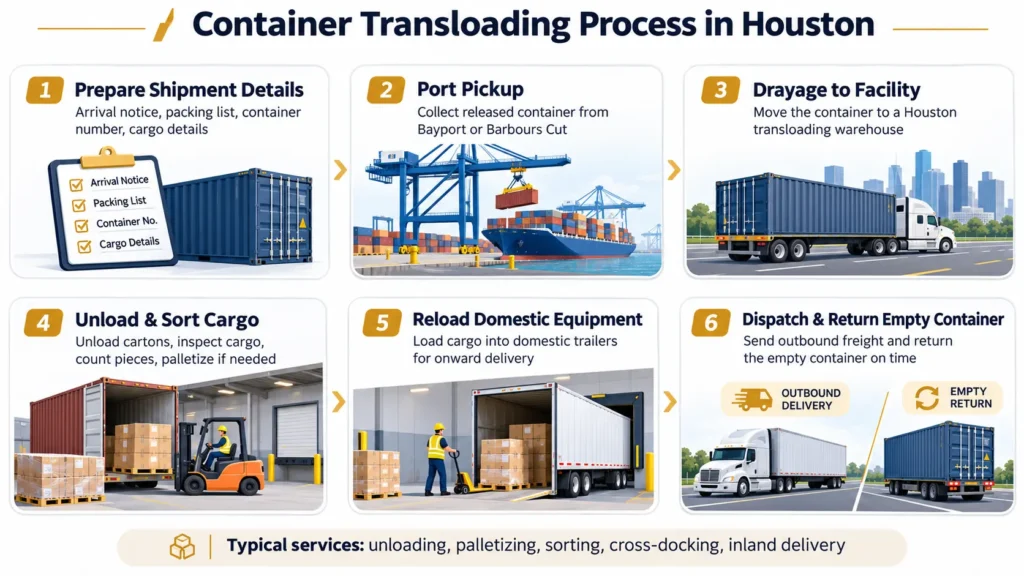
Before the container arrives, provide the transloading facility with the arrival notice, packing list, container number, cargo dimensions, gross weight, and piece count.
Confirm whether the cargo is palletized or floor-loaded. Also identify any requirements for sorting, labeling, palletizing, or splitting the shipment between multiple destinations.
Once customs and carrier releases are complete, arrange container pickup from Bayport or Barbours Cut.
Confirm terminal appointments, chassis availability, and the pickup schedule with the trucking provider. Completing the U.S. customs clearance process and checking terminal availability in advance can help prevent unnecessary delays.
A drayage truck moves the loaded ocean container from the terminal to the transloading warehouse.
The facility should confirm its receiving schedule and have the necessary labor, forklifts, and unloading equipment ready before the container arrives. The actual drayage time depends on the terminal, traffic, and warehouse location.
Warehouse staff unload the container using forklifts or other suitable equipment. They check the cargo against the packing list, verify the piece count, and record visible damage or discrepancies.
Depending on the shipment requirements, goods may also be palletized, labeled, or separated by destination before reloading.
After unloading and preparation, the cargo is transferred into domestic trailers, such as dry vans or flatbeds.
One ocean container can be consolidated into a single outbound load or divided into multiple shipments for different destinations. Proper weight distribution and load securing should be checked before dispatch.
Loaded trailers are dispatched to their final destinations by truck or, where suitable, rail.
After unloading, the empty ocean container must be returned to the designated depot or terminal within the carrier’s allowed free time. Confirm the return location and receiving schedule to avoid additional equipment-related charges.
Transloading is commonly used for general cargo that can be safely unloaded, handled, and reloaded at a warehouse.
Suitable cargo may include:
Cartons and palletized consumer goods
Retail and wholesale inventory
Building materials and packaged products
Industrial parts and non-hazardous machinery components
Floor-loaded shipments requiring sorting or palletizing
Cargo moving to multiple warehouses or customer locations
Oversized, unusually heavy, fragile, hazardous, or temperature-sensitive shipments should be reviewed before booking. These goods may require special lifting equipment, additional labor, or dedicated storage arrangements.
Container transloading costs in Houston depend on container size, cargo volume, piece count, and handling requirements. Palletized freight generally costs less to transfer, while floor-loaded containers require more manual labor and may involve additional palletizing expenses.
The following figures are indicative budgeting ranges. Actual charges vary by provider, terminal, cargo condition, and service requirements.
| Service / Line Item | Estimated Cost Range | Notes & Pricing Drivers |
|---|---|---|
| Palletized Transload (Cross-Dock) | $150–$490 per container | Direct forklift transfer from an ocean container to an outbound trailer |
| Floor-Loaded Transload (20ft) | $350–$500+ per container | Manual unloading; higher rates may include palletizing |
| Floor-Loaded Transload (40ft) | $500–$900+ per container | Depends on carton count, box weight, and SKU quantity |
| Port-to-Warehouse Drayage | $250–$650 per container | Transportation from Bayport or Barbours Cut to a transloading facility |
| Pallets & Stretch Wrap | $10–$25 per pallet | Standard pallets, stretch wrapping, and labeling |
For a full 40ft container, pallet and stretch-wrap expenses may add approximately $150–$450, depending on the number of pallets required.
These figures should be treated as estimates rather than fixed Port Houston tariffs or guaranteed market rates. Request a current, itemized quote before arranging the shipment.
Several factors influence the final price:
Container size: A 40ft container generally requires more handling capacity and labor than a 20ft container.
Cargo loading method: Palletized freight is generally faster to transfer, while floor-loaded cargo requires manual unloading.
Piece count and SKU quantity: A large number of loose cartons or different SKUs increases unloading, counting, and sorting time.
Palletizing requirements: Additional pallets, stretch wrapping, and labeling increase material and labor expenses.
Drayage distance: The distance between the port terminal and transloading facility affects trucking charges.
Equipment and accessorial charges: Chassis use, waiting time, additional labor, and after-hours handling may increase the total cost.
Storage and outbound delivery: Temporary storage and transportation to multiple destinations may be charged separately.
When reviewing a quote, check whether chassis fees and other accessorial charges are included in the drayage rate.
The unloading fee is only one part of the overall transportation expense.
Total transloading cost = Port drayage + Container unloading + Palletizing and materials + Additional handling + Storage (if required) + Outbound transportation.
Ask the provider whether charges are calculated per container, pallet, piece, or labor hour. Also confirm the included handling time, storage period, empty-container return arrangements, and any additional fees.
These services are related but serve different logistics purposes.
| Service | Main Purpose | Typical Use |
|---|---|---|
| Transloading | Transfers cargo between transportation equipment or modes | Moving goods from ocean containers into domestic trailers or rail equipment |
| Cross-Docking | Transfers inbound freight to outbound transportation with minimal storage | Sorting and dispatching cargo to multiple destinations |
| Warehousing | Stores inventory for a longer or planned period | Holding stock before orders, production, or distribution |
A shipment may use more than one service. For example, cargo can be transloaded from an ocean container, sorted through a cross-docking operation, and temporarily staged before outbound trucks arrive.
The right arrangement depends on inventory requirements, delivery schedules, and available warehouse capacity.
Good planning helps businesses manage handling costs and avoid unnecessary delays during Houston transloading operations.
Provide accurate cargo information: Send the packing list, dimensions, gross weight, and piece count before the container arrives.
Complete release procedures early: Check customs clearance, carrier release, and terminal availability before scheduling pickup.
Confirm handling requirements: Decide whether the cargo needs palletizing, sorting, labeling, or shipment splitting.
Coordinate outbound equipment: Arrange suitable trailers and delivery appointments before unloading is completed.
Plan empty-container returns: Confirm the return location, free time, and receiving schedule.
Review additional charges: Clarify waiting time, extra labor, materials, storage, chassis, and after-hours fees before accepting a quote.
Transloading can help reduce the time an ocean container remains in use, but it does not automatically eliminate demurrage or detention charges.
Demurrage generally applies when a container remains at the terminal beyond its allowed free time, while detention relates to keeping carrier equipment beyond the permitted period after pickup. Storage is a separate charge that may apply when cargo remains at a warehouse.
Understanding demurrage, detention, and storage charges helps importers plan container returns and warehouse handling more effectively.
Before selecting a transloading provider, compare the facility’s capabilities, transportation arrangements, and pricing structure.
Terminal coverage: Confirm that the provider can arrange pickup from the correct Houston terminal.
Facility location: Check the actual drayage distance from Bayport or Barbours Cut.
Cargo-handling capability: Verify forklifts, dock access, labor availability, and floor-loaded unloading capacity.
Inventory control: Ask how piece counts, cargo condition, and handling discrepancies are recorded.
Outbound transportation: Confirm access to suitable trucks, trailers, and rail connections where required.
Transparent pricing: Request an itemized quote covering drayage, unloading, palletizing, storage, and additional services.
Scheduling and communication: Make sure the provider can coordinate receiving appointments, outbound dispatch, and empty-container returns.
A suitable provider should be able to explain the complete transportation process, from terminal pickup to final delivery, rather than quoting only the unloading charge.
As an experienced freight forwarder, Tonlexing helps coordinate shipments from China to Houston, including port drayage, transloading, and inland delivery.
Transloading is the transfer of cargo from one transportation unit or mode to another. For Houston imports, it commonly involves unloading an ocean container and reloading the freight into domestic trailers or rail equipment for inland distribution.
A transloading fee covers the labor and equipment required to transfer cargo between transportation units. Depending on the service, it may include unloading, sorting, palletizing, reloading, and temporary staging. Drayage, materials, storage, and outbound transportation may be charged separately.
The time depends on cargo volume, loading method, labor availability, equipment, and warehouse scheduling. Palletized cargo is generally faster to handle than floor-loaded shipments. Same-day processing may be possible for straightforward loads, but the actual schedule should be confirmed with the facility.
Yes. A transloading facility can unload one ocean container, separate the cargo by destination, and reload it into multiple domestic trailers. This is useful for importers distributing inventory to different warehouses, customers, or retail locations.
Yes. Port Houston operates two container terminals: Bayport Container Terminal in Pasadena and Barbours Cut Container Terminal in La Porte. Both handle international containerized cargo and connect with regional transportation networks.
Useful freight, customs and importing resources related to this shipping guide.
Introduction – Why Houston is a Key Destination for Freight from China Houston is one of the most important gateways for international trade in t...
Read guide →
Drayage in the USA Explained: Services, Costs, Types, and How It Works Verified & Reviewed · Last updated March 2026 Drayage in the USA explained...
Read guide →
What Is Container Yard CY in Shipping? Verified & Reviewed · Last updated April 2026 A container yard (CY) in shipping is a designated area at a...
Read guide →
When dealing with international shipping, one of the common costs importers and exporters encounter is Terminal Handling Charges (THC). These cha...
Read guide →Demurrage vs Detention vs Storage Verified & Reviewed · Last updated January 2026 Demurrage vs detention vs storage is one of the most expensive...
Learn more → Useful Resource Origin Charges vs Destination Charges in International ShippingOrigin Charges vs Destination Charges in International Shipping Verified & Reviewed · Last updated July 2026 Origin charges and destination charg...
Learn more →WhatsApp us