Related Guide
How to Choose the Best Freight Forwarder in China
In the complex world of international trade, selecting a reliable freight forwarder is a crucial step in ensuring a smooth and cost-effective sup...
Read guide →

Tianjin is a major international trade and logistics hub in northern China, connecting manufacturers in Tianjin, Beijing, and Hebei with global markets through Tianjin Port.
As a freight forwarder in Tianjin, Tonlexing provides sea freight, air freight, rail transport, supplier pickup, warehousing, customs support, and door-to-door shipping for commercial and industrial goods.
Tianjin Port
Sea, Air & Rail Freight
Customs & Door-to-Door
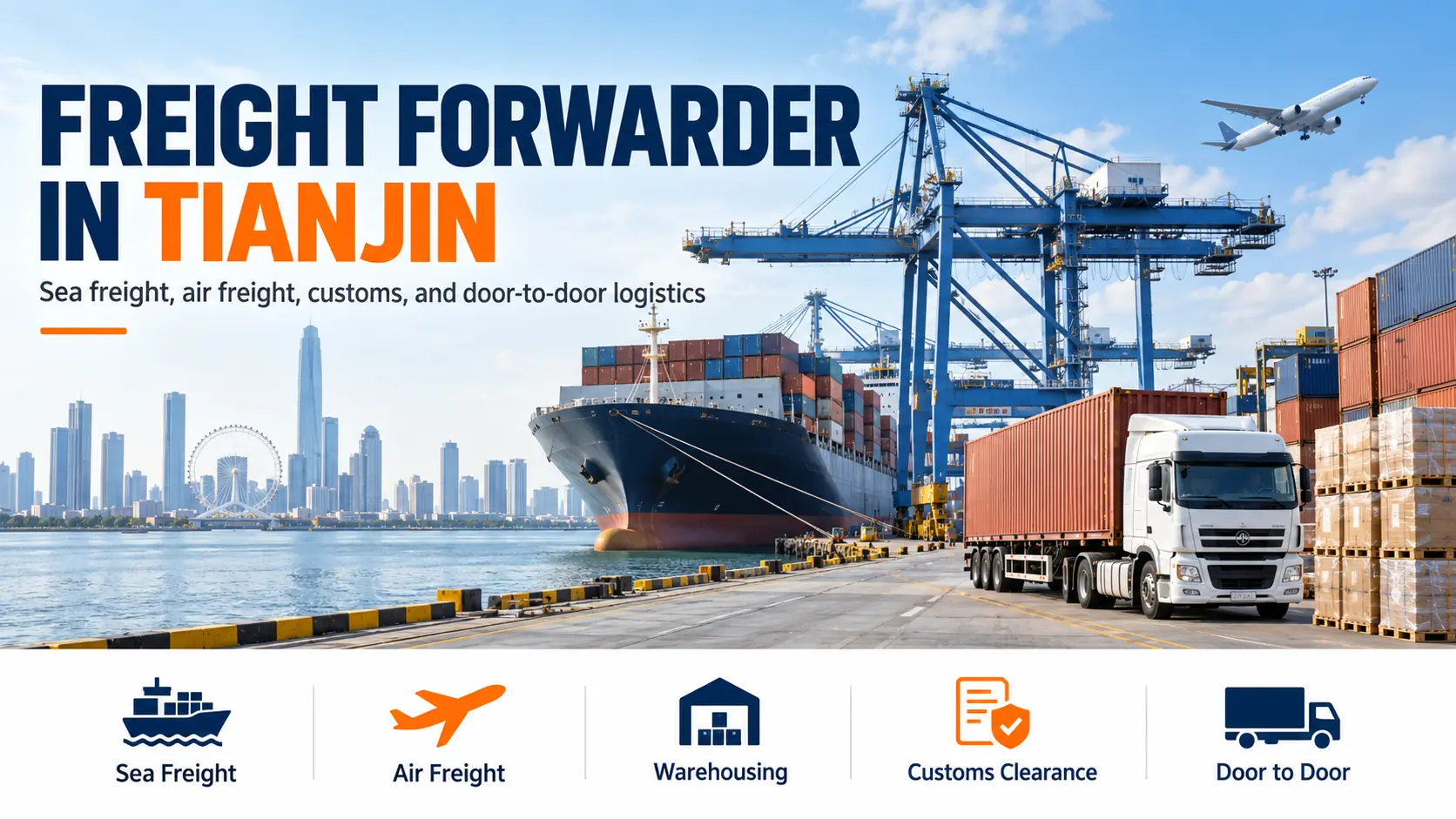
Tonlexing provides international freight forwarding services from Tianjin for importers, manufacturers, trading companies and other businesses moving goods from northern China.
Instead of coordinating several logistics providers separately, customers can use one team to manage the main stages from supplier collection to international transport.
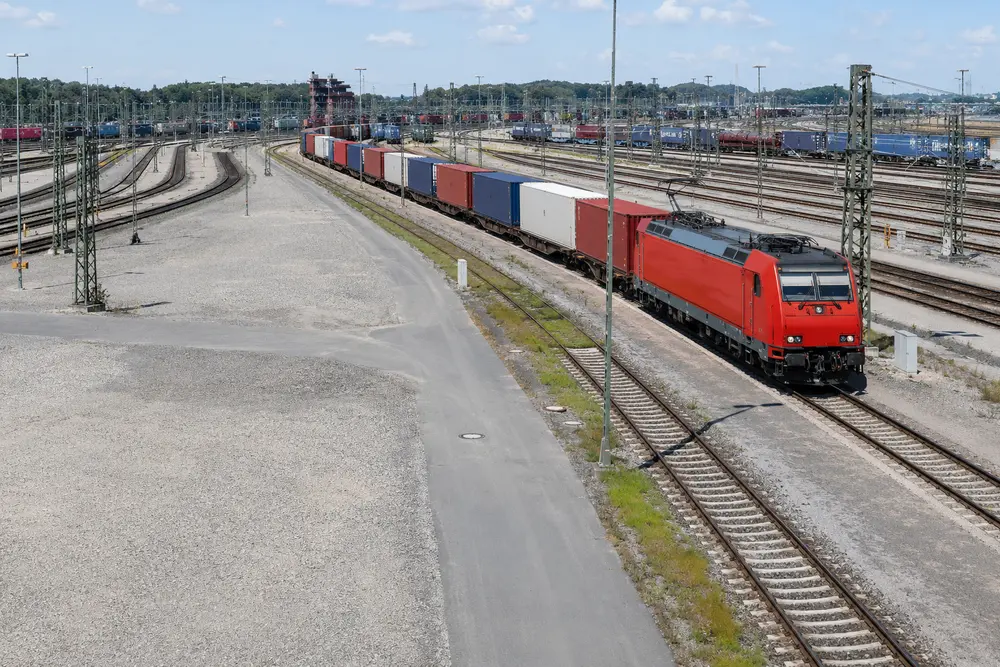
Rail solutions for selected China-Europe and inland routes, balancing transit time and transport cost.
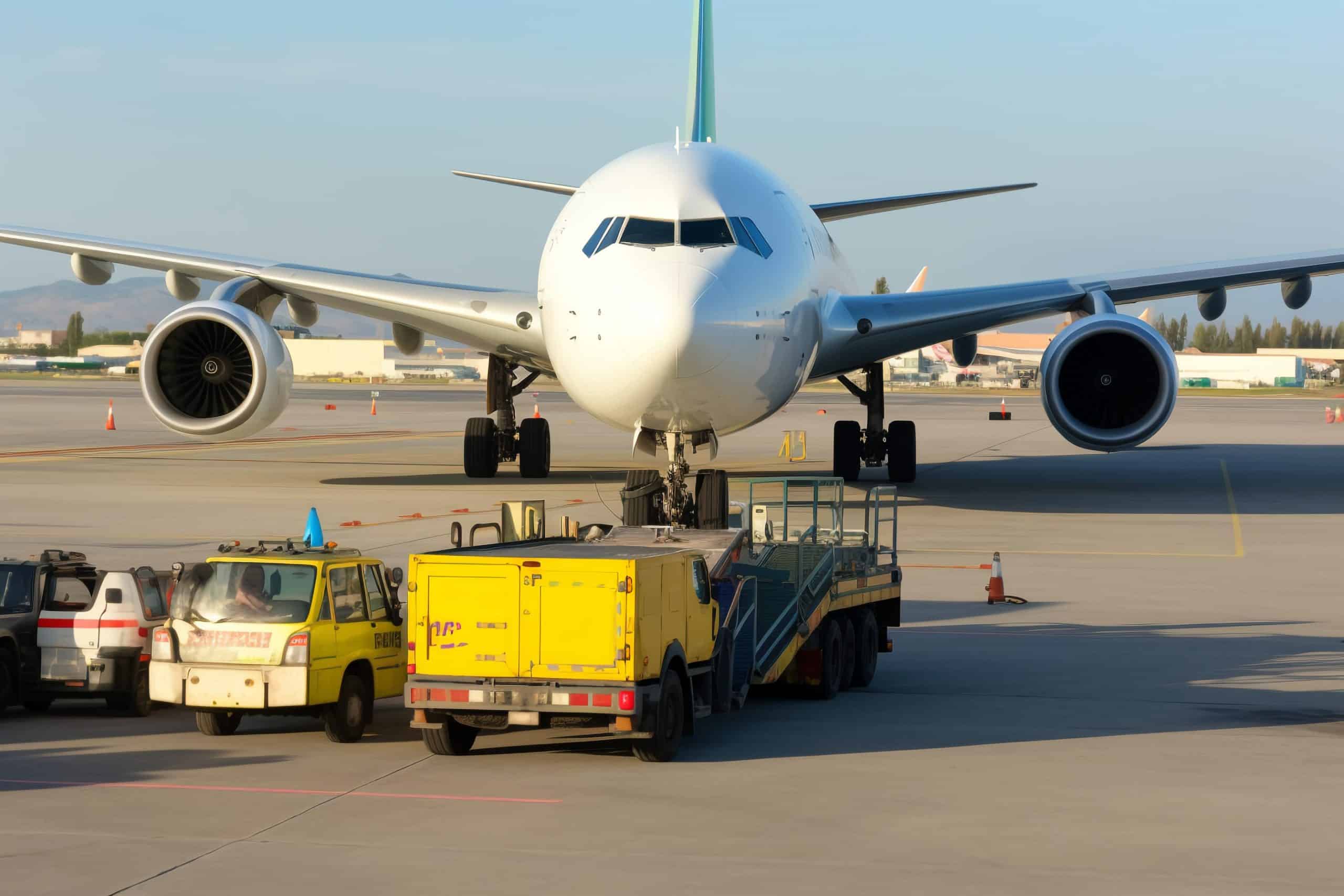
Fast transport for urgent, high-value and time-sensitive goods, with flexible airport and routing options.
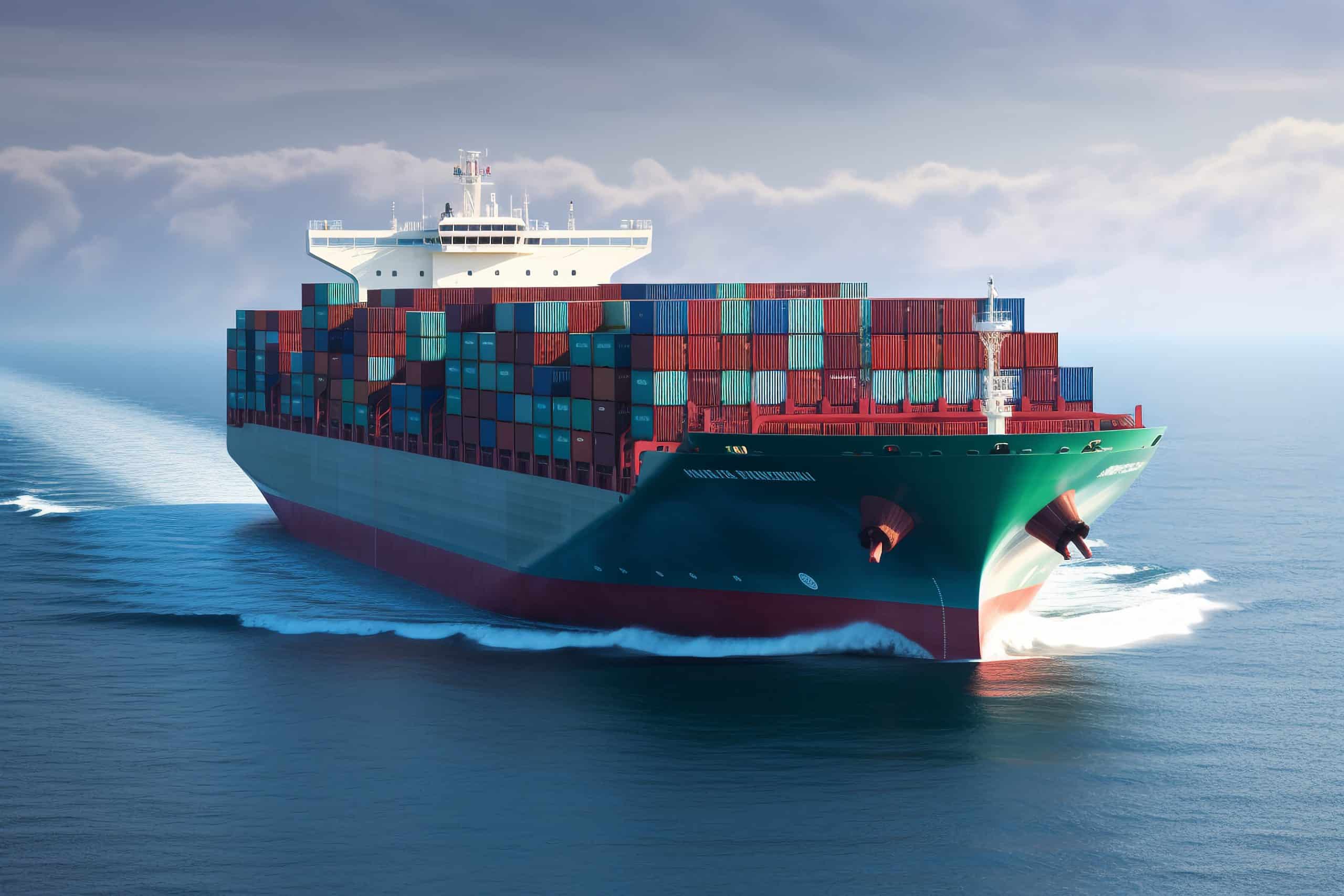
FCL and LCL shipping from Tianjin to major markets in North America, Europe, the Middle East, Asia and Africa.
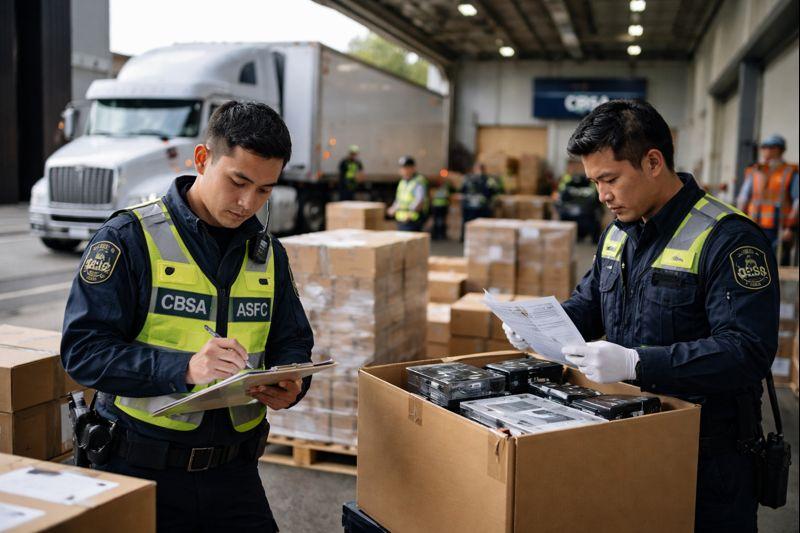
Supplier pickup from Tianjin, Beijing, Hebei and nearby manufacturing areas before export.
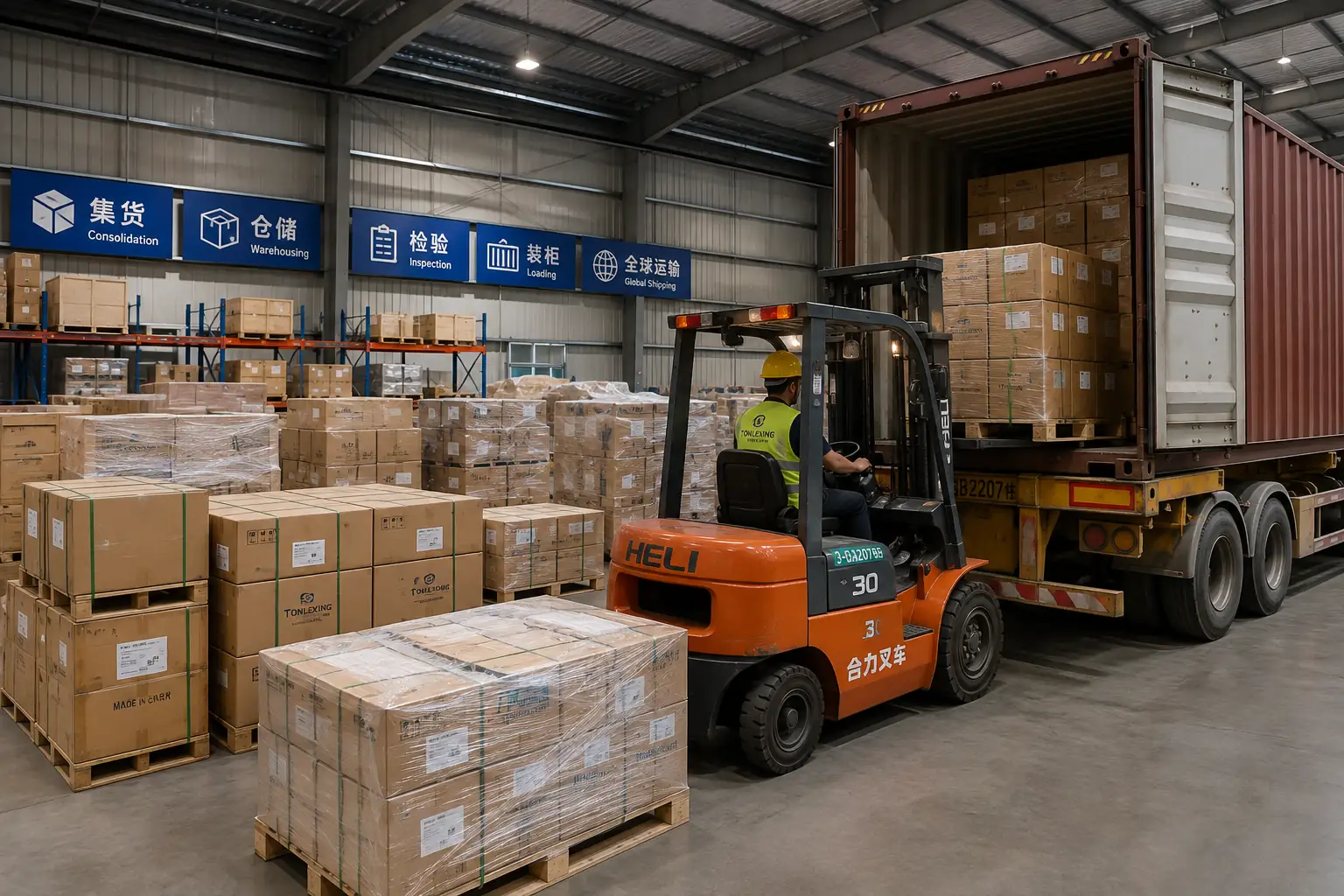
Combine goods from multiple suppliers, check packages and prepare them for international shipping.
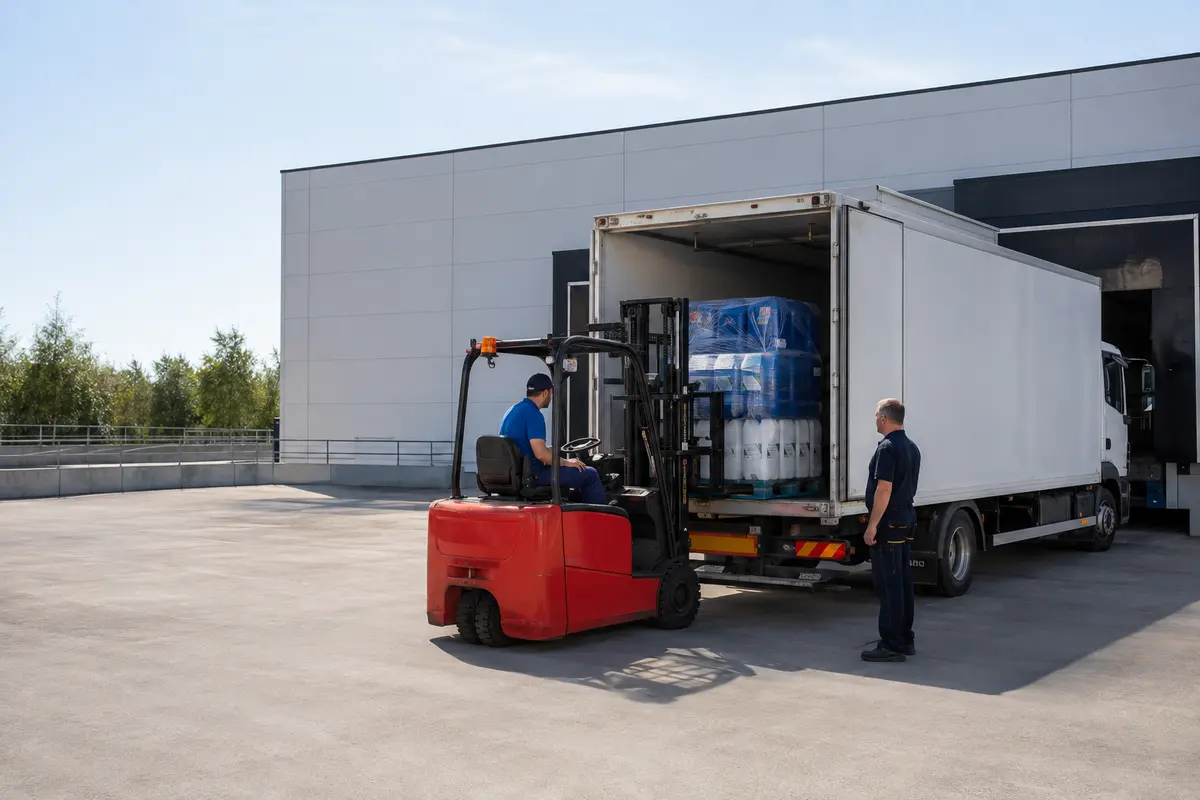
One coordinated service covering pickup, export handling, international transport and final delivery.
Tonlexing can combine these services into one logistics plan based on your cargo size, origin, destination, urgency and delivery requirements.
Tianjin has an important position in China’s transportation network because it connects one of the country’s largest northern manufacturing regions with international ocean shipping.
The city is particularly useful for companies sourcing goods around the wider Beijing-Tianjin-Hebei area.
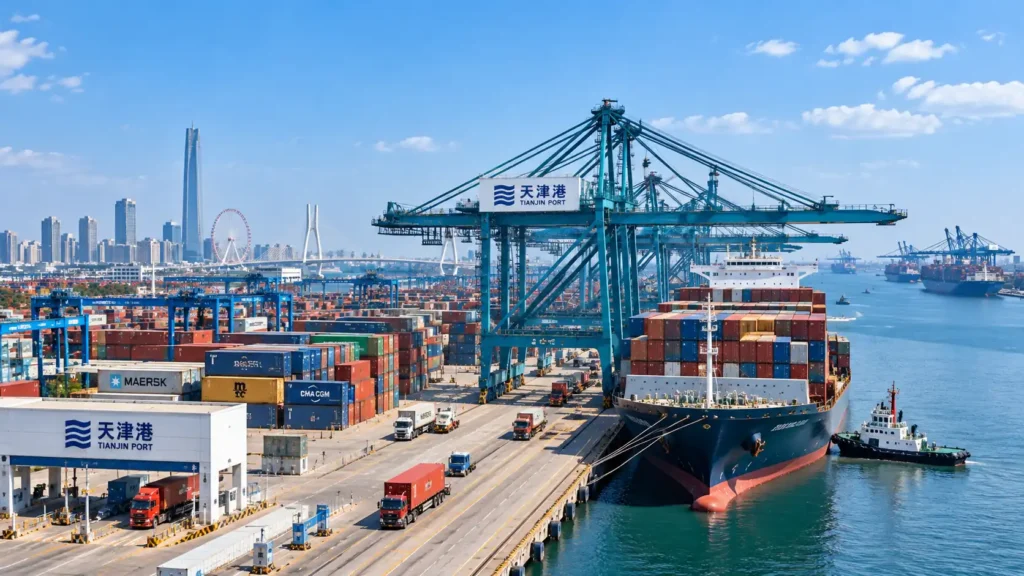
Beijing, Tianjin and Hebei contain a large number of manufacturers producing machinery, automotive components, electrical equipment, construction materials, metal products and other industrial goods.
For suppliers in this region, using Tianjin as an export gateway can reduce the need for long-distance domestic trucking to Shanghai, Ningbo, Shenzhen or other southern ports.
Tianjin provides access to major international trade lanes linking northern China with North America, Europe, Asia, the Middle East and other markets.
This makes it possible to combine inland transportation, port handling and overseas freight within one logistics plan.
The surrounding region produces a broad range of commercial and industrial goods, including:
Machinery and industrial equipment
Steel and metal products
Automotive parts
Electrical equipment
Construction materials
Industrial components
Consumer products
Selected bulk cargo
For importers shipping heavy or industrial products, proximity to a major northern port can simplify both pickup and export planning.
You can also learn more about Tianjin Xingang Port and its role in international shipping from northern China.
The best shipping method depends on the volume, weight, urgency, destination and characteristics of the goods.
Tonlexing does not automatically recommend the same method for every customer. Instead, we compare the available options before booking.
Full Container Load is generally suitable when one shipper has enough goods to use most or all of a container.
Common equipment includes:
FCL is often used for machinery, industrial products, palletized goods, furniture, construction materials and larger commercial orders.
Because the container is assigned to one shipper, loading and handling can be more straightforward than combining the order with unrelated goods.
For dense or heavy products, container payload limits and weight distribution should be checked before loading.
LCL is suitable when the volume is not large enough to justify booking an entire container.
Goods from several shippers are consolidated into one container, with charges normally calculated according to volume or weight under the applicable W/M rule.
LCL can work well for:
Several cartons
Pallets
Spare parts
Small machines
Trial orders
Goods from multiple suppliers
However, importers should compare the total cost, not only the basic ocean rate.
Origin handling, consolidation, destination fees, import clearance and local delivery may all affect the final amount.
When delivery speed is more important than price, air freight can be used for urgent commercial goods.
Tianjin Binhai International Airport can support international transportation, while alternative northern China airports may sometimes provide better schedules or capacity.
Typical uses include:
Production spare parts
Electronics
Samples
High-value items
Time-sensitive components
Air charges are normally based on chargeable weight, which compares actual weight with volumetric weight.
This means a lightweight but bulky carton can cost more than its physical weight alone suggests.
Rail transport may be suitable for selected destinations where available routes provide a useful balance between cost and transit time.
A multimodal solution may combine:
Factory Pickup → Truck Transport → Rail or Ocean Shipping → Destination Delivery
The actual routing should be based on the customer’s location and destination rather than simply choosing the nearest terminal.
Tianjin is also well positioned for many industrial and heavy shipments.
Before arranging transport, Tonlexing reviews factors such as:
Dimensions
Gross weight
Packaging
Lifting requirements
Loading equipment
Center of gravity where relevant
Container compatibility
Large equipment that cannot fit inside a standard container may require an open-top container, flat rack, special trucking or another project transportation solution.
Goods exported through Tianjin Port or Tianjin Binhai International Airport must be declared in accordance with China Customs requirements. Accurate product information and consistent documentation are especially important, as discrepancies in the product name, quantity, weight, value, or HS code can delay export clearance.
Tonlexing can coordinate document checking and export customs procedures before the goods are loaded for international transportation.
For standard commercial goods, the main export documents may include:
Commercial Invoice – showing the product description, value, currency, unit price, buyer, and seller information.
Packing List – showing package quantity, gross and net weight, dimensions, and packing method.
Customs Declaration Information – including the HS code, product description, quantity, value, and other declaration elements.
Sales Contract – may be required depending on the transaction and declaration requirements.
Bill of Lading or Air Waybill – issued for ocean or air transportation.
Certificates or permits – required for certain regulated or controlled products.
Depending on the destination and commodity, additional documents such as a Certificate of Origin, export license, dangerous goods documents, or transport certificates may also be required.
The information shown on the invoice, packing list, and declaration documents should be consistent. Even small differences in product descriptions, quantities, or weights can create unnecessary customs questions.
For standard goods, the export process generally follows these steps:
Shipping Data Preparation → Goods Enter Port or Terminal → Customs Declaration → Document Review → Release or Inspection
Before container loading or terminal entry, the forwarder or customs broker prepares the required shipment and declaration information.
Once the goods enter the relevant terminal or customs-supervised area, the declaration is submitted electronically.
Customs may then:
Release the goods directly after document review, or
Select the goods for inspection.
If an inspection is required, the container or packages may need to be moved to a designated inspection area. This can add extra handling time and local charges.
For this reason, customs clearance time should not be treated as a guaranteed fixed number of days. Straightforward declarations may be processed quickly, while inspections, document discrepancies, or licensing issues can extend the process.
Local export charges vary by shipment, customs broker, terminal, and product type. As a general reference, common origin charges may include:
| Charge | Typical Reference | Notes |
|---|---|---|
| Export Customs Declaration | RMB 350–550 / declaration | Customs broker service fee |
| Documentation Fee | RMB 250–450 / shipment | Document processing |
| Local Trucking / Drayage | RMB 1,000–2,500 / container | Depends on pickup distance and equipment |
| Customs Inspection | RMB 800–1,800 / container | Only when an inspection occurs |
These figures should be treated as general references rather than fixed rates. The final amount depends on the route, product, container type, pickup location, and whether additional handling is required.
Tonlexing can coordinate supplier pickup, warehousing, and cargo consolidation for goods moving through Tianjin and nearby areas such as Beijing and Hebei.
This is especially useful when an importer buys from several factories and wants to combine the goods before international shipping.
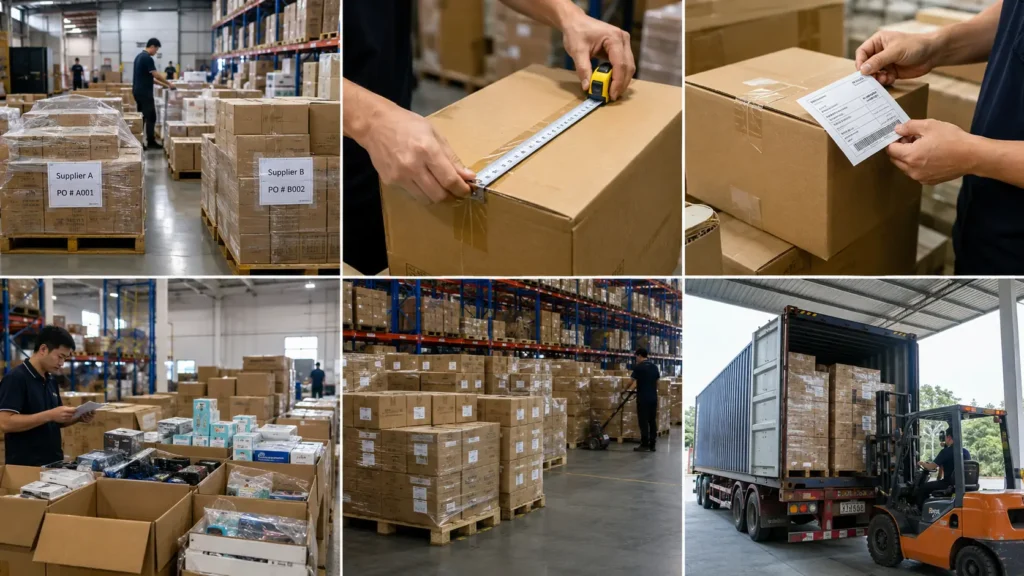
Goods can be collected directly from factories and transported to the designated warehouse or export facility.
Before pickup, we normally confirm:
Pickup address
Number of packages
Dimensions and weight
Cargo-ready date
Packaging condition
Whether special handling is required
For heavy machinery or oversized goods, forklift, crane, or loading requirements should be confirmed in advance.
After the goods arrive at the warehouse, basic information such as package quantity, dimensions, and weight can be checked before shipment.
If the packaging is not suitable for international transportation, reinforcement or repacking can also be arranged when required.
When goods come from several suppliers, Tonlexing can collect them separately and combine them into one shipment.
A typical process is:
Supplier Pickup → Warehouse Receiving → Measurement → Consolidation → Export Preparation → International Shipping
Consolidation can simplify the supply chain and reduce repeated domestic transport and handling costs, especially for importers sourcing from multiple factories in northern China.
Once all goods are ready, Tonlexing can arrange the next step by FCL, LCL, air freight, rail transport, or another suitable logistics solution.
Tianjin supports international trade with many major markets around the world.
Actual routing depends on carrier schedules, destination ports, transshipment arrangements and current capacity.
Goods from northern China can move to major ports in the United States and Canada, followed by rail or truck transportation where inland delivery is required.
Tonlexing supports both port-to-port and door-to-door services for companies importing into North America.
European destinations may include Germany, the Netherlands, France, Italy, Poland and other countries. Ocean shipping typically arrives through major European gateway ports before the goods continue inland.
Rail may also be considered for selected inland destinations where the route is commercially practical.
Tianjin can be used for trade with markets such as:
Saudi Arabia
Kuwait
Qatar
Other Gulf countries
The final solution depends on the destination, goods type and required delivery service.
Tonlexing also arranges logistics to countries across Asia, Africa, Latin America and Oceania.
For less common routes, transshipment may be required, so the cheapest option is not always the fastest.
When comparing different trade lanes, our team considers routing, transit time, handling requirements and overall transportation cost.
Freight costs from Tianjin vary by destination, shipping method, cargo volume, container type, season, and carrier capacity. The figures below are general market references only and should not be treated as fixed quotations.
For accurate pricing, Tonlexing recommends confirming the latest rate based on your cargo details and destination before booking.
| Destination | 20FT FCL | 40HC FCL | LCL | Estimated Transit Time |
|---|---|---|---|---|
| North America – West Coast | USD 3,000–5,500 | USD 4,600–5,700 | USD 60–130/CBM | 15–22 days |
| North America – East Coast | USD 4,200–7,200 | USD 5,200–9,800 | USD 80–150/CBM | 30–40 days |
| Europe – Major Ports | USD 3,500–4,800 | USD 5,000–7,500 | USD 70–160/CBM | 35–45 days |
| Southeast Asia | USD 1,200–1,800 | USD 1,600–2,700 | USD 40–70/CBM | 5–12 days |
| Middle East | USD 2,200–3,200 | USD 3,500–4,800 | USD 60–110/CBM | 18–28 days |
| Australia / Oceania | USD 1,800–2,500 | USD 2,800–3,800 | USD 50–90/CBM | 18–30 days |
FCL is usually more suitable for larger orders, while LCL is useful when the volume is not enough to fill a full container. If your shipment is approaching 13–15 CBM, it is worth comparing LCL with a 20FT container because the total cost difference can become much smaller.
European transit times may also be longer when carriers use alternative routings instead of the usual Red Sea route.
For urgent goods, air transportation can reduce transit time significantly.
Typical market references from Tianjin or nearby northern China airports are:
North America: about USD 6.50–7.80/kg
Europe: about USD 4.80–6.60/kg
Southeast Asia: about USD 1.80–3.50/kg
Express Courier: about USD 12–16/kg
Air transit time can range from about 1–5 days on faster services, while standard commercial air freight may take longer depending on routing and flight schedules.
Air freight is charged by chargeable weight, so carton dimensions can affect the final price.
The international freight rate is only part of the total logistics cost.
Other charges may include:
Terminal handling charges
Export customs declaration
Documentation fees
AMS or ISF filing for U.S.-bound goods
Factory pickup and trucking
Warehousing or consolidation
Special handling
Destination customs clearance
Final delivery
As a general reference, origin trucking around Tianjin and nearby industrial areas may range from roughly USD 150–400, while terminal and documentation charges depend on the shipment and service required.
A typical Tonlexing order follows a straightforward shipping process.
Send the product name, package quantity, dimensions, weight, pickup location, destination, and cargo-ready date.
Goods can be collected from suppliers in Tianjin, Beijing, Hebei, and nearby areas, then delivered to the warehouse for receiving and measurement.
Tonlexing checks the shipping documents, arranges export declaration, and books the selected sea, air, or rail service.
After departure, we provide shipment updates and can coordinate destination clearance and final delivery where required.
Choosing the right freight forwarder in Tianjin is not only about comparing the lowest rate. A reliable logistics partner should understand local operations, provide clear pricing, and have experience with your type of goods and destination.
The forwarder should be familiar with Tianjin Port operations, local trucking, FCL and LCL handling, export procedures, and supplier pickup from Tianjin, Beijing, Hebei, and nearby areas.
Ask for a clear quotation showing what is included, such as pickup, origin handling, customs declaration, international freight, destination charges, and final delivery.
A low base rate may not be the cheapest option if important charges are excluded.
Check the company information, business license, service capabilities, and experience with your product type.
A professional forwarder should also ask for accurate product details, HS code, value, packaging, and any special characteristics before booking.
Different goods require different logistics experience. Machinery, oversized equipment, batteries, chemicals, and other special products may need additional handling or documentation.
Tonlexing provides freight forwarding services from Tianjin for FCL, LCL, air and rail transport, warehousing, consolidation, customs support, and door-to-door delivery. Our team reviews the actual goods, route, timing, and delivery requirements before recommending a suitable transportation solution.
Tonlexing has handled a range of commercial and industrial shipments from Tianjin, including DDP and door-to-door sea freight to the United States. These real shipping cases demonstrate our experience with industrial goods, export coordination, ocean transportation, customs support, and final delivery.
Tonlexing arranged DDP sea freight from Tianjin to Miami for steel pipes and flanges. The shipment required coordinated export handling in China, international ocean transport, destination customs procedures, and final delivery.
This case shows how industrial goods can be managed under a complete DDP logistics solution when the importer prefers one provider to coordinate the major stages of transportation.
For another industrial project, Tonlexing arranged door-to-door sea freight from Tianjin to Houston for valves.
The service covered the movement from China through international shipping and destination delivery, providing a practical example of how industrial components can be transported from northern China to an inland U.S. market.
Tonlexing has also completed DDP shipping from Tianjin to Houston, combining international freight with destination-side coordination under a delivered-duty-paid arrangement.
For importers that prefer a more complete logistics service, DDP can reduce the number of separate providers involved in customs, duties, and final delivery.
View the Tianjin to Houston DDP Case
These examples show that Tonlexing has practical experience handling ocean freight from Tianjin, particularly for industrial products and door-to-door shipments to the United States.
If you are planning a similar shipment, send us your product details, packing list, pickup location, and destination. We can recommend a suitable transportation solution based on the actual goods and delivery requirements.
A freight forwarder coordinates transportation and related logistics services between the supplier and destination. This may include factory pickup, warehousing, consolidation, export documents, sea transport, air or rail service, customs support and final delivery.
Tianjin Port is commonly referred to as Tianjin Xingang or Xingang Port in international shipping. However, the exact terminal and booking details should still be confirmed before the goods are delivered to the port.
Yes. Tonlexing can arrange both full-container and less-than-container-load services. The better option depends on volume, weight, destination, frequency and total logistics cost.
Yes. Goods located in Beijing, Hebei and other nearby areas can be collected by truck and transported to the appropriate warehouse or port facility in Tianjin before export.
Provide the product name, package quantity, dimensions, weight, total CBM, HS code if available, goods value, pickup location, destination, goods-ready date and information about any batteries, liquids, powders, magnets, chemicals or branded products.
Useful freight, customs and importing resources related to this shipping guide.
In the complex world of international trade, selecting a reliable freight forwarder is a crucial step in ensuring a smooth and cost-effective sup...
Read guide →
Sea freight is the most cost effective shipping method for large volumes and container load cargo. It is ideal for businesses looking to reduce s...
Read guide →
What is FCL Shipping? Verified & Reviewed · Last updated June 2026 FCL shipping, short for Full Container Load shipping, is an international frei...
Read guide →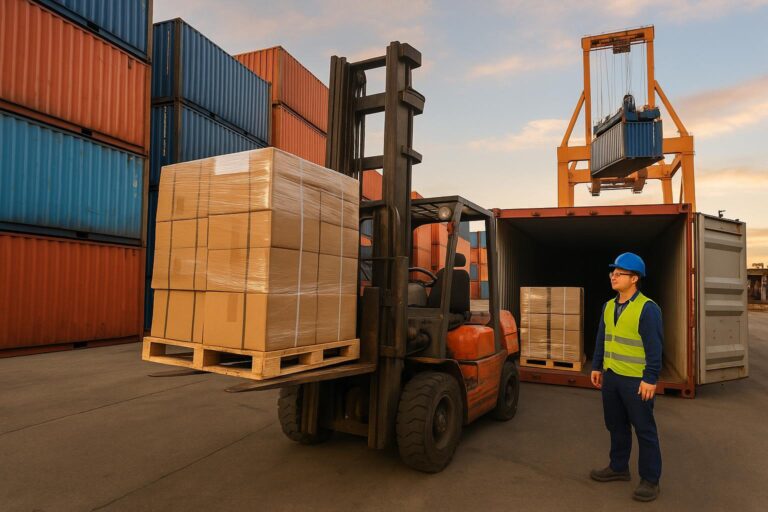
Learn how LCL shipping and consolidated shipments help reduce shipping costs for smaller cargo from China.
Read guide →Warehouse Consolidation in China — Faster, Smarter Global Shipping A consolidation warehouse combines cargo from multiple suppliers into one ship...
Learn more → Useful Resource Customs Broker vs Freight ForwarderCustoms Broker vs Freight Forwarder Verified & Reviewed · Last updated April 2026 Customs broker vs freight forwarder is a common question for im...
Learn more →WhatsApp us