Related Guide
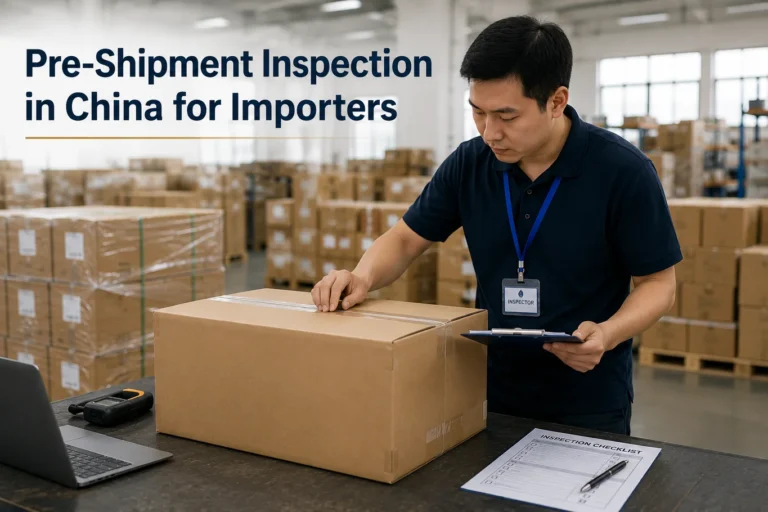
Pre-Shipment Inspection in China for Importers
Pre-Shipment Inspection in China for Importers Verified & Reviewed · Last updated July 2026 A pre-shipment inspection helps importers identify de...
Read guide →

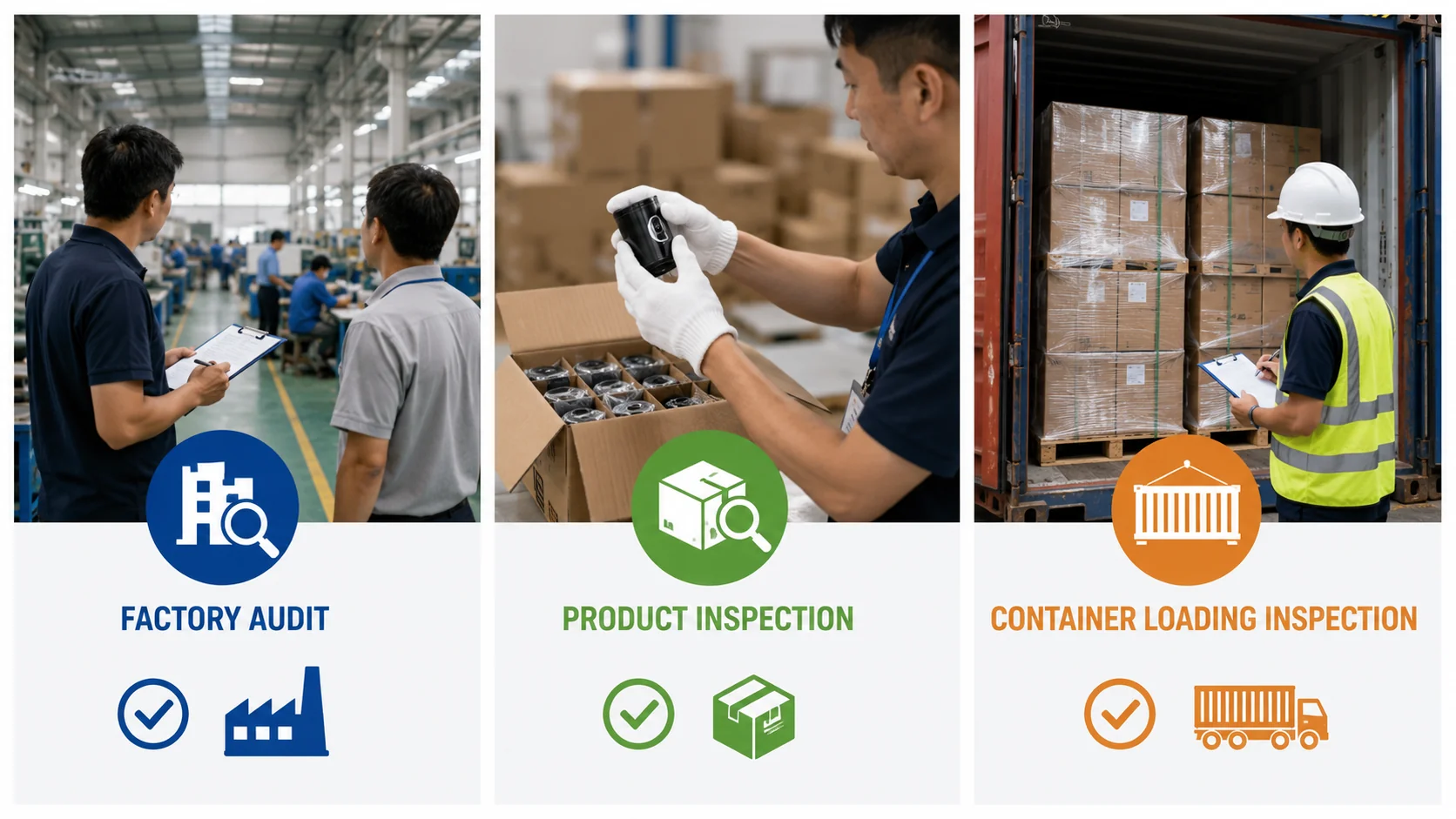
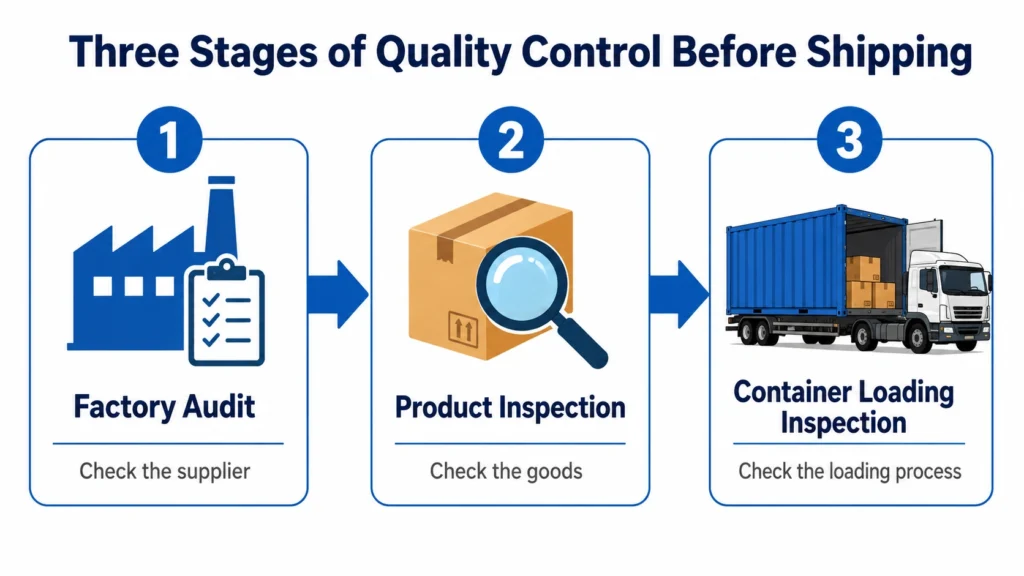
Factory audit, product inspection, and container loading inspection are three different quality control steps for importers sourcing from China. Each one checks a different stage, from supplier capability to product quality and final container loading.
This guide explains the key differences between these inspection services, when to use each one, and how importers can reduce supplier risk, product defects, loading errors, and shipping disputes before goods leave China.
Factory Audit
Product Inspection
Container Loading Inspection
| Service type | Main focus | Best timing | Main risk controlled |
|---|---|---|---|
| Supplier capability review | Business legitimacy, management systems, equipment, staff, and capacity | Before a major order | Fake companies, weak capacity, poor systems, and unauthorized subcontracting |
| Product inspection | Materials, workmanship, function, labeling, packaging, and product quantity | During production or before shipment | Defects, wrong specifications, missing items, and non compliance |
| Container Loading Inspection | Container condition, carton count, loading activities, handling, stowage, and container seals | When loading begins | Loading errors, shortages, mixed goods, transit damage, and disputes |
The simplest way to remember the difference is:
The company review checks who will make the goods. Product inspection checks what was made. Container loading supervision checks what actually leaves the site.
This review is completed before an importer commits to a new factory or a high-value purchase order. It does not approve a specific batch. Instead, it assesses whether the business has the legal standing, manufacturing resources, staff, equipment, and quality controls needed to handle the order.
The review normally covers:
Business registration and operating address
Production lines, machinery, and factory floor conditions
Workforce size and manufacturing capacity
Incoming material controls
In-process and final quality procedures
Calibration and maintenance records
Management of rejected goods
Traceability and documentation
Relevant safety standards and certification services
Evidence of outsourcing or subcontracting
The review may reveal that a vendor is a trading company rather than the stated manufacturer, has limited capacity, or maintains a management system only on paper. Even a positive result does not guarantee the current batch. It shows capability, not finished-goods conformity.
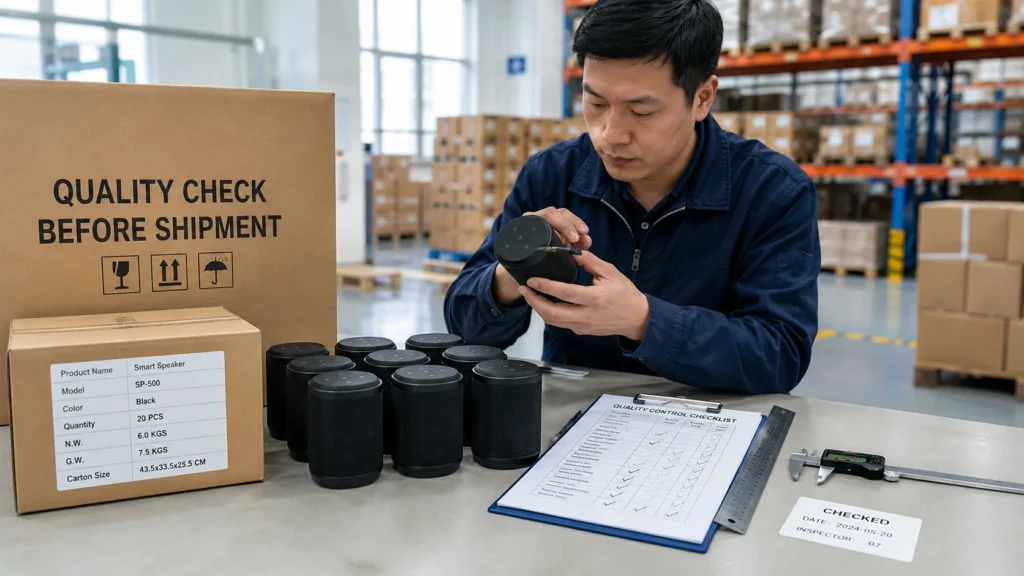
Product inspection focuses on the goods. A reviewer uses samples or the full order to verify the purchase order, approved sample, drawings, labels, packaging requirements, and product specifications.
These checks can be carried out at several stages.
A pre-production check helps verify raw materials, components, colors, accessories, approved samples, and readiness to start. It is useful for customized goods and orders with strict material requirements.
A during-production check takes place after manufacturing has started but before the order is complete. It can identify repeated defects early enough for corrective actions. The reviewer may examine workmanship, dimensions, assembly, function, and manufacturing progress.
The final product check usually takes place when most goods are complete and packed. The reviewer selects samples to verify function, reviews shipping cartons, and compares labels and carton marks with the order requirements.
Typical checks include:
Appearance and workmanship
Dimensions, weight, color, and materials
Function and performance
Barcodes, labels, carton marks, and manuals
Accessories and spare parts
Packaging materials and packaging integrity
Product quantity and carton count
Compliance with approved requirements
This process protects product quality and reduces the chance of defective goods reaching customers. It also gives the buyer time to request rework, replacement, sorting, or other corrective actions before dispatch.
However, the product review does not prove what enters the container. A report may show 500 cartons in the warehouse, but without loading supervision, the buyer cannot know whether all 500 were securely loaded.
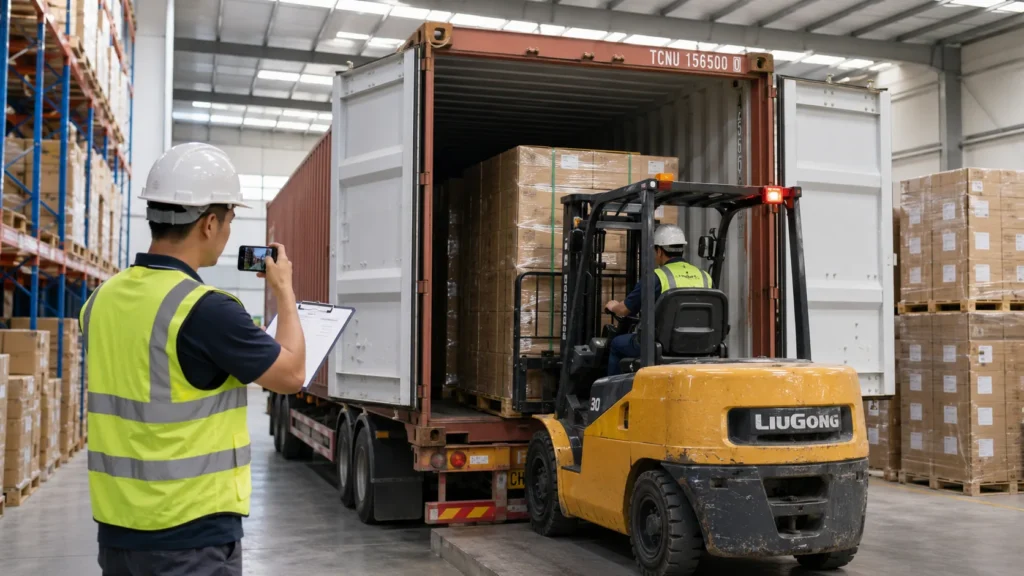
A Container Loading Inspection is the final stage of physical control before dispatch. An independent inspector attends the loading site and monitors the entire loading process, from the initial container inspection to final sealing.
This service ensures that the shipping container is suitable, the correct items are present, the right quantities are counted, and the cargo is handled correctly. The representative also records the container number and seal numbers and takes photographic evidence.
Container Loading Inspection may also be called container loading supervision or loading inspection. The exact scope varies, so the buyer should issue a clear loading plan before the service starts.
A complete loading check normally includes four stages.
Before loading begins, the inspector verifies the container condition, including:
Container cleanliness and dryness
Strong odors or contamination
Holes, cracks, rust, or damaged doors
Floor condition
Signs of water leakage
Suitability for the cargo
Poorly packed containers are not the only cause of product damage. A wet, dirty, leaking, or damaged unit can also compromise a shipment. The representative should report an unsuitable unit and request corrective actions before loading.
The representative uses the packing list and purchase order to verify goods inside the loading area. The check covers:
Correct items and models
Correct quantity
Carton and pallet count
Shipping marks and labels
Packaging integrity
Condition of shipping cartons
Protection for fragile products
A pre-loading inspection may also review selected product and packing requirements before cartons enter the container. This is useful when a detailed product review has already been completed.
During container loading supervision, inspectors monitor the work and continuously monitor how cartons, pallets, crates, or machines are handled.
The representative verifies:
Whether the loading plan is followed
Proper handling by workers and equipment
Placement of heavy and fragile cargo
Weight distribution inside the container
Use of straps, dunnage, blocks, airbags, or other securing materials
Protection against shifting, crushing, and moisture
Efficient use of space without unsafe overloading
Incorrect loading can damage acceptable goods. Heavy boxes on delicate cargo, uneven weight distribution, weak securing, and excessive gaps all create avoidable transit problems.
Container loading supervision is especially useful for furniture, machinery, glass, electronics, high-value cargo, mixed orders, and goods from multiple vendors.
After the cargo is loaded correctly, the inspector verifies that the doors close properly and that the container is properly sealed. Container seals and seal numbers are photographed and entered in the final report.
The final documentation should include:
Container and vehicle numbers
Seal numbers
Total quantity loaded
Loading start and finish times
Images of the empty container
Images taken during the loading process
Photographs of securing and final stowage
Images of closed doors and seals
Notes on shortages, damage, delays, or non compliance
This evidence helps reduce disputes about handling, carton count, and shipment integrity.
| Comparison point | Supplier capability review | Product inspection | Container Loading Inspection |
|---|---|---|---|
| Main object | Business and management system | Goods and packing | Container, goods, handling, and loading |
| Main question | Can the company produce reliably? | Do the goods meet requirements? | Were the right goods loaded safely? |
| Timing | Before order confirmation | During or after production | At the final stage before dispatch |
| Method | Records, staff, facilities, and systems | AQL sampling or full checking | Count, observation, and transport records |
| Main evidence | Findings and facility photos | Measurements, tests, defects, and photos | Carton count, loading photos, container and seal details |
| Best use | New or high-risk manufacturer | New products, large orders, or strict requirements | Full loads, mixed cargo, fragile goods, or high shipping risk |
| Main limitation | Cannot detect batch defects | Cannot assess long-term capacity or final loading | Cannot detect hidden defects or long-term capability |
These inspections work together because each addresses a different weakness. None fully replaces the others.
Product inspection confirms that the goods meet the agreed requirements before shipment, but it does not always show what happens during the final loading stage.
After inspection, products may still be moved, repacked, mixed with other shipments, or loaded incorrectly. Issues such as missing cartons, wrong quantities, poor weight distribution, damaged packaging, or incorrect container sealing can happen during the loading process.
A Container Loading Inspection provides an additional control point by verifying:
The shipping container condition before loading
Correct products and quantities being loaded
Proper handling and securing of cargo
Loading sequence and weight distribution
Container seals and final loading records
In simple terms, product inspection checks whether the goods are acceptable, while loading supervision checks whether the approved goods leave the factory correctly.
For full container shipments, fragile products, high-value cargo, or multi-supplier orders, combining both inspections provides stronger protection against quality and shipping risks.
The right inspection method depends on the supplier relationship, product type, shipment value, and potential risks. Different situations require different levels of quality control.
Start with a capability review. Then arrange product inspection before releasing the balance payment. Add container loading supervision for a full load, high-value shipment, or fragile cargoa.
A full company review may not be necessary for every order. Regular product checks can track quality consistency. Loading inspection remains useful when the shipment has high value, unusual packing, or a history of shortages or damage.
Use an early production check for materials and components, followed by a final product review. Add loading supervision when the goods are difficult to replace or late delivery would affect a launch.
Container loading inspection is strongly recommended. The inspector verifies carton totals by vendor, checks marks, reviews the loading sequence, and records which goods entered the shared container.
A practical plan follows the order of exposure:
Verify the business before commitment. Review legitimacy, capacity, systems, and manufacturing resources.
Check materials and progress when exposure is high. Use early checks for customized, technical, or high-value goods.
Review finished goods before payment and shipping. Check workmanship, count, labels, packing, and compliance.
Supervise container loading when dispatch risk matters. Review container cleanliness, goods, cargo placement, securing, and sealing.
Keep complete records. Retain the inspection report, packing list, photographs, container number, and seal numbers.
Using all three inspections provides layered risk management in sourcing. The goal is not to repeat the same check. It is to place each control where it can prevent the most expensive failure, protect brand reputation, and support customer satisfaction.
Quality control is only one part of successful international shipping. After inspection approval, goods still need proper pickup, consolidation, documentation, and transportation arrangements.
Tonlexing helps importers connect inspection results with the shipping process by coordinating with suppliers, warehouses, and logistics partners.
Our support includes:
Arranging supplier pickup after inspection approval
Receiving and consolidating goods from multiple suppliers
Checking shipment details and packing information
Supporting container loading arrangements
Handling export procedures and international shipping coordination
Providing sea freight, air freight, railway, and DDP/DDU solutions
By combining quality control coordination with freight services, Tonlexing helps importers reduce delays, improve shipment visibility, and move goods from China to the destination more smoothly.
Not for every shipment. It is valuable when an order is high value, fragile, mixed, difficult to replace, or loaded as a full container. The goods review covers the order, while the loading service checks final container loading, handling, carton totals, and sealing.
The inspector verifies container condition, container cleanliness, correct products, carton totals, shipping cartons, loading activities, proper handling, weight distribution, securing, and container seals. The representative also prepares photographic evidence and an inspection report.
Only visible defects or packing problems seen during loading. Detailed testing should be completed earlier through a dedicated product check.
The buyer, manufacturer, or freight forwarder should provide the latest approved records before loading begins. The representative needs accurate item descriptions, carton totals, marks, and special handling instructions.
The representative should document the container condition and report the problem immediately. Depending on the buyer’s instructions, loading may pause until the unit is cleaned, repaired, or replaced.
No service can remove every transit hazard. However, loading inspection helps prevent incorrect loading, weak securing, count disputes, and avoidable product damage. The inspection ensures the cargo was handled correctly and securely loaded, improving the chance of safe delivery.
Useful freight, customs and importing resources related to this shipping guide.
Pre-Shipment Inspection in China for Importers Verified & Reviewed · Last updated July 2026 A pre-shipment inspection helps importers identify de...
Read guide →
How to Verify a Chinese Supplier Before You Pay Verified & Reviewed · Last updated July 2026 Before you pay a Chinese supplier, do not rely only...
Read guide →
China Sourcing Trip Guide Verified & Reviewed · Last updated June 2026 China Sourcing Trip Guide for importers: A sourcing trip to China can be o...
Read guide →
China Warehouse Consolidation Service Verified & Reviewed · Last updated May 2026 China warehouse consolidation service helps importers collect g...
Read guide →Shipping from Multiple Suppliers in China Verified & Reviewed · Last updated May 2026 Shipping from multiple suppliers in China can be difficult...
Learn more → Useful Resource Documents Required to Import from China (2025 Guide)Importing goods from China can be highly profitable—but only when you understand the necessary documents and import requirements. Whether you’re...
Learn more →WhatsApp us