Related Guide
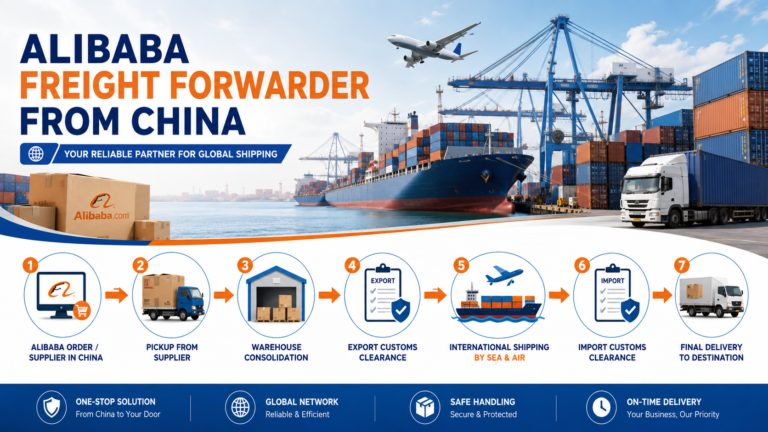
Alibaba Freight Forwarder from China
Alibaba Freight Forwarder from China Verified & Reviewed · Last updated July 2026 Finding a reliable Alibaba freight forwarder from China can mak...
Read guide →

Freight forwarder red flags can appear before your cargo even moves. Unclear pricing, poor communication, missing business details, and weak customs knowledge may lead to hidden fees, shipping delays, or compliance problems.
This guide explains how to identify risky freight forwarders before booking, covering pricing traps, company verification, shipment visibility, documentation issues, customs risks, and export compliance warning signs.
Red Flags
Hidden Fees & Pricing Risks
Customs & Compliance Issues
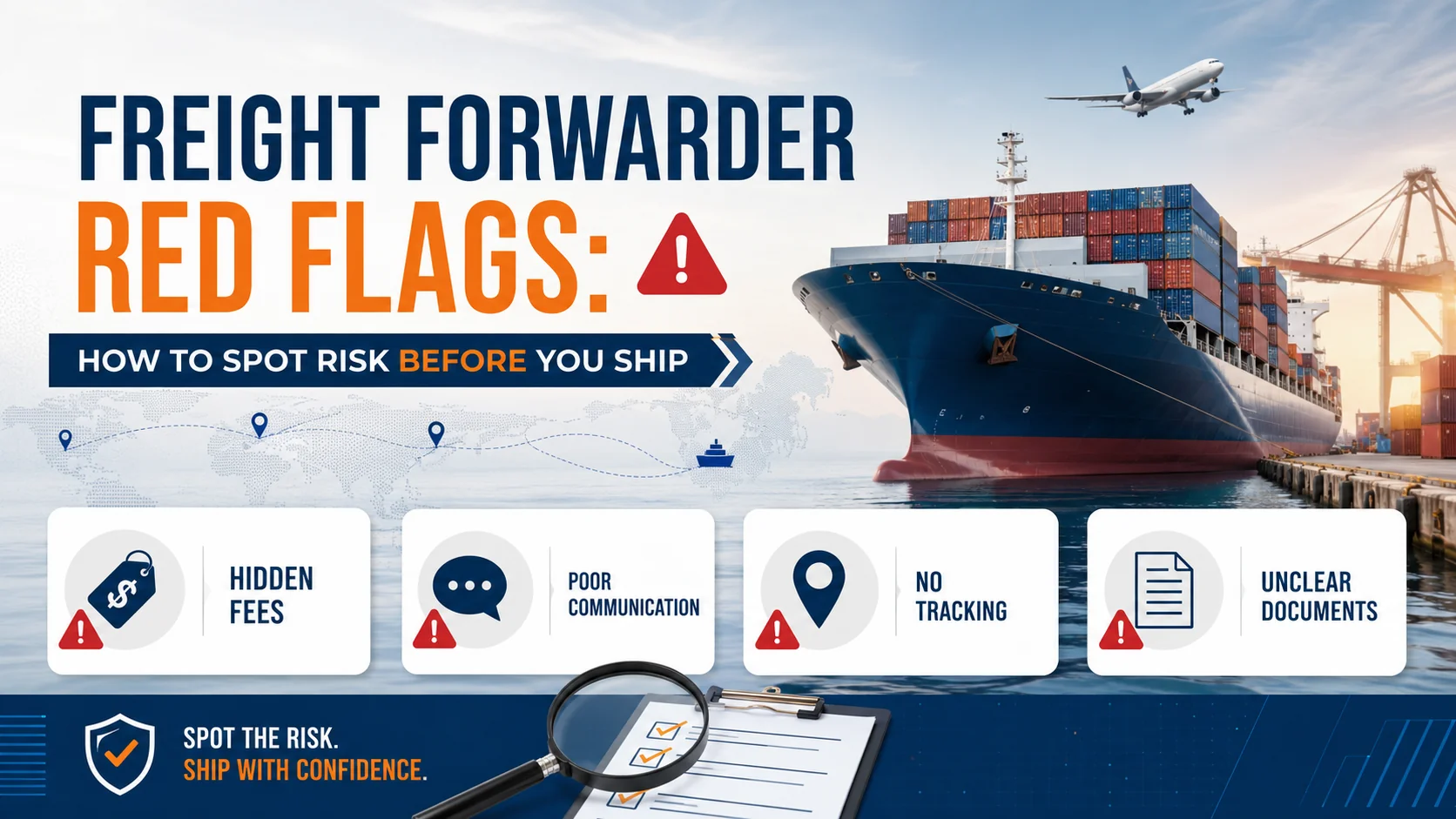
Freight forwarder red flags are warning signs that a logistics provider may be unreliable, inexperienced, non-transparent, or risky to work with. Some red flags are easy to see, such as poor communication or suspiciously low pricing. Others are more serious but less obvious, such as weak customs knowledge, missing documentation processes, or unfamiliarity with export regulations.
A competent forwarder should be able to explain the shipping route, pricing structure, documents, customs responsibilities, delivery process, and possible extra charges. They should also understand the basic regulatory requirements for the shipment type and destination country.
The goal is not to avoid every small freight forwarder. Many smaller providers are professional and highly specialized. The real issue is whether the forwarder is transparent, verifiable, and capable of handling your shipment correctly.
The most common red flags usually appear before the shipment starts. If several of these warning signs appear at the same time, you should slow down and verify the provider carefully.
| Red Flag | Why It Matters |
|---|---|
| Unclear pricing | May lead to hidden fees and unexpected charges |
| Very low quote | May exclude important services or indicate weak operations |
| No business address | Makes the forwarder difficult to verify |
| Poor communication | Often predicts service problems after payment |
| Weak customs knowledge | Can cause clearance delays and compliance issues |
| Missing licenses or insurance | Reduces accountability and protection |
| No tracking updates | Makes cargo difficult to control |
| Vague export compliance process | May create legal risks for regulated export shipments |
A single issue does not always mean fraud. However, repeated vague answers, unclear documents, and pressure for fast payment are strong warning signs.
Price is one of the first things importers compare, but it is also where many freight forwarding problems begin. A reliable quote should explain what is included, what is excluded, and what may change after cargo measurement or customs review.
Unclear pricing and hidden fees are significant concerns in freight forwarding. A quote that only shows one total amount without details can make the final shipping cost unpredictable.
Important charges may include pickup, warehouse handling, export documents, customs clearance, destination local charges, delivery fees, duties, taxes, storage, demurrage, and customs inspection costs.
Some extra fees are legitimate when they are caused by customs inspection, wrong cargo data, remote delivery, or port storage. The problem is when the forwarder does not explain these possible costs before booking.
A reliable freight forwarder should provide an itemized quote and clearly state whether the price is door to door, port to port, DDP, DDU, air freight, sea freight, LCL, or FCL.
A low rate is not always bad. Some forwarders have strong carrier contracts or efficient consolidation services. The red flag appears when one quote is far below the market and the provider cannot explain why.
Suspiciously low pricing often means key costs are missing. The quote may exclude destination charges, final delivery, customs clearance, duty, VAT, warehouse fees, or other local costs.
Before choosing the cheapest option, compare quotes based on the same shipment details:
Product name
Gross weight and volume
Carton or pallet quantity
Pickup address
Destination address
Shipping method
Customs responsibility
Duties and taxes
Final delivery service
The cheapest quote is only useful if the service scope is truly the same.
Before sending payment or allowing cargo pickup, make sure the freight forwarder is a real and traceable business. A lack of physical presence can indicate a dubious freight forwarder.
A legitimate freight forwarder should have a registered company name, business address, official email, website, phone number, and consistent contact information. The details on the quotation, invoice, bank account, website, and business registration should not conflict.
Be careful if the forwarder only uses a personal chat account, refuses to provide company information, or gives a business address that cannot be verified. Unverifiable physical addresses are often associated with fraudulent freight forwarders or companies with weak accountability.
A small company can still be reliable, but it should not be invisible.
Missing licenses and insurance can signal an untrustworthy forwarder or an unprepared one. Requirements vary by country and transport mode, but a competent forwarder should understand the licenses, agents, and partners involved in its service.
For example, ocean freight may involve an NVOCC, shipping line agent, or licensed partner. Air freight may require airline cargo arrangements and security procedures. Customs clearance may require a licensed customs broker.
Cargo insurance is also important. Freight forwarders are not automatically responsible for every loss or damage event. A professional provider should explain insurance options, claim procedures, and required documents.
Poor communication is one of the most practical warning signs. If communication is already weak before booking, it usually becomes worse when the shipment faces delays, inspection, or delivery changes.
Poor communication before booking can predict future service problems. International shipping requires quick coordination between supplier, warehouse, carrier, customs broker, consignee, and delivery agent.
Common communication red flags include slow replies, ignored questions, vague answers, inconsistent pricing, and refusal to confirm details in writing. Another common pattern is fast replies before payment and slow replies after payment.
A reliable forwarder should be able to explain the route, transit time, documents, tracking process, and possible extra costs in a clear way.
Vague operational answers indicate a lack of control over logistics processes. If the forwarder cannot explain where the cargo will move, when it will be loaded, or who handles customs clearance, your shipment may be poorly managed.
Before booking, ask direct questions:
Which port or airport will be used?
Is the service direct or transshipment?
When is the warehouse cutoff?
Who handles customs clearance?
How will tracking updates be provided?
What happens if customs inspects the shipment?

Customs and documentation mistakes can be expensive. They can cause border delays, storage charges, customs inspections, penalties, or cargo release problems.
A freight forwarder with limited customs experience can create unnecessary risks. Be careful if they do not ask for basic cargo information, cannot explain customs responsibilities, or ignore destination country requirements.
Important details include:
For regulated products such as electronics, batteries, chemicals, or branded goods, the forwarder should understand potential compliance requirements before shipment.
Incorrect documents can lead to customs delays, inspections, and additional costs. A professional forwarder should help review key documents and ensure the information is consistent.
Common document problems include:
Before shipping, confirm who handles customs clearance, document submission, duties, and taxes. Clear responsibilities help avoid disputes and keep shipments moving smoothly.
Shipment visibility is an important part of international logistics. A reliable freight forwarder should provide regular updates about cargo status, even when real-time tracking is not available for every shipping method.
A lack of shipment visibility can indicate poor operational control. Be careful if the forwarder cannot provide clear updates after cargo pickup or fails to explain where the shipment is during transit.
Important shipment milestones should include:
Cargo pickup confirmation
Warehouse receiving status
Weight and volume confirmation
Vessel, flight, or truck departure
Arrival and customs clearance status
Final delivery confirmation
A professional freight forwarder should explain how tracking information will be shared and who is responsible for shipment follow-up.
Warning signs include:
No tracking reference or shipment status updates
Delayed responses after cargo departure
No clear contact person for urgent issues
Unable to explain delays, inspections, or delivery changes
Good shipment visibility helps importers manage inventory, prepare for customs clearance, and respond quickly when unexpected problems occur.
International shipping depends on more than one company. A forwarder usually works with carriers, warehouses, trucking companies, customs brokers, destination agents, and delivery partners.
A weak global network can hinder the ability of a freight forwarder to manage international shipments. This matters most for door-to-door, DDP, DDU, and multi-country shipments.
If the forwarder has no reliable destination partner, problems may appear after arrival. These may include unclear local charges, slow customs clearance, missed delivery appointments, storage fees, or poor communication with the consignee.
A strong forwarder should understand both origin and destination operations, not only the freight rate.
No experience in your industry can make a freight forwarder unsuitable for specific shipments. Some goods need special handling, labeling, packing, documentation, or compliance review.
Be more careful when shipping lithium batteries, magnetic products, liquids, powders, chemicals, cosmetics, medical devices, branded goods, oversized machinery, fragile items, high-value electronics, or temperature-sensitive cargo.
A forwarder unfamiliar with your cargo may choose the wrong route, miss required documents, or underestimate regulatory requirements.
Demands for full payment upfront before services are rendered are a red flag when there is no formal quote, invoice, written agreement, or company verification.
Some freight services do require advance payment, especially small shipments, air freight, express, and DDP shipping. The issue is not prepayment itself. The issue is pressure without clear terms.
Be careful if the forwarder says:
Pay now, details later
No written agreement is needed
Everything is included, but refuses to define everything
The rate will disappear today without a valid reason
Payment must go to a personal or unrelated bank account
The beneficiary name should match the company or be clearly explained in writing. Exporters and importers should document expectations before payment, including service scope, shipping method, customs responsibility, payment terms, and possible extra fees.
Export compliance is an important part of international shipping, especially for goods subject to export controls or specific licensing requirements. A freight forwarder should understand its responsibilities and help ensure that export information, documents, and shipment details are accurate.
A forwarder with limited knowledge of export regulations may create compliance risks for exporters and other parties involved in the transaction.
Warning signs include:
Unable to explain export control requirements
Missing or inaccurate Electronic Export Information (EEI) data
Unclear AES filing responsibilities
No awareness of license requirements or license exceptions
Failure to screen restricted parties when required
For U.S.-related export shipments, the forwarder should understand relevant requirements under the Export Administration Regulations (EAR), including export controls, recordkeeping, and filing obligations.
Routed export transactions require clear communication between the exporter, foreign principal party in interest, and authorized agent. A lack of written instructions or unclear responsibilities can create compliance issues.
Be careful if the forwarder:
Cannot explain who is responsible for EEI filing
Accepts routed transaction requests without proper authorization
Does not verify the ultimate consignee or end user
Ignores denied party screening or unusual destination risks
A professional freight forwarder should help ensure that all parties involved understand their roles, maintain proper documentation, and follow applicable export regulations before shipment.
Screening a freight forwarder does not need to be complicated. The goal is to confirm that the provider is real, transparent, experienced, and suitable for your shipment.
Start with company verification. Check the business address, company name, website, contact information, invoice details, and payment account. Then review the quotation line by line and confirm what is included.
Before booking, ask the forwarder to explain the route, transit time, customs process, required documents, tracking method, insurance options, and possible extra charges.
For regulated goods or export shipments, ask about export controls, license exceptions codes, EEI filing, AES response messages, denied party screening, restricted parties, and record retention when relevant.
A professional freight forwarder should not avoid these questions. They should help you understand the process before your cargo moves.
The biggest freight forwarder red flag is a very low quote with vague service terms. If the forwarder cannot explain what is included, what is excluded, and how the shipment will be handled, the final cost may be much higher than expected.
Check the company name, business address, physical location, website, licenses, payment account, written quotation, and track record. A legitimate freight forwarder should provide clear communication, proper shipping documents, and a traceable business identity.
Some quotes are cheap because they exclude important charges such as pickup, warehouse handling, customs clearance, destination fees, delivery, duties, taxes, or storage. Always compare the full service scope, not only the headline freight rate.
Yes. A forwarder may create compliance issues if it submits inaccurate Electronic Export Information, ignores export controls, skips denied party screening, mishandles routed transaction requests, or fails to follow applicable export regulations.
Not always. Some freight services require advance payment. The red flag is full upfront payment without a formal quotation, invoice, written agreement, company verification, or clear payment terms.
Useful freight, customs and importing resources related to this shipping guide.
Alibaba Freight Forwarder from China Verified & Reviewed · Last updated July 2026 Finding a reliable Alibaba freight forwarder from China can mak...
Read guide →
With the rapid expansion of global trade, the logistics industry has become an essential pillar of international commerce. Freight forwarders act...
Read guide →
How to choose a reliable DDP freight forwarder in China is a critical question for importers dealing with complex international shipping. Selecti...
Read guide →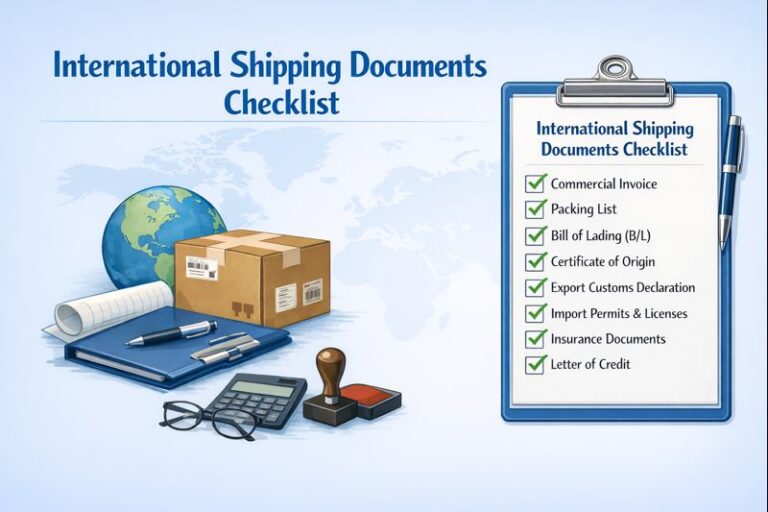
International Shipping Documents Checklist Verified & Reviewed · Last updated January 2026 International shipping fails for boring reasons: a shi...
Read guide →Customs Clearance Step by Step: The Complete Process Verified & Reviewed · Last updated February 2026 Customs clearance step by step helps intern...
Learn more → Useful Resource Freight Insurance GuideFreight Insurance Guide Verified & Reviewed · Last updated January 2026 Freight insurance helps you protect cargo value when freight shipping goe...
Learn more →WhatsApp us