Related Guide
Shipping from China to Canada
Shipping from China / Shipping from China to Canada China–Canada Shipping Guide · Updated August 2026 Shipping from China to Canada Compare sea f...
Read guide →

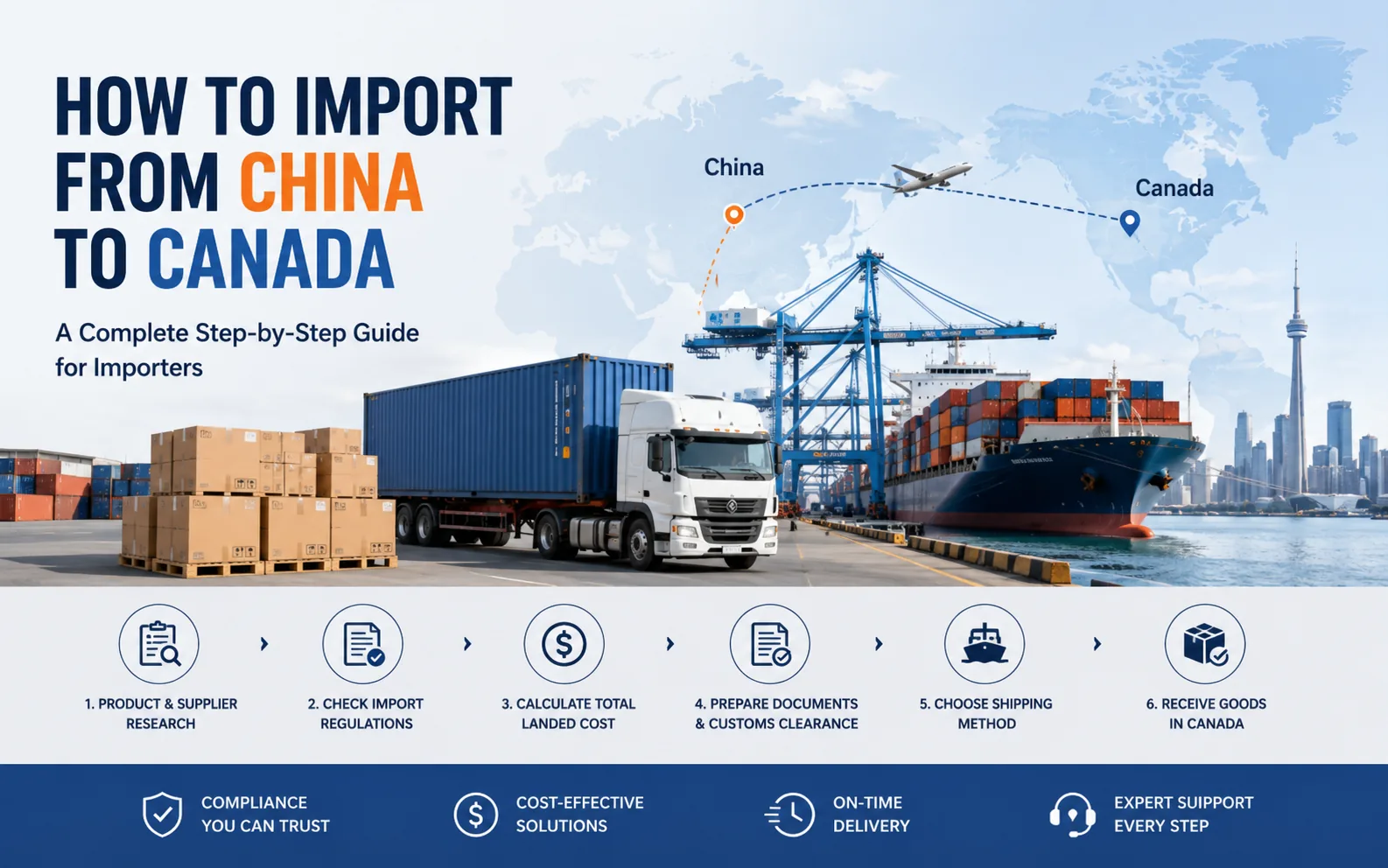
Importing from China to Canada requires more than arranging freight. Importers need to check product requirements, set up the correct importer account, calculate landed costs, and prepare for customs clearance.
This 2026 guide covers supplier verification, Incoterms, shipping methods, import duties, required documents, Canadian customs clearance, and final delivery.
Import Requirements
Shipping Options
Customs Clearance
Businesses importing goods commercially into Canada generally need a nine-digit Business Number, or BN9, and an import-export program account known as an RM account.
The Canada Border Services Agency now uses the CBSA Assessment and Revenue Management system, known as CARM, as its official system of record for importers and other trade-chain partners. Businesses that import or export commercial goods need an RM account and should register well before their goods are due to arrive.
The Business Number identifies the business, while the RM account is used for commercial import and export activities.
Since October 21, 2024, most new resident commercial importers can obtain their BN9 while registering through the CARM Client Portal. A non-resident importer and certain other entities must first obtain the Business Number through the Canada Revenue Agency before registering the RM account with CBSA.
Registering in advance is important because incomplete importer information can create unnecessary delays when the goods enter Canada.
Canada does not have one universal import license that applies to every commercial product.
Many ordinary products can be brought into the country without a special permit. However, certain goods are controlled or regulated and may require additional permits, licences, registrations or certificates.
Whether authorization is needed depends on what the product is, its intended use and how it enters Canada. Global Affairs Canada administers controls for specific categories, while other products may fall under different federal agencies.
Requirements should therefore be checked before confirming the purchase order rather than after production has finished.
Before confirming an order with a Chinese supplier, check whether the product meets Canadian import regulations and can legally be sold in the Canadian market. Requirements vary by product category, so they should be confirmed before production begins.
Depending on the goods, importers may need to consider:
Canadian standards and product safety requirements
Testing or certification
English and French labelling
Packaging and marking rules
Permits or approvals for certain goods
The legal requirements can vary between ordinary consumer products and regulated goods. For customized or private-label products, confirm the specifications, packaging and labels with the supplier before mass production.
Checking these details early improves regulatory compliance and helps ensure compliance before the cargo reaches Canada, reducing the risk of customs delays or costly relabelling.
Choosing the right supplier is an important part of building a reliable supply chain from China to Canada. A low quotation may be attractive, but price alone does not show whether the supplier can meet your quality, production and delivery requirements.
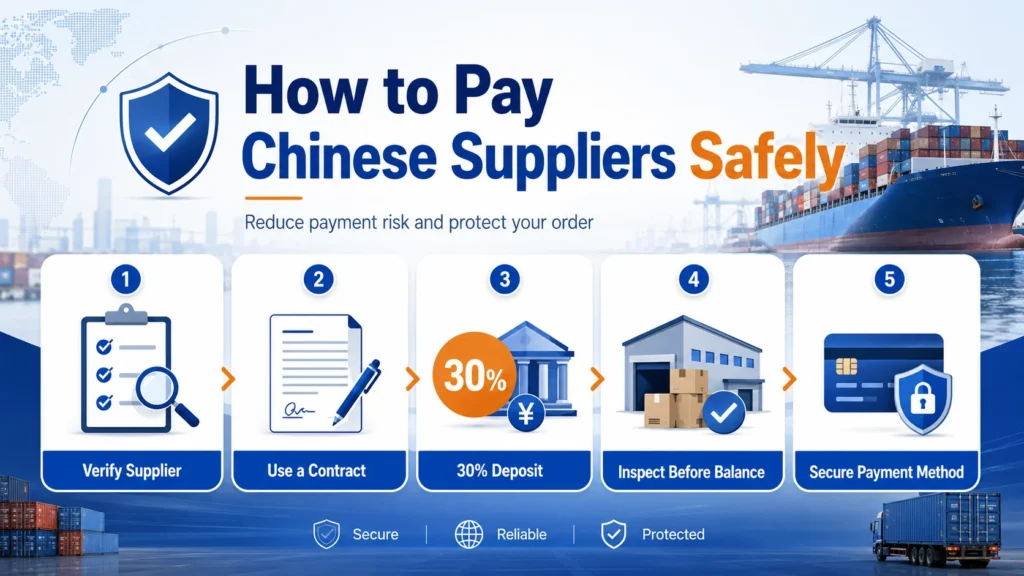
Before placing a large order, verify the supplier’s business information, manufacturing capability and experience with the product. Important details to confirm include minimum order quantity, production lead time, payment terms, packaging requirements and agreed product specifications.
For customized, branded or higher-value goods, request product samples before mass production. Samples allow you to check materials, dimensions, appearance, functionality and packaging. A pre-shipment inspection can also help identify quality problems before the cargo leaves China.
If you purchase from multiple suppliers, the goods can often be collected at one warehouse and consolidated before export. This can simplify cargo handling and make the overall shipping process easier to coordinate.
A reliable supplier should provide consistent quality, clear communication and accurate product information throughout the order.
Incoterms define how transportation costs, responsibilities and risks are divided between the supplier and buyer. Choosing the right term early makes it easier to compare quotations and calculate the final landed cost.
Four common Incoterms used for China-to-Canada shipments are EXW, FOB, CIF and DDP.
| Incoterm | Supplier Responsibility | Importer Responsibility | Suitable For |
|---|---|---|---|
| EXW | Makes goods available at the factory | China pickup, export, freight, customs and delivery | Experienced buyers wanting more logistics control |
| FOB | Delivers cargo to the port and handles export procedures | Main freight, Canadian customs and delivery | Regular commercial sea shipments |
| CIF | Arranges ocean freight and basic insurance | Destination handling, customs and final delivery | Buyers using supplier-arranged freight |
| DDP | Arranges most transport and import procedures | Mainly receives the goods | Buyers wanting a simplified delivery process |
FOB is widely used for commercial sea freight because the supplier manages the origin-side delivery and export formalities while the buyer controls international transportation and destination arrangements.
With CIF, check which Canadian destination charges are excluded before accepting the quotation. A low freight rate at origin does not always mean a low final cost.
Delivered Duty Paid (DDP) can simplify transportation, but the buyer should confirm who is acting as importer of record, how duties and taxes are handled, and which services are actually included.
The best shipping method depends on cargo volume, urgency, product value and the final delivery location in Canada. Small urgent shipments may be more suitable for courier or air freight, while larger commercial orders are usually more cost effective by sea.
| Shipping Method | Typical Shipment Size | Estimated Transit Time | Best Used For |
|---|---|---|---|
| Express Courier | Small parcels, samples and low-volume cargo | 3–7 days | Samples and urgent small shipments |
| Air Freight | Usually commercial cargo from around 100 kg | 5–12 days | Electronics, spare parts and time-sensitive goods |
| Sea Freight – LCL | Smaller shipments that do not require a full container | 25–40 days | Pallets, cartons and small-to-medium commercial orders |
| Sea Freight – FCL | Larger shipments suitable for a dedicated container | 20–35 days | Bulk inventory, machinery and high-volume cargo |
These are general estimates rather than guaranteed delivery times. Actual transit can vary according to the departure city, carrier schedule, route, Canadian destination and customs clearance.
For ocean shipments, the choice between LCL and FCL should not be based on weight alone. Cargo volume, dimensions, destination charges and container utilization can make FCL more economical even when the container is not completely full.
When comparing shipping options, consider the total transportation requirement rather than choosing only by the lowest freight rate.
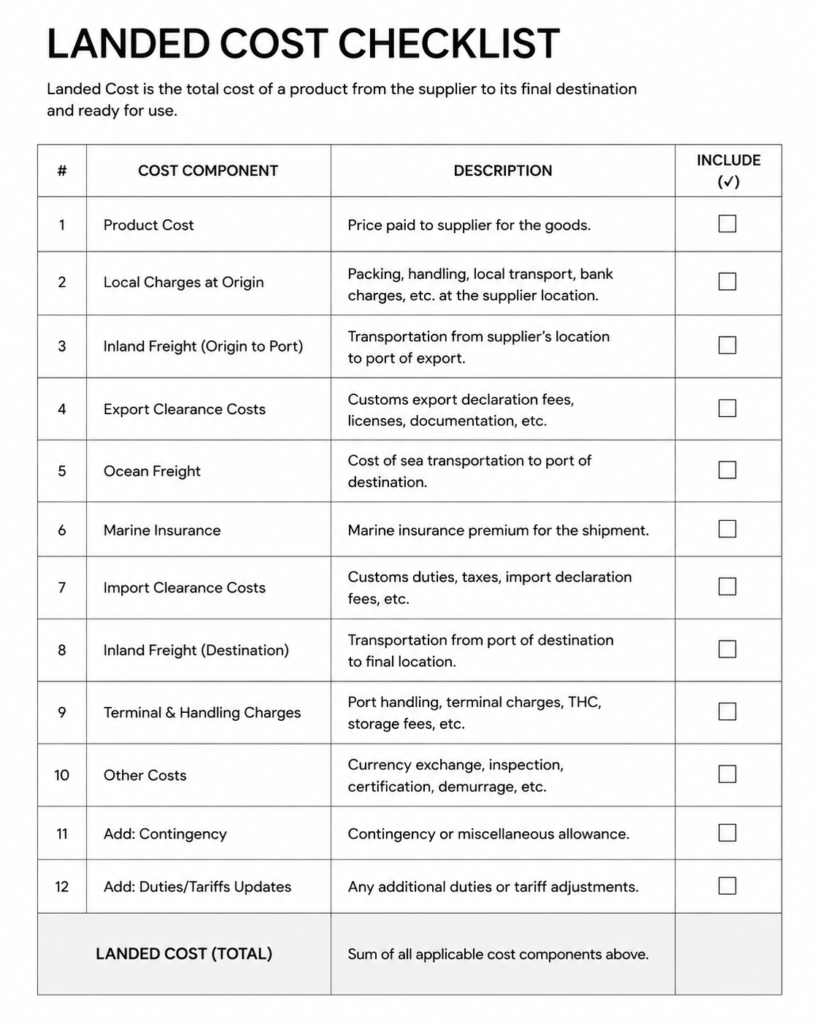
The supplier’s quotation is only one part of the actual cost of importing goods from China to Canada. A landed-cost calculation gives a clearer picture of what the product will cost after transportation, customs and delivery.
A typical calculation includes:
Product Cost + China Inland Transport + International Freight + Insurance + Import Duties and Taxes + Brokerage + Destination Charges + Final Delivery
The charges paid by the importer depend partly on the Incoterm. For example, EXW requires the buyer to arrange more of the origin-side logistics, while FOB transfers responsibility after the supplier completes delivery to the agreed Chinese port.
Pay particular attention to terminal handling, storage, brokerage and local delivery. These hidden charges can make an apparently inexpensive freight quotation more expensive after arrival.
For commercial importing, comparing the landed cost per unit is usually more useful than looking only at the factory price or international freight rate.
Proper documentation is essential before the cargo leaves China. The supplier, importer and freight forwarder should confirm the required paperwork in advance so that missing or inconsistent information can be corrected before arrival in Canada.
Typical documents for commercial imports include:
Commercial Invoice
Packing List
Bill of Lading for sea freight
Air Waybill for air freight
Proof of origin where required
Product permits or certificates where applicable
Supporting testing or compliance records for regulated goods
The commercial invoice should clearly identify the buyer and seller, describe the goods and show the transaction value. Avoid vague descriptions such as “parts” or “accessories” when a more specific product description can be provided.
Information on the invoice, packing list and transportation document should remain consistent. Accurate paperwork supports smooth customs clearance and makes it easier for all parties to process the goods.
Commercial goods must be cleared by the Canada Border Services Agency (CBSA) before they can be released for delivery in Canada. Customs clearance is based on accurate importer information, product classification, origin, declared value and any permits that apply to the goods.
Preparing this information before arrival can reduce customs questions and avoid unnecessary delays at the port, airport or warehouse.
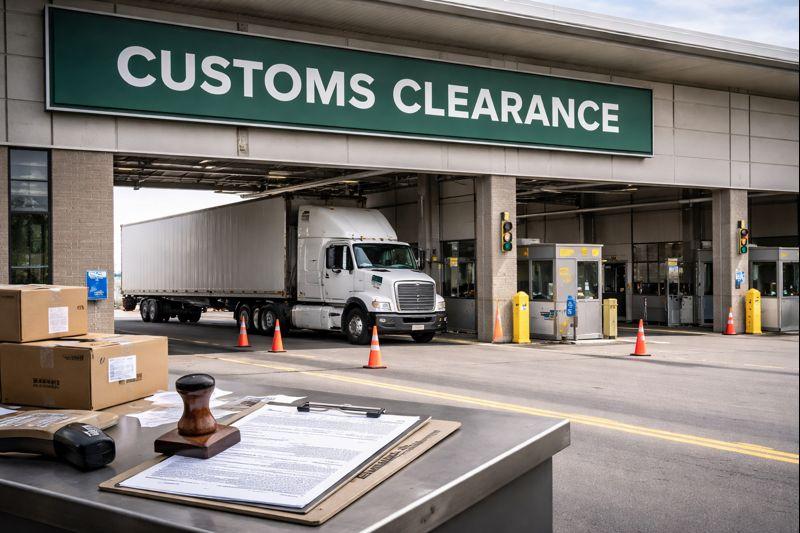
Canada uses a 10-digit tariff classification number for commercial imports. The correct HS code helps determine the applicable tariff treatment, duty rate and whether additional requirements apply to the product.
Customs assessment also considers:
Country of origin – used to determine the applicable tariff treatment
Customs value – generally supported by the commercial invoice and transaction records
Product description – should clearly identify what the goods are and how they are used
Incorrect classification or inconsistent values can lead to reassessment, requests for additional information or delayed release.
There is no single duty rate for all goods imported from China. China generally receives Most-Favoured-Nation (MFN) tariff treatment in Canada, but the actual customs duty depends on the product’s tariff item. Some goods may enter duty-free, while others are subject to a specific rate.
Most taxable imports are also subject to 5% GST. Depending on the product, additional charges may include:
customs duty
GST
surtaxes on certain goods
excise duties or taxes where applicable
anti-dumping or countervailing duties on products subject to trade-remedy measures
Importers should therefore confirm the HS code and applicable charges before relying on an estimated landed cost.
Importers may complete customs procedures themselves or appoint a licensed customs broker to assist with clearance. A broker can prepare customs entries, review shipping documents, communicate with CBSA and coordinate the release of the goods.
For smoother clearance, the importer should provide the broker with accurate product descriptions, commercial invoices, packing information and any required permits or compliance documents before the shipment arrives.
Even when a customs broker is used, the importer remains responsible for the accuracy of the declaration and any duties or taxes payable. Once CBSA releases the goods, they can move on to the final delivery stage.
After customs release, the goods can move from the port, airport, rail terminal or local warehouse to the final destination in Canada. This stage should be arranged before arrival, especially for container shipments where terminal free time, trucking appointments and empty-container return can affect the final cost.
Depending on the shipment, final delivery may involve:
Port or airport pickup
Local trucking or rail transport
Warehouse delivery
LCL cargo collection
Empty-container return for FCL shipments
Delays after customs release can lead to storage, demurrage or additional handling charges, so the importer should coordinate delivery with the freight forwarder or local carrier in advance.
Importers should also keep complete records for each commercial import. Canadian customs records generally need to be retained for six years following importation, including invoices, transport documents, origin information, payment records and other documents supporting the customs declaration.
Organized record keeping can also make repeat imports, customs reviews and future shipments of the same products easier to manage.
Many problems can be prevented before the goods leave the supplier. The most common mistakes usually involve product compliance, supplier management or incomplete logistics planning.
Importers should avoid:
Ordering before checking Canadian product requirements
Choosing a supplier only because of the lowest price
Skipping samples or quality inspections
Using an incorrect HS code
Selecting an Incoterm without understanding the responsibilities
Comparing freight quotations without checking destination charges
Preparing customs paperwork too late
Purchasing, shipping and customs should be planned together rather than treated as separate processes. Product specifications, packaging, cargo dimensions and compliance requirements can all affect the final import process.
Importing from China to Canada involves coordination between suppliers, carriers, customs brokers and final delivery providers. A reliable freight forwarder helps keep these stages connected and provides clearer visibility throughout the shipment.
Tonlexing supports importers from supplier pickup in China through international transportation and destination coordination in Canada. Services can include:
Supplier pickup across major manufacturing regions in China
Consolidation from multiple suppliers
FCL and LCL sea freight
Air freight for urgent or higher-value cargo
China export customs and documentation support
Cargo inspection and warehouse coordination where required
Shipment tracking and schedule updates
Customs broker coordination in Canada
Final delivery to warehouses or business locations
Rather than selecting a shipping method only by the lowest quoted rate, Tonlexing can help evaluate the cargo volume, urgency, supplier location and final delivery requirements before transportation is arranged.
For an accurate shipping plan, provide the product name, number of cartons or pallets, gross weight, dimensions, supplier address and final delivery location in Canada.
Total import costs depend on the product price, cargo volume, shipping method, Incoterm, freight, insurance, applicable duties, taxes, brokerage, destination handling and final delivery.
For commercial importing, calculate the final landed cost per unit rather than comparing only the supplier’s factory price.
Some goods from China are subject to customs duty, while others have a Free MFN tariff rate. The applicable duty depends on the product’s Canadian tariff classification and any additional trade measures that apply.
There is no single customs duty percentage for all products imported from China.
Not for every product. Canada does not have one universal import licence covering all commercial goods.
However, regulated or controlled products may require permits, licences, certificates or registrations before importation.
No. Importers can handle customs procedures themselves, but many businesses use licensed customs brokers to assist with entries, accounting and communication with CBSA.
The importer still remains responsible for the accuracy of the information provided and any applicable duties and taxes.
Typical commercial imports require a Commercial Invoice, Packing List and Bill of Lading or Air Waybill.
Depending on the product, additional paperwork may include proof of origin, import permits, certificates, testing reports or other compliance documents.
Useful freight, customs and importing resources related to this shipping guide.
Shipping from China / Shipping from China to Canada China–Canada Shipping Guide · Updated August 2026 Shipping from China to Canada Compare sea f...
Read guide →
Customs Clearance in Canada (2026 Guide) Verified & Reviewed · Last updated January 2026 Customs clearance in Canada varies by shipment type, but...
Read guide →
Shipping Cost from China to Canada (2026 Guide) Verified & Reviewed · Last updated April 2026 Shipping cost from China to Canada in 2026 typicall...
Read guide →
Importing goods from China can be highly profitable—but only when you understand the necessary documents and import requirements. Whether you’re...
Read guide →Learn what the CARM Client Portal is, who needs to use it, and how it affects duties, taxes, registration, and customs compliance for importing i...
Learn more → Useful Resource Release Prior to Payment RPP in CanadaRelease Prior to Payment RPP in Canada Verified & Reviewed · Last updated March 2026 Release Prior to Payment RPP in Canada allows eligible impor...
Learn more →WhatsApp us