

How to Ship Building Materials from China to USA
- Verified & Reviewed · Last updated March 2026
Shipping building materials from China to the USA involves more than booking freight. Product type, shipping method, customs clearance, packaging, and final delivery all affect total cost, transit time, and shipment safety.
This guide explains how to ship building materials from China to the USA, covering supplier selection, sea freight and air freight options, customs clearance, shipping costs, and how to move cargo efficiently from China to your final destination in the United States.
Shipping method
Customs clearance
Final delivery / Door to Door
- Experienced China-based logistics specialists
Table of Contents
Why Many U.S. Buyers Import Building Materials from China
There are several reasons why buyers continue importing building materials from China. The first is competitive pricing. Many Chinese manufacturers can offer lower production costs than domestic suppliers, especially for large quantities. The second is product variety. China offers a diverse product range across interior, exterior, decorative, and structural categories, making it easier to build one supply chain instead of sourcing from many countries.
Another major reason is manufacturing depth. The Chinese market includes both specialized factories and large-scale exporters with strong experience in global trade and international trade. Many Chinese suppliers already understand overseas packaging, export documentation, payment terms, and the expectations of U.S. buyers.
For businesses working on construction projects, resale, or distribution, this can create real cost savings and better supply chain flexibility. Still, the benefits only appear when the import process is managed with careful planning.
Common Types of Building Materials Imported from China
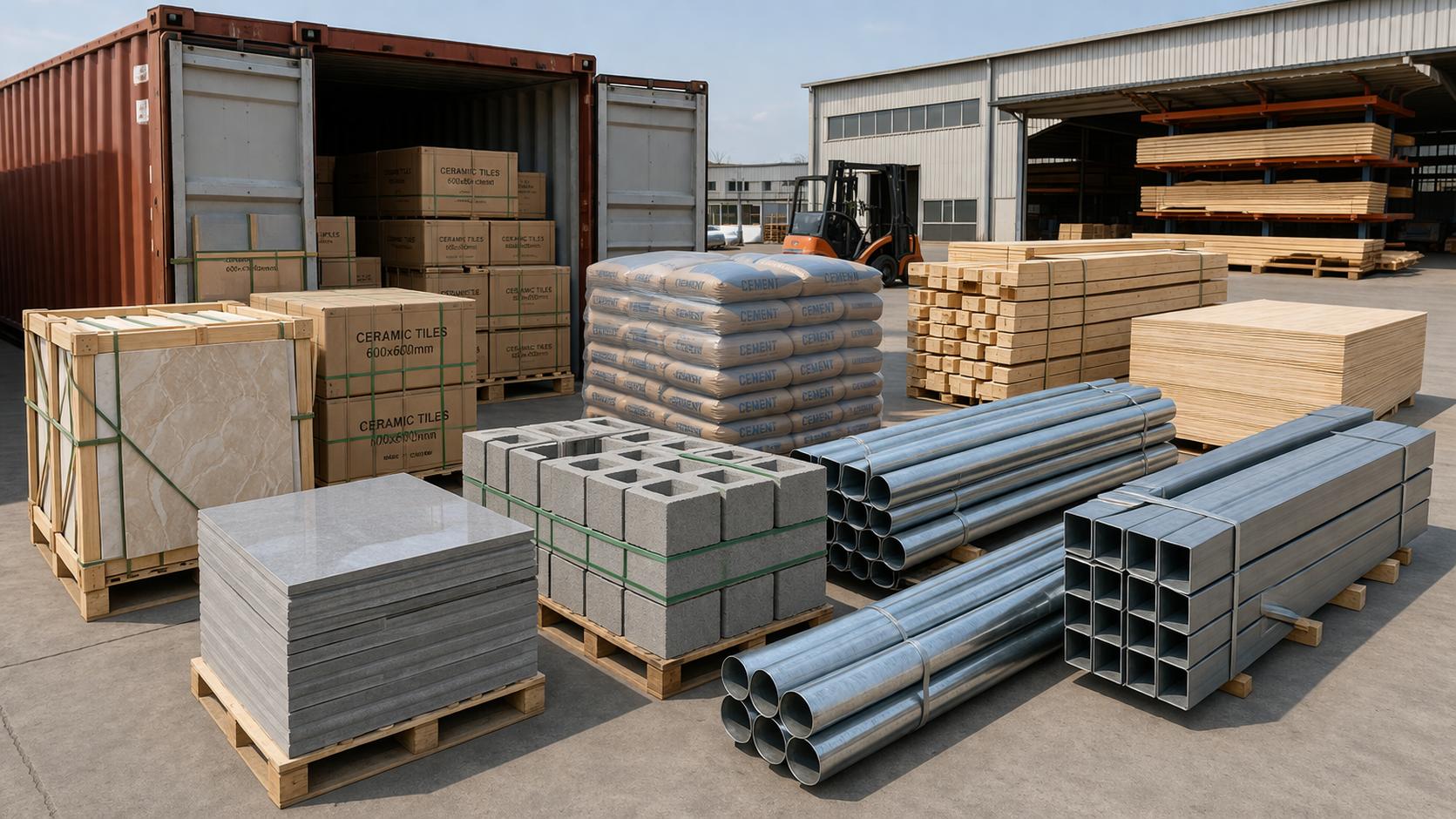
China supplies a wide range of construction materials and related products for residential, commercial, and industrial use. Common construction material imports include:
ceramic and porcelain tiles
vinyl flooring and engineered wood flooring
cabinets and bathroom vanities
sanitary ware and fittings
glass products
aluminum doors and windows
insulation materials
stone products and countertops
hardware and fixtures
steel items and structural components
selected industrial equipment used in installation or site support
Different materials come with different shipping concerns. Tiles, stone, and glass are fragile. Cabinets and finished fixtures need better surface protection. Heavy metal items and structural components need stronger load planning. Some products must also meet specific quality standards, safety standards, or local regulations before they can be used in the U.S. market.
Start the Import Process by Finding Reliable Suppliers
The first step in the import process is finding reliable suppliers. This stage has a direct effect on product quality, lead time, packaging, paperwork, and the entire shipping process. If the supplier is weak, problems usually appear later in customs clearance, cargo condition, or delivery timing.
Many buyers begin by searching on Alibaba, Made-in-China, and Global Sources. These platforms are useful for contacting Chinese suppliers, comparing products, and reviewing factory profiles. Trade fairs such as the Canton Fair can also help with finding reliable suppliers because buyers can inspect products in person and speak directly with manufacturers.
What to check when evaluating suppliers
A proper supplier verification process should include:
export experience
company licenses and certifications
production capacity
packaging standards
communication quality
experience with U.S. orders
ability to meet minimum order quantity requirements
consistency in product quality
Finding reliable suppliers is not only about price. Reliable suppliers support better documents, stronger packaging, clearer communication, and more stable production schedules.
Request product samples before mass production
Always request product samples before confirming a large order. This is especially important when importing building materials with visible finishes or strict size requirements. Samples help buyers confirm:
color and finish
dimensions and tolerance
workmanship
packaging level
general product quality
Request product samples early so there is enough time to compare factories and adjust specifications if needed.
Confirm payment terms early
Before production starts, buyers should also discuss payment terms, production lead time, packaging requirements, replacement policy, and inspection conditions. Clear payment terms reduce misunderstandings and help keep the entire process under control.
Confirm Product Details and Import Regulations Before Shipping
Once the supplier is selected, the next step is to confirm the cargo details before freight is booked. This includes product name, material type, quantity, dimensions, weight, packaging, declared value, and country of origin. These details will later appear on the commercial invoice and other customs documents, so they need to be accurate.
This is also the stage where buyers should review import regulations. Different building materials may face different import regulations, local regulations, safety standards, and international regulations depending on their composition and end use.
Product compliance and safety standards
Some materials must meet recognized safety standards or industry requirements before they can be accepted in the U.S. market. Depending on the product, buyers may need to review ASTM, UL, or ANSI compliance. This matters most for products used in electrical, fire-related, structural, or regulated building applications.
Understanding import regulations before shipment helps avoid customs delays, rejected goods, and extra charges after arrival.
HS codes and HTS classification
Proper classification of goods using HS codes is necessary for smooth customs procedures. In the U.S., HTS classification affects import duties, customs duties, tariff exposure, and how the shipment is reviewed by US Customs. If the classification is incorrect, the cargo may face customs delays, extra duty exposure, or document questions during the customs clearance process.
Choose the Right Shipping Method
Shipping from China to the USA can usually be arranged by sea freight, air freight, or express freight. The right shipping method depends on the cargo type, volume, urgency, packaging strength, and budget.
For most building materials, sea freight is the main option because it provides better cost efficiency for large shipments and bulky cargo. Air freight is usually reserved for urgent replacement parts, small high-value items, or time-sensitive samples. Express freight is mostly used for documents or very small parcels.
Sea freight for bulk shipments
Sea freight is the most common solution for construction materials because many products are heavy and move in bulk shipments. It is widely used for flooring, cabinets, insulation materials, tiles, sanitary ware, and structural components.
Typical shipping times for sea freight are often around 15 to 35 days port to port, depending on the route and carrier schedule. In practice, total transit is longer once customs clearance, terminal handling, and final delivery are added. For most large shipments, ocean freight is the most practical option.
Air freight for urgent cargo
Air freight is the fastest standard freight option. It is suitable for:
urgent samples
replacement parts
small high-value goods
time-sensitive project items
Air freight can reduce shipping times significantly, but air freight costs are much higher than sea freight. For this reason, air freight is rarely the first choice for full orders of building materials.
Express freight for small parcels
Express freight works best for small packages, sample pieces, and urgent documents. It is fast and simple, but not cost-effective for real construction materials shipments except in very small quantities.
Understand FCL and LCL for Sea Freight
After choosing sea freight, the next step is deciding whether to use full container or shared space.
Full Container Load for larger or fragile shipments
Full Container Load means the cargo uses the entire container. A full container load is often the better option for building materials because it offers:
less cargo handling
lower breakage risk
better loading control
stronger protection for fragile goods
more efficiency for large quantities
For tiles, glass, cabinets, and other fragile products, using the entire container can reduce the risk of damage.
LCL for smaller shipments
LCL, or Less than Container Load, means your goods share container space with other shipments. This option can work for smaller orders or trial shipments that do not justify a full container.
However, LCL usually involves more warehouse handling, cargo consolidation, and destination unpacking. For building materials, that can increase the risk of damage, delays, and extra charges.
Shipping Method Comparison
| Shipping Method | Best For | Transit Time | Cost Level | Main Notes |
|---|---|---|---|---|
| Sea freight / Full Container Load | Large shipments, heavy cargo, fragile goods | 15–35 days | Lower per unit | Better cargo control and lower handling risk |
| Shared container load | Smaller orders | 20–40+ days | Medium | More handling and more exposure to damage |
| Air freight | Urgent cargo, replacement items, high-value samples | 2–15 days | High | Fast but expensive |
| Express freight | Documents, sample pieces, very small packages | 3–7 days | Very high | Best only for very small urgent shipments |

Work With a Freight Forwarder and Logistics Provider
An experienced freight forwarder can make the shipping process much easier. For building materials, a freight forwarder often helps manage pickup, export booking, route planning, document coordination, and final delivery arrangements.
A good logistics provider can support:
supplier pickup
container booking
export coordination
shipment tracking
destination handling
final delivery planning
For first-time importers, a freight forwarder can also help compare shipping options and avoid common handling mistakes. In many cases, logistics professionals are especially useful when the cargo is heavy, fragile, or coming from multiple suppliers.
Prepare Documents and Necessary Paperwork Carefully
Accurate documents are essential for the import process. Missing or inconsistent paperwork can create serious issues during customs clearance.
The necessary paperwork usually includes:
packing list
bill of lading
certificates of origin where needed
test reports or compliance documents
other necessary paperwork for regulated products
The commercial invoice is one of the most important documents in the shipment. It should clearly show the product description, quantity, declared value, origin, and sales terms. Inaccurate descriptions or mismatched values can create problems during customs procedures.
ISF filing and customs documentation
For ocean freight to the United States, Importer Security Filing must be submitted correctly and on time. A customs broker often helps manage this filing. Good document preparation supports smoother customs clearance and reduces the risk of customs delays.
Handle Customs Clearance the Right Way
When the cargo arrives, US Customs and Border Protection reviews the documents and may inspect the goods. The customs clearance process is one of the most important parts of importing building materials because delays here can quickly increase storage, port, and delivery costs.
A customs broker can help with:
document review
duty calculation
entry filing
customs communication
managing customs clearance
For many shipments, especially formal entries, using a licensed customs broker is one of the safest ways to reduce risk. A licensed customs broker can also help importers interpret import regulations, avoid filing mistakes, and move through the customs clearance process more efficiently.
Why classification and broker support matter
Classification affects import duties, customs duties, tariff treatment, and compliance review. That is why a customs broker is so valuable. If the shipment is classified incorrectly, the buyer may face delays, extra costs, and problems with US Customs.
Understand Shipping Costs and Total Landed Cost
When shipping building materials from China to the USA, freight is only part of the total cost. Buyers should look at the total landed cost, which means the full cost of moving the goods from the supplier in China to the final destination in the United States.
In most cases, the total landed cost includes five main parts.
Origin cost in China
This is the cost before the goods leave China. It may include:
product cost from the supplier
local pickup from the factory to the port
export customs declaration and origin handling charges
If you buy under FOB terms, some of these costs may already be included. Under EXW terms, the buyer usually pays more on the origin side.
Ocean freight or air freight
This is the international shipping cost from China to the USA. For most building materials, sea freight is the main option because it is more cost-effective for heavy cargo and large shipments. Air freight is faster, but it is usually used for urgent samples or smaller shipments.
If you ship by sea, cost also depends on whether you use Full Container Load or shared container space.
This is often one of the biggest cost items. It may include:
import duties based on HTS classification
additional tariffs depending on the product
government-related fees when applicable
For some building materials, duty exposure can be higher than expected, so correct classification is important before shipment.
Destination charges after arrival
Once the cargo arrives at the U.S. port, there may still be charges before release, such as:
terminal handling charges
document or release fees
customs clearance service fees
customs bond costs when required
Final delivery
After customs release, the goods still need to move from the port or warehouse to the final destination. This may include local trucking, unloading, and other delivery-related charges.
That is why buyers should review the full cost before booking freight, not just the supplier quote or shipping rate.
Protect Product Quality with Quality Control and Quality Assurance
Quality control is essential when importing building materials from China. If the goods arrive damaged, inconsistent, or below specification, the expected savings can disappear quickly.
A pre-shipment inspection can help verify:
quantity
workmanship
dimensions
labeling
packaging
shipment readiness
This is a core part of quality control. It also supports quality assurance by confirming that the finished order matches the approved sample and expected standards. For fragile or visible products, strong quality assurance is just as important as price negotiation.
Packaging matters as much as the product
For building materials, packaging is part of quality control. Robust export packaging should protect the cargo against:
vibration
moisture
compression
shifting during transit
edge and corner damage
This is especially important for tiles, glass, cabinets, sanitary ware, and insulation materials.
Plan Final Delivery to the Final Destination
After customs release, the goods still need final delivery to the final destination. This could be a warehouse, store, distribution center, or job site. For building materials, final delivery needs careful planning because the cargo may be heavy, fragile, or difficult to unload.
Buyers should confirm:
address access
unloading equipment
appointment requirements
receiving hours
handling conditions
Early planning supports timely delivery and helps avoid extra storage or truck waiting fees.
Key Factors and Practical Tips for Smoother Imports
Several key factors affect whether the shipment goes smoothly:
reliable suppliers
accurate classification
strong documents
good packaging
consistent quality control
the right shipping method
early customs planning
dependable partners
A few practical tips can improve results:
focus on finding reliable suppliers, not only low quotes
request product samples before bulk production
confirm payment terms in writing
review import regulations before booking freight
use a freight forwarder that understands building materials
use a customs broker or licensed customs broker for formal entries
inspect the goods before shipment
plan final delivery before the cargo arrives
These steps support timely delivery, reduce risk, and make the supply chain more stable.
Frequently Asked Questions
For most bulk shipments, sea freight is the best choice because it is more cost-effective for heavy and bulky cargo. For urgent needs, air freight may be better. The right shipping method depends on urgency, cargo type, and volume.
In many cases, yes. A customs broker helps with filing, classification, and customs clearance. For more complex shipments, a licensed customs broker is often recommended.
Start with major sourcing platforms, factory screening, supplier verification, and request product samples early. Finding reliable suppliers is one of the most important parts of the import process.
Shipping costs are mainly affected by weight, volume, shipping method, packaging, destination, and customs treatment. A detailed breakdown is the best way to understand the real landed cost.
Use strong export packaging, inspect the goods before shipment, and use full container loading when possible for fragile materials.
Related Shipping Guides for China to USA
- How to Ship Kitchen Cabinets from China to USA
- Shipping Heavy Cargo from China to USA
- Shipping Oversized Cargo to USA
- Bulk Shipping from China to USA
- China Warehouse Consolidation for USA
Get a Shipping Quote for Building Materials from China
- Sea freight, air freight, or door-to-door options
- Customs clearance support and cost planning
- Shipping solutions for heavy, fragile, or bulk cargo
Get tailored shipping options, transparent pricing, and expert support for your building materials shipment.