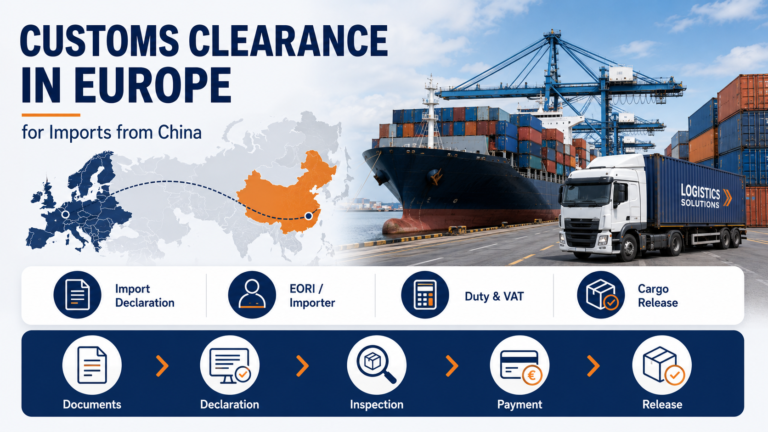
Related Guide
Customs Clearance in Europe for Imports from China
Customs Clearance in Europe for Imports from China Verified & Reviewed · Last updated July 2026 Customs clearance in Europe for imports from Chin...
Read guide →

For ecommerce businesses shipping from China to Europe, IOSS and DDP both help reduce surprise fees, but they are not the same. IOSS is a tax compliance model for B2C orders under €150. DDP is a shipping model where the seller is responsible for freight, duties, taxes, customs, and final delivery.
This guide explains the difference between IOSS and DDP, including Import One Stop Shop, Delivered Duty Paid, import VAT, customs clearance, duties, UK VAT, and how to choose the right shipping method for EU ecommerce orders.
IOSS / VAT Compliance
DDP / Duty Paid Delivery
EU Ecommerce Shipping
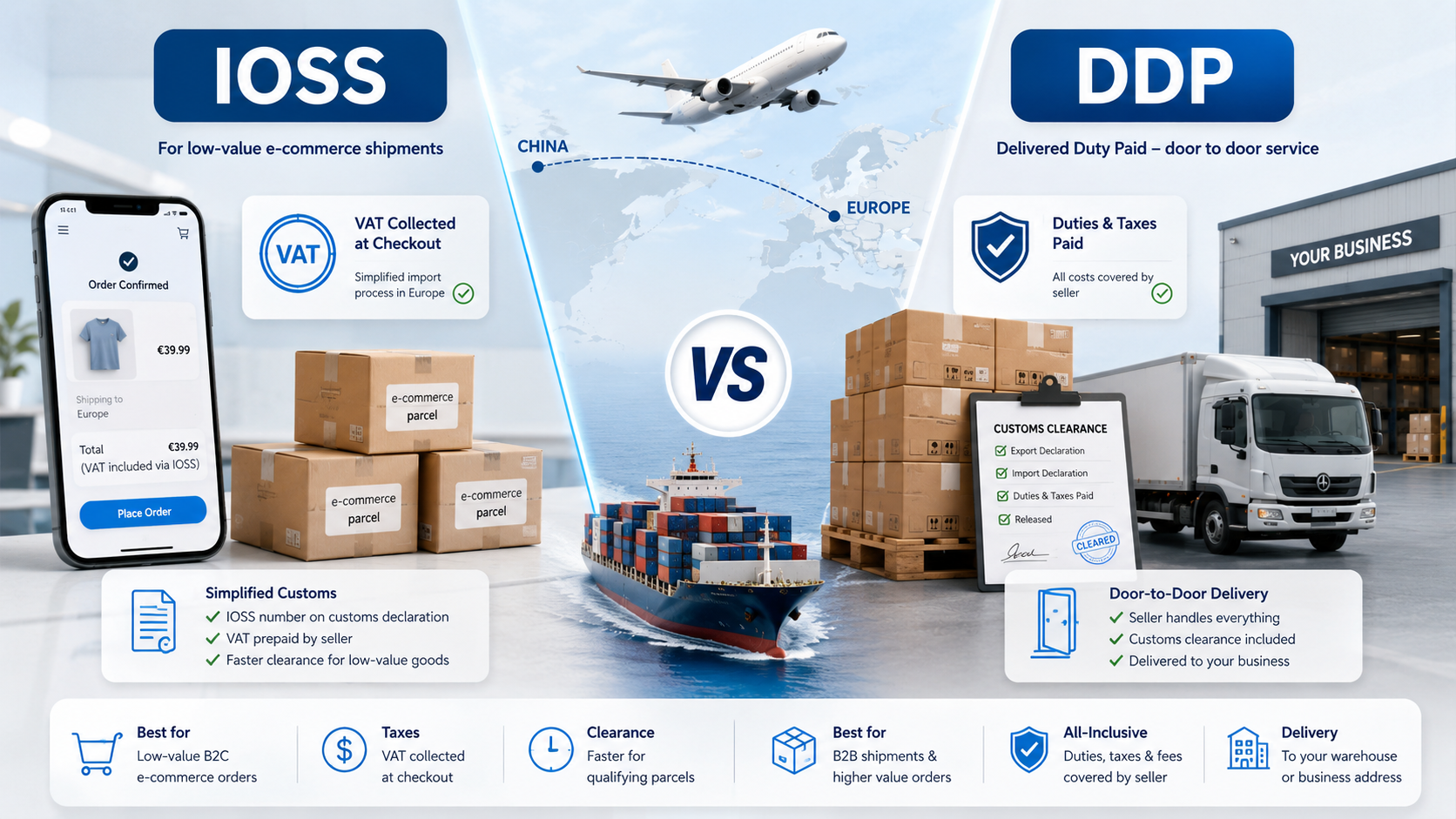
IOSS stands for Import One Stop Shop. It is a European Union electronic portal that allows an online store, marketplace, or appointed intermediary to declare and pay VAT for eligible goods sold to EU customers. It is mainly used when goods are shipped from outside the EU and the total value of the consignment does not exceed €150. The EU introduced this system as part of its VAT e-commerce changes, which also removed the old low-value VAT exemption from 1 July 2021.
Under Import One Stop Shop, the business must charge VAT at checkout based on the destination country. For example, a parcel sent to Germany uses the German rate, while a parcel sent to Ireland uses the Irish rate. Once tax is collected, the IOSS number is sent with the customs data so the parcel can be identified as VAT paid.
A non-EU business usually needs an EU based intermediary for IOSS registration. The intermediary can help the business become IOSS registered, file VAT returns, file monthly returns, and remit the tax. This can simplify VAT compliance across EU countries because one registered setup can cover many countries instead of requiring separate registration in every EU country.
IOSS is useful for stores that send parcels to private customers. It does not cover import duties, freight, storage, product certification, or border problems caused by wrong data.
DDP is often searched as delivery duty paid. The formal Incoterm is Delivered Duty Paid. Under DDP, the seller agrees to deliver the goods to the named place and pay the main costs before the buyer receives the order. ICC guidance explains that DDP places maximum responsibility for risks and costs on the seller, while the buyer mainly receives and unloads the goods at the agreed destination.
A DDP quote may include the total value review, international shipping costs, export handling, destination handling, import taxes, import duties, customs documents, and door delivery. The buyer should not need to pay a separate customs bill when the order arrives.
DDP can be used for parcels, air freight, sea freight, rail freight, truck freight, Amazon FBA, and other international shipments. Unlike IOSS, it is not limited to €150. It is often better for commercial goods, B2B orders, bulk cargo, and shipments where the customer wants one clear landed price.
IOSS is about tax collection. DDP is about who will pay and manage the full landed process. They can support the same sale, but they do different jobs.
| Feature | IOSS | DDP |
|---|---|---|
| Full name | Import One Stop Shop | Delivered Duty Paid |
| Main purpose | Tax collection and reporting | Seller-paid shipping and entry costs |
| Best for | B2C ecommerce parcels under €150 | B2B, FBA, high-price orders, bulk cargo |
| Limit | Usually only goods under €150 | No fixed limit |
| Tax treatment | Buyer pays VAT at checkout | Seller pays tax during entry |
| Duties | IOSS does not cover duties | Seller includes duties when quoted correctly |
| Customs role | Correct parcel data is still required | Customs clearance is arranged by the seller side |
| Buyer experience | Fewer tax surprises if declared correctly | No separate payment if the service is arranged correctly |
IOSS is best for ecommerce sales where the buyer is a private person in an EU country. The tax is collected at checkout, and the parcel is sent with the correct IOSS number.
A typical process is:
The customer places an order under €150.
The store calculates the correct rate for the destination country.
The customer pays VAT at checkout.
The store gives the IOSS number to the courier or logistics partner.
Customs checks the declaration and confirms the tax data.
When the order arrives, import VAT should not be collected again.
The seller or intermediary files VAT returns and pays the collected tax.
This process gives customers a clearer purchase price and reduces unexpected charges. However, the IOSS number must be accurate. If the number is missing, invalid, or not transmitted, the buyer may need to pay the tax again plus customs charges.
DDP shipping covers the logistics chain from China to the final address. Before cargo moves, the freight forwarder checks product type, HS code, weight, volume, declared amount, route, and destination country.
A typical DDP process is:
The seller provides cargo and address details.
The forwarder checks duties, taxes, and country requirements.
A DDP price is quoted for the shipping method.
Goods are picked up in China or delivered to a warehouse.
Export documents are prepared.
The shipment moves by courier, air, sea, rail, or truck.
Customs clearance is handled by the appointed party.
The buyer receives the goods without extra border payment.
This is why DDP is popular for B2B customers and Amazon FBA. The buyer does not need to find a broker, calculate duties, or pay the carrier during delivery.
Yes. Many ecommerce sellers combine IOSS and DDP when shipping low-value goods from China to Europe. The two systems serve different purposes and can complement each other.
For orders valued at €150 or less, IOSS allows the seller to collect import VAT at checkout. A DDP shipping service can then handle transportation, customs clearance, and final delivery, helping buyers receive their parcels without unexpected charges.
However, using IOSS does not automatically make a shipment DDP. IOSS only covers import VAT, while DDP includes customs duties, taxes, and delivery costs. Before choosing this approach, sellers should confirm that the shipping provider supports both IOSS declarations and DDP customs clearance.
IOSS + DDP is often a practical choice for:
Shopify and independent ecommerce stores
Small B2C parcels shipped to EU customers
Sellers who want a smoother checkout and delivery experience
Businesses looking to reduce customs delays and unexpected fees
The EU removed the old exemption for goods below €22 on 1 July 2021 and required declarations for all imports. From 1 July 2026, the EU applies a temporary €3 customs duty per item on consignments up to €150 from outside the EU.
This update is important for China to Europe shipping. Some sellers think that IOSS means every small parcel is free from border cost. That is not correct. IOSS helps with tax reporting, but it does not remove duties, customs controls, or courier handling rules.
Before you send parcels to Germany, France, Ireland, Spain, Italy, the Netherlands, Poland, or other EU countries, check HS code, product restrictions, declaration data, and the charging policy of the courier. Some countries may process the same product faster than others, while other countries may request additional proof.

Some sellers compare IOSS with DAP, DDU, or delivered duty unpaid. These terms affect who must pay at the border.
| Term | Who usually pays duties and tax? | Customer result |
|---|---|---|
| IOSS | Customer pays VAT at checkout | Clearer ecommerce purchase |
| DAP | Buyer pays on arrival | Possible customs bill |
| DDU | Buyer pays on arrival | Similar to delivery duty unpaid |
| DDP | Seller pays before delivery | No separate border payment if arranged correctly |
DAP and DDU can create unexpected costs because the buyer may not know a bill is coming. DDP or IOSS is usually better when the store wants a smoother customer experience.
IOSS only applies to EU countries, so it does not cover the UK. If you ship goods from China to the UK, you need to follow UK VAT rules separately.
For low-value ecommerce orders, UK VAT may need to be charged at checkout, depending on the order value, sales channel, and buyer type. For higher-value shipments, import VAT and customs duties may be paid during UK customs clearance.
This means sellers should not use the same tax setup for both EU and UK orders. A shipping model that works for Germany, France, or Ireland may not work the same way for the UK.
If you sell to both markets, separate your:
EU IOSS setup
UK VAT registration
Customs declaration data
DDP shipping cost
Final delivery process
EORI means Economic Operators Registration and Identification. It is used for businesses and persons involved in customs activity in the EU. The European Commission states that an EORI number is mandatory for the clearance of customs operations in the EU customs territory, including import, export, and transit.
For DDP, an EORI may be needed by the importer of record, broker, or logistics partner. For IOSS, the IOSS number supports tax reporting, but it does not replace HS classification, product documents, safety rules, or standard customs requirements.
This is why sellers should confirm the full setup before shipping regulated goods, high-price cargo, or repeat commercial orders.
There is no single best answer. The right choice depends on order amount, customer type, sales channel, destination country, and service promise.
| Question | Better direction |
|---|---|
| Is the parcel under €150? | Consider IOSS |
| Is the customer a private EU buyer? | Consider IOSS |
| Is the order above €150? | Consider DDP |
| Is it B2B or Amazon FBA? | Usually DDP |
| Does the buyer want no extra bill? | DDP or IOSS plus prepaid delivery |
| Is the destination the UK? | Review UK VAT separately |
| Is the buyer in another EU country? | Check the local rate and delivery rule |
For ecommerce parcels under €150, IOSS is often the starting point. For higher-price cargo, business shipments, and warehouse delivery, DDP is usually more practical.
No. IOSS is for tax reporting on eligible ecommerce sales. DDP is a seller-paid shipping arrangement that includes duties, taxes, and delivery responsibility.
IOSS applies when eligible goods are sold to EU customers, shipped from outside the EU, and priced at €150 or less per consignment.
Yes. DDP can be used for shipments above €150, including B2B cargo, Amazon FBA, and palletized goods.
No. IOSS does not cover duties. It only helps collect and report VAT for eligible online sales.
Yes, but many non-EU sellers need an EU based intermediary for IOSS registration, VAT returns, and payment.
Often yes. B2B shipments usually need commercial documents, duty calculation, and coordinated delivery. DDP can simplify the process when the logistics partner is reliable.
Useful freight, customs and importing resources related to this shipping guide.
Customs Clearance in Europe for Imports from China Verified & Reviewed · Last updated July 2026 Customs clearance in Europe for imports from Chin...
Read guide →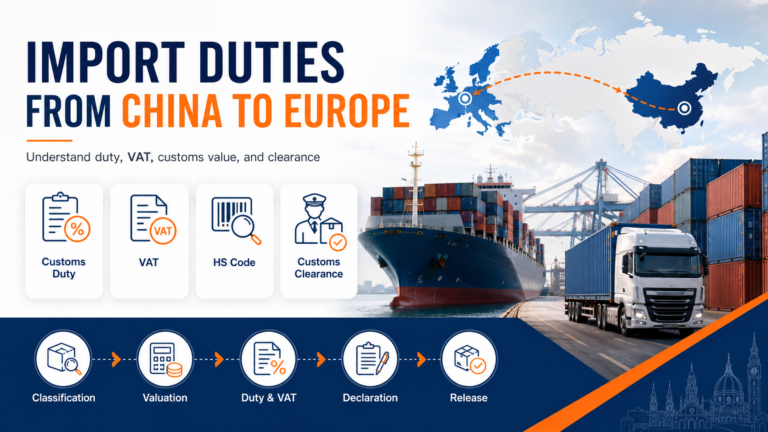
Import Duties from China to Europe Verified & Reviewed · Last updated July 2026 Import duties from China to Europe depend on the HS code, customs...
Read guide →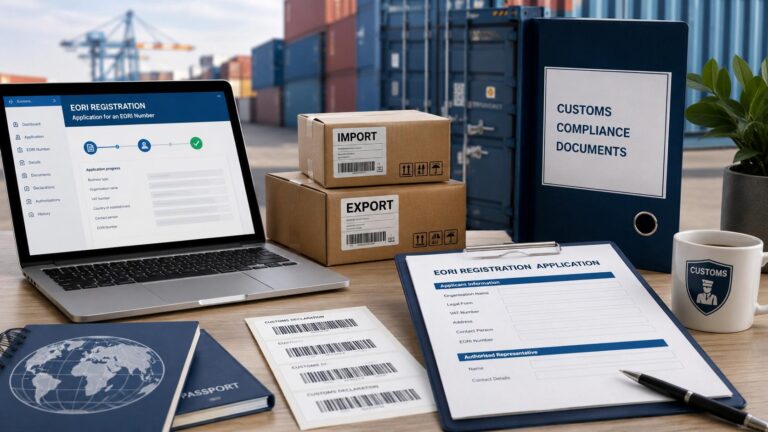
EORI Number Explained: Do You Need It to Import from China? Verified & Reviewed · Last updated July 2026 An EORI number is usually required when...
Read guide →
DDP Shipping from China to Europe Verified & Reviewed · Last updated June 2026 DDP shipping from China to Europe helps importers move cargo door...
Read guide →How to Calculate Landed Cost When Importing from China to Europe Verified & Reviewed · Last updated June 2026 Landed cost from China to Europe in...
Learn more → Useful Resource Shipping from China to Europe (2025 Guide)International shipping from China to Europe remains one of the most vital trade routes in global logistics. With Europe being a massive consumer...
Learn more →WhatsApp us