Related Guide
Drayage in the USA Explained
Drayage in the USA Explained: Services, Costs, Types, and How It Works Verified & Reviewed · Last updated March 2026 Drayage in the USA explained...
Read guide →

Los Angeles and Long Beach transloading and cross-dock services connect ocean containers with domestic trucking and distribution across the United States. Transloading transfers cargo from containers to domestic trailers, while cross-docking moves freight between trucks with minimal storage.
This 2026 guide covers available services, warehouse locations, handling times, costs, and port-to-door delivery.
Transloading Services
Cross-Docking
Costs & Handling Times
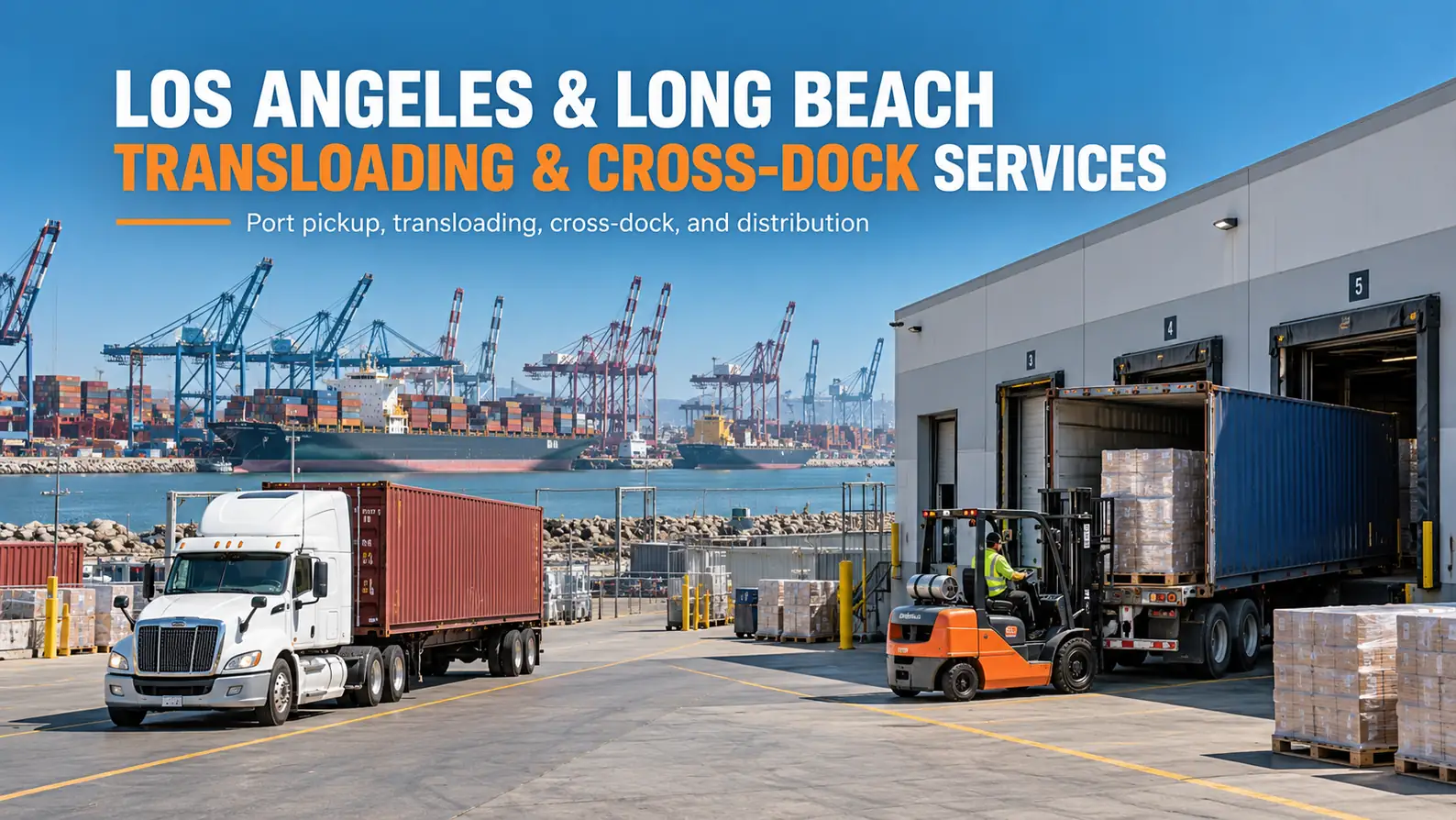
The Port of Los Angeles and Port of Long Beach form a major container gateway for international cargo entering Southern California. Many import containers arriving from China and other Asian markets require local handling before continuing to warehouses, retailers, or inland destinations.
Transloading facilities near the ports provide an intermediate location where cargo can be unloaded, inspected, sorted, repalletized, or transferred to another transportation vehicle.
Container transloading typically involves moving goods from 20-foot or 40-foot ocean containers into 53-foot domestic trailers or other suitable equipment.
Common services include:
Container unloading: Removing palletized or floor-loaded cargo from ocean containers.
Freight transfers: Loading goods into domestic trailers for onward transportation.
Palletizing and repacking: Preparing cartons and products for warehouse handling.
Cargo sorting: Separating freight by customer, purchase order, or destination.
Weight distribution: Adjusting loads to meet applicable trucking weight regulations.
Transloading can be useful when ocean containers need to be returned to the shipping line while the cargo continues inland using domestic transportation equipment.
Cross-docking focuses on transferring incoming goods to outbound vehicles without placing them into long-term warehouse storage.
A cross-dock facility may receive freight from multiple containers or trucks, sort shipments by destination, and reload them for regional or nationwide distribution.
It is commonly used for retail replenishment, consumer goods, palletized freight, and time-sensitive shipments.
Depending on the facility, additional services may include short-term storage, pallet breakdown, labeling, shrink wrapping, and freight consolidation.
Temperature-controlled cargo, machinery, transformers, battery storage systems, hazardous materials, and project cargo require facilities with suitable equipment, handling procedures, and applicable approvals. These capabilities should be confirmed before booking.
Transloading and cross-docking both involve transferring freight, but they serve different logistics purposes.
| Feature | Transloading | Cross-Docking |
|---|---|---|
| Main purpose | Transfer cargo between transport equipment or modes | Move goods quickly between inbound and outbound vehicles |
| Typical operation | Ocean container to domestic trailer | Incoming freight to outgoing truck |
| Cargo handling | Unloading, sorting, repalletizing, and reloading as needed | Sorting, staging, and direct transfers |
| Storage | Short-term storage may be required | Minimal storage |
| Best suited for | Ocean imports and long-distance inland transport | Rapid distribution and retail replenishment |
| Main benefit | Greater equipment and routing flexibility | Reduced storage time and faster freight movement |
Choose transloading when the cargo needs to move from an ocean container into domestic transportation equipment. Choose cross-docking when goods need to be sorted and transferred quickly to outbound vehicles.
In practice, a shipment may require both services. Imported products can be unloaded from containers, sorted by destination, and transferred directly into outbound trailers at the same warehouse.
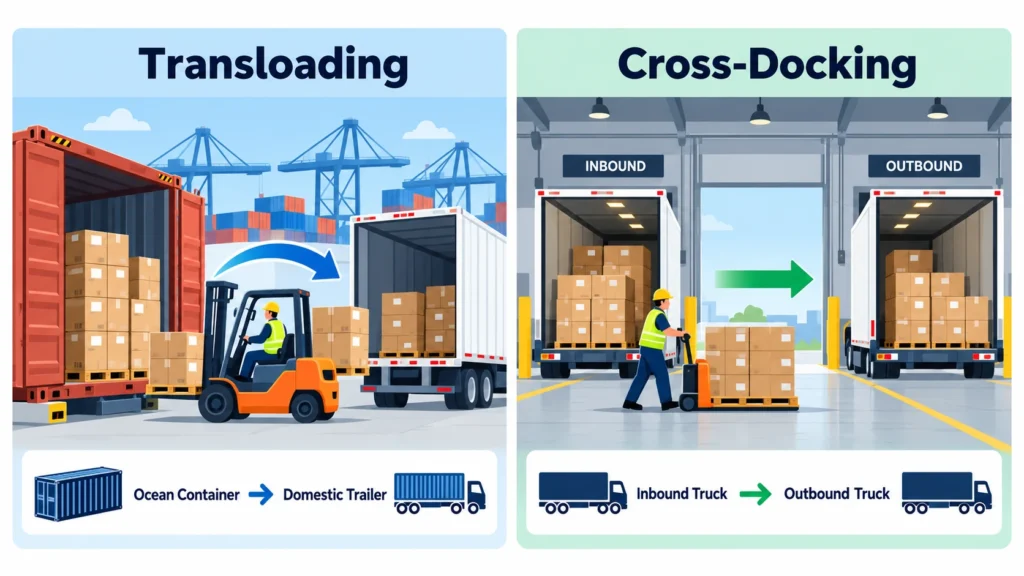
Transloading operations connect ocean freight arrivals with local trucking, warehouse handling, and domestic distribution.
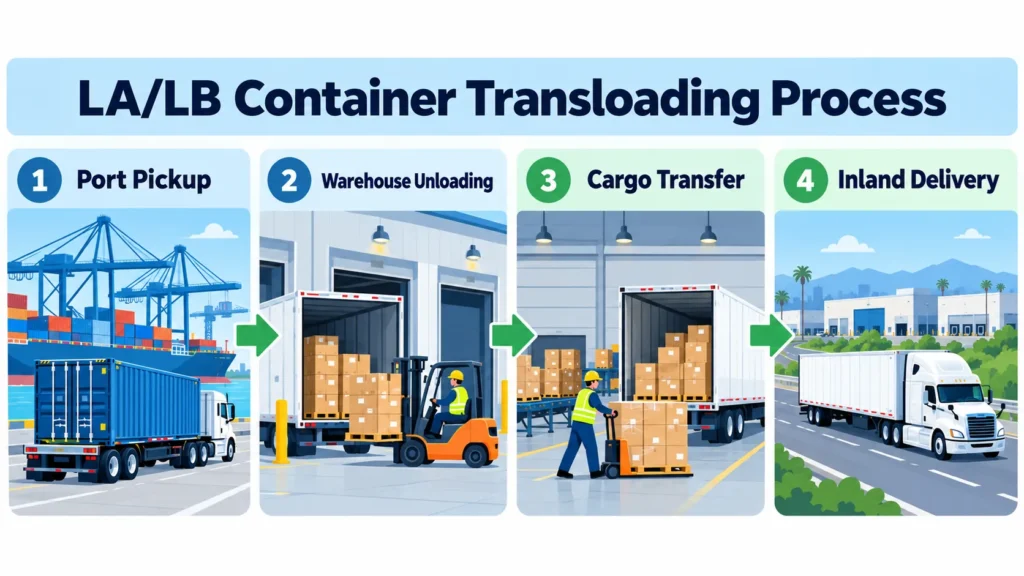
Import containers arrive at the Port of Los Angeles or Port of Long Beach. Before pickup, the logistics provider coordinates applicable customs release, shipping line release, terminal availability, and required appointments.
Cargo subject to customs holds cannot be transferred through an ordinary warehouse operation until the necessary authorization is obtained.
A drayage truck collects the available container and transports it to a warehouse or cross-dock facility.
Facilities in Wilmington, Carson, Compton, and surrounding industrial areas may be used depending on warehouse capacity, container availability, and truck scheduling.
Warehouse workers unload the container using forklifts, pallet jacks, or other suitable equipment.
The cargo may be checked for visible damage, carton counts, packaging condition, and discrepancies against the receiving instructions.
Goods are sorted and prepared for the next transportation stage.
Depending on the shipment, freight may be transferred directly into a 53-foot domestic trailer, divided among several trucks, or placed into short-term storage while outbound transportation is arranged.
The ocean container is returned to the designated location according to the shipping line’s instructions and return deadlines.
Meanwhile, outbound freight moves by full truckload (FTL), less-than-truckload (LTL), or other suitable transportation services to its final destination.
Efficient Los Angeles & Long Beach port drayage is important throughout this process because container pickup, chassis availability, warehouse appointments, and empty returns must be coordinated.
Warehouse location affects drayage distance, container turnaround, scheduling flexibility, and inland transportation costs.
Several logistics areas support transloading and cross-docking operations around the Los Angeles and Long Beach port complex.
| Location | Logistics Advantages | Common Applications |
|---|---|---|
| Wilmington and San Pedro | Close to harbor container terminals | Port-related container transfers |
| Long Beach and Carson | Access to port trucking routes and industrial warehouses | Transloading and distribution |
| Compton and South Gate | Established industrial and warehouse areas | Cross-docking and regional freight |
| Vernon and Commerce | Connections to Los Angeles distribution networks | Retail and commercial cargo |
| Ontario and Fontana | Inland Empire distribution hubs | Warehousing and long-distance trucking |
Facilities closer to the ports may reduce the local drayage distance, while inland warehouses can provide advantages when inventory storage, consolidation, or distribution is more important.
The most suitable facility depends on more than its distance from the port.
Importers should confirm:
Available dock doors, forklifts, and cargo handling equipment
Compatibility with floor-loaded, palletized, heavy, or specialized freight
Warehouse appointment capacity and operating hours
Access to domestic trailers and inland trucking
Short-term storage, inventory control, and cargo security
Empty container return arrangements
A facility close to the Port of Long Beach may be convenient for port pickup, but its actual suitability depends on the cargo and available services.
Los Angeles and Long Beach transloading costs depend on container size, cargo weight, loading method, and warehouse handling requirements. Standard container-to-trailer transloading may cost approximately $350–$650 per container, while basic cross-docking typically ranges from $10–$25 per pallet.
These are indicative 2026 budgeting ranges, not fixed rates. Floor-loaded cargo, repacking, and special handling may increase the total cost.
| Service | Estimated Cost |
|---|---|
| Standard container transloading | $350–$650 per container |
| Cross-docking | $10–$25 per pallet |
| Floor-loaded container surcharge | $150–$300 per container |
| Palletizing and wrapping | $15–$25 per pallet |
| Load reworking and weight adjustments | Quoted based on labor and equipment |
| Temporary warehouse storage | $15–$30 per pallet per month |
| Truck detention | $75–$150 per hour |
| After-hours handling | $250–$500 per special opening |
Rates are approximate planning estimates. Actual charges depend on the facility, cargo specifications, minimum handling fees, and service arrangements. Port drayage and inland trucking are generally quoted separately.
Beyond basic handling fees, importers should account for chassis rental, warehouse waiting time, demurrage, container detention, and empty container returns.
To control costs:
Schedule early: Coordinate port pickup, warehouse appointments, and outbound trucking.
Provide accurate cargo details: Confirm pallet counts, cargo weight, and floor-loaded requirements.
Minimize storage: Arrange outbound transportation before unloading whenever possible.
Compare total costs: Include drayage, transloading, storage, and inland delivery rather than comparing handling rates alone.
Contact Tonlexing for a customized quote based on your container size, cargo details, arrival terminal, and final delivery destination.
Transloading and cross-docking near the Ports of Los Angeles and Long Beach typically take several hours to 2 business days, depending on cargo volume, handling complexity, and warehouse availability.
Cross-docking is generally faster because freight moves directly between inbound and outbound trucks, while container transloading may require unloading, sorting, palletizing, and reloading.
| Service | Estimated Time |
|---|---|
| Standard cross-docking | Same day to 24 hours |
| Ocean container transloading | 1–2 business days |
| Floor-loaded container unloading | 1–2 business days |
| Cargo sorting and repalletizing | 1–3 business days |
| Specialized or oversized cargo | Depends on handling requirements |
These are estimated warehouse processing times after cargo arrival, excluding customs clearance, terminal pickup, port drayage, and inland transportation.
Several factors can delay transloading and cross-dock operations:
Port and terminal availability: Container holds, congestion, and missed pickup appointments.
Cargo handling requirements: Floor-loaded goods, mixed cartons, or heavy equipment requiring additional labor.
Warehouse scheduling: Limited dock capacity or unavailable handling equipment.
Outbound transportation: Delays in securing domestic trailers or delivery appointments.
To reduce delays, importers should arrange port drayage, warehouse appointments, and outbound trucking before container arrival whenever possible.
Transloading and cross-docking near the Ports of Los Angeles and Long Beach can face delays, cargo handling problems, and unexpected charges. Proper coordination between port drayage providers, warehouses, and trucking companies helps reduce these risks.
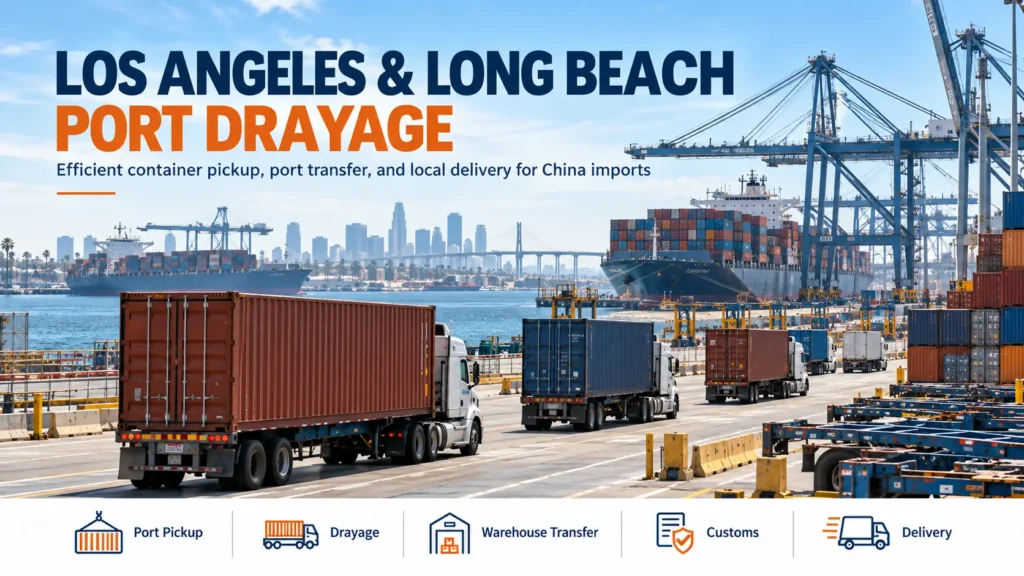
Port congestion, customs holds, missed appointments, and equipment shortages can disrupt transloading schedules. Delayed container pickup or empty returns may also result in demurrage and detention charges.
To avoid these problems:
Confirm cargo release: Verify customs clearance and terminal availability before scheduling pickup.
Coordinate appointments: Align drayage, warehouse receiving, and outbound truck schedules.
Track return deadlines: Monitor container free time and arrange empty returns promptly.
Floor-loaded containers, mixed shipments, overweight cargo, and limited warehouse capacity can increase handling time and create additional costs.
To minimize disruptions:
Provide accurate cargo details: Share container size, weight, pallet count, and special handling requirements.
Prevent cargo damage: Use appropriate unloading equipment, packaging, and weight distribution.
Plan outbound delivery: Confirm trailer availability and warehouse capacity before unloading.
Tonlexing can help coordinate port pickup, transloading, cross-docking, and inland transportation to reduce unnecessary delays and handling costs.
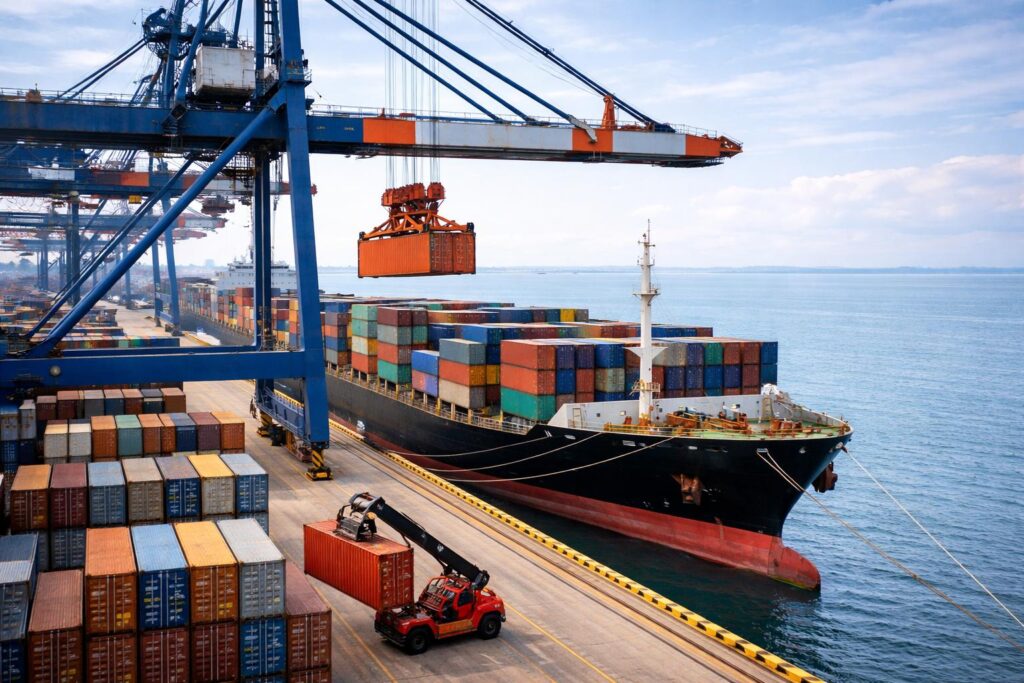
Tonlexing helps importers coordinate international freight and destination logistics for cargo arriving at the Ports of Los Angeles and Long Beach.
Depending on shipment requirements and local partner availability, services can be arranged across port pickup, warehouse handling, cargo transfers, and inland transportation.
Tonlexing can assist with planning and coordinating:
Ocean freight shipments from China to Los Angeles and Long Beach
Port drayage and container pickup arrangements
Transloading and cross-dock services through suitable logistics partners
Cargo consolidation, warehouse handling, and domestic truck delivery
Shipping documentation and customs broker coordination
Shipment updates and container return arrangements
For shipments moving beyond Southern California, USA container drayage services and intermodal rail drayage may form part of a wider inland transportation plan.
For importers arranging shipping from China to the USA, transloading can be planned before the vessel reaches Los Angeles or Long Beach.
To prepare a suitable solution, provide the container number or size, cargo description, total weight, unloading requirements, destination ZIP code, and expected arrival date.
Contact Tonlexing for a customized Los Angeles and Long Beach transloading, cross-docking, and inland delivery quotation.
Transloading involves unloading cargo from an ocean container and transferring it to another transportation vehicle, commonly a domestic truck trailer, for onward distribution.
Transloading focuses on transferring cargo between transportation equipment or modes. Cross-docking focuses on rapidly moving freight from inbound to outbound vehicles with minimal storage.
Simple cross-docking may be completed on the same day or within 24 hours when freight, equipment, and warehouse appointments are ready. More complex transfers can take longer.
Yes. Cargo from a 40-foot ocean container can be transferred into a 53-foot domestic trailer, subject to loading configuration, trailer capacity, and legal weight limits.
Generally, imported cargo must be released by U.S. Customs and Border Protection before ordinary domestic distribution. Unreleased cargo may move only under appropriate customs authorization and facility arrangements.
Useful freight, customs and importing resources related to this shipping guide.
Drayage in the USA Explained: Services, Costs, Types, and How It Works Verified & Reviewed · Last updated March 2026 Drayage in the USA explained...
Read guide →
The Port of Long Beach stands as a vital gateway for international trade, particularly between Asia and North America. Located in Southern Califo...
Read guide →
Shipping from China to Los Angeles is one of the most critical international logistics routes between Asia and the United States. As a major gate...
Read guide →
The top West Coast shipping ports in the USA play a vital role in supporting international trade, facilitating container shipping, and driving ec...
Read guide →Demurrage vs Detention vs Storage Verified & Reviewed · Last updated January 2026 Demurrage vs detention vs storage is one of the most expensive...
Learn more → Useful Resource What Are Terminal Handling Charges (THC)?When dealing with international shipping, one of the common costs importers and exporters encounter is Terminal Handling Charges (THC). These cha...
Learn more →WhatsApp us