

Port of Xiamen CNXMG Shipping Guide
- Verified & Reviewed · Last updated January 2026
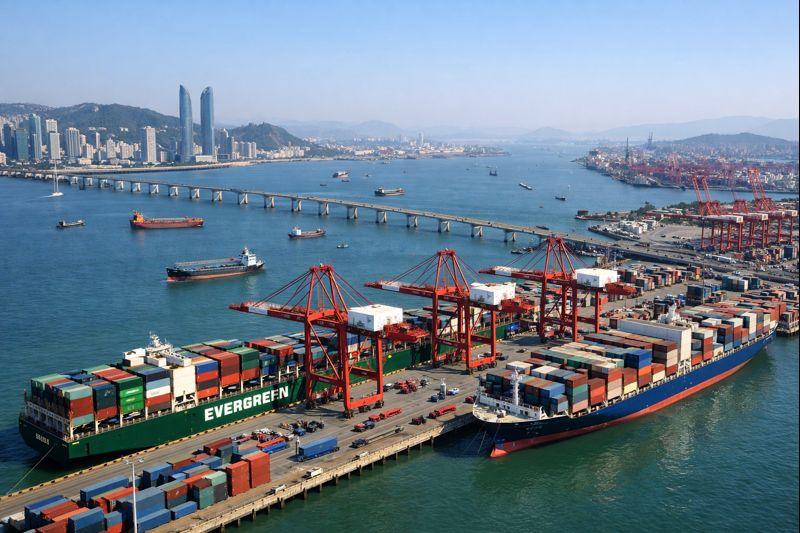
The Port of Xiamen is a key export gateway for factories in Fujian and nearby regions.
Xiamen Port is valued for short inland pickup, a mature terminal network, and stable service coverage to Southeast Asia, the Middle East, Europe, and North America. This page focuses on freight execution: how to use CNXMG in documents, how terminal receiving works, what cutoffs control loading, and how to plan routes, transit time, and freight costs with fewer delays.
Terminals / Receiving
Transit time range
Freight costs
- Experienced China-based logistics specialists
Table of Contents
Quick facts for shipping documents
UN/LOCODE: CNXMG
Port name on documents: Xiamen China
Country: People’s Republic of China
Province: Fujian
Location: southeast coast of mainland China
Terminal system: commonly described as nine container terminals, with major container areas in Dongdu and Haicang
Best practice: keep Xiamen China and CNXMG consistent across SI, invoice, packing list, and bill of lading
What CNXMG means and where it shows up
CNXMG is the standard UN/LOCODE used to identify the Port of Xiamen in carrier systems and shipping documents. You will see CNXMG in:
Booking confirmations and EDI records
Shipping Instructions
Bills of lading
Forwarder quotations and internal systems
If different teams use different port names or codes, the carrier often pauses for manual checks, which can delay confirmation and document release.
Where the Port of Xiamen is located and why it matters
The Port of Xiamen is located on the southeast sea coast of China, close to many Fujian production clusters. For freight planning, the location matters because it reduces inland variability:
Shorter drayage and easier pickup planning
Higher chance to meet CY cutoffs
More stable container delivery to the receiving terminal
Some exporters compare routing through Shanghai, but inland distance and trucking uncertainty are often the deciding factor for time-sensitive cargo.
Xiamen Port Authority and operating rules
In daily operations you work through your forwarder, carrier, and trucker, but the Xiamen Port Authority framework still shapes real outcomes:
Gate appointment rules and entry procedures
Safety checks and inspections
Coordination across terminals and service strings
The practical rule is simple: stable shipment data, early SI submission, and correct receiving terminal reduce holds.
Container terminals and receiving
How to avoid gate-in mistakes
Xiamen Port runs a multi-terminal system. What matters is which receiving terminal the carrier assigns for the sailing, not just the total number of terminals.
Before the truck goes to gate-in, confirm:
Receiving terminal on the booking confirmation
Gate window and appointment requirements
CY cutoff, VGM cutoff, SI cutoff
Final shipment data: cartons, gross weight, CBM, and product description
The most common delay pattern is delivering the container to the wrong receiving point or arriving outside the gate window. That usually leads to missed cutoffs and rollover.
Berths, facilities, and deep-water capability
For exporters, the key question is whether the port can handle big calls reliably in peak weeks. The Port of Xiamen has modern port facilities and multiple berths for large container ships. It is widely described as a deep water port, and that supports flexible vessel deployment during demand spikes.
From a shipper perspective, the takeaway is operational:
berth productivity affects loading reliability
yard flow affects truck waiting time
stable gate procedures reduce last-minute disruptions
Public descriptions of coastline length differ by reporting scope, but the freight impact is still driven by berths, yard flow, and gate execution.
Key markets and the Taiwan Strait trade lane
Key markets served from the Port of Xiamen include regional Asia distribution and long-haul lanes. The port also supports visible trade flows linked to Taiwan across the Taiwan Strait. If your cargo is tied to Taiwan-linked supply chains, confirm whether the routing is direct or via relay, since service strings can change by season.
Xiamen Port stays connected to the world through multiple weekly service strings. In some years, it is described as ranked among leading hubs by throughput, with totals often cited in the million TEUs range.
Cutoffs you must manage for smooth loading
Export shipments usually revolve around three deadlines:
CY cutoff
The last time the loaded container can enter the terminal.
VGM cutoff
The deadline to submit verified gross mass. Missing it can block loading.
SI cutoff
The shipping instructions deadline for bill of lading drafting. Late SI edits are a common cause of holds.
Direct vs transshipment
Routing drives transit time variability.
Direct services are usually more stable for regional lanes.
Transshipment adds buffer days and connection risk during congestion.
If the cargo is time-sensitive, ask your forwarder to confirm whether it is direct or via transshipment and which relay port is used.
Depending on lane and week, services from major lines such as COSCO may appear in the routing plan, so always confirm the string and cutoffs at booking.
Typical shipping routes and transit time from Xiamen
These are planning ranges. Actual transit time depends on schedules, direct versus relay, and congestion.
| Destination market | Typical discharge port | Typical routing | Transit time |
|---|---|---|---|
| Southeast Asia | Singapore | Direct regional service | 4–7 days |
| Regional Asia | Port Klang | Direct or short relay | 5–9 days |
| Regional Asia | Ho Chi Minh | Direct or regional relay | 6–11 days |
| Philippines | Manila | Direct services available | 5–10 days |
| US West Coast | Los Angeles or Long Beach | Mainline, sometimes relay | 12–19 days |
| US East Coast | New York or Savannah | Longer strings, relay possible | 26–40 days |
| Europe | Rotterdam or Hamburg | Mainline with frequent relay | 28–42 days |
| Middle East | Jebel Ali | Direct on some strings, relay common | 18–30 days |
Tip: if your warehouse receiving window is tight, add buffer for relay connections and destination congestion.
Estimated freight costs from Xiamen for FCL
The ranges below are linehaul freight estimates for FCL. They exclude origin and destination local charges, customs clearance, trucking, storage, insurance, and special-cargo surcharges. Rates change with seasonality and equipment.
| Destination | 20GP | 40HQ | Notes |
|---|---|---|---|
| Singapore | USD 220–650 | USD 380–980 | High frequency, usually stable |
| Port Klang | USD 260–720 | USD 480–1,120 | Carrier options vary by week |
| Ho Chi Minh | USD 320–880 | USD 600–1,280 | Space tightens before peak weeks |
| Manila | USD 380–980 | USD 720–1,380 | Capacity swings by service |
| Los Angeles or Long Beach | USD 1,250–3,350 | USD 2,000–5,050 | Demand swings, routing matters |
| New York or Savannah | USD 2,300–4,200 | USD 3,500–6,100 | East Coast strings fluctuate more |
| Rotterdam or Hamburg | USD 1,650–4,350 | USD 2,500–6,350 | Relay choices change totals |
| Jebel Ali | USD 1,150–2,950 | USD 1,750–4,350 | Surcharges vary by carrier |
What you should prepare before requesting a quote
Import, unloading, and arrival planning
If you are moving import cargo via the Port of Xiamen, plan arrival early:
confirm discharge terminal and release steps
book trucking pickup within terminal windows
track free time to avoid storage escalation
Fast unloading and correct consignee details reduce holds and protect your schedule.
Practical workflow with fewer delays
Lock shipment facts early
Confirm product description, cartons, CBM, gross weight, and compliance flags.Confirm the receiving terminal
Follow the booking confirmation and terminal gate rules.Manage the three cutoffs
Plan pickup and gate-in around CY cutoff. Submit VGM and SI early.Confirm routing
Direct vs relay changes predictability. Add buffer when transshipment is used.Confirm scope of responsibility
Clarify port-to-port, port-to-door, or door-to-door to avoid surprise charges.
Frequently Asked Questions
CNXMG is the UN/LOCODE commonly used in booking and documentation.
Many references describe nine container terminals in the Xiamen system, with major container areas in Dongdu and Haicang.
It is widely described as a deep water port capable of accommodating large vessel calls.
Regional Asia lanes and long-haul lanes to Europe, the Middle East, and North America. Cross-strait flows with Taiwan across the Taiwan Strait are also relevant for some supply chains.
Peak season depends on lane. If timing is tight, book earlier and avoid late document changes. Capacity often tightens in December.
More China Port Guides
Get a Xiamen Port Shipping Quote
Correct receiving terminal and cutoff planning
Route and transit time options you can compare
Transparent freight cost breakdown and support
Share your destination, ready date, and cargo details to receive a fast, workable plan from Xiamen (CNXMG).