

Sea Freight vs Air Freight: Costs, Transit Times, and How to Choose in 2026
- Verified & Reviewed · Last updated January 2026
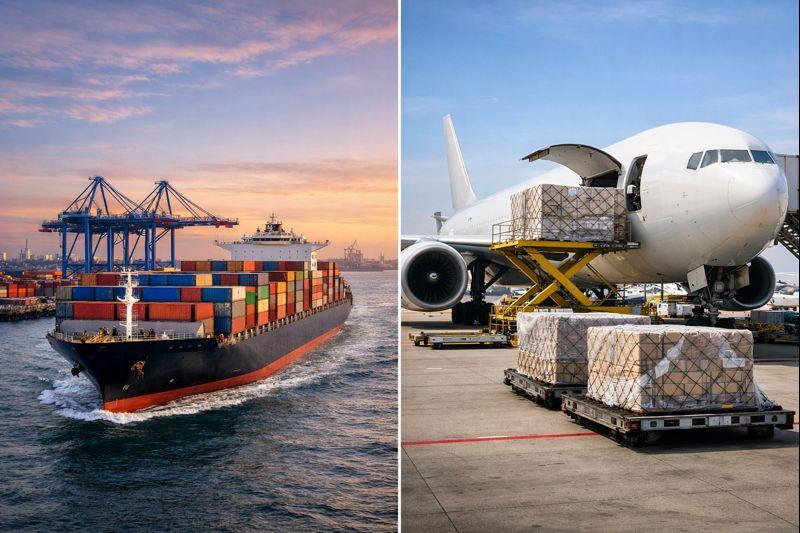
Sea freight vs air freight is one of the most important decisions in international shipping because it directly affects shipping costs, transit times, and your delivery plan. Sea freight is the backbone of global trade and stays the most cost effective option for bulk cargo, heavy goods, and large volumes.
This 2026 guide compares air and ocean freight, explains how pricing is calculated, and helps you choose the right shipping method for your shipment.
Shipping method / Mode
Transit time range
Cost comparison
- Experienced China-based logistics specialists
Table of Contents
Key differences between sea freight and air freight
The key differences come down to speed, cost drivers, cargo limits, and disruption risk.
Speed and transit times
Air freight is the fastest mode of international shipping, often delivering within 5 to 10 days for many routes when the shipment is ready, documents are correct, and connections are available.
Sea freight typically takes longer. Door-to-door transit times often fall in the 14 to 40 plus day range depending on port pair, sailing schedule, customs clearance, and inland trucking.
Because many buyers compare airport-to-airport versus port-to-port, they underestimate true door-to-door transit times. The shipment timeline includes pickup, export processing, main transport, import release, and last-mile delivery to the final destination.
Cost and pricing logic
Air freight is usually more expensive than sea freight. In some real comparisons, air freight can be multiple times higher and can reach extreme gaps on low-density cargo.
Sea freight is significantly cheaper per unit for large volumes, which is why it is ideal for bulk cargo, raw materials, and steady replenishment.
Cargo flexibility
Sea freight can transport virtually any type of cargo, including oversized, heavy, or irregularly shaped items.
Air freight is constrained by aircraft door size, weight limits, pallet heights, and cargo hold restrictions.
Sustainability
Air freight generally has a much higher emissions profile than ocean shipping. Many shippers cite comparisons where air freight can generate around 47 times more greenhouse gases per ton-mile than sea freight.
Sea freight is usually the better choice when you need a lower carbon footprint for most transport goods, especially heavy shipments.
Sea freight vs air freight: the one-minute comparison table
| Factor | Air freight | Sea freight |
|---|---|---|
| Typical door-to-door transit times | 5 to 10 days on many lanes | 14 to 40 plus days on many lanes |
| Main cost driver | Chargeable weight and surcharges | Container space, cubic meters, port and inland charges |
| Best for | Time sensitive shipments, high-value, urgent deliveries | Bulk cargo, large volumes, heavy cargo shipped, stable inventory |
| Cargo limits | Strict size limits and airline regulations | Can handle oversized and irregular shapes |
| Reliability profile | Often consistent schedules | More exposed to port congestion and weather |
| Environmental profile | Higher emissions intensity | Often a lower carbon footprint per unit |
This is the core reason teams keep debating air freight vs sea and air vs ocean freight: the trade-offs are clear, but the right answer depends on shipment details.
Door-to-door shipping process: why the timeline feels different
A shipment does not start at the port or airport. It starts at pickup and ends at delivery.
Air freight shipment flow
Pickup and export booking confirmation
Cargo acceptance, security checks, and handling at origin
Build-up into pallets or unit load devices for efficient air cargo movement
Linehaul flight and possible transfers through hubs
Arrival handling and import release
Customs clearance procedures and duty and tax processing
Local delivery to the final destination
Because the flight network is dense, air freight offers speed and often reduces exposure time for cargo. This is one reason many importers prefer air freight for high value goods.
Sea freight shipment flow
Pickup and delivery to a consolidation point or port terminal
Stuffing, packing, or consolidation into a container load
Gate-in and export clearance
Main ocean leg on a container ship
Discharge at destination port and terminal processing
Customs clearance, exams when required, and release
Inland delivery and appointment scheduling
The ocean leg can be predictable, but the shipment can lose days in terminals, trucking queues, or documentation holds. This is why the same sea freight lane can show varying transit times.
How Air and Ocean Freight Costs Are Calculated
Pricing for air freight vs ocean freight looks different because the billing logic is different. Air freight is mainly about billed weight and surcharges, while ocean freight is mainly about container space and port-to-door costs. If you want a clean comparison, always compare the same scope to the same final destination.
Air freight costs: billed weight plus surcharges
Air freight pricing is built around chargeable weight, then adds service and handling items.
Chargeable weight, actual weight, and volumetric weight
Air freight uses chargeable weight, determined by either actual weight or volumetric weight, whichever is higher. In plain terms, you pay for mass or space, whichever is more expensive for the airline.
Actual weight is what the shipment weighs on a scale.
Volumetric weight is the space the shipment consumes and is often called dimensional weight.
If cartons are large and light, volumetric weight becomes the driver and the invoice can increase sharply even when the shipment seems light. Confirm carton measurements, pallet dimensions, and gross weight before booking. If gross weight changes after acceptance, the billed amount can change.
Typical air freight line items
A realistic air freight quote often includes:
base air rate per kg based on lane and service level
handling and screening for air cargo
fuel surcharges
documentation and terminal charges
delivery charges for remote destinations or special handling
A key point is that the per-kg rate alone does not tell the full story. Packing and measurement can change the final cost.
Ocean freight costs: container space plus origin and destination charges
Ocean freight pricing depends on whether you ship a full container or share one, then adds the charges around the sailing.
Full container load and LCL
Full container load means your shipment uses an entire container. It reduces touch points and often improves cargo control. Common container options are 20ft and 40ft, and the best choice depends on your total gross weight and total cubic meters.
LCL means your shipment shares space with other cargo and is usually priced by cubic meters plus handling charges.
A common mistake is comparing only the base ocean freight line item. A real comparison needs the total cost to your delivery point.
Typical ocean freight line items
A sea freight quote may include:
origin handling and export documentation
main ocean freight line item
destination handling and release fees
customs clearance service if included
inland delivery and appointment costs
storage risk when a shipment is not cleared on time
Because sea freight moves huge volumes, it is often the cost-effective baseline for larger shipments and large quantities.
Sea freight vs air freight cost breakpoints
The biggest cost swings happen when packaging changes the billed weight.
When air freight becomes expensive
Air freight becomes expensive when:
The shipment is bulky and billed on volumetric weight
The lane is tight on capacity, especially during peak periods
The cargo requires extra screening, special handling, or strict airline regulations
The delivery point is far inland or serves remote locations that add local surcharges
A low-density shipment can make air freight vs sea look extreme. This is where teams see air freight priced many times higher vs sea freight for the same goods.
When sea freight becomes the clear winner
Sea freight becomes the clear winner when:
The cargo is heavy and dense
The shipment is large and stable in volume
You are shipping bulk cargo or raw materials
You can plan inventory and accept longer transit times
You can fill an entire container or consolidate efficiently
Sea freight is significantly cheaper per unit for large volumes. It is the classic answer when the goal is cost control rather than speed.
Ocean freight capacity and container planning
Understanding container strategy helps you reduce shipping costs and reduce damage risk.
Entire container versus shared container load
If your shipment is large, booking an entire container reduces handling. It also simplifies tracing and reduces the risk of partial delays.
If your shipment is smaller, LCL is flexible, but it introduces more touch points. More touch points mean higher exposure to delays during consolidation and deconsolidation.
Container ship and sea shipping realities
A modern container ship can carry cargo at enormous scale, which is why sea shipping is the backbone of global trade. A container ship also runs on fixed schedules, but ports and terminal operations can introduce variability.
For many lanes, ocean freight schedule reliability is good when you book early and avoid last-minute cutoffs. Still, sea shipping can be affected by weather and congestion more than air schedules.
Air cargo constraints: cargo hold, passenger planes, and safety
Air cargo is fast, but it is constrained by aircraft physics and safety standards.
Cargo hold limits
Aircraft cargo hold dimensions limit pallet height and package shape. Cargo hold rules also affect how weight is distributed and how goods are secured. Cargo hold capacity varies by aircraft type and route. Cargo hold limits are a common reason shipments are rolled to a later flight.
Passenger planes versus freighters
Some air freight moves on dedicated freighters, while other shipments move in the passenger planes. Passenger planes often have less cargo capacity and can be more sensitive to seasonal swings in baggage volume. Passenger planes can still be reliable on major routes, but capacity can tighten quicklycargo hold of .
Handling and safety
Air freight is often considered safer by many shippers because once the goods are loaded and secured, there is less handling until arrival. Shorter transit times also reduce exposure to damage and theft risk.
Hazardous materials and compliance: air freight vs ocean freight
Hazardous materials are a deciding point for many shippers.
Air freight has stricter limitations on hazardous materials because of airline regulations, safety rules, and quantity thresholds.
Ocean freight is often more flexible for hazardous materials, but declarations and packaging must be correct.
If your cargo shipped includes batteries, chemicals, aerosols, or flammable goods, compliance planning must happen before booking. A shipment can be delayed or rejected if documents do not match the cargo.
Sea freight can accommodate a wider range of hazardous materials categories in many cases, but the shipper must still comply with labeling, packing, and declaration standards.
Which shipping method is best for different shipment types
A quick way to choose between sea freight vs air freight is to match the shipping method to the product type and delivery urgency. Use the table below as a practical guide.
| Shipment type | Better option | Why |
|---|---|---|
| Smaller shipments | Air freight | Faster delivery for urgent orders and quick replenishment |
| Larger shipments and large quantities | Sea freight | More cost effective per unit for heavy cargo and bulk cargo |
| High value goods | Air freight | Shorter time in transit, faster arrival to the final destination |
| Perishable goods with short shelf life | Air freight | Reduces spoilage risk and supports consistent quality |
In real operations, many mature importers do not treat this as a one-time choice. They combine air and sea freight as a practical plan: use air freight for urgent deliveries, launch stock, and time sensitive shipments, then use sea freight for baseline replenishment and heavy goods. This air-and-ocean freight approach stabilizes supply chains by separating emergency stock from routine stock, so you control both speed and cost instead of debating one mode forever.
Ocean and air freight hybrid: Sea-Air services
Some shippers use a hybrid model that combines ocean freight with air freight. This approach is often called Sea-Air and is used to balance speed and cost.
When it works best:
Direct air freight is too expensive
Direct sea freight is too slow
You need a midpoint solution for schedule risk
This is a practical answer for teams comparing air freight vs sea and seeking a speed-cost balance without paying full air freight costs.

Sustainability, carbon footprint, and fuel consumption trends
Sustainability is a growing decision driver. Air freight generally has a higher emissions intensity than ocean freight, and many shippers reference that difference when selecting the shipping method.
Air freight typically has a higher carbon footprint per unit of cargo moved.
Sea freight typically supports a lower carbon footprint for most heavy cargo shipped.
On the ocean side, carriers improve efficiency through ship design, operations, and route planning. Larger ships can reduce fuel consumption per unit moved. Some carriers also offer strategies aimed at reducing fuel consumption, such as slower speeds or optimized routing.
These changes do not remove the speed advantage of air, but they strengthen the sustainability case for ocean freight for large volumes.
A decision checklist to choose ocean freight or air freight
Use this checklist for each shipment:
Choose air freight when
The shipment is urgent and delay has high business impact
You need consistent short transit times
You ship high value goods or perishable goods
The shipment is small enough to avoid expensive dimensional weight
You need to reach remote destinations quickly
Choose ocean freight when
You ship large volumes, bulk cargo, or raw materials
The shipment is heavy and dense
You can plan inventory cycles and buffer time
You want cost effective shipping costs per unit
You can consolidate into a full container load or efficient container load
If you need a simple default for most routine replenishment: choose ocean freight. If speed is the main key factor: air freight is the tool.
Quotes and data you should send your freight forwarder
To compare options accurately, give your freight forwarder:
Product name and cargo description
Carton count and dimensions
Gross weight per carton and total gross weight
Pickup city and delivery postcode
Whether the shipment includes hazardous materials
Required delivery timeline and service scope
Any special packing requirements for fragile cargo
This data prevents re-measurement and helps avoid billing surprises on chargeable weight.
What a freight forwarder does and why it matters
A reliable freight forwarder does more than provide a rate. They protect your cost and timeline by making sure the shipment is booked correctly, packed efficiently, and compliant before it moves.
A forwarder typically helps with:
comparing air freight vs ocean freight using the same door-to-door scope
optimizing packing to reduce chargeable weight or CBM waste
recommending LCL vs FCL and the right container size such as 20ft or 40ft
coordinating export documents, carrier cutoffs, and customs clearance steps
managing exceptions like inspections, delays, and delivery appointments to the final destination
If you want accurate quotes and fewer surprises, send complete data early and ask for an itemized quote that separates origin, main freight, destination, and delivery.
Frequently Asked Questions
The main difference is speed versus cost structure. Air freight is faster and often more reliable on schedules, while sea freight is far cheaper for large volumes and more flexible for oversized cargo.
Compare the same scope and same final destination. Include pickup, export handling, main transport, customs clearance, and delivery. This avoids misleading comparisons vs ocean freight based only on the base rate.
Air shipping is almost always faster on the linehaul leg. Sea shipping can still be competitive for some regional lanes, but in most long-haul cases air wins clearly on transit times.
Yes. Sea freight can carry cargo that is oversized, heavy, or irregular. Many shipments that cannot fit aircraft constraints can still move by ocean freight on a container ship.
More Shipping Guides You May Need
Get a Sea Freight vs Air Freight Quote
Side-by-side cost comparison for air and ocean freight
Realistic transit time range to your final destination
Best shipping method recommendation based on CBM and weight
Send your cargo details and get the most cost-effective option for your shipment.