Related Guide
Shipping from China to the USA
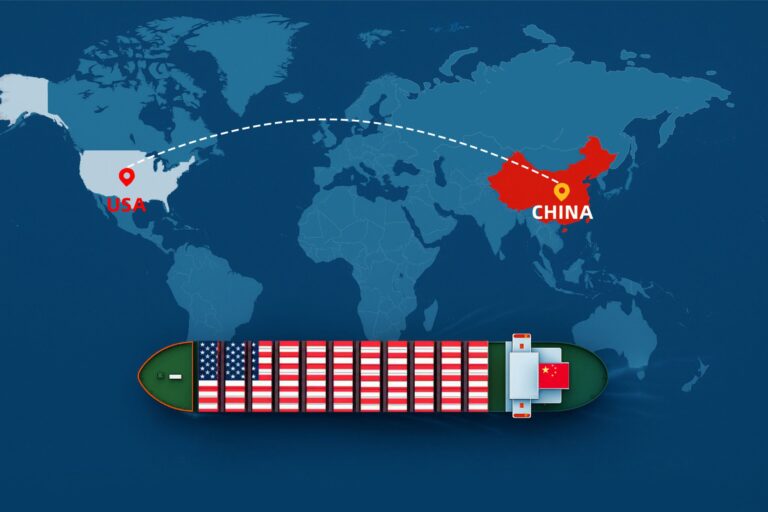
Shipping from China to the USA includes air freight, sea freight, and DDP shipping options. Compare shipping costs, transit times, and US customs...
Read guide →

Shipping 1–5 pallets from China to the USA is a practical solution for businesses importing small and medium quantities of goods, including orders from multiple suppliers.
Compare LCL, air freight, and express shipping rates, transit times, pallet dimensions, and U.S. customs requirements to choose the right shipping solution.
Pallet Shipping Costs
LCL vs. Air Freight
U.S. Customs Clearance
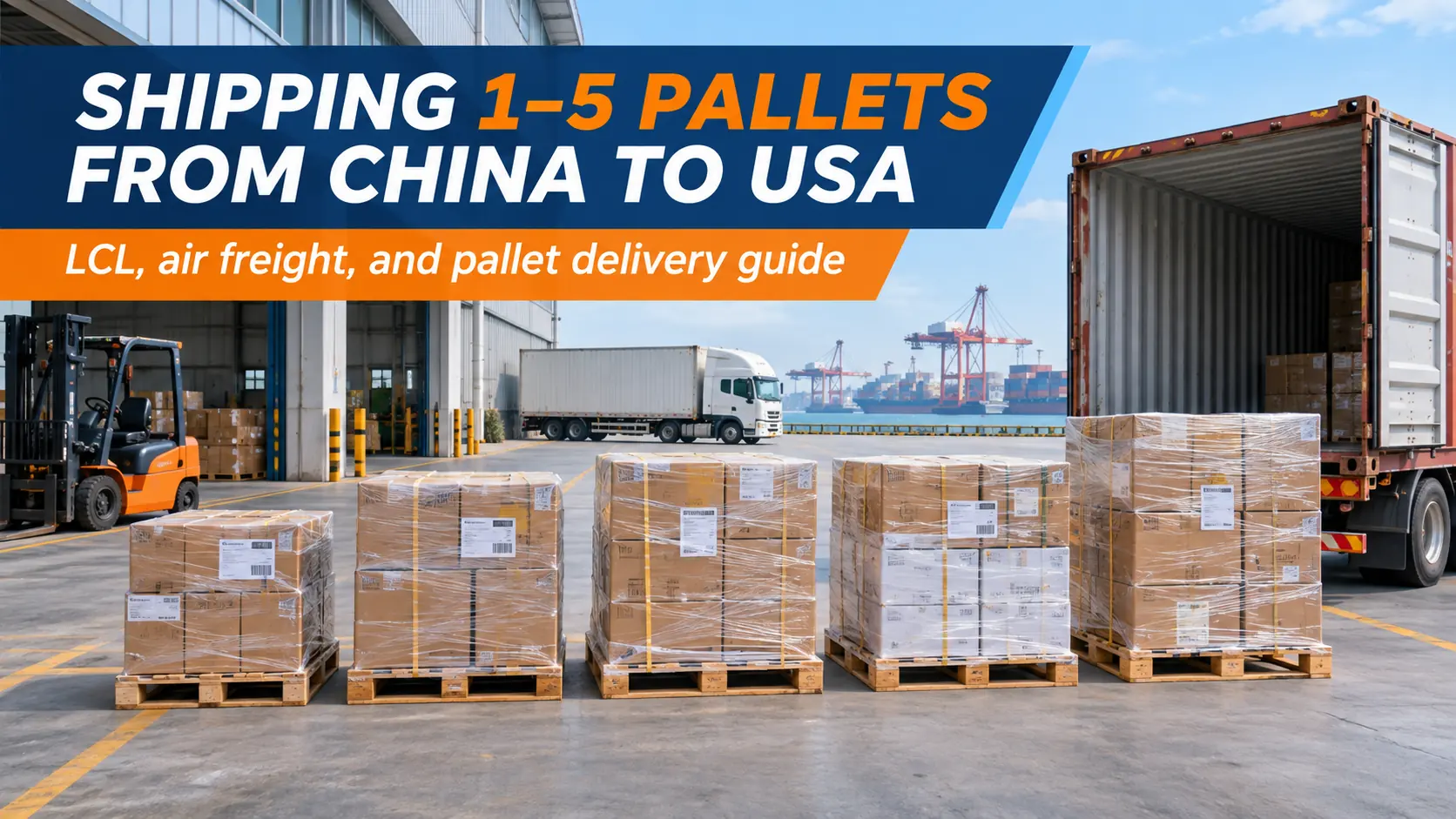
Typical shipment size: 1–5 pallets of commercial goods
Most economical method: Ocean LCL
Faster transportation: Air freight
Urgent shipments: Express courier
Main cost factors: Pallet dimensions, gross weight, shipping route, and destination charges
Important customs requirements: Commercial invoice, packing list, applicable customs bond, and ISF for ocean shipments
Businesses purchasing from multiple suppliers can also use a China warehouse to consolidate orders before international transportation.
The cost to ship pallets from China to the USA depends on the transportation mode, total CBM, chargeable weight, departure location, and destination.
The following figures are indicative market reference rates for preliminary budgeting, not fixed Tonlexing quotations.
| Shipping Method | Estimated Freight Rate | Best For |
|---|---|---|
| Ocean LCL | $40–$80 per CBM | Heavy, non-urgent goods |
| Expedited Sea | Route-specific quotation | Faster ocean transportation |
| Air Freight | $4.00–$6.00 per kg | Urgent or high-value products |
| Express Courier | $7.54–$9.54 per kg | Samples and small shipments |
These are indicative rates, not guaranteed prices. Actual freight rates vary with carrier capacity, fuel surcharges, peak-season demand, cargo dimensions, and the selected route. Air and express charges are generally based on chargeable weight rather than actual weight alone.
When comparing shipping services, ask your freight forwarder to identify the following charges:
China pickup: Transportation from the supplier’s factory to the warehouse or departure point
Origin charges: Warehouse receiving, handling, documentation, and export procedures
International freight: Ocean or air transportation from China to the USA
Destination charges: CFS handling, terminal fees, documentation, and applicable arrival charges
Customs clearance: Import entry preparation, brokerage, and applicable government fees
Import duties: Duties and additional tariffs determined by the product’s classification and country of origin
Final delivery: Domestic trucking or LTL transportation to the receiving address
A low freight rate does not necessarily mean a low final shipping price. Always compare the complete quotation, including origin and destination charges.
For an initial estimate, use the freight cost calculator from China and provide your shipment dimensions, weight, and destination.
Ocean freight and air freight are the two main transportation options for palletized goods from China to the USA. The best choice depends on shipment size, delivery deadlines, and the total freight rates.
Ocean LCL (Less than Container Load) is usually the first option to consider when shipping 1–5 pallets.
Instead of booking an entire container, your goods share container space with shipments from other importers. Charges are generally calculated according to the applicable weight-or-measurement rules, subject to minimum billing requirements.
Advantages:
Lower transportation costs for smaller shipment volumes
Suitable for heavy and bulky commercial products
No need to wait until enough goods are available to fill a container
Convenient for combining orders from multiple suppliers
Disadvantages:
Longer transit times than air freight
Additional consolidation and deconsolidation handling
Destination CFS charges can increase the total cost
More handling during transportation may increase the risk of packaging damage
LCL is particularly suitable for furniture, household products, machinery components, packaging materials, and other general commercial goods.
For more information, read our LCL shipping from China guide.
Air freight is a suitable option when delivery speed is more important than the lowest transportation cost.
For 1–5 pallets, air transportation can be practical for high-value products, urgent replenishment orders, and goods needed to meet production or sales deadlines.
Advantages:
Faster international transportation
Suitable for valuable and time-sensitive products
Frequent departure options on major trade routes
Less exposure to extended ocean shipping schedules
Disadvantages:
Higher freight costs per kilogram
Strict restrictions on certain products
Volumetric weight can increase the chargeable weight
Airport handling and final delivery add to the total cost
Before booking, compare the actual air freight costs with the value of receiving your goods earlier. You can also check our air freight transit time from China to the USA.
Express courier services such as DHL and FedEx are generally designed for small, urgent shipments.
They are convenient for product samples, spare parts, documents, and lightweight commercial goods. However, transporting several full pallets through express services can become expensive.
Before booking, confirm:
Whether the courier accepts your pallet dimensions
Maximum shipment weight and size
Whether palletized goods need repacking
Whether commercial or residential delivery is included
Whether customs clearance and duties are billed separately
For several full pallets, compare express rates with standard air freight before choosing a service.
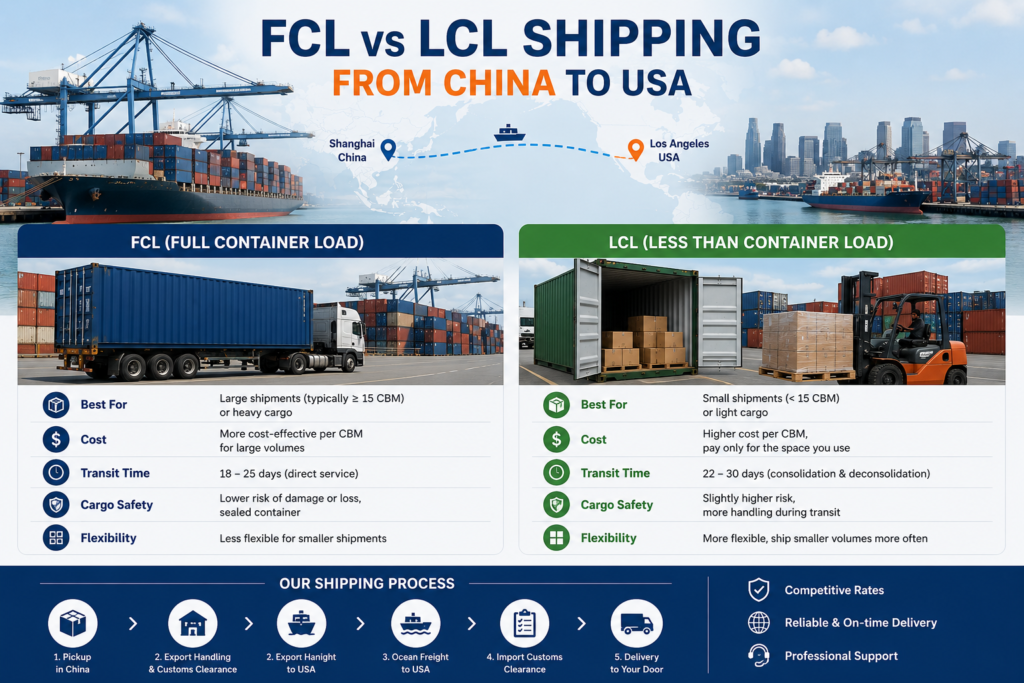
Although LCL is usually suitable for 1–5 pallets, larger or non-stackable shipments may make a full container worth considering.
As a general planning guideline:
Below 10 CBM: LCL is usually worth considering first
Around 10–15 CBM: Compare LCL with a 20GP container
Above 15 CBM: FCL may become more economical, depending on the route and total charges
These are comparison guidelines rather than fixed break-even points. Origin handling, destination charges, container loading, customs, and final delivery can all change the result.
Read our FCL vs. LCL shipping comparison from China to the USA for a more detailed comparison.
Pallet dimensions and gross weight directly affect shipping costs. Ocean LCL generally uses a weight-or-measurement (W/M) calculation, while air freight uses chargeable weight.
Use this formula:
CBM = Length (m) × Width (m) × Height (m) × Number of Pallets
For example, if one pallet measures 1.2 × 1.0 × 1.2 meters: 1.2 × 1.0 × 1.2 = 1.44 CBM
| Pallet Quantity | Total Volume |
|---|---|
| 1 Pallet | 1.44 CBM |
| 2 Pallets | 2.88 CBM |
| 3 Pallets | 4.32 CBM |
| 5 Pallets | 7.20 CBM |
Always use the final packaged dimensions, including the pallet base and protective wrapping. You can calculate your shipment volume using our CBM calculator for shipping from China.
Air freight charges are generally based on whichever is higher: actual gross weight or volumetric weight.
A commonly used calculation is:
Volumetric Weight (kg) = Length × Width × Height (cm) ÷ 6,000
For a pallet measuring 120 × 100 × 120 cm: 120 × 100 × 120 ÷ 6,000 = 240 kg
If its actual gross weight is 180 kg, the chargeable weight is generally 240 kg, subject to the airline’s applicable divisor.
For ocean LCL, the forwarder normally calculates freight using the applicable W/M tariff and minimum billing requirements.
Stackable pallets help use container space more efficiently and may reduce freight costs. Non-stackable or oversized pallets can occupy additional space and require special handling.
Inform your freight forwarder if the products are fragile, have an uneven weight distribution, or cannot support additional loads.
Transit times depend on the shipping method, departure port or airport, destination, and handling arrangements. Ocean LCL takes longer because of cargo consolidation, while air freight offers faster delivery.
| Shipping Method | Estimated Transit Time |
|---|---|
| Ocean LCL | 22–40 days |
| Ocean FCL | 18–35 days |
| Air Freight | 3–7 days |
| Express Courier | 2–5 days |
These are indicative international transit estimates, not guaranteed door-to-door delivery times. Pickup in China, customs clearance, and final trucking in the USA may require additional time.
Several factors can affect the actual delivery schedule:
Origin and destination: Routes to Los Angeles and Long Beach may have different schedules from East Coast destinations such as New York.
Cargo consolidation: LCL shipments may require additional warehouse handling before departure.
Customs clearance: Document errors, inspections, or missing information can delay release.
Peak seasons: Chinese New Year and busy shipping periods may affect booking availability and departure schedules.
Final delivery: Warehouse appointments, trucking availability, and unloading arrangements can add time.
For route-specific estimates, see our sea freight transit time from China to the USA and air freight time from China to the USA guides.
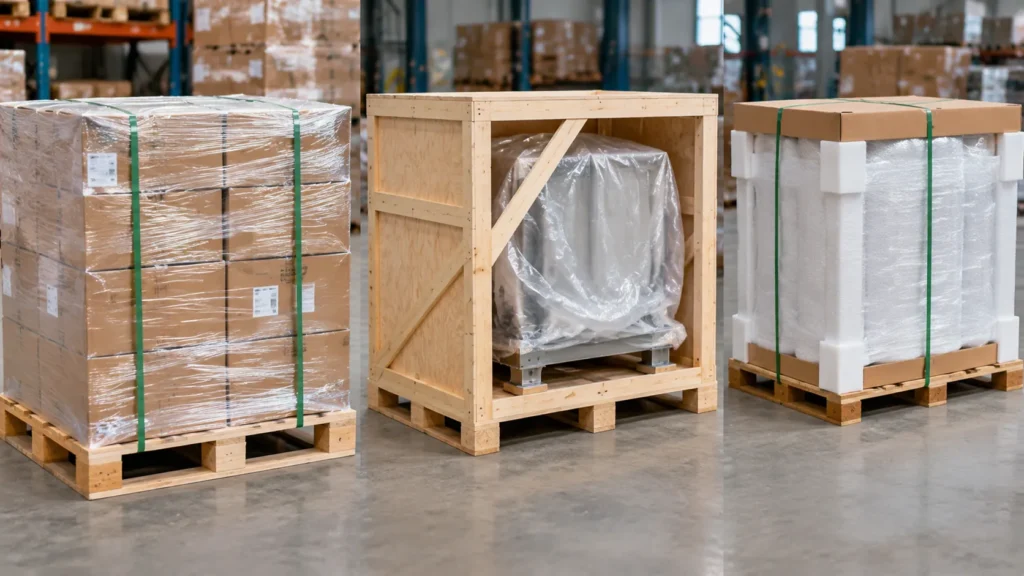
Proper pallet preparation protects products during warehouse handling, consolidation, and international transportation.
Pallet dimensions vary according to the supplier, product type, and destination requirements.
Common formats include:
North American standard pallet: 48 × 40 inches
European standard pallet: 1200 × 800 mm
Common export pallet: 1200 × 1000 mm
These are common formats rather than mandatory sizes for every shipment.
Before booking, confirm the complete external dimensions, including the pallet base, packaging, and protective materials.
Wooden pallets entering the United States must comply with applicable ISPM 15 requirements.
According to USDA APHIS wood packaging material requirements, regulated wood packaging material must be properly treated and marked with the required ISPM 15 identification.
The official mark generally includes:
IPPC symbol
Country code
Approved treatment facility identification
Treatment code, such as HT or MB
Non-compliant wooden packaging may be refused entry or require corrective action.
Plastic pallets and certain processed wood products, such as plywood and pressboard, may fall outside the same wood packaging material requirements. Confirm the applicable classification before shipping.
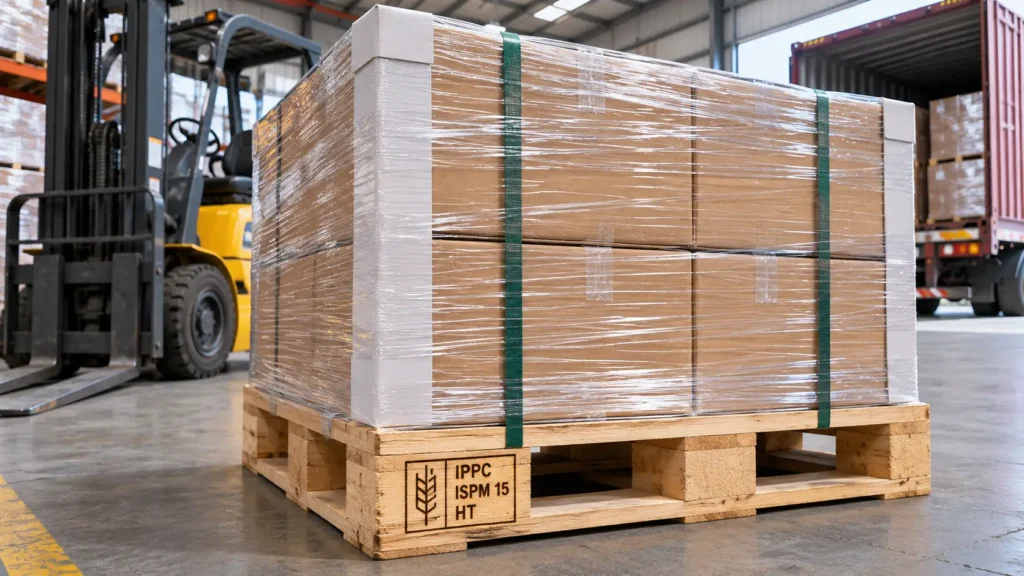
Before transportation, make sure that:
Products are securely fixed to the pallet
Stretch wrap or suitable protective packaging is applied
Heavy items are positioned safely
Fragile products have adequate cushioning
Carton labels and shipping marks are visible
Pallets can withstand normal handling and transportation
For machinery and heavy equipment, confirm lifting points and loading requirements before arranging pickup.
U.S. customs clearance is an essential part of importing commercial goods from China. Importers should prepare the required documents, confirm the applicable import duties, and coordinate with a customs broker before the shipment arrives.
Commonly required or relevant documents include:
Commercial Invoice: Declares product descriptions, transaction value, seller, and buyer
Packing List: Shows pallet quantity, package details, dimensions, and gross weight
Bill of Lading: Ocean transportation document
Air Waybill: Air transportation document
HS Code: Identifies the product’s customs classification
Importer Information: Identifies the importer of record
Certificate of Origin: Verifies the country of origin when required
Product Certificates or Permits: Required for certain regulated products
An accurate commercial invoice and packing list help the customs broker prepare the import entry and verify the shipment details.
You can refer to our commercial invoice template for importing from China to the USA.
For ocean freight, the Importer Security Filing (ISF 10+2) must generally be submitted at least 24 hours before the goods are loaded onto the vessel destined for the USA. This requirement does not apply to ordinary air freight shipments.
A customs bond is generally required for formal commercial import entries. Importers can use a single-entry bond for individual shipments or a continuous bond for multiple entries.
Import duties depend on the HS code, customs value, country of origin, and applicable additional tariffs. Other charges may include:
MPF: Merchandise Processing Fee for applicable customs entries
HMF: Harbor Maintenance Fee for applicable ocean imports
Customs Brokerage: Fees for import entry preparation and clearance
Additional Duties: Such as applicable Section 301 tariffs
The general $800 de minimis exemption should not be assumed to apply to commercial shipments. Check the latest applicable import requirements before shipping.
For a detailed breakdown, see our China to USA import duties guide.
Shipping 1–5 pallets from China to the USA involves five main steps, from supplier pickup to final delivery.
Confirm pallet quantity, dimensions, gross weight, cargo type, pickup location, and U.S. delivery address.

Compare LCL, air freight, and express based on your budget, shipment size, and delivery schedule.

Collect goods from suppliers and consolidate them at a China warehouse if necessary. Check pallet dimensions, packaging, and shipping documents before dispatch.

Complete export procedures, arrange ocean or air transportation, and prepare the required U.S. customs documents. For ocean freight, ensure timely ISF filing.

After customs release, arrange trucking to the U.S. delivery address. Confirm unloading facilities, delivery appointments, and any liftgate requirements in advance.

Shipping 1–5 pallets requires coordination between suppliers, warehouses, international carriers, and U.S. delivery providers. Tonlexing helps simplify the process with flexible freight solutions tailored to your shipment size and delivery requirements.
Our services include:
Supplier Pickup: Arrange collection from factories and suppliers across China.
Warehouse Consolidation: Combine orders from multiple suppliers into one shipment.
Flexible Shipping Options: Compare ocean LCL, air freight, and express services.
Shipping Coordination: Assist with export documentation, customs arrangements, and transportation schedules.
U.S. Final Delivery: Coordinate customs clearance and delivery to commercial warehouses or business addresses.
Whether you are shipping one pallet or five, Tonlexing can help you compare shipping options and arrange transportation from China to the USA based on your cargo details, budget, and delivery schedule.
Contact our team with your pallet dimensions, gross weight, pickup location, and U.S. destination to request a shipping quotation.
The cost depends on the pallet’s dimensions, weight, shipping method, and destination. Ocean LCL is generally more economical for non-urgent goods, while air freight is more expensive but faster. Origin handling, destination charges, customs, and final delivery must also be considered.
LCL is usually better for heavy or bulky goods when delivery time is flexible. Air freight is more suitable for urgent, valuable, or time-sensitive products. Compare the total cost and delivery schedule before choosing.
Ocean LCL generally takes around 30–45 days, while air freight typically takes 5–10 days. Express courier services may take approximately 2–5 days. Actual delivery time depends on the route, handling, customs clearance, and final transportation.
A customs bond is generally required for formal U.S. import entries. Importers may choose a single-entry or continuous bond depending on their shipping frequency and entry requirements. A customs broker or surety can help determine the appropriate option.
Yes. A freight forwarder can collect goods from different suppliers and consolidate them at a warehouse in China. After inspection and measurement, the pallets can be arranged into one LCL or another suitable shipment, simplifying transportation coordination and reducing duplicated handling.
Useful freight, customs and importing resources related to this shipping guide.
Shipping from China to the USA includes air freight, sea freight, and DDP shipping options. Compare shipping costs, transit times, and US customs...
Read guide →
Break down shipping costs from China to the USA, including air freight, sea freight, and delivery times for different shipment sizes.
Read guide →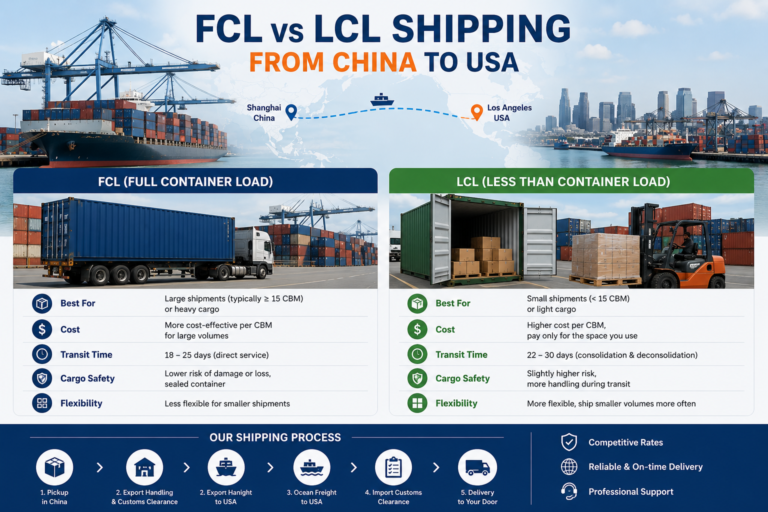
FCL vs LCL shipping from China to USA Verified & Reviewed · Last updated June 2026 FCL vs LCL shipping from China to USA depends on your cargo vo...
Read guide →
Compare air freight rates from China to the USA, including transit times, chargeable weight, and cost effective air shipping options.
Read guide →China Warehouse Consolidation for USA Verified & Reviewed · Last updated January 2026 China warehouse consolidation for USA helps importers combi...
Learn more → Useful Resource Customs Clearance Step by StepCustoms Clearance Step by Step: The Complete Process Verified & Reviewed · Last updated February 2026 Customs clearance step by step helps intern...
Learn more →WhatsApp us