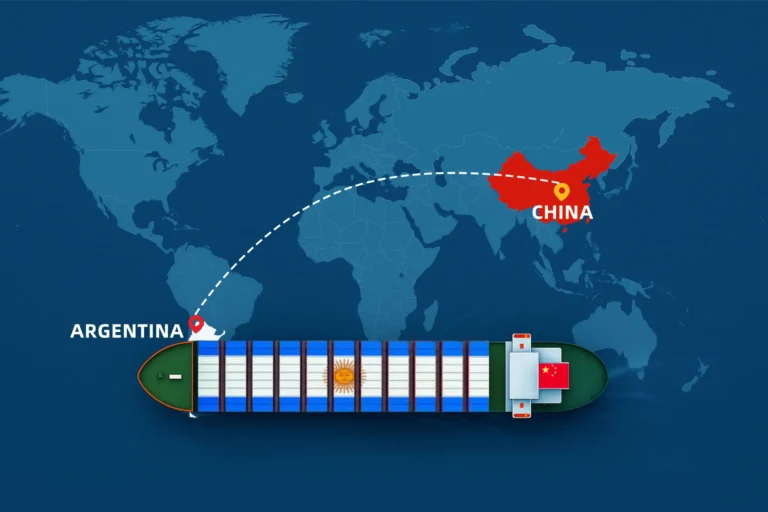
Related Guide
Shipping from China to Argentina
Shipping from China to Argentina – Sea, Air & DDP in 2026 Fast, reliable shipping from China to Argentina for B2B importers,industrial cargo, and...
Read guide →

Shipping costs from China to Argentina usually range from USD 105–200 per CBM for LCL sea freight, USD 6,100–7,500 for a 20ft container, USD 6,250–7,650 for a 40HQ container, and USD 10–14 per kg for standard air freight.
The China Argentina trade route is commonly used for electronics, machinery, auto parts, furniture, textiles, construction materials, consumer goods, and bulk shipments. Most sea freight shipments arrive at Buenos Aires Port, while air cargo usually arrives at Ezeiza International Airport near Buenos Aires.
For large shipments and full container load cargo, sea freight from China to Argentina is usually the most cost-effective option. For urgent shipments, samples, spare parts, and high-value goods, air freight or express shipping is faster.
This guide covers 2026 shipping costs from China to Argentina, including sea freight costs, air freight cost, express shipping rates, transit time, customs clearance, shipping documents, and freight forwarder options.
Shipping method / Mode
Transit time range
DDP / Door to Door
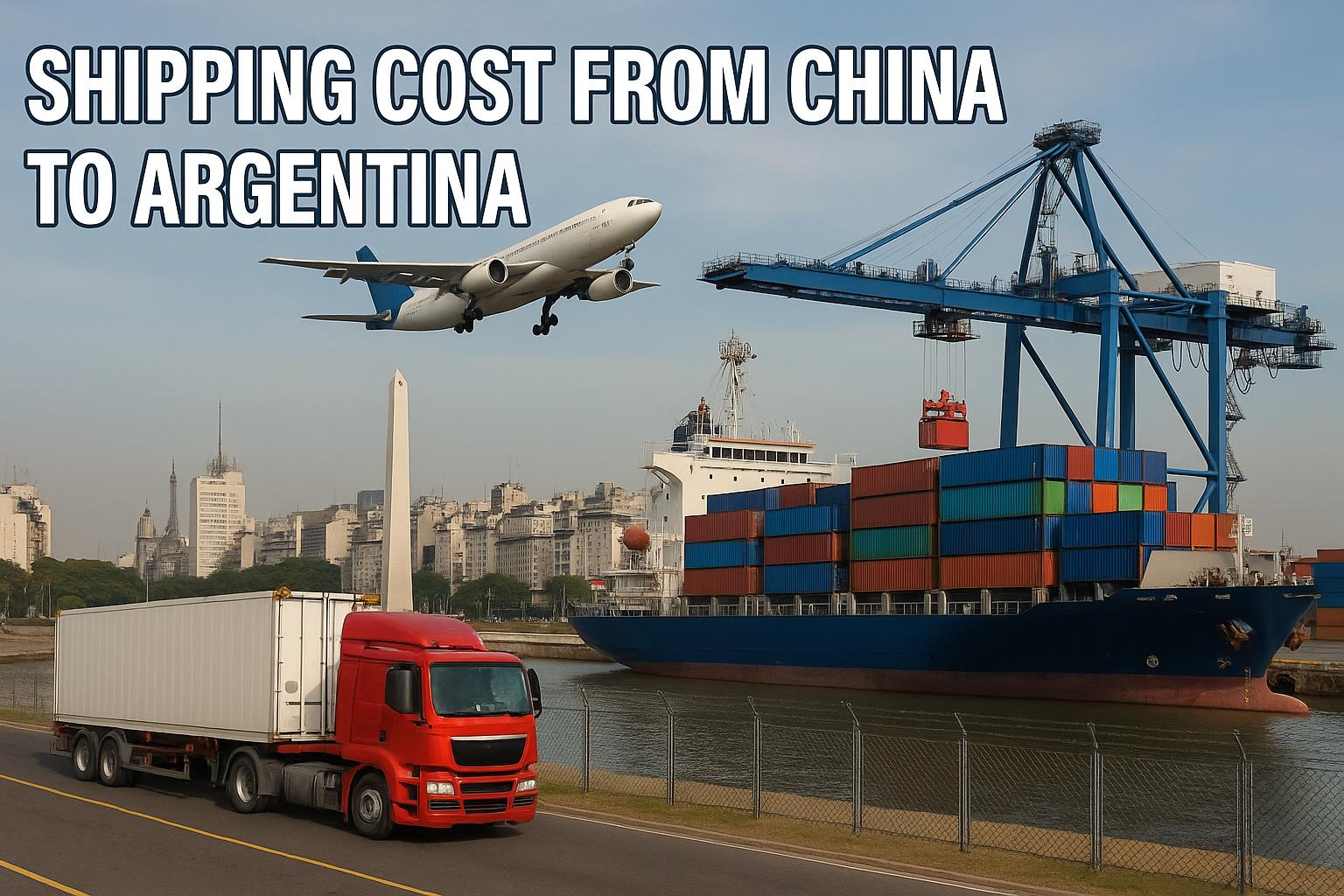
As a general estimate, shipping costs from China to Argentina vary by shipping method, cargo size, weight, route, and delivery requirements. The table below gives a quick reference for common shipping options.
| Shipping Mode | Cost Reference | Best For |
|---|---|---|
| Sea Freight 20GP Container | $5,500 – $7,000 / container | Large shipments and bulk cargo |
| Sea Freight 40GP Container | $6,200 – $7,500 / container | Commercial cargo |
| Sea Freight 40HQ Container | $6,250 – $7,650 / container | High-volume cargo |
| LCL Shipping | $105 – $200 / CBM | Small and medium cargo |
| Air Freight | $10 – $14 / kg | Urgent shipments |
| Express Shipping | $16 – $22 / kg | Samples and small parcels |
These shipping rates are general references. Actual shipping costs may differ significantly depending on container space, fuel surcharges, port congestion, cargo insurance, destination charges, Argentine customs requirements, and the selected freight forwarder.
When importing goods from China, choosing the right shipping method depends on your cargo type, delivery deadline, and budget. The most common options are sea freight, air freight, and door-to-door shipping services. Each comes with distinct advantages depending on whether you are shipping small parcels or entire containers.
Sea freight from China to Argentina remains the most economical solution for shipping large volumes or bulk cargo. It’s ideal for companies importing wholesale goods, industrial equipment, or any cargo that isn’t time-sensitive.
FCL (Full Container Load)
If your cargo volume exceeds 15–20 CBM, FCL shipping is the most cost-effective and secure option. You rent the entire container, either 20ft or 40ft, and your goods are not mixed with others. This reduces damage risk and simplifies customs clearance.
Benefits of FCL:
LCL (Less than Container Load)
If your shipment is below 15 CBM, LCL shipping allows you to share container space with others. Freight charges are based on volume (CBM) or weight—whichever is greater.
LCL services are ideal for:
Top Chinese ports for sea shipping to Argentina:
Key destination port in Argentina:
When speed matters, air freight shipping offers the fastest way to move cargo from China to Argentina. Although it is significantly more expensive than sea freight, it is ideal for urgent shipments, high-value goods, or orders with tight delivery windows.
Common Air Cargo Goods:
Major air routes:
Air freight services can be tailored as:
For shipments between 100–300 kg, air freight can be a viable alternative to LCL sea freight in terms of freight rates and transit time.
For importers who prefer a hassle-free shipping process, door to door service from China to Argentina is the most convenient option. The freight forwarder handles the entire shipping process, including:
Some freight forwarders, including Tonlexing, offer Delivered Duty Paid (DDP) options, which means we handle the customs duties, import taxes, and documentation on your behalf—perfect for first-time importers.
Understanding the transit time between China and Argentina is essential when planning inventory, forecasting delivery schedules, or comparing shipping methods. Whether you’re shipping via air freight or ocean freight, transit durations can vary significantly depending on the route, customs processes, and destination.
For most businesses, sea freight is the preferred method due to its cost efficiency. However, it requires patience due to the longer shipping time. Cargo ships sail from major Chinese ports such as Shanghai, Shenzhen, or Ningbo, and typically arrive at Buenos Aires port.
Here’s an overview of estimated ocean freight transit times:
| Shipping Route | Estimated Transit Time |
|---|---|
| Shanghai Port → Buenos Aires, Argentina | 30 – 40 days |
| Ningbo Port → Buenos Aires | 32 – 42 days |
| Shenzhen Port → Buenos Aires | 28 – 38 days |
| Qingdao Port → Buenos Aires | 35 – 45 days |
Note: Weather disruptions, transshipments, and customs clearance delays can extend transit time. Working with a reliable freight forwarder ensures smoother coordination across the entire shipping route.
If speed is your top priority, air freight shipping from China to Argentina is significantly faster. While the cost is higher, air cargo is ideal for urgent shipments, lightweight goods, and high-value products.
Typical air freight transit times:
Popular flight routes include:
Air cargo may also pass through transit hubs in Europe or North America depending on the airline, which may slightly affect final delivery time.
If you choose door to door shipping, the total delivery time includes origin pickup, export clearance, international transport, import clearance, and final delivery in Argentina.
| Mode | Average Door-to-Door Time |
|---|---|
| Sea Freight (LCL) | 38 – 50 days |
| Sea Freight (FCL) | 35 – 45 days |
| Air Freight | 7 – 12 days |
Working with a reputable freight forwarder helps reduce delays by ensuring all shipping documents, customs declarations, and transportation services are handled efficiently.
The shipping cost from China to Argentina depends on various factors, such as cargo volume, weight, shipping method, container size, delivery urgency, and customs clearance procedures. Below is an overview of estimated freight rates for 2025, designed to help you choose the most cost-effective solution for your business.
FCL shipping means Full Container Load. You rent an entire shipping container for your cargo. This shipping mode is suitable when your goods are large enough to fill a 20GP, 40GP, or 40HQ container.
Container Load | Destination Port | Sea Freight Costs | Transit Time |
|---|---|---|---|
20GP Container | Buenos Aires Port | $5,500 – $7,000 | 32 – 45 days |
40GP Container | Buenos Aires Port | $6,200 – $7,500 | 32 – 45 days |
40HQ Container | Buenos Aires Port | $6,250 – $7,650 | 32 – 45 days |
LCL shipping means Less than Container Load. Your cargo shares container space with shipments from other importers. It is suitable when your cargo is not large enough for a full container load.
LCL shipping from China to Argentina usually costs $105 to $200 per CBM. The final cost depends on cargo volume, origin warehouse, destination port, local handling fees, and customs clearance requirements in Argentina.
LCL Shipping Option | Cost Reference | Transit Time | Best For |
|---|---|---|---|
China to Buenos Aires Port | $105 – $200 / CBM | 35 – 50 days | Small commercial cargo |
China to Argentina inland delivery | Case by case | 40 – 60 days | Door delivery cargo |
Consolidated cargo from China | $105 – $200 / CBM | 35 – 50 days | Mixed goods and samples |
Air freight shipping is priced based on chargeable weight (volume or actual weight, whichever is higher). For shipments under 300 kg, it may even compete with LCL costs.
Chargeable Weight | Air Freight Cost |
|---|---|
45 kg – 100 kg | $12 – $16 / kg |
100 kg – 300 kg | $10 – $14 / kg |
300 kg – 500 kg | $9 – $13 / kg |
500 kg and above | Case by case |
For sensitive or urgent shipments, air freight ensures timely delivery, especially for high-value goods, samples, or medical supplies.
| Service Type | Cost Reference | Transit Time | Suitable For |
|---|---|---|---|
| Sea Freight Door-to-Door | USD 280–450/CBM | 40–60 Days | Commercial cargo, bulk shipments |
| Air Freight Door-to-Door | USD 14–22/kg | 5–12 Days | Urgent shipments, high-value goods |
| Express Door-to-Door | USD 16–25/kg | 3–7 Days | Samples, documents, small parcels |
| DDP Shipping | Case by Case | Depends on Route | Selected products and importers |

No matter which shipping method you choose, all international shipments entering Argentina must go through customs clearance. Whether you’re shipping by sea freight or air freight, understanding the import regulations and documentation is crucial for avoiding delays and fines.
The Argentine Customs Authority (Dirección General de Aduanas) is responsible for all imports into the country. Every shipment must be declared and properly classified before being released for delivery.
Here’s a typical customs clearance process for cargo from China:
To ensure smooth customs clearance, prepare the following documents before cargo departure:
All documentation must be consistent and match the freight forwarder’s data to avoid issues.
Argentina imposes several taxes on imported goods. These charges are calculated based on the CIF (Cost + Insurance + Freight) value of the shipment:
| Type | Typical Rate (Varies by product) |
|---|---|
| Import Duty | 0% – 35% |
| Statistical Tax (Tasa Estadística) | 3% |
| VAT (IVA) | 21% |
| Additional VAT | 10.5% (in some categories) |
| Income Tax Advance | 6% – 11% |
Some items like electronics, machinery, textiles, or bulk cargo may fall under specific customs categories. Using an experienced customs broker helps navigate complex tax codes.
If you don’t want to deal with customs yourself, consider Delivered Duty Paid (DDP) service. With DDP, your freight forwarder pays all import taxes and handles customs clearance on your behalf.
| Trade Term | Who Handles Import Duties | Customs Broker Needed? | Suitable for… |
|---|---|---|---|
| DDP | Seller (freight forwarder) | No | New importers, eCommerce |
| DDU | Buyer | Yes | Experienced businesses |
Tonlexing offers both DDP and DDU services from China to Argentina. For most small and medium importers, DDP shipping offers a stress-free experience with full cost transparency.
Selecting the right freight forwarder is one of the most important decisions when organizing international shipping. A reliable logistics partner ensures that your cargo is transported efficiently, meets customs requirements, and arrives on time at its final destination in Argentina.
A professional freight forwarder acts as the bridge between shippers, carriers, and customs authorities. Instead of dealing with each part of the shipping process separately, your forwarder manages everything from booking container space to arranging smooth customs clearance.
Benefits of working with a reputable freight forwarder:
When comparing logistics providers, here are key factors to consider:
At Tonlexing, we provide complete shipping services tailored to importers in Argentina. Whether you need bulk cargo by sea, urgent shipments by air, or door-to-door delivery with DDP, our team ensures competitive rates, timely delivery, and compliance with Argentina’s customs regulations.
Our services include:
By choosing a reliable freight forwarder like Tonlexing, you reduce risk, save time, and guarantee a smoother import experience from China to Argentina.
In June 2026, the shipping cost from China to Argentina is usually $5,500 to $7,650 per container for FCL sea freight, $105 to $200 per CBM for LCL shipping, $10 to $14 per kg for air freight, and $16 to $22 per kg for express shipping.
Sea freight is usually the cheapest shipping method for large shipments and bulk cargo. LCL shipping is suitable for smaller cargo volumes, while FCL shipping is more cost-effective for full container load shipments.
Sea freight from China to Argentina usually takes 32 to 45 days to Buenos Aires Port. Depending on shipping routes, transshipment, port congestion, and customs clearance, sea shipping can take 30 to 60 days in total.
Air freight from China to Argentina usually takes 3 to 7 days. The final air freight transit time depends on flight availability, air cargo space, customs clearance, and delivery location.
Customs duties in Argentina depend on the HS code and product category. Duty rates may range from 0% to 35%, and VAT is typically 21% on imports. Import duties, taxes, and customs brokerage fees can significantly increase total landed costs.
Useful freight, customs and importing resources related to this shipping guide.
Shipping from China to Argentina – Sea, Air & DDP in 2026 Fast, reliable shipping from China to Argentina for B2B importers,industrial cargo, and...
Read guide →
Compare shipping time from China by air, sea, and express shipping. Check transit times and delivery speed for different countries.
Read guide →
Sea freight is the most cost effective shipping method for large volumes and container load cargo. It is ideal for businesses looking to reduce s...
Read guide →
Air Freight from China to Argentina: 2026 Rates Verified & Reviewed · Last updated January 2026 Air freight from China to Argentina is a fast shi...
Read guide →Shipping from China to Argentina is a growing trend among global importers, eCommerce sellers, and manufacturers seeking cost-effective access to...
Learn more → Useful Resource 20ft & 40ft Container Shipping Costs from China to Argentina20ft 40ft Container Shipping Costs from China to Argentina Verified & Reviewed · Last updated June 2026 Shipping a 20ft or 40ft container from Ch...
Learn more →WhatsApp us