Related Guide
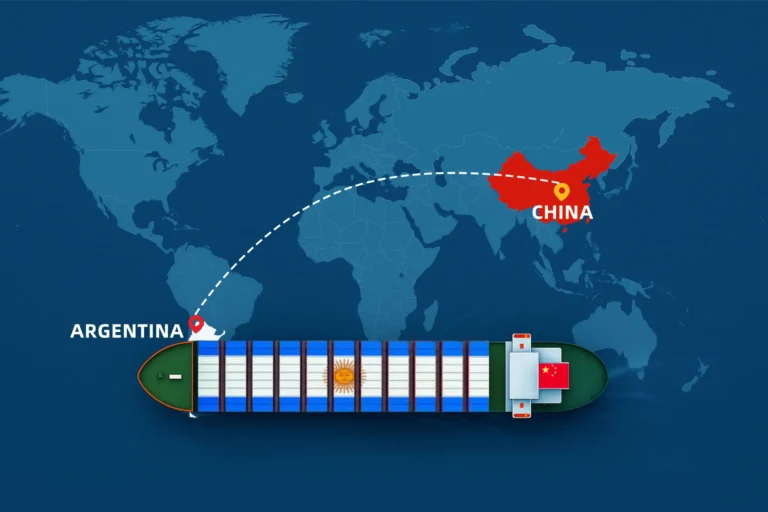
Shipping from China to Argentina
Shipping from China to Argentina – Sea, Air & DDP in 2026 Fast, reliable shipping from China to Argentina for B2B importers,industrial cargo, and...
Read guide →

Shipping a 20ft or 40ft container from China to Argentina is a common solution for importers moving machinery, furniture, electronics, textiles, auto parts, building materials, industrial equipment, and other containerized cargo. For larger shipments, ocean service is usually more cost efficient than air service because one full container can move a high cargo volume at a lower cost per unit.
This guide explains the latest container shipping costs, 20ft and 40ft container rates, major ports, estimated transit time, cost factors, customs requirements, cargo insurance, and practical ways to reduce the total shipping cost from China to Argentina.
Shipping method
Transit time range
DDP / Door to Door
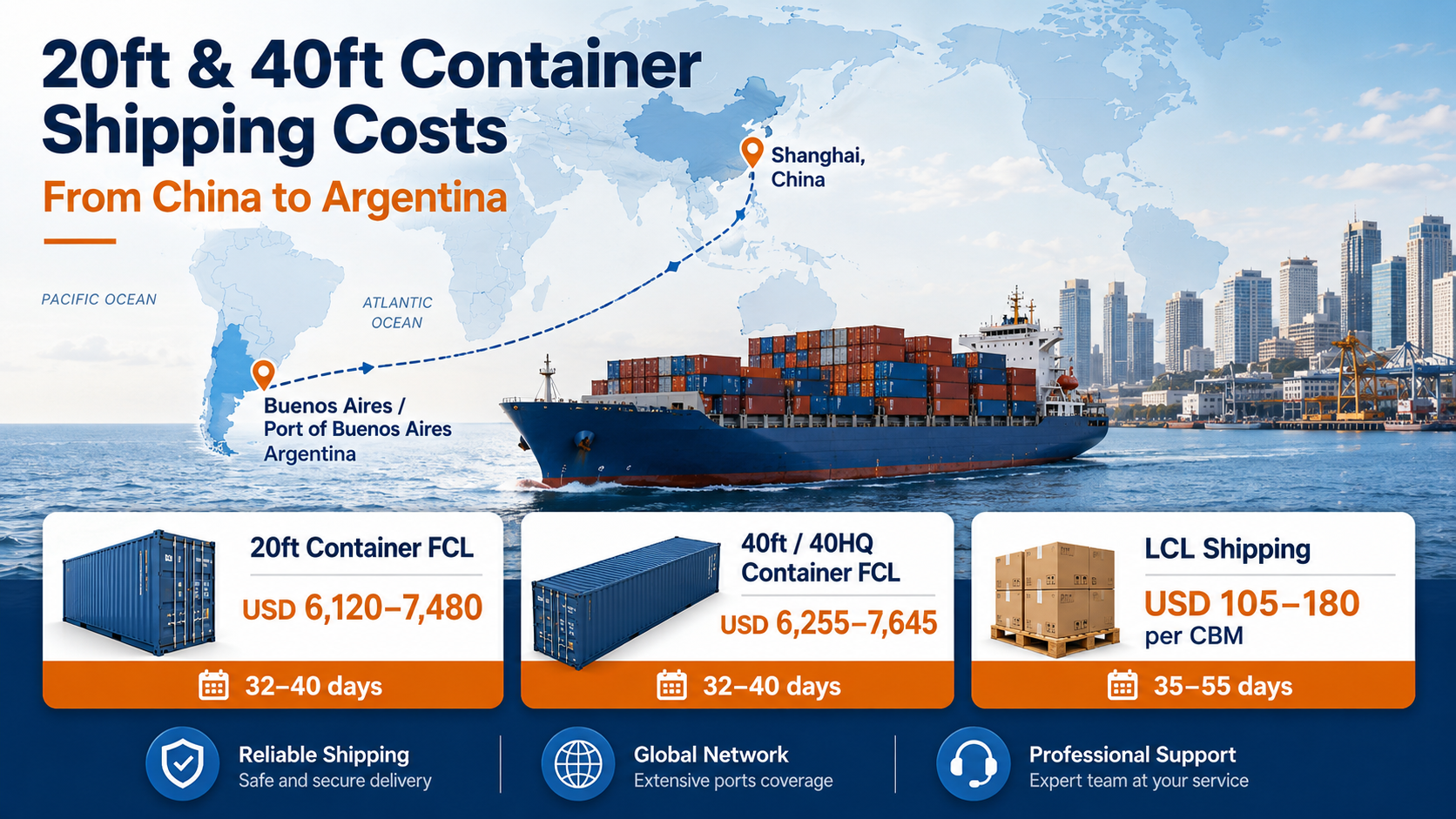
The cost to ship a container from China to Argentina is influenced by the departure port, destination port, container size, cargo type, carrier availability, and overall ocean freight market conditions. In June 2026, shipping rates to South America remain relatively high due to limited vessel space, longer sailing distance, and occasional port congestion in major hubs like Buenos Aires.
| Shipping Option | Average Price Range | Transit Time | Best For |
|---|---|---|---|
| 20ft Container FCL | $6,120 – $7,480 | 32–40 days | Heavy or compact cargo |
| 40ft / 40HQ Container FCL | $6,255 – $7,645 | 32–40 days | Larger shipments with more container space |
| LCL Shipping | $105 – $180 per CBM | 35–55 days | Smaller shipments |
| Air Service | Quoted per kg | 3–6 days | Urgent or high-value cargo |
These figures are reference-level container shipping rates. The final cost to ship may vary depending on fuel surcharges, terminal handling charges, customs fees, inland transportation, and whether the shipment is arranged as port-to-port, door-to-door, or DDP service.
A 20ft container (20GP) is typically used for dense cargo such as machinery parts, metal products, tools, construction materials, and other commercial goods with high weight but limited volume.
A 40ft or 40HQ container is more suitable for bulky or lightweight cargo such as furniture, textiles, packaging materials, household goods, and e-commerce shipments that require more container space.
Although the total shipping cost of a 20ft container is lower in some cases, a 40ft container often provides better cost efficiency per CBM when cargo volume is high.
In general:
20ft container = better for heavy, compact shipments
40ft / 40HQ container = better for high-volume or lightweight goods
LCL shipping = better for smaller shipments below full container load
Importers can choose full container load, less than container load, or air service depending on budget, cargo volume, urgency, and the required delivery model. For most commercial shipments, sea freight remains the main choice because it provides stable capacity for shipping containers and better cost control for large orders.
Full container load means the importer books an entire container. The goods do not share container space with other shipments, which makes handling easier and reduces the risk of damage or cargo mixing.
FCL is usually more economical for larger shipments over 13–15 CBM. It also works well when the cargo is fragile, high value, or time sensitive within a planned supply chain. Compared with LCL, full container load shipping often has faster handling at the origin warehouse and destination terminal.
FCL shipping is commonly used for:
Factory orders from one supplier
Consolidated cargo from several suppliers
Furniture and home goods
Machinery and auto parts
Construction materials
Bulk commercial cargo packed in cartons or pallets
For larger shipments over 15 m³, FCL is often more efficient than LCL because the importer controls the whole container load.
Less than container load shipping is designed for smaller shipments that do not fill a full container. The cargo is consolidated with other shipments, and the cost is usually calculated by cubic meter.
LCL can be cost-effective for importers buying small batches from China. However, LCL shipments may take longer than FCL shipments because consolidation, deconsolidation, and warehouse handling add extra steps to the shipping process.
LCL is suitable when:
The cargo volume is small
The importer wants a lower cost than booking an entire container
The shipment is not urgent
The goods can share space safely with other cargo
The buyer is testing a new supplier or product line
For shipments close to 13–15 CBM, it is important to compare LCL and 20ft FCL. Sometimes a full container is cheaper after all additional fees are included.
Air service is the fastest way to move goods from China to Argentina. Typical door-to-door transit is around 3–6 days, depending on flight space, pickup time, document preparation, and local delivery.
Because air pricing is much higher than ocean service, it is usually used for urgent spare parts, samples, electronics, medical items, and high value shipments. For heavier cargo, importers should compare air service with LCL or FCL before booking.
Most container shipments from China to Argentina are handled through key export ports in China and primarily arrive at major destination ports in Argentina. These ports play an important role in determining shipping routes, transit time, and overall container shipping efficiency.
Most container shipments from China to Argentina are exported through key major Chinese ports, depending on supplier location and cargo type. These ports provide stable ocean freight services and regular vessel schedules to Buenos Aires.
These major container ports are well connected with Argentina ports, ensuring smooth transporting goods operations across different shipping modes.
Buenos Aires Port – Main hub for container imports and customs clearance
Rosario Port – Used for regional distribution and bulk cargo
Bahía Blanca Port – Handles limited specialized and industrial shipments
Buenos Aires remains the primary entry point for most containerized cargo from China, with inland transportation connecting goods to cities such as Córdoba, Mendoza, Rosario, and Santa Fe.
Sea freight from China to Argentina usually takes 35 to 55 days, depending on the shipping route, vessel schedule, transshipment port, weather, cargo type, and port congestion. Under smoother conditions, some services to Buenos Aires may arrive in about 32–40 days, but importers should plan extra time for port handling and delivery.
| Route | Estimated Transit Time |
|---|---|
| Shanghai to Buenos Aires | 35–40 days |
| Ningbo to Buenos Aires | 35–42 days |
| Shenzhen / Yantian to Buenos Aires | 32–40 days |
| Qingdao to Buenos Aires | 38–45 days |
| Guangzhou / Nansha to Buenos Aires | 35–42 days |
Transit times vary based on the shipping route and cargo type. LCL shipments may take longer than FCL shipments because they need warehouse consolidation and separation at destination.

Shipping a container from China to Argentina involves more than just the base ocean freight. The total shipping cost includes all origin, international, and destination charges required to complete the full shipping process. Importers should always request a detailed breakdown before booking, especially when comparing different freight forwarder quotes.
The total shipping cost generally includes:
Ocean freight (base shipping rate)
Origin services (pickup, export handling, trucking)
Port and terminal handling charges (THC)
Documentation and customs processing fees
Fuel surcharges and carrier adjustments
Destination charges (port handling, inland delivery)
Import customs fees and duties in Argentina
Optional cargo insurance
In most cases, port-related charges may range from $150 to $400 per container, while total terminal and local fees can vary depending on the port, carrier, and service type.
A clear and transparent quotation is important because it separates ocean freight from local charges and helps importers compare the real total shipping cost instead of only focusing on the headline rate.
Shipping rates from China to Argentina vary depending on several key factors related to cargo details, shipping route, and global market conditions. Understanding these factors helps importers better estimate the total shipping cost and avoid unexpected charges.
Container Size and Cargo Volume
Costs depend on whether you choose a 20ft or 40ft container, or LCL shipping based on CBM. Larger shipments usually achieve better cost efficiency per unit.
Shipping Route and Port Pair
Different China–Argentina routes affect freight rates due to distance, carrier schedules, and inland transportation requirements.
Fuel Prices and Ocean Freight Rates
Fluctuations in fuel prices directly impact ocean freight rates. When fuel costs rise, carriers often apply additional surcharges.
Seasonal Demand and Shipping Space
During peak seasons, container space becomes limited, which can increase container shipping rates due to higher demand.
Cargo Type and Cargo Value
Special cargo such as batteries, branded goods, or high-value shipments may require additional handling, documentation, or insurance.
Customs Clearance and Local Charges
Import duties, customs fees, and destination handling charges in Argentina can also affect the total shipping cost.
Customs clearance is a required step for all container shipments from China to Argentina. Proper documentation helps ensure smooth release at the destination port and avoids costly delays, inspections, or storage charges.
Commercial Invoice – Declares product value, HS code, and transaction details
Packing List – Shows cargo quantity, weight, and carton details
Bill of Lading – Proof of shipment and transport contract
HS Code – Used for customs classification and duty calculation
Certificate of Origin – Required for certain product categories
Import Permit (if required) – Needed for restricted or controlled goods
All documents must be consistent with actual cargo details. Any mismatch in description, quantity, or value may lead to customs inspection or delays.
Import shipments in Argentina usually follow a standard clearance procedure:
Document submission to customs authorities
Cargo inspection and verification (if required)
Payment of import duties and taxes
Release of cargo for delivery
Working with a freight forwarder or customs broker helps ensure accurate declaration and smoother clearance at Buenos Aires Port.
Import Duties – Usually range from 0% to 35% depending on HS code
VAT (Value Added Tax) – Standard rate is 21% on most imported goods
Additional Taxes – May apply to specific products such as electronics, textiles, or luxury goods
Customs Processing Fees – Charged by customs authorities for handling import declarations
Tonlexing is an experienced freight forwarder providing reliable shipping services from China to Argentina, including sea freight, air freight, and door-to-door solutions. We help importers manage the entire shipping process with better cost control and smoother coordination.
We handle all key steps in the shipping process, including supplier pickup in China, export customs clearance, ocean freight booking, and final delivery in Argentina. This reduces the need to deal with multiple service providers and helps ensure smoother shipment management.
Tonlexing provides different shipping options based on cargo type and shipment size:
Full container load (FCL) for large shipments
Less than container load (LCL) for smaller cargo
Air freight for urgent shipments
Door-to-door and DDP services for simplified importing
These options help importers choose the most cost-efficient shipping method.
With strong experience in the China–Argentina shipping route, we work with major carriers to provide stable schedules and competitive ocean freight rates. Regular shipments from Shanghai, Ningbo, Shenzhen, Qingdao, and Guangzhou to Buenos Aires ensure reliable space and transit planning.
Our team assists with commercial invoices, packing lists, HS codes, and Argentina customs clearance requirements. This helps reduce delays and ensures smoother cargo release at the destination port.
Under normal market conditions, a 20ft container may cost around $1,500 to $5,000. In June 2026, current rates to Argentina are higher, with many 20ft container quotes around $6,120 to $7,480, depending on the route, carrier, and cargo details.
A 40ft container may cost around $2,500 to $10,000 depending on market conditions. In June 2026, many 40ft or 40HQ quotes from China to Argentina range from $6,255 to $7,645 for standard port-to-port ocean service.
Shipping from China to Argentina usually takes 35–55 days by sea. Some services to Buenos Aires may take around 32–40 days, but delays can happen because of port congestion, transshipment, weather, or customs processing.
FCL is better for larger shipments, usually above 13–15 CBM. LCL is more cost-effective for smaller shipments because the importer pays by cubic meter instead of booking an entire container.
Common documents include a commercial invoice, packing list, bill of lading, HS code, and any required certificate or permit. Importers should make sure the documents match the actual goods to avoid delays.
Cargo insurance is not always mandatory, but it is recommended for valuable, fragile, or large shipments. It helps cover loss or damage during international transport.
Useful freight, customs and importing resources related to this shipping guide.
Shipping from China to Argentina – Sea, Air & DDP in 2026 Fast, reliable shipping from China to Argentina for B2B importers,industrial cargo, and...
Read guide →
Shipping Costs from China to Argentina (2026 Guide) Verified & Reviewed · Last updated June 2026 Shipping costs from China to Argentina usually r...
Read guide →
Compare shipping time from China by air, sea, and express shipping. Check transit times and delivery speed for different countries.
Read guide →
Sea freight is the most cost effective shipping method for large volumes and container load cargo. It is ideal for businesses looking to reduce s...
Read guide →Air Freight from China to Argentina: 2026 Rates Verified & Reviewed · Last updated January 2026 Air freight from China to Argentina is a fast shi...
Learn more → Useful Resource DDP Shipping from China to ArgentinaShipping from China to Argentina is a growing trend among global importers, eCommerce sellers, and manufacturers seeking cost-effective access to...
Learn more →WhatsApp us