Related Guide
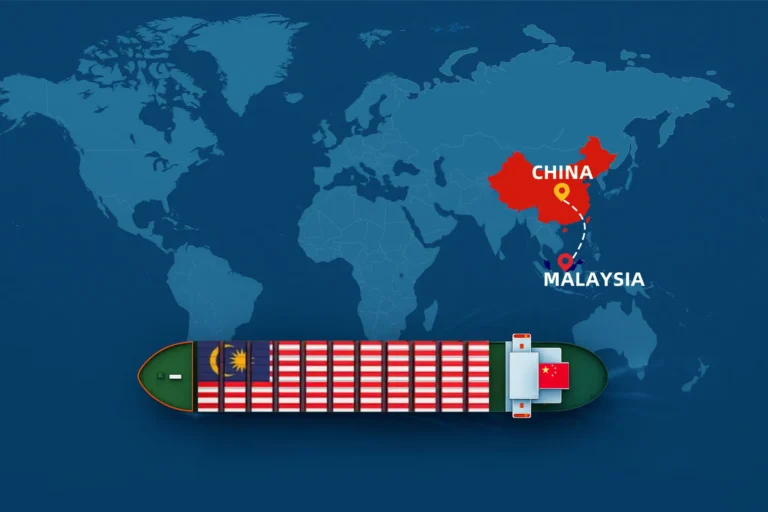
Shipping from China to Malaysia
Shipping from China / Shipping from China to Malaysia China–Malaysia Shipping Guide · Updated August 2026 Shipping from China to Malaysia Compare...
Read guide →

Shipping cost from China to Malaysia in 2026 typically ranges from $1.8–$4.5 per kg for air freight, $4.0–$8.0 per kg for express shipping, and $10–$35 per CBM for sea freight, depending on shipment size, cargo type, delivery speed, and final destination.
Shipping cost from China to Malaysia depends on the shipping method, shipment size, product type, supplier’s location, and final destination. A small package sent by DHL or FedEx is priced differently from a pallet, loose cargo, or a full container load.
The cheapest option is not always the best one. Importers should compare cost, transit times, customs requirements, and delivery time before choosing a route.
Freight cost
Air / Sea / Express
Customs & Door Delivery
| Shipping Method | Estimated Cost | Transit Time | Best For |
|---|---|---|---|
| Express shipping | USD 4.0–8.0/kg | 3–5 days | Samples, small parcels, urgent package delivery |
| Air freight | USD 1.8–4.5/kg | 3–7 days | Electronics, spare parts, high value products |
| LCL sea freight | USD 10–35/CBM | 8–18 days port-to-port | Small commercial cargo and mixed supplier orders |
| FCL sea freight | USD 400–1,250/container | 7–15 days port-to-port | Full container load shipments |
| Door-to-door service | Quoted by details | 12–25 days by ocean route | Buyers needing customs clearance and final delivery |
These shipping rates are reference ranges only. The final price is calculated based on actual weight, volumetric weight, package weight, cargo volume, HS codes, customs requirements, and Malaysian delivery address.
Choosing the right shipping method depends on three things: shipment size, delivery urgency, and how much work you want to handle at destination. For China to Malaysia shipments, most importers compare express, air freight, sea freight, and door-to-door service before booking.
Express shipping is the simplest option for samples, documents, small accessories, and urgent replacement parts. Couriers such as DHL, FedEx, and UPS usually provide fast pickup, tracking, customs handling, and final delivery.
It is convenient, but the cost is higher when cartons are heavy or bulky. Express rates are usually charged by actual weight or dimensional weight, whichever is greater.
Air freight is suitable when your goods are too large for express shipping but still need faster delivery than sea freight. It is commonly used for electronics, fashion products, automotive parts, high value products, and seasonal goods.
This method balances speed and cost better than courier service for medium-size shipments. The final rate is calculated based on chargeable weight, including actual weight and volumetric weight.
Sea freight is the most cost-effective option for larger shipments from China to Malaysia. It is widely used for furniture, machinery, building materials, packaging products, household goods, and wholesale cargo.
You can choose LCL or FCL depending on cargo volume. LCL is suitable when your goods do not fill a full container. FCL is better for larger orders, heavy goods, fragile cargo, or shipments that need less handling.
Door-to-door shipping is designed for importers who want one freight forwarder to manage the whole shipping process. It can include pickup in China, export handling, international freight, customs clearance, import taxes coordination, and final delivery in Malaysia.
This option is useful if you do not have your own customs broker or delivery partner in Malaysia. For DDP service, the quotation must be based on product name, HS code, cargo value, weight, volume, and final address.
Sea freight cost from China to Malaysia is normally the best choice for larger shipments. LCL is charged by CBM, while FCL is charged by container type.
| Ocean Option | Reference Cost | Recommended Use |
|---|---|---|
| LCL | USD 10–35/CBM | 1–15 CBM commercial goods |
| 20GP | USD 400–850/container | Dense or heavy products |
| 40GP | USD 600–1,100/container | Medium and large orders |
| 40HQ | USD 650–1,250/container | Light bulky products and furniture |
A 20GP container is often better for heavy goods, while a 40HQ is better for cartons with large volume. A better container load plan reduces wasted space and supports cost optimization.
Most shipments depart from major Chinese ports such as Shanghai, Ningbo, Shenzhen, and Guangzhou. and Xiamen. On the Malaysia side, the main destinations include Port Klang, Penang, Pasir Gudang, Tanjung Pelepas, Kota Kinabalu, Kuching, and Bintulu.
Port Klang is the primary gateway for many China to Malaysia shipments because it offers stable transit times, strong local delivery connections, and competitive pricing for commercial cargo. It is especially convenient for Kuala Lumpur, Selangor, and central Malaysia.
For East Malaysia, including Sabah and Sarawak, shipments usually take longer because routing and local delivery are more complex.
Air freight cost from China to Malaysia is usually quoted per kilogram. Larger chargeable weight often gets a lower per-kg rate.
| Chargeable Weight | Reference Rate | Best For |
|---|---|---|
| 45–100 kg | USD 3.0–4.5/kg | Urgent samples and spare parts |
| 100–300 kg | USD 2.5–4.0/kg | Electronics and commercial parcels |
| 300–500 kg | USD 2.0–3.5/kg | Medium urgent shipment |
| 500 kg+ | USD 1.8–3.2/kg | Larger air cargo |
This option is useful when faster delivery matters more than the lowest cost.
Most air shipments arrive at Kuala Lumpur International Airport before customs clearance and local delivery. Compared with sea freight, air freight offers faster delivery and more stable transit times, making it suitable for urgent shipment arrangements.

Customs clearance is required before the cargo can be released in Malaysia. Malaysia customs may check the product description, HS codes, declared value, cargo type, and applicable customs duties.
Malaysia customs usually requires several basic shipping documents before cargo can be released.
Accurate documentation helps reduce customs delays and supports smoother customs clearance.
Import taxes and customs duties depend on the product category, HS codes, cargo value, and customs classification. Some products may have low duty rates, while others may require additional payment or import approval.
| Product Category | HS Code Example | Customs Duty | SST (Sales & Service Tax) |
|---|---|---|---|
| Electronics | 85 | 0–10% | 6% |
| Apparel & Textiles | 61–62 | 10–20% | 6% |
| Machinery | 84 | 0–5% | 6% |
| Food & Agricultural Products | 02–08 | 0–15% | 6% |
| Medical Products | 30 | 0–5% | 6% |
The final import taxes are calculated based on cargo value, freight cost, insurance, and the applicable customs regulations in Malaysia.
Some goods may require additional documents or import permits before shipping from China to Malaysia.
Common controlled or restricted items include:
Before payment of customs duties and import taxes, Malaysia customs may review HS codes, cargo value, product usage, and applicable import licenses to ensure compliance with local customs regulations and Malaysian customs procedures.
Good planning can reduce shipping costs and total landed cost, not just the first freight quote. Buyers shipping from China every month should set simple rules for courier, air, and ocean orders.
Choose sea transport for non-urgent bulk goods. Use air transport only when stock timing or sales deadlines justify the higher rate. For small urgent parcels, compare express shipping with standard air options.
If you buy from several factories, combine goods in one China warehouse. Consolidation reduces repeated pickup, export handling, and destination delivery charges.
For better cost optimization, importers should:
Tonlexing provides shipping services from China to Malaysia for small packages, commercial cargo, and full container load shipments. Our team can help arrange supplier pickup, export declaration, freight booking, customs coordination, cargo insurance, and final delivery.
A reliable freight forwarder does more than quote a rate. Tonlexing checks shipment details, compares routes, reviews documents, follows schedules, and helps buyers reduce avoidable costs.
Our freight forwarding support is suitable for importers moving goods from major cities in China to Kuala Lumpur, Selangor, Penang, Johor Bahru, Port Klang, Sabah, Sarawak, and other Malaysian destinations.
The goal is stable delivery, transparent communication, and long-term customer satisfaction.
Shipping cost from China to Malaysia usually starts from USD 4.0–8.0/kg by express shipping, USD 1.8–4.5/kg by air freight, USD 10–35/CBM by sea freight LCL, and USD 400–1,250 per container by sea freight FCL. The final rate depends on shipment details.
Sea freight is normally the cheapest shipping method for bulk cargo. LCL works for smaller shipments, while FCL is better when the cargo can fill most of a container.
Transit times are about 3–5 days by courier, 3–7 days by air, 7–15 days port-to-port by ocean, and 12–25 days for many door-to-door ocean shipments.
Yes, customs duties, import taxes, or service tax may apply. The amount depends on HS codes, declared value, product type, and Malaysia customs rules.
Yes. Tonlexing can arrange door-to-door shipping from China to Malaysia, including pickup, export handling, customs clearance support, and final delivery to the consignee address.
Useful freight, customs and importing resources related to this shipping guide.
Shipping from China / Shipping from China to Malaysia China–Malaysia Shipping Guide · Updated August 2026 Shipping from China to Malaysia Compare...
Read guide →
How long does it take to ship from China to Malaysia?This is one of the most common questions among importers, e-commerce sellers, and business o...
Read guide →
Sea freight is the most cost effective shipping method for large volumes and container load cargo. It is ideal for businesses looking to reduce s...
Read guide →
In 2025, trade between China and Malaysia continues to grow rapidly, supported by strong industrial cooperation, e-commerce expansion, and cross-...
Read guide →DDP Shipping from China to Malaysia Verified & Reviewed · Last updated June 2026 DDP shipping from China to Malaysia is a door-to-door logistics...
Learn more → Useful Resource 20ft & 40ft Container Shipping Costs from China to Malaysia20ft & 40ft container shipping costs from China to Malaysia are a crucial consideration for importers in 2025. As Southeast Asia’s trade network...
Learn more →WhatsApp us