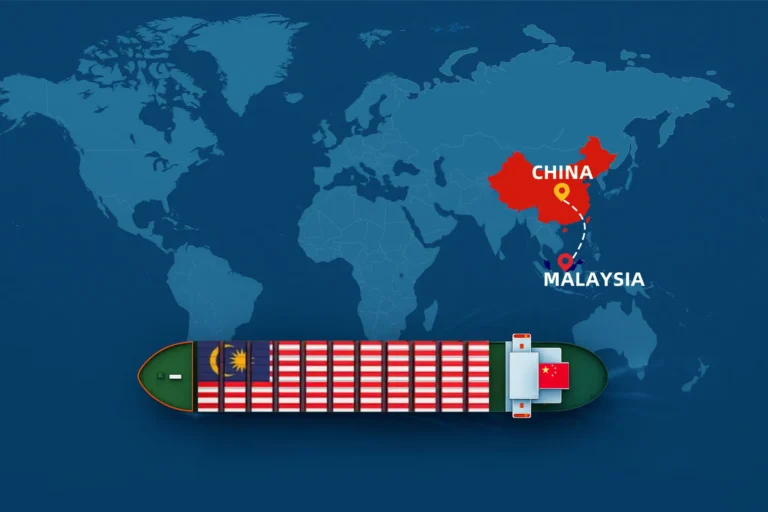
Related Guide
Shipping from China to Malaysia
Shipping from China / Shipping from China to Malaysia China–Malaysia Shipping Guide · Updated August 2026 Shipping from China to Malaysia Compare...
Read guide →

DDP shipping from China to Malaysia is a door-to-door logistics solution where the freight forwarder handles pickup, export clearance, international freight, Malaysian customs clearance, duties, taxes, and final delivery.
This guide explains DDP air freight, DDP sea shipping, transit times, shipping costs, customs requirements, and how Malaysian importers can ship from China with fewer hidden charges and lower customs risk.
Shipping method
Transit time range
Door to Door Delivery
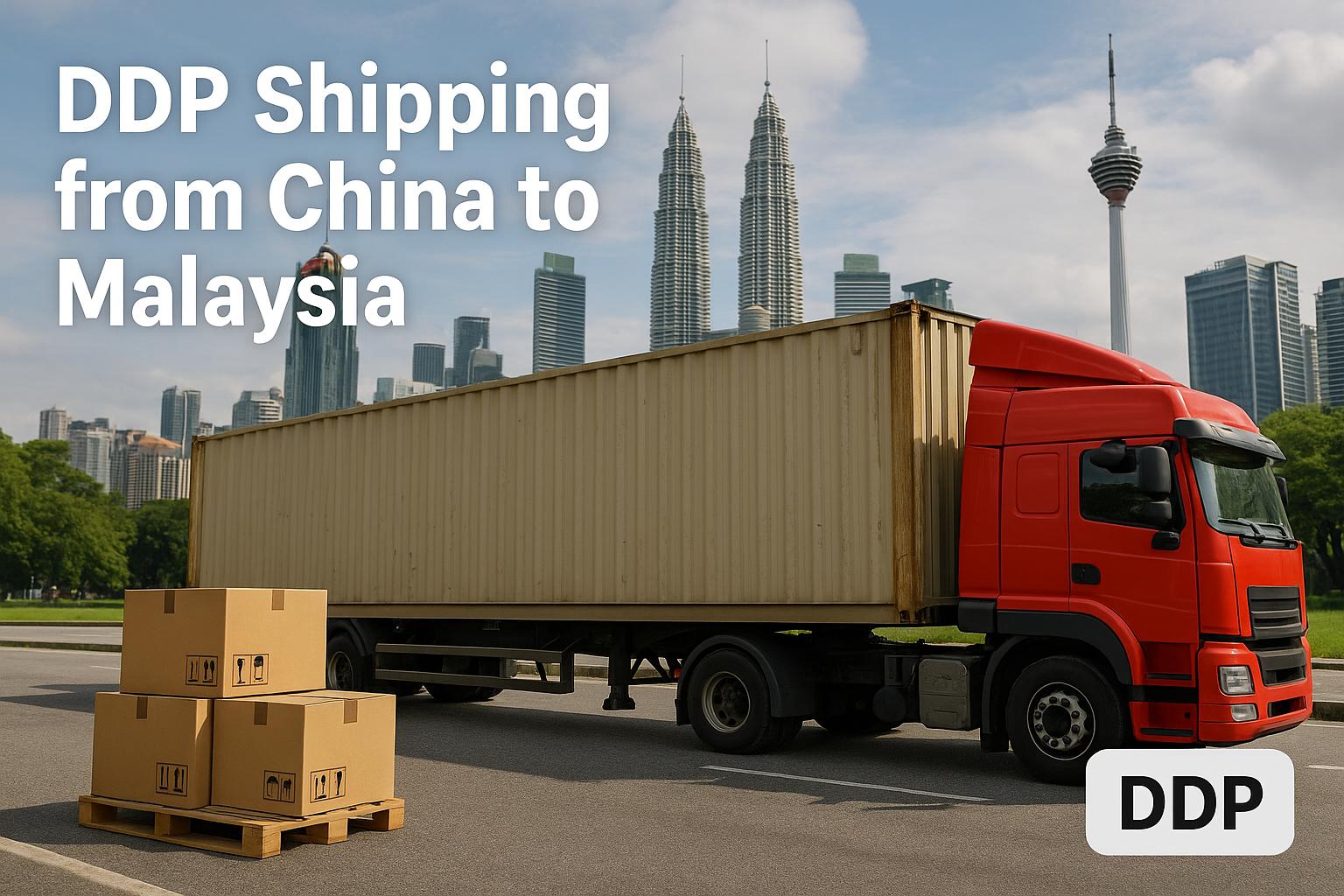
Delivered Duty Paid (DDP) is an Incoterm where the seller takes full responsibility for transporting the goods from China to the buyer’s address in Malaysia. This covers:
International freight (air, sea, or truck)
Export declaration in China
Malaysian customs clearance
Import duties and taxes
Delivery to the final destination
For Malaysian buyers, DDP is a stress-free import solution. There is no need to register a business, no tax payment at customs, and no additional paperwork. Everything is included in one all-in freight price.
DDP shipping is widely used for:
Online retailers and Shopee/Lazada sellers
SMEs with limited import knowledge
Buyers purchasing from multiple suppliers
Importers wanting predictable shipping costs
Goods requiring stable customs handling
DDP shipping from China to Malaysia has become one of the preferred logistics solutions for importers because it simplifies the import process and provides greater cost certainty. Instead of coordinating multiple service providers for transportation, customs clearance, duties, taxes, and local delivery, buyers receive a complete door-to-door shipping solution managed by a single freight forwarder.
For businesses importing electronics, furniture, machinery, household products, automotive parts, and e-commerce goods, DDP shipping reduces administrative work and allows them to focus on sales and operations rather than logistics.
One of the biggest advantages of DDP shipping is cost transparency. The quotation typically includes transportation, customs clearance, customs duties, import taxes, and final delivery, helping buyers avoid unexpected charges after the cargo arrives in Malaysia.
Benefits include:
Better budgeting and cost control
Fewer unexpected logistics expenses
Reduced risk of hidden fees
Easier landed cost calculation
Customs clearance can be one of the most challenging parts of international shipping. Incorrect HS codes, inaccurate cargo values, or missing documents can result in delays, inspections, and additional costs.
With DDP shipping, experienced freight forwarders handle export documents and check essential documents before submission, since export documentation includes invoices and packing lists and missing paperwork can delay clearance:
Export customs clearance in China
Import customs clearance in Malaysia
HS code classification
Customs declaration procedures
Duties and tax payments
Compliance with customs regulations
This helps ensure smooth customs clearance and faster cargo release.
DDP shipping provides true door-to-door delivery. Cargo is collected directly from the supplier’s warehouse in China and delivered to the buyer’s warehouse, office, retail store, or residential address in Malaysia.
The freight forwarder manages:
Cargo pickup
International freight
Customs handling
Local transportation
Final delivery
This eliminates the need for buyers to arrange multiple logistics providers.
Many Malaysian importers purchase goods from different factories and suppliers across China. DDP shipping allows freight forwarders to consolidate cargo into a single shipment before export.
Advantages include:
Lower overall shipping costs
Improved shipment management
Reduced handling charges
Better container utilization
The seller remains responsible for the shipment until it reaches the buyer’s final destination under DDP terms. This significantly reduces customs risk for the importer because the freight forwarder manages customs procedures and documentation throughout the entire shipping process.
DDP shipping is especially popular among:
E-commerce sellers
SMEs
First-time importers
Wholesalers
Online retailers
Businesses can import goods from China without needing extensive knowledge of customs procedures, import documentation, or tax calculations.
DDP services are available through multiple transportation methods, allowing importers to choose the most suitable solution based on cargo type, budget, and delivery requirements.
Options include:
DDP air freight for urgent shipments
DDP sea shipping for heavy cargo
LCL shipments for smaller volumes
Sea FCL for full container loads
Road freight for selected cargo types
Express shipping for samples and documents
By combining predictable shipping costs, smooth customs clearance, reduced customs risk, and convenient door-to-door delivery, DDP shipping from China to Malaysia remains one of the most efficient and hassle-free ways to import goods from China.
When arranging DDP shipping from China to Malaysia, the right shipping method depends on your cargo size, delivery deadline, product type, and budget. Importers can choose between DDP air freight, DDP sea shipping, road freight, and express shipping. Each option has a different balance between transit time, shipping costs, customs clearance requirements, and final delivery speed.
DDP air freight is the fastest regular shipping method for cargo moving from China to Malaysia. It is commonly used when buyers need quick delivery, stable handling, and predictable door to door delivery.
Most DDP air freight shipments are collected from suppliers in cities such as Shenzhen, Guangzhou, Shanghai, Yiwu, Ningbo, or Hong Kong, then shipped by air to Malaysia. After arrival, the freight forwarder handles import customs clearance, customs duties, import taxes, and final delivery to the buyer’s address.
DDP air freight is suitable for:
Electronics and accessories
E-commerce products
Small parcels and samples
High-value but lightweight cargo
Urgent replenishment orders
Fashion items and consumer goods
Typical DDP air transit time from China to Malaysia is around 3 to 7 days, depending on the pickup city, flight schedule, customs clearance process, and final delivery address.
DDP sea shipping is the most economical option for heavy, bulky, or non-urgent cargo. It is widely used for furniture, machinery parts, household products, packaging materials, building materials, tools, hardware, and wholesale goods.
Cargo is usually shipped from major Chinese ports such as Shanghai, Shenzhen, Ningbo, Guangzhou, Qingdao, Xiamen, and Tianjin. In Malaysia, common destination ports include Port Klang, Penang Port, and Johor Port. Port Klang is the main gateway for many sea freight shipments because it provides strong access to Kuala Lumpur, Selangor, and other major inland markets.
DDP sea shipping usually includes:
Supplier pickup in China
Export customs clearance
Sea freight to Malaysia
Import customs clearance
Customs duties and import taxes
Warehouse sorting if required
Door delivery to the final destination
Typical DDP sea shipping transit time is around 25 to 55 days, depending on whether the cargo is shipped by LCL or FCL, the sailing schedule, customs regulations, and local delivery arrangement.
LCL shipments are suitable when your cargo does not fill a full container. The goods are consolidated with cargo from other importers and shipped together in one container.
LCL is a practical choice for:
Small and medium shipments
Mixed goods from different suppliers
Heavy cartons with limited volume
First-time importers
E-commerce and wholesale cargo
The main advantage of LCL is lower entry cost. However, transit time is usually longer because the cargo needs consolidation in China and sorting after arrival in Malaysia.
Sea FCL is suitable when the cargo volume is large enough to use a full container load. Compared with LCL, FCL reduces cargo handling and gives the importer better control over the shipment.
Common container options include:
20GP container for heavy cargo
40GP container for larger commercial shipments
40HQ container for bulky goods requiring more loading space
FCL is often used for furniture, machinery, large wholesale orders, factory shipments, and regular container load imports. The final cost depends on the container type, port of loading, destination port, customs clearance requirements, and final delivery address in Malaysia.
Road freight can be used for selected shipments that need a balance between speed and cost. It is sometimes chosen when cargo is not suitable for air freight or when the buyer wants faster delivery than regular sea freight.
Typical road freight transit time is around 7 to 12 days, depending on route conditions, border processing, customs clearance, and final delivery distance.
Road freight may be suitable for:
Medium-volume commercial cargo
Products with air freight restrictions
Mixed cartons and e-commerce goods
Cost-sensitive shipments needing faster delivery than sea freight
Express shipping is the fastest option for small parcels, samples, spare parts, and documents. It is usually handled by courier networks, provides detailed tracking throughout the shipping process, and may include additional services like stronger shipment security.
Express shipping is suitable for:
Product samples
Documents
Small parcels
Urgent replacement parts
Lightweight e-commerce orders
Typical express delivery time from China to Malaysia is around 1 to 4 days, but the cost is usually higher than standard air freight or sea freight, with June 2026 pricing around $4.07 per kilogram depending on the courier, shipment weight, and service level.
DDP shipping cost from China to Malaysia depends on cargo weight, volume, shipping method, HS code, cargo value, pickup location in China, final delivery address in Malaysia, and the destination country, since local duties, tax rules, and last-mile delivery conditions also affect the quote. Unlike basic air freight or sea freight rates, DDP shipping includes customs clearance, customs duties, import taxes, local handling, and door delivery.
This is why DDP shipping cost is usually higher than port-to-port shipping, but it gives buyers a clearer final cost with fewer additional costs later.
DDP air freight is charged by chargeable weight. The freight forwarder compares actual weight and volumetric weight, then uses the higher number.
| Chargeable Weight | Estimated DDP Air Freight Cost | Transit Time |
|---|---|---|
| 21–45 kg | USD 4.50–7.50/kg | 3–7 days |
| 45–100 kg | USD 3.80–6.50/kg | 3–7 days |
| 100–300 kg | USD 3.50–5.80/kg | 4–7 days |
| 300 kg+ | Quoted by shipment details | 4–7 days |
DDP air freight is suitable when delivery speed is more important than freight cost.
DDP sea shipping is usually charged by CBM for LCL shipments. It is more suitable for heavy cartons, furniture, machinery parts, household goods, and non-urgent commercial cargo.
| Shipment Volume | Estimated DDP Sea Shipping Cost | Transit Time |
|---|---|---|
| 0.5–3 CBM | USD 70–120/CBM | 25–55 days |
| 3–8 CBM | USD 60–110/CBM | 25–55 days |
| 8 CBM+ | Project rate | 25–55 days |
Sea shipping is slower than air freight, but the cost per unit is usually much lower.
For large cargo volumes, sea FCL is often more cost-effective than LCL shipments. A full container load reduces handling risk and gives better control over cargo movement.
| Container Type | Estimated Freight Cost (USD) | Best For |
|---|---|---|
| 20GP Container | $486 – $600 | Heavy cargo, machinery, hardware, tiles |
| 40GP Container | $990 – $1,210 | Furniture, cartons, mixed commercial goods |
| 40HQ Container | $1,100 – $1,350 | Bulky cargo requiring more space |
FCL DDP pricing changes with shipping line rates, port congestion, customs requirements, and inland delivery distance in Malaysia.
Customs clearance is one of the most valuable components of the DDP shipping model. Under DDP, the freight forwarder handles the entire process, making it completely hassle-free for the buyer.
HS Code classification
Malaysian customs declaration, and for air shipments, an air waybill
Import duties & SST
Cargo inspection (if required)
Release and delivery scheduling
Smooth clearance also depends on essential documents such as the commercial invoice and packing list.
Certain categories require additional documentation or approval:
Electronics with batteries
Cosmetics & skincare
Health products and supplements
Chemicals and powders
Branded goods (requires proof of authenticity)
Tonlexing ensures compliance with Malaysian customs regulations, preventing delays and penalties.
While DDP covers taxes, it cannot bypass Malaysian import laws. Goods are split into two categories that dictate how they clear customs:
Items: Clothes, shoes, standard furniture, phone cases, non-branded consumer goods.
Process: Cleared fast via automated lanes. Low risk of inspection.
If your goods fall here, you must notify your forwarder before shipping. They require special channels, permits, or specific Malaysian government agency approvals (e.g., SIRIM, JAKIM, National Pharmaceutical Regulatory Agency):
Electronics & Appliances: Require SIRIM certification or energy labels.
Cosmetics & Skincare: Require NPRA (Notification Note) from the Ministry of Health.
Food & Agriculture: Require MAQIS permits and sometimes Halal certification.
Branded Items / Replicas: High risk of intellectual property seizure if declared incorrectly.
Reducing shipping costs requires proper planning before cargo leaves the supplier’s warehouse.
If purchasing from several factories, cargo can be consolidated into one shipment.
Benefits include:
Lower freight costs
Reduced handling charges
Better container utilization
Simplified logistics management
Consolidation is especially useful for LCL shipments.
Different cargo types require different shipping methods.
General guidelines:
Air freight for urgent cargo
Sea freight for heavy cargo
Road freight for medium-volume shipments
Express shipping for samples and documents
Selecting the appropriate shipping method can significantly reduce the final cost.
Poor packaging increases shipping costs.
To reduce expenses:
Minimize empty carton space
Use stackable packaging
Reduce volumetric weight
Optimize pallet configuration
This is particularly important for DDP air freight.
Freight rates often rise before:
Chinese New Year
Major holidays
Peak e-commerce seasons
Year-end inventory cycles
Planning shipments during quieter periods may reduce transportation costs.
Although DDP shipping offers convenience, buyers should understand its limitations.
Since the seller or freight forwarder manages the entire shipping process, buyers may have limited visibility into:
Carrier selection
Customs broker arrangements
Tax handling
Customs declaration details
Some sellers include additional risk buffers when calculating DDP shipping costs.
These costs may cover:
Customs risk
Tax fluctuations
Port charges
Documentation fees
This can make DDP appear more expensive than standard freight options.
For certain business structures, import taxes, customs duties, and value added tax paid under DDP arrangements may not always be recoverable.
Importers requiring specific tax documentation should discuss this before shipping begins, because under some DDP arrangements, buyers may lose the ability to claim Input Tax Credit under Malaysian SST if the import tax documentation is not issued in their own name.
Selecting a trusted freight forwarder is one of the most important decisions when arranging DDP shipping from China to Malaysia.
Tonlexing provides professional freight forwarding solutions designed for importers seeking reliable transportation, transparent pricing, and smooth customs clearance.
We manage every stage of the shipping process:
Cargo pickup
Export customs clearance
International freight
Import customs clearance
Customs duties and tax handling
Final delivery
Our team coordinates the entire shipment from the supplier’s warehouse to the buyer’s location.
Tonlexing offers:
DDP air freight
DDP sea shipping
Sea FCL shipping
LCL shipments
Road freight
Express shipping
This allows us to recommend the most suitable shipping method based on cargo requirements and delivery times.
Our customs specialists help ensure:
Accurate HS code classification
Proper export documentation
Correct customs declarations
Compliance with customs regulations
Faster cargo release
This minimizes delays and helps achieve smooth customs clearance.
We can arrange pickup from multiple suppliers throughout China and combine cargo into a single shipment.
Benefits include:
Lower shipping costs
Simplified logistics
Reduced handling
Better shipment visibility
We focus on clear quotations without hidden fees.
Customers receive visibility into:
Shipping costs
Transit times
Cargo requirements
Customs handling procedures
Each quotation also includes key insights on transit-time expectations, customs requirements, and likely additional costs.
This helps businesses budget accurately and avoid unexpected charges.
The final cost depends on cargo weight, volume, HS code, cargo value, shipping method, and delivery location. DDP pricing includes customs clearance, customs duties, import taxes, and door delivery.
DDP air freight typically takes 3 to 7 days. DDP sea shipping generally takes 25 to 55 days, depending on consolidation, vessel schedule, customs clearance, warehouse sorting, and door delivery. Road freight usually takes around 7 to 12 days, while express shipping can take 1 to 4 days.
Yes. Delivered Duty Paid shipping includes customs duties, import taxes, customs clearance, and final delivery costs. The buyer receives an all-in price before shipping, which helps avoid unexpected destination charges after the goods arrive in Malaysia.
Common departure ports include Shanghai, Shenzhen, Ningbo, Guangzhou, Xiamen, Qingdao, and Tianjin. Shanghai is the world’s busiest container port, while Shenzhen is a major export gateway for South China cargo.
Shipping rates change due to vessel space, fuel costs, port congestion, equipment availability, cargo volume, and seasonal demand. In June 2026, sea freight rates from China to Malaysia rose by around 8% to 16%, so importers should confirm current pricing before booking.
Useful freight, customs and importing resources related to this shipping guide.
Shipping from China / Shipping from China to Malaysia China–Malaysia Shipping Guide · Updated August 2026 Shipping from China to Malaysia Compare...
Read guide →
Shipping Cost from China to Malaysia (2026 Guide) Verified & Reviewed · Last updated May 2026 Shipping cost from China to Malaysia in 2026 typica...
Read guide →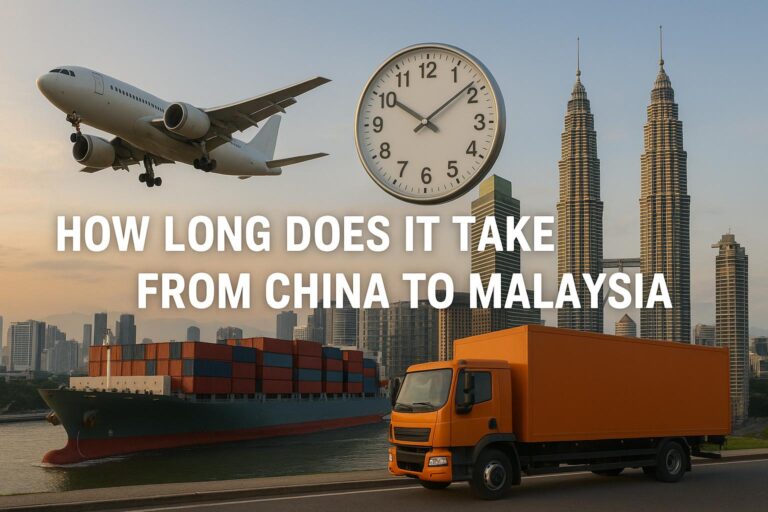
How long does it take to ship from China to Malaysia?This is one of the most common questions among importers, e-commerce sellers, and business o...
Read guide →
Sea freight is the most cost effective shipping method for large volumes and container load cargo. It is ideal for businesses looking to reduce s...
Read guide →In 2025, trade between China and Malaysia continues to grow rapidly, supported by strong industrial cooperation, e-commerce expansion, and cross-...
Learn more → Useful Resource 20ft & 40ft Container Shipping Costs from China to Malaysia20ft & 40ft container shipping costs from China to Malaysia are a crucial consideration for importers in 2025. As Southeast Asia’s trade network...
Learn more →WhatsApp us