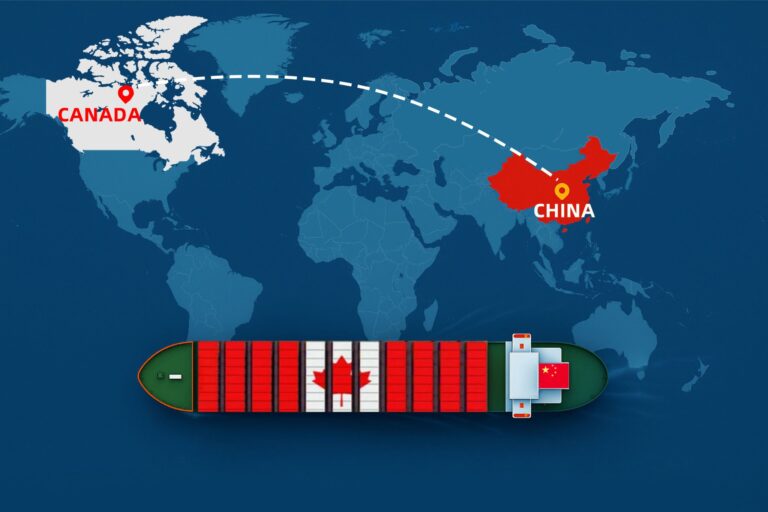
Related Guide
Shipping from China to Canada
Shipping from China / Shipping from China to Canada China–Canada Shipping Guide · Updated August 2026 Shipping from China to Canada Compare sea f...
Read guide →

Shipping from Shenzhen China to Canada involves different shipping methods, transit times, shipping costs, customs clearance steps, and final delivery arrangements depending on your cargo type and destination.
This guide explains shipping from Shenzhen China to Canada, including air freight, sea freight, LCL and FCL shipping, transit time, shipping rates, customs clearance, import duty, taxes, and how to choose the best shipping method for your shipment.
Shipping method
Transit Time & Rates
Customs & Import Duty
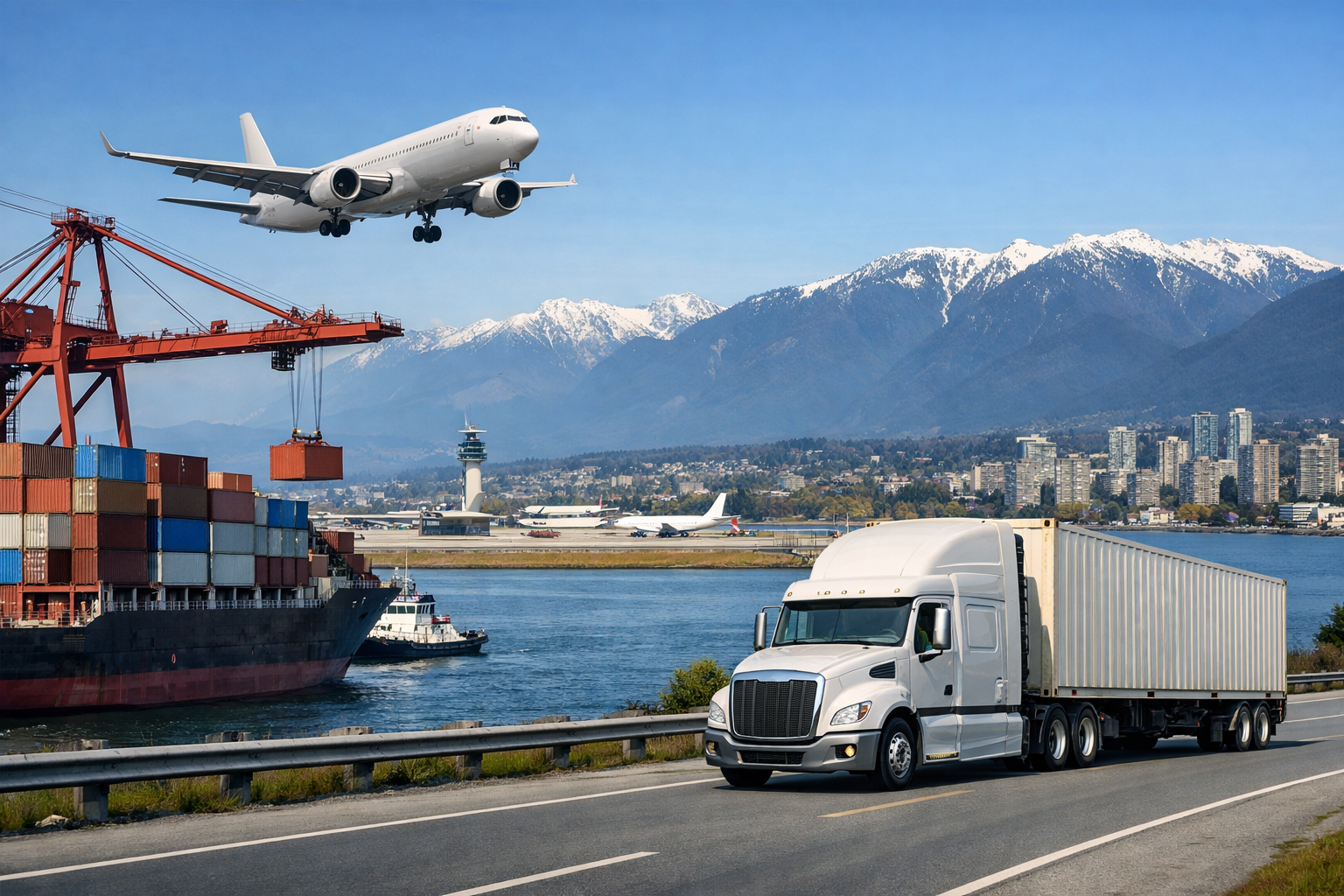
Shenzhen is one of the most important origin ports for shipping from China. It connects manufacturers, export warehouses, trucking networks, air cargo terminals, and major Chinese ports in one highly efficient logistics region.
For businesses shipping goods internationally, Shenzhen offers several clear advantages:
strong access to factories across Guangdong
fast export handling for different shipping options
stable connections to air freight and sea shipping networks
flexible container space for less than container load and full container load
good support for urgent shipments, oversized cargo, and standard commercial cargo
Because of this, Shenzhen is often the starting point for companies transporting goods from China to Canada on a regular basis.
Choosing the best shipping method depends on budget, shipment dimensions, shipment size, cargo value, and delivery deadline. The three main options are express courier, air freight, and sea freight.
Express courier services are best for documents, samples, small cartons, and urgent shipments. This is usually the fastest delivery option for shipping goods from Shenzhen to Canada.
It is often used when:
the cargo is small and lightweight
time matters more than cost savings
the shipment is high value
you need simple door-to-door international shipping
Express courier is convenient, but the air freight rates and courier charges are usually much higher than sea freight rates.
Air freight stands out when the shipment is too large for standard express courier but still needs a short transit period. Many importers use standard air freight for commercial cargo, high value products, electronics, spare parts, and urgent stock replenishment.
Air freight is a strong option when:
you need faster delivery than ocean shipping
the shipment details support a higher freight rate
you want reliable flight schedules
the cargo has moderate weight but important commercial value
For many businesses, air freight offers the best balance between transit time and shipping costs.
Sea freight is the most common option for larger shipments. It is widely used for ocean freight, freight shipping, and international logistics planning because it offers stronger cargo capacity and better cost efficiency.
Sea freight works well when:
the shipment is large or heavy
you want lower shipping costs
you can accept a longer transit time
the cargo is not highly urgent
Importers often choose sea freight for wholesale orders, large or heavy shipments, furniture, machinery, and regular supply chain replenishment.
When choosing sea freight, importers normally decide between LCL shipping and FCL shipping.
LCL shipping means less than container load. This option is used when your cargo does not fill an entire container. Your goods share container space with cargo from other shippers.
LCL is suitable for:
smaller commercial shipments
cargo volumes around 1 to 15 CBM
importers who want to avoid paying for a full container load
businesses that can accept a longer handling process
Because LCL shipping involves consolidation and deconsolidation, transit times vary more than FCL.
FCL shipping means full container load. This option gives the shipper use of the full container, which usually improves cargo control and handling efficiency.
FCL is suitable for:
larger shipments
regular import programs
better cargo protection
improved loading control
lower unit cost on big orders
If your shipment size is large enough, FCL shipping often becomes the best shipping method for stable ocean freight services.
Shipping time depends on the shipping method, origin port, arrival ports, weather conditions, port congestion, customs clearance speed, and inland delivery to the final destination.
Express shipping from Shenzhen to Canada usually takes about 3 to 7 days. This is the fastest delivery solution for small commercial cargo, urgent shipments, and samples.
The typical transit time for air freight from Shenzhen China to Canada is around 5 to 10 days. The exact transit time depends on airline schedules, airport handling, security checks, customs procedures, and final delivery arrangements.
If there are limited flight schedules or peak season pressure, the transit period may become longer.
Sea freight from Shenzhen to Canada usually takes around 20 to 40 days for full container load shipments and around 30 to 50 days for less than container load shipments.
Transit times vary based on:
destination port
vessel schedule
transshipment arrangements
weather conditions
port congestion
customs processing after arrival
Cargo moving to western Canada is usually faster than cargo going to eastern or inland destinations.
Shipping costs change throughout the year. Freight rates are influenced by container space demand, fuel surcharges, seasonality, route pressure, shipment dimensions, customs requirements, and last-mile delivery.
Below is a practical reference for common shipping methods.
| Shipping Method | Best Use | Typical Transit Time | Reference Shipping Rates |
|---|---|---|---|
| Express Courier | samples, urgent shipments, small parcels | 3 to 7 days | from $14.50 per kg |
| Air Freight | high value cargo, time-sensitive goods | 5 to 10 days | around $7 to $10 per kg |
| LCL Shipping | medium cargo, shared container load | 30 to 50 days | around $160 to $200 per CBM |
| FCL Shipping | large commercial shipments | 20 to 40 days | around $4,100 to $5,900 per container |
These shipping rates are only market references. Actual freight rates depend on the cargo type, destination port, final destination, shipment size, and delivery terms.
A strong shipping plan begins with knowing the right origin port and arrival ports.
Most sea freight and air freight shipments from Shenzhen move through:
Shekou Port
Chiwan Port
In some cases, air cargo may also move through Hong Kong for better airline choices or scheduling flexibility.
The main Canadian port and airport gateways include:
Prince Rupert
Toronto
Calgary
Vancouver International Airport
Toronto Pearson International Airport
Montreal-Trudeau International Airport
The destination port matters because it affects transit time, inland trucking or rail cost, and the full supply chain timeline.

Every commercial shipment entering Canada must go through customs clearance. This is one of the most important parts of shipping goods internationally because any errors in paperwork or product declaration can create potential delays.
Canadian customs regulations generally require importers to provide clear and accurate documentation, including product description, value, quantity, and tariff information.
The customs process often includes:
review of shipment details
duty and tax assessment
cargo inspection if required
verification of customs requirements
release approval before delivery
If documents are inconsistent or incomplete, the shipment may be delayed, examined, or charged additional fees. Some regular importers in Canada may also use Release Prior to Payment (RPP) under the CBSA’s CARM system, which allows eligible shipments to be released before final payment of duties and taxes.
Accurate documentation is essential for smooth freight shipping. The exact documents depend on the cargo, but the following are the most common:
commercial invoice
packing list
bill of lading for sea freight
air waybill for air freight
customs declaration data
product details and HS code information
certificates or permits for restricted goods when required
The commercial invoice and packing list are especially important because they affect customs valuation, import duty assessment, and release processing.
For many importers, accurate documentation is the easiest way to reduce customs risk.
When evaluating shipping costs, importers should think beyond the freight quote. The total landed cost includes freight rates, import duty, taxes, customs clearance fees, local charges, and delivery costs.
All commercial shipments entering Canada are subject to CBSA supervision.
Import Duty: Based on the product HS code. In many cases, duty rates range from 0% to 25%, depending on the cargo type.
GST or HST: Canada applies GST at 5%. In some provinces, HST may apply at a higher combined rate.
De Minimis Rule: Low-value mail shipments may qualify for limited tax relief, but commercial express shipments often follow different rules.
DDP shipping, or delivered duty paid shipping, is a shipping option where the seller or logistics provider arranges more of the shipping process, including freight, customs handling, and many destination charges.
DDP shipping can be useful when:
the buyer wants a simpler import process
the shipment is commercial but the consignee wants less operational work
the seller prefers to offer an all-in logistics solution
For some importers, delivered duty paid service creates better cost visibility, though the quote should always be reviewed carefully.
Many businesses assume shipping is only about distance, but several factors can change both transit time and freight rates.
The main factors include:
shipment size
shipment dimensions
cargo capacity required
container space availability
port congestion
weather conditions
airline or vessel schedule
customs clearance speed
destination port
final destination
fuel surcharges
the complexity of the logistics involved
For example, a shipment to Vancouver may move faster than cargo sent onward to Toronto or Montreal. In the same way, large or heavy shipments may require different planning than standard cargo.
Many importers struggle between air freight and sea freight. The decision should be based on business priorities, not just price.
Choose air freight when:
you need fast delivery
your cargo is high value
inventory timing is critical
the shipment is not large enough to justify sea freight delay
Choose sea freight when:
cost savings are more important than speed
the shipment is bulky or heavy
you are moving container load cargo
you can plan shipments in advance
If your cargo does not urgently need to arrive, sea freight is often the more economical option. If you are managing urgent replenishment, air freight is usually more practical.
The entire logistics process usually follows these steps:
supplier pickup in Shenzhen or nearby factory area
cargo inspection, measuring, and warehouse handling
export customs processing in China
booking with air freight or ocean freight carrier
international transport to the Canadian port or airport
customs clearance in Canada
payment of import duty and other charges if applicable
final delivery to warehouse, store, business address, or fulfillment center
Understanding this shipping process helps importers plan shipments better and avoid unnecessary confusion.
A freight forwarder does much more than book cargo space. Reliable freight forwarders help coordinate the full movement of goods from origin port to final destination.
A professional freight forwarder can support with:
comparing shipping methods
arranging air freight and sea freight
managing less than container load and full container load shipments
preparing shipping documents
coordinating customs broker support
handling shipping companies and carrier bookings
tracking cargo through the supply chain
solving problems during the logistics process
For businesses shipping from Shenzhen China to Canada regularly, working with experienced and reliable freight forwarders can save time, reduce risk, and improve consistency.
A good shipping plan does not only focus on cheaper quotes. It should also reduce operational risk and improve the chance of on-time delivery.
Practical tips include:
plan shipments early during peak season
book container space before market demand rises
compare air freight rates and sea freight rates based on actual shipment details
prepare the commercial invoice and packing list carefully
confirm customs requirements before shipping
choose the right destination port for your business
avoid underdeclaring cargo value
consider cargo insurance for higher-risk or higher-value shipments
Small mistakes in documentation or booking can create larger losses later through storage, delays, and extra charges.
Express courier usually takes 3 to 7 days, air freight about 5 to 10 days, and sea freight around 20 to 50 days depending on the service and route.
Sea freight is usually the cheapest option for larger shipments. LCL shipping works for medium cargo, while FCL shipping is often better for larger volume.
The most common documents include the commercial invoice, packing list, and transport document, along with accurate product and customs information.
Choose sea freight for better cost savings on larger shipments. Choose air freight when speed is more important and the cargo value can support the higher rate.
Yes. DDP shipping is available on many routes and can simplify the shipping process for some buyers, depending on cargo type and delivery arrangement.
Useful freight, customs and importing resources related to this shipping guide.
Shipping from China / Shipping from China to Canada China–Canada Shipping Guide · Updated August 2026 Shipping from China to Canada Compare sea f...
Read guide →
Shipping Cost from China to Canada (2026 Guide) Verified & Reviewed · Last updated April 2026 Shipping cost from China to Canada in 2026 typicall...
Read guide →
Shipping goods from China to Canada by sea is one of the most cost-effective ways to transport large quantities of products. With the growth of g...
Read guide →
International shipping is a complex process that involves the transportation of goods from one country to another. It requires a deep understandi...
Read guide →How long does it take to ship from China to Canada? This is one of the most common questions asked by importers and supply chain managers. Shippi...
Learn more → Useful Resource DDP Shipping from China to CanadaDDP Shipping from China to Canada Verified & Reviewed · Last updated May 2026 DDP shipping from China to Canada helps importers ship goods door t...
Learn more →WhatsApp us