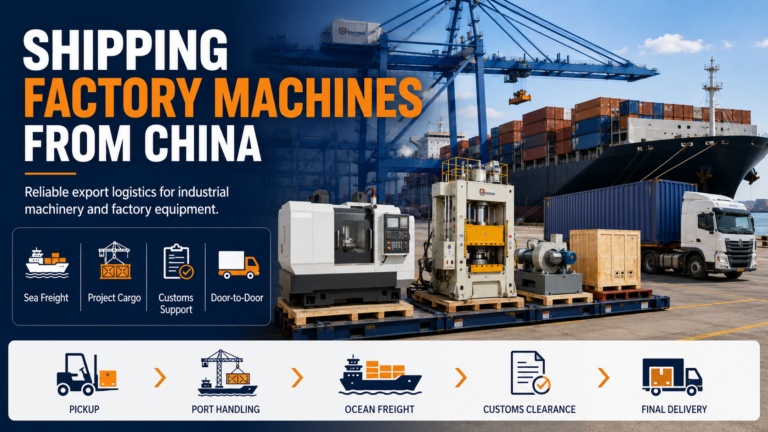
Related Guide
Shipping Factory Machines from China
Shipping Factory Machines from China Verified & Reviewed · Last updated July 2026 Shipping factory machines from China requires careful planning...
Read guide →

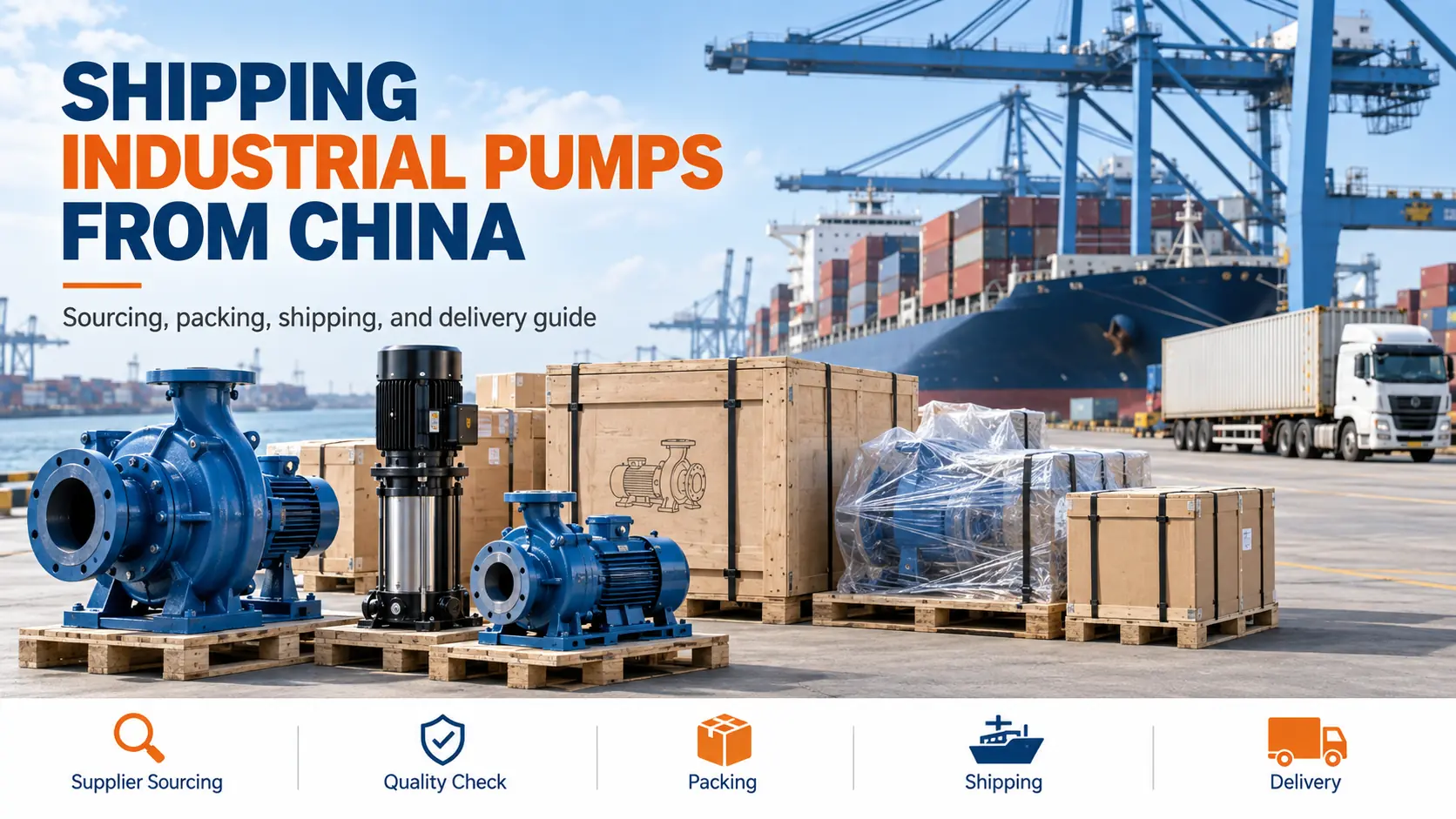
Shipping industrial pumps from China requires careful planning because pumps are often heavy, high-value, and sensitive to moisture, corrosion, and improper handling.
Learn how to source, inspect, pack, and ship industrial pumps from China, including FCL, LCL, air freight, oversized cargo, shipping costs, customs clearance, and final delivery.
Industrial Pump Shipping
FCL & LCL Freight
Heavy Cargo Handling
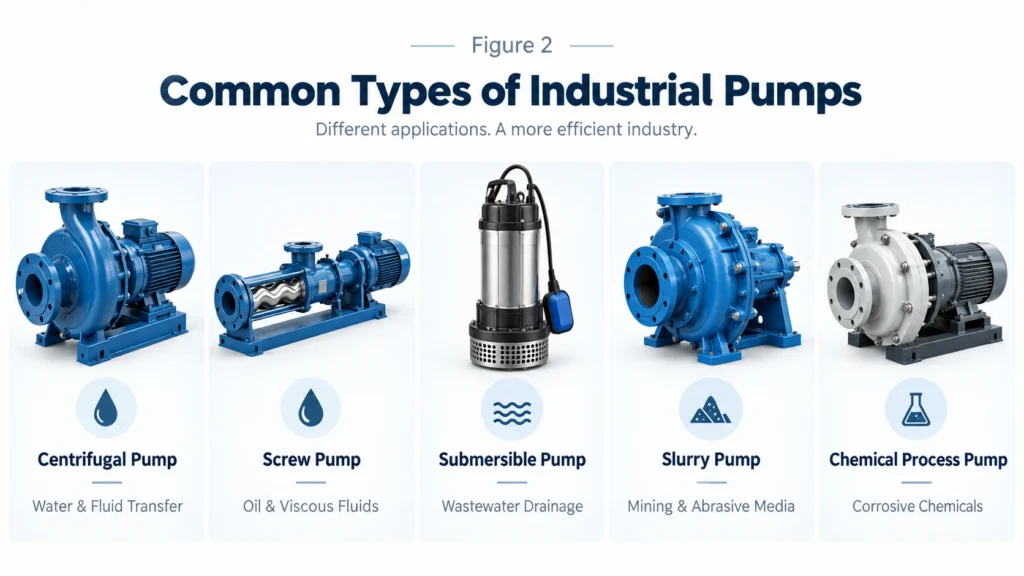
Chinese pump manufacturers offer a broad product range for different fluids, operating conditions, and project requirements. The pump type affects not only performance, but also the materials, weight, dimensions, packaging, and transportation plan.
Centrifugal pumps are widely used for water supply, wastewater treatment, industrial cooling systems, and general fluid transfer.
Before ordering a centrifugal pump, buyers normally need to confirm:
Required flow rate
Head or discharge pressure
Impeller design
Casing material
Shaft seal
Motor power
Voltage and frequency
Operating conditions
A large centrifugal pump may be supplied together with its motor, coupling, and base frame. This complete set can be considerably heavier and larger than the pump body shown in the product catalogue.
A screw pump is commonly used for transferring oil, lubricants, viscous liquids, and other fluids that require a steady and controlled flow.
Other positive displacement pumps may be used in chemical production, food processing, and industrial applications where the fluid properties or pressure requirements make centrifugal pumps less suitable.
Because these pumps may contain sensitive internal components, exposed shafts, openings, and connections should be protected carefully before export.
Submersible and sewage pumps are commonly used for drainage and wastewater treatment.
Slurry pumps are designed to handle slurries, suspended solids, and abrasive materials in mining and industrial processing. Chemical process pumps may handle acids, oils, corrosive chemicals, and other aggressive media in refineries or chemical plants.
Depending on the application, manufacturers may use stainless steel, special alloys, plastics, or other corrosion-resistant materials for the casing, impeller, shaft seal, and wetted components.
Industrial pumps are also widely used for pharmaceutical fluid transfer, food processing, and cooling systems in power-generation facilities.
Before placing a production order, buyers should confirm both the pump specifications and the manufacturer’s ability to meet the project requirements. A freight forwarder can arrange transportation, but problems with performance, materials, voltage, or connection standards are much harder to fix after the pump has been shipped.
The supplier should receive clear operating and installation data before manufacturing begins. Important points include:
Flow rate and head: Confirm the required duty point and ask for the pump performance curve where applicable.
Voltage and frequency: Check whether the motor requires 50Hz or 60Hz and the correct voltage. Pumps made for the Chinese domestic market are commonly configured for 50Hz / 380V, which may not suit the destination.
Fluid conditions: Provide the fluid type, viscosity, solids content, operating temperature, and corrosiveness.
Materials of construction: Confirm the casing, impeller, shaft, seal, and wetted materials, such as SS304, SS316, duplex stainless steel, or other project-specified materials.
Flange and connection standard: Make sure the flange dimensions, pressure rating, and standard, such as ANSI or DIN, match the installation.
Motor and installation requirements: Confirm motor power, mounting arrangement, protection requirements, and any special electrical or mechanical specifications.
For slurry pumps, chemical pumps, and other specialized equipment, material compatibility is especially important. Stainless steel should not automatically be assumed to suit every corrosive fluid.
Supplier vetting should go beyond comparing factory prices. Buyers should also check whether the manufacturer has the production capacity, quality control, and testing capability needed for the order.
Key points include:
Manufacturing experience
Product range
Production capacity
Quality-control procedures
Testing facilities
Similar project experience
Technical drawings and documentation
Spare-parts availability
After-sales support
For customized or project pumps, ask how the finished equipment will be tested and whether the manufacturer can provide the required performance curve, test report, and nameplate information.
For larger orders, factory audits, production records, and previous project references can also help verify manufacturing consistency.
The purchase price is only one part of the decision. Maintenance, energy consumption, spare parts, and service life can all affect the pump’s total cost of ownership.
Industrial pumps should be checked before they are packed and released for shipping, especially for customized or project-specific orders.
Compare the finished equipment with the approved order or technical drawing.
Check the model, dimensions, flange connections, materials, motor specifications, nameplate information, accessories, and spare parts. The inspection should also look at the pump shaft, coatings, exposed components, and visible assembly quality.
Any mismatch is easier to correct while the pump is still at the factory.
Where performance testing is required, the factory should verify the pump against the agreed operating conditions.
Depending on the project, this may include:
Flow rate and head
Pressure
Power consumption
Efficiency
Leakage
Vibration where required
Hydrostatic or other special tests may also be required for certain pumps or engineering projects.
The test should follow the actual project specification rather than applying the same testing procedure to every industrial pump.
Before shipment, ask for the relevant performance curve or test report.
It is also useful to keep:
Nameplate photos
Serial numbers
Inspection photos
Test results
Final packing photos
These records help confirm product quality before departure and can be useful if a technical, warranty, or transport issue appears after delivery.
Industrial pump packaging needs to protect the equipment from physical damage as well as moisture and corrosion.
Using unsuitable materials or failing to secure the equipment correctly can damage shafts, flanges, motors, instruments, coatings, and other components during handling and transport.
Industrial pumps may still contain water after factory performance testing or hydrostatic testing.
Before packing, any remaining test fluid should be checked and drained where required. Residual water can cause internal corrosion, leakage, or moisture damage during a long sea freight journey.
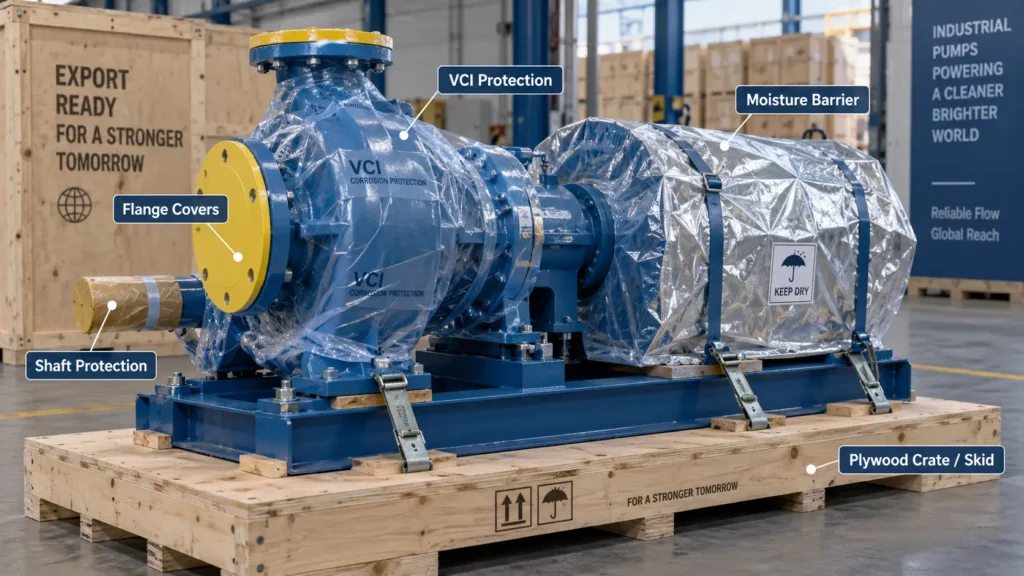
Protection may include:
Anti-rust treatment
VCI materials
Waterproof wrapping
Moisture barriers
Desiccants
Flange covers
Shaft protection
Sealed openings
If chemicals or other regulated substances remain inside the pump, this should be identified before transport is arranged.
Large industrial pumps normally need stronger packaging than ordinary cartons.
Reinforced plywood crates are commonly used for industrial pump exports because they provide strong protection without relying on untreated solid-wood packaging.
Other options include:
Heavy-duty wooden cases
Export skids
Steel bases for very heavy equipment
The pump should be bolted or fixed firmly to the base so it cannot shift during trucking, lifting, terminal handling, or sea freight.
Loose accessories should be packed and secured separately, and the crate should allow safe forklift or crane handling.
If regulated solid-wood packaging is used for international shipping, applicable ISPM 15 requirements should be checked.
Plywood and regulated solid wood should not automatically be treated as the same packaging material. The packing company should confirm whether treatment and compliant markings are required for the destination.
Sea freight is the most practical option for many industrial pump shipments, especially for heavy pumps, multiple units, and project cargo where air freight would be too expensive.
The best method still depends on the final packed dimensions, gross weight, urgency, destination, and whether the cargo fits inside standard equipment.
| Shipping Method | Best For | Main Consideration |
|---|---|---|
| FCL | Large pumps or multiple units | Less cargo handling |
| LCL | Smaller crated shipments | Strong packaging |
| Air Freight | Urgent pumps or spare parts | Chargeable weight |
| Open Top | Tall equipment | Equipment availability |
| Flat Rack | Oversized or heavy pumps | Securing and handling |
| Breakbulk | Very large project cargo | Heavy-lift planning |
FCL is usually a good option when importing several large pumps or heavy pump assemblies.
Because the cargo remains inside one container, it normally goes through fewer handling points than LCL. It also gives more control over positioning, blocking, bracing, lashing, and weight distribution.
For industrial pumps, container payload and floor-loading limits should be checked before loading.
LCL can be suitable for one or several smaller crated pumps that do not justify a full container.
The main disadvantage is additional handling. LCL cargo normally passes through consolidation and deconsolidation warehouses, which increases the importance of strong individual packaging.
For high-value equipment, the lowest freight rate is not always the lowest-risk solution.
Air freight is mainly used when speed matters.
Typical air shipments include:
Emergency replacement pumps
Motors
Impellers
Seals
Critical spare parts
Because air freight may be charged according to volumetric weight, always use the final packed dimensions when requesting a quotation.
If a packed pump cannot fit inside a standard dry container, an open-top container or flat rack may be required.
Very large industrial equipment may move as breakbulk cargo.
These shipments require additional planning for lifting, lashing, terminal handling, inland trucking, and destination unloading.
RoRo is generally more suitable for wheeled or rolling equipment than for standalone industrial pumps.
Industrial pumps should be booked and loaded according to their final packed size and gross weight, not only the bare machine dimensions shown on the factory drawing.
Before booking, provide:
Final packed dimensions
Number of packages
Center of gravity where required
Lifting or forklift points
Photos and technical drawings are particularly useful for heavy or oversized equipment.
Motors, base frames, skids, crates, and protective materials can add significant weight and volume to the original pump.
Heavy pumps may require high-capacity forklifts, cranes, or other lifting equipment.
Once inside the container, the cargo should be positioned and secured correctly. Weight distribution, blocking, lashing, and container payload all need to be checked.
Poor securing can allow a heavy pump to move during transportation even if the outer crate appears undamaged.
The unloading plan should be confirmed before the shipment arrives.
Depending on the cargo, the receiving site may need a crane, heavy-duty forklift, or other equipment. Site access, ground conditions, and available lifting capacity can also affect final delivery.
Industrial pump shipping costs depend on the route, cargo size, weight, shipping method, and handling requirements.
The following figures can be used as general 2026 reference ranges rather than fixed quotations:
| Shipping Method | Estimated Cost | Typical Use |
|---|---|---|
| Sea Freight FCL 20ft | $4,800–$6,700/container | Large pumps |
| Sea Freight FCL 40ft | $6,700–$8,200/container | Multiple pump assemblies |
| Sea Freight LCL | $80–$160/CBM | Smaller crated pumps |
| Air Freight | $4–$8/kg | Urgent pumps or spare parts |
Actual freight rates can change by route, season, carrier capacity, fuel costs, and final cargo dimensions.
Heavy or oversized pumps may involve extra charges beyond the basic freight rate.
Typical additional costs include:
Export crating: about $100–$500+ per unit
Crane or forklift handling: around $100–$500
Lashing and securing: about $100–$300
Terminal handling: around $150–$800
Destination unloading: about $200–$1,000+
If the pump is too large for a standard container, an open-top, flat-rack, or breakbulk solution may be required. These shipments are normally quoted individually based on the packed dimensions, gross weight, route, and lifting requirements.
These figures are only general reference ranges and can vary by port, destination, and cargo size.
Customs clearance starts with the correct HS classification and complete export documentation.
Pumps for liquids generally fall under HS heading 8413, but there is no single HS code for every industrial pump.
The exact classification depends on factors such as:
Pump type
Operating principle
Construction
Application
Complete pump or pump parts
Destination-country tariff schedule
Centrifugal pumps, screw pumps, sewage pumps, slurry pumps, and pump parts may fall under different subheadings.
The final classification should be confirmed before customs entry because it affects duties and other import requirements.
Complete export documentation helps reduce delays during Chinese export procedures and destination customs clearance.
A typical shipment may require:
Commercial Invoice
Packing List
Bill of Lading or Air Waybill
Certificate of Origin when required
Technical specifications
Test reports when applicable
Destination-specific compliance documents
The invoice and packing list should match the actual product description, quantity, package count, gross weight, and net weight.
Compliance requirements depend on the destination market, pump application, customer specification, and industry.
Some oil, petroleum, or process-industry projects may specify relevant API standards. Equipment entering certain markets may also require conformity documentation relating to the pump, motor, electrical components, or control system.
ISO 9001 relates to a manufacturer’s quality-management system and should not be treated as a universal industrial pump product certification. CE requirements also depend on the destination market and the equipment involved.
Industrial pumps are not automatically classified as dangerous goods. However, pumps containing residual chemicals, fuel, regulated oils, batteries, or other controlled substances may require additional checks, declarations, or transport arrangements.
Used pumps need particular attention because they may previously have handled hazardous fluids.
Shipping industrial pumps is easier when the sourcing, testing, packing, and freight arrangements are planned together. The process usually follows these steps.
Before production, confirm the pump specifications, materials, motor requirements, and application conditions. Also make sure the manufacturer has the required production capacity, testing capability, and quality-control process.
Complete any required inspection and performance testing before the pump is packed.
After testing, drain residual fluids where necessary, protect exposed metal parts against corrosion, and secure the pump in a suitable plywood crate, skid, or steel base.
Once packing is complete, obtain the final:
Packed dimensions
Gross weight
Number of packages
Photos or drawings for heavy cargo
Lifting points where required
Freight should be quoted from the final packed cargo, not the bare pump size.
Choose the transport method according to cargo size, weight, and urgency:
FCL for large pumps or multiple units
LCL for smaller crated shipments
Air freight for urgent pumps or spare parts
Flat rack, open top, or breakbulk for oversized equipment
Also confirm whether the order is EXW, FOB, or another Incoterm so both sides are clear about pickup, export handling, freight, and delivery responsibilities.
The freight forwarder can then arrange factory pickup, export customs, international transport, and destination handling.
Before arrival, the importer should prepare the customs documents and confirm whether the final site needs a crane, high-capacity forklift, or other unloading equipment.
Pumps for liquids generally fall under HS heading 8413, but the exact subheading depends on the pump type, operating principle, construction, and destination-country tariff schedule.
FCL is often better for large or heavy pumps because it reduces handling and gives more control over cargo securing. LCL can be suitable for smaller quantities when each pump is packed securely.
Yes. Air freight can be used for urgent pumps, compact high-value equipment, and critical spare parts. The final packed dimensions should be used when calculating chargeable weight.
Large industrial pumps normally require reinforced export packaging such as plywood crates, heavy-duty cases, skids, or steel bases. If regulated solid wood is used, applicable ISPM 15 requirements should be checked.
Provide the pump type, quantity, number of packages, final packed dimensions, gross weight, pickup city in China, destination, and Incoterm. Photos and technical drawings are especially useful for heavy or oversized cargo.
Useful freight, customs and importing resources related to this shipping guide.
Shipping Factory Machines from China Verified & Reviewed · Last updated July 2026 Shipping factory machines from China requires careful planning...
Read guide →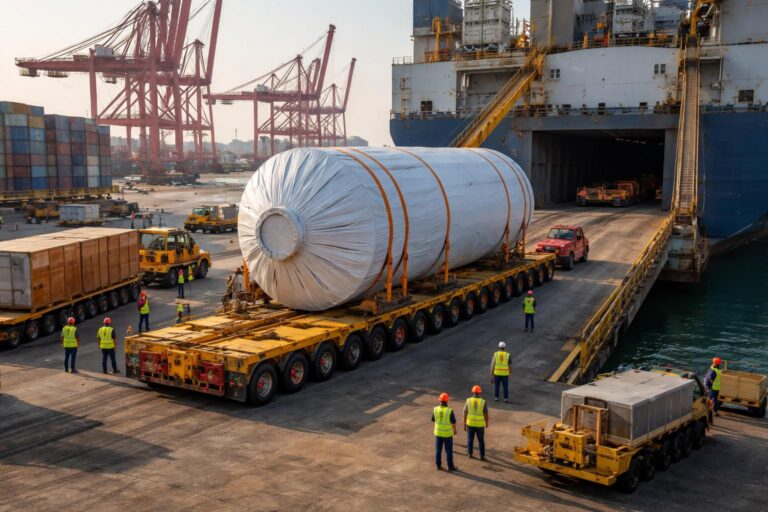
Shipping Oversized Cargo from China Verified & Reviewed · Last updated February 2026 Shipping oversized cargo from China depends on cargo dimensi...
Read guide →
Sea freight is the most cost effective shipping method for large volumes and container load cargo. It is ideal for businesses looking to reduce s...
Read guide →
Pre-Shipment Inspection in China for Importers Verified & Reviewed · Last updated July 2026 A pre-shipment inspection helps importers identify de...
Read guide →Introduction to Customs Clearance How to clear customs when importing from China is one of the most critical steps in international trade. Whethe...
Learn more → Useful Resource What Is Cargo Insurance and How Does It Work?What Is Cargo Insurance and How Does It Work? Verified & Reviewed · Last updated April 2026 Cargo insurance protects goods against physical loss...
Learn more →WhatsApp us