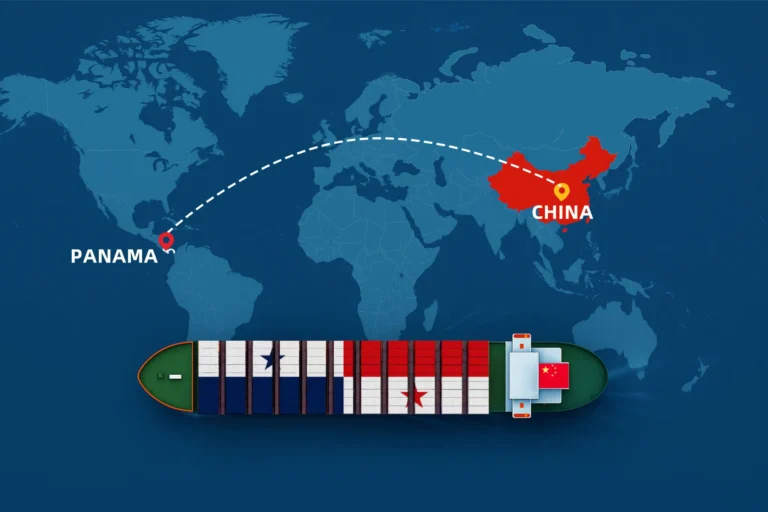
Related Guide
Shipping from China to Panama
Shipping from China to Panama (Sea, Air & DDP) | 2026 Guide Fast, reliable shipping from China to Panama for B2B importers,eCommerce sellers, and...
Read guide →

20ft and 40ft container shipping costs from China to Panama vary depending on ocean freight rates, container size, transit times, port charges, and final delivery requirements.
This guide explains the cost to ship a 20ft or 40ft container from China to Panama, covering major ports such as Balboa, Colon, Cristobal, and Manzanillo International Terminal, as well as FCL shipping, LCL shipping, customs clearance, port fees, and door-to-door delivery options.
Shipping method / Mode
Transit time range
DDP / Door to Door
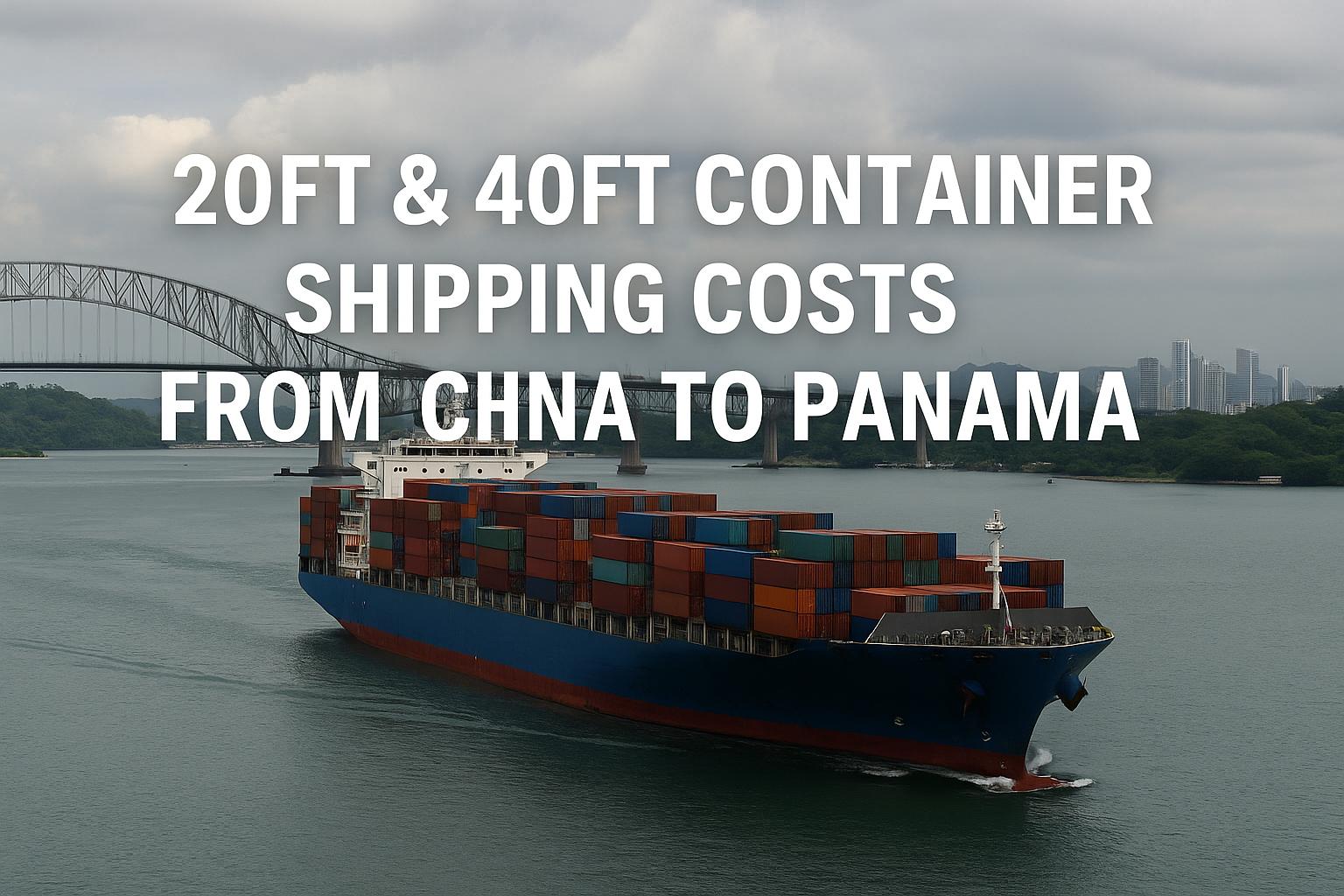
Container shipping costs from China to Panama fluctuate based on market conditions. Current rates can change weekly because many carriers adjust prices according to vessel space, fuel prices, holiday rush, canal conditions, and demand from major Chinese ports.
| Shipping Container Type | Estimated Cost Range | Best For |
|---|---|---|
| 20ft FCL | USD 1,150 – 3,500 | Heavy goods, machinery, tools, tiles, metal products |
| 40ft FCL | USD 2,150 – 4,850 | Large shipments, furniture, electronics, textiles, mixed goods |
| 40ft High Cube | USD 2,500 – 5,200 | Bulky goods that need more container space |
| 40ft Reefer | USD 2,500 – 6,000 | Temperature-controlled products |
| LCL Shipping | Around USD 18 – 30 / CBM | Smaller shipments that do not fill one unit |
A 20-foot container has a capacity of about 1,172 cu ft, while a 40-foot container has a capacity of about 2,389 cu ft. A 40-foot high cube container offers around 13% more space than a standard 40ft unit, which makes it useful for bulky but lightweight goods.
The shipping container transport cost depends heavily on the China origin location and Panama arrival terminal. Major Chinese ports like Shanghai, Ningbo, Shenzhen, Guangzhou, Qingdao, and Xiamen usually offer more stable schedules and more competitive rates than smaller ports because they have high frequency sailings and stronger carrier coverage.
Route | 20ft Container | 40ft Container | Transit Times |
|---|---|---|---|
Shanghai to Colon | USD 1,150 – 3,300 | USD 2,150 – 4,700 | 28 – 35 days |
Ningbo to Colon | USD 1,200 – 3,350 | USD 2,200 – 4,750 | 27 – 34 days |
Shenzhen to Balboa | USD 1,250 – 3,500 | USD 2,250 – 4,850 | 25 – 33 days |
Guangzhou to Balboa | USD 1,250 – 3,500 | USD 2,250 – 4,850 | 26 – 35 days |
Qingdao to Colon | USD 1,350 – 3,500 | USD 2,350 – 4,850 | 30 – 38 days |
Xiamen to Manzanillo International Terminal | USD 1,300 – 3,500 | USD 2,300 – 4,850 | 28 – 36 days |
These container rates are general references only. Actual shipping rates may be lower or higher depending on current rates, container load, sailing schedule, free time, port congestion, and carrier rate adjustments.
Choosing the right container size is important because it affects both loading space and total shipping costs. For China to Panama shipments, the best option depends on cargo weight, cargo volume, packaging size, and whether the goods are dense or bulky.
A 20ft container is usually better for heavy cargo that reaches the weight limit before using all available space. It is often used for machinery, tools, hardware, tiles, stone products, metal parts, and building materials.
Typical use cases include:
Heavy but low-volume cargo
Dense goods packed on pallets
Loads where weight matters more than space
Although a 20ft container has a lower freight rate than a 40ft container, the cost per CBM may be higher if your goods are light or bulky.
A 40ft container provides much more loading space and is often more cost-effective for commercial cargo. Many importers use 40ft FCL shipping when they need to move large shipments from China to Panama at a better unit rate.
It is commonly used for:
Furniture and home goods
Textiles and clothing
Consumer electronics
Packaging materials
Mixed supplier loads
For many Panama importers, a 40ft option offers better value because it carries much more cargo than a 20ft unit, while the rate is not usually double.
A 40HQ container has the same floor length as a standard 40ft unit but offers extra height. This additional container space makes it suitable for bulky but lightweight goods, especially when carton height or stacking efficiency matters.
A 40HQ is often suitable for:
Bulky furniture
Foam products
Plastic goods
Large cartons
E-commerce inventory
A 40HQ may cost slightly more than a standard 40ft container, but it can reduce total shipping costs if the extra space helps you avoid booking another unit.
Importers can choose between full container load and less than container load services. The right option depends on volume, budget, delivery schedule, and handling requirements. Most imports to Panama arrive as FCL 40ft containers because this format provides better space efficiency for commercial goods.
FCL shipping means one importer uses the entire shipping container. This option is usually better for large shipments, high-value goods, or products that should not be mixed with other cargo.
FCL is recommended when:
Your goods are over 13–15 CBM
You want better control over loading
The goods come from one or several suppliers
You need faster terminal handling
You want to reduce the risk of damage or mixing
Most imports to Panama arrive as FCL 40 ft containers because this option provides better space efficiency for commercial cargo.
Less than container load is suitable for smaller shipments that do not require one full unit. Goods share space with other importers’ products, which helps reduce the upfront freight charge.
LCL demand from China to Panama has doubled since 2023 as more buyers test smaller orders before increasing volume. As a general reference, LCL rates from China to Panama are approximately USD 18–30 per cubic meter, although the final price may vary based on warehouse handling, destination charges, and the selected route.
The China–Panama route connects major Chinese ports with Panama’s key ports on both the Pacific and Atlantic sides. Because Panama is linked by the Panama Canal, it can serve both as a final destination and as a regional distribution point for Central America, South America, and the Caribbean.
China is home to several world-class major ports that handle millions of container ships every year. The main origin ports for container shipping services to Panama include:
Panama has several container terminals that handle imports from Asia. The best arrival port depends on the carrier route, cargo type, and final destination in Panama.
Main Panama ports include:
Balboa Port
Colon Container Terminal
Cristobal Port
Manzanillo International Terminal
Balboa is commonly used for cargo moving to Panama City and nearby areas. Colon, Cristobal, and Manzanillo International Terminal are important for Atlantic-side logistics, transshipment, and cargo connected to the Colon Free Zone.
Panama is an important logistics hub because it connects Pacific and Atlantic trade lanes through the Panama Canal. This allows importers to use Panama not only for local delivery, but also for redistribution to nearby markets.
Key advantages of Panama as a logistics hub include:
Direct access to the Panama Canal
Strong connections to Central and South American markets
Modern container terminals and warehousing facilities
Frequent services from major global carriers
Efficient distribution through the Colon Free Zone
For businesses importing goods from China, Panama serves not only as a final destination but also as an important regional distribution center that supports a more flexible and efficient supply chain.
Container shipping costs from China to Panama can change throughout the year. Even for the same route, prices may vary depending on equipment type, fuel prices, vessel space, season, terminal conditions, and delivery requirements.
Main cost factors include:
Container size: 20ft, 40ft, 40HQ, reefer, open top, and flat rack options have different rates.
Fuel prices: Higher bunker fuel costs can increase ocean freight rates and related surcharges. Fuel prices increased by around 5%–10% in 2025, which affected freight pricing on many routes.
Seasonal demand: Peak season and holiday rush periods may raise shipping rates by 30%–50%.
Port congestion: Delays at busy terminals may lead to congestion surcharges, storage fees, or longer transit times.
Equipment availability: Repositioning costs of empty containers are often absorbed into the freight rate. When empty units are limited at major Chinese ports, prices may rise quickly.
Commodity type and cargo value: Sensitive, high-value, or regulated goods may require inspection, special handling, or cargo insurance.
Port fees and local charges: Terminal handling fees often range from USD 150–400 per container, while customs service fees for shipping to Panama may range from USD 50–200.
Final destination: Delivery to Panama City, Colon Free Zone, or inland warehouses costs more than port-to-port service.
Checking these points before booking helps importers compare rates more accurately and avoid unexpected charges.
Customs clearance is a critical step when shipping goods from China to Panama. Even if your cargo arrives on schedule, delays can still occur if the shipping documents are incomplete, the HS code is incorrect, or the declared cargo value does not match customs requirements.
To avoid unnecessary storage fees and delivery delays, importers should prepare all documents before the goods depart China and ensure that the information provided is accurate and consistent throughout the import process.
Most commercial imports into Panama require the following documents:
Packing list
Bill of lading
HS code
Import permit for regulated goods
Product certificates if required
Cargo insurance certificate if purchased
The commercial invoice should clearly show the product description, quantity, unit price, total value, currency, supplier details, consignee details, and trade terms. The packing list should match the actual shipment, including carton quantity, gross weight, net weight, dimensions, and total volume.
When importing goods into Panama, customs authorities calculate duties and taxes based on the CIF value, which includes the cargo value, cargo insurance, and ocean freight cost. Because import charges are assessed using the total landed value of the shipment, accurate declarations are essential during the customs clearance process.
For most commercial shipments from China, importers should be aware of two main cost components:
Import Duties: Most products are subject to import duties ranging from 0% to 15%, depending on the HS code and product category. Certain agricultural products and protected industries may face significantly higher tariff rates.
ITBMS Tax: Panama applies a 7% ITBMS (Value Added Tax) on most imported commercial goods. This tax is generally calculated based on the CIF value plus any applicable import duties.
Before shipping, importers should verify the correct HS code classification and estimated duty rate to avoid unexpected import customs costs after the cargo arrives.
After the container arrives at the port, customs authorities review the submitted documents and verify shipment details. Depending on the cargo type and risk assessment, customs may release the shipment directly or select it for additional inspection.
The typical customs clearance process includes:
Submission of shipping documents
Customs declaration review
Duty and tax assessment
Inspection if required
Payment of applicable charges
Cargo release and final delivery
Most standard shipments clear customs smoothly when all information is accurate and complete.
Before shipping from China to Panama, importers should confirm whether the goods require special permits, certificates, or handling. Most general cargo can move in standard containers, but regulated or sensitive products may face extra customs checks.
Some products need additional documents before they can clear customs in Panama. These items should be checked before booking to avoid delays, storage fees, or cargo rejection.
Common examples include:
Certain chemicals and hazardous goods
Food, beverages, and agricultural products
Pharmaceuticals and medical devices
Batteries and lithium-powered products
Cosmetics and personal care products
Branded goods or products with trademarks
Counterfeit goods
For these cargo types, importers should confirm the HS code, product certificates, and import requirements in advance.
Standard dry containers are suitable for most goods, including furniture, electronics, textiles, machinery, and household products. However, some cargo requires special equipment because of temperature, size, or loading conditions.
Common special equipment includes:
Reefer containers: Used for frozen food, fresh produce, seafood, pharmaceuticals, and other temperature-sensitive cargo.
Open top containers: Suitable for tall cargo that cannot be loaded through standard doors.
Flat rack containers: Used for oversized machinery, vehicles, steel structures, and project cargo.
Refrigerated containers usually cost much more than standard dry units because they require temperature control and power supply during transit. A 40ft reefer from China to Panama may cost around USD 8,000 to USD 12,000, depending on the route, season, and carrier space.
Choosing the right equipment helps protect the cargo, reduce customs risk, and avoid unnecessary handling charges.
The cost depends on container size, route, goods type, season, and service terms. As a 2026 reference, a 20ft container usually costs USD 1,150 to USD 3,500, while a 40ft container usually costs USD 2,150 to USD 4,850.
A 20ft container from China to Panama usually costs USD 1,150 to USD 3,500 for base ocean freight. The final price may change depending on origin port, Panama destination, fuel prices, port fees, customs service fees, cargo insurance, and final delivery.
Sea transport is usually the cheapest option for large or heavy goods. FCL is better for large shipments, while LCL is more economical for smaller shipments that do not fill one full unit.
Transit times usually range from 20 to 35 days by sea. LCL may take 25 to 40 days because of consolidation. Air freight usually takes 3 to 7 days.
Balboa, Colon, Cristobal, and Manzanillo International Terminal are commonly used for container imports. The best arrival point depends on the carrier route and final destination in Panama.
Useful freight, customs and importing resources related to this shipping guide.
Shipping from China to Panama (Sea, Air & DDP) | 2026 Guide Fast, reliable shipping from China to Panama for B2B importers,eCommerce sellers, and...
Read guide →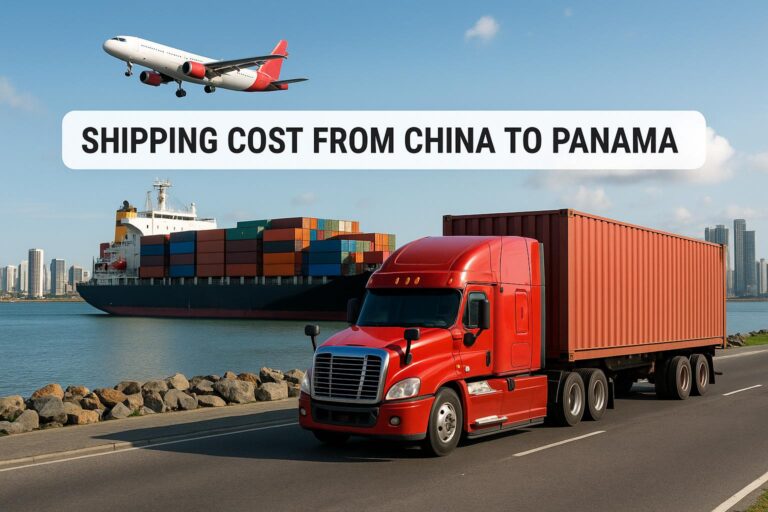
Shipping Costs from China to Panama (2026 Guide) Verified & Reviewed · Last updated June 2026 Shipping costs from China to Panama usually range f...
Read guide →
Global trade between China and Panama has been growing rapidly in recent years, with Panama serving as a strategic hub in Latin America due to th...
Read guide →
Sea freight is the most cost effective shipping method for large volumes and container load cargo. It is ideal for businesses looking to reduce s...
Read guide →Air freight from China is the best option for time sensitive and high value shipments. It offers fast delivery, reliable transit times, and effic...
Learn more → Useful Resource DDP Shipping from China to PanamaWhen it comes to international logistics, DDP shipping from China to Panama stands out as one of the most convenient and cost-effective solutions...
Learn more →WhatsApp us