Related Guide
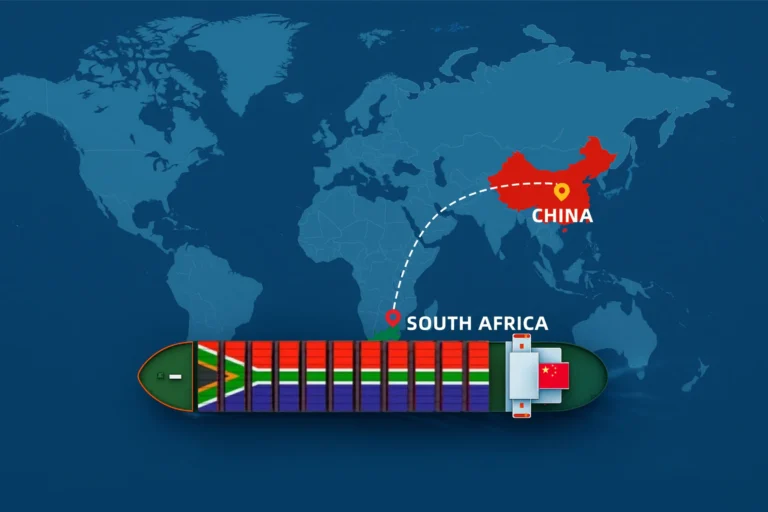
Shipping from China to South Africa
Shipping from China to South Africa – Sea, Air & DDP in 2026 Fast, reliable shipping from China to South Africa for B2B importers,industrial carg...
Read guide →

Reliable & Cost-Effective Shipping from China
Tailored Logistics Solutions for Your Business
DDP shipping from China to South Africa combines supplier pickup, export handling, international freight, import customs coordination, duty and tax handling under the agreed service terms, and final delivery to the confirmed address. It is suitable for importers who prefer one coordinated shipping solution instead of arranging separate freight, customs clearance, and local delivery services.
Tonlexing can compare air freight, sea freight LCL or FCL, and express options based on the cargo weight, volume, product type, supplier location, destination postcode, and delivery priority. Before confirming a DDP quotation, we review the cargo description, HS code, declared value, packaging, and any batteries, liquids, powders, magnets, branded goods, or regulated products that may affect the available route or customs requirements.
DDP shipping can cover the shipment from the supplier in China to the buyer’s confirmed address in South Africa. The exact quotation should clearly state whether pickup, export clearance, international freight, South African customs handling, duties, VAT, and final delivery are included.
The final cost and estimated transit time depend on the shipping method, chargeable weight or cargo volume, product classification, customs requirements, and delivery postcode. Send the cargo details, China pickup address, and South Africa postcode to receive a route-specific DDP shipping proposal.
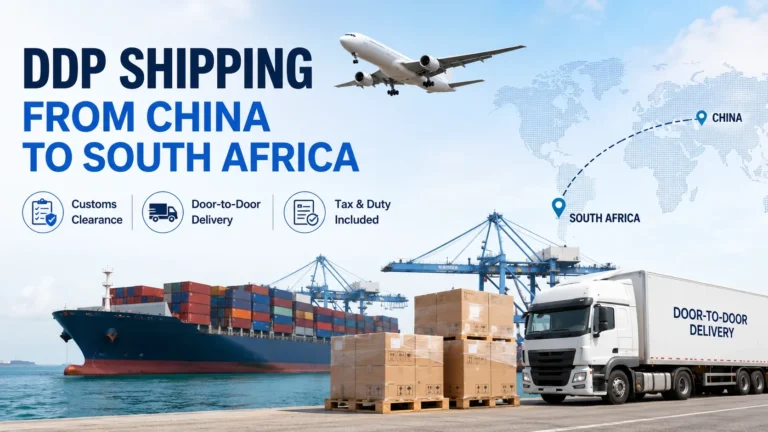
DDP stands for Delivered Duty Paid. Under this shipping arrangement, the seller or appointed logistics provider coordinates the shipment from the supplier in China to the confirmed delivery address in South Africa. The agreed service may cover export handling, international freight, import customs clearance, duty and tax handling, and final delivery.
For importers, the main advantage is that the major transport and customs stages are managed under one coordinated quotation. However, the exact scope must be confirmed before shipment because product permits, customs inspections, storage, insurance, remote-area delivery, or special handling may not be included automatically.
A typical DDP shipping service may include:
Pickup from the supplier or warehouse in China
China export declaration and shipping documents
Air freight, sea freight, or express transportation
Customs clearance coordination in South Africa
Import duty and VAT handling under the agreed terms
Final delivery to the confirmed business or warehouse address
The importer must still provide accurate cargo information, including the product description, HS code, declared value, packing details, and any regulated or sensitive cargo information. Incorrect or incomplete details can affect the quotation, customs clearance, and delivery schedule.
Compared with FOB or CIF shipping, DDP places more transport and customs coordination on the seller or logistics provider. Importers comparing different trade terms can also review our DDP vs CIF vs FOB guide to understand where the costs and responsibilities change.
DDP shipping coordinates the main transport, customs, and delivery stages under one service arrangement. Before booking, the freight forwarder checks the cargo details, confirms the available shipping method, and defines what is included in the quotation.
The importer provides the product name, HS code, quantity, weight, dimensions, declared value, supplier address, and South Africa delivery postcode. After the shipment is confirmed, Tonlexing coordinates pickup from the supplier or arranges delivery to the designated warehouse in China.
The cargo details and shipping documents are checked before departure. Export declaration, warehouse handling, labeling, consolidation, or repacking can be arranged according to the shipment and the agreed service scope.
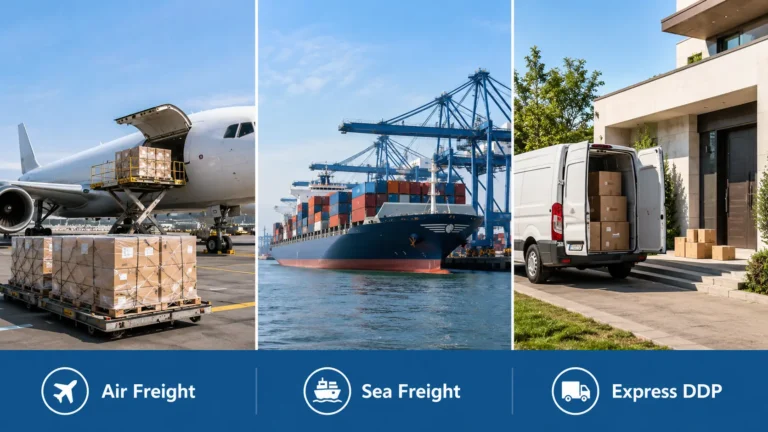
Depending on your cargo type, urgency, and budget, your goods can be shipped via:
Air shipping: Suitable for smaller, higher-value, or time-sensitive goods
Sea freight shipping: Suitable for bulk cargo through LCL or FCL shipping
Express shipping services: Suitable for samples and smaller urgent shipments
The freight cost and estimated transit time vary according to the selected method, cargo weight or volume, route, and current capacity.
After arrival, the appointed clearance partner prepares the import declaration using the commercial invoice, packing list, transport document, HS code, and other required information. Duty and VAT handling follows the confirmed DDP arrangement, while regulated products may require additional permits, certificates, or customs review.
Once customs release is completed, the shipment is transferred to local delivery and sent to the confirmed business, warehouse, or other approved address. The destination postcode should be provided before quotation because inland transport and remote-area delivery can affect both cost and delivery time.
A well-defined DDP quotation should identify the transport method, customs scope, duty and tax arrangement, destination address, and any charges that require separate confirmation.
The right DDP shipping method depends on the shipment size, delivery priority, cargo restrictions, and final destination in South Africa. The table below provides a quick comparison of the available options.
Shipping Method | Typical Use | Estimated Door-to-Door Time | Charging Basis |
|---|---|---|---|
Air Freight DDP | Urgent or medium-sized commercial cargo | 10–15 days | Actual or volumetric weight |
Sea Freight DDP | Heavy, bulky, or higher-volume cargo | 35–50 days for LCL | CBM, weight, or container type |
Express Shipping | Samples, documents, and small parcels | Confirm by courier route | Chargeable weight |
Air cargo normally enters South Africa through a major gateway such as OR Tambo International Airport in Johannesburg before customs clearance and local delivery. Batteries, magnets, liquids, powders, branded goods, and other sensitive items must be checked before booking because they may affect airline acceptance and route availability.
Sea freight can be arranged as LCL for smaller volumes or FCL for full 20ft, 40ft, or 40HQ containers. Shipments generally arrive through Durban or Cape Town before customs clearance and inland delivery. LCL cargo involves consolidation and additional warehouse handling, while a full container load (FCL) provides dedicated container space.
Express shipping is mainly used when the cargo is small enough for courier delivery. It offers simpler handling for samples and urgent parcels, but volumetric weight and product restrictions can make it unsuitable for larger commercial shipments.
Transit times are estimates and may be affected by flight or vessel schedules, customs clearance, cargo inspection, port congestion, and the final delivery postcode.
The cost of DDP shipping from China to South Africa depends on the cargo details, shipping method, product classification, customs requirements, and final delivery address. A proper DDP quotation should cover the agreed transport and customs scope from supplier pickup in China to delivery at the confirmed address in South Africa.
The final price is not calculated from the international freight rate alone. Import duty, VAT, customs handling, destination delivery, cargo type, and any special requirements can all affect the total landed cost.
Depending on the confirmed service terms, a DDP shipping quotation may include:
Pickup from the supplier or warehouse in China
Export handling and customs declaration
International transportation by air, sea, or express
Import customs clearance coordination in South Africa
Duty and VAT handling under the agreed arrangement
Destination handling and final delivery to the confirmed postcode
Some charges may still require separate confirmation. These can include cargo insurance, customs inspection, storage, demurrage, remote-area delivery, special permits, repacking, wooden cases, palletizing, or handling for sensitive and oversized goods.
Shipping Method
Air freight is calculated by chargeable weight and is generally used when delivery time is more important.
Sea freight LCL is usually based on cargo volume or chargeable weight, while FCL pricing depends on the selected container type.
Express delivery is mainly suitable for samples and small urgent parcels.
Weight and Volume
Air and express charges are based on actual or volumetric weight, whichever is higher.
The total CBM and gross weight help determine whether air freight, sea freight LCL, or a full container is more practical.
Product Type and Customs Requirements
The HS code, declared value, and product description affect import duty, VAT, customs clearance, and documentation requirements.
Batteries, magnets, liquids, powders, branded goods, chemicals, and regulated products may require additional confirmation or special handling.
Pickup and Delivery Location
The supplier’s location in China affects pickup and origin transport costs.
The final city and postcode in South Africa affect inland delivery charges, especially for remote or limited-service areas.
Packaging and Current Market Conditions
Wooden cases, pallets, fragile packaging, repacking, oversized cargo, and overweight pieces may add handling costs.
Airline capacity, vessel schedules, fuel surcharges, port congestion, and seasonal demand can affect the final quotation.
The following ranges provide a general reference for standard cargo shipped from China to South Africa. Final pricing depends on the actual cargo details, HS code, declared value, pickup location, customs requirements, and delivery postcode.
Shipping Mode | Estimated Cost Range | Pricing Basis | Suitable Cargo |
|---|---|---|---|
DDP Air Freight | $8–$18 per kg | Actual or chargeable weight | Cargo above 45 kg, urgent or higher-value goods |
DDP Sea Freight (LCL) | $100–$180 per CBM | Cargo volume in cubic meters | Heavy, bulky, or larger-volume shipments |
DDP Express Courier | $12–$20 per kg | Chargeable weight | Urgent samples and small parcels below 20 kg |
These 2026 prices are reference ranges rather than fixed quotations. Duties, VAT, customs inspection, storage, insurance, remote-area delivery, and special cargo handling must be confirmed according to the actual shipment and agreed service scope.
To calculate the DDP shipping cost from China to South Africa, please provide:
Product name and HS code
Number of cartons or packages
Weight and dimensions of each package
Total gross weight and cargo volume
Cargo value
Supplier pickup address in China
Delivery address and postcode in South Africa
Cargo and packaging photos
Details of batteries, magnets, liquids, powders, branded goods, or other sensitive products
Expected cargo-ready date
Once the cargo information is reviewed, Tonlexing can compare the available air freight, sea freight LCL, or express options and confirm the route, estimated transit time, customs scope, delivery arrangement, and reference cost.
For an accurate quotation, contact Tonlexing with the complete cargo and delivery details.
Accurate and consistent shipping documents are essential for customs clearance in South Africa. The product description, quantity, value, weight, and consignee information should match across all documents.
The commercial invoice should include:
Product name and description
Quantity and unit price
Total declared value and currency
Seller and consignee details
Country of origin
Agreed trade terms
Avoid vague descriptions such as “parts,” “accessories,” or “samples” without further details.
The packing list should show:
Number and type of packages
Package dimensions
Total cargo volume
Marks and package numbers
The package quantity and cargo details should match the commercial invoice and the actual shipment.
A Bill of Lading is used for sea freight, while an Air Waybill is used for air freight. The shipper, consignee, package quantity, cargo description, and destination should be checked before the document is issued.
Some regulated or sensitive products may require additional documents, depending on the product type and HS code. These may include:
Certificate of Origin
Product specifications or test reports
Safety Data Sheet for applicable cargo
Battery documents
Product compliance certificates
Import permits
The exact requirements should be confirmed before shipment.
The customs clearance partner prepares the import declaration using the commercial invoice, packing list, transport document, HS code, declared value, and supporting documents.
Importers should keep copies of the final shipping and customs documents for their internal records.
DDP shipping can be arranged for a wide range of commercial goods from China to South Africa. The suitable route depends on the shipment size, packaging, delivery priority, product characteristics, and applicable import requirements.
Here are several common product categories and the main shipping considerations for each.
Phones, tablets, chargers, smart devices, electronic components, and mobile accessories are often shipped by air or express when delivery time is important. Larger commercial orders may also move by sea freight.
Best for: Air freight or express for urgent cartons
Products containing lithium batteries or magnets must be checked before booking.
Screens, components, and fragile accessories need suitable cushioning and carton protection.
Garments, fabrics, shoes, and other textile products are generally packed in cartons. Smaller orders can move by air, while wholesale shipments are commonly consolidated through LCL or shipped in full containers.
Materials, quantities, HS codes, and declared values should be stated clearly.
Branded garments or footwear require advance confirmation.
Carton marks and packing quantities should match the commercial documents.
Furniture and home products are normally bulky, so cargo dimensions and total CBM have a major effect on the shipping cost. Smaller orders may use LCL, while larger shipments can be arranged in a 20ft, 40ft, or 40HQ container.
Packing focus: Corners, glass, stone, painted surfaces, and decorative parts
Reinforced cartons, foam, pallets, or wooden cases may be needed.
Packing photos should be provided before the quotation is confirmed.
Auto parts, tools, machinery, and industrial equipment are commonly shipped by sea because individual packages may be heavy, oversized, or packed in wooden cases.
Shipping option: LCL or FCL for larger cargo; air freight for smaller urgent parts
Handling requirement: Confirm the weight of each package and whether lifting equipment is needed.
Oil, batteries, magnets, fluids, or other sensitive components must be declared in advance.
LED lighting, hand tools, small machines, and related equipment can move by air or sea freight depending on the cargo size and required delivery time.
Air freight works for urgent cartons, while LCL is more practical for larger orders.
Internal dividers and cushioning help protect lamps, fittings, and fragile components.
Batteries, branded goods, and regulated electrical products require route confirmation.
The final DDP method should be selected according to the complete cargo details rather than the product category alone. Tonlexing reviews the weight, dimensions, packaging, product properties, and South Africa delivery postcode before confirming the available route.
Under a DDP arrangement, the arrival gateway and final delivery route are selected according to the shipping method, carrier schedule, cargo details, and destination postcode. Sea freight commonly enters through Durban or Cape Town, while air and express shipments often move through Johannesburg.
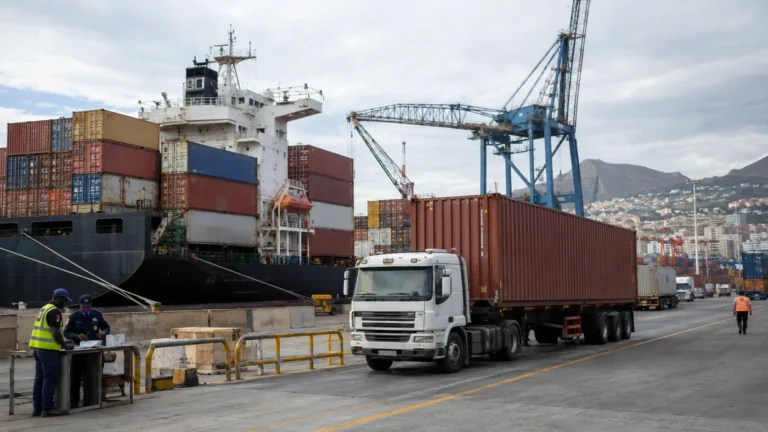
Cape Town serves importers in the Western Cape and nearby areas. The port handles both FCL and LCL sea freight, while air cargo may arrive through Cape Town International Airport when the selected service and routing are available.
Sea freight can be delivered onward to warehouses, shops, and business addresses in the Western Cape.
The final delivery cost depends on the cargo size and confirmed postcode.
Port handling or customs inspection may affect the delivery schedule.
Durban is a major entry point for containerized cargo arriving in South Africa. It is commonly used for FCL and LCL shipments before local delivery or inland transport to Johannesburg, Pretoria, and other destinations.
Suitable for container cargo, machinery, wholesale goods, and larger commercial shipments.
Inland trucking can be arranged after customs release.
Delivery time and cost depend on the final destination and local transport arrangement.
Johannesburg is an important destination for air freight, express shipments, and inland distribution. DDP air cargo commonly arrives through OR Tambo International Airport before customs clearance and local delivery in Gauteng.
Sea freight destined for Johannesburg may first arrive through Durban or Cape Town and then move inland by truck after customs release.
Commonly used for urgent air freight and express cargo.
Suitable for deliveries to warehouses, offices, and commercial addresses in Gauteng.
The delivery postcode should be confirmed before quotation.
After customs clearance, the cargo is transferred to the arranged local delivery service and sent to the confirmed warehouse, shop, office, or other approved address.
Delivery to major cities is generally easier to arrange, while remote or limited-service areas may require additional transit time or inland transport charges. The complete address and postcode should therefore be provided before the DDP quotation is confirmed.
Choosing a reliable freight forwarder or shipping agent from China to South Africa is important because DDP shipping involves export handling, international transport, customs clearance, and final delivery. A shipping company offering DDP should explain the complete service scope rather than only the freight rate.
Choose a forwarder familiar with air freight, sea freight, customs clearance, and door-to-door delivery from China to South Africa.
The forwarder should have a reliable customs clearance and delivery partner in South Africa, especially for inland destinations such as Johannesburg and Pretoria.
The quotation should state whether pickup, export handling, freight, customs clearance, duties, VAT, and final delivery are included. Inspection, storage, insurance, and remote delivery should be listed separately when applicable.
A professional forwarder should check the product name, HS code, value, packing details, and any batteries, magnets, liquids, powders, or branded goods before booking.
Updates should be provided at key stages, including pickup, departure, arrival, customs release, and final delivery.
With a trustworthy supplier and freight forwarder by your side, your business can benefit from a comprehensive shipping solution—ensuring lower risks, shorter lead times, and peace of mind.

DDP shipping can be a practical option for importers who prefer one coordinated service from supplier pickup in China to customs clearance and final delivery in South Africa. It is particularly useful when the quotation clearly states the transport method, duty and VAT arrangement, included charges, and delivery scope.
DDP is not automatically the cheapest option for every shipment. The decision should be based on the cargo size, product requirements, delivery priority, and total landed cost rather than the international freight rate alone.
Tonlexing can compare air freight, sea freight LCL or FCL, and express options according to your cargo details and South Africa delivery postcode.
Contact Tonlexing for a DDP shipping quote.
DDP shipping coordinates supplier pickup in China, export handling, international freight, customs clearance, duty and VAT handling under the agreed terms, and final delivery to the confirmed address in South Africa.
DDP air freight typically takes 10 to 15 days door-to-door, while DDP sea freight by LCL usually takes 35 to 50 days door-to-door. Express transit time should be confirmed according to the courier route and cargo type.
These are estimated times and may be affected by customs clearance, flight or vessel schedules, inspections, and the final delivery postcode.
For 2026, the general reference ranges are:
DDP air freight: $8–$18 per kg
DDP sea freight LCL: $100–$180 per CBM
DDP express courier: $12–$20 per kg
The final cost depends on the cargo weight, volume, HS code, declared value, pickup address, customs requirements, and destination postcode.
A DDP quotation may include pickup in China, export customs handling, international freight, South Africa customs clearance, duty and VAT handling, and final delivery.
Insurance, inspection, storage, special permits, remote delivery, and special cargo handling should be confirmed separately.
The main documents normally include:
Commercial invoice
Packing list
Bill of Lading or Air Waybill
HS code and declared value
Certificates or import permits when applicable
The required documents depend on the product and customs requirements.
Some sensitive products can be shipped, but the route must be checked before booking. Provide the product details, photos, battery information, brand information, and any available MSDS, UN38.3, or transport certificates so the suitable service can be confirmed.
Useful freight, customs and importing resources related to this shipping guide.
Shipping from China to South Africa – Sea, Air & DDP in 2026 Fast, reliable shipping from China to South Africa for B2B importers,industrial carg...
Read guide →
Shipping Cost from China to South Africa (2026 Guide) Verified & Reviewed · Last updated May 2026 Shipping cost from China to South Africa in 202...
Read guide →
How Long Does It Take to Ship from China to South Africa is one of the most important questions importers ask when planning logistics, managing d...
Read guide →
Sea freight is the most cost effective shipping method for large volumes and container load cargo. It is ideal for businesses looking to reduce s...
Read guide →Looking for the fastest way to ship goods from China to South Africa? Air freight is the ideal solution for urgent shipments, high-value items, a...
Learn more → Useful Resource 20ft & 40ft Container Shipping Costs from China to South Africa20ft & 40ft Container Shipping Costs from China to South Africa Verified & Reviewed · Last updated June 2026 Shipping a 20ft or 40ft container fr...
Learn more →WhatsApp us