

DDP vs CIF: Which Is Better for USA Imports?
- Verified & Reviewed · Last updated March 2026
DDP vs CIF for USA imports affects customs clearance, delivery responsibility, total landed cost, and shipment control.
This guide explains the difference between DDP and CIF for USA imports, including customs duties, risk transfer, final delivery, and which shipping term is better for new importers or experienced buyers.
DDP or CIF
Cost Comparison
Customs & Risk
- Experienced China-based logistics specialists
Table of Contents
What DDP and CIF Mean in International Trade
DDP and CIF are both shipping terms that define who arranges the main transport, who pays certain charges, when risk transfer happens, and what the seller and buyer are responsible for during the shipment.
What Is DDP
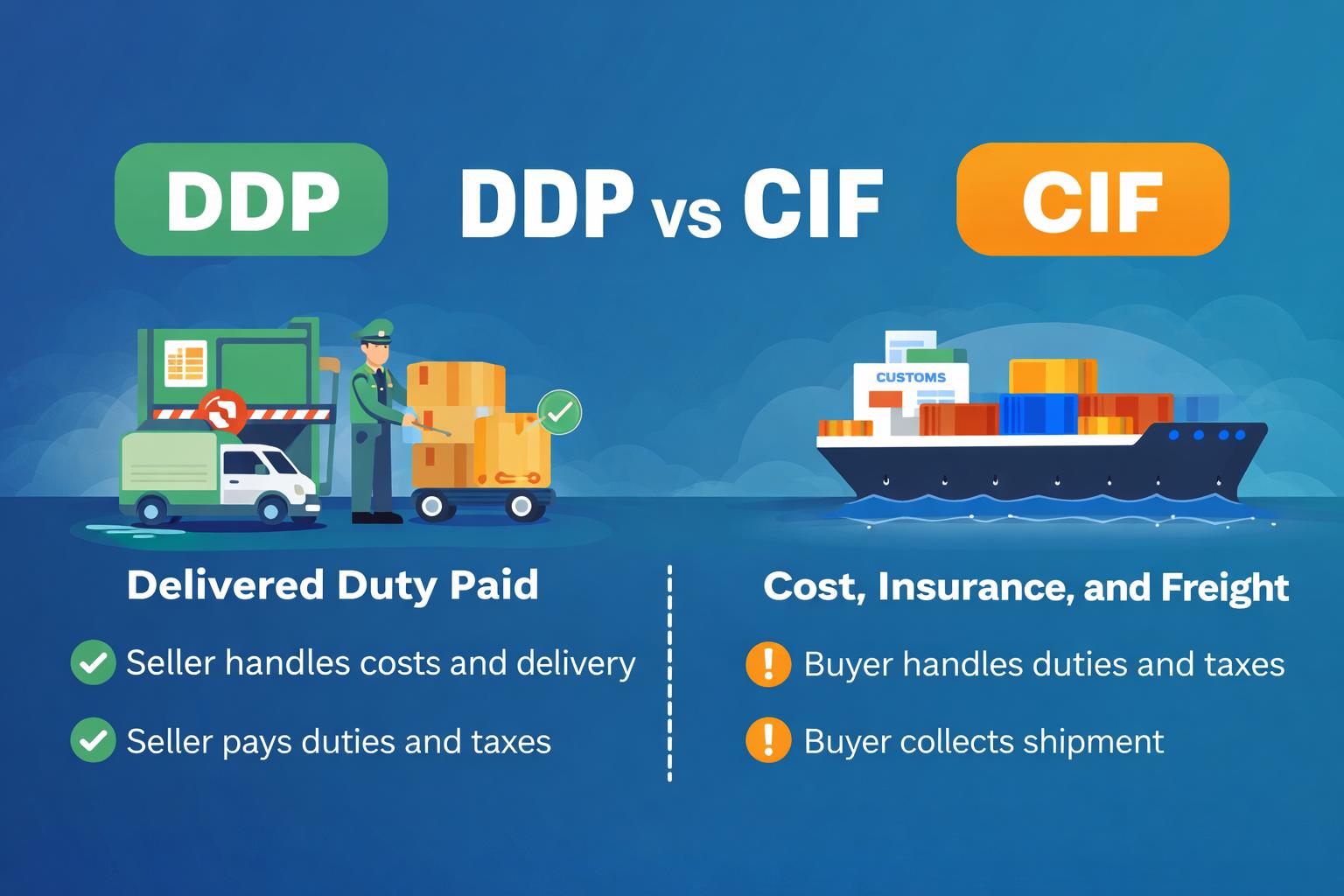
DDP, or Delivered Duty Paid, means the seller delivers goods to the named destination and takes responsibility for almost the entire shipping process.
In most cases, the seller covers costs related to:
export handling
freight
customs arrangements
import duties
final delivery
For the buyer, DDP delivered duty paid offers a simpler setup because the supplier handles most of the logistics work. That is why DDP is often linked to maximum convenience, easier import planning, and a more comprehensive solution.
What Is CIF
CIF, or Cost Insurance and Freight, means the seller pays the cost, insurance, and freight needed to move the goods by sea to the destination port.
Under CIF terms, the seller usually covers:
shipment up to the destination port
After the cargo arrives, the buyer becomes responsible for:
import customs clearance
taxes
unloading
port charges
CIF is mainly used in maritime transport and inland waterway transport, so it is not the best shipping term for every type of door-to-door arrangement.
DDP vs CIF: Main Differences and Comparison for USA Imports
For USA imports, the main difference is simple: DDP places more responsibility on the seller, while CIF shifts more responsibility to the buyer after arrival.
This affects:
customs clearance
import duties
final delivery
risk transfer
cost visibility
how much control the buyer keeps
Key Differences
Customs and Duties
Under DDP, the seller manages a larger share of the import process. Under CIF, the buyer handles import customs clearance, customs duties, taxes, and related destination charges.
Final Delivery
DDP extends closer to the final destination. CIF ends at the destination port, so the buyer must arrange delivery from port to warehouse or final address.
Risk Transfer
Under CIF, risk transfer happens earlier, usually when the cargo is loaded at origin. Under DDP, the seller remains responsible further into the delivery process.
Control
DDP reduces buyer workload. CIF gives the buyer more control over customs, inland transport, and local delivery.
Quick Comparison
| Feature | CIF | DDP |
|---|---|---|
| Customs clearance | Buyer handles | Seller or freight partner handles |
| Import duties and taxes | Buyer pays | Seller pays under the agreed delivery structure |
| Risk transfer point | Origin port when loaded | Final destination or named delivery point |
| Final delivery | Buyer arranges from port | Seller arranges delivery |
| Best for | Buyers with their own customs broker and freight setup | Buyers who want a simpler process |
Why DDP Is Often Better for USA Imports
For many USA importers, DDP is the easier option because the seller handles more of the shipping process.
DDP is often better because it offers:
less work after shipment
easier customs coordination
better cost visibility
smoother final delivery
DDP is especially suitable for:
first-time importers
small businesses
e-commerce sellers
buyers who want door-to-door delivery
For these buyers, DDP often makes the shipping process easier to manage from start to finish.
Why CIF Can Be Better for Some Importers
CIF is often better for buyers who want more control after the cargo reaches the destination port.
CIF may work better when the buyer:
already has a customs broker
works with their own freight forwarder
imports regularly
wants to manage delivery after arrival
This gives the buyer:
more control over local charges
more flexibility in delivery planning
more freedom to choose service providers
For experienced importers, that flexibility can be more valuable than the convenience offered by DDP.
Shipping Cost: Is DDP or CIF Cheaper?
At first glance, CIF usually looks cheaper because the quote often covers only the shipment to the destination port. But that does not mean the total cost is lower.
Once the cargo arrives in the United States, CIF can create extra charges such as:
customs broker fees
import duties and taxes
port charges
unloading
inland trucking
final delivery
Because of this, the final landed cost under CIF may end up higher than expected.
DDP usually looks more expensive upfront because the seller includes a larger part of the shipping process in one price. This often covers not only freight, but also import-side handling and delivery to the final destination.
So the real question is not which quote is lower at the beginning. The real question is which option gives you the better total landed cost.
DDP is often better for smaller shipments, new importers, and buyers who want clearer pricing
CIF is often better for larger or regular shipments when the buyer already has a customs broker, freight forwarder, and destination-side delivery setup
In simple terms, CIF may look cheaper first, but DDP is often easier to budget and easier to manage.
Customs, Risk, and Responsibility in DDP vs CIF
Customs and risk are two of the most important points in the DDP vs CIF comparison because they directly affect shipment control, delivery timing, and total landed cost.
Customs Responsibility
With DDP, the import process is usually easier for the buyer because the seller arranges more of the customs side through a freight forwarder or customs partner. This reduces the amount of work the buyer needs to handle after the cargo reaches the United States.
With CIF, the buyer takes over after arrival at the destination port. That means the buyer usually handles import customs clearance, customs duties, and destination-side coordination. For experienced importers, this offers more control. For less experienced buyers, it can create more pressure during the import process.
Risk Transfer
Another key difference is the point where risk transfers from seller to buyer. Under CIF, risk usually passes earlier, when the cargo is loaded onto the vessel at origin. Even though the seller pays for the main ocean freight and basic insurance, the buyer takes the transport risk sooner.
Under DDP, the seller remains responsible for a much larger part of the shipment. Because the seller’s responsibility extends closer to the final destination, the buyer usually faces less operational risk during the main shipping process.
Responsibility After Arrival
For many USA importers, the real challenge begins after the goods arrive. Customs release, port charges, local handling, and final delivery can all create delays or extra costs if the process is not managed well.
This is why DDP is often the easier option for buyers who want a simpler import experience, while CIF is usually better for importers who already have the resources and experience to manage the shipment after arrival.

Which Option Fits Different Types of Importers
The better shipping term depends on the buyer’s experience, shipment volume, and internal logistics setup.
DDP is usually better for:
first-time importers
small and medium businesses
e-commerce sellers
buyers who want a simple door-to-door process
CIF is usually better for:
experienced importers
buyers with their own freight forwarder
companies with a customs broker in place
regular ocean freight importers
In short, DDP is usually better for convenience, while CIF is usually better for buyers who want more control.
When to Choose DDP and When to Choose CIF
Choosing the right shipping term depends on your internal capability, not just the supplier quote.
Choose DDP If
you are new to importing
you want the seller to handle most of the shipping process
you do not want to manage customs directly
you want final delivery included
you prefer more predictable costs
you want fewer hidden costs
Choose CIF If
you already work with a customs broker
you have your own freight forwarder
you want more control over the shipment
you understand USA import procedures
you are comfortable managing port charges and delivery
you import regularly by ocean freight
Which Is Better for USA Imports?
For most importers, DDP is the better choice for USA imports because it offers a simpler shipping process, fewer destination-side problems, and better cost visibility.
It is especially suitable for:
small businesses
first-time importers
buyers who do not want to manage customs clearance on their own
companies that want smoother final delivery
CIF can still be the better option for experienced importers who already have a customs broker, their own freight forwarder, and a clear system for handling cargo after it reaches the destination port.
In simple terms:
choose DDP if you want convenience, easier customs handling, and a smoother delivery process
choose CIF if you want more control and already know how to manage the import process after arrival
So, when asking DDP vs CIF: which is better for USA imports, the answer depends on the buyer’s experience and logistics setup. But for most buyers looking for a safer and easier importing option, DDP is usually the better fit.
Frequently Asked Questions
For many businesses, yes. DDP is often better because the seller handles more of the shipping process, including customs-related arrangements and final delivery.
Not always. CIF may look cheaper at first, but extra charges such as import duties, taxes, port charges, unloading, and local delivery can make the final cost higher.
Under DDP, the seller usually covers costs related to import duties as part of the delivery arrangement. Under CIF, the buyer usually pays import duties and handles import clearance.
CIF gives the buyer more control because the buyer takes responsibility after the goods reach the destination port and can manage customs clearance, inland transport, and final delivery.
Yes. CIF is mainly used for maritime transport and inland waterway transport, rather than broader multimodal door delivery structures.
Related Shipping Terms & Import Guides
Need Help Choosing Between DDP and CIF?
Compare total landed cost
Review customs and delivery responsibility
Choose the right shipping term for your cargo
Get tailored shipping options, clear pricing, and expert support for USA imports from China.