Related Guide
Italy
Shipping from China to Italy – Sea, Air & DDP in 2026 Reliable shipping from China to Italy for importers, distributors, and e-commerce sellers,c...
Read guide →

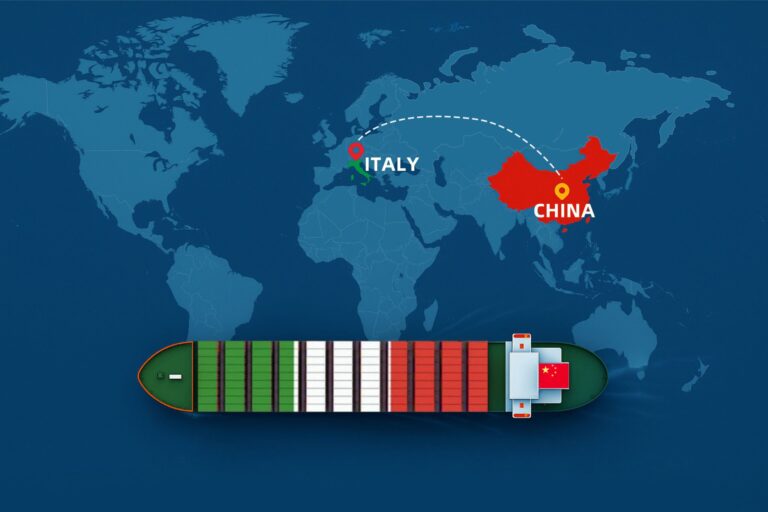
Door to door shipping from China to Italy provides a complete logistics solution from cargo pickup at a supplier, factory, or warehouse in China to final delivery at the consignee’s address in Italy. Depending on the shipment size, delivery deadline, cargo type, and budget, goods can move by sea freight, air freight, rail freight, or express shipping.
Tonlexing can coordinate door-to-door shipping from China to Italy, including pickup in China, international transportation, Italian customs support, and final delivery across Italy. DDP and DAP shipping options can also be arranged according to the shipment requirements and service terms.
Shipping Methods
Cost & Transit Time
DDP & Customs
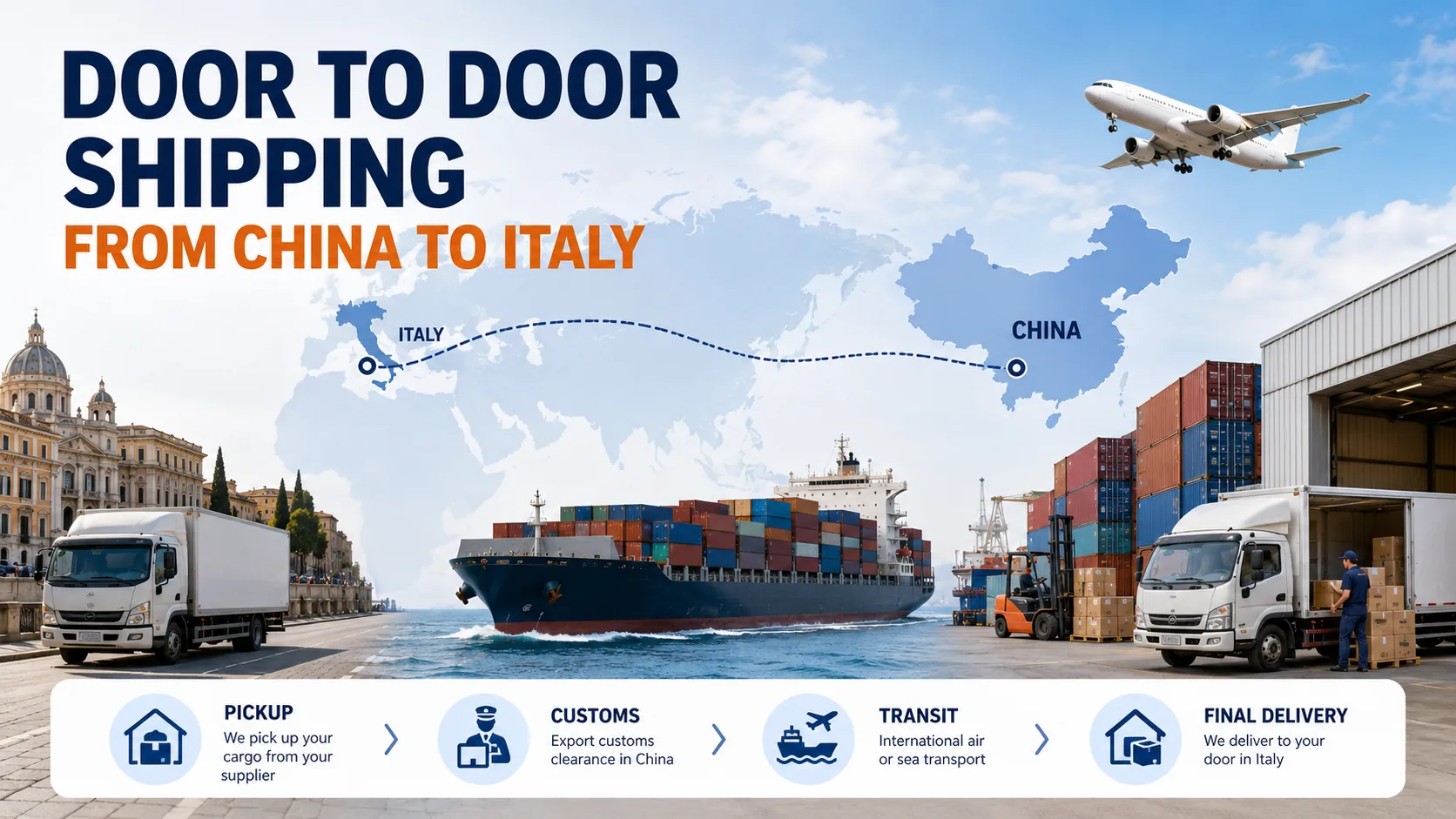
Door-to-door shipping means that one freight forwarder coordinates shipping from China to Italy, from the cargo origin through to the final delivery address. The service combines the main transport stages into one logistics arrangement, reducing the need for the importer to coordinate several independent providers.
The exact scope depends on the quotation and Incoterm. A door-to-door service may cover origin pickup, international freight, customs coordination, and final delivery, but it does not automatically mean that import duties and VAT are included.
This is why door-to-door and DDP should not be treated as the same term. Door-to-door describes the transportation scope, while DDP, DAP, and other Incoterms define how costs and responsibilities are allocated between the parties.
Door-to-door shipments from China to Italy can be arranged by sea freight, air freight, rail freight, or express shipping. Each method differs in cargo capacity, transit time, handling requirements, and cost structure.
| Shipping Method | Best For | Typical Door-to-Door Transit Time | Relative Cost |
|---|---|---|---|
| Express Shipping | Samples and small urgent shipments | 3–7 days | Highest |
| Air Freight | Time-sensitive commercial cargo | 5–8 days | High |
| Rail Freight | Medium-sized shipments | 18–24 days | Medium |
| Sea Freight | LCL, FCL, heavy and bulk cargo | 30–40 days | Lowest |
Door-to-door shipments from China to Italy can be arranged by sea freight, air freight, rail freight, or express shipping. Each method differs in cargo capacity, transit time, handling requirements, and cost structure.
Sea shipping from China to Italy is a cost-effective option for machinery, furniture, building materials, industrial products, and other large or heavy shipments.
Importers can choose between less-than-container load (LCL) and full container load (FCL) shipping. LCL allows several shipments to share container space and is suitable for smaller shipments, while a full container load provides dedicated container space for larger volumes.
LCL requires consolidation before departure and deconsolidation after arrival, so it normally involves more handling than FCL.
Air freight is commonly used for electronics, spare parts, technical products, high-value goods, seasonal cargo, and time-sensitive shipments.
Air freight charges are based on chargeable weight. Carriers compare the actual gross weight with volumetric weight and charge according to whichever is higher.
This means bulky but lightweight cartons can cost significantly more than their actual weight suggests, making accurate package dimensions important when requesting a quote.
Rail freight connects China with the European logistics network and can provide a cost-effective solution for commercial cargo that does not require air transport.
Shipments normally travel through the China-Europe rail network before continuing through European rail or trucking connections.
Rail services can handle consolidated cargo as well as larger commercial shipments, although availability depends on the cargo origin, product type, rail schedule, and current routing.
Express shipping is mainly used for documents, samples, replacement parts, and smaller commercial parcels.
Courier networks manage the shipment through an integrated delivery system, making express service relatively simple for small cargo.
Like air freight, express shipping is generally charged according to the higher of actual weight or volumetric weight. As cargo becomes larger or bulkier, the cost per shipment can increase quickly.
Shipping costs for door-to-door shipping from China to Italy depend on shipment size, transport method, pickup location, import requirements, and the final delivery address.
A useful way to estimate the overall price is:
Total Door-to-Door Cost = Origin Charges in China + International Freight + Import Charges in Italy + Final Delivery
The following figures are general freight references for China-to-Italy shipping. They are not fixed all-inclusive DDP rates because pickup, customs clearance, duties, VAT, and final delivery may be charged separately depending on the service.
| Shipping Method | 2026 Reference Rate | Pricing Basis |
|---|---|---|
| LCL Sea Freight | Around USD 40/CBM | Cargo volume |
| 20GP Sea Freight | USD 3,420–4,180/container | Full container |
| Air Freight | Around USD 4.10/kg | Chargeable weight |
| Rail Freight 20GP | USD 4,356–5,324/container | Full container |
| Express Shipping | Around USD 7.37/kg | Chargeable weight |
Shipping rates change with carrier capacity, seasonal demand, fuel costs, routing, and cargo type, so these figures should be used as reference points rather than fixed quotations.
Depending on the agreed service terms, a door-to-door quotation may include:
Pickup from the supplier in China
Export handling and documentation
Cargo consolidation where required
International freight
Destination handling
Customs clearance
Import duties and VAT where applicable
Final delivery in Italy
Comparing the complete service scope helps buyers identify hidden fees and understand the actual logistics costs before booking. For this reason, importers should compare the total door-to-door cost, not only the headline freight rate.
To calculate a reliable door-to-door rate from China to Italy, provide:
Product name and HS Code if available
Number of cartons, pallets, or crates
Dimensions and gross weight
Total CBM
Pickup location in China
Delivery postcode in Italy
Cargo ready date
Preferred shipping method
Required terms such as DDP or DAP
Complete cargo information helps the freight forwarder calculate more accurate shipping rates and identify possible destination or handling charges before booking.
Door-to-door transit time from China to Italy can range from about 3 days to around 40 days, depending on the transport method and the time required for origin handling, Italian import procedures, and final delivery.
3–7 days
Fastest Option
5–8 days
Time-Sensitive Cargo
18–24 days
Balanced Speed & Cost
30–40 days
LCL & FCL Shipping
It is important to distinguish main freight transit time from total door-to-door delivery time. A carrier may quote only the time between two ports, airports, or rail terminals, while a complete door-to-door shipment also includes pickup from the supplier, export handling, consolidation where required, Italian customs procedures, and inland delivery.
Several factors can extend the actual delivery time:
Cargo ready date and pickup location in China
LCL consolidation or warehouse handling
Vessel, flight, or rail departure schedules
Peak-season capacity and holidays
Customs inspection or additional document requests
Final delivery location in Italy
Sea freight usually has the greatest difference between port-to-port and door-to-door timing, particularly for LCL shipments that require consolidation before departure and deconsolidation after arrival.
For urgent cargo, the importer should therefore confirm whether a quoted transit time refers to international transportation only or the complete door-to-door service. This provides a more realistic arrival estimate and makes it easier to compare different shipping options.
Although the exact procedure varies by shipping method, most door-to-door shipments follow the same six stages.
The importer provides the product name, package quantity, dimensions, gross weight, pickup location, delivery postcode, cargo ready date, and preferred service terms. These details are used to compare suitable shipping options and prepare the quotation.

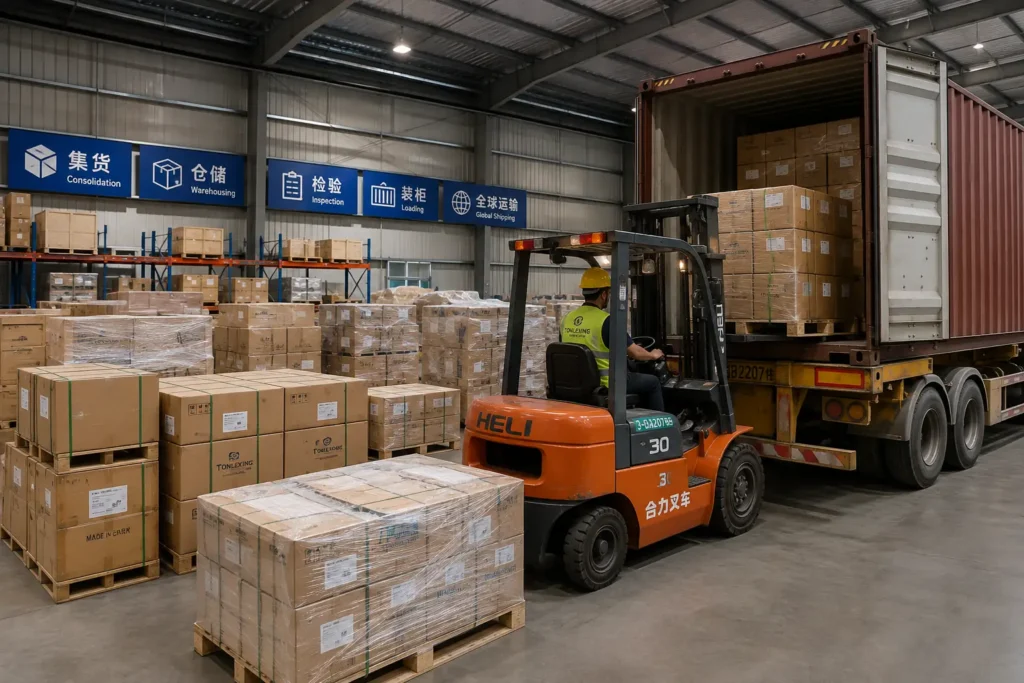
Once the shipment is booked, cargo is collected from the supplier, factory, or warehouse. If several suppliers are involved, separate pickups can be arranged and the goods can be consolidated before export.

The cargo is prepared for international transportation. This may include warehouse handling, consolidation, export documentation, labeling, and other shipment-specific preparation.

The cargo moves by sea, air, rail, or express according to the selected route and service. The transport plan is based on shipment size, cargo characteristics, schedule, cost, and required delivery time.

After arrival, the shipment completes the required Italian customs procedures. Customs documents and product information should be accurate and consistent to reduce the risk of clearance delays.

After customs release, the shipment continues to the agreed address in Italy. Sea, air, and rail cargo normally completes the last stage by local truck, while smaller express shipments continue through the courier network.

DDP, or Delivered Duty Paid, is a shipping term used when the seller takes on a broader range of transport and import responsibilities up to the agreed destination.
For a China-to-Italy shipment, a DDP service can combine origin handling, international freight, import clearance arrangements, duty and tax handling according to the agreed setup, and final delivery. The exact scope should be stated clearly in the quotation.
DDP is different from a standard door-to-door service. Door-to-door describes the physical movement of cargo from origin to destination, while DDP defines responsibility for costs and import formalities.
Before accepting a DDP quote, confirm how the following are handled:
Customs clearance
Import duties
VAT
Destination handling charges
Final delivery
Possible additional local charges
The quote should also identify the delivery address, cargo basis, service limits, and any conditions that may create extra charges. A clear scope makes it easier to compare DDP with DAP or another door delivery arrangement on a like-for-like basis.
DDP can be convenient for buyers who want a more integrated service, but it should not be selected only because it appears simpler. The importer should understand who is involved in the customs process and what commercial documents or product information must still be provided.
Commercial goods shipped from China to Italy must complete import customs clearance before they can be released for final delivery. Accurate product information and consistent documentation are essential, as incorrect classifications, declared values, or invoice details can lead to additional checks and delays.
For door-to-door shipments, import clearance may be coordinated by the freight forwarder or local customs agent according to the agreed service terms. The importer should still ensure that all product and commercial information provided for declaration is accurate.
Most commercial shipments require several basic documents:
Commercial invoice showing the buyer, seller, product description, quantity, value, and transaction details
Packing list showing package quantity, dimensions, gross weight, and packing information
Transport document, such as a bill of lading or air waybill
HS or TARIC code for customs classification
EORI number where required
Additional certificates or permits for regulated goods
Information on the commercial invoice, packing list, transport documents, and physical cargo should be consistent.
Goods imported into Italy are classified using HS and EU TARIC codes. The classification can determine the applicable customs duty, import restrictions, product-specific requirements, and possible trade measures.
Importers should use a code that accurately reflects the product rather than selecting a classification based only on the apparent duty rate.
Businesses involved in customs activities within the European Union commonly require an EORI number.
The importer should confirm the correct registration and customs requirements before the shipment arrives in Italy, especially when importing commercially for the first time or using a new customs arrangement.
Customs duties vary according to the product’s HS or TARIC classification, country of origin, customs value, and applicable EU tariff rules.
As a broad reference, duties on imports from China may range from 0% to 17%, but the actual rate must be checked for the specific product.
Italy’s standard VAT rate is 22%. The actual tax treatment can vary depending on the goods and transaction.
For DDP shipments, the quotation should clearly state how customs duties, VAT, and clearance charges are handled rather than assuming that every destination charge is automatically included.
Most avoidable customs delays are caused by incomplete, inconsistent, or inaccurate shipment information.
Before cargo leaves China, check that:
Product descriptions are clear and specific
HS or TARIC classifications are appropriate
Invoice values match the commercial transaction
Packing list details match the actual shipment
Required certificates or permits are prepared for regulated products
Preparing customs information before departure makes it easier to identify missing documents early and reduces the risk of additional delays after the goods arrive in Italy.
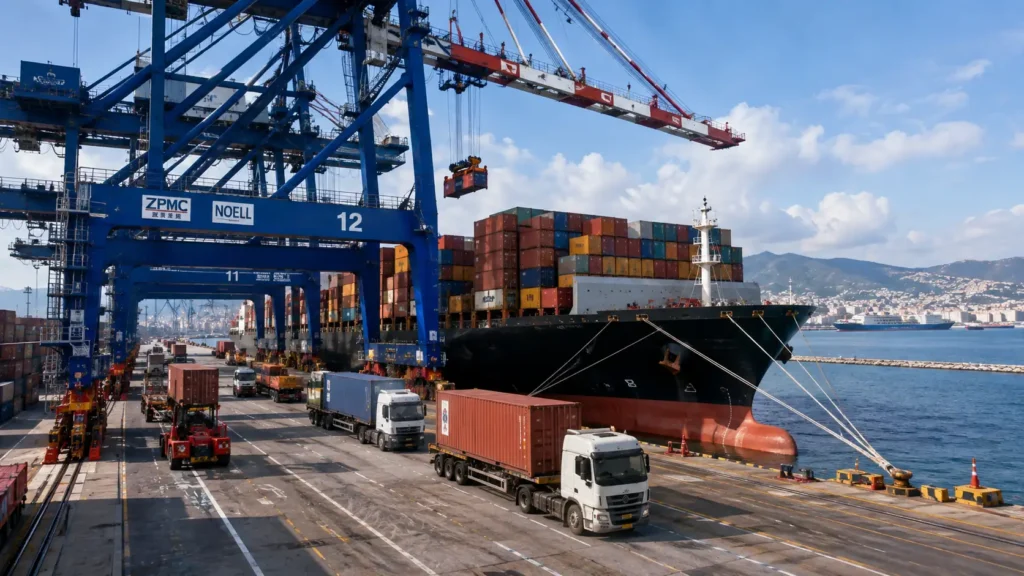
Door-to-door shipping routes from China to Italy are planned according to the cargo origin, transport mode, carrier schedule, and final delivery postcode. For a complete door delivery service, the route should be evaluated from the supplier location in China to the consignee’s address in Italy rather than only from port to port or airport to airport.
Shipments can be collected from manufacturing regions across China and moved to the most suitable export gateway.
Common departure areas include:
Shenzhen and Guangzhou for cargo from Southern China
Shanghai and Ningbo for Eastern China
Qingdao and other northern gateways for cargo from Northern China
Inland cities connected to major ports, airports, or rail terminals
When goods are purchased from several suppliers, they can also be consolidated at one warehouse before international transport. This can simplify the origin plan and reduce duplicated local handling.
The arrival gateway depends on the selected shipping route and final destination.
For air freight, major entry points include Milan Malpensa Airport and Rome Fiumicino Airport. Milan is particularly important for shipments destined for Northern Italy and nearby industrial areas.
Sea freight can arrive through major Italian ports or other suitable European gateways depending on carrier service and routing. Rail cargo normally enters the wider European rail network before continuing toward Italy by rail or truck.
After the required import procedures are completed, cargo continues to the final delivery address by local truck or courier network.
Door delivery can be arranged to major commercial and industrial areas including:
Milan
Turin
Bologna
Florence
Rome
Naples
The final postcode has a direct impact on local delivery cost and timing. Distance from the arrival gateway, cargo size, pallet quantity, appointment requirements, and special handling can all affect the last stage of transportation.
For this reason, the most practical route is not always the one with the lowest international freight rate. A suitable door-to-door route should balance the international leg with customs handling and inland delivery in Italy.
Lower shipping costs usually come from better planning rather than choosing the cheapest advertised rate.
Useful ways to control logistics costs include:
Consolidate multiple suppliers. Combining smaller orders can reduce duplicated pickup and international freight costs.
Optimize packaging. Smaller cartons can reduce volumetric weight for air and express shipments.
Book earlier. More lead time makes it easier to use sea or rail instead of urgent air or express shipping.
Compare total cost. A low base freight rate may be offset by destination handling, customs, or final delivery charges.
Provide accurate cargo data. Correct dimensions, weight, pickup location, and delivery postcode reduce quotation changes and unexpected charges.
The most cost-effective solution is the one that meets the required delivery date without adding unnecessary transport or handling costs.
Door-to-door shipping involves coordination between origin pickup, export handling, international transportation, customs procedures, and local delivery. A freight forwarder can manage these stages through one point of contact and compare different shipping solutions based on the actual cargo.
Tonlexing can arrange sea freight, air freight, rail freight, express shipping, cargo consolidation, customs support, and final delivery from China to Italy.
For an accurate quotation, provide:
Product name and HS Code if available
Number of cartons, pallets, or crates
Package dimensions and gross weight
Total CBM
Pickup location in China
Delivery postcode in Italy
Cargo ready date
Preferred shipping method
Required terms such as DDP or DAP
For buyers working with several suppliers, the forwarder can also coordinate separate pickups and consolidation before export. This can reduce the number of international shipments, simplify document control, and make it easier to plan one final delivery in Italy.
When requesting a quote, it is useful to state the priority clearly: lowest total cost, fastest delivery, a specific arrival deadline, or a more inclusive DDP service. That allows the transport plan to be built around the actual shipping need rather than selecting a method by habit.
Sea freight is generally the lowest-cost option for large or heavy commercial shipments. LCL is suitable for smaller volumes, while FCL can become more competitive as shipment size increases. Compare the total door-to-door cost rather than the ocean freight rate alone.
Typical planning ranges are around 3–7 days by express, 5–8 days by air freight, 18–24 days by rail, and 30–40 days by sea freight. Actual delivery time depends on pickup, carrier schedules, customs clearance, and final delivery.
The price depends on cargo weight and volume, shipping method, pickup location, cargo type, customs requirements, and delivery postcode. A complete quote may include origin charges, international freight, destination handling, customs clearance, and final delivery.
DDP can be arranged for suitable shipments depending on the cargo, customs requirements, and service conditions. The quotation should clearly explain how duties, VAT, customs clearance, destination charges, and final delivery are handled.
Businesses carrying out customs activities in the European Union commonly require an EORI number. The exact requirement depends on the importer and customs arrangement, so it should be confirmed before the shipment arrives.
Useful freight, customs and importing resources related to this shipping guide.
Shipping from China to Italy – Sea, Air & DDP in 2026 Reliable shipping from China to Italy for importers, distributors, and e-commerce sellers,c...
Read guide →
Shipping Cost from China to Italy (2026 Guide) Verified & Reviewed · Last updated April 2026 Shipping cost from China to Italy in 2026 typically...
Read guide →
Sea Freight from China to Italy: Cost, Transit Time, Ports & Customs Guide Verified & Reviewed · Last updated June 2026 Sea freight from China to...
Read guide →
How Long Does It Take to Ship from China to Italy is a question many importers ask when planning their supply chain. Shipping from China to Italy...
Read guide →DDP shipping from China to Italy is the most efficient solution for importers seeking all-inclusive logistics with no customs hassle or hidden fe...
Learn more → Useful Resource 20ft & 40ft Container Shipping Costs from China to Italy20ft 40ft Container Shipping Costs from China to Italy Verified & Reviewed · Last updated June 2026 Shipping containers from China to Italy is on...
Learn more →WhatsApp us