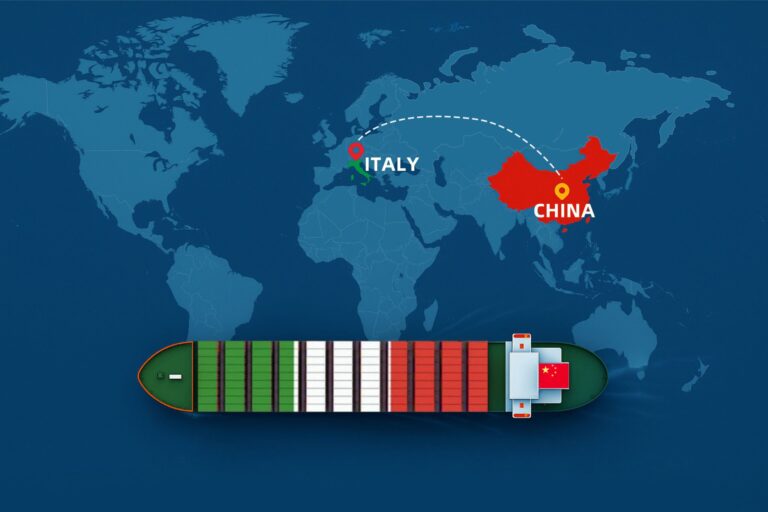


20ft 40ft Container Shipping Costs from China to Italy
- Verified & Reviewed · Last updated June 2026
Shipping containers from China to Italy is one of the most common solutions for importers moving furniture, machinery, electronics, building materials, textiles, auto parts, retail goods, and commercial cargo. For most large shipments, sea freight is still the most cost effective way to ship a container because it offers strong capacity, stable container transport, and lower average price levels than air freight.
This guide explains the main shipping costs, average price ranges, container shipping rates, shipping process, customs clearance documents, and practical ways to reduce the total cost when shipping from China to Italy.
Container shipping costs
Transit time range
Customs clearance
- Experienced China-based logistics specialists
10,000+ international shipments handled Global sea, air & DDP shipping solutions 24/7 shipment tracking & customer support
Table of Contents
20ft vs 40ft Container Shipping Cost from China to Italy
The cost to ship a container from China to Italy depends mainly on the container size, cargo volume, shipping route, and market conditions. In most cases, a 20ft container is preferred for heavy cargo, while a 40ft or 40HQ container is more suitable for larger shipments that require additional space.
20ft Container Shipping Cost from China to Italy
A 20ft container from China to Italy usually costs $2,550 to $4,250 by sea freight. This container type provides approximately 33 CBM of cargo space and is commonly used for heavy products that do not require a large amount of volume.
Typical cargo shipped in a 20ft container includes:
Machinery and equipment
Ceramic tiles and stone products
Hardware and tools
Metal products
Industrial materials
A 20ft container is often the most cost effective option when cargo is heavy but compact. It offers lower overall shipping costs and better weight utilization than a larger container.
40ft and 40HQ Container Shipping Cost from China to Italy
A 40ft container from China to Italy usually costs $3,050 to $5,550, while a 40HQ container typically costs $3,250 to $5,950. These container types provide approximately 67–76 CBM of cargo space, making them ideal for larger shipments.
Common cargo shipped in 40ft and 40HQ containers includes:
Furniture
Textiles and garments
Household goods
Electronics
Retail and e-commerce products
Although the freight rate is higher than a 20ft container, the cost per cubic meter is usually lower. For importers shipping large cargo volumes, a 40ft container often provides better value and more efficient loading.
Difference Between 20ft, 40ft, and 40HQ Containers
The right container size depends on cargo weight, cargo volume, and shipping requirements. Heavy cargo generally fits better in a 20ft container, while bulky cargo is usually better suited for a 40ft or 40HQ container.
| Container Type | Average Price Range | Best For | Cargo Capacity | Estimated Transit Time |
|---|---|---|---|---|
| 20ft Container | $2,550–$4,250 | Heavy goods, machinery, tiles, tools, metal products | 33 CBM | 30–45 days |
| 40ft Container | $3,050–$5,550 | Furniture, electronics, textiles, retail goods | 67 CBM | 30–45 days |
| 40HQ Container | $3,250–$5,950 | Bulky cargo, lightweight goods, high-volume shipments | 76 CBM | 30–45 days |
For machinery, metal products, and industrial cargo, a 20ft container is usually the best option. For furniture, textiles, and retail products, a 40ft container offers better value. When maximum loading space is required, a 40HQ container is often the most economical choice for high-volume shipments.
What Is Included in Container Shipping Costs?
Container shipping costs can vary depending on the shipping method, destination port, and service scope. Some quotations only include ocean freight, while others may include customs clearance, local handling, and inland delivery.
For this reason, importers should always confirm what is included before booking a shipment.
A standard container shipping quote may include:
- Ocean freight from China to Italy
- Export customs declaration in China
- Origin terminal handling charges
- Container loading and documentation fees
- Basic carrier charges
Additional charges may include:
- Customs clearance in Italy
- Customs duties and VAT
- Destination port handling charges
- Inland transportation to the final address
- Cargo insurance
- Storage, inspection, or special handling fees
When comparing container shipping costs, it is important to look beyond the freight rate alone. A lower ocean freight quote may not include destination charges or customs-related costs, which can significantly affect the total shipping cost.
Main Shipping Route from China to Italy
China and Italy are connected by regular container shipping services through major ports on the Asia–Europe trade route. Most shipments depart from coastal ports in China and arrive at key container ports in Italy before being transported to their final destinations.
Major Chinese Ports
Most container shipping services from China to Italy depart from the following ports:
Xiamen Port
Tianjin Port
These ports handle large volumes of export cargo and offer frequent sailings to Europe throughout the year.
Major Italian Ports
Italy has several major ports that receive container cargo from China. The most commonly used ports include:
Genoa
La Spezia
Trieste
Naples
Venice
Livorno
Genoa and La Spezia are among the busiest container ports in Italy and are often used for shipments destined for northern and central Italy. Trieste is a popular gateway for northeastern Italy and nearby European markets.
Common Shipping Routes
The most frequently used shipping routes between China and Italy include:
Shanghai to Genoa
Ningbo to Genoa
Shenzhen to Genoa
Shanghai to La Spezia
Ningbo to La Spezia
Qingdao to Trieste
Guangzhou to Naples
Sea freight from China to Italy typically takes 30 to 45 days, depending on the shipping carrier, route, weather conditions, and port congestion. Direct services usually offer shorter transit times, while transshipment services may take longer but sometimes provide lower shipping costs.
FCL and LCL Shipping Options
When shipping from China to Italy, importers can choose between FCL (Full Container Load) and LCL (Less than Container Load). The right option depends on cargo volume, shipping costs, and delivery requirements.
FCL means you use the entire container for your shipment. LCL means your cargo shares container space with other shipments. For large shipments, FCL is usually more cost effective and offers faster handling. For smaller shipments, LCL can help reduce upfront shipping costs.
FCL Shipping
FCL shipping is ideal when your cargo can fill most or all of a container. The goods remain in the same container throughout the journey, reducing handling and transit risks.
Benefits of FCL shipping include:
Better cargo protection
Faster loading and unloading
Lower cost per unit for large shipments
Suitable for commercial cargo and bulk goods
LCL Shipping
LCL shipping allows multiple shippers to share one container. It is a practical option for smaller shipments that do not require a full container.
Benefits of LCL shipping include:
Lower initial shipping costs
Flexible for small cargo volumes
No need to book an entire container
FCL vs LCL Comparison
| Item | FCL (Full Container Load) | LCL (Less than Container Load) |
|---|---|---|
| What it means | One shipper uses an entire container | Multiple shippers share the same container |
| How you pay | Pay per container load | Pay for container space, usually by CBM |
| Transit time | Usually faster and more stable | Usually slower due to consolidation steps |
| Handling risk | Lower, less multiple handling | Higher, more handling in warehouses |
| Best for | Larger shipments, higher control | Smaller shipments, flexible volume |
In general, FCL is recommended for larger shipments, while LCL is a suitable solution for businesses shipping smaller cargo volumes from China to Italy.
Factors That Affect the Cost to Ship a Container
The cost to ship a container from China to Italy is not fixed. It changes based on the container size, shipping route, cargo details, and market demand.
Main factors include:
Container type: 20ft, 40ft, and 40HQ containers have different prices and loading capacity.
Cargo volume and weight: Heavy or bulky cargo may affect the final shipping costs.
Shipping route: Different origin ports and destination ports can lead to different container shipping rates.
Peak seasons: Freight rates may rise by 10–20% when shipping demand is high.
Fuel prices: Higher fuel prices can increase carrier surcharges.
Customs clearance: Customs duties, VAT, inspection, and destination charges may add to the total cost.
Understanding these factors helps importers compare quotes more clearly and choose a more cost effective shipping solution.
Customs Clearance and Import Documents in Italy
All goods shipped from China to Italy must complete customs clearance before they can be released for delivery. Importers are responsible for submitting the required shipping documents and paying any applicable customs duties and VAT. Preparing accurate documents in advance can help avoid customs delays, inspections, and unexpected charges.
Customs Clearance Process in Italy
After the shipment arrives at the destination port, Italian Customs reviews the import declaration and supporting documents. Once customs duties and VAT are paid, the cargo can be released for inland transportation or final delivery.
The customs clearance process usually includes:
Import declaration
Document verification
Customs inspection if required
Duty and VAT assessment
Cargo release and delivery
Most container shipments are cleared within a few working days when all documents are complete and accurate.
Required Import Documents
The following shipping documents are commonly required for customs clearance in Italy:
Bill of Lading
Commercial Invoice
Certificate of Origin (if required)
EORI Number
Product certificates or licenses (if required)
The Commercial Invoice should include product descriptions, quantities, values, and buyer information. The Packing List should show package details, dimensions, and cargo weight. Providing accurate customs clearance documents helps ensure a smooth import process and reduces the risk of delays or additional customs fees.
Door-to-Door Container Shipping from China to Italy
Door-to-door container shipping is a complete shipping solution that can cover pickup in China, export customs, sea freight, destination port handling, customs clearance in Italy, and delivery to the final address. It is useful for importers who want one shipping company or freight forwarder to manage the full shipping process.
This service usually costs more than port-to-port sea freight, but it gives the cargo owner a clearer total cost and reduces coordination work. It is especially helpful for importers without their own customs broker, trucking provider, or local logistics partner in Italy.
A door-to-door container shipping service may include:
Supplier pickup in China
Export customs declaration
Origin port handling
Sea shipping from China to Italy
Destination port handling
Customs clearance in Italy
Customs duties and VAT if arranged under DDP
Inland transportation to warehouse or business address
Door-to-door service can also help reduce hidden costs because the freight forwarder provides a more complete quotation instead of only showing the base sea freight rate.
How to Reduce Shipping Costs from China to Italy
Reducing shipping costs requires planning before the cargo is ready. Importers can often save money by choosing the right container type, booking before peak seasons, preparing accurate documents, and selecting the most suitable destination port.
The cheapest quote is not always the best option. A quotation with missing destination charges may become more expensive after the shipment arrives in Italy.
Practical ways to reduce the cost to ship include:
Choose the right container type
Use a 20ft container for heavy cargo and a 40ft or 40HQ container for larger cargo volume.Book before peak seasons
Early booking helps secure better space and lower container shipping rates.Select the right destination port
A port closer to the final address can reduce inland transportation costs.Prepare accurate customs documents
Complete customs clearance documents help avoid delays and extra charges.Compare total cost, not only sea freight
Check whether port handling, customs clearance, destination charges, and trucking are included.Consolidate shipments when possible
Combining orders into one full container load can reduce the average price per unit.
Working with experienced freight forwarders can also help importers compare shipping lines, avoid unnecessary fees, and find cost effective solutions for different cargo types.
How to Choose a Freight Forwarder for China to Italy Shipping
A freight forwarder plays an important role in container shipping, customs clearance, shipping documents, cargo insurance, and inland delivery. For international shipping needs, choosing a reliable logistics partner can help reduce risk and improve delivery reliability.
Good freight forwarders should understand the logistics industry, Italian import regulations, shipping carrier schedules, container specifications, and destination country requirements. They should also provide transparent pricing and reliable services from booking to delivery.
When comparing freight forwarders, check whether they can provide:
Updated container shipping rates
FCL and LCL shipping options
Sea freight and air freight services
Customs clearance support in Italy
Clear quotation with destination charges
Cargo tracking during the shipping process
Cargo insurance options
Experience with hazardous materials if needed
Door-to-door container shipping service
A reliable logistics partner should not only offer a low price. They should also help you reduce delays, avoid hidden charges, protect your cargo, and choose the most suitable shipping method.
Frequently Asked Questions
How much does it cost to ship a container from China to Italy?
The average price to ship a container from China to Italy is usually $2,550 to $4,250 for a 20ft container and $3,050 to $5,550 for a 40ft container. The final cost to ship depends on container type, shipping route, cargo volume, destination port, fuel prices, peak seasons, and customs clearance.
How long does sea freight from China to Italy take?
Sea freight from China to Italy usually takes 30 to 45 days port to port. Transit time depends on the shipping route, origin port, destination port, shipping lines, and port congestion.
Is FCL or LCL better for shipping from China to Italy?
FCL is better for large shipments or when you need an entire container. LCL is better for smaller cargo that does not fill one container load. For larger cargo volume, full container load is usually more cost effective and has fewer handling risks.
What documents are needed for customs clearance in Italy?
Common customs clearance documents include a Bill of Lading, commercial invoice, packing list, HS code, Certificate of Origin if required, importer EORI number, and product certificates when applicable. Accurate shipping documents help prevent customs delays and extra charges.
Why do container shipping rates change so often?
Container shipping rates change because of market conditions, fuel prices, shipping carrier capacity, container availability, peak seasons, port congestion, and route demand. Rates can fluctuate weekly, so importers should confirm pricing before booking.
Related Logistics Guides
Useful freight, customs and importing resources related to this shipping guide.
Related Guide
Shipping Cost from China to Italy
Shipping Cost from China to Italy (2026 Guide) Verified & Reviewed · Last updated April 2026 Shipping cost from China to Italy in 2026 typically...
Read guide →
Related Guide
How Long Does It Take to Ship from China to Italy?
How Long Does It Take to Ship from China to Italy is a question many importers ask when planning their supply chain. Shipping from China to Italy...
Read guide →
Related Guide
Sea Freight from China to Italy
Sea Freight from China to Italy: Cost, Transit Time, Ports & Customs Guide Verified & Reviewed · Last updated June 2026 Sea freight from China to...
Read guide →
Useful Resource
Air Freight from China to Italy
If you’re looking for the fastest and most secure way to ship goods from China to Italy, air freight is your ideal solution. With increasing trad...
Learn more → Useful Resource DDP Shipping from China to ItalyDDP shipping from China to Italy is the most efficient solution for importers seeking all-inclusive logistics with no customs hassle or hidden fe...
Learn more →