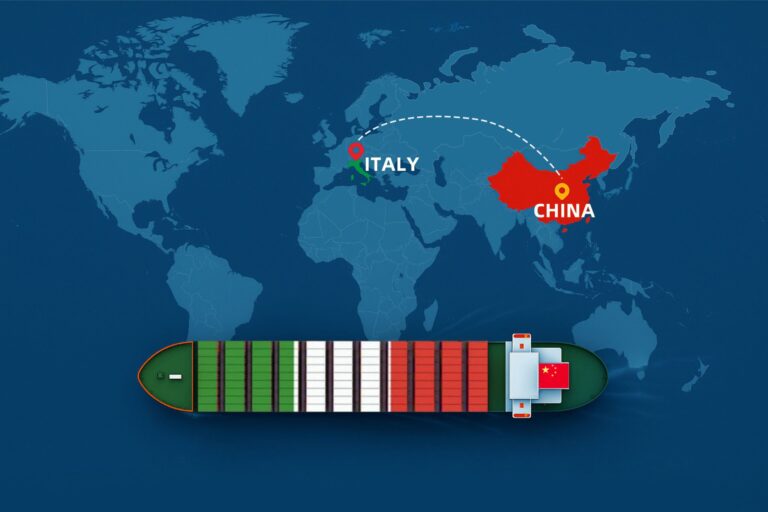
Related Guide
Italy
Shipping from China to Italy – Sea, Air & DDP in 2026 Reliable shipping from China to Italy for importers, distributors, and e-commerce sellers,c...
Read guide →

Sea freight from China to Italy is one of the most cost-effective shipping methods for importers moving commercial goods, wholesale products, machinery, furniture, building materials, auto parts, textiles, and e-commerce cargo between Asia and Europe.
This guide explains China to Italy sea freight costs, container shipping rates, transit time, major Chinese ports, key Italian ports, customs clearance, VAT, import duties, door-to-door shipping, DDP service, and how to choose the right freight forwarder for your shipment.
Sea freight costs
Transit time range
Door to door & DDP
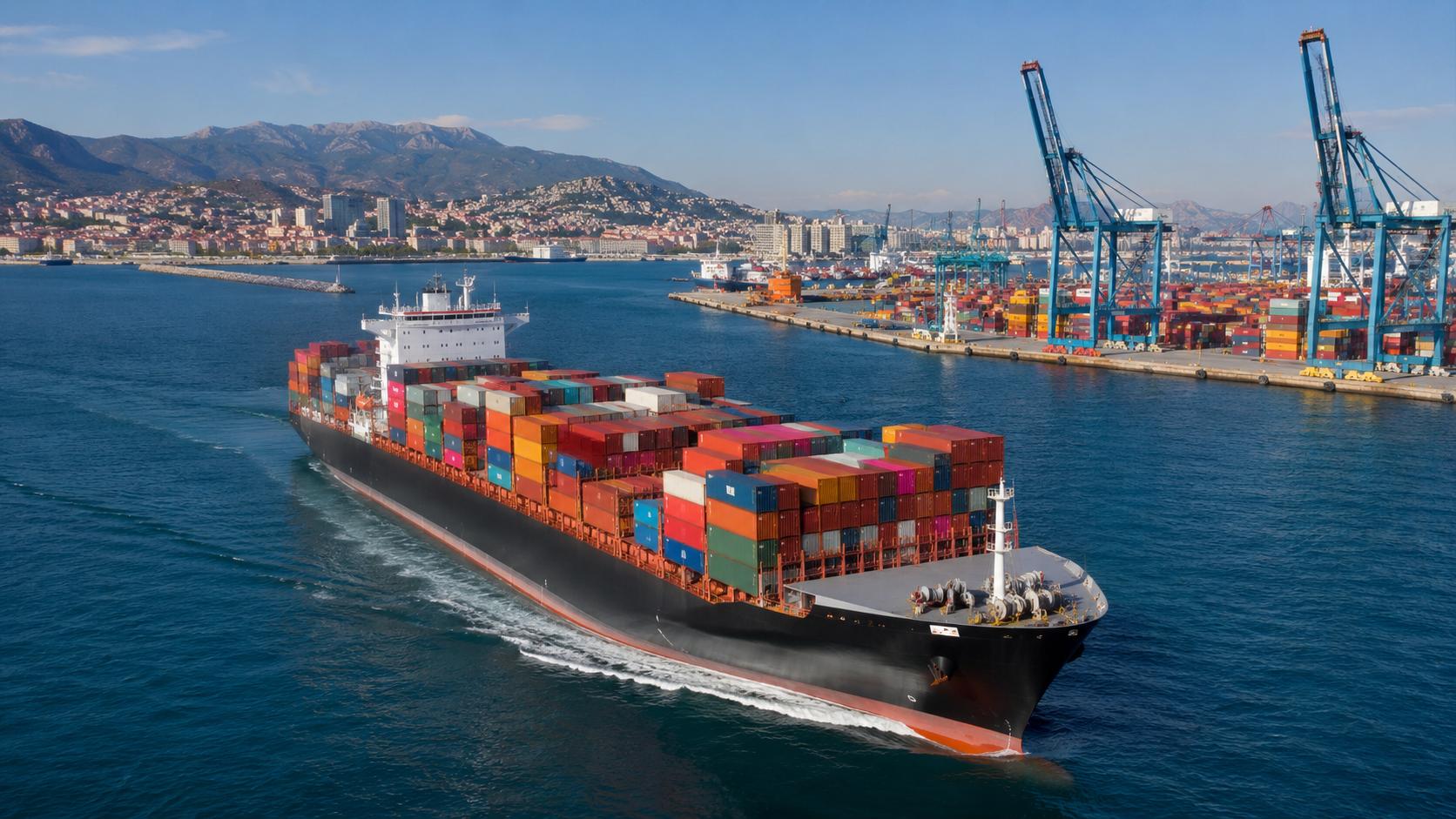
Sea freight is the process of transporting goods by ocean vessel from China to Italy. It is commonly used when importers need a cost effective solution for medium or large shipments that do not require urgent delivery. For many businesses, shipping from China by sea is the best balance between shipping costs, cargo safety, and reliable shipping schedules.
Sea freight is suitable for a wide range of China to Italy shipments, including furniture, hardware, machinery, tiles, lighting, electronics, packaging materials, home goods, industrial parts, and wholesale products. It is especially useful when cargo volume is high or when air freight would be too expensive.
Most importers choose one of the following shipping modes:
Full Container Load: Best for larger cargo that can use a dedicated 20ft, 40ft, or 40HQ container.
Less than Container Load: Best for smaller shipments that share container space with other importers.
Door to door shipping: Covers pickup in China, ocean freight, customs clearance, and final delivery in Italy.
DDP shipping: Simplifies customs processes by including duties, taxes, and delivery under one service.
Port to port shipping: Suitable for experienced importers with their own customs broker and local delivery partner.
For many businesses, sea freight is the cheapest shipping method from China to Italy when delivery time is flexible.
Shipping costs from China to Italy depend on shipping method, cargo volume, container load, departure port, arrival port, season, carrier capacity, fuel surcharge, and destination charges. Ocean freight rates also fluctuate during peak season, before Chinese holidays, and when vessel space becomes tight.
| Shipping Mode | Estimated Cost | Typical Transit Time |
|---|---|---|
| Sea Freight 20ft Container | $2,025–$2,475 | 25–34 days |
| Sea Freight 40HQ Container | $3,015–$3,685 | 25–34 days |
| LCL Shipping | Around $40 per CBM | 26–38 days |
These prices are reference ranges only. The final China to Italy cost should be calculated according to real shipment details, including cargo weight, CBM, pickup address, destination city, product category, customs duties, VAT, and final delivery requirements.
A freight forwarder usually needs the following details to provide an accurate quote:
Product name and HS code
Total cargo volume and weight
Number of cartons, pallets, or containers
Supplier address in China
Destination address in Italy
Preferred shipping method
Required delivery time
Incoterms such as EXW, FOB, CIF, DAP, or DDP
Need for customs clearance, insurance, or tracking services
The cheapest shipping option is not always the best shipping solution. A reliable freight partner should help importers compare total logistics costs, not only the ocean freight rate.
Full container load is ideal for importers shipping larger quantities from China to Italy. FCL means the container is used by one shipper only, which reduces handling, improves cargo security, and makes the shipping process easier to control.
FCL is often recommended when the shipment is over 15 CBM, although the best choice depends on cargo density, packaging, destination, and current freight rates. A 20ft container is usually better for heavy cargo, while a 40HQ container is better for bulky goods.
FCL shipping is suitable for:
Furniture and home products
Building materials and tiles
Machinery and industrial equipment
Auto parts and hardware
Large wholesale orders
Retail inventory
Project cargo
Regular supply chain shipments
For China to Italy shipping, FCL can reduce the risk of damage because goods are not repeatedly handled during consolidation and deconsolidation. It is also easier to arrange direct delivery after customs clearance in Italy.
Less than Container Load is available for smaller shipments that do not fill a full container. With LCL, cargo from different importers is consolidated into one container at the origin warehouse, shipped by sea, then separated at the destination warehouse in Italy.
LCL shipping is useful for importers who want to ship goods from China without paying for a full container. It is commonly used for trial orders, sample batches, small wholesale shipments, spare parts, and goods purchased from multiple suppliers.
LCL shipments from China to Italy usually take 26–38 days on average, but the full delivery time may be longer when warehouse handling, consolidation, deconsolidation, customs clearance, and final delivery are included. Some LCL shipments can take 30–45 days depending on route and destination.
LCL is a good choice when:
Cargo volume is small
You are testing a new supplier
You want to reduce upfront shipping costs
You are consolidating cargo from multiple factories
Delivery speed is not the top priority
You need flexible shipment planning
However, LCL requires proper packaging because cargo is handled more often than FCL cargo. Fragile, high-value, or irregular goods should be packed with stronger cartons, pallets, corner protection, and clear shipping marks.
China to Italy shipping routes connect major Chinese ports with key Italian ports across the Mediterranean. Some services are direct, while others use transshipment hubs depending on carrier schedules and route availability. Choosing the right port pair can reduce shipping costs, shorten delivery time, and ensure smoother operations.
The best route should be selected based on supplier location, container availability, shipping schedules, Italian port choice, customs clearance efficiency, and final delivery city. For northern Italy, routes into Genoa, La Spezia, and Trieste are commonly used because they provide strong inland connections to Milan, Turin, Verona, Bologna, and nearby industrial areas.
Shanghai to Genoa
Ningbo to La Spezia
Shenzhen to Genoa
Qingdao to Naples
Shanghai to Trieste
Ningbo to Venice
Shenzhen to La Spezia
Qingdao to Genoa
Shanghai is a major port for exports to Italy, especially for cargo from eastern China. Ningbo and Shenzhen serve large manufacturing regions and offer frequent vessel schedules. Qingdao, Xiamen, Tianjin, and Guangzhou Nansha are also key Chinese ports for Italy shipments.
Primary Chinese departure ports include:
Choosing a nearby port to the supplier’s location reduces inland trucking costs and improves loading efficiency.
Major Italian arrival ports include:
Genoa
La Spezia
Trieste
Naples
Venice
Livorno
Ravenna
Genoa is Italy’s largest container port and a primary gateway for imports from China. La Spezia is significant for northern and central Italy shipments. Trieste is used for northern Italy and central/eastern Europe connections. Naples serves southern Italy deliveries. Venice handles cargo for northeastern Italy.
The right Italian port should be selected based on final delivery location, port handling efficiency, customs clearance processes, and inland transportation services.
Choosing the right shipping method from China to Italy depends on several factors: cargo volume, delivery speed, product type, budget, and supply chain requirements. While sea freight is the most cost-effective option for large shipments, other modes such as air freight, rail freight, and express shipping may be preferable for urgent deliveries or smaller parcels.
Most cost-effective for heavy and large volume shipments.
Ideal for full container load (FCL) and less than container load (LCL) shipments.
Typical transit time: 25–45 days, depending on departure port, arrival port, route, and carrier schedule.
Less suitable for urgent or high-value cargo due to longer delivery times.
Faster delivery option for commercial shipments from China to Italy.
Suitable for electronics, fashion items, medical supplies, perishable goods, and urgent orders.
Typical transit time: 5–8 days from major Chinese airports to Milan Malpensa, Rome Fiumicino, or Venice Marco Polo Airport.
Costs approximately $5–$8 per kg, higher than sea freight.
Balanced solution for time-sensitive shipments that are too heavy for air freight but require faster delivery than sea freight.
Suitable for bulk shipments moving to northern Italy or central/eastern Europe.
Typical transit time: 12–24 days, depending on route and service.
Limited route flexibility compared with ocean or air freight.
Fastest delivery method for small parcels, samples, and urgent goods.
Typically door-to-door service, including pickup, customs clearance, and final delivery.
Delivery speed: 3–7 days from China to Italy.
High cost per kilogram ($8–$12/kg), not cost-effective for large shipments.
| Shipping Mode | Best For | Transit Time | Cost Consideration | Notes |
|---|---|---|---|---|
| Sea Freight | Large volume shipments, FCL/LCL | 25–45 days | Lowest per unit cost | Cost-effective, slower |
| Air Freight | Urgent or high-value cargo | 5–8 days | Higher than sea freight | Faster, limited volume |
| Rail Freight | Medium volume, time-sensitive | 12–24 days | Moderate | Good balance of speed and cost |
| Express Shipping | Samples, documents, small urgent parcels | 3–7 days | Highest cost per kg | Priority delivery, ideal for small shipments |
Key Takeaways:
Sea freight is ideal for cost-sensitive and bulk shipments.
Air freight is best for urgent, smaller, or high-value cargo.
Rail freight offers a middle ground for time and cost.
Express shipping is for fast, priority deliveries of small parcels.
Door-to-door services enhance operational efficiency and provide real-time tracking for all shipping methods.

Italian customs clearance is a critical step when shipping from China to Italy. All commercial shipments entering Italy must be declared to customs and comply with Italian customs regulations before they can be released for delivery.
Accurate documentation is essential for smooth customs clearance. Missing information, incorrect HS codes, undervalued invoices, or incomplete paperwork can result in customs delays, additional inspections, storage charges, or penalties.
Most China to Italy shipments require the following documents:
Packing list
Bill of lading or air waybill
EORI number
Certificate of origin if required
Product compliance certificates for regulated goods
Italian customs procedures require accurate commercial invoices and packing lists that clearly describe the goods, quantity, value, origin, and shipment details.
Importers may encounter customs issues when documentation is incomplete or product information is inaccurate.
Common customs challenges include:
Incorrect HS code classification
Missing or incomplete documents
Incorrect cargo value declaration
Product compliance issues
Customs inspections
Delayed VAT or duty payments
Preparing documents before shipment departure can significantly reduce the risk of customs delays.
To ensure efficient customs processing and timely delivery:
Verify HS codes before shipping
Prepare accurate commercial invoices
Ensure packing list details match the shipment
Confirm product compliance requirements
Submit customs documents early
Work with an experienced freight forwarder or customs broker
Pre-lodging declarations can help expedite customs clearance in Italy by allowing customs information to be submitted before the cargo arrives.
For businesses unfamiliar with Italian customs regulations, using a door-to-door service or DDP shipping solution can simplify the customs process and reduce administrative work.
When importing goods from China to Italy, importers must account for Value Added Tax (VAT), customs duties, and other applicable taxes. These fees are part of the total landed cost and are mandatory for all commercial shipments entering Italy.
Italy applies a Value Added Tax (VAT) of 22% on most imported goods. There is no duty-free threshold for commercial shipments, which means VAT is calculated on the total customs value of the goods plus shipping and insurance costs.
Customs duties depend on the product’s HS code, category, and origin. Rates vary from 0% to 25% for most imported goods from China. Accurate classification of products is essential to avoid underpayment or fines.
High-duty products: Some electronics, fashion items, and luxury goods may attract higher customs rates.
Low or zero-duty products: Certain industrial equipment, machinery, or raw materials may have minimal duties depending on trade agreements.
The total cost of importing goods to Italy includes multiple components:
Product value from the supplier
Ocean freight, air freight, or rail freight costs
Insurance, if purchased
Italian customs duties
VAT (22% of product + freight + duties)
Customs clearance service fees
Port handling and delivery charges
Storage or demurrage if delays occur
Ensure accurate HS codes for all products to determine correct duty rates.
Prepare complete and consistent commercial invoices and packing lists.
Consider DDP shipping to simplify customs procedures; the forwarder handles duties, VAT, and final delivery.
Pre-lodging customs declarations can help expedite clearance and avoid delays.
Work with an experienced freight forwarder or customs broker familiar with Italian regulations.
Proper planning and documentation help minimize customs delays, reduce risk of fines, and ensure timely delivery. Choosing the right shipping method combined with correct customs handling is essential for cost-effective and reliable China-to-Italy logistics.
Door-to-door shipping includes pickup, customs clearance, and delivery. It is a practical shipping solution for importers who want one freight partner to manage the full process from the supplier’s warehouse in China to the final address in Italy.
A door to door service can include:
Pickup from supplier in China
Warehouse consolidation
Export customs declaration
Ocean freight, rail freight, air freight, or express shipping
Arrival handling in Italy
Italian customs clearance
Customs duties and VAT support
Final delivery to warehouse, office, store, or fulfillment center
Real-time tracking services
Door-to-door services enhance operational efficiency for businesses because they reduce the need to coordinate multiple transportation services. This is helpful for companies that import regularly, manage multiple suppliers, or do not have their own logistics team in Italy.
DDP service simplifies customs and delivery processes by covering all duties upfront. Under delivered duty paid terms, the logistics provider can manage import duties, VAT, customs clearance, and final delivery. This can be useful for e-commerce sellers, small importers, Amazon sellers, and buyers who want simpler delivery management.
A clear shipping process helps reduce risk, avoid customs delays, and improve timely delivery. Whether you use sea freight, air freight, rail freight, or express shipping, every step should be planned before the cargo leaves China.
The normal shipping process includes:
Confirm shipment details
The importer provides product name, cargo volume, gross weight, supplier address, destination address, and required delivery time.
Choose the shipping method
The freight forwarder compares sea freight, air freight, rail freight, and express shipping based on cost, delivery speed, and cargo type.
Book shipping space
The forwarder checks vessel schedules, container availability, rail services, flight space, or express courier options.
Arrange pickup or warehouse delivery
Cargo is collected from the supplier or delivered to a consolidation warehouse in China.
Check documents and packaging
Commercial invoice, packing list, HS code, carton marks, pallets, and proper packaging are reviewed.
Complete export customs in China
The cargo is declared before loading.
Move cargo from China to Italy
Goods are shipped by ocean freight, rail freight, air freight, or express services.
Handle Italian customs clearance
Import documents are submitted, customs duties and VAT are calculated, and Italian customs releases the cargo.
Arrange final delivery
After release, goods are delivered to the final destination in Italy.
A reliable shipping provider should offer tracking services, shipment updates, customs guidance, and clear communication throughout the process.
To minimize costs, importers should plan shipping from China early instead of booking at the last minute. Freight rates can change quickly, especially during peak seasons, holidays, capacity shortages, and route disruptions.
The best way to control shipping costs is to optimize cargo volume, choose the right shipping mode, prepare documents correctly, and avoid unnecessary storage or customs delays.
Practical cost-saving tips include:
Use sea freight for large volume shipments
Choose FCL when cargo volume is over 15 CBM
Use LCL for smaller shipments
Consolidate goods from multiple Chinese suppliers
Compare different shipping routes
Select the right Italian port based on final delivery city
Avoid peak season when possible
Confirm customs duties and VAT before shipping
Prepare accurate commercial invoices and packing lists
Use proper packaging to avoid damage and rework
Work with the right freight forwarder for better routing and pricing
The cheapest shipping rate may not be the most cost effective solution if it causes slow delivery, hidden charges, poor tracking, or customs delays.
Choosing the right freight forwarder is essential for smooth China to Italy shipping. Freight forwarders should specialize in China-to-Italy shipping lanes and understand both China export procedures and Italian customs processes.
The best freight forwarder should help with more than freight rates. They should provide freight services, customs clearance support, door to door shipping, DDP options, tracking services, and practical advice based on your cargo type and delivery time.
When choosing a freight forwarder, check whether they can provide:
Sea freight from major Chinese ports to Italian ports
Air freight to Milan Malpensa Airport, Rome Fiumicino Airport, and Venice Marco Polo Airport
Rail freight and rail services for faster China to Europe delivery
Express shipping and express courier options
FCL and LCL container load solutions
Door to door service in Italy
DDP shipping when needed
Italian customs clearance support
Transparent shipping costs
Cargo insurance and tracking services
Experience with your product category
Support for northern Italy, central Italy, and southern Italy
The right freight forwarder should recommend a timely shipping solution based on cargo volume, delivery speed, budget, customs requirements, and final destination. Experienced freight forwarders can also help importers avoid customs delays, reduce logistics costs, and improve supply chain stability.
Sea freight is usually the cheapest shipping method for large volume shipments, heavy cargo, and non-urgent commercial goods. LCL is suitable for smaller shipments, while FCL is more cost effective when cargo volume is large enough for a full container.
Sea freight to Italy usually takes 25–45 days, depending on the departure port, arrival port, carrier schedule, shipping route, and customs clearance. Some services take 25–34 days, while LCL or longer routes may take 30–45 days.
Sea freight rates from China to Italy often range from $2,025 to $3,685 for common container shipments. Full container shipping may cost around $2,000 to $5,000, depending on container type, route, season, and carrier capacity.
Major Italian arrival ports include Genoa, La Spezia, Trieste, Naples, Venice, Livorno, and Ravenna. Genoa is Italy’s largest container port, while La Spezia and Trieste are also important for imports from China.
Yes. Italy applies 22% VAT on most commercial imports. Customs duties may also apply based on the product’s HS code and category. Importers should calculate customs duties, VAT, and delivery costs before shipping.
Useful freight, customs and importing resources related to this shipping guide.
Shipping from China to Italy – Sea, Air & DDP in 2026 Reliable shipping from China to Italy for importers, distributors, and e-commerce sellers,c...
Read guide →
Shipping Cost from China to Italy (2026 Guide) Verified & Reviewed · Last updated April 2026 Shipping cost from China to Italy in 2026 typically...
Read guide →
How Long Does It Take to Ship from China to Italy is a question many importers ask when planning their supply chain. Shipping from China to Italy...
Read guide →
20ft 40ft Container Shipping Costs from China to Italy Verified & Reviewed · Last updated June 2026 Shipping containers from China to Italy is on...
Read guide →If you’re looking for the fastest and most secure way to ship goods from China to Italy, air freight is your ideal solution. With increasing trad...
Learn more → Useful Resource DDP Shipping from China to ItalyDDP shipping from China to Italy is the most efficient solution for importers seeking all-inclusive logistics with no customs hassle or hidden fe...
Learn more →WhatsApp us