FCA vs EXW for Importing from China: Which Is Better?

FCA and EXW determine who handles export clearance, cargo loading, and transportation arrangements in China. FCA is generally more practical for commercial imports, while EXW gives buyers greater responsibility for origin logistics.

Compare FCA vs EXW, including shipping costs, risk transfer, export customs clearance, and the best option for air freight, LCL, and FCL shipments.

FCA vs EXW

Export Clearance

Shipping Costs

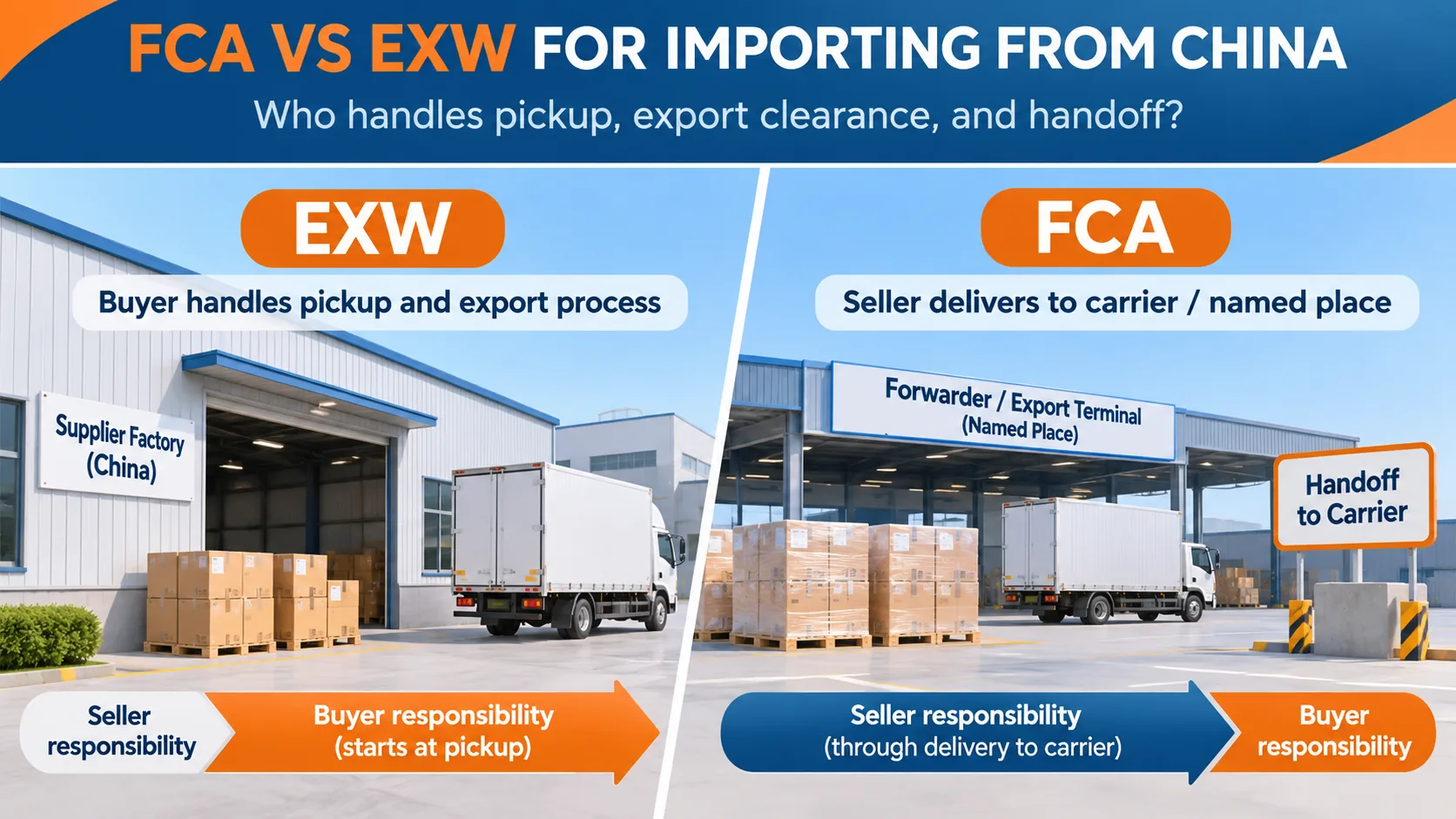
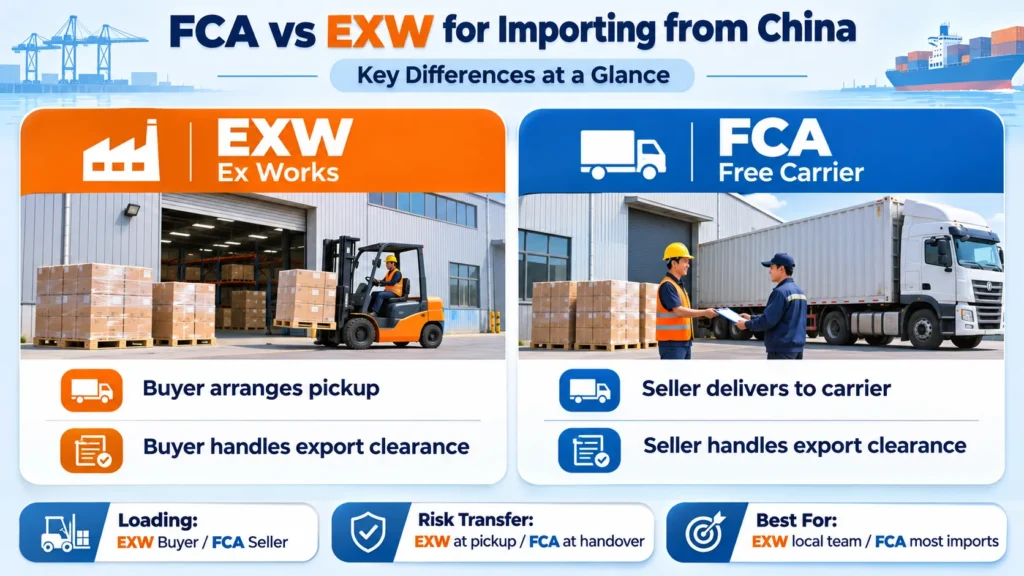
FCA vs EXW for importing from China infographic comparing export clearance, factory pickup, and cargo handover responsibilities.
10,000+ international shipments handled    Global sea, air & DDP shipping solutions    24/7 shipment tracking & customer support

Table of Contents

FCA vs EXW: Key Differences at a Glance

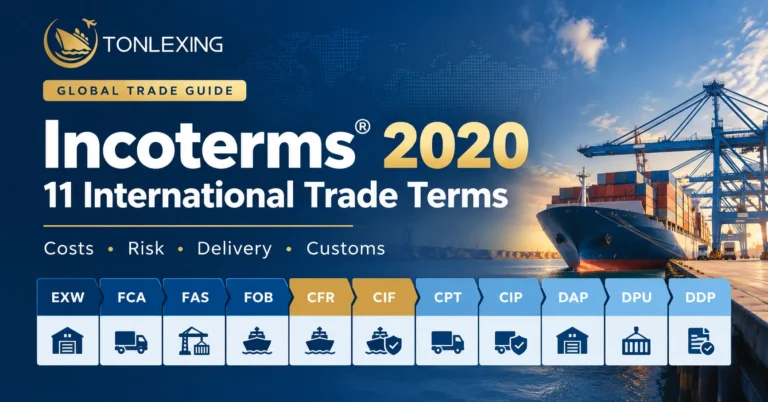
EXW and FCA are two Incoterms® 2020 rules that define the seller’s delivery obligations and the point at which risk transfers to the buyer.

The main difference is that EXW places fewer obligations on the seller, while FCA requires the seller to handle export clearance and deliver the goods to the buyer’s nominated carrier at the agreed location.

FeatureEXW (Ex Works)FCA (Free Carrier)
Seller's delivery obligationMakes goods available at the named placeDelivers goods to the nominated carrier
Export customs clearanceBuyerSeller
Loading at seller's premisesBuyerSeller
Local transportationBuyer arrangesSeller, if required to reach the named place
International freightBuyerBuyer
Risk transferWhen goods are placed at the buyer's disposalWhen delivery is completed under FCA
Import customs clearanceBuyerBuyer
Transport modesAny modeAny mode

The agreed delivery location is important. Under FCA, the seller’s loading responsibility depends on where delivery takes place. At the seller’s premises, the seller loads the goods onto the collecting vehicle. At another named place, the seller delivers the goods on its transport, ready for unloading.

Both terms generally leave international freight and destination import clearance to the buyer.

For a broader explanation of the different trade terms, see our Incoterms® 2020 guide.

FCA vs EXW comparison infographic showing factory pickup, export clearance, and seller-buyer responsibilities for China imports.

What EXW Means for China Imports

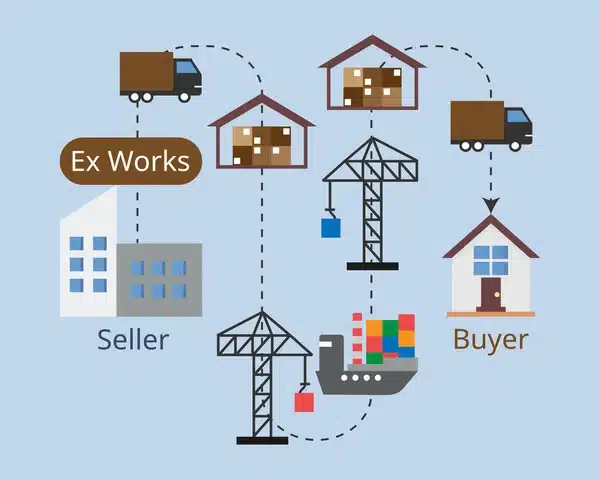
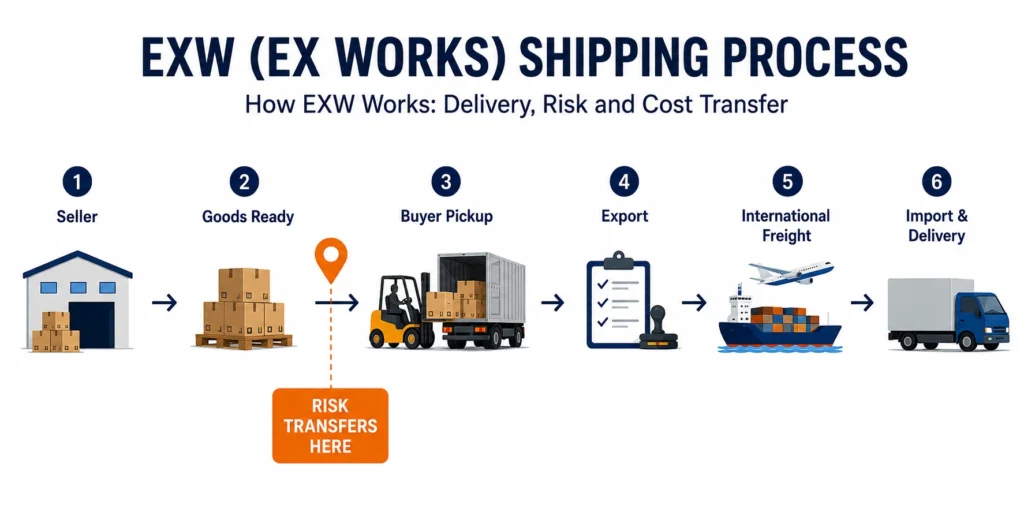
EXW, or Ex Works, places the minimum delivery obligation on the seller. The seller makes the goods available at an agreed location, usually the factory or warehouse in China.

The buyer arranges collection and manages the remaining logistics process, including loading, local transportation, export clearance, and international shipping.

EXW shipping process showing risk transfer from seller to buyer

EXW Delivery at the Seller's Premises

Under EXW, the seller must make the goods available at the named place and agreed time. The seller is not required to load the goods onto the buyer’s collecting vehicle or complete export customs clearance.

For example, if a buyer purchases machinery from a supplier in Guangzhou under EXW Guangzhou, the buyer must arrange the collection vehicle and coordinate the shipment from the factory.

The buyer may also need to arrange:

  • Factory pickup and loading

  • Local trucking to a warehouse, airport, or seaport

  • China export customs clearance

  • Customs broker or export agent services

  • International freight and destination handling

The seller must provide the goods and relevant information needed for collection. However, the buyer assumes responsibility for arranging transportation and export procedures.

Challenges of Using EXW in China

The main challenge for overseas buyers is arranging export clearance in China.

A foreign buyer may not have the necessary local registration, export arrangements, or qualified export entity to complete the export declaration independently. Depending on the transaction structure, the buyer may need assistance from a suitable Chinese export company or customs broker.

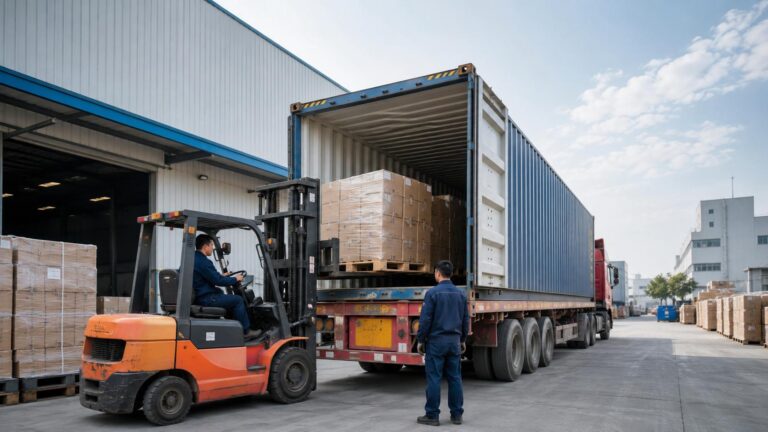
Loading is another consideration. Since EXW does not require the seller to load the cargo, the buyer should confirm whether the factory has suitable forklifts, loading equipment, and labor available.

These arrangements can make an EXW supplier quotation less attractive than it initially appears.

When EXW Makes Sense

EXW can work well when:

  • The buyer has a local purchasing or logistics team in China.

  • A trusted agent can arrange factory collection and export procedures.

  • The buyer wants direct control over origin transportation.

  • The supplier is unable or unwilling to arrange export delivery.

For a more detailed explanation, see our EXW (Ex Works) Incoterms guide.

What FCA Means for China Imports

FCA, or Free Carrier, requires the seller to complete export customs clearance and deliver the goods to a carrier or another person nominated by the buyer at the agreed delivery point.

This gives overseas buyers a clearer export arrangement while allowing them to choose their own freight forwarder and control international transportation.

FCA Incoterms infographic showing Free Carrier delivery point, seller responsibilities, buyer responsibilities, costs, risk transfer, and import duties.

FCA at the Supplier's Factory

When the named delivery point is the supplier’s factory, the seller must complete export formalities and load the goods onto the collecting vehicle arranged by the buyer.

For example, a buyer purchasing machinery from a supplier in Shenzhen may agree to:

FCA [Supplier’s Factory Address], Shenzhen, China, Incoterms® 2020

The supplier handles export clearance and factory loading. The buyer nominates the carrier and arranges the subsequent international shipment.

Risk transfers when the goods have been loaded onto the collecting vehicle at the seller’s premises.

FCA at a Freight Forwarder's Warehouse

FCA can also be arranged at a location other than the supplier’s factory.

For example, an overseas buyer sourcing products from several Chinese suppliers may nominate a freight forwarder’s warehouse in Guangzhou as the agreed delivery point.

In this arrangement:

  1. The buyer agrees on the named warehouse and nominates the receiving carrier or person.

  2. Each supplier prepares the cargo and completes its export obligations.

  3. The seller arranges transportation to the agreed delivery location.

  4. The goods are delivered to the nominated carrier or person according to FCA requirements.

  5. The buyer coordinates consolidation and international transportation.

The exact named place and handover arrangements should be stated in the sales contract. Simply delivering goods to a warehouse does not automatically establish that FCA delivery has been completed.

This option is particularly useful for buyers purchasing from multiple suppliers who want to consolidate their goods before international shipping.

Learn more about China warehousing and consolidation services.

Who Arranges International Freight Under FCA?

Under FCA, the buyer normally arranges and pays for international freight after the agreed delivery point.

For example, if a supplier delivers goods to a nominated freight forwarder’s warehouse in Shanghai, the buyer can use its preferred logistics provider to arrange air freight or ocean freight.

The buyer is generally responsible for:

  • International transportation

  • Cargo insurance, if required

  • Destination handling charges

  • Import customs clearance

  • Import duties and taxes

  • Final delivery to the receiving address

FCA does not require the seller to pay for the main international transportation or destination import clearance.

For more details, see our FCA Incoterms guide.

Who Handles China Export Clearance?

China export customs clearance is one of the most important differences between FCA and EXW.

Under FCA, the seller is responsible for export clearance. Under EXW, the buyer assumes this responsibility, although the seller may provide assistance at the buyer’s request.

Export Declaration Under EXW

When importing under EXW, the buyer must arrange the export formalities in China.

However, completing a China export declaration requires compliance with applicable customs registration and declaration requirements. An overseas buyer should not assume that it can simply submit the export documents without suitable local arrangements.

Depending on the transaction structure, the buyer may need to coordinate with:

  • An eligible Chinese export company

  • A qualified customs declaration enterprise

  • A local freight forwarder with appropriate export arrangements

Before accepting EXW terms, confirm which entity will act as the exporter, who will arrange the export declaration, and whether the supplier can provide the necessary commercial documents.

The seller may be required to assist the buyer in obtaining information needed for export clearance under EXW, but the related risk and cost remain with the buyer.

Export Clearance Under FCA

Under FCA, the seller is responsible for completing China export customs clearance before delivery to the nominated carrier.

The supplier may use its own customs broker or an authorized service provider to handle the export declaration.

The buyer should still coordinate the shipment information and ensure that the required documents are accurate, including:

  • Commercial Invoice

  • Packing List

  • Product descriptions and quantities

  • HS codes, where applicable

  • Export licenses or permits, if required

  • Consignee and transportation details

Incorrect product descriptions, inconsistent declared values, or missing permits may result in customs delays.

FCA simplifies the export responsibility for overseas buyers, but both parties must cooperate to prepare accurate documentation.

For further information, see our customs clearance process and required documents guide.

FCA vs EXW Costs: What Should You Compare?

The cost difference between FCA and EXW is mainly related to origin handling, local transportation, and export customs clearance. EXW may offer a lower supplier price, but buyers need to arrange additional services before the goods can enter international transportation.

EXW vs FCA: Origin Cost Differences

Under EXW, the buyer must budget for the origin services required to collect the cargo and prepare it for export, including:

  • Factory pickup and loading

  • Local trucking to the freight forwarder’s warehouse, airport, or seaport

  • Export customs declaration and related service fees

  • Warehouse receiving and cargo handling

Under FCA, the seller handles export clearance and delivers the goods to the agreed location. Depending on the delivery point, the seller’s quotation may also include factory loading and local transportation.

Which Option Offers Better Value?

An EXW quotation is not necessarily cheaper once all additional logistics charges are included. Similarly, an FCA quotation may have a higher unit price because the seller has more delivery obligations.

To compare both options accurately, request a breakdown of the following costs:

Cost ItemEXWFCA
Product priceSeller quotationSeller quotation
Factory loadingBuyerSeller at seller's premises
Export customs clearanceBuyerSeller
Local delivery to named pointBuyerSeller, if required
International freightBuyerBuyer
Destination chargesBuyerBuyer
Import duties and taxesBuyerBuyer

The actual charges depend on the agreed delivery location and quotation terms. For example, FCA at a supplier’s factory does not mean the seller pays for transportation to the seaport after delivery.

The best way to choose is to compare the total cost from the supplier’s factory to the destination, rather than focusing only on the EXW or FCA unit price. Ask your supplier and freight forwarder for a clear breakdown of origin charges, international freight, and destination expenses before confirming the order.

Which Is Better for Air, LCL and FCL Shipping?

The choice between FCA and EXW depends on how goods are collected, where export customs clearance takes place, and how the shipment is handed over to the freight forwarder. For most commercial shipments from China, FCA offers a clearer arrangement because the seller handles export clearance before delivering the cargo to the nominated carrier.

FCA vs EXW for Air Freight

For air freight, FCA is generally easier to coordinate when the buyer uses an independent freight forwarder. The supplier completes export clearance and delivers the goods to the agreed handover point, allowing the buyer to arrange the main air transportation.

Under EXW, the buyer must organize factory pickup, loading, export procedures, and delivery to the airport or nominated cargo facility. This can add coordination work, particularly when the buyer has no local logistics team in China.

FCA vs EXW for LCL Shipping

FCA is often a practical choice for LCL shipments because goods from different suppliers can be delivered to a nominated consolidation warehouse before being shipped together.

The buyer can appoint one freight forwarder to coordinate warehouse receiving and international transportation, while each supplier handles its own export obligations under the agreed FCA terms.

With EXW, the buyer must arrange collection and export clearance separately for each supplier, which may increase origin handling costs and coordination requirements.

FCA vs EXW for FCL Shipping

For FCL shipments, FCA is generally preferable when the buyer wants the supplier to handle export clearance and factory loading. The buyer can nominate a carrier and arrange container transportation and ocean freight.

EXW may also work when the buyer has a local agent capable of arranging container positioning, factory loading, export declaration, and port delivery.

For containerized cargo, FCA can provide a clearer handover arrangement, especially when the buyer wants to retain control of the main ocean freight and use its own freight forwarder.

Which Term Should You Choose?

Shipping ScenarioRecommended OptionMain Reason
Commercial air freightFCASeller handles export clearance
LCL shipmentsFCAEasier coordination with consolidation warehouses
FCL shipmentsFCAClearer export and factory handover responsibilities
Multiple suppliersFCAEasier to arrange delivery to a nominated warehouse
Buyer with an established China logistics teamEXW or FCADepends on cost and operational arrangements

Overall, FCA is usually the more convenient option for commercial imports from China, regardless of whether the cargo moves by air or sea. EXW is worth considering when the buyer has reliable local resources and can manage export procedures and origin transportation efficiently.

Before confirming the purchase, compare the complete origin charges under both terms rather than choosing based only on the supplier’s quoted unit price.

Risk Transfer and Contract Requirements

Risk transfer determines when the buyer becomes responsible for loss of or damage to the goods during transportation. Both parties should understand the exact handover point before signing the purchase contract.

When Does Risk Transfer Under EXW?

Under EXW, risk transfers to the buyer when the seller places the goods at the buyer’s disposal at the agreed location.

The seller does not have to load the goods onto the collecting vehicle for delivery to take place.

Therefore, if the goods are damaged during loading after delivery has occurred, the buyer generally bears the risk under EXW.

When Does Risk Transfer Under FCA?

Under FCA, the risk transfer point depends on the named delivery location:

  • Seller’s premises: Risk transfers when the seller loads the goods onto the collecting vehicle.

  • Another agreed location: Risk transfers when the goods arrive on the seller’s transport, are ready for unloading, and are placed at the disposal of the nominated carrier or person.

Neither EXW nor FCA requires the seller to arrange cargo insurance for the buyer. Buyers should consider insurance coverage from the applicable risk transfer point.

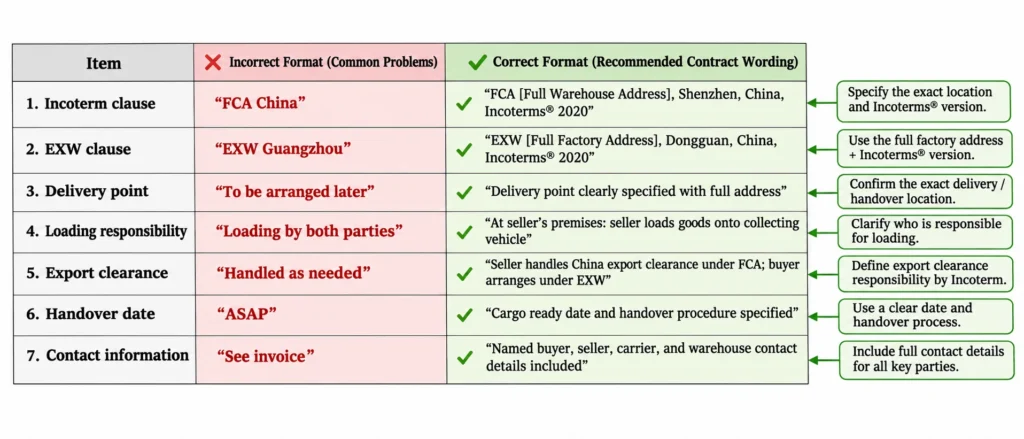
What to Include in the Purchase Contract

To avoid misunderstandings, specify the following details:

  • Exact delivery address and named place

  • Applicable Incoterms version

  • Factory loading and unloading responsibilities

  • Export customs clearance arrangements

  • Local transportation costs

  • Nominated freight forwarder or carrier

  • Cargo-ready date and handover procedure

Avoid using vague terms such as FCA China or EXW Guangzhou without identifying the actual delivery point.

For comparison with other common trade terms, see our guide to EXW vs FOB vs DDP.

FCA vs EXW purchase contract comparison showing incorrect and correct wording for delivery points, loading responsibilities, and export clearance.

Frequently Asked Questions