Related Guide
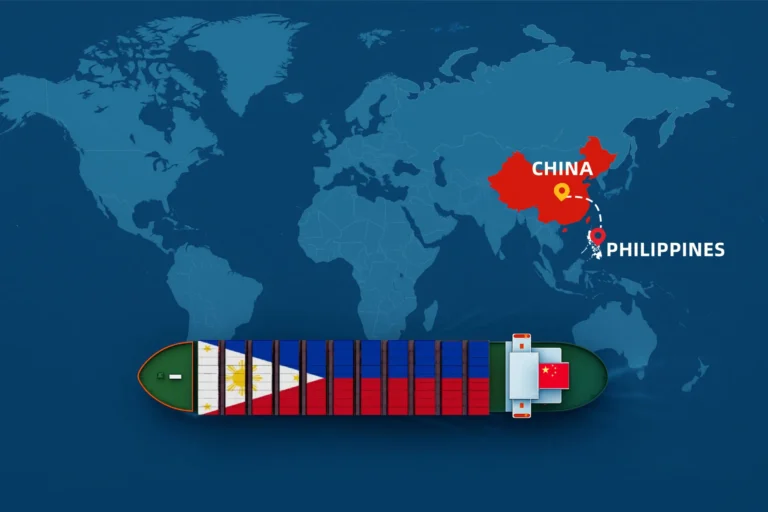
Shipping from China to the Philippines
Shipping from China to Philippines – Sea, Air & Door-to-Door in 2026 Fast, reliable shipping from China to Philippines for B2B importers,industri...
Read guide →

Choosing the right freight forwarder from China to Philippines depends on the cargo size, shipping method, transit time, and delivery requirements.
Tonlexing coordinates supplier pickup, cargo consolidation, FCL and LCL sea freight, air freight, customs support, and door-to-door delivery to Manila, Cebu, Davao, and other destinations. Send us your cargo details to receive a tailored shipping solution.
Sea / Air / Express
Cost / Transit Time
Customs / Door to Door
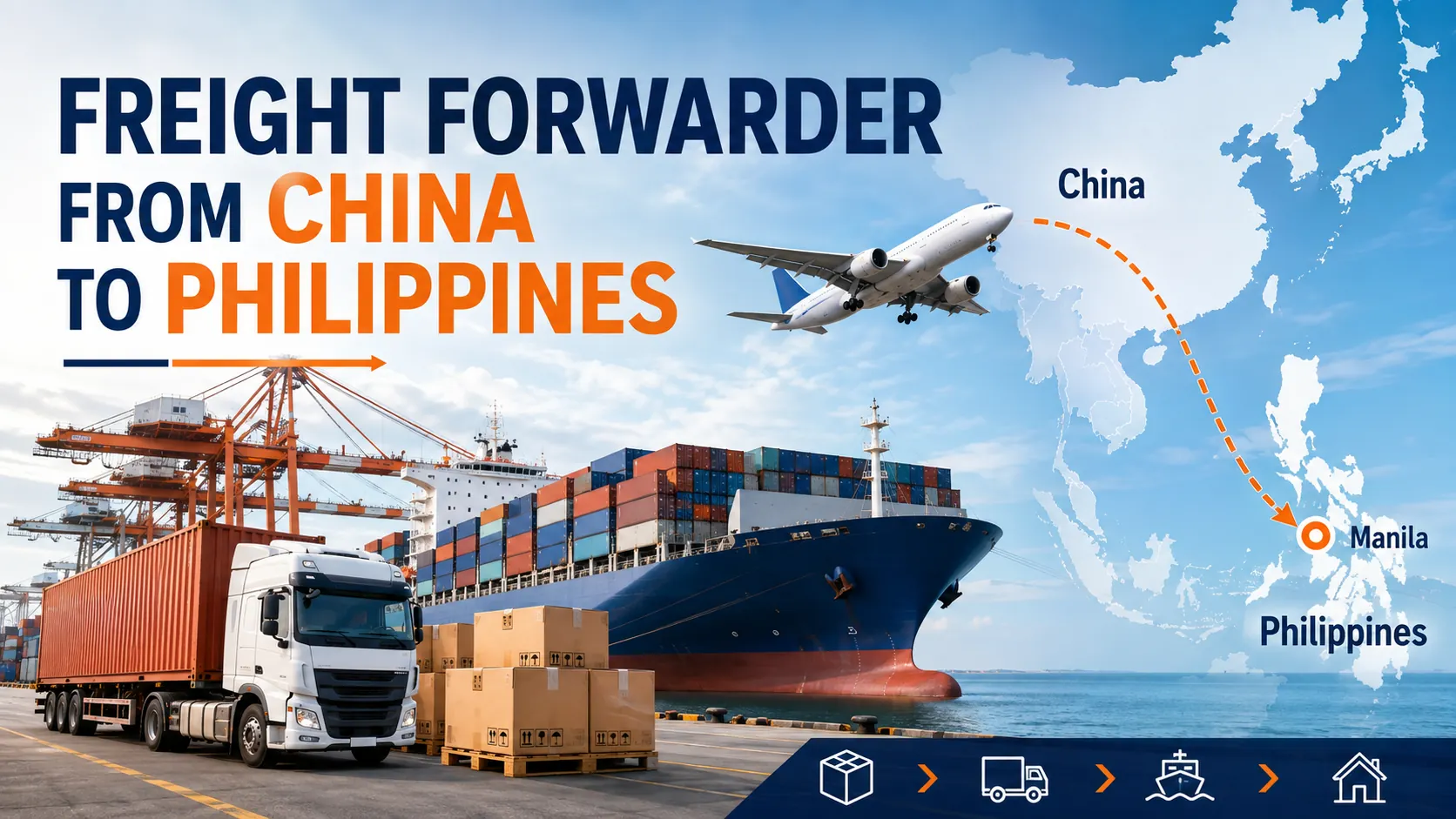
A freight forwarder coordinates the suppliers, warehouses, trucking companies, carriers, customs brokers, and destination partners involved in cargo transportation. Instead of managing each provider separately, the importer can use one logistics partner to coordinate the main shipping stages.
The exact service scope depends on the Incoterm. For an EXW shipment, the forwarder can arrange pickup from the supplier. Under FOB terms, the supplier normally delivers the cargo to the agreed Chinese port and completes export clearance. Door-to-door service can extend the arrangement to destination handling, customs clearance support, and final delivery.
The correct shipping service should be selected after reviewing the cargo weight, volume, packaging, value, destination, delivery deadline, and customs requirements.
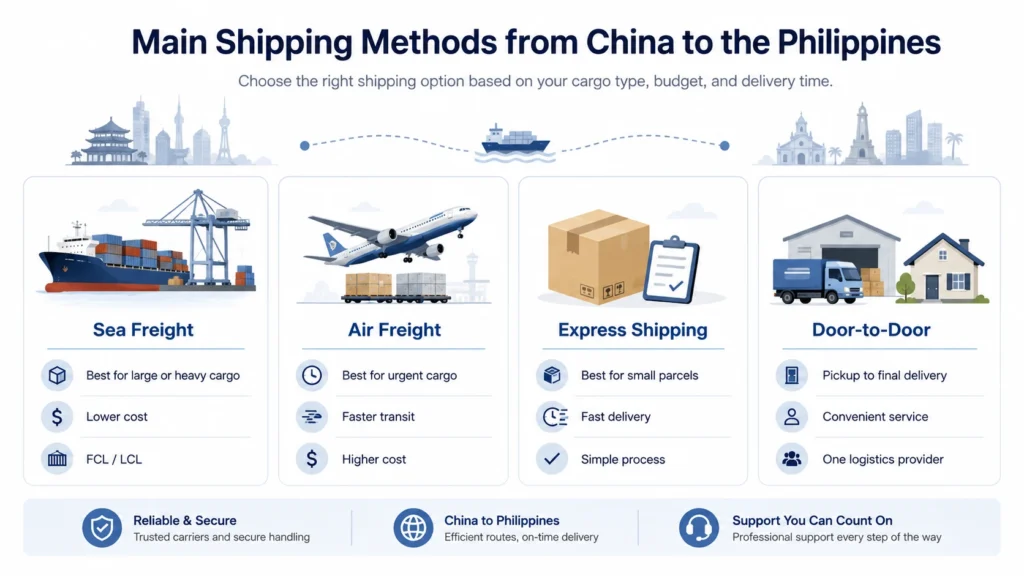
Full Container Load shipping gives one importer the use of an entire container. It is commonly selected for machinery, furniture, building materials, industrial equipment, wholesale goods, and regular high-volume shipments.
Common container options include:
FCL cargo is loaded into a dedicated container and does not need to share space with shipments from other importers. This reduces handling and provides better control over loading, weight distribution, and cargo securing.
A container does not need to be completely full before FCL becomes practical. When the goods occupy most of the available space, a full container load may provide a better total cost than LCL after consolidation and destination handling charges are considered.
Less than Container Load shipping allows several importers to share space in the same container. It is generally suitable for commercial cargo from 1 CBM that does not require a full container.
LCL sea freight is normally charged according to cargo volume or the applicable weight-to-measurement rule. The shipment may also involve:
Warehouse receiving
Export customs declaration
Consolidation
Ocean freight
Destination deconsolidation
Port handling
Customs brokerage
Local delivery
Importers should compare the complete LCL cost rather than looking only at the advertised sea freight rate per cubic meter.
Because LCL goods are handled during consolidation and deconsolidation, suitable outer cartons, pallets, wooden cases, or other protective packaging may be required. Fragile or irregular cargo should be reviewed before selecting this shipping method.
Air freight from China to the Philippines is suitable for urgent commercial cargo, electronics, spare parts, samples, medical equipment, and high-value products. It offers faster transit times and more frequent departures than sea shipping.
Tonlexing generally handles standard air freight from 45 kg. The charge is based on chargeable weight, which is the higher of the actual weight and volumetric weight.
The common air freight volumetric weight formula is:
Length × Width × Height in centimeters ÷ 6,000
Correct dimensions are essential. A lightweight but bulky shipment may produce a higher chargeable weight than expected if the quotation is based only on actual weight.
Before booking air shipping, declare whether the cargo contains batteries, liquids, powders, magnets, motors, chemicals, or branded products. These goods may require a transportation report, additional documents, or a different airline service.
Express cargo is suitable for urgent commercial shipments that require transportation and final delivery through an international courier network.
Tonlexing generally handles express shipments from 45 kg. For lighter personal parcels, booking directly with an international courier may be more practical.
Express services can have stricter cargo restrictions than standard air freight. Batteries, liquids, powders, magnets, food, cosmetics, chemicals, and other sensitive goods must be checked before delivery to the courier warehouse.
Door-to-door shipping can combine supplier pickup in China, international freight, customs clearance coordination, and delivery to the consignee’s address in the Philippines.
The service can be arranged by sea freight or air freight. It is useful for businesses that want fewer logistics handovers or do not have an established freight team at the destination.
However, door-to-door does not automatically mean that every charge is included. Before booking, confirm whether the quotation covers:
Import duties and VAT
Customs brokerage
Destination handling
Port or airport charges
Delivery to the final address
Remote-area or island delivery
Storage, inspection, or demurrage charges
The importer of record, customs responsibilities, and required product permits should be confirmed before the cargo leaves China.
The best shipping method depends on the complete shipment rather than a single freight rate.
| Shipping Method | Best For | Pricing Basis | Main Advantage |
|---|---|---|---|
| Sea Freight LCL | Smaller commercial shipments | CBM or W/M | Lower cost without booking a full container |
| Sea Freight FCL | Larger shipments | Per container | Better container control and lower unit cost at volume |
| Air Freight | Urgent and higher-value cargo | Chargeable weight | Faster transit |
| Express Shipping | Small urgent parcels | Chargeable weight | Simple and fast delivery |
| Coordinated Delivery | Importers needing more logistics stages managed | Complete service quote | Fewer handoffs between providers |
The shipping cost from China to the Philippines depends on the shipping method, cargo volume, origin, destination, and service scope. Sea freight is generally the most economical option for larger shipments, while air freight is better suited to urgent or time-sensitive cargo.
| Shipping Method | Estimated Freight Rate | Typical Transit |
|---|---|---|
| LCL Sea Freight | USD 20–45 per CBM | 11–18 days |
| 20GP FCL | USD 210–260 per container | 10–16 days |
| 40GP / 40HQ FCL | USD 440–540 per container | 10–16 days |
| Air Freight, 1,000 kg+ | From around USD 1.60/kg | 2–4 days |
| Air Freight, smaller shipments | Around USD 2–4/kg | 2–4 days |
These are general 2026 market references for standard cargo. Actual shipping rates vary according to carrier capacity, cargo type, origin port or airport, destination, shipment size, and season.
A low international freight rate does not always mean a low total shipping cost. Importers should confirm whether the quotation includes:
China pickup and origin handling
Export customs documentation
Terminal or warehouse charges
Destination handling in the Philippines
Customs brokerage
Import duties and taxes
Local delivery
Storage or inspection charges when applicable
This is especially important when comparing different freight forwarders from China to the Philippines. One quotation may appear cheaper simply because some origin or destination charges have not yet been included.
For an accurate Tonlexing quotation, provide the product name, total weight, dimensions or CBM, supplier location in China, and final delivery destination in the Philippines.
Transit times from China to the Philippines vary by shipping method, origin, destination, carrier schedule, and customs clearance. Air freight is the fastest option, while sea freight is more suitable for larger shipments where cost is the main priority.
| Shipping Method | Typical Transit Time | Best For |
|---|---|---|
| Air Freight | 1–3 days airport-to-airport | Urgent and high-value cargo |
| Express Shipping | 3–5 days | Small parcels and samples |
| Sea Freight FCL | 7–15 days port-to-port | Full-container shipments |
| Sea Freight LCL | 10–18 days | Smaller commercial cargo |
Some direct services can be faster than the general range:
Shenzhen to Manila: around 3–4 days sailing time
Shanghai to Manila: around 5 days sailing time
Other routes may take longer depending on port calls and vessel schedules
These figures refer to the international sailing stage only.
The complete shipping process may also include:
Factory pickup in China
Export customs clearance
LCL consolidation
Waiting for vessel or flight departure
Customs clearance in the Philippines
Cargo release and final delivery
For this reason, importers should confirm whether a quoted transit time means port-to-port, airport-to-airport, or complete delivery time before booking.
Cargo can move from several Chinese ports and airports to the Philippines. The most efficient shipping route depends on where the supplier is located and where the goods need to be delivered.
Shenzhen and Yantian are commonly used for cargo produced in Shenzhen, Dongguan, Huizhou, and other Pearl River Delta manufacturing areas.
Guangzhou and Nansha serve many suppliers in Guangzhou, Foshan, and surrounding industrial regions.
Shanghai is one of the main gateways for cargo originating in Shanghai, Jiangsu, and other East China manufacturing areas.
Ningbo is frequently used for shipments from Zhejiang and nearby industrial centers, while Xiamen serves Fujian and surrounding regions. Qingdao is an important option for cargo from Shandong and parts of northern and eastern China.
Choosing the nearest port is not always automatically the cheapest solution. Vessel schedules, carrier availability, inland trucking costs, and the final destination should also be considered.
Manila handles a large share of international cargo entering the Philippines and is one of the most common destinations for shipments from China.
Other important destinations include:
Cebu
Davao
Subic
Other regional cities and islands
The final delivery location can have a significant effect on total cost and transit time.
A shipment arriving in Manila for delivery within Metro Manila is different from cargo that must continue to Cebu, Davao, or another island.
Importers should therefore provide the complete delivery city or postcode when requesting a quotation.
Customs clearance for goods imported into the Philippines is administered by the Bureau of Customs (BOC). Commercial shipments must be properly declared, supported by accurate documents, and assessed for applicable duties, taxes, and import requirements before release.
Importers should make sure that the product description, quantity, declared value, HS Code, and shipping documents are consistent. Missing or inaccurate information can lead to customs delays, inspections, additional charges, or penalties.
Common documents for commercial shipments include:
Bill of Lading or Air Waybill
Commercial invoice showing transaction value, currency, origin, and quantity
Packing list with carton details, weight, and contents
Certificate of origin when applicable
Import permits or clearances for regulated products
Importer registration or accreditation required by Philippine customs
For shipments claiming preferential tariff treatment under an applicable trade agreement, a valid certificate of origin may also be required.
Certain products require approval from the relevant Philippine authority before importation. Examples include:
Food, pharmaceuticals, and cosmetics
Telecommunications and wireless equipment
Agricultural products, plants, and meat
Chemicals and dangerous goods
Certain electrical and regulated products
The exact permit depends on the product and HS Code, so compliance should be confirmed before the cargo leaves China.
After the shipment arrives, the customs broker or importer submits the declaration through the Philippine customs system. Customs then reviews the HS classification, declared value, supporting documents, and applicable duties and taxes.
Once the assessment is completed and the required duties and taxes are paid, customs can release the cargo for pickup or final delivery. Imports may also be selected for additional documentary review or physical inspection depending on the shipment’s risk profile.
The Philippines generally applies 12% VAT on imported goods, in addition to any applicable customs duty. The final amount depends on the customs value, HS Code, product type, and any available tariff preference.
Tonlexing can assist with shipping documents, customs coordination, and delivery arrangements, while the importer should confirm that the goods meet all applicable Philippine import and product compliance requirements.
A well-organized shipping process from China to the Philippines usually follows six main stages.
Start by sending the forwarder accurate shipment details, including the product name, HS Code if available, number of cartons or pallets, gross weight, dimensions, total CBM, supplier address, destination, Incoterm, and required delivery date.
Batteries, liquids, chemicals, oversized products, branded goods, and other special cargo should be identified before the quotation is prepared.

The forwarder compares suitable sea freight, air freight, FCL, LCL, express, or door-to-door shipping options according to cargo volume, urgency, and destination.
Large or heavy cargo is normally more economical by sea, while urgent and time-sensitive shipments may justify air transportation.

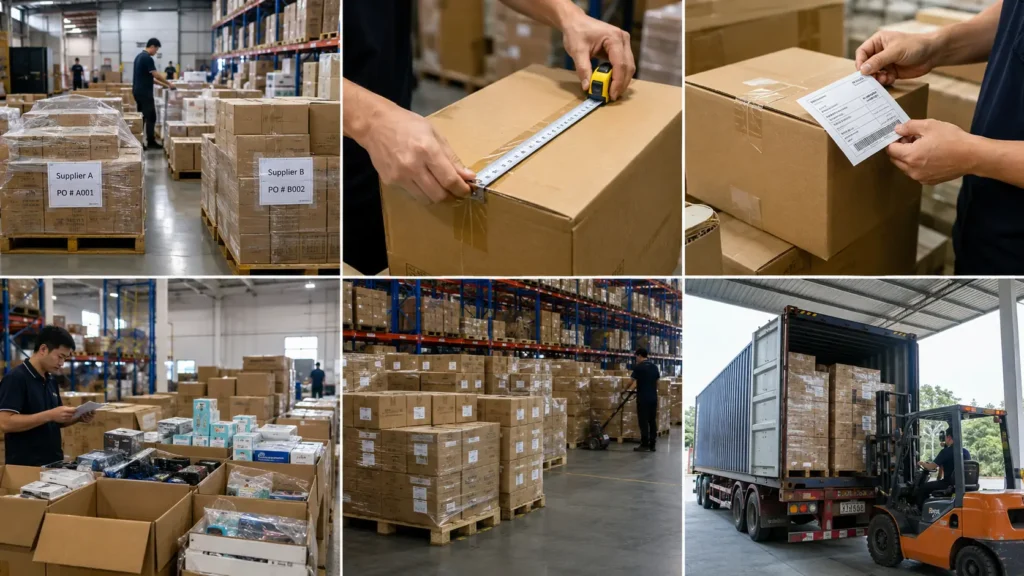
Cargo can be collected from the supplier or delivered to a nominated warehouse, port, or airport.
If products are purchased from several suppliers in China, they can also be collected and consolidated before international shipping. This can simplify cargo transportation and reduce the number of separate shipments that need to be managed.

The required shipping documents are checked, cargo is prepared for transportation, and export customs procedures are completed according to the shipment arrangement.

The cargo moves from China to the Philippines by the selected sea or air service.
The forwarder should provide useful status updates around important milestones such as warehouse receiving, departure, arrival, customs clearance, cargo release, and delivery.

After arrival, the shipment enters Philippine customs clearance procedures.
Once the goods are released, they can be collected by the consignee or transported to the final destination according to the agreed service. Door-to-door shipping can be useful for customers who prefer one logistics provider to coordinate more stages of the delivery process.

Choosing a freight forwarder from China to the Philippines is not only about finding the lowest rate. The right forwarder should understand the route, explain the total cost clearly, and be able to manage the shipment when schedules, documents, or customs requirements change.
Choose a forwarder that regularly handles cargo between China and the Philippines and can offer suitable sea freight and air freight options based on your shipment size, cargo type, and destination.
Experience with the product itself is also important. Machinery, batteries, fragile goods, oversized cargo, and regulated products may require different documents, packing, or handling from ordinary commercial cargo.
A good quotation should make it easy to understand what is included and what is not.
When comparing freight forwarders, use the same cargo details and check whether the quote covers origin handling, international freight, destination charges, customs services, and local delivery. A lower freight rate may not be cheaper if important destination charges are excluded.
International shipping can involve schedule changes, customs questions, or additional document requests. A reliable logistics partner should provide clear updates and respond quickly when action is required.
Good customer service means keeping the importer informed at important stages of the shipment, from cargo pickup and departure in China to arrival, customs clearance, and final delivery in the Philippines.
The best forwarder is therefore not simply the cheapest one, but the company that can provide a suitable route, clear pricing, and dependable support throughout the shipment.
Tonlexing provides international logistics services and practical shipping solutions for businesses sourcing and importing goods from China.
We coordinate shipments according to cargo size, product characteristics, supplier location, Philippine destination, and delivery priority instead of recommending the same shipping method for every shipment.
Our services can include:
Supplier pickup in China
Sea freight FCL and LCL
Air freight
Export customs coordination
Shipping documentation
Shipment tracking
Customs clearance support
Door-to-door delivery arrangements
Cargo insurance upon request
For businesses that regularly ship from China to the Philippines, using one forwarder to coordinate several logistics stages can simplify communication between suppliers, carriers, warehouses, customs providers, and the consignee.
Tonlexing aims to make the service scope clear before booking so importers understand the selected route, expected transit time, major freight charges, and responsibilities involved in the shipment.
Shipping costs vary by cargo size, shipping method, origin, destination, and service scope. As a general 2026 reference, LCL sea freight is around USD 20–45 per CBM, 20GP FCL around USD 210–260 per container, 40GP/40HQ around USD 440–540 per container, and air freight around USD 1.60–4 per kg depending on shipment weight.
Sea freight commonly takes around 7–15 days port-to-port, although some direct sailings between South China and Manila can be faster. Total shipping time is longer when factory pickup, consolidation, customs clearance, and final delivery are included.
Airport-to-airport air freight can take approximately 1–3 days. The complete delivery process takes longer when pickup, export handling, import customs clearance, and local delivery are included.
Sea freight is generally the more economical choice for large or heavy commercial cargo. LCL is suitable for smaller volumes, while FCL can provide a lower unit cost when shipment volume becomes large enough. The final decision should be based on total logistics cost rather than the ocean freight rate alone.
Yes. LCL allows several customers to share container space and is commonly used when cargo does not justify booking a full container. For commercial shipments, LCL generally becomes more practical from around 1 CBM.
Yes. Door-to-door shipping can combine pickup in China, international freight, customs support, and local delivery depending on the agreed service scope. Importers should confirm whether destination charges, duties, taxes, customs clearance, and final delivery are included before booking.
Useful freight, customs and importing resources related to this shipping guide.
Shipping from China to Philippines – Sea, Air & Door-to-Door in 2026 Fast, reliable shipping from China to Philippines for B2B importers,industri...
Read guide →
The Philippines is one of the key trading partners of China, with a thriving exchange of goods ranging from electronics and textiles to machinery...
Read guide →
Air Freight from China to Philippines is one of the fastest and most reliable shipping methods for businesses engaged in international trade betw...
Read guide →
20ft & 40ft Container Shipping Costs from China to Philippines remain a major concern for importers in 2025, especially as trade volumes continue...
Read guide →How Long Does It Take to Ship from China to the Philippines in 2026 Verified & Reviewed · Last updated January 2026 If you are searching how long...
Learn more → Useful Resource DDP Shipping from ChinaDDP shipping from China includes customs clearance, import duties, and final delivery. It is a convenient door to door service with clear and pre...
Learn more →WhatsApp us