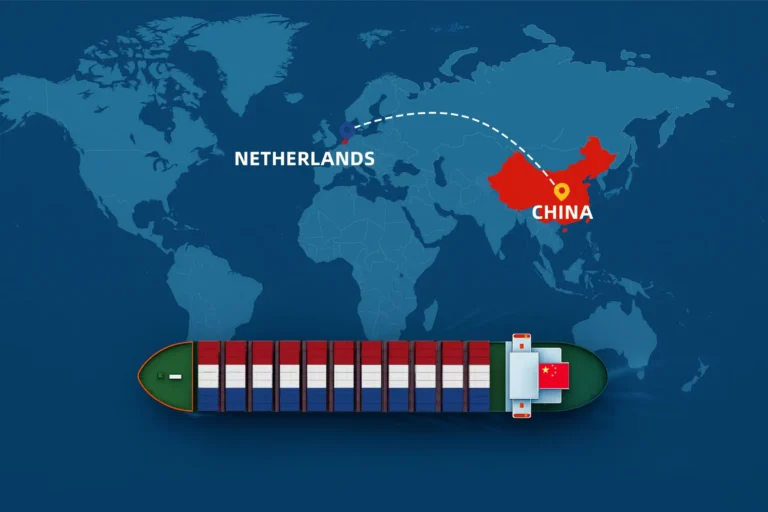
Related Guide
Shipping from China to the Netherlands
Shipping from China to the Netherlands – Sea, Air & DDP in 2026 Reliable shipping from China to the Netherlands for importers, distributors, and...
Read guide →

A freight forwarder from China to Netherlands should do more than reserve cargo space. The forwarder must coordinate the supplier, export handling, international transport, customs clearance and final delivery.
Tonlexing Logistics provides freight forwarding by sea, air, rail and express, with door-to-door and DDP options for different business needs. The best option depends on package size, cargo volume, urgency, product type and destination.
Get Shipping Rates
Compare Methods
DDP & Import Records
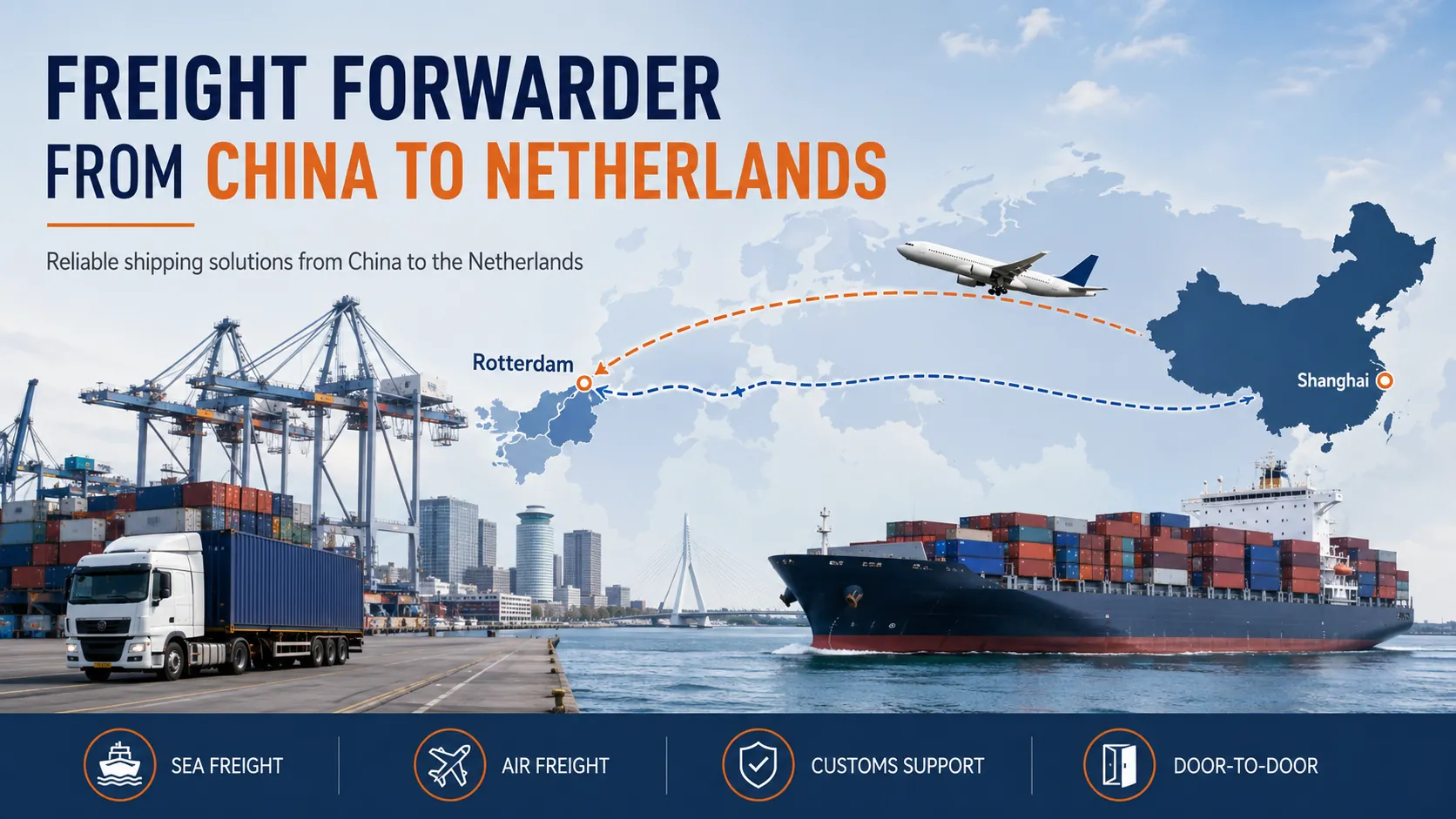
Freight forwarding from China to the Netherlands is suitable for importers who need more than simple parcel delivery. It is especially useful when the shipment involves commercial goods, multiple suppliers, special documents or final delivery to a warehouse.
Common users include:
Dutch importers and distributors buying from Chinese suppliers
Amazon FBA sellers shipping inventory to Europe
E-commerce and retail businesses importing in bulk
Machinery, electronics, furniture and industrial product buyers
Companies consolidating goods from multiple Chinese suppliers
Buyers shipping to Rotterdam, Amsterdam, Tilburg, Eindhoven or other Dutch cities
Importers needing DDP shipping with clearer tax and delivery arrangements
Tonlexing Logistics provides practical freight forwarding solutions for importers shipping from China to the Netherlands. We review your shipment size, supplier location, delivery deadline and final address before recommending a route.
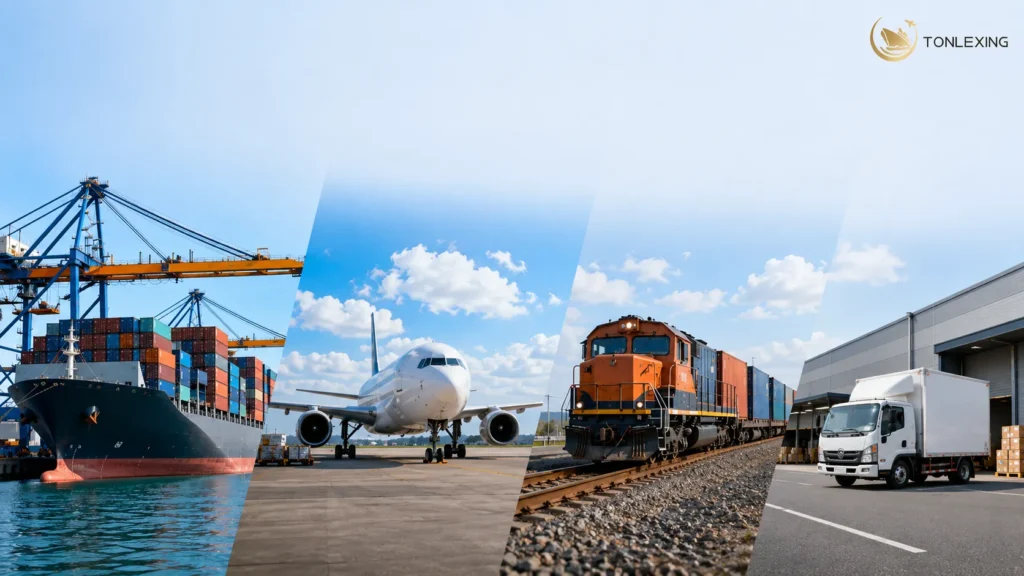
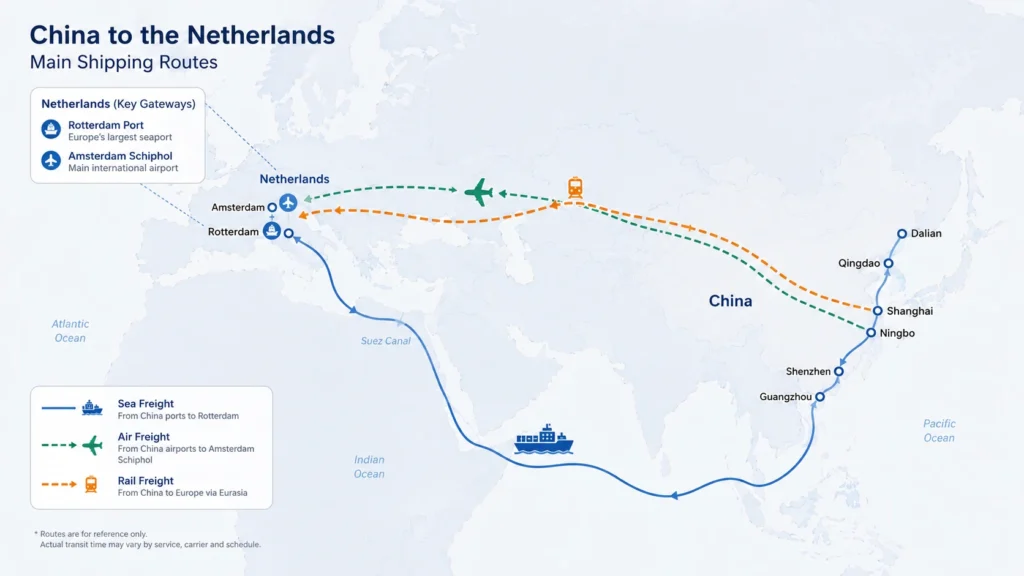
Different shipments need different transportation methods. Sea freight is suitable for larger shipments, air freight works better for urgent goods, and rail freight can be a balanced option between cost and speed.
Tonlexing can arrange:
Sea freight, including LCL and full container load shipping
Air freight, rail freight and express delivery
Delivery to Dutch warehouses, business addresses and Amazon FBA locations
Many importers buy from several suppliers in China. Tonlexing can help collect goods from different factories, consolidate shipments and coordinate export handling before departure.
Our support may include:
Supplier pickup in major Chinese manufacturing cities
Consolidation from multiple suppliers
Export documentation
Import document coordination in the Netherlands
Delivery appointments and inland transport
A low freight rate does not always mean a lower total cost. Tonlexing helps importers check whether pickup, origin charges, destination handling, import duties, VAT and final delivery are included.
Additional support may include:
Repacking, palletizing and labelling
Real time tracking or milestone updates
Cargo insurance options
Review of eligible batteries, liquids, powders and chemicals
Import records under applicable DDP arrangements
Experience with the China-to-Netherlands trade lane helps a freight forwarder manage route selection, carrier communication, documentation and destination delivery more efficiently.
Shipping costs from China to the Netherlands depend on the shipping method, shipment volume, weight, pickup city and final delivery address. A port-to-port rate is different from a door-to-door or DDP quote, so the service scope should always be checked before booking.
| Shipping Mode | Pricing Basis | Average Cost (USD) | Transit Time |
|---|---|---|---|
| Sea Freight LCL | Per CBM | $35–$120/CBM | 26–36 days |
| Sea Freight FCL | Per container | $2,790–$6,215/container | 25–32 days |
| Rail Freight LCL | Per CBM | $204/CBM | 12–17 days |
| Rail Freight FCL | Per container | $4,039–$7,180/container | 12–17 days |
| Air Freight | Per kg | $4.50–$7.30/kg | 5–7 days |
| Express Courier | Per kg for small parcels | $7.00–$13.13/kg | 3–5 days |
Sea freight is usually the most economical choice for larger shipments. Rail freight is faster than sea shipping and can work well for medium-volume cargo. Air freight is suitable for urgent goods, while express courier is mainly used for samples and small parcels.
The final quote may change based on the service scope. Requesting detailed quotations helps importers compare competitive rates and avoid hidden fees before the shipment leaves China.
Key factors include:
Supplier pickup location in China
Shipment volume, weight and package size
LCL, FCL, air, rail or express service
Destination city or postcode in the Netherlands
Import documents and duties
Final delivery, warehouse appointment or Amazon FBA requirements
Storage, demurrage or detention, if applicable
For a quick estimate, use Tonlexing’s shipping cost calculator with your origin city, destination, weight and CBM.
For an accurate quotation, submit the final shipment details to Tonlexing. We will confirm the latest rate, included charges, delivery scope and any extra costs before booking.
Customs clearance should be prepared before the shipment leaves China. The importer and freight forwarder need to confirm the importer details, product classification and supporting documents in advance. Customs expertise is crucial for managing Dutch and EU import regulations and reducing avoidable delays after arrival.
Before booking, confirm:
Commercial invoice
Packing list
Bill of lading or air waybill
Product certificates or permits, if required
The invoice and packing list should use consistent product descriptions, quantities, weights and values. Avoid vague descriptions such as “parts,” “samples” or “accessories.”
When importing goods into the Netherlands, two main financial obligations arise at the border:
Customs Duties
Rates: Range from 0% (e.g., for books, laptops, digital items) up to 12%+ for textiles, footwear, and specific industrial products.
Calculation: Applied directly to the total CIF value of the shipment.
Import Value Added Tax (VAT)
Standard Rate: 21% applies to most commercial goods entering the Netherlands.
Reduced Rate: 9% applies to specific goods like food, medicine, and books.
Calculation: Applied to the cumulative sum of the CIF Value + Customs Duties + Inland Transport Costs to the first destination inside the EU.
Dutch Customs may accept the declaration, request additional documents or select the cargo for inspection. Possible checks include reviewing the declared value, verifying the product classification, scanning the container or physically examining the goods.
Common causes of clearance delays include:
Incorrect HS or CN codes
Incomplete commercial invoices
Differences between the invoice and packing list
Missing product certificates
Unclear customs values
Undeclared batteries, liquids, powders or chemicals
Tonlexing can review the available cargo information before departure, coordinate the necessary customs documentation and arrange delivery after the goods are released.
DDP can simplify the shipping process for buyers who want one coordinated solution from China to the Netherlands. Under DDP, the seller is responsible for transportation and import customs formalities up to the named destination.
However, the DDP structure must be confirmed before booking, especially when a foreign seller is involved in Dutch import clearance.
A clear DDP quotation should explain:
Who acts as the importer
Which EORI and VAT details are used
Whether duties and VAT are included
Whether inspections or storage are excluded
Whether unloading and delivery appointments are included
Which customs documents the buyer receives
These details should be confirmed in writing before shipment, not after the cargo arrives in the Netherlands.
Tonlexing can provide a DDP solution in which the buyer receives the applicable import records after customs clearance.
The document package may include:
Import customs declaration
Customs release record
Duty and import VAT records
Commercial invoice
Packing list
Bill of lading or air waybill
Delivery confirmation
Ask Tonlexing for an itemized DDP quotation showing the importer structure, customs documentation, duties, VAT, delivery scope and exclusions.
Tonlexing can assist with eligible batteries, liquids, powders, chemicals and dangerous goods, except products prohibited by law, customs authorities or carriers.
Acceptance depends on the product, route, packaging and supporting documents. Depending on the cargo, the shipper may need:
Transport appraisal report
UN38.3 test summary for lithium batteries
Battery specification sheet
Dangerous Goods Declaration
Product composition statement
Packaging certificates
Product and packaging photographs
Required export or import permits
A transport report alone does not guarantee acceptance. The product classification, packaging, documents and carrier requirements must be reviewed before cargo space is confirmed.
A clear transportation process helps importers understand what happens before, during and after the shipment. Whether the cargo moves by sea freight, air freight, rail freight or DDP service, each step should be confirmed before the next stage begins.
Confirm the product description, carton quantity, dimensions, gross weight, volume, supplier address, cargo-ready date and regulated contents.
Check the Incoterm and determine who will manage pickup, export procedures, import clearance, taxes and delivery.
Confirm the importer, EORI, classification, VAT arrangement and required certificates before departure.
Select sea freight, air freight, rail or express according to cost, speed, cargo risk and the required delivery date.
Review the commercial invoice, packing list, bill of lading or air waybill, package count, declared value, weight and goods description.
Monitor pickup, warehouse receipt, departure, arrival, customs release and final delivery.
Importers should avoid:
Comparing only the headline freight price
Requesting a final quote with estimated dimensions
Assuming door-to-door always means DDP
Using vague customs descriptions
Failing to declare batteries or chemicals
Booking before confirming the importer and EORI
Ignoring storage, demurrage and detention
Assuming transport approval confirms EU product compliance
Before confirming your shipment, make sure the following details are ready:
Final dimensions, gross weight and total volume
Accurate product description and HS code
Importer of Record, EORI number and VAT setup
Required customs documents and product certificates
Battery, liquid, powder, chemical or regulated cargo declaration
Origin charges and destination charges
Transit scope, delivery terms and final address
Duties, VAT treatment and excluded charges
Tracking method and shipment update process
DDP customs document package, if applicable
Preparing these details in advance helps Tonlexing provide a more accurate shipping plan and reduce avoidable changes after booking.
Sea freight is generally the most economical option for large shipment volumes. LCL suits smaller shipments, while FCL may provide better control and fewer handling stages for larger loads.
Transit times vary depending on the method, route, carrier schedule, import process and destination. Always confirm whether the estimate is port-to-port, airport-to-airport or door-to-door.
Tonlexing can coordinate customs documentation and supporting documents. The importer must provide accurate information about the product, value, classification and compliance requirements.
Yes. Tonlexing can arrange DDP shipments with the applicable import declaration, release record, duty and VAT records and supporting documents provided to the buyer.
Eligible goods can be handled after the product classification, packaging, route and supporting documents have been reviewed. Prohibited goods cannot be accepted.
You can contact Tonlexing by submitting your shipment details through the freight quote form. Include the product name, supplier location, package size, gross weight, total volume, cargo-ready date and final delivery address in the Netherlands.
Useful freight, customs and importing resources related to this shipping guide.
Shipping from China to the Netherlands – Sea, Air & DDP in 2026 Reliable shipping from China to the Netherlands for importers, distributors, and...
Read guide →
Shipping Cost from China to Netherlands (2026 Guide) Verified & Reviewed · Last updated June 2026 Shipping cost from China to the Netherlands in...
Read guide →
Sea Freight from China to Netherlands Verified & Reviewed · Last updated May 2026 The Netherlands is a key logistics hub in the European Union. W...
Read guide →
Air freight from China to the Netherlands has become one of the most popular shipping options for businesses engaged in international shipping. W...
Read guide →DDP Shipping from China to Netherlands Verified & Reviewed · Last updated June 2026 DDP shipping from China to the Netherlands provides an all-in...
Learn more → Useful Resource Customs Clearance in the NetherlandsCustoms Clearance in the Netherlands Verified & Reviewed · Last updated June 2026 Customs clearance in the Netherlands is required when goods ent...
Learn more →WhatsApp us