

Shipping goods from China to Pakistan is a core activity in regional and international trade. Pakistan relies heavily on Chinese manufacturing for electronics, textiles, machinery, consumer goods, construction materials, and industrial cargo. For businesses engaged in international shipping, understanding shipping time is essential for inventory planning, cash flow management, and customer delivery commitments.
One of the most frequently asked questions is:“How long does it take to ship from China to Pakistan?”
The answer is not a single number. The actual shipping duration depends on the shipping method, the shipping process, the shipment size, the distance between origin and destination, and how efficiently customs clearance is handled in both countries. This guide explains shipping time in detail and compares all major shipping options so you can choose the most efficient and cost-effective solution.
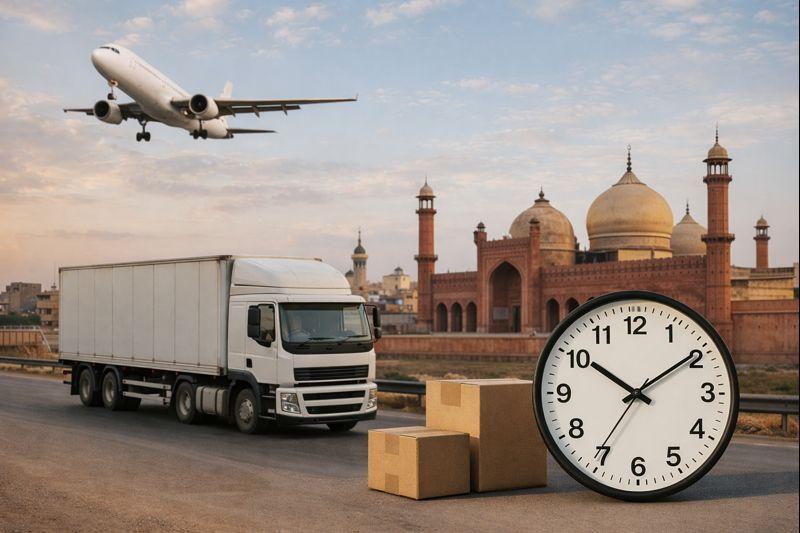
Shipping Time from China to Pakistan: Direct Answer
In most cases, shipping from China to Pakistan takes:
- 2–5 days via express shipping
- 3–7 days via air freight
- 15–30+ days via sea freight
- 18–40 days for door-to-door delivery
These timeframes apply to common destination cities such as Karachi, Lahore, and Islamabad. Actual delivery time may vary due to customs delays, route changes, port congestion, or special cargo requirements.
Why Shipping Time Varies Between China and Pakistan
Many importers expect shipping to take the same amount of time for every shipment. In reality, shipping time between China and Pakistan varies due to several factors:
- The chosen shipping method
- Transportation modes used (air, sea, rail, truck)
- Shipment size and cargo type
- Geographical distance between origin and destination
- Customs duties, inspections, and taxes
- Carrier schedules and port congestion
Understanding these factors allows importers to estimate transit time more accurately and avoid unexpected delivery delays.
Primary Shipping Methods from China to Pakistan
There are several primary shipping methods used for shipping from China to Pakistan. Each method has different delivery time, cost, and operational requirements.
Main shipping methods include:
- Express shipping
- Air freight
- Sea freight
- Rail and multimodal transportation
Your chosen shipping method determines not only how fast your cargo arrives, but also how shipping costs are calculated and how customs clearance is handled.
Express Shipping: Fastest Way to Reach Pakistan
Express shipping is the fastest shipping option for small and urgent shipments.
Express Shipping Delivery Time
- 2–4 business days for major destination cities
- Up to 5 days if customs clearance takes longer
Express couriers such as DHL, UPS, FedEx, and other global services operate extensive global networks that allow shipments to move quickly across destination countries.
Each express shipment is assigned a tracking number, enabling real-time tracking from pickup in China until the package is delivered in Pakistan.
China Post and Postal Service Shipping Time
For non-urgent parcels, China Post and other postal service options are commonly used.
- Typical delivery time: 7–15 days
- More cost effective than express couriers
- Slower transit time and limited tracking updates
China Post is suitable for lightweight shipments but not recommended for urgent or high-value cargo.
Air Freight from China to Pakistan: Speed and Reliability
Air freight is the most common solution for businesses that need faster delivery without the high cost of express shipping.
How Long Does Air Freight Take?
- Airport-to-airport transit time: 3–5 days
- Door-to-door air freight: 5–7 days
- Urgent air cargo: sometimes as fast as 3–4 days
Air freight services operate from major Chinese airports and arrive at key Pakistani airports, including Karachi. Transit time depends on flight availability, routing, and customs efficiency.
When Air Freight Is the Practical Solution
Air freight is ideal for:
- Urgent shipments
- Medium-sized cargo
- High-value goods
- Regular shipments with strict delivery schedules
However, air freight shipping costs are higher than sea freight, especially for large shipments.
Sea Freight from China to Pakistan: Transit Time, Routes, and Containers
For bulk shipments and large shipments, sea freight remains the most widely used shipping method from China to Pakistan. Compared with air freight, sea freight offers significantly lower shipping costs and better rates for high-volume cargo, although the shipping duration is longer.
How Long Does Sea Freight Take from China to Pakistan?
In most cases, sea freight shipping time is:
- Port-to-port transit time: 18–25 days
- Extended range: 15–30+ days depending on route and season
- Door-to-door sea freight: 25–40 days
Sea freight shipping duration varies depending on the route, vessel schedule, and how efficiently customs clearance is handled at the destination.
Major Sea Freight Routes Between China and Pakistan
The geographical distance between China and Pakistan means most sea freight follows established Asian and Middle East shipping lanes.
Common China Loading Ports
Pakistan Destination Ports
- Karachi (primary gateway)
- Port Qasim
- Gwadar
Among all destination ports, Karachi handles the majority of containerized cargo. Shipping time to Karachi is often used as the benchmark for shipping from China to Pakistan.
Shipping Time to Karachi by Sea Freight
For shipments destined for Karachi:
- Sea freight (port-to-port): 18–25 days
- Sea freight door-to-door: 30–40 days
Shipping time may increase during peak seasons due to port congestion, limited vessel space, or customs delays. Working with a freight forwarder familiar with Karachi port operations helps reduce unnecessary waiting time.
Full Container Load (FCL) vs Container Load (LCL)
When shipping by sea, shipment size determines whether you use full container load (FCL) or container load (LCL).
Full Container Load (FCL)
A full container load means one shipper occupies the entire container.
Advantages of FCL include:
- Faster shipping process
- Fewer handling steps
- Lower risk of customs delays caused by other shipments
- More predictable delivery time
FCL is ideal for regular shipments and large-volume cargo.
Container Load (LCL)
A container load under LCL means cargo shares a container with other shipments.
LCL characteristics:
- Longer shipping duration
- Additional consolidation and deconsolidation steps
- Higher risk of delay compared to FCL
LCL is suitable for smaller shipment sizes when cost savings are more important than speed.
Transit Time vs Shipping Time: What’s the Difference?
Many importers confuse transit time with overall shipping time, but they are not the same.
- Transit time refers to the time cargo spends moving between ports or airports.
- Shipping time includes the entire shipping process, from pickup to final delivery.
For example, sea freight transit time from China to Pakistan may be 20 days, but the total shipping duration can reach 30–40 days once export handling, customs clearance, and inland transportation are included.
Understanding this difference helps businesses plan delivery schedules more accurately.
Rail and Multimodal Transportation from China to Pakistan
Although less common than air or sea, rail freight combined with trucking is sometimes used for specific routes.
Rail Shipping Time
- Rail + truck transit time: 18–25 days
- Route availability depends on infrastructure and border conditions
Rail shipping is usually applied to special cargo or when sea freight congestion is severe. It is not yet a mainstream solution for all destination countries, but it can be a practical solution in certain scenarios.
Transportation Modes and Route Selection
Shipping logistics between China and Pakistan rely on multiple transportation modes:
- Sea
- Air
- Rail
- Truck (inland)
The selected route and combination of transportation services directly affect shipping duration, shipping costs, and delivery reliability. A reliable freight forwarder evaluates route options based on cargo type, urgency, and destination.
Shipping Logistics Challenges on the China–Pakistan Lane
Several logistics challenges can affect shipping time:
- Long geographical distance
- Port congestion at major destination ports
- Limited vessel schedules during peak seasons
- Customs inspections and documentation checks
These challenges explain why shipping time can vary even for similar shipments.
How a Freight Forwarder Optimizes Sea Freight Shipping Time
A professional freight forwarder plays a critical role in managing sea freight shipments.
A freight forwarder helps by:
- Selecting efficient shipping routes
- Managing container booking
- Coordinating export and import customs clearance
- Reducing unnecessary handling delays
A reliable freight forwarder with experience in shipping from China to Pakistan can secure better rates, reduce transit time risks, and ensure cargo is delivered smoothly.
Cost-Effective Sea Freight Strategies for Importers
For businesses focused on cost control, sea freight offers the most cost effective shipping option.
To optimize sea freight:
- Use FCL for large shipments
- Plan shipments early to avoid peak season surcharges
- Prepare accurate documentation in advance
- Choose stable carrier schedules rather than the cheapest short-term option
These strategies help balance shipping costs with predictable delivery time.
Customs Clearance in Pakistan: How It Affects Shipping Time
For shipping from China to Pakistan, customs clearance is often the most unpredictable stage of the shipping process. Even when transit time is fast, cargo can be delayed at the destination if documents or compliance details are not handled correctly.
Why Customs Clearance Impacts Shipping Duration
Customs authorities in Pakistan review shipments to verify:
- Cargo description and classification
- Declared value
- Applicable customs duties and taxes
- Compliance with import regulations
If any information is missing or inconsistent, customs may hold the shipment for inspection, increasing shipping duration and delaying final delivery.
Handling Customs Clearance Efficiently
Properly handling customs clearance is essential to avoid unnecessary delays.
Best practices include:
- Preparing accurate documentation (commercial invoice, packing list, HS codes)
- Ensuring cargo description matches actual shipment
- Confirming duties and taxes in advance
- Using a freight forwarder familiar with Pakistan customs procedures
When documentation is accurate, customs clearance can often be completed within 1–3 days.
Customs Duties and Taxes in Pakistan
When shipping cargo from China to Pakistan, importers must pay:
- Customs duties
- Sales tax
- Additional regulatory taxes (depending on cargo type)
Failure to arrange payment on time can result in customs delays and storage charges. Many importers use a freight forwarder or customs broker to manage duty and tax payment through a dedicated account, ensuring smooth cargo release.
Common Causes of Customs Delays
Customs delays typically occur due to:
- Incomplete or incorrect documents
- Misdeclared cargo value
- Random inspections
- Special requirements for restricted goods
These delays can extend shipping time by several days or even weeks in severe cases.
Shipping Process from China to Pakistan: Step by Step
Understanding the shipping process helps importers predict delivery time more accurately.
Typical Shipping Process Includes:
- Booking transportation services
- Pickup from supplier in China
- Export customs clearance
- Main transportation (air, sea, or rail)
- Import customs clearance in Pakistan
- Final delivery to the destination
Delays can occur at any step, especially during customs clearance and final delivery.
Explore more shipping guides:
- 20ft & 40ft Container Shipping Costs from China to Pakistan
- DDP Shipping from China to Pakistan (2025 Guide)
- Air Freight Shipping of Plastic Molds from Guangzhou, China to Pakistan
- How Long Does It Take to Ship from China to Iran?
- How Long Does It Take to Ship from China to Saudi Arabia?
- How Long Does It Take to Ship from China to UAE?
Final Delivery and Last-Mile Transportation
After customs clearance is completed, cargo enters the final delivery stage.
Final delivery time depends on:
- Distance from port or airport
- Local transportation conditions
- Shipment size and handling requirements
For shipments to Karachi, final delivery may take 1–3 days, while inland destinations can take longer.
Delivered Status: What It Really Means
When tracking updates show that cargo is delivered, it usually means:
- The shipment has cleared customs
- Duties and taxes have been paid
- Cargo has reached the consignee’s warehouse or address
However, “delivered” does not always mean the shipping process is complete if additional documentation or confirmation is required internally.
Shipping Services Offered by Freight Forwarders
A professional freight forwarder provides a range of services that directly affect shipping duration and reliability.
These services typically include:
- Transportation services coordination
- Customs clearance handling
- Duty and tax management
- Tracking and shipment monitoring
- Issue resolution during transit
Using integrated services reduces risk and improves delivery efficiency.
Why a Reliable Freight Forwarder Matters
A reliable freight forwarder minimizes shipping risks by:
- Preventing documentation errors
- Coordinating customs clearance efficiently
- Selecting stable routes and carriers
- Communicating proactively during delays
For regular shipments, a freight forwarder also helps manage long-term shipping logistics and optimize delivery schedules.
Documentation Accuracy and Shipping Time
Accurate documentation plays a major role in shipping speed.
Incorrect invoices or packing lists can:
- Trigger customs inspections
- Cause duty reassessment
- Delay shipment release
Ensuring accurate documentation from the start reduces customs delays and protects delivery time.
Special Requirements That Can Delay Shipments
Some cargo types have special requirements, such as:
- Batteries
- Chemicals
- Branded goods
- Regulated or restricted items
These shipments often require additional permits or inspections, which can extend shipping duration if not prepared in advance.
How to Reduce Customs-Related Shipping Delays
To minimize customs delays:
- Verify import regulations before shipping
- Prepare documents early
- Use a customs-experienced freight forwarder
- Maintain a dedicated payment account for duties and taxes
These steps significantly improve clearance speed and final delivery reliability.
Shipping Costs vs Shipping Time: Choosing the Right Shipping Options
When shipping from China to Pakistan, importers must balance shipping costs and shipping time. Faster delivery usually means higher costs, while slower transportation methods are more cost effective for bulk cargo.
Understanding this balance helps businesses choose the right shipping options based on urgency, shipment size, and budget.
Typical Cost–Time Comparison
- Express shipping: fastest delivery, highest cost
- Air freight: fast delivery, moderate-to-high cost
- Sea freight: longest shipping duration, lowest cost per unit
- Rail (limited): moderate delivery time, route-dependent pricing
Selecting the right shipping method ensures cargo can arrive on time without unnecessary expense.
How to Get Better Rates When Shipping from China to Pakistan
Securing better rates is not only about choosing the cheapest carrier. Experienced importers focus on long-term efficiency.
Ways to obtain better rates include:
- Working with a freight forwarder for negotiated pricing
- Shipping regular shipments instead of one-off cargo
- Choosing flexible delivery windows
- Optimizing shipment size and packaging
- Avoiding peak shipping seasons
A freight forwarder with a strong global network can often access more competitive rates than individual shippers.
Destination Countries and Trade Context
China ships goods to many destination countries across Asia, Europe, Africa, and the Middle East. Among these countries, Pakistan remains a key partner due to strong bilateral trade demand.
Compared with other destination countries, shipping from China to Pakistan benefits from:
- Established shipping routes
- Frequent vessel and flight schedules
- Competitive freight services
This trade relationship allows relatively stable shipping time compared with less-developed routes serving other countries.
China and Pakistan in International Trade
The trade relationship between China and Pakistan continues to expand, driven by infrastructure development, manufacturing demand, and regional logistics cooperation.
In international trade:
- China acts as a major export hub
- Pakistan serves as a growing import market and regional distribution point
This close trade relationship supports consistent shipping logistics and improves route reliability over time.
Example: Choosing the Best Shipping Method
Example Scenario
A company in Pakistan imports consumer electronics from China.
- Shipment size: medium volume
- Urgency: moderate
- Budget: controlled
Best solution: air freight for initial launch inventory, followed by sea freight for replenishment.
This approach ensures faster delivery for urgent stock while maintaining cost control for regular shipments.
Shipping Time to Different Destinations Within Pakistan
Shipping time may vary based on the destination within Pakistan.
- Karachi: fastest clearance and delivery
- Lahore / Islamabad: additional inland transportation time
- Remote areas: longer final delivery time
Even after cargo reaches Pakistan, inland transportation affects how quickly shipments arrive at the final destination.
Factors That Influence Delivery Efficiency
Several factors determine whether shipping is efficient or delayed:
- Shipping method and route selection
- Shipment size and cargo type
- Accuracy of documentation
- Customs clearance speed
- Inland transportation capacity
Understanding these factors helps importers avoid disruptions and plan realistic delivery schedules.
Tracking Shipments from China to Pakistan
Tracking is an important part of modern shipping logistics.
- Express shipments include a tracking number
- Air and sea shipments are tracked via freight forwarder systems
- Tracking updates show key milestones: departed, arrived, customs cleared, delivered
Proper tracking improves visibility and helps importers respond quickly to delays.
Rail Freight and Alternative Routes (Supplementary Option)
Although rail shipping is not yet a mainstream solution for all shipments, it can be used as an alternative route when:
- Sea freight congestion is severe
- Air freight costs are too high
- Specific inland routes are required
Rail freight is usually combined with trucking and offers moderate transit time for selected cargo types.
Common Mistakes That Increase Shipping Time
Importers often face delays due to:
- Choosing the wrong shipping method
- Underestimating customs clearance requirements
- Inaccurate documentation
- Last-minute booking during peak season
Avoiding these mistakes improves delivery reliability and reduces total shipping duration.
Frequently Asked Questions (FAQs)
How long does it take to ship from China to Pakistan?
Typically 2–5 days by express, 3–7 days by air freight, and 15–30+ days by sea freight.
What is the fastest shipping option?
Express shipping is the fastest method.
Which shipping method is most cost effective?
Sea freight is the most cost effective for bulk shipments and large cargo.
Why do shipping times vary?
Shipping time varies due to customs delays, route changes, shipment size, and several operational factors.
Can shipments be tracked?
Yes. Most shipments can be tracked using a tracking number or freight forwarder tracking systems.
Final Conclusion: How Long Does It Take to Ship from China to Pakistan?
So, how long does it take to ship from China to Pakistan?
- 2–5 days via express shipping
- 3–7 days via air freight
- 15–30+ days via sea freight
- 18–40 days for door-to-door shipping
The actual shipping duration depends on shipping method, customs clearance efficiency, shipment size, and route selection. By understanding shipping options and working with a reliable freight forwarder, businesses can ensure cargo arrives in Pakistan efficiently, cost effectively, and on schedule.