Related Guide
How to Ship Medical Furniture from China
Medical furniture—such as hospital beds, examination tables, patient chairs, and other healthcare furnishings—plays a critical role in providing...
Read guide →

Importing and shipping medical equipment from China involves more than sourcing suppliers and arranging freight. Buyers should first confirm product classification, regulatory requirements, supplier qualifications, and shipping conditions before the goods leave China.
This guide explains how to import medical equipment from China, covering FDA and CE compliance, supplier verification, quality inspection, packaging, shipping methods, customs documentation, and final delivery planning.
FDA & CE Compliance
Supplier Verification
Shipping & Customs
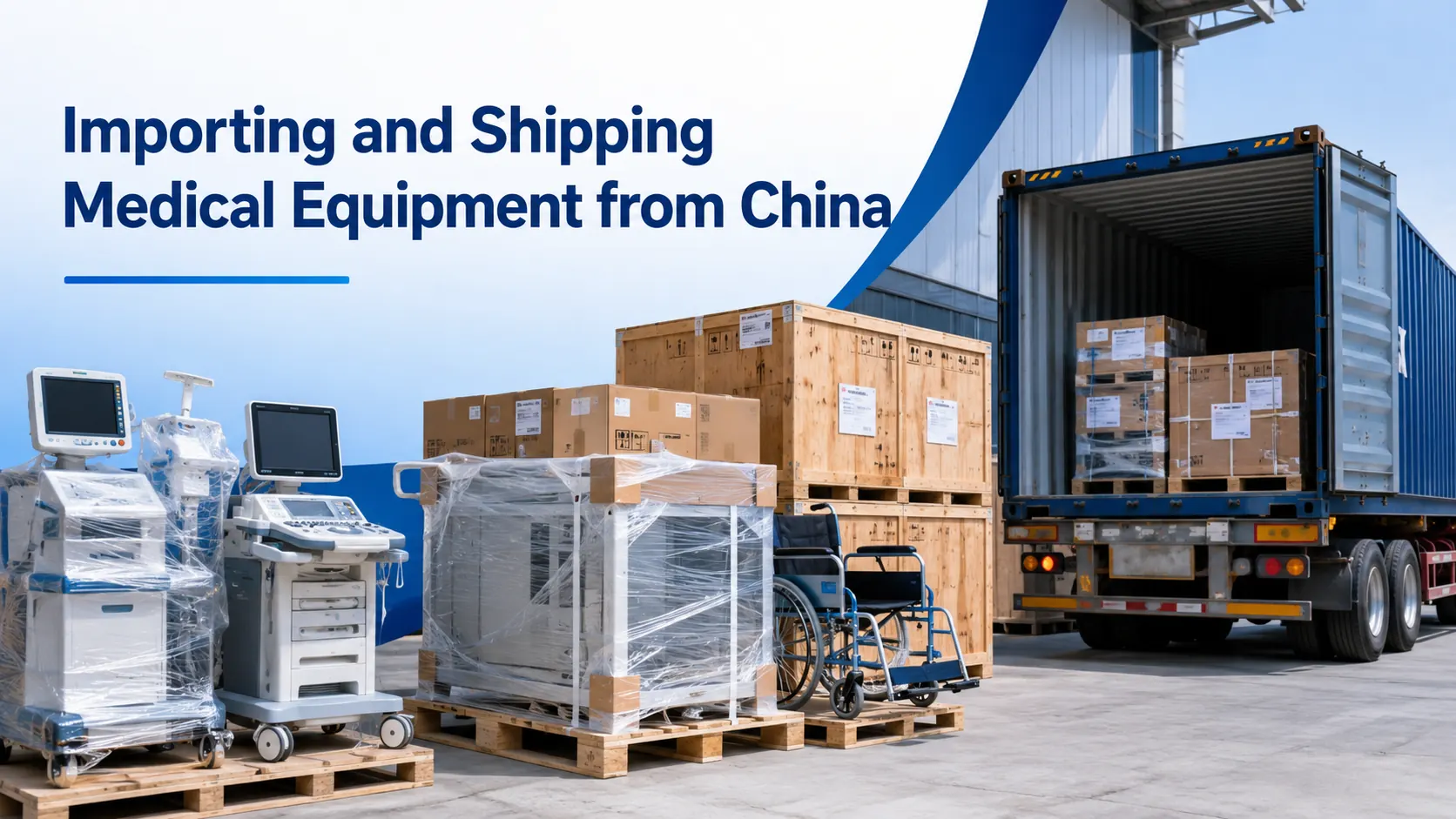
A practical import process should begin before production rather than when the cargo is ready to ship. Buyers first need to understand what they are purchasing, how the product is regulated, and which party will be responsible for registration and import compliance.
STAGE 01
Classify & Verify
STAGE 02
Confirm & Prepare
STAGE 03
Ship & Deliver
Complete the regulatory and documentation checks before booking freight. This helps reduce the risk of customs delays, rejected imports, or last-minute shipping changes.
Before requesting quotations, define exactly what you intend to import.
Medical equipment from China may include diagnostic instruments, patient monitoring devices, surgical tools, hospital furniture, dental equipment, laboratory and IVD products, medical supplies, hearing aids, and electronic healthcare equipment.
The intended use matters because it can determine how a product is classified and which regulatory pathway applies. Classification may affect registration, testing, labeling requirements, technical files, quality standards, and market access.
There is no single global classification system for medical devices.
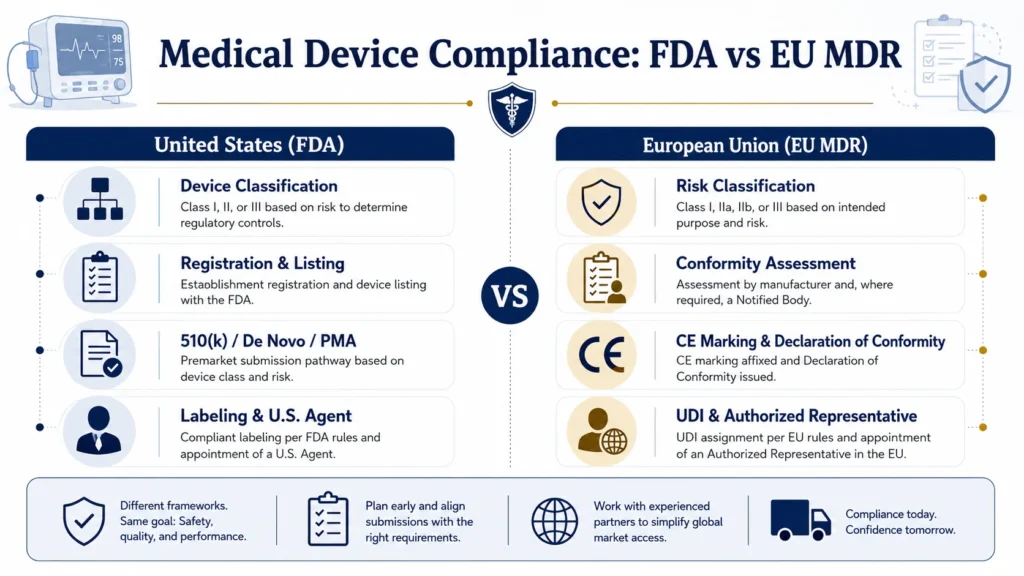
In the United States, the FDA generally places medical devices into Class I, Class II, and Class III.
In the European Union, the MDR framework includes Class I, Class IIa, Class IIb, and Class III.
Higher-risk devices usually require more extensive regulatory review. Importers should not assume that a classification shown on Chinese documentation automatically matches the classification used by authorities in the destination market.
A product that can legally be manufactured or sold in China is not automatically approved for another medical device market.
Local regulations may affect registration, import licenses, testing, labeling, local representation, and importer responsibilities.
The registration process is especially important when products will be supplied to distributors, hospitals, clinics, or hospital procurement teams. In some markets, a local importer or regulatory agent must complete specific procedures before the goods arrive.
Medical devices entering the United States may be regulated by the U.S. Food and Drug Administration (FDA).
Depending on the medical device and its classification, FDA requirements may involve:
FDA establishment registration
FDA device listing
FDA 510(k) premarket notification
FDA De Novo classification
FDA Premarket Approval (PMA)
FDA labeling rules
FDA quality-system requirements
A U.S. agent for certain foreign establishments
One common mistake is assuming that FDA registration means a medical device is FDA-approved. Establishment registration and device listing do not by themselves mean that the FDA has approved an individual product. Importers should verify the manufacturer, listing information, and applicable FDA pathway before commercial shipping.
Medical devices placed on the European Union market are primarily regulated under EU MDR 2017/745, while in vitro diagnostic devices are covered by separate IVD legislation.
Depending on the medical device, requirements may include:
Correct risk classification
Conformity assessment
Technical documentation
Declaration of Conformity
CE marking
Quality-management procedures
Authorized representative arrangements where applicable
UDI and labeling requirements
A CE mark alone should not be treated as sufficient evidence. Importers should check whether the supporting documentation matches the manufacturer, device model, and certification scope.
Medical device regulations also vary across the UK, Canada, Australia, Southeast Asia, the Middle East, Africa, and Latin America. Some jurisdictions require local registration, import permits, additional testing, language labels, or a local representative. Regulatory checks should be completed before shipment.
China has a large healthcare manufacturing sector, with medical device manufacturers, trading companies, and specialized suppliers serving international markets. Buyers should distinguish between actual manufacturers, exporters, and trading companies before placing an order. Reliable suppliers should be able to explain their manufacturing role, quality controls, and experience with regulated products.
Certificate verification is an important part of supplier due diligence.
Check the manufacturer name, factory address, certificate number, issuing body, certification scope, issue date, and expiry date. For ISO 13485, confirm that the certificate covers the relevant company and activities.
A valid ISO 13485 certificate does not automatically mean that every medical device made by the company is approved in every market.
Where possible, confirm certificate validity with the issuing organization or an official database.
Regulatory paperwork cannot replace physical quality control.
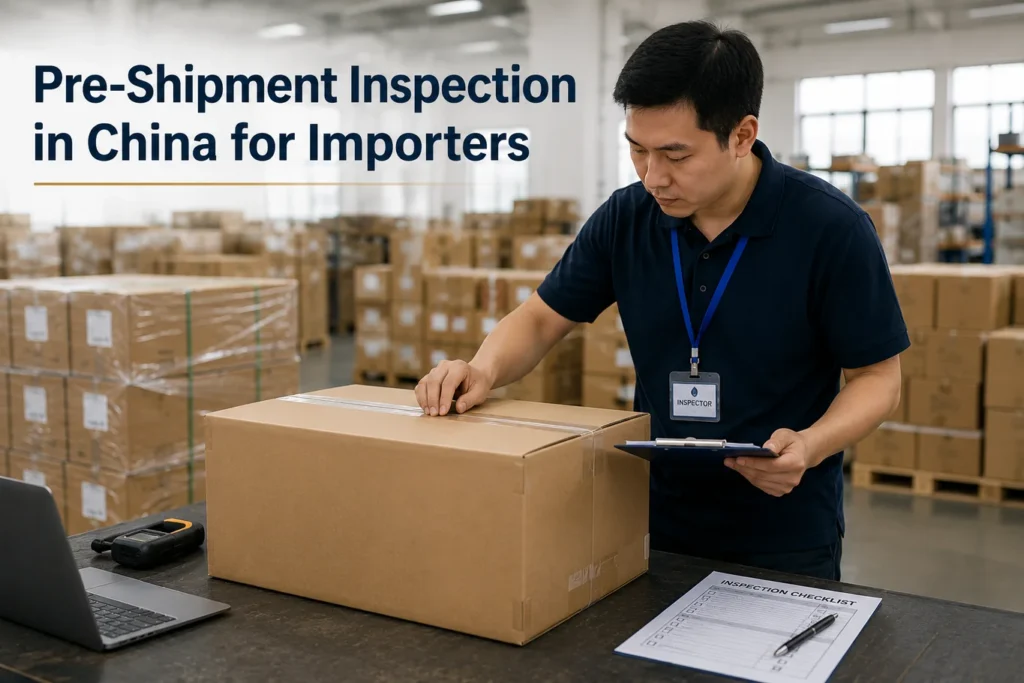
Before a large order is released, importers may use samples, factory audits, laboratory testing, or a pre-shipment inspection. An independent inspection company may check:
Product model and quantity
Dimensions and gross weight
Appearance and workmanship
Functional performance
Labels and markings
Packaging and crate condition
For companies supplying hospitals or distributors, product quality should be evaluated against the purchase specification and applicable safety standards. A qualified inspection company can verify selected specifications before export. Inspection does not replace registration, but it can identify quality or packaging problems while the cargo is still in China.
Healthcare products and precision instruments often require stronger packaging than ordinary commercial goods.
The packing method should reflect value, fragility, weight, dimensions, vibration sensitivity, moisture sensitivity, and any sterile-packaging requirements. Common solutions include reinforced cartons, foam inserts, moisture barriers, pallets, wooden crates, and shock indicators.
Labeling requirements vary by market and may include:
Product name, model, and manufacturer
Lot or serial number
Country of origin
Manufacturing or expiry information
Storage conditions and warnings
UDI information where applicable
Authorized representative details or instructions for use
Importers should also confirm whether local-language labels are required before import.
The right shipping method depends on cargo size, urgency, value, handling needs, and destination.
| Shipping Method | Best For | Main Considerations |
|---|---|---|
| Air Freight | Urgent, high-value, compact medical products | Faster but more expensive |
| Sea Freight | Heavy machines, pallets, and large shipments | Lower unit cost but longer transit |
| Express Courier | Samples, spare parts, and small instruments | Convenient for lower-volume shipments |
| Temperature-Controlled Transport | Sensitive supplies with defined storage conditions | Requires suitable packaging and controlled-temperature handling |
Air freight is often suitable for diagnostic instruments, medical electronics, urgent hospital supplies, and replacement parts. Before booking, confirm whether the cargo contains lithium batteries, liquids, magnets, dry ice, or other restricted components.
Sea freight is usually more economical for hospital beds, heavy machinery, multiple pallets, and large procurement projects. FCL can reduce handling, while LCL is suitable for smaller shipments but normally involves consolidation and deconsolidation during sea transit.
Some medical products and healthcare supplies cannot move as standard general freight.
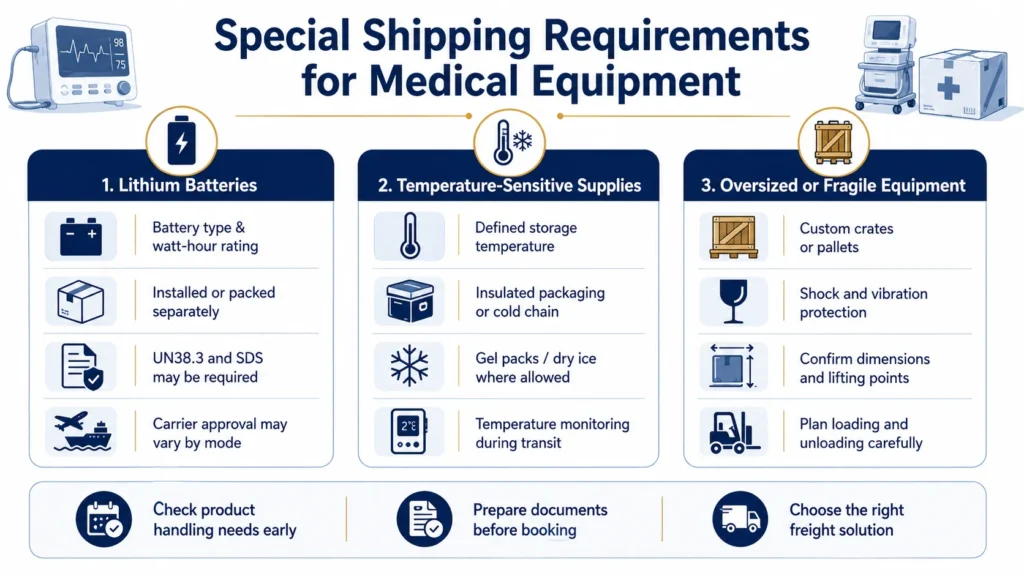
For battery-powered products, the freight forwarder may need:
Battery type
Watt-hour rating
Battery quantity
Whether batteries are installed or packed separately
UN38.3 documentation
SDS or other information where required
Requirements vary by transport mode and carrier, so battery details should be disclosed during quotation.
Some diagnostic, laboratory, and medical supplies require temperature control. Depending on the goods, transport may involve insulated packaging, gel packs, dry ice, temperature loggers, refrigerated storage, or cold-chain services.
The required temperature range should be based on validated storage and transportation conditions.
Large hospital systems and precision instruments may require custom crates, pallet bases, lifting plans, shock protection, or cargo insurance.
Confirm packed dimensions, gross weight, center of gravity, lifting points, forklift access, and unloading requirements before booking.
Medical equipment imports usually require both commercial shipping documents and regulatory documentation.
Commercial Invoice: Seller, buyer, product description, quantity, value, and transaction details.
Packing List: Carton, pallet, or crate quantities, dimensions, and weight.
Bill of Lading or Air Waybill: International transport document.
Certificate of Origin: Required in some customs or tariff situations.
Insurance Certificate: Used where cargo insurance is arranged.
Depending on the product, importers may also need registration records, import permits, Declaration of Conformity, CE-related documents, FDA documentation, ISO 13485 certificates, test reports, technical files, labeling records, or UDI information.
The required document set should be determined for the actual device rather than copied from a generic checklist.
Customs clearance may involve both normal customs procedures and medical regulatory checks.
Authorities may review:
HS Code and product description
Customs value and origin
Manufacturer and importer information
Commercial invoice and packing list
Freight documents
Import permits
Registration records
Certificates and labels
Customs regulations and medical regulations are related but not identical. A correct HS Code helps determine duties and taxes, but it does not replace FDA, CE, or other market-access requirements.
For regulated imports, the commercial invoice, packing list, certificates, and registration records should be checked before departure. Vague descriptions such as “machine” or “accessories” can create unnecessary questions during customs clearance.
Incoterms define how transportation costs, risks, and responsibilities are divided between buyer and seller. They do not determine whether a regulated product is legally approved for import.
EXW: The buyer controls most of the supply chain from the supplier’s premises.
FOB: Frequently used for sea freight, with the seller handling responsibilities up to the agreed Chinese port.
CIF: Includes ocean freight and insurance to the named destination port but normally not import clearance, duties, or final delivery.
DAP/DDP: Can simplify door delivery, but the legal importer and regulatory responsibilities must still be confirmed.
For medical device imports, clarify who handles registration, import licenses, customs declarations, duties, and local compliance before choosing the term.
A freight forwarder handling healthcare cargo should understand more than ordinary freight booking and coordinate with suppliers, the importer, customs broker, and carrier.
Look for experience with:
Air and sea freight from China
Battery-powered medical devices
Fragile and high-value cargo
Oversized hospital equipment
Temperature-sensitive goods
Export documentation
Customs clearance
Door delivery
For an accurate quotation, provide the product name, intended use, HS Code if available, package count, dimensions, gross weight, battery details, temperature requirements, pickup location, destination, postcode, and cargo-ready date.
A freight forwarder can manage transportation and customs coordination, but the importer should still confirm the regulatory status of the product.
To import medical devices from China, identify the device, determine its classification, check destination-market requirements, verify Chinese suppliers, review certificates and registration records, arrange inspection, prepare compliant packaging, choose a suitable shipping method, and complete customs clearance. Regulatory checks should be completed before placing a large order.
Yes. Medical equipment can be shipped by air, sea, courier, or specialized logistics services. Batteries, temperature-sensitive materials, fragile components, liquids, or oversized dimensions may require additional packaging, documentation, or carrier approval.
Common documents include a commercial invoice, packing list, Bill of Lading or Air Waybill, and Certificate of Origin when required. Medical devices may also require FDA-related documents, CE conformity records, registration records, test reports, ISO 13485 certificates, labeling documents, or import permits.
To import medical devices into the United States, determine the FDA classification and applicable regulatory pathway first. Depending on the device, requirements may involve establishment registration, device listing, 510(k), De Novo, PMA, labeling rules, quality-system requirements, or a U.S. agent. FDA status should be verified before commercial shipping.
It depends on the HS classification, origin, destination, device type, trade measures, and any applicable exemptions. Medical equipment from China is not automatically duty-free, so importers should confirm the correct HS Code and current customs treatment before import.
Useful freight, customs and importing resources related to this shipping guide.
Medical furniture—such as hospital beds, examination tables, patient chairs, and other healthcare furnishings—plays a critical role in providing...
Read guide →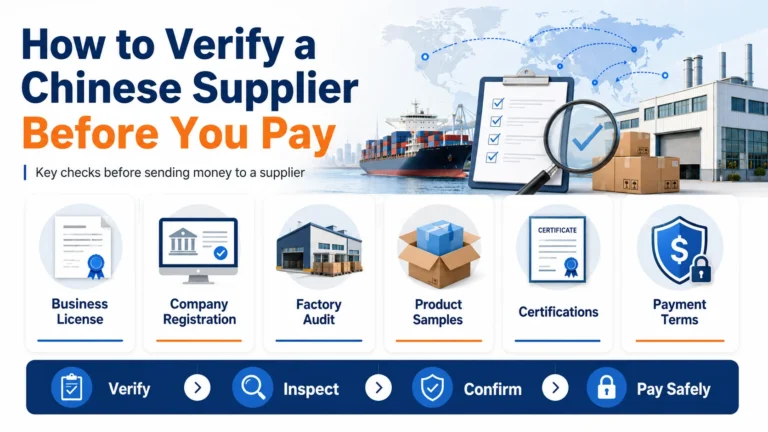
How to Verify a Chinese Supplier Before You Pay Verified & Reviewed · Last updated July 2026 Before you pay a Chinese supplier, do not rely only...
Read guide →
Importing goods from China can be highly profitable—but only when you understand the necessary documents and import requirements. Whether you’re...
Read guide →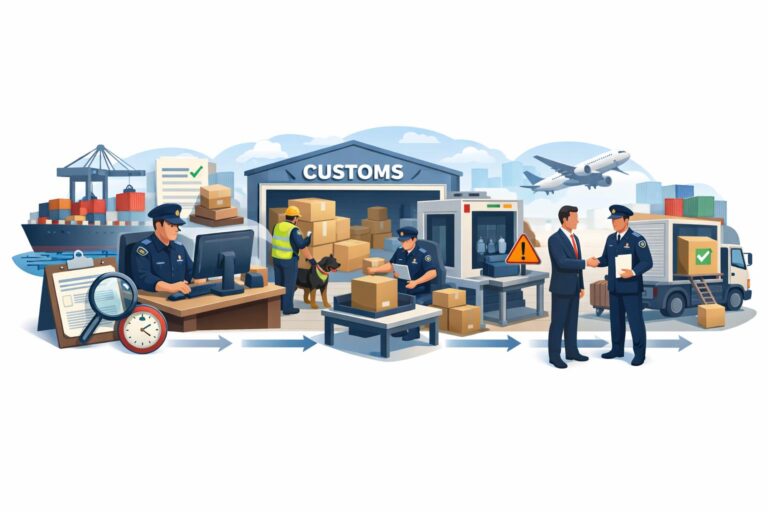
Customs Clearance Step by Step: The Complete Process Verified & Reviewed · Last updated February 2026 Customs clearance step by step helps intern...
Read guide →Air freight from China is the best option for time sensitive and high value shipments. It offers fast delivery, reliable transit times, and effic...
Learn more → Useful Resource Sea Freight Shipping from ChinaSea freight is the most cost effective shipping method for large volumes and container load cargo. It is ideal for businesses looking to reduce s...
Learn more →WhatsApp us