

Shipping Energy Storage Systems from China
- Verified & Reviewed · Last updated March 2026
Shipping energy storage systems from China requires careful planning around battery compliance, transport methods, transit time, and total logistics cost.
This guide explains how to ship battery energy storage systems from China safely and efficiently, including sea freight, air freight, rail options, customs clearance, lithium battery document requirements, packing standards, and final delivery planning for global projects.
Shipping method / Mode
Battery compliance
Customs clearance
- Experienced China-based logistics specialists
Table of Contents
Why Shipping Energy Storage Systems from China Requires Special Planning
Energy storage cargo is more complex than general industrial equipment. These systems are often high-value, technically sensitive, and subject to specific requirements during transportation. In many projects, the cargo may include lithium ion batteries, LFP cells, battery pack assemblies, inverter units, control cabinets, and complete containerized systems already equipped for deployment.
Unlike standard cargo, energy storage systems involve more risk at every stage of logistics. The battery itself may be regulated as dangerous goods. The equipment may be sensitive to impact, moisture, and vibration. The shipment may also require strict document review before loading and more coordination during delivery.
The main reasons why special planning is necessary include:
many battery products must comply with dangerous goods regulations
lithium batteries require accurate tests and compliance files
containerized systems may be heavy, oversized, or difficult to deliver
customs clearance depends on clear and consistent product descriptions
poor handling may increase the risk of short circuits or thermal runaway
final road transport may be more difficult than the ocean leg
For importers, this means logistics is not only about transport. It is also about risk control, delivery reliability, and protecting the performance of the project after installation.
What Is Included in an Energy Storage System Shipment
The term energy storage systems covers many product types. Some buyers import only core battery units, while others buy complete battery energy storage systems ready for project installation.
A shipment from China may include:
lithium batteries or lithium ion batteries
battery pack units or battery modules
inverter equipment
power conversion systems
transformers
EMS cabinets and control equipment
cooling systems
cables, connectors, and other components
spare parts for operation and maintenance
For larger projects, some systems are shipped as integrated container units. These containerized solutions may already be equipped with battery racks, monitoring systems, fire protection devices, and cooling equipment. This type of cargo requires more detailed planning for loading, handling, and final delivery.
Main Shipping Methods for Energy Storage Systems from China
Choosing the right transport method depends on the cargo profile, delivery deadline, destination, budget, and battery compliance conditions.
Sea Freight
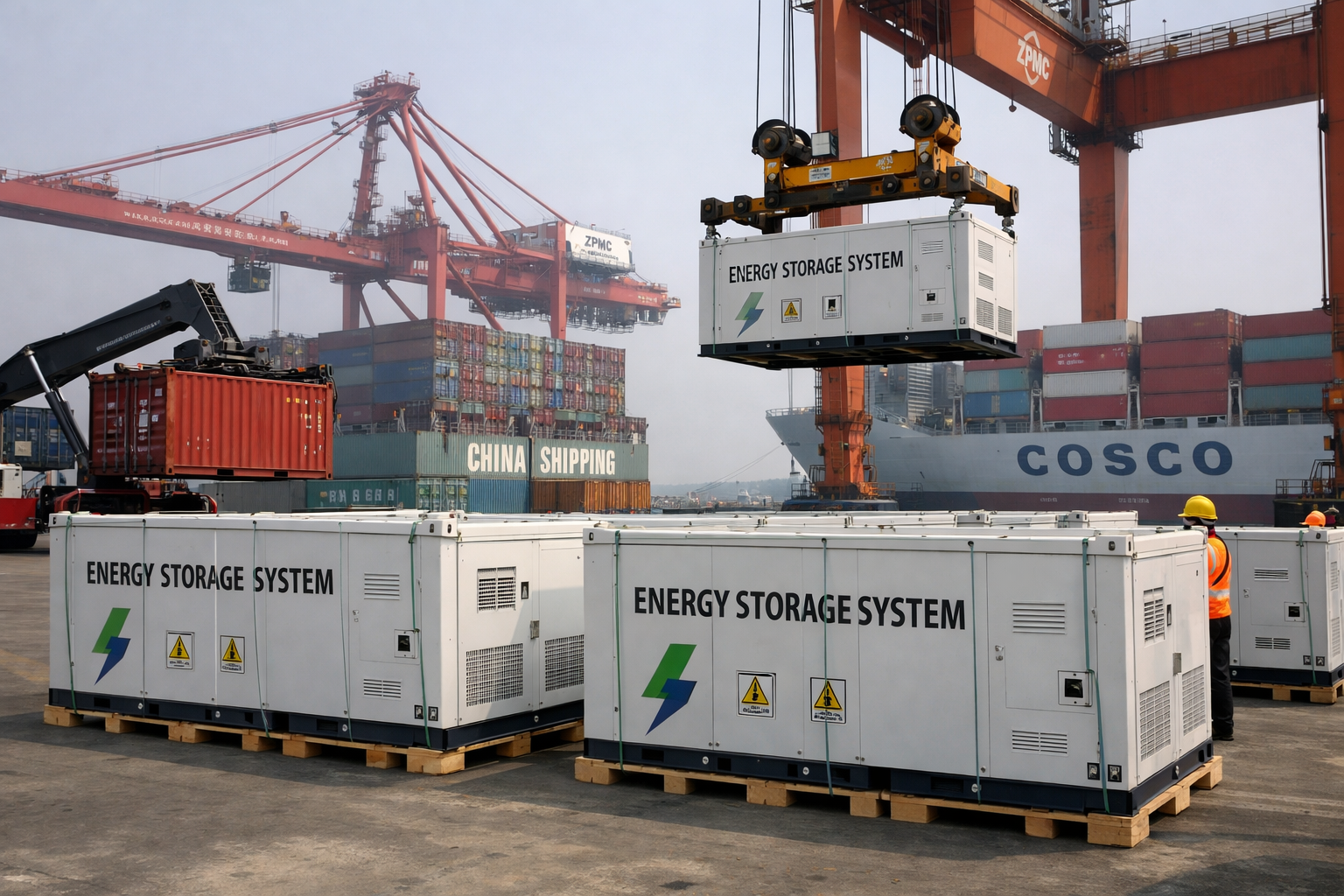
Sea freight is the main option for shipping energy storage systems from China. It is usually the most practical method for large battery energy storage systems, industrial equipment, and project cargo because it offers stronger capacity and better cost control.
Sea freight is commonly used for:
complete battery energy storage systems
battery cabinets and large battery pack shipments
containerized energy storage solutions
heavy industrial power equipment
multi-pallet project cargo
For large shipments, FCL is often the preferred solution because it reduces repeated handling and offers better cargo stability. LCL may work for samples, spare parts, or small orders, but it is not always ideal for lithium batteries.
Air Freight
Air freight is generally used only for urgent shipments. It is not the first choice for full systems because the cost is high and airline acceptance rules for lithium batteries are strict.
Air freight may be suitable for:
urgent spare parts
replacement components
sample units
control systems
critical equipment needed to avoid project delay
Before using air transport, buyers should confirm whether the cargo can be accepted under airline regulations and whether all compliance files are ready.
Rail and Road Transport
For some Europe-bound shipments, rail can be a practical middle option between sea and air. It may offer better efficiency than ocean freight while remaining more affordable than air transport.
Road transport is important for nearly every shipment because the final delivery usually depends on trucking from the port or rail terminal to the warehouse or project site. For heavy or containerized systems, road transport planning should include:
cargo dimensions and weight
unloading conditions
road restrictions
crane or forklift requirements
site access
local delivery appointment arrangements
Compliance Requirements for Battery Energy Storage Systems
Compliance is one of the most important parts of the shipping process. Incomplete or inaccurate documents can delay booking, stop loading, or create customs clearance problems after arrival.
Battery Testing and Dangerous Goods Documents
For lithium batteries and lithium ion batteries, UN38.3 is often a key requirement. This confirms the battery has passed transport safety tests. Depending on the product type and shipping method, the cargo may also be classified as dangerous goods and require additional declarations.
Buyers should confirm:
battery chemistry
dangerous goods classification
packaging requirements
label and marking requirements
carrier acceptance conditions
Material Safety Data Sheet and Shipping Documents
A material safety data sheet is a core document for many battery shipments. It provides information about battery composition, hazards, handling instructions, and emergency response.
Standard shipping documents usually include:
bill of lading or air waybill
battery test reports
material safety data sheet
certificate of origin if required
product specifications if needed for customs or import review
Customs Clearance and Import Compliance
Customs clearance should be planned before cargo departure, not after arrival. Different countries may have different import rules for energy storage systems, industrial battery equipment, and related power components.
To support smoother customs clearance, importers should make sure:
product descriptions are accurate
HS codes are reasonable
declared value matches the cargo
battery documents are complete
importer information is ready
all documents are consistent with the shipment
Packing, Safety, and Handling Standards
Packing quality has a direct impact on safety, cargo condition, and long-term system reliability. Energy storage cargo is often exposed to vibration, repeated handling, pressure, and moisture during transport. Weak packaging can damage the system even if the exterior looks normal.
The main safety focus should include:
preventing short circuits
reducing thermal runaway risk
improving cargo stability
protecting against moisture
reducing handling damage
securing cargo correctly inside the container
Proper packing methods may include reinforced cartons, strong pallets, wooden crates, anti-slip protection, internal blocking, moisture barriers, and terminal protection. For larger systems, the loading plan should also confirm weight distribution and safe securing methods.
Below is a simplified comparison of the main shipping options.
| Shipping Method | Best For | Main Advantages | Main Limitations |
|---|---|---|---|
| Sea Freight | Large battery energy storage systems, container cargo, project shipments | Lower cost for heavy cargo, good capacity, suitable for container ships | Longer transit time, more exposure to port congestion |
| Air Freight | Urgent spare parts, samples, high-priority components | Fast delivery, useful for project emergencies | High cost, strict lithium battery acceptance rules |
| Rail Freight | Selected Europe shipments | Faster than sea in some cases, moderate cost | Limited route suitability, battery acceptance must be checked |
| Road Transport | Final delivery from port or terminal | Essential for warehouse and site delivery | Can be limited by road access, unloading conditions, and local restrictions |
Shipping Costs and Transit Time
Shipping costs for energy storage systems from China depend on more than the base freight rate. The final logistics cost is usually affected by cargo type, battery compliance, transport mode, destination, and delivery conditions. For many battery energy storage systems, buyers should focus on the total door-to-door cost rather than comparing freight prices alone.
What Affects Shipping Costs
Shipping costs can vary widely depending on the shipment details. If the cargo includes lithium batteries or battery pack units, the cost may be higher because of dangerous goods handling and additional compliance requirements.
The main cost factors usually include:
battery type and dangerous goods classification
package dimensions, gross weight, and loading method
export handling charges in China
port, terminal, or airport fees
customs clearance and import charges
inland delivery distance and unloading conditions
cargo insurance for high-value equipment
For large battery energy storage systems, sea freight is usually the most cost-effective option. It is better suited for heavy cargo, container shipments, and project delivery. Air freight is much faster, but the cost is much higher and acceptance rules are stricter. Rail freight can be a practical option for some Europe shipments.
Typical Transit Time by Shipping Method
Transit time should be evaluated based on the full transportation process, not only the main carrier schedule. For energy storage systems, the real delivery timeline may also include battery document review, dangerous goods approval, customs clearance, port handling, and inland road transport.
As a general reference:
| Destination | Sea Freight | Rail Freight | Air Freight |
|---|---|---|---|
| USA West Coast | 12–22 days | - | 5–10 days |
| USA East Coast | 30–45 days | - | 7–12 days |
| Europe | 25–45 days | 16–22 days | 5–10 days |
| Australia | 12–20 days | - | 3–7 days |
| Southeast Asia | 5–12 days | - | 2–5 days |
These are general reference ranges only. Actual transit time may be affected by port congestion, vessel schedules, customs inspections, battery compliance review, and final delivery arrangements.
For most full energy storage systems, sea freight offers the best balance of cost and capacity. Air freight is usually more suitable for urgent spare parts or critical components, while rail may work for selected Europe-bound cargo.

Common Challenges in the Transportation Process
Many importers run into the same avoidable problems when shipping energy storage systems from China. These problems often do not come from one major mistake, but from several small issues that were not addressed early enough.
Common challenges include:
incomplete compliance files
inaccurate dangerous goods declarations
unclear product descriptions
customs clearance delays
weak packing quality
poor loading control
road transport restrictions at destination
weak coordination between supplier, freight forwarder, and customer
For example, cargo may reach the port on time but still fail to deliver because the project site is not ready for unloading. In other cases, the battery shipment may be delayed before loading because a required material safety data sheet or test file is missing.
In project logistics, good communication is just as important as transport itself.
Pre-Shipment Checklist Before Booking Energy Storage Cargo
Before booking cargo, buyers should prepare a clear shipment checklist. This improves efficiency, reduces mistakes, and makes the transportation process more predictable.
A practical pre-shipment checklist should cover the following:
product name and battery type
whether the cargo includes lithium batteries or battery pack units
package count, dimensions, and gross weight
UN38.3 and other battery tests
material safety data sheet
invoice and packing list
destination port and delivery address
unloading conditions at site
customs clearance preparation
required delivery timeline
responsible contact person on each side
This step is especially important for customers handling battery energy storage systems for the first time or managing large industrial projects with multiple suppliers and components.
How to Choose the Right Freight Forwarder for Energy Storage Cargo
Not every freight forwarder is the right fit for energy storage cargo. Buyers should work with a logistics partner that understands the specific requirements of lithium batteries, dangerous goods, customs clearance, and project delivery.
A reliable freight forwarder should be able to:
review battery and cargo details
identify compliance risks early
recommend the right shipping method
support document preparation
coordinate loading and port handling
arrange final delivery planning
communicate clearly with suppliers, brokers, and customers
At Tonlexing, we help customers ship energy storage systems from China with a practical focus on safety, compliance, and delivery efficiency. Our team can review cargo details, support documentation, and suggest suitable transport solutions based on the shipment size, battery type, and destination. For this type of cargo, reliability, experience, and execution ability often matter more than simply choosing the lowest quote.
Frequently Asked Questions
Sea freight is usually the best choice for large battery energy storage systems, container cargo, and heavy project shipments. It offers the most practical balance of cost and capacity.
Many lithium batteries and lithium ion batteries are classified as dangerous goods during transportation. The exact requirements depend on the battery type, packaging, and transport mode.
Common documents include the commercial invoice, packing list, UN38.3 report, material safety data sheet, and transport documents. Some shipments may also require dangerous goods declarations and import-specific files.
Because battery systems and power equipment often require accurate descriptions and complete supporting files. Inconsistent documents can delay customs clearance and final delivery.
They can reduce risk by confirming compliance early, improving packing quality, choosing the right transport method, and working with a freight forwarder experienced in energy storage logistics.
More Shipping Guides
Get an Energy Storage Shipping Quote from China
- Support for battery energy storage systems and lithium battery cargo
- Sea, air, rail, and door-to-door shipping options
- Help with compliance documents, customs clearance, and delivery planning
Get tailored shipping solutions, transit planning, and expert support for your energy storage shipment from China.