Related Guide
Drayage in the USA Explained
Drayage in the USA Explained: Services, Costs, Types, and How It Works Verified & Reviewed · Last updated March 2026 Drayage in the USA explained...
Read guide →An added benefit for eligible new customers shipping with Tonlexing.
Check Eligibility & Get a Quote →Subject to cargo eligibility, insurer approval and policy terms.
Coverage and insured value depend on the cargo, route and written insurer confirmation before shipment. Policy exclusions, deductibles and claims terms apply. The US$500,000 figure is a maximum coverage limit, not a guaranteed claim payment. Insurance premiums are not represented as free unless expressly confirmed in your quote.


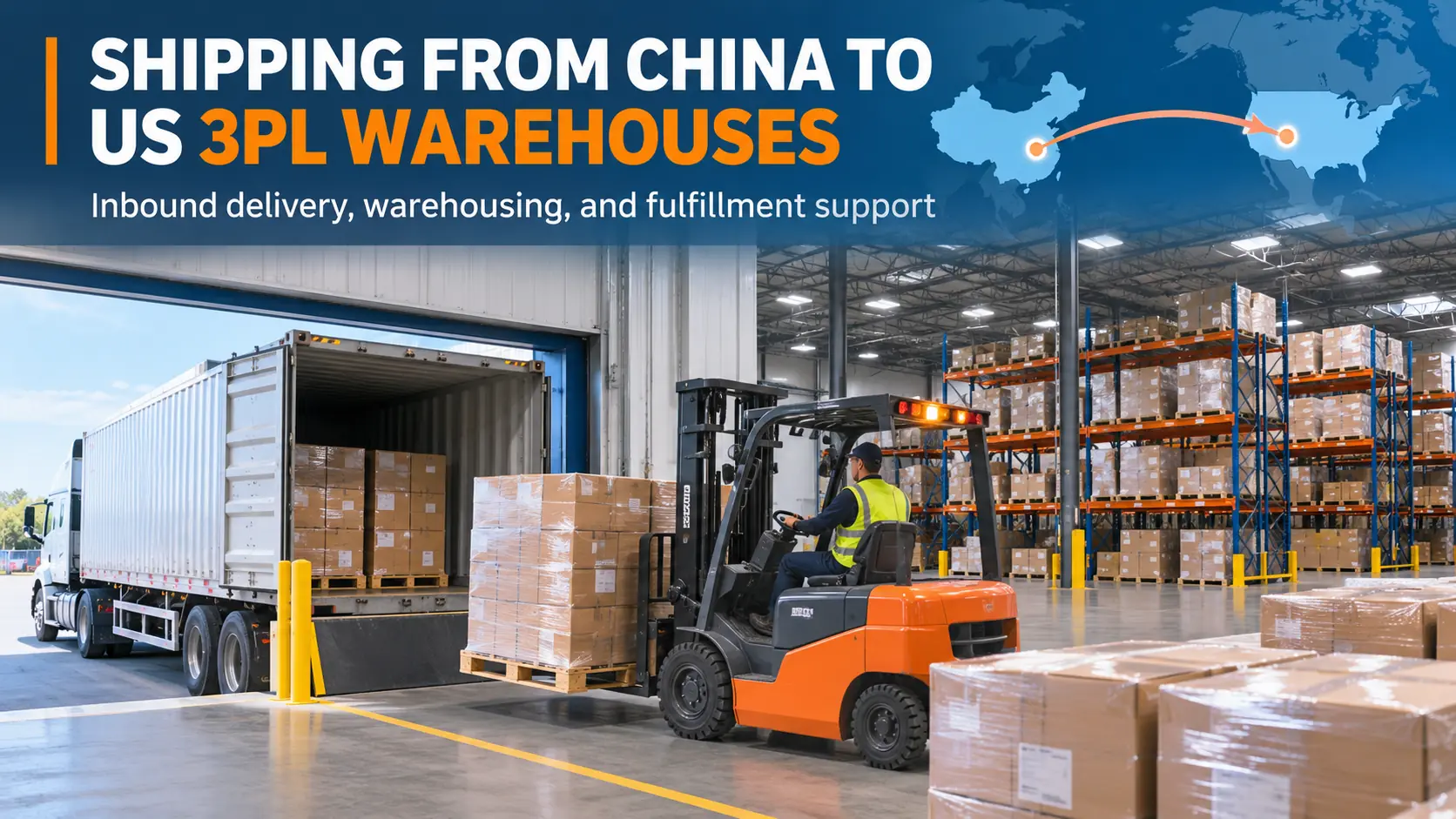
Shipping inventory from China to a US 3PL warehouse requires coordinated supplier pickup, international freight, customs clearance, and final delivery.
Learn about shipping methods, costs, transit times, US import requirements, and warehouse receiving procedures.
Shipping Costs
Transit Time
3PL Warehouse Delivery
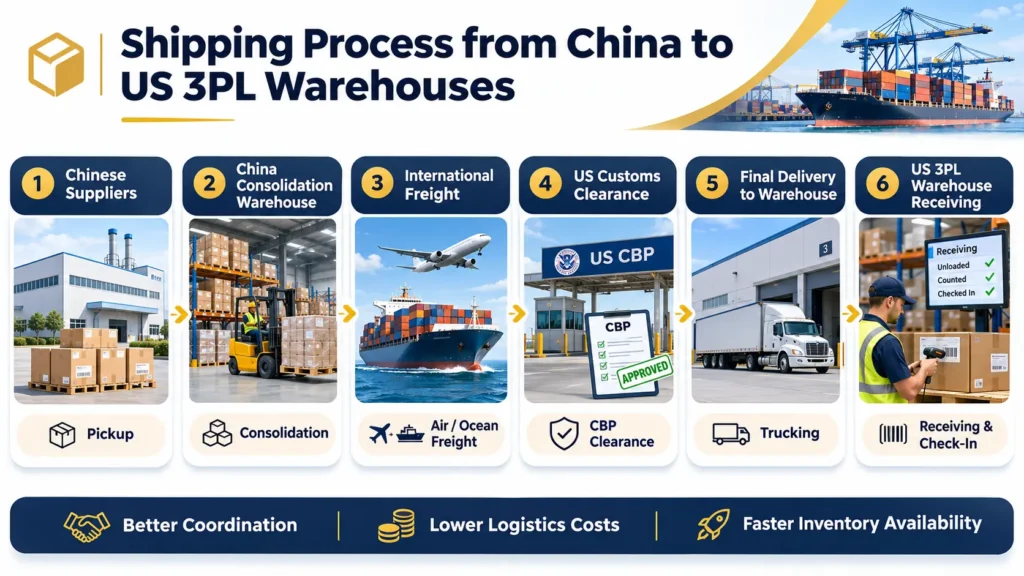
The shipping process typically involves five stages, from preparing goods in China to completing inventory receiving at the US warehouse.
Confirm warehouse requirements: Obtain the 3PL warehouse address, ZIP code, receiving hours, delivery appointment rules, carton labeling instructions, and pallet specifications. Check whether the facility accepts LTL or FTL deliveries.
Arrange supplier pickup: Coordinate with your Chinese suppliers to collect finished goods. If products come from different factories, arrange transportation to a consolidation warehouse before international shipping.
Prepare and ship the cargo: Check product quantities, packaging, dimensions, and shipping documents. Select air or sea freight based on your cargo and delivery schedule.
Complete US customs clearance: The importer or its authorized customs broker handles the import entry, applicable duties, and other regulatory requirements. Ocean shipments also require timely ISF filing.
Arrange final delivery: After customs release, coordinate port pickup or airport collection, inland transportation, and delivery to the designated 3PL warehouse. The warehouse then checks the shipment and processes inventory according to its receiving procedures.
Working with a freight forwarder can help coordinate these stages, particularly when multiple suppliers, carriers, and service providers are involved. For a broader overview of shipping from China to the USA, you can also review the available transportation options.
The best shipping method depends on shipment size, product characteristics, inventory demand, and delivery urgency. Air freight is generally faster, while ocean freight is usually more economical for larger shipments.
| Shipping Method | Suitable For | Main Advantage |
|---|---|---|
| Express Shipping | Samples and small parcels | Fast delivery |
| Air Freight | Medium-sized or urgent shipments | Shorter transit time |
| LCL Sea Freight | Smaller ocean shipments | No need to book a full container |
| FCL Sea Freight | Large or regular shipments | Dedicated container space |
Air freight is suitable for medium-sized shipments, high-value products, and inventory that needs replenishment quickly. It offers shorter transit times than ocean freight but generally has a higher transportation cost.
Express services from carriers such as DHL, FedEx, and UPS are more suitable for samples, small parcels, and urgent orders. However, their rates can become expensive as shipment weight and dimensions increase.
Air freight is often a practical choice when a US 3PL warehouse needs inventory quickly without waiting for a full ocean shipment.
Ocean freight is commonly used for larger inventory shipments because of its cost advantages.
LCL (Less than Container Load) allows multiple importers to share container space. It is suitable for shipments that do not require an entire container, although consolidation and deconsolidation may add handling time.
FCL (Full Container Load) provides dedicated container space for one shipper. It is generally suitable for larger shipments, multiple pallets, or regular inventory replenishment. Fewer cargo handling stages can also help simplify transportation.
For a more detailed comparison, see our guide to FCL vs. LCL shipping from China to the USA.
Many ecommerce businesses purchase products from several factories in China but prefer to send all inventory to one US warehouse. Shipping each order separately can increase pickup, export handling, and international freight costs.
A more coordinated approach is supplier consolidation.
A freight forwarder can arrange pickup from different suppliers and transport the goods to a designated warehouse in China. Once the cargo arrives, the warehouse can check quantities, inspect outer packaging, and organize the shipments for export.
Before consolidation, importers should confirm:
Product descriptions and quantities from each supplier
Carton dimensions, gross weight, and total CBM
Product labels and packaging requirements
Cargo readiness dates and supplier addresses
Commercial invoices and packing information
If necessary, products can be repacked, labeled, or grouped according to the receiving requirements of the US 3PL.
Consolidation can reduce duplicated pickups and help combine smaller shipments into one larger international shipment. It may also make inventory planning easier by allowing products from different suppliers to arrive at the same destination.
However, consolidation is not automatically cheaper in every situation. Importers should compare warehouse handling, storage, repacking, and additional transportation charges against the savings in international freight.
Businesses sourcing from multiple factories can learn more about China warehouse consolidation for USA shipments.
Before shipping inventory from China to a US 3PL warehouse, importers must ensure that their goods meet US customs requirements. Proper documentation, accurate product classification, and a clear Importer of Record (IOR) arrangement help prevent customs delays, unexpected duties, and compliance issues.
The Importer of Record is responsible for ensuring that imported goods comply with US customs regulations. This includes providing accurate shipment information, declaring the correct customs value and tariff classification, and paying applicable duties and fees.
Importers can handle customs entry themselves or authorize a licensed US customs broker to file on their behalf. Although a broker can manage documentation and customs procedures, the importer remains responsible for compliance.
A US 3PL warehouse is not automatically the Importer of Record simply because it receives the shipment. Confirm the importer arrangement before the goods leave China.
Most commercial shipments require accurate import information and supporting documents, including:
Commercial Invoice: Contains product descriptions, quantities, declared values, and seller information.
Packing List: Details carton quantities, gross weight, dimensions, and packaging information.
Bill of Lading or Air Waybill: Provides transportation and shipment details.
Additional Certificates or Permits: May be required for regulated products or goods subject to specific US agency requirements.
Products must also be classified under the appropriate Harmonized Tariff Schedule (HTS) code. Accurate classification helps determine applicable duty rates and identify any additional import requirements.
Import duties are determined by factors such as product classification, customs value, country of origin, and applicable trade measures. Certain products may also be subject to additional tariffs.
A customs bond may be required depending on the entry type and import circumstances. Importers should confirm the applicable bond requirements and estimated duties with their customs broker before shipping.
For ocean shipments entering the United States, the Importer Security Filing (ISF 10+2) must be submitted to US Customs and Border Protection (CBP) at least 24 hours before the cargo is loaded onto the vessel destined for the United States.
The filing provides advance information about the shipment, including details about the importer, seller, manufacturer, and cargo. Late or inaccurate filings may result in penalties and shipment delays. ISF requirements do not apply to air freight.
Shipping terms determine how transportation costs and import-related responsibilities are divided between the buyer and seller.
EXW: The buyer generally arranges pickup and transportation from the supplier’s premises.
FOB: The seller handles delivery to the named port and export clearance, while the buyer arranges the main transportation.
DAP: The seller arranges delivery to the named destination, while the buyer handles import clearance and applicable duties.
DDP: The seller takes responsibility for delivery, import clearance, and applicable duties under the agreed terms.
Regardless of the shipping term, the actual US customs entry must follow applicable import regulations, and the IOR arrangement should be confirmed before shipment.
For more information, see our guides to customs clearance from China to the USA and DDP shipping from China to the USA.
A shipment can clear customs successfully and still experience delays if it does not meet the receiving warehouse’s requirements. Each 3PL provider may have different rules for labeling, packaging, pallet dimensions, and delivery appointments.
Before shipping, obtain the warehouse’s current inbound preparation guidelines and share them with your suppliers.
Common requirements include:
Product Barcodes: Apply scannable SKU, UPC, EAN, or warehouse-specific labels where required.
Carton Labels: Include the necessary product identification, carton numbers, and shipment references.
Palletization: Follow the warehouse’s specified pallet dimensions, weight limits, and stacking rules.
Packaging: Use suitable cartons and protective materials to reduce damage during transportation and handling.
Do not assume that every US 3PL uses the same pallet size or labeling format. Confirm the requirements before cargo leaves China to avoid relabeling, repacking, or additional handling charges.
Many 3PL warehouses require an Advance Shipping Notice (ASN) before a shipment arrives. The ASN provides information about expected inventory, carton quantities, SKUs, and delivery details.
For truck deliveries, the warehouse may also require an appointment. The carrier must follow the assigned delivery window and provide the necessary shipment references.
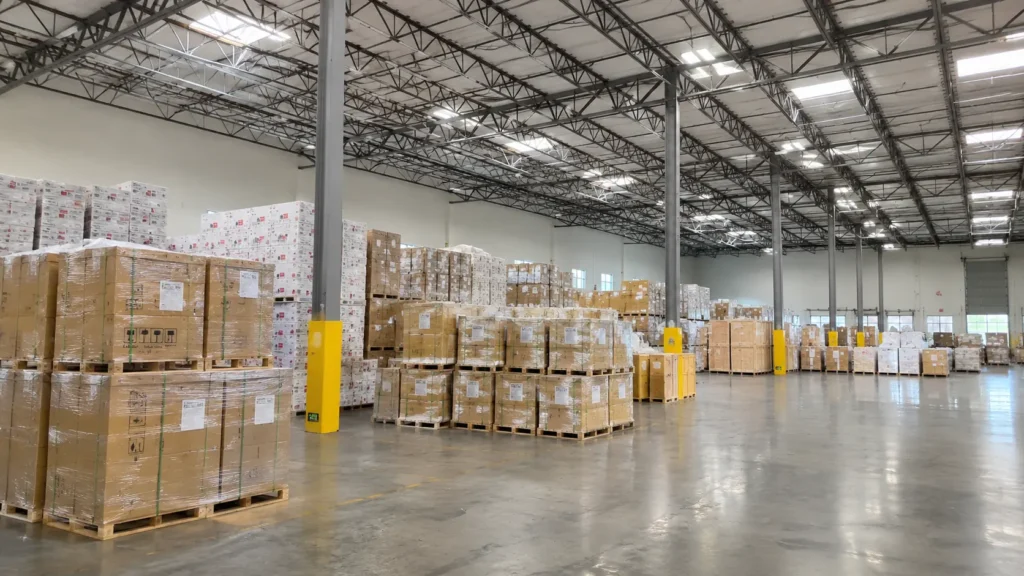
After arrival, the warehouse typically checks the cartons or pallets against the inbound records. It may inspect quantities, identify damaged packaging, and report discrepancies before updating the inventory management system.
Cargo delivery and inventory availability are two different milestones. Goods may need additional receiving, counting, labeling, and putaway before they become available for order fulfillment.
Shipping costs from China to a US 3PL warehouse depend on cargo volume, weight, destination, shipping method, and delivery requirements. Express and air freight are suitable for smaller or urgent shipments, while LCL and FCL ocean freight are generally more economical for larger inventory orders.
The following table provides indicative freight rates for different shipping methods and shipment sizes.
| Shipping Method | Ideal Volume / Weight | Base Freight Rate |
|---|---|---|
| Express Courier (DHL, FedEx, UPS) | Under 150 kg | $5.00–$19.00+ / kg |
| Air Freight | 150–500+ kg | $6.00–$8.50 / chargeable kg |
| Ocean LCL | 1–15 CBM | $60–$160 / CBM (West Coast); $85–$190 / CBM (East Coast) |
| Ocean FCL – 20ft | 15–28 CBM | $4,400–$6,600 (West Coast); $5,800–$7,900 (East Coast) |
| Ocean FCL – 40ft / 40HQ | 28–68 CBM | $7,000–$7,900 (West Coast); $9,000–$10,100 (East Coast) |
Note: These are indicative reference rates, not guaranteed quotations. Express courier rates may vary depending on account discounts. Actual prices depend on market conditions, cargo specifications, carrier availability, and destination.
Base freight rates do not necessarily cover the entire delivery process. Importers should also budget for:
China Pickup and Origin Handling: Collecting goods from suppliers, warehouse handling, export documentation, and consolidation when required.
Customs Clearance and Duties: Customs broker fees, applicable import duties, tariffs, and entry-related charges.
US Destination Handling and Inland Delivery: Port or airport handling, drayage, chassis charges where applicable, and trucking to the 3PL warehouse.
3PL Warehouse Fees: Unloading, receiving, labeling, pallet handling, storage, and other fulfillment-related services.
Cargo insurance can also be arranged to protect against eligible loss or damage during transportation.
When comparing quotations, check whether the same services and destination charges are included. A lower international freight rate does not necessarily mean a lower total delivery cost.
Estimated door-to-door transit times vary by shipping method and destination:
Express Courier: Approximately 3–7 days.
Air Freight: Approximately 7–12 days.
LCL Sea Freight: Around 25–35 days to the West Coast and 35–45+ days to the East Coast.
FCL Sea Freight: Around 20–28 days to the West Coast and 30–40 days to the East Coast.
These are planning estimates rather than guaranteed delivery schedules. Actual transit times depend on departure and arrival locations, carrier schedules, customs processing, and inland transportation arrangements.
After delivery, the 3PL warehouse may need additional time for unloading, inspection, counting, labeling, and inventory registration in its warehouse management system (WMS). Sellers should distinguish between cargo delivery and inventory availability when planning stock replenishment.
Choosing the right freight forwarder is important when shipping inventory from China to a US 3PL warehouse. Beyond competitive freight rates, businesses need a logistics partner that understands international transportation, US import procedures, and warehouse delivery requirements.
Before making a decision, consider the following factors:
China Pickup and Consolidation: Check whether the forwarder can collect cargo from multiple suppliers, coordinate origin warehouse handling, and consolidate shipments when needed.
Flexible Shipping Options: Look for air and ocean freight services that can accommodate different shipment sizes, inventory volumes, and replenishment schedules.
US Customs Coordination: Confirm how customs clearance is arranged, who acts as the Importer of Record, and whether the forwarder can coordinate with a qualified US customs broker.
3PL Delivery Experience: Make sure the forwarder can communicate with your designated warehouse, follow its receiving instructions, and arrange suitable transportation and delivery appointments.
Transparent Pricing and Shipment Updates: Request an itemized quotation covering the main transportation and destination charges. Reliable tracking and timely communication also help you manage inventory arrivals.
At Tonlexing, we help businesses coordinate shipments from China to designated US 3PL warehouses through supplier pickup, cargo consolidation, air and sea freight, customs coordination, and final delivery arrangements.
Whether you are shipping inventory from one factory or sourcing from multiple Chinese suppliers, we can help arrange a shipping solution based on your cargo specifications, budget, and warehouse destination.
Contact Tonlexing to discuss your shipment and request a customized freight quotation.
Yes. A freight forwarder can arrange pickup from multiple suppliers and consolidate the goods at a warehouse in China before shipping them to one US 3PL destination. This can reduce duplicated transportation and handling costs.
Yes. A freight forwarder can coordinate final delivery after customs clearance and cargo release. The shipment must meet the receiving warehouse’s labeling, packaging, documentation, and appointment requirements.
Not necessarily. Foreign businesses may be able to arrange US imports under an appropriate importer structure, subject to CBP requirements. They must establish a valid importer identification and meet applicable entry requirements. Consult a licensed customs broker before shipping to confirm the arrangement.
Not automatically. DDP generally covers transportation to the named destination, import clearance, and applicable duties under the agreed terms. Separate 3PL services, such as unloading, receiving, labeling, storage, and order fulfillment, should be confirmed and quoted separately.
Ocean freight is generally the most economical option for larger shipments. LCL is suitable for smaller cargo volumes, while FCL can offer better overall value for larger shipments. Air freight and express shipping cost more but are useful for urgent inventory replenishment. The best option depends on your cargo volume, delivery schedule, and total landed cost.
Useful freight, customs and importing resources related to this shipping guide.
Drayage in the USA Explained: Services, Costs, Types, and How It Works Verified & Reviewed · Last updated March 2026 Drayage in the USA explained...
Read guide →
In today’s global economy, businesses and individuals are increasingly turning to international shipping to meet their needs. Door-to-door shippi...
Read guide →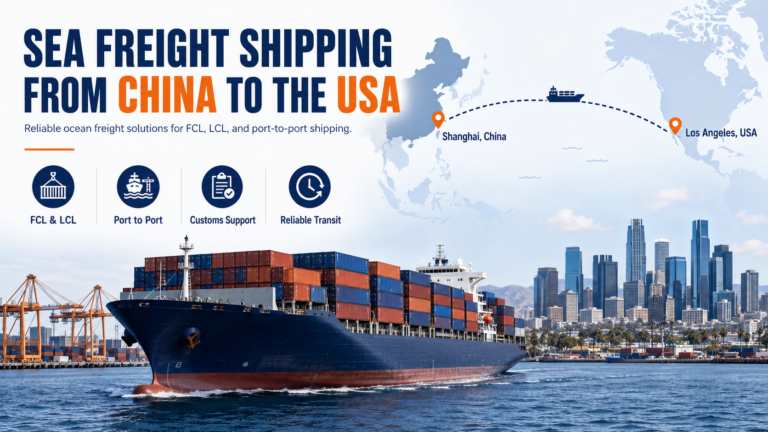
Sea Freight Shipping from China to the USA Verified & Reviewed · Last updated June 2026 Sea freight shipping from China to the USA is one of the...
Read guide →
Compare air freight rates from China to the USA, including transit times, chargeable weight, and cost effective air shipping options.
Read guide →Break down shipping costs from China to the USA, including air freight, sea freight, and delivery times for different shipment sizes.
Learn more → Useful Resource 20FT & 40FT Container Shipping Rates from China to USA20ft & 40ft Container Shipping Rates from China to USA Verified & Reviewed · Last updated June 2026 20ft and 40ft container shipping rates from C...
Learn more →WhatsApp us