
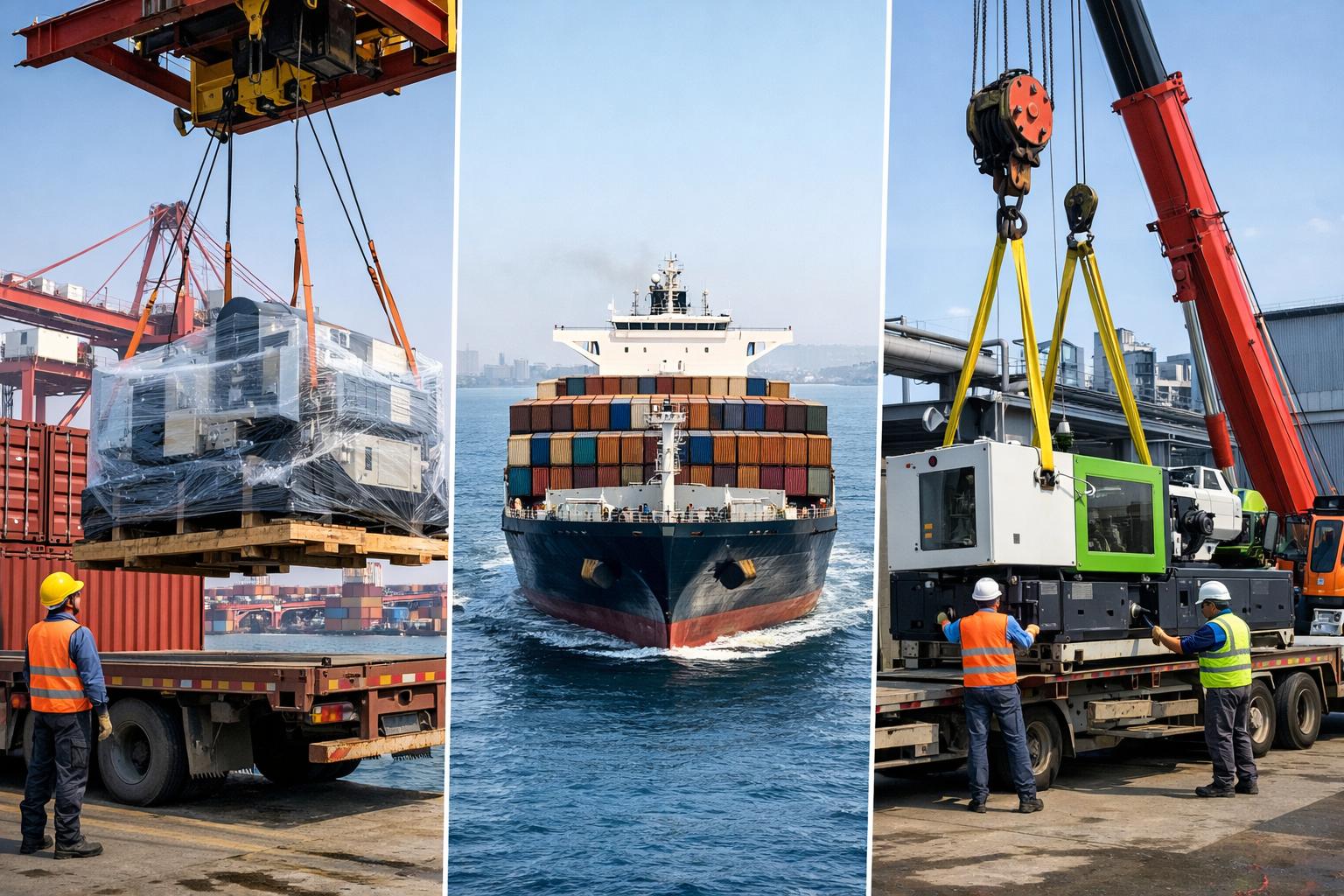
Shipping Machinery From China to Germany

Shipping machinery from China to Germany varies depending on cargo size, transit time, and total shipping charges.

This updated 2026 guide explains shipping machinery from China to Germany by air freight, sea freight, and rail freight, covering transit times, container options, shipping routes, shipping costs, and customs clearance documents such as the commercial invoice and packing list.

Air / Sea / Rail

Transit time 

Door to Door / Customs Clearance

Shipping Machinery From China to Germany-Air Freight, Sea Freight, Rail Freight, and Customs Clearance
10,000+ international shipments handled    Global sea, air & DDP shipping solutions    24/7 shipment tracking & customer support

Table of Contents

Quick Decision Guide: Choose Air, Sea, or Rail in 60 Seconds

Before you compare quotes, decide what matters most: speed vs cost vs cargo sensitivity.

  • Need it fast : choose air freight or express shipping

  • Heavy and not urgent: choose sea freight (often the cheapest shipping option for heavy machinery)

  • Middle ground: choose rail freight on the China Europe rail freight network

This guide focuses on machinery. Perishable goods follow different temperature-control and inspection requirements and should be handled as a separate category.

Air Freight vs Sea Freight vs Rail Freight for Machinery

The best shipping method depends on cargo size, urgency, and how your machinery is packed.

Air freight for machinery

Air freight is best for high-value machinery, urgent replacement parts, and smaller shipments where time is critical.

  • Typical transit times: 3–7 days door shipping to Germany, depending on origin and routing

  • Best airports: Frankfurt Airport is a major hub for Germany air freight and onward trucking

  • Use cases: production downtime, urgent installation schedules, time-critical spare parts

For urgent machinery, air cargo is often chosen because it keeps lead times short and reduces downtime risk. If timing is critical, book express air freight. It is faster but more expensive, so use it when the value of timely delivery is higher than air freight costs.

Sea freight for machinery

Sea freight is the most common solution for industrial machines because it delivers the lowest cost per kg for heavy cargo.

  • Typical transit times: 30–55 days door-to-door

  • Best for: crates, pallets, heavy units, multiple machines, entire container loads

  • Main advantages: low freight shipping cost and strong capacity for large cargo transported

Your main sea freight decision is FCL shipping vs LCL shipping:

  • Full container load is safer because handling is reduced

  • LCL shipping works for smaller shipments, but adds more touchpoints and damage risk

For Germany sea freight and Germany ocean freight, your forwarder will often compare reliability and space availability across major shipping companies, especially during peak season. If you want good ocean freight performance, focus on fewer handoffs, stable schedules, and clean paperwork.

Rail freight for machinery

Rail freight on the China Europe rail freight network is the middle option between air and ocean.

  • Typical transit times: 16–25 days door-to-door

  • Best for: crated machinery, stable volume, consistent routing to major European destinations

  • Strength: often a stable railway service vs some ocean schedules during peak congestion

Rail shipping depends on capacity at rail terminals and schedule stability on cross-border railway transportation lanes. If you are deciding whether to choose rail freight, confirm hub-to-hub timing and door-to-door feasibility before booking.

Transit Times From China to Germany

Transit times are not only the main transport leg. They include export pickup, terminal processing, customs clearance, and inland delivery to the final destination.

Typical door-to-door transit times

Shipping methodTransit timesBest fit
Air freight3–7 daysurgent machinery, spare parts
Express shipping1–4 dayssmall parcels, emergency component
Rail freight16–25 daysbalanced speed and freight costs
Sea freight / ocean freight30–55 dayscheapest shipping for heavy machinery

Why transit times change

  • Port congestion during peak season

  • Factory readiness and export customs timing

  • Rail terminal availability and rail transit schedules

  • Airline capacity on key lanes into Germany

  • Destination appointment constraints for heavy delivery

Common shipping delays come from port congestion, container shortages, and document mismatches that trigger inspections. Early document checks and milestone tracking improve timely delivery.

Shipping Routes and Major Gateways

A clean shipping route reduces delays and surprise charges. For shipping from China to Germany, routing typically includes factory pickup, export gateway selection, main transport, then inland delivery.

Major Chinese ports for machinery exports

Common export gateways for machinery include Shanghai, Ningbo, Qingdao, and Shenzhen (Yantian/Shekou). For South China factories, Guangzhou (Nansha) is also widely used. A freight forwarder should choose the port based on factory location, sailing frequency, and equipment availability.

Germany entry and inland delivery logic

Common Germany entry ports include Hamburg and Bremerhaven. Depending on the carrier schedule, some shipments may route via nearby North Europe gateways and then move by truck or rail into Germany. Route planning should start with the delivery site in Germany, then work backward to port selection, because heavy-crate delivery often requires appointments and unloading equipment.

For machinery cargo shipping, confirming equipment positioning and container load orders early can help prevent avoidable delays during peak season.



Shipping Cost, Freight Costs, and Container Shipping Rates

If you only compare base freight rates, you will underestimate total landed cost.

Freight cost by mode

  • Air freight costs: driven by chargeable weight, dimensions, and service level

  • Ocean freight rates: driven by container type, space, season, and port pair

  • Rail freight: driven by container availability and terminal routing

Origin charges in China

  • Factory pickup, trucking, export handling

  • Terminal fees, documentation, security, VGM where applicable

  • Export customs processing

Destination charges in Germany

  • Handling, port fees, terminal release

  • Customs broker service, inspection costs if selected

  • Inland trucking to the final destination

Taxes and duties

  • Customs duties depend on HS classification

  • Import VAT in Germany is a major cash-flow factor for machinery imports

  • Additional import taxes may apply depending on product type and value rules

Risk costs

  • Packaging upgrades

  • Cargo insurance

  • Rework costs if crates are damaged or moisture affects precision machines

What drives container shipping rates

Container shipping rates and Germany freight rates move with:

  • Space availability and peak season demand

  • Port congestion and equipment shortages

  • Container type and load plan, especially full container load vs LCL shipment goods

  • Delivery complexity at the final destination

When comparing quotes, ask for a full breakdown of container cost and local charges, not just the headline ocean freight rate. Strong freight services and disciplined freight forwarding reduce re-handling, re-delivery, and documentation fixes. This is where a good forwarder adapts to your shipping needs instead of forcing a one-size-fits-all quote.

Container Load: FCL Shipping vs LCL Shipping

For machinery, container strategy is not only about price. It’s also about damage risk, handling, and delivery control.

Full container load for machinery

FCL shipping works best if you can fill most of a container or you want control and safety.

Benefits:

  • Fewer handling steps

  • Better security

  • Lower damage risk

  • Easier sealing and documentation consistency

When you ship an entire container, your machine stays in one controlled environment from origin to destination. Some exporters also call this shipping FCL.

LCL shipping for smaller machinery

LCL shipping is common for smaller shipments but needs stricter packing and shock control.

Risks:

  • Multiple warehouse moves

  • More forklift handling

  • Higher chance of crate impact

  • Potential delays if consolidation schedules slip

If your machinery is sensitive, confirm how the LCL shipment goods will be handled at both ends and upgrade packing if needed.

Packaging and Crating for Machinery Shipping

For shipping, industrial-grade packaging is necessary, especially for machinery.

Packing Standard for Machinery

Use these standards to reduce damage, moisture issues, and inspection problems:

  • Waterproofing for sea shipping: sealed wrapping, desiccants, and moisture barriers

  • Anti-rust protection for exposed metal surfaces during ocean freight exposure

  • Strong internal bracing to prevent movement inside the crate

  • Clear marks for lifting points, center of gravity, and crate numbers

  • Extra shock control for LCL shipment goods: corner protection and reinforced bases

  • Wood packaging compliance where required, including visible marks on wooden crates

A practical risk control step is a pre-shipment inspection in China. It documents condition before loading and strengthens insurance claims if damage occurs.

Customs Clearance Germany: Documents and Process

Customs clearance is where many machinery shipments get stuck. The biggest causes are inconsistent documents and unclear product descriptions. Germany follows EU customs regulations, so consistency is essential.

  • Commercial invoice

  • Packing list and crate marks

  • Transport document: bill of lading for ocean freight, air waybill for air freight

  • Supporting compliance documents if required

  • Any special certificates depending on the machine category

Commercial invoice best practices

Your commercial invoice should clearly show:

  • Product name and machine function

  • Model number and serial numbers

  • Quantity and unit value

  • Total value and currency

  • Country of origin

  • HS classification reference if available

Origin commercial invoice customs consistency

Origin commercial invoice customs issues usually mean export-side and import-side information does not match. Avoid differences in product naming, quantities, weights, HS references, and Incoterms responsibility statements.

For high-value machinery, some buyers request supporting documentation as credit packing list proof, especially when financing or insurance requires packaging details to match the shipment record.

Clearance Hold Triggers: Common Reasons Germany Customs Stops Machinery

  • Commercial invoice description is too generic and does not state machine function

  • Model number or serial numbers are missing

  • Weight or dimensions mismatch between invoice and packing list

  • HS code is inconsistent across documents or does not match the machine type

  • Certificate of origin is missing when the buyer requests it

  • Missing compliance documents for regulated machinery categories

  • Crate marks do not match the packing list crate numbers

Duties, Import Taxes, and Import VAT

Customs duties vary by machine type and classification. Correct HS code classification is critical to determining the exact duty rate for machinery imports.

Key points:

  • Import VAT is often the largest tax cost for Germany machinery imports, so plan cash flow early

  • The standard import sales tax for many industrial goods in Germany is 19%

  • A valid EORI number is typically required for importing into Germany as an economic operator

CE Marking and Compliance Basics

Machinery imported into Germany must generally comply with EU safety standards, which often means CE marking and relevant documentation.

Practical importer actions:

  • Confirm whether the machine category requires CE compliance

  • Request the correct documentation package from the supplier early

  • Keep technical documents ready in case authorities request them during inspections

If CE documents are missing or inconsistent, shipments may be held for checks, and the importer may face extra storage and re-delivery costs.

Freight Forwarder Selection: How to Choose a Professional Freight Forwarder

A freight forwarder is more than a booking agent. When you’re shipping machinery from China to Germany, you need a partner who can control the details that cause delays and extra costs: packing, routing, documentation, and delivery planning.

What a professional freight forwarder should do

  • Plan the best shipping method for your cargo size and urgency: air freight, sea freight, or rail freight

  • Recommend the right container plan: FCL shipping for safer handling, or LCL shipping for smaller shipments with stronger packing requirements

  • Provide a clear quote with transparent freight costs, separating origin, main freight, destination, and inland delivery

  • Check documents before departure, especially the commercial invoice, packing list, and air waybill or bill of lading

  • Manage delivery to the final destination in Germany, including appointments, forklift or crane needs, and access restrictions

  • Offer insurance options and support claims with photos and shipment records if damage happens

Delivery Planning for Heavy Cargo in Germany

  • Unloading method at the site: forklift capacity, dock availability, or crane requirements

  • Delivery appointment window and site receiving hours

  • Access limits: narrow roads, low bridges, steep ramps, or restricted industrial zones

  • Lift points and center of gravity clearly marked on the crate to prevent tipping

  • On-site contact person and phone number for the delivery driver

If you are shortlisting providers, ask for proof of experience on the China to Germany lane and compare scope, not just price. Many buyers define the best freight forwarder as the one that prevents destination surprises and keeps the shipment moving.

Shipping Process Checklist for Machinery Shipments

A simple shipping process checklist reduces mistakes and keeps the shipment moving:

  • Confirm cargo dimensions, crate count, and whether cargo weighs exceed handling limits

  • Choose the shipping method and container plan, then confirm pickup and cut-off dates

  • Finalize documents: commercial invoice, packing list, and air waybill or bill of lading

  • Confirm packing standards, waterproofing, and labels for handling and inspection

  • Track milestones from pickup to final destination and prepare for customs clearance timing

Frequently Asked Questions

Get a Machinery Shipping Quote: China to Germany

  • Air, sea, or rail options based on your cargo and timeline

  • Door-to-door delivery to Germany with customs clearance support

  • Clear breakdown of freight costs, taxes, and destination charges

Share your cargo dimensions, weight, pickup city, and Germany ZIP code to receive a fast, accurate quote and transit time range.