
Related Guide
Shipping Oversized Cargo to USA
Shipping Oversized Cargo to USA Verified & Reviewed · Last updated March 2026 Shipping oversized cargo to USA depends on cargo dimensions, weight...
Read guide →

Shipping mini jaw crushers from China to the USA requires proper transportation, packaging, and customs clearance. LCL suits some small machines, while FCL is generally better for heavier crushers or multiple units. Oversized equipment may require special containers.
This 2026 guide covers shipping costs, transit times, LCL and FCL options, packaging, US import duties, customs clearance, and final delivery.
Mini Jaw Crusher
LCL & FCL Freight
US Customs Clearance
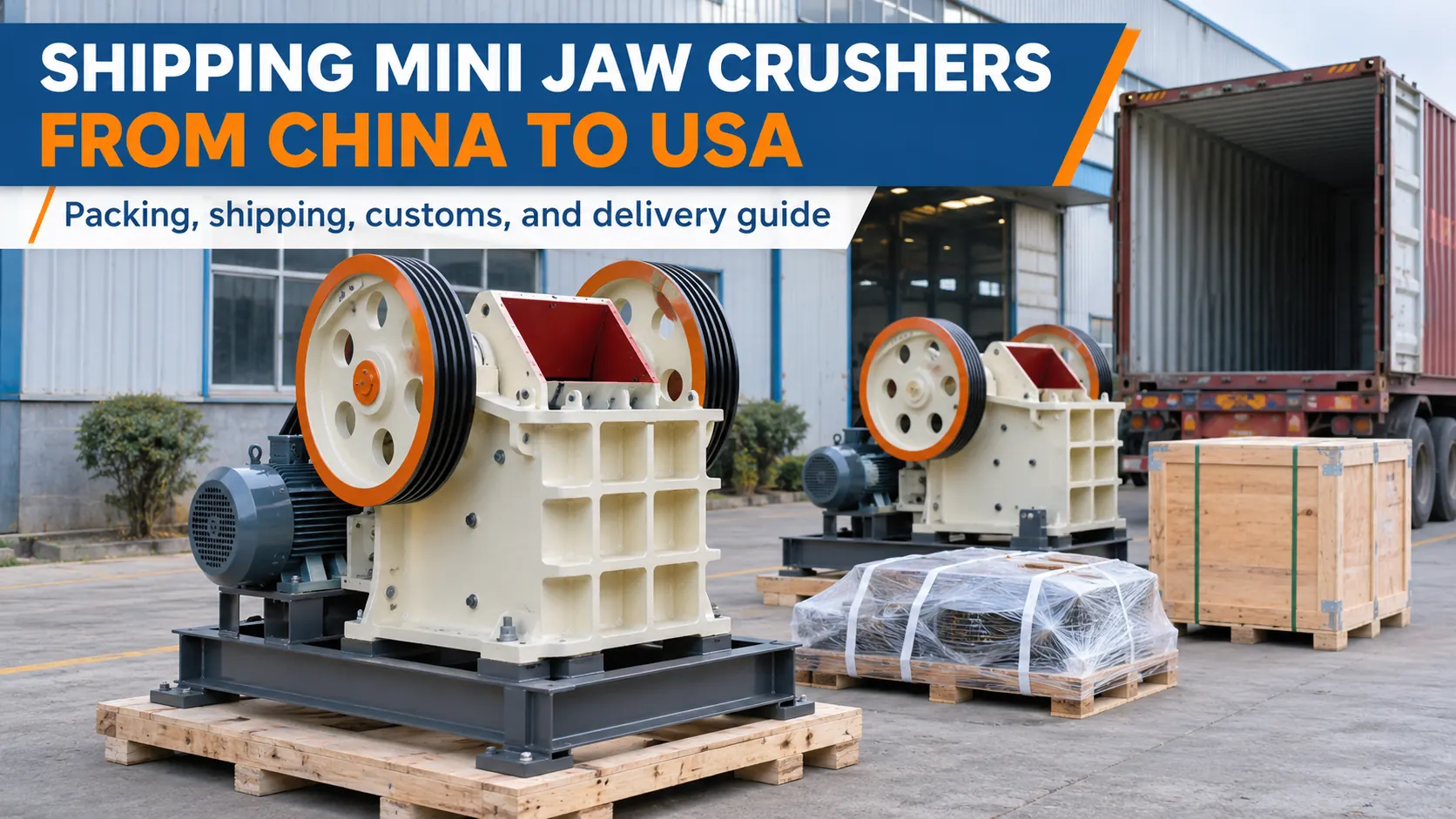
The shipping process involves coordinating the Chinese supplier, freight forwarder, shipping carrier, customs broker, and final delivery provider.
The main steps include:
Confirm machine specifications: Obtain the model, dimensions, gross weight, production capacity, and packaging details.
Choose a shipping method: Compare LCL, FCL, and special equipment transportation.
Prepare the cargo: Secure the machine and protect the motor, accessories, and exposed components.
Arrange factory pickup: Transport the equipment to the export warehouse or port.
Book ocean freight: Confirm the shipping route, freight charges, and estimated transit time.
Complete US customs clearance: Prepare the commercial invoice, packing list, Bill of Lading, and required declarations.
Arrange final delivery: Organize port pickup, trucking, and unloading at the destination.
Before shipment, confirm whether the machine is stationary, skid-mounted, or mobile, as this affects loading and transportation arrangements.
For businesses importing industrial machinery, our guide to shipping heavy cargo from China to the USA provides additional transportation information.
Mini jaw crushers are commonly used for primary crushing of granite, limestone, basalt, and other materials. Different models offer different production capacities and configurations.
Depending on the application, a crushing plant may also include cone crushers, impact crushers, and vibrating screens.
The main shipping options are:
| Shipping Method | Best For | Main Considerations |
|---|---|---|
| LCL | Small, crated jaw crushers | Shared container space and handling fees |
| FCL 20GP | Larger single machines | Weight and loading requirements |
| FCL 40GP/40HQ | Multiple machines | Available space and cargo securing |
| Flat Rack | Oversized equipment | Special loading and handling |
| Open Top | Equipment requiring top loading | Crane access |
| Air Freight | Urgent spare parts | Higher transportation costs |
LCL (Less than Container Load) allows importers to ship a mini jaw crusher without booking an entire container.
It is suitable for some compact machines packed in wooden crates. However, LCL cargo may undergo additional handling during consolidation and deconsolidation.
Before booking, confirm the packed dimensions, gross weight, warehouse handling requirements, and whether the cargo can be stacked.
FCL (Full Container Load) is generally more suitable for heavier crushers, multiple machines, or combined equipment orders.
A 20-foot container may accommodate one machine, depending on its dimensions and weight. A 40-foot container provides more space for multiple units, spare parts, and related products.
Container selection should consider internal dimensions, maximum payload, floor loading, and loading access.
If the machine cannot fit inside a standard container, flat rack or open top transportation may be required.
For additional information, see our 20ft and 40ft container shipping rates from China to the USA.
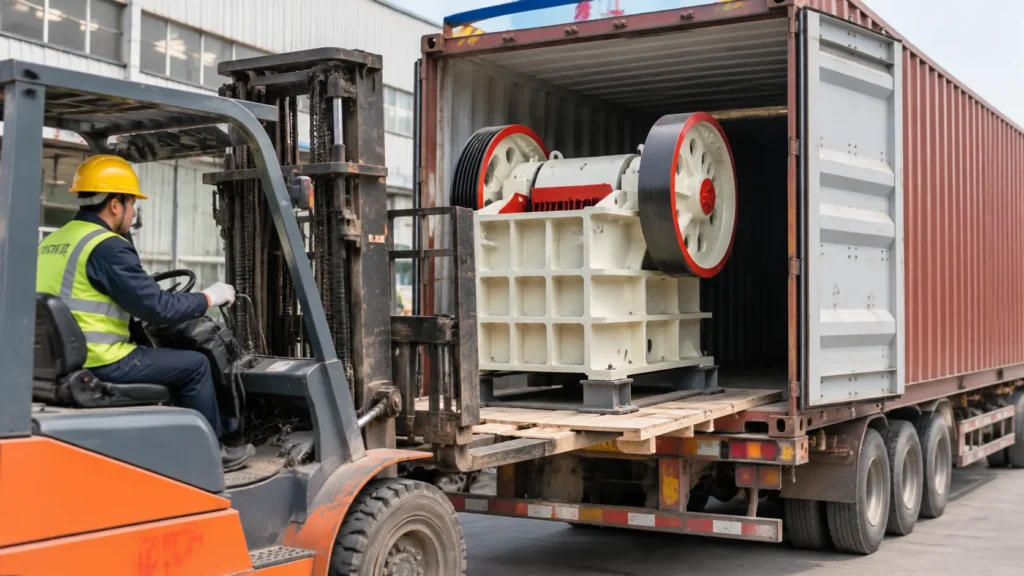
The total cost of shipping a mini jaw crusher from China to the USA includes the machine price, inland transportation, ocean freight, destination charges, customs clearance, import duties, and final delivery.
For preliminary budgeting, the following estimates illustrate the main expenses for a small LCL shipment.
| Cost Item | Estimated Cost (USD) | Description |
|---|---|---|
| Machine Price (EXW/FOB) | $1,500-$4,500 | Depends on model, production capacity, and motor configuration |
| China Inland Transportation | $300-$600 | Factory pickup and export handling |
| LCL Ocean Freight | $200-$500 | Based on cargo volume or chargeable weight |
| US Destination Charges | $500-$1,200 | Deconsolidation, terminal handling, and processing |
| Import Duties and Tariffs | Varies | Applicable customs duty and potential Section 301 tariffs |
| Customs Brokerage and Bond | $250-$450 | Broker fees and customs bond |
| US Inland Delivery | $300-$800+ | Trucking from the port or warehouse to the final destination |
Some small shipments may have an overall freight and logistics budget of approximately $3,000–$3,500, depending on the route, handling requirements, and delivery location. This is an indicative estimate, not a fixed rate, and the machine purchase price and import duties may be additional.
Cargo dimensions and weight: Heavy crushers may incur additional handling charges even when their CBM is relatively small.
Destination fees: LCL shipments require deconsolidation and warehouse handling.
Import duties: The final amount depends on the HTS classification and applicable additional tariffs.
Final delivery: A forklift, liftgate truck, or specialized trailer may be required.
Total Landed Cost = Machine Price + Origin Charges + International Freight + Insurance + Import Duties + Customs Fees + Destination Charges + Inland Delivery.
For more information, see our guides to China to USA import duties and calculating landed cost when importing from China.
Ocean freight is generally the most economical option for shipping heavy crushing equipment.
Transit time depends on the departure port in China, destination port, carrier schedule, and whether the shipment requires transshipment.
| Route | Estimated Port-to-Port Transit |
|---|---|
| China to Los Angeles / Long Beach | 12-18 days |
| China to Oakland | 14-22 days |
| China to New York / New Jersey | 25-35 days |
| China to Houston | 25-35 days |
These are indicative estimates rather than guaranteed schedules. LCL shipments may require additional time for consolidation and warehouse handling.
For door-to-door delivery, also allow time for factory pickup, export clearance, US customs clearance, and inland transportation.
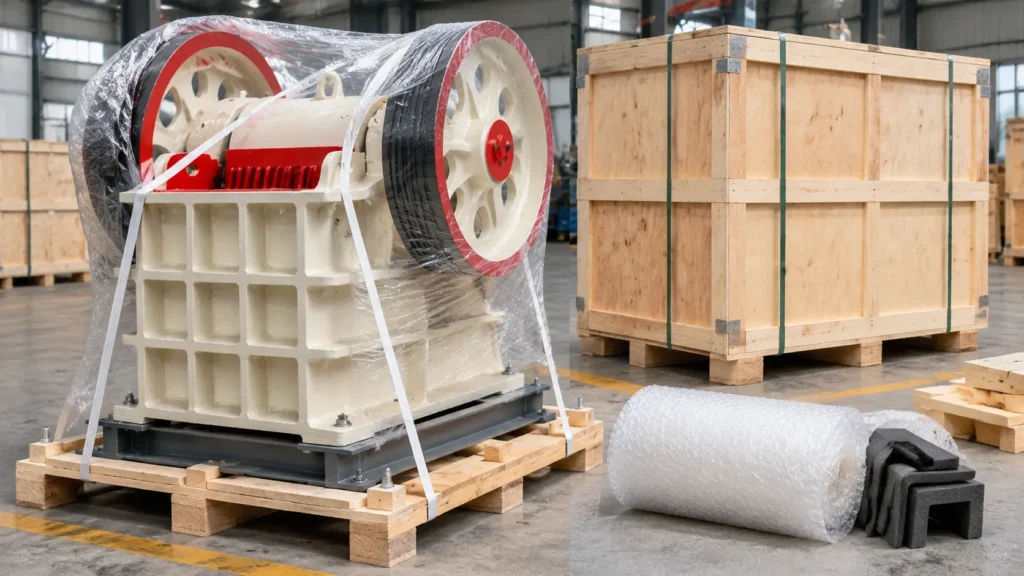
Proper packaging helps protect jaw crushers from impact, vibration, moisture, and corrosion during transportation.
Common packaging methods include:
Wooden crates: Suitable for smaller machines and accessories.
Steel frames: Provide stronger support for heavier equipment.
Protective wrapping: Helps prevent moisture and surface damage.
The machine should be securely fixed to its base. Motors, control panels, and detachable parts should receive additional protection where necessary.
If solid wood pallets or crates are used, they must comply with applicable ISPM 15 requirements for US imports, including proper treatment and marking.
Before shipment, request packaging photographs and confirm the final cargo dimensions with the supplier.
A PE-200×300 model provides a useful example of the specifications needed for a freight quotation.
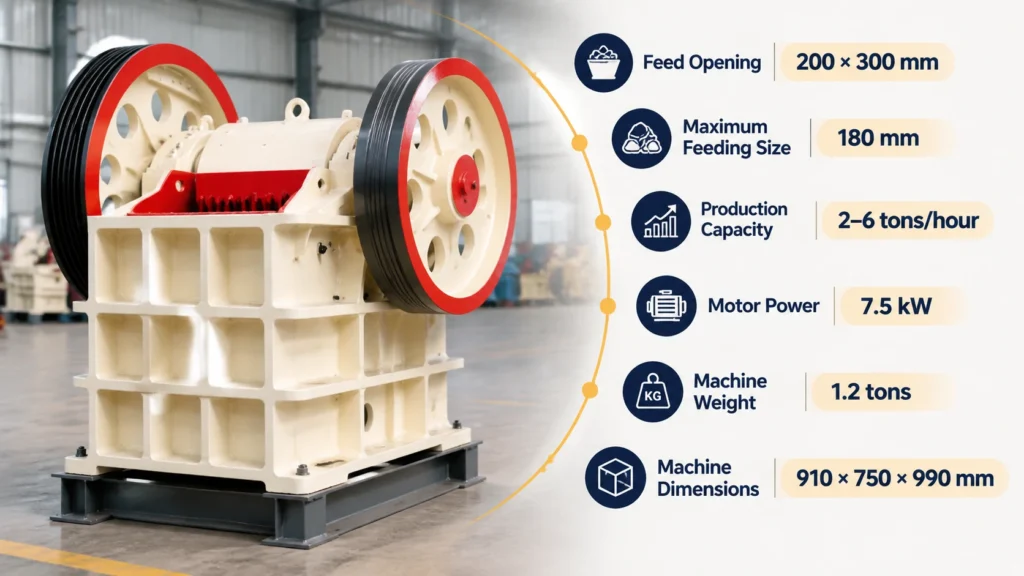
These specifications are model-specific and should be confirmed with the manufacturer. The final freight calculation must use the packed dimensions and gross weight rather than the bare machine measurements.
Importing mini jaw crushers into the United States requires accurate documentation and appropriate product classification.
Common documents for importing jaw crushers include:
Commercial Invoice: Shows the machine description, quantity, declared value, and country of origin.
Packing List: Provides package dimensions, gross weight, and packaging details.
Bill of Lading: Confirms the international shipment and transportation details.
ISF Filing: Provides advance cargo information required for ocean imports.
Customs Entry Documents: Support the import declaration and customs release.
For ocean shipments, the Importer Security Filing (ISF) must generally be submitted at least 24 hours before the cargo is loaded onto the vessel destined for the USA.
Mini jaw crushers may fall under HTS heading 8474.20, which covers crushing or grinding machinery.
However, the final US tariff classification depends on the machine’s actual design and function. Importers should confirm the complete HTS code with a qualified customs broker.
Additional Section 301 tariffs may apply to certain Chinese-origin machinery. The applicable rate should be verified against the specific tariff classification rather than assuming a fixed percentage.
For further guidance, see our articles on HTS codes for imports from China and US customs clearance from China.
If the crusher uses a diesel engine, importers should verify applicable US EPA nonroad engine requirements before shipment. Request the engine model, emissions label, and relevant certification documents from the manufacturer.
For electric crushers, confirm that the motor and control system are compatible with the US electrical supply, including the required voltage and 60 Hz frequency where applicable.
With complete documentation and no additional inspection, routine customs processing may take approximately 1–5 days. Examinations or documentation problems can extend the release period.
After customs clearance, the mini jaw crusher can be transported from the US port or warehouse to the buyer’s final destination. The delivery method depends on the machine’s packed weight, dimensions, and unloading conditions.
Common delivery arrangements include:
Container Drayage: Transporting FCL containers from the port to the buyer’s warehouse or facility.
Flatbed Trucking: Suitable for crated or skid-mounted jaw crushers.
Liftgate Delivery: Useful when the destination does not have a loading dock or forklift.
Forklift or Crane Unloading: Required when the machine cannot be unloaded using standard equipment.
Before delivery, confirm the destination address, truck access, unloading facilities, and delivery appointment. For heavier or oversized equipment, check whether special trucking arrangements or transportation permits are required.
A freight forwarder can coordinate port pickup, inland transportation, and final delivery to help ensure the crushing equipment reaches the destination safely.
Shipping mini jaw crushers involves several stages, from factory pickup in China to customs clearance and final delivery in the USA.
An experienced freight forwarding company can help coordinate:
LCL, FCL, and special equipment shipping
Factory pickup and export handling
Ocean freight and cargo insurance
Customs clearance arrangements
Port handling and inland trucking
Final delivery and unloading
Before placing an order, customers should also confirm the supplier’s manufacturing experience, equipment quality, available replacement parts, and after-sales service. These factors can affect machine performance and future maintenance costs.
Tonlexing provides freight forwarding support for machinery and industrial equipment shipped from China to international destinations.
For more information, see our guide on how to get a freight forwarder in China when shipping to the USA.
To request a quotation, provide the machine model, packed dimensions, gross weight, pickup location in China, and final delivery address in the USA.
The cost depends on the machine’s weight, dimensions, shipping method, and destination. Some small shipments may have a preliminary freight and logistics budget of around $3,000–$3,500, but the actual quotation varies.
Ocean freight generally takes around 12–18 days to some West Coast ports and 25–35 days to selected East Coast destinations. Customs clearance and final delivery require additional time.
HTS 8474.20 is a relevant heading for crushing or grinding machinery. The complete classification should be confirmed according to the machine’s specifications.
Yes, but applicable EPA requirements for nonroad diesel engines must be checked before shipment.
It may be suitable if the packed dimensions, weight, and handling requirements meet the consolidation warehouse’s acceptance conditions. Compare the total LCL cost with FCL before booking.
Useful freight, customs and importing resources related to this shipping guide.
Shipping Oversized Cargo to USA Verified & Reviewed · Last updated March 2026 Shipping oversized cargo to USA depends on cargo dimensions, weight...
Read guide →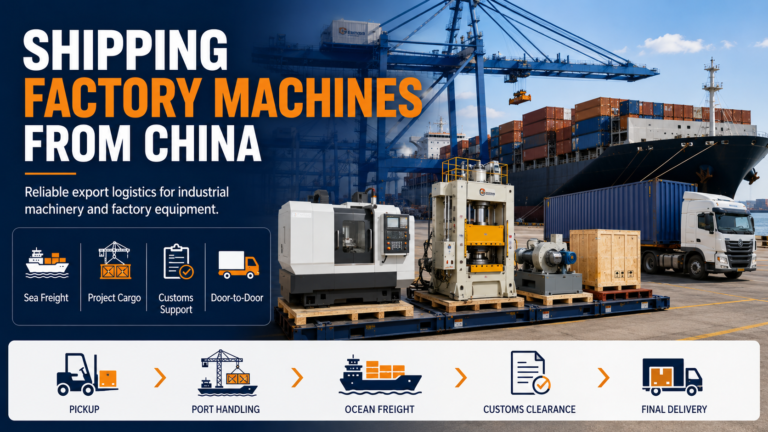
Shipping Factory Machines from China Verified & Reviewed · Last updated July 2026 Shipping factory machines from China requires careful planning...
Read guide →
Shipping Hydraulic Press Machines from China to USA Verified & Reviewed · Last updated June 2026 Shipping hydraulic press machines from China to...
Read guide →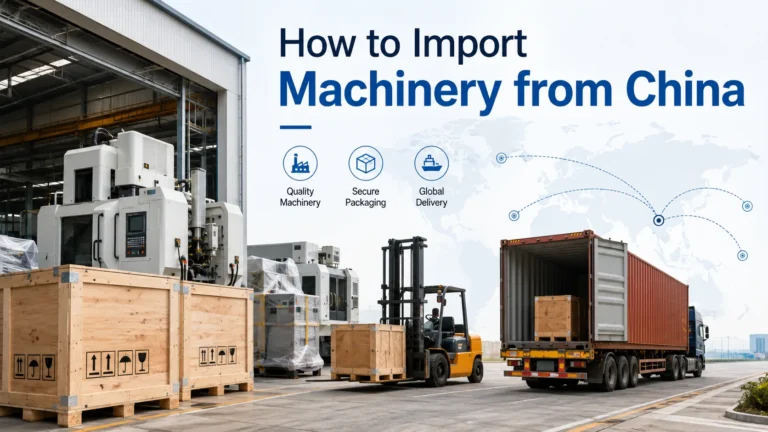
How to Import Machinery from China Verified & Reviewed · Last updated August 2026 Importing machinery from China requires careful supplier verifi...
Read guide →Shipping from China to the USA includes air freight, sea freight, and DDP shipping options. Compare shipping costs, transit times, and US customs...
Learn more → Useful Resource Door-to-Door Sea Freight: Excavator Shipment from Qingdao to the USAShipment Overview Details Specifications Mode of Transport Sea Freight – Door-to-Door DDP Origin Qingdao, China Destination USA (Client’s Warehou...
Learn more →WhatsApp us