
Shipping Oversized Cargo from China

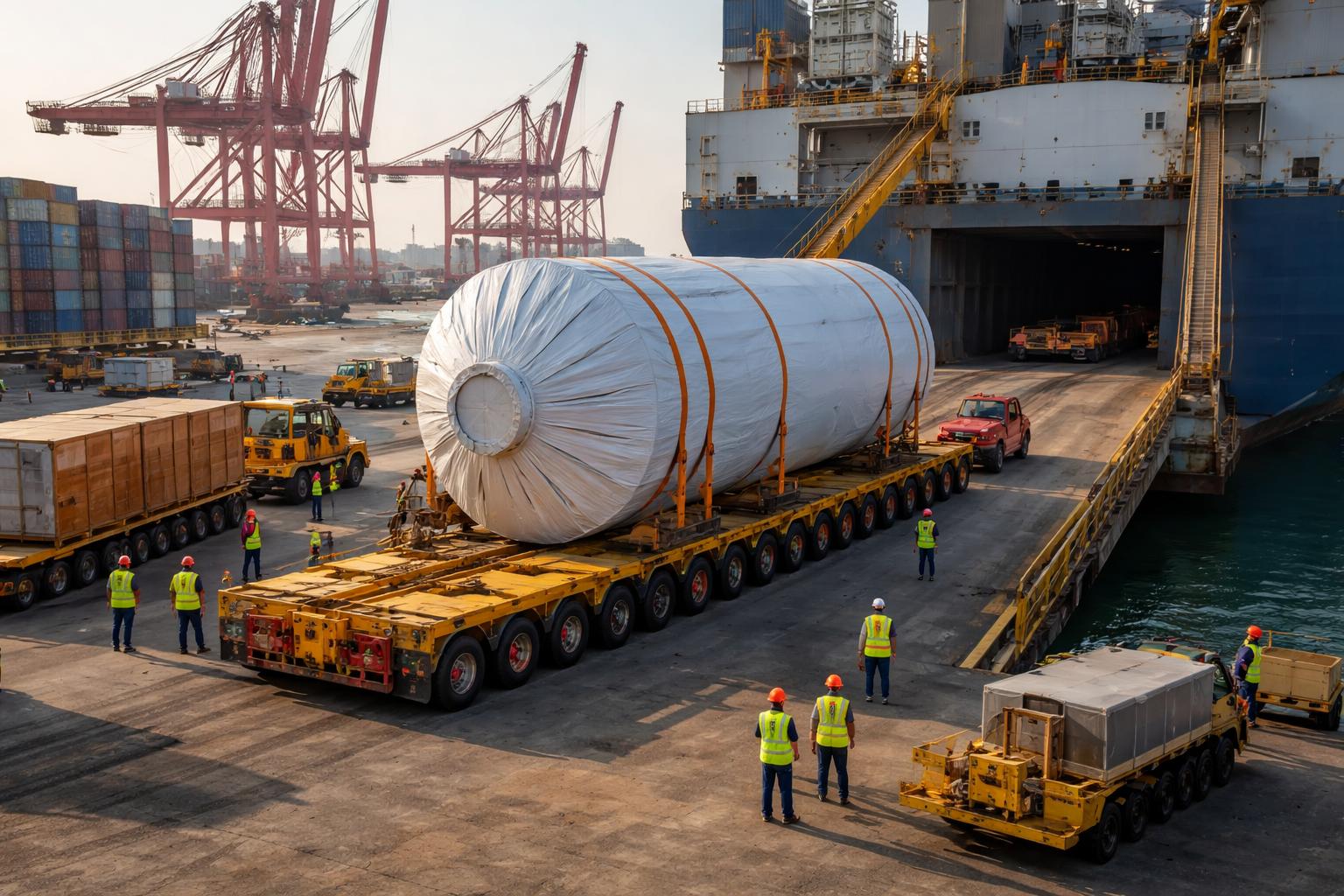
Shipping oversized cargo from China depends on cargo dimensions, weight, and loading limits. Most oversized shipments use ocean freight with flat racks, open top, breakbulk, or RoRo, while air freight fits urgent cargo.

This guide covers key shipping methods, typical sea freight costs, transit time ranges, and what’s included in a freight quote, including port operations and customs clearance options.

Shipping method 

Costs & Transit Time

Shipping Process

Shipping Oversized Cargo from China
10,000+ international shipments handled    Global sea, air & DDP shipping solutions    24/7 shipment tracking & customer support

Table of Contents

What Counts as Oversized Cargo When Shipping From China

Oversized cargo usually means your shipment cannot fit into a standard container or requires special loading and securing because of its size or weight. It is commonly treated as oversized when it exceeds standard container limits in length, width, or height, or when it needs top-loading, side-loading, cranes, or reinforced crating to move safely through port operations.

Typical oversized cargo includes:

  • Heavy machinery and industrial equipment

  • Oversized crates and irregular project cargo

  • Long steel structures, beams, pipes, and frames

  • Vehicles and rolling equipment shipped via RoRo

If your cargo is likely to require flat racks, open top containers, breakbulk, or RoRo, it generally falls into the oversized category and should be quoted and planned as an oversized shipment.



Shipping Mode Options

The best shipping mode depends on shipment size, deadlines, handling constraints, and budget. Most oversized cargo shipped from China moves by sea freight because it provides high capacity at a reasonable cost. Air cargo is chosen for urgent timelines when premium service is justified.

Sea freight for large shipments

Sea freight is the most common shipping method for large shipments due to its capacity and economic advantages. Ocean freight is supported by shipping lines and ocean carriers on stable shipping routes from major ports.

Air freight for urgent moves

Air freight is generally faster but more expensive than sea freight. Oversized air cargo often requires main-deck capacity, strict dimensional checks, and early booking. Air shipping works best when a delay would create larger losses than the higher air rates.

Express shipping for smaller shipments

Express shipping is generally more reliable and quicker than standard mail services. Express courier options can work for smaller shipments such as spare parts or urgent components that do not justify ocean shipping, but they rarely fit true oversized cargo.

Ocean Freight Methods for Oversized Cargo

When shipping oversized cargo from China, ocean freight is usually the most practical option because it offers the most container space, flexible equipment, and a cost effective way to move large shipments. The right method depends on your cargo size, weight, and how it can be lifted and secured.

Flat Rack

Best for wide or heavy machinery and cargo that cannot fit inside a standard container.

  • Cargo is loaded from the side or top and secured with lashing

  • Good for oversized crates, steel structures, industrial equipment

  • Often higher sea freight costs due to special equipment and securing

Open Top

Best for tall cargo that cannot be loaded through container doors.

  • Loaded from the top by crane

  • Suitable for tall machines, large crated equipment

  • Requires strong waterproof covering and secure loading

Best for very large single pieces that are not suitable for containers.

  • Cargo is loaded directly onto the vessel as individual units

  • Common for project cargo, heavy lifts, oversized industrial parts

  • Needs careful port operations planning and may require special lifting windows

RoRo (Roll-on/Roll-off)

Best for vehicles and rolling equipment that can drive on and off the ship.

  • Reduces crane lifting for the cargo itself

  • Often used for trucks, loaders, excavators, trailers

  • Requires the cargo to be operable and secured to RoRo deck standards

Quick selection tip:
If the cargo is wide or heavy, start with flat racks. If it’s mainly tall, consider open top. If it’s too big for container-based options, use breakbulk. If it rolls, RoRo is usually the easiest ocean freight method.

Air Shipping for Urgent Oversized Moves

Air shipping can solve urgent timelines, but oversized air cargo requires feasibility checks. Cargo may require main deck space and can be limited by aircraft door dimensions and loading restrictions.

What drives air rates

Air rates depend on route, chargeable weight, volume, aircraft type, seasonality, and market conditions. Request up to date information and compare at least two routing options before confirming air freight.

When air freight is worth it

Air freight is often justified when:

  • production downtime is expensive

  • a project milestone cannot slip

  • the cargo value supports premium service

  • you need a short transit time

Practical way to reduce air freight costs

  • Pack tighter to cut chargeable weight. Air rates are driven by chargeable weight, so reduce empty space with custom crates, compact pallets, and removing non-essential add-ons.

  • Split the shipment. Send only the critical component by air cargo and move the remaining pieces by sea freight to keep the total freight costs reasonable.

  • Avoid last-minute bookings. Early booking improves capacity options and often lowers air rates, especially for oversized air shipping.

  • Use direct routing when possible. Fewer transfers reduces handling and the chance of rework fees for oversized cargo.

  • Confirm dimensions after packing. Quoting from “estimated size” is a common cause of re-rating and unexpected air freight costs.


FCL (Full Container Load)

FCL means your cargo uses an entire container (20ft or 40ft). For oversized cargo, FCL is often the preferred option even if the goods do not perfectly fill every cubic meter, because you get more control over how the cargo is positioned and secured.

Choose FCL when:

  • The cargo is heavy machinery or large crates that need strong blocking, bracing, and lashing

  • You want fewer handling steps and a more predictable transit time

  • The shipment size is large, or the cargo shape needs dedicated container space

  • You want lower risk of damage, loss, or delays caused by re-handling

LCL (Less than Container Load)

LCL shipping means your cargo shares container space with other shipments. It can reduce upfront cost for smaller shipments, but it usually involves more consolidation and deconsolidation steps, which increases handling and may extend overall transit time.

Choose LCL shipping when:

  • Your shipment is truly small and does not justify an entire container

  • The cargo is standard crates or pallets and does not require special positioning

  • You can accept slightly longer transit time and extra handling steps

Practical rule for oversized cargo

If your cargo is heavy, fragile, irregular in shape, or close to using half a container, FCL is usually the better decision. It helps control freight costs in the long run by reducing handling risk, avoiding surprise storage or rework charges, and keeping the shipment moving smoothly through port operations and final delivery.

Costs and Transit Time Overview

Shipping costs from China are influenced by cargo type, shipping mode, dimensional weight, route distance, port operations, and delivery requirements. Oversized cargo adds extra cost drivers such as special equipment, lashing, cranes, and trucking permits. Transit time also depends on port congestion and customs clearance speed.

Shipping optionBest forTypical transit timeCost notes
Sea freightLarge shipments, heavy machinery30–45 daysUsually the most cost effective; sea freight costs vary by dimensions and port charges
Flat racks / Open topWide or tall oversized cargo30–50 daysHigher freight costs due to special equipment and lashing requirements
Air freightUrgent shipments7–12 daysFast but expensive; air rates depend on chargeable weight and size limits
Express courierSmaller shipments, spare parts3–8 daysPremium shipping rates; best for critical components, not true oversized cargo

These are planning ranges. Actual freight rates depend on shipment size, dimensions, shipping routes, and market conditions. Request up to date information close to booking.

Sea Freight Costs and Shipping Rates Explained

For oversized cargo, sea freight costs are only one part of the total shipping cost. A realistic budget needs a clear breakdown of freight costs from pickup through final delivery, because oversized cargo often triggers extra handling and special equipment charges.

Common cost components include:

  • Ocean freight charged by shipping lines and ocean carriers

  • Origin port handling and export documentation

  • OOG surcharges based on how far cargo exceeds equipment limits

  • Lashing and securing cargo services, including blocking, bracing, and straps or chains

  • Inland trucking plus permits, escorts, and route controls

  • Destination port charges, terminal handling, and storage exposure

  • Customs clearance costs and brokerage support

  • Final delivery costs, including site access and unloading requirements

To keep a reasonable cost, compare freight quotes using the same scope. A low ocean freight line item can become expensive if it excludes key port operations, lashing, inland permits, or destination port charges.

Shipping Routes: Major Ports, Destination Planning, and Port Congestion

Shipping routes affect transit time, reliability, and cost. For oversized cargo, routing decisions should consider:

  • the origin port’s crane and yard capability

  • the destination port’s drayage capacity and appointment rules

  • inland trucking feasibility and route restrictions

  • risk of port congestion during peak season

Major ports commonly used

Major ports in China for oversized cargo commonly include Shenzhen, Shanghai, Ningbo, Qingdao, Tianjin, and Xiamen. These gateways typically offer better infrastructure for flat racks, open top handling, and breakbulk operations.

Direct shipping routes often reduce handling and improve predictability. Transshipment routes can reduce base shipping rates but increase schedule variability when port operations are congested.

Port congestion can extend transit time and increase storage charges. A reliable logistics partner should provide up to date information on congestion, cutoff schedules, and sailing changes from ocean carriers.

Step-by-Step Shipping Process for Oversized Cargo From China

A structured shipping process protects your schedule and budget. Most delays happen when cargo data, paperwork, or handling plans are incomplete.

Step 1: Confirm shipment size and cargo data

Provide exact dimensions and gross weight per piece. If the cargo is crated, the crate dimensions are the dimensions that count. Include photos and notes about lifting points and fragile areas.

Step 2: Select the right shipping mode and equipment

Your freight forwarder should confirm whether ocean freight or air freight is feasible, then recommend flat racks, open top, breakbulk, or RoRo based on cargo size and handling constraints.

Step 3: Arrange pickup and export handling

If you buy from Chinese suppliers, confirm whether the forwarder will arrange pickup, which truck type is needed, and whether permits or escorts are required. Inland constraints can be the limiting factor.

Step 4: Port operations, loading, and securing

Oversized cargo needs professional loading. Secure loading techniques include blocking, bracing, and correct weight distribution with high-strength chains or straps. Request loading photos as proof.

Step 5: Customs clearance and release

Customs clearance is a critical step. Delays happen when paperwork is incomplete or classifications are wrong. Confirm who will handle customs clearance and how quickly documents will be submitted.

Step 6: Final delivery and delivery appointment

Final delivery can trigger additional fees if unloading equipment is not available or if the site has restricted delivery hours. Confirm unloading capability before the shipment arrives.

Customs Clearance: Documents, Compliance, and Common Delay Triggers

Customs clearance is a critical step in the shipping process. Importers must provide accurate product classifications to determine correct customs duties and taxes.

Common shipping documents required for customs include:

ISPM 15 certified wooden pallets are required to pass international customs without rejection or destruction. If your crating or pallets are not compliant, you can face holds, rework, or disposal costs.

Delays in customs can occur if paperwork is incomplete or incorrect. Working with a freight forwarder can simplify the customs process and help ensure compliance with regulations.

Tariffs, Duties, and Total Landed Cost

Tariffs can significantly impact shipping costs for oversized cargo, and changes in trade policies can lead to fluctuations in shipping budgets. Customs duties and taxes are additional costs that must be considered when calculating total shipping expenses, which is why total landed cost matters.

A strong total landed cost plan includes:

  • sea freight costs or air freight costs

  • customs duties and taxes

  • destination charges and inland delivery

  • packaging, cargo services, and cargo insurance

  • storage risk from port congestion

  • final delivery and unloading requirements

Freight forwarders can assist with estimating duties, confirming required documents, and reducing delays that increase additional costs.

Packaging, Reinforced Crating, and Cargo Insurance for Oversized Cargo

Proper packaging is essential for oversized cargo to prevent damage during transit. Heavy machinery and large shipments need export-grade protection.

Reinforced crating

Reinforced crating uses custom-built wooden crates or steel frames to support extreme weight and provide stability. When the cargo is heavy, base reinforcement helps prevent deformation during lifting and trucking.

Heavy-duty packaging and moisture control

Invest in heavy-duty packaging using custom wooden crates, heavy-duty cartons, or vacuum sealing to protect against moisture and structural damage. This is especially important for ocean shipping.

Secure loading practices

Secure loading techniques involve employing expert loaders to perform proper blocking, bracing, and weight distribution, ensuring cargo is secured with high-strength chains or straps.

Cargo insurance

Cargo insurance is essential for international transport due to higher risks of damages. Insurance protects your total landed cost and reduces exposure during port operations, inland trucking, and vessel transit.

Door to Door Service vs Port Pickup: Choosing the Right Delivery Model

When shipping oversized cargo from China, your delivery model affects cost, timing, and coordination.

Your freight forwarder arranges pickup in China and manages transport through to final delivery. It’s best if you want fewer handoffs and a smoother shipping process for heavy machinery or oversized crates.

Port pickup

The shipment arrives at the destination port and you handle customs clearance and local trucking. It can work if you already have a broker and trucking partner, but you must watch port deadlines to avoid storage and extra charges.

If you want lower coordination risk, choose door to door service. If you have strong local capability and want more control at destination, choose port pickup.

How to Avoid Hidden Fees and Keep a Reasonable Cost

Hidden fees usually come from unclear scope or incomplete cargo data. Oversized cargo magnifies this risk because re-handling and permits are expensive.

Common hidden fee triggers:

  • incorrect dimensions or weight leading to re-rating

  • lashing scope changes after inspection

  • storage caused by port congestion

  • permit or escort needs not included in the quote

  • final delivery constraints and unloading limits

How to control costs:

  • provide accurate measurements and photos early

  • confirm container load strategy and container space needs

  • ask for a freight quote that itemizes sea freight costs, port charges, and inland delivery

  • book early to protect freight rates and reduce schedule risk

  • use reinforced packaging and cargo insurance to reduce claims exposure

Freight Quote Checklist and Supply Chain Management Tips

To get an accurate freight quote, send a complete data pack. This helps freight shipping services quote correctly and reduces surprise additional costs.

Send this to your freight forwarder

  • cargo name and photos

  • dimensions and gross weight per piece

  • total pieces and packaging type

  • cubic meter estimate if available

  • preferred shipping mode: sea freight or air shipping

  • service preference: door to door service or port pickup

  • pickup city, ready date, and whether to arrange pickup

  • origin port preference if any

  • destination port or final address for final delivery

  • notes from Chinese suppliers and any handling limits

Supply chain management actions that improve outcomes

  • consolidate smaller shipments when it reduces handling

  • split critical components for air cargo while moving the rest by ocean freight

  • use digital tools for milestone tracking and document sharing

  • request up to date information on port congestion and sailing changes

  • choose a logistics partner with a professional team and clear process control

Frequently Asked Questions

Get an Oversized Cargo Shipping Quote from China

  • Correct equipment plan: Flat Rack / Open Top / Breakbulk / RoRo

  • Transparent sea freight costs with itemized port handling and lashing

  • End-to-end support from pickup to final delivery and customs clearance

Send your cargo dimensions, weight, and photos to receive shipping options, transit time ranges, and a clear freight cost breakdown.