

20ft & 40ft container shipping costs from China to Somalia are a key concern for importers as trade between the two countries continues to grow. Shipping goods from China to Somalia is now a core part of regional and global trade. As Somalia’s consumer market continues to grow, businesses rely heavily on Chinese suppliers for consumer goods, construction materials, spare parts, electronics, household items, and various industrial equipment.
While product sourcing is often straightforward, the real challenge lies in managing international shipping. Importers must understand how shipping costs are formed, how to choose the correct shipping method, and how to control the total shipping cost from factory pickup in China to final delivery in Somalia. Many new importers underestimate costs because they only focus on the ocean freight rate and ignore port charges, customs fees, and inland transport.
For Somalia-bound cargo, container shipping remains the most common solution. Both 20ft and 40ft shipping containers are widely used, depending on cargo weight, volume, and budget. In addition, some shipments require special equipment such as flat rack containers, especially when handling oversized cargo, heavy loads, or wheeled cargo.
This guide explains, step by step, how 20ft & 40ft container shipping from China to Somalia works. You will learn about sea freight, air freight, container types, shipping rates, transit times, customs procedures, and cost-saving strategies. Whether you are shipping for the first time or managing large shipments, this article provides a clear, practical roadmap to help your goods arrive safely, on time, and at a cost effective level.
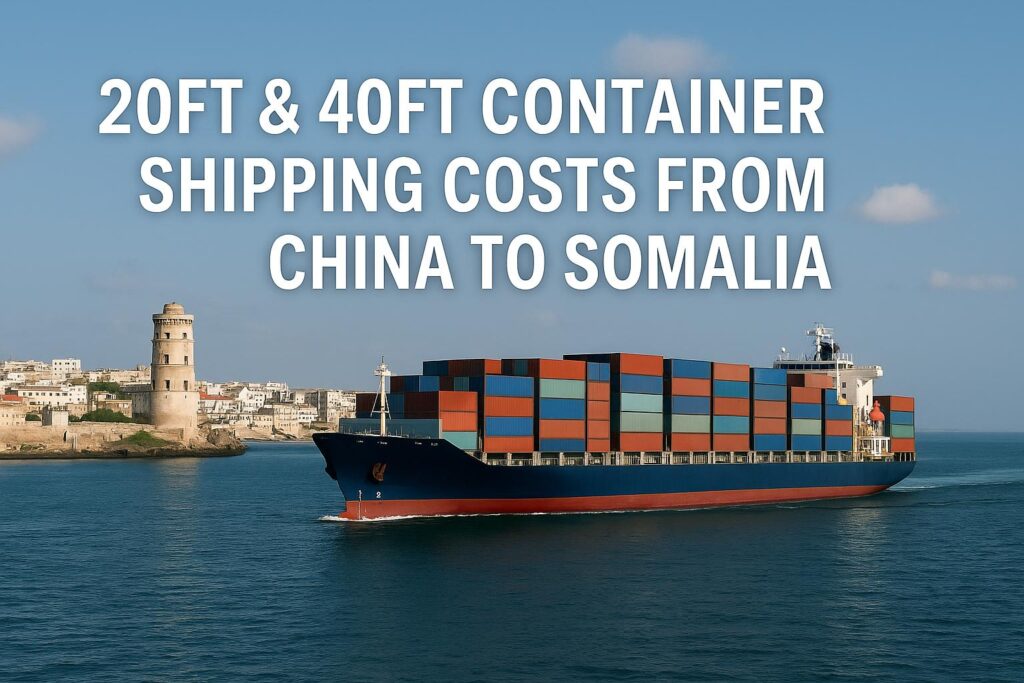
Overview of Shipping Modes from China to Somalia
There are three main shipping modes used for transporting goods from China to Somalia: sea freight, air freight, and integrated door to door service. Each mode suits different shipping needs, cargo types, and urgency levels.
Sea Freight: The Backbone of Somalia Imports
For most importers, sea freight is the preferred choice. It offers the lowest shipping costs per unit and can handle almost all cargo types, including bulk goods and heavy machinery. Sea freight shipments are suitable for traders who prioritize cost control over speed.
Key advantages of sea freight include:
- Lower cost for bulk shipping and large shipments
- Flexible use of shipping containers (20ft, 40ft, 40HQ)
- Ability to handle oversized cargo and heavy equipment
- Reliable schedules for long-term import planning
Most Somalia-bound sea cargo is shipped via ocean freight, often with transshipment through regional hubs such as Jebel Ali or East African ports. While transit times are longer than air freight, ocean shipping remains the most cost effective solution for regular imports.
Air Freight & International Air Freight
Air freight is used when speed is critical. Importers choose international air freight for urgent orders, high value goods, or perishable goods that cannot tolerate long transit times. Somalia’s main air cargo gateway is Aden Adde International Airport in Mogadishu.
Air cargo is ideal for:
- Electronics and branded products
- Medical supplies and sensitive goods
- Small-volume, high-margin items
- Emergency restocking
Although air freight has higher shipping charges, it offers faster delivery, improved security, and better real time tracking, making it suitable for time-sensitive business operations.
Door to Door Service
For businesses seeking hassle free shipping, door to door service is an increasingly popular option. In this model, a professional freight forwarder manages the entire shipping process, including:
- Pickup from supplier in China
- Export handling and export documentation
- Sea freight or air cargo transport
- Customs clearance in Somalia
- Inland transport and last mile delivery
Door-to-door shipping provides convenient solutions, reduces coordination risks, and helps importers clearly understand their total shipping cost upfront.
Sea Freight & Ocean Freight Explained in Detail
Understanding how sea freight works is essential for controlling container shipping costs. Ocean shipping involves multiple stages, service providers, and cost components that together form the final price.
How Sea Freight Shipments Operate
A typical sea freight shipment from China to Somalia follows this flow:
- Cargo is collected from the supplier
- Goods are delivered to a port warehouse or container yard
- Cargo is loaded into a shipping container
- Container is loaded onto a vessel
- Vessel sails to a transshipment hub
- Container is transferred to a feeder vessel
- Cargo arrives at the Somalia destination port
This multi-stage process explains why shipping costs are influenced by routing, port congestion, and carrier schedules.
Ocean Freight vs Other Shipping Methods
Ocean freight is slower than air freight but significantly cheaper for high-volume cargo. It allows importers to move shipping goods at scale while maintaining predictable costs. Compared with air cargo, ocean freight is better suited for:
- Furniture and household goods
- Building materials
- Machinery and spare parts
- General shipping cargo that is not time-critical
For most Somali importers, ocean freight offers the best balance between price and capacity, especially when using full container load shipping.
Sea Cargo and Bulk Shipping
In addition to containerized cargo, some traders also use sea cargo solutions for bulk shipping, especially for commodities or unpackaged materials. However, containerized shipping remains more common because it offers better cargo protection and easier customs handling.
Using containers also simplifies customs compliance and reduces the risk of cargo damage during handling and storage.
When Sea Freight Is the Best Choice
Sea freight is usually the best option when:
- You are shipping large shipments
- Your cargo is heavy or bulky
- Delivery speed is flexible
- You want the lowest shipping expenses per unit
Understanding these conditions helps importers select the correct shipping mode and avoid unnecessary air freight costs.
20ft & 40ft Container Shipping Costs from China to Somalia (Detailed Analysis)
Understanding 20ft and 40ft container shipping costs from China to Somalia starts with knowing how ocean freight pricing works in real trade operations. Unlike fixed-price courier services, container shipping costs are influenced by market demand, carrier capacity, fuel prices, port congestion, and route availability.
For Somalia-bound shipments, most containers move via ocean freight with at least one transshipment. This is why prices fluctuate throughout the year and why importers must focus on the total shipping cost, not just the base ocean rate.
Average 2025 Container Shipping Costs (FCL)
Below are realistic market ranges for full container load shipping based on 2025 conditions:
| Container Type | Average Ocean Freight Cost |
|---|---|
| 20ft Container (20GP) | USD 1,700 – 2,700 |
| 40ft Container (40GP) | USD 3,300 – 4,300 |
| 40ft High Cube (40HQ) | USD 3,500 – 4,700 |
These figures represent container shipping costs for the international sea leg only. They do not include inland transport, destination charges, or customs clearance.
Why Container Shipping Costs Vary
Several factors influence shipping costs on the China–Somalia route:
- Origin port in China (Shanghai, Ningbo, Shenzhen, Guangzhou, Qingdao)
- Type of shipping container
- Carrier schedule and available vessel space
- Peak season demand
- Transshipment port efficiency
- Cargo weight and volume
Even when two shipments use the same container, their final total cost may differ significantly depending on timing and routing.
20ft vs 40ft: Which Is More Cost Effective?
A 20ft container is often chosen for dense cargo such as tiles, metal parts, canned food, or machinery components. A 40ft container or 40HQ works better for light but voluminous shipping goods like furniture, textiles, and packaged consumer goods.
In most cases, 40ft containers offer lower per-unit shipping expenses when fully utilized, making them more cost effective for growing importers.
Full Container Load vs Less-than-Container Load (FCL vs LCL)
Choosing between full container load (FCL) and LCL is a key decision that affects cost, risk, and transit time.
Full Container Load Shipping
Full container load shipping means one shipper uses the entire container. This option provides:
- Lower handling risk
- Faster processing
- Better cargo security
- Predictable shipment process
FCL is ideal for large shipments, recurring imports, or mixed shipping cargo from multiple suppliers consolidated into one container.
Less-than-Container Load (LCL)
LCL is used when cargo volume is insufficient to fill a container. Charges are calculated per cubic meter. Typical LCL rates to Somalia range from USD 65–100 per CBM, depending on route and season.
LCL is suitable for:
- Small businesses testing the market
- Low-volume imported products
- High-value but compact cargo
However, LCL involves more handling steps, which can extend transit times and increase the risk of delay during the shipment process.
Container Load Optimization
Efficient container load planning helps reduce shipping costs. Proper packing, pallet alignment, and space utilization allow importers to maximize container capacity and reduce wasted volume.
Container Types & Cargo Types for Somalia Shipments
Different cargo requires different container solutions. Choosing the correct container ensures cargo safety and efficient transporting goods.
Standard Shipping Containers
Standard 20ft and 40ft dry containers are used for most shipping goods, including:
- Packaged consumer goods
- Household products
- Apparel and footwear
- Dry food items
- General merchandise
These shipping containers offer flexibility, easy handling, and wide carrier availability.
Flat Rack Containers for Oversized Cargo
Flat rack containers are used for oversized cargo that cannot fit inside standard containers. Typical flat rack cargo includes:
- Heavy equipment
- Construction machinery
- Steel structures
- Large generators
- Project cargo
Flat racks allow loading from the top or sides and are essential for handling heavy loads and non-standard dimensions.
Wheeled Cargo & Heavy Loads
Vehicles, forklifts, and rolling machinery are classified as wheeled cargo. These items require secure lashing and careful weight distribution to ensure safe freight shipping.
Reefer Containers for Perishable Goods
Reefer containers are used for perishable goods such as frozen food, dairy products, pharmaceuticals, and temperature-sensitive materials. Proper temperature control ensures products arrive in market-ready condition.
Matching Container Type to Shipping Needs
Selecting the right container based on cargo type, weight, and volume helps importers meet their shipping requirements, reduce damage, and improve overall shipping experience.
Explore more shipping guides:
- DDP Shipping from China to Somalia
- 20ft & 40ft Container Shipping Costs from China to Kenya
- 20ft & 40ft Container Shipping Costs from China to Yemen
- 20ft & 40ft Container Shipping Costs from China to Saudi Arabia
- 20ft & 40ft Container Shipping Costs from China to Egypt (2025 Guide)
Step-by-Step Shipping Process from China to Somalia
Understanding the full shipping process is essential for controlling risk, cost, and delivery time. Many importers focus only on price and ignore how the shipment process actually works, which often leads to delays, unexpected shipping expenses, and poor coordination at the destination.
Below is a clear, real-world breakdown of how shipping cargo moves from China to Somalia.
Supplier Coordination & Cargo Preparation
The process begins at the factory or supplier’s warehouse in China. At this stage, importers confirm product specifications, packaging standards, and quantities. Goods are prepared for export through:
- Proper carton packing or palletization
- Labeling for identification and handling
- Reinforcement for fragile or sensitive goods
- Compliance with export regulations
Correct preparation ensures smoother transporting goods during long-distance freight shipping.
Booking Space & Choosing the Shipping Method
Next, the importer or freight forwarder books space on a vessel or aircraft. This step includes deciding the shipping method and shipping mode, such as:
- Full container load shipping
- LCL sea freight shipments
- Air freight or international air freight
Choosing the right method directly affects shipping costs, transit reliability, and handling complexity.
Export Documentation & Customs Paperwork in China
Before the cargo can leave China, all shipping documents must be prepared accurately. These typically include:
- Commercial invoice
- Packing list
- Export declaration
- Bill of lading draft
Correct customs paperwork ensures smooth export clearance and avoids delays that could disrupt the entire shipment.
Container Loading or LCL Consolidation
For FCL shipments, cargo is loaded into a dedicated container. For LCL, multiple shipments are consolidated in one container. Efficient container load planning reduces empty space, prevents cargo movement, and improves overall cost efficiency.
International Transport by Sea or Air
Once loaded, the container or air cargo enters the international transport phase. For sea freight, the ship sails to a transshipment hub before reaching Somalia. For air freight, cargo moves through international gateways with shorter transit times.
Throughout this stage, reliable providers offer real time tracking, allowing importers to monitor progress and plan downstream operations.
Arrival, Customs Clearance & Final Delivery
Upon arrival at the Somalia destination port, the importer completes customs clearance, pays import duty, and arranges local delivery. After release, goods move through local trucking networks for final delivery to warehouses or distribution points.
Customs Clearance, Import Duty & Compliance in Somalia
Customs clearance is one of the most critical stages of Somalia-bound shipments. Errors here can cause delays, storage charges, or even seizure of goods.
Required Shipping Documents for Somalia Imports
Importers typically need the following shipping documents:
- Commercial invoice
- Packing list
- Original or telex-released bill of lading
- Certificate of origin
- HS code declaration
Certain cargo types may also require special permits, especially perishable goods, pharmaceuticals, or regulated products.
Customs Clearance Process in Somalia
The clearance process usually includes:
- Submission of documentation
- Verification of declared value
- Physical inspection (if required)
- Assessment of duties and taxes
- Cargo release
Maintaining full customs compliance ensures faster clearance and avoids unnecessary shipping charges.
Import Duty and Cost Considerations
Import duty in Somalia is calculated based on cargo value, classification, and quantity. Understanding duty structures helps importers estimate their total shipping cost accurately and avoid budget overruns.
Working with an experienced freight forwarder familiar with Somalia regulations reduces compliance risk and speeds up the release process.
Air Freight, Air Cargo & Aden Adde International Airport
While sea freight dominates the China–Somalia trade lane, air freight plays an important role for urgent and high-value shipments.
When Air Freight Is the Right Choice
Importers typically use air freight for:
- High value goods
- Sensitive goods requiring careful handling
- Perishable goods with short shelf life
- Emergency restocking and samples
Air shipping provides unmatched speed and predictable timely delivery, especially when market demand is time-sensitive.
Air Cargo Routes to Somalia
Most air cargo arrives in Somalia through Aden Adde International Airport in Mogadishu. Shipments often transit through major hubs such as Dubai, Istanbul, Doha, or Addis Ababa before reaching Somalia.
This routing supports stable international air freight connections and frequent flight availability.
Air Freight Costs & Transit Times
Typical air freight rates from China to Somalia range from USD 4.50 to 8.00 per kilogram, depending on cargo type and season. Although higher than sea freight, air shipping offers:
- Shorter transit times (3–7 days)
- Enhanced security
- Better real time tracking
- Faster cash-flow turnover
For certain products, air freight can be more cost effective despite higher per-unit cost.
Limitations of Air Freight
Air freight is not suitable for all shipments. Limitations include:
- Higher shipping expenses
- Weight and size restrictions
- Unsuitability for heavy loads or bulky cargo
As a result, many Somali importers combine sea and air freight based on their shipping needs.
Door to Door Service, Last Mile Delivery & Somalia Services
For many importers, the most challenging part of international logistics is not the ocean voyage itself, but what happens before departure and after arrival. This is where door to door service becomes a practical solution for managing complex shipping needs.
What Door to Door Shipping Includes
Door-to-door shipping combines multiple logistics stages into one coordinated service. A professional freight forwarder manages:
- Cargo pickup from suppliers in China
- Export handling and export documentation
- Sea freight or air freight transport
- Customs clearance at the Somalia destination port
- Inland trucking and last mile delivery
This approach reduces communication gaps, minimizes errors, and provides a smoother shipping experience for importers who prefer simplicity and predictability.
Benefits of Door to Door Shipping
Door-to-door solutions are especially useful for businesses that:
- Do not have a local clearing agent
- Want a hassle free shipping process
- Need clear visibility of total shipping cost
- Import mixed shipping cargo from multiple suppliers
By centralizing responsibility, door-to-door shipping improves efficient delivery and lowers the risk of delays caused by miscommunication between different service providers.
Last Mile Delivery in Somalia
After customs release, cargo must be delivered from the port to the final warehouse or distribution point. Last mile delivery in Somalia requires local knowledge of road conditions, security considerations, and regional logistics practices.
Experienced logistics partners provide reliable Somalia services, ensuring cargo moves safely from Mogadishu Port, Berbera, or Bosaso to its final destination. This final stage is critical to ensuring products arrive intact and on schedule.
Support Systems & Local Coordination
A strong logistics support system includes proactive communication, shipment updates, and problem resolution. Forwarders with extensive connections in both China and Somalia are better positioned to handle unexpected challenges and maintain service continuity.
Total Shipping Cost Breakdown & Cost-Saving Strategies
To control profitability, importers must understand how the total shipping cost is built. Focusing only on the ocean freight rate often leads to underestimating real expenses.
Components of Total Shipping Cost
A complete cost breakdown typically includes:
- Base shipping costs (sea freight or air freight)
- Inland trucking in China
- Port and terminal handling fees
- Export paperwork and documentation
- Carrier surcharges
- Destination port charges
- Customs clearance fees
- Import duty and local taxes
- Inland transport and final delivery
Each of these elements contributes to the final total cost of the shipment.
Example Cost Scenarios
Example 1 – 20ft Container to Mogadishu Port
A trader importing mixed consumer goods from Guangzhou may face:
- Ocean freight: USD 2,300
- Origin handling and documents: USD 180
- Destination port charges: USD 300
- Customs and duty: variable
- Local trucking: USD 100
This results in a realistic total shipping cost of USD 2,700–3,500, depending on cargo value and duties.
Example 2 – 40ft Container to Berbera
For larger shipments of construction materials or household goods, a 40ft container may deliver lower unit cost, even though the base freight is higher.
Practical Ways to Reduce Shipping Costs
Importers can reduce shipping expenses by:
- Consolidating orders to maximize container utilization
- Choosing the correct container size
- Avoiding peak shipping seasons
- Improving packaging to reduce wasted space
- Booking early to secure better shipping rates
- Working with a reliable freight forwarder
These strategies help ensure logistics remain cost effective without sacrificing reliability.
Balancing Cost and Reliability
Cheapest is not always best. Consistent schedules, proper documentation, and experienced handling often result in fewer delays and lower hidden costs over time. Reliable logistics leads to better efficient logistics and long-term business stability.
Frequently Asked Questions (FAQ)
How much does it cost to ship a 20ft container from China to Somalia?
The average 20ft container shipping cost from China to Somalia ranges from USD 1,700 to 2,700 for ocean freight, excluding local charges and import duties.
What is the cost of a 40ft container from China to Somalia?
A 40ft container typically costs between USD 3,300 and 4,700, depending on the route, season, and container type.
Which shipping method is best for Somalia imports?
For most large shipments, sea freight is the most cost effective option. Air freight is better suited for urgent, high-value, or perishable goods.
How long does shipping from China to Somalia take?
Sea freight transit times usually range from 18 to 32 days, depending on the origin port and transshipment route. Air freight takes approximately 3 to 7 days.
What documents are required for customs clearance in Somalia?
Common shipping documents include a commercial invoice, packing list, bill of lading, certificate of origin, and HS code declaration. Some goods may require additional permits.
Can I ship oversized or heavy cargo to Somalia?
Yes. Oversized cargo, heavy equipment, and wheeled cargo can be shipped using flat rack containers or other special equipment.
Is door to door shipping available from China to Somalia?
Yes. Door to door service is available and includes pickup, international transport, customs clearance, and last mile delivery.
What is the main port in Somalia for container shipping?
Mogadishu Port is the primary container port, with Berbera and Bosaso also serving important regional roles.
How can I track my shipment?
Most carriers and forwarders offer real time tracking throughout the shipping process, especially for containerized cargo and air freight.
How do I choose the right freight forwarder?
Look for a freight forwarder with Somalia experience, transparent pricing, strong carrier relationships, and proven handling of shipping cargo similar to yours.
Final Summary
Shipping 20ft and 40ft containers from China to Somalia requires careful planning, cost awareness, and the right logistics partners. By understanding container shipping costs, choosing the right shipping method, managing customs clearance, and planning the shipment process, importers can achieve reliable, efficient, and scalable logistics operations.
Whether you are importing consumer goods, construction materials, industrial equipment, or specialized cargo, a structured logistics strategy ensures your goods move smoothly from China to Somalia—on time, within budget, and ready for sale.