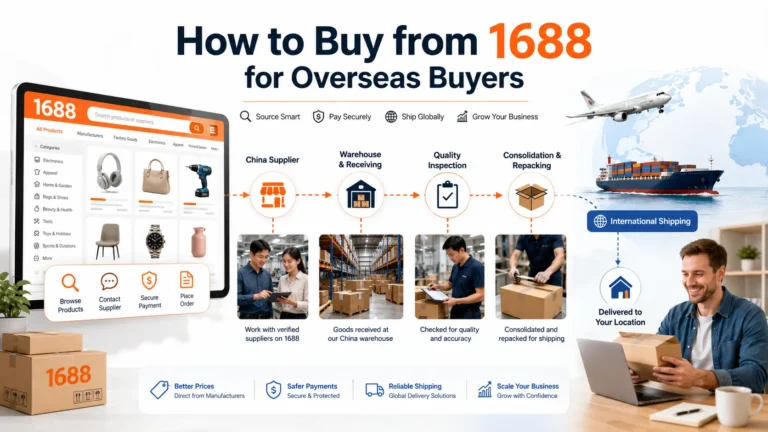
Related Guide
How to Buy from 1688 for Overseas Buyers (2026 Guide)
Why Overseas Buyers Are Turning to 1688 1688.com is a major Chinese wholesale marketplace used by manufacturers, wholesalers and domestic buyers...
Read guide →

Alibaba and 1688 are both popular sourcing platforms in China, but they are built for different types of buyers. Alibaba is easier for overseas buyers, while 1688 often shows lower product prices.
This guide compares Alibaba vs 1688 by price, payment, supplier communication, buyer protection, shipping support, and final landed cost, so you can decide which platform fits your sourcing needs.
Sourcing platform comparison
1688 vs Alibaba
Buyer protection
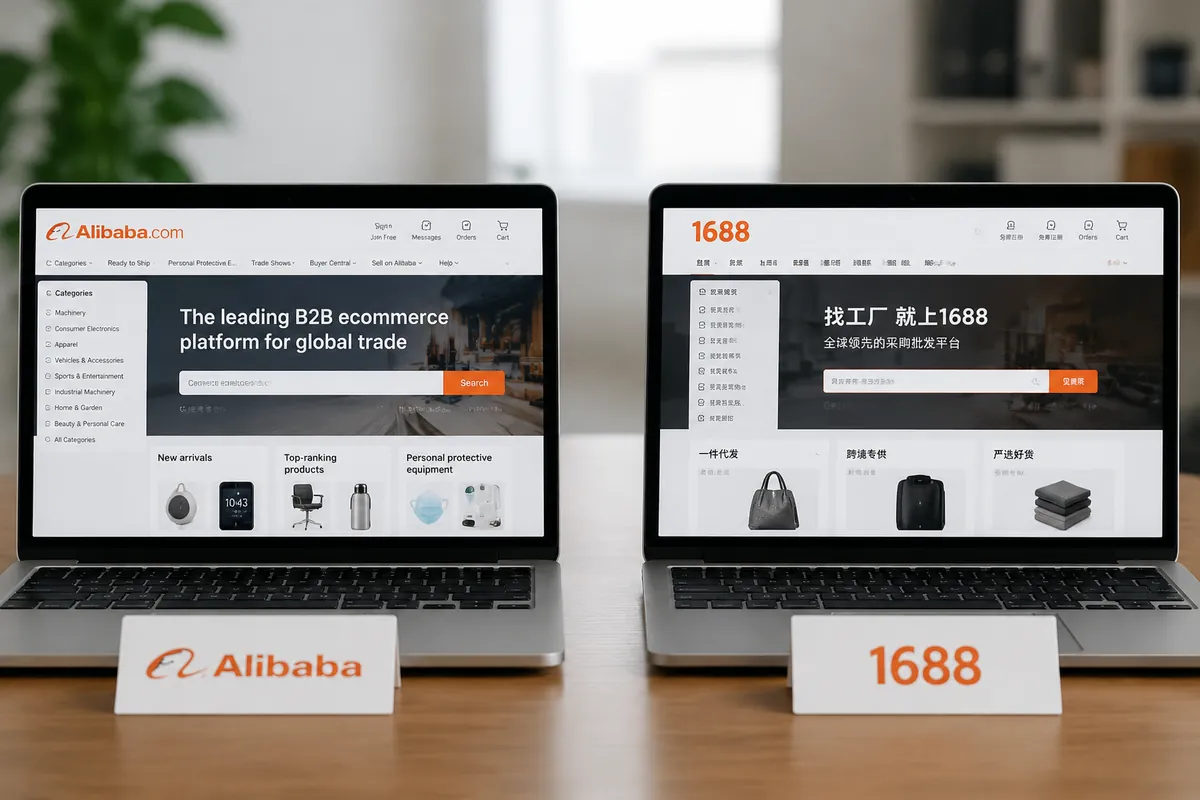
Alibaba and 1688 are often compared as if they are two similar sourcing websites, but they solve different problems for different buyers.
Alibaba is easier because it is built around export orders. Suppliers are usually more familiar with overseas inquiries, English communication, samples, payment terms, shipping options, and basic customs documents.
1688 looks cheaper because it works more like a local wholesale market in China. Sellers usually quote for domestic buyers, accept local payment, and ship to an address inside China. They are not usually pricing the product with export service included.
This is why buyers often get two very different impressions:
Alibaba feels more expensive, but the process is easier to manage.
1688 looks cheaper, but the buyer has to handle more steps after purchase.
The real difference is not only where the product is listed. It is how much support is included after you contact the supplier.
Alibaba is usually the smoother choice when you are buying from outside China. You can ask suppliers about product details, packaging, MOQ, samples, payment terms, and shipping methods in a way that is more familiar to international buyers.
Many suppliers can also provide basic export documents, such as commercial invoices, packing lists, carton details, and product descriptions. This does not guarantee a perfect order, but it makes the process easier for new importers.
1688 can be useful when you already know what you want to buy and want to compare domestic wholesale prices. The platform gives buyers access to many local suppliers that may not quote export-style prices.
The challenge is that most 1688 sellers only handle the domestic part of the order. After payment, the goods still need to be received in China, checked, consolidated, and shipped overseas.
That is why 1688 is not difficult because products are hard to find. It is difficult because the steps after finding the product need local support.
This table highlights the key differences between Alibaba vs 1688 in real sourcing situations. Alibaba gives more convenience. 1688 gives more access to domestaic wholesale prices.
| Factor | Alibaba | 1688 |
|---|---|---|
| Main buyer type | Overseas buyers and importers | Buyers inside China |
| Product pricing | Usually higher | Usually lower |
| Language | English support is common | Mostly Chinese |
| Payment | Easier for foreign buyers | Usually local Chinese payment |
| Shipping | Export shipping is often discussed | Usually China domestic delivery only |
| Supplier types | Factories and trading companies | Factories, wholesalers, resellers |
| Buyer protection | More structured for export orders | More limited for overseas buyers |
| Best for | New importers, custom orders, export support | Repeat products, cost control, China-side support |
This does not mean one platform is always better. Alibaba is usually better when you need a simpler and safer buying process. 1688 is better when you already have support in China and want to control product cost more aggressively.
Alibaba is easier because it was built around international buyers from the beginning. The platform, supplier profiles, payment process, and communication style are all more friendly to overseas buyers.
When you contact Alibaba suppliers, they usually expect questions about MOQ, product quality, packaging, lead time, HS code, shipping costs, customs clearance, and payment terms. Many suppliers have English-speaking sales staff, so supplier communication is much smoother than on 1688.
Alibaba is especially useful when you are buying from China for the first time or testing a new product. You can compare multiple suppliers, check whether a supplier is a verified supplier, review basic transaction history, and use Alibaba Trade Assurance when available.
For buyers who need custom packaging, private label products, OEM production, or export-ready support, Alibaba is often the easier starting point.
The downside is price. Alibaba suppliers often include English support, export service costs, international payment fees, and overseas customer service in their quotations. That is one reason Alibaba prices are usually higher than 1688.
1688 often offers lower prices because it mainly targets domestic buyers in China. Suppliers on 1688 usually sell to the domestic market, where competition is high and pricing is closer to factory or wholesale level.
In many product categories, 1688 prices can be around 20–30% lower than Alibaba. A product listed at $3 on Alibaba may appear around $1.80 to $2.40 on 1688, depending on the supplier, quantity, and product type.
This price difference comes from the way 1688 works. Many sellers do not include export services in the product price. They may not offer English support, international payment, international shipping, export documents, or overseas after-sales service.
That is why the lower price needs to be understood carefully. 1688 can give you a significant advantage on product cost, but the buyer must handle more of the supply chain.
You may still need to pay for:
Domestic freight inside China
Sourcing agent service fees
Product inspection or quality control
Warehouse receiving and repacking
Export documents
International shipping
So 1688 is often cheaper at the product price level, but not always cheaper at the final import level.
Many buyers compare Alibaba vs 1688 by looking only at the product price. That is a common mistake.
The number that really matters is the landed cost. Landed cost means the total cost after the goods are purchased, inspected, packed, exported, shipped, cleared by customs, and delivered to your final address.
| Cost Item | Alibaba Order | 1688 Order |
|---|---|---|
| Product cost | Usually higher | Usually lower |
| Local China delivery | Often simpler | Usually required |
| Agent service | Often not needed | Often needed |
| Product inspection | Recommended | More important |
| Export documents | Usually easier | May need agent or forwarder |
| International freight | Easier to discuss | Must be arranged separately |
| Customs clearance | Supplier or forwarder may assist | Buyer needs separate support |
| Final cost | More predictable | Can be lower, but less simple |
For small orders, the savings from 1688 may become smaller after agent feaes, domestic shipping, inspection fees, and international freight are added. Many 1688 suppliers also accept low minimum order quantities, which can help reduce initial product cost, even if other fees offset some of that advantage. For repeat orders or larger volume purchases, 1688 can be much more cost-effective if you already have a reliable sourcing agent and logistics partner.
Language and payment are two of the biggest practical differences between Alibaba and 1688. These issues may look small at the beginning, but they can affect the whole order.
Alibaba reduces these barriers because most suppliers are prepared for international communication. 1688 does not work the same way. It is a domestic platform first, so overseas buyers need to adapt to how Chinese suppliers normally sell.
1688 product listings are primarily in Chinese. Supplier messages, store rules, reviews, specifications, and after-sales terms are also written for Chinese buyers.
Browser translation tools can help you understand the general meaning, but they are not enough for serious supplier negotiation. A small misunderstanding about material, size, packaging, color, or quality standards can lead to the wrong product being shipped.
For product research, translation tools may be acceptable. For real orders, many overseas buyers use a sourcing agent to confirm details directly with suppliers.
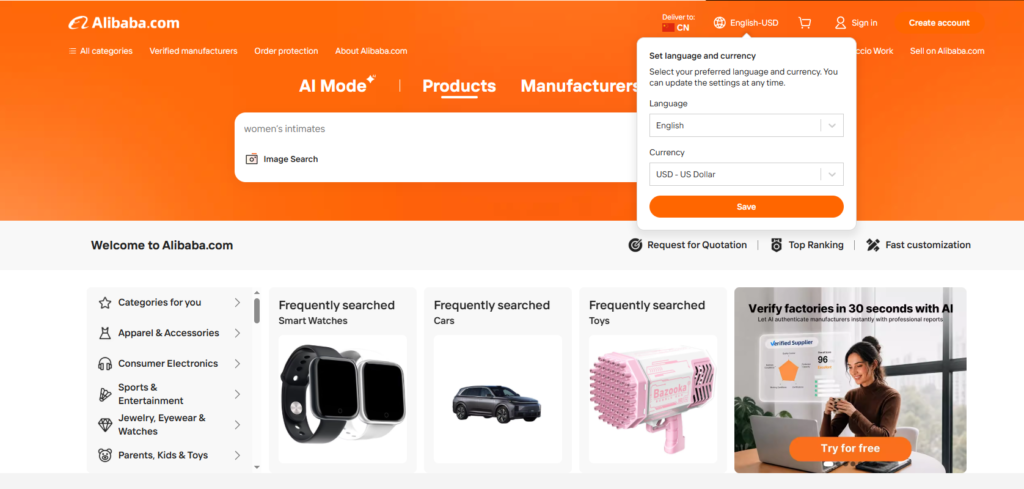
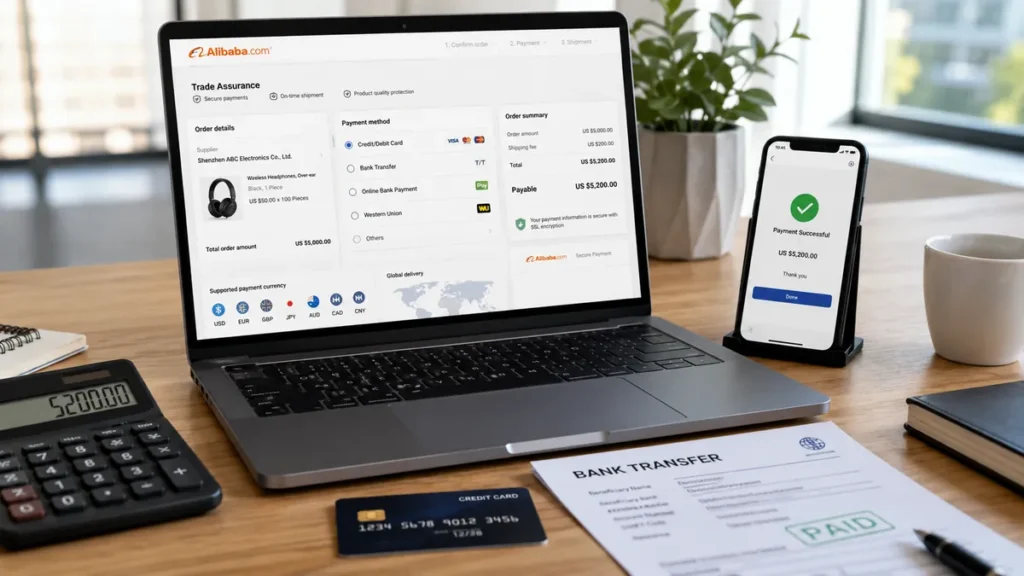
Alibaba supports more international payment methods. Depending on the order and supplier, buyers may pay by credit card, bank transfer, online payment channels, WorldPay-style payment options, or Alibaba Trade Assurance.
This is one reason many international buyers prefer Alibaba for early orders. The payment process is easier to understand, and there is usually a clearer transaction record.
1688 is more local. Most sellers expect payment in Chinese yuan through Alipay, Chinese bank transfers, or other domestic payment methods.
For overseas buyers without a Chinese bank account, this becomes difficult. A sourcing agent can help pay suppliers, but this adds service fees and requires trust. The buyer should make sure the agent provides clear payment records, supplier information, and order updates.
Shipping is one of the biggest hidden differences in the Alibaba vs 1688 comparison. Many buyers only realize this after they have already found a cheap product on 1688.
Alibaba suppliers usually understand international shipping. Many can quote express shipping, air freight, sea freight, FOB, CIF, or DDP shipping. Some suppliers can also work with your freight forwarder and prepare basic export documents.
1688 sellers usually handle only domestic shipping. Their responsibility often ends when the goods are delivered to a Chinese address. After that, the buyer needs someone to receive the goods, check the cartons, consolidate shipments, prepare documents, and arrange international shipping.
A normal 1688 shipping process often looks like this:
The supplier sends goods to a Chinese warehouse.
The warehouse receives and checks the cartons.
Goods from multiple suppliers may be consolidated.
Export documents are prepared.
A freight forwarder arranges international shipping.
The shipment goes through customs clearance.
The goods are delivered to the final address.
This process works well if you have the right logistics partners. Without local support, it can quickly become confusing.
A freight forwarder such as Tonlexing can help overseas buyers collect goods from multiple 1688 suppliers, consolidate cartons, check packaging, prepare export documents, and arrange air freight, sea freight, rail freight, express shipping, or DDP shipping from China.
Alibaba generally gives international buyers more protection than 1688. That does not mean Alibaba has no risk, but the buying process is easier to manage from overseas.
On Alibaba, buyers can check supplier profiles, verified supplier status, transaction history, reviews, and Trade Assurance options. These tools are not perfect, but they help reduce risk and make supplier verification easier.
1688 requires more manual checking. A low price is not enough. You need to look at whether the supplier has stable transaction history, clear product details, reasonable response speed, and a focused product range.
Alibaba Trade Assurance can act as a safety net when the supplier does not meet agreed order terms. It may help protect the buyer if there are issues with product quality, delivery time, or order details.
For new importers, this protection is one reason Alibaba feels safer than 1688.
Supplier verification on 1688 depends more on experience. You need to check whether the seller looks like a real factory, wholesaler, or trading company. You should also compare different suppliers instead of choosing the lowest price immediately.
For larger orders, quality control before shipment is strongly recommended. Once the goods leave China, returns and replacements become much harder.
Foreigners can browse 1688, and some may be able to buy through certain methods. But for most overseas buyers, direct buying is not easy.
The platform was not designed for international buyers; it connects buyers in China’s domestic market with local suppliers rather than serving overseas purchasers directly. Most sellers speak Chinese, accept local Chinese payment methods, and ship only to a Chinese address. Some sellers may not understand export documents, international shipping, or customs clearance requirements.
Many overseas buyers face problems such as unclear communication, payment difficulty, no Chinese address, no inspection support, and limited refund options.
This is why many international buyers use a sourcing agent, purchasing agent, dropshipping agent, or freight forwarder in China. A reliable sourcing agent can help search products with Chinese keywords, compare multiple suppliers, communicate with sellers, pay suppliers, check product quality, and coordinate domestic shipping before export.
For most small business owners, Alibaba is the better starting point. It is easier to communicate, easier to pay, and easier to arrange international shipping.
If you are still testing products, learning how importing works, or placing your first small order from China, Alibaba reduces many mistakes. You can talk to suppliers in English, request samples, compare quotations, and use international payment methods.
1688 becomes more useful when your business is more stable. If you already know the product, understand your target price, and have someone in China to help with supplier communication and quality control, 1688 can help reduce product costs.
Many experienced buyers use both platforms together. They search Alibaba to understand export pricing and supplier options, then search 1688 to compare domestic wholesale pricing for the same product or similar products.
For small businesses, the right choice depends on your stage. Beginners usually start with Alibaba. Experienced buyers with China-side support can use 1688 to improve margins.
Alibaba and 1688 are not direct replacements for each other. They solve different sourcing problems.
Alibaba helps buyers reduce operational difficulty. 1688 helps buyers access lower domestic prices. Whichever platform you choose, the final decision should depend on your product type, order size, budget, and ability to manage the supply chain.
Alibaba is better when you want a smoother and safer sourcing process. It is more suitable for buyers who need export-ready suppliers, English communication, international payment, and international shipping support.
You should use Alibaba when you are buying customized products, testing new suppliers, or placing your first few orders from China. It is also better for products that need private label packaging, OEM production, certifications, or clear export documents.
Alibaba is usually a better fit when you need English support, Alibaba Trade Assurance, supplier verification tools, and easier international shipping.
The trade-off is that Alibaba prices are usually higher.
1688 is better when your main goal is cost control and you already have China-side support.
It works well for ready-made products, repeat orders, simple consumer goods, accessories, packaging materials, home products, and items already widely sold in the domestic market.
1688 is also useful when you buy from multiple suppliers and consolidate everything in one Chinese warehouse. This gives buyers more flexibility and can lower the average product cost.
However, 1688 is not ideal if you expect the supplier to handle international payment, export logistics, and overseas shipping for you. In simple terms, 1688 gives you lower prices, but you must manage more of the process.
Buying from 1688 safely is not about finding the cheapest listing. It is about checking the supplier, product details, and goods before the order leaves China. Most problems happen because buyers pay too quickly without confirming enough information.
A low price should not be the only reason to choose a seller. Before ordering, compare several suppliers and pay attention to how they communicate. A seller who answers clearly before payment is usually easier to work with later.
Look for signs such as:
A focused product range
Clear product details
Recent photos or videos
Consistent answers about size, material, and packaging
Reasonable response speed
Product photos on 1688 are not enough. Before paying, confirm the material, size, color, quantity, packaging, lead time, carton size, and weight. These details should be written clearly, especially if you are ordering products for resale.
If you use a sourcing agent, ask them to confirm the details with the seller in Chinese before payment. This reduces the risk of misunderstanding caused by translation tools.
The best time to find problems is while the goods are still in China. For small orders, warehouse photos may be enough. For larger shipments, a basic inspection is safer.
At minimum, check the product quantity, appearance, packaging, labels, and carton condition before arranging international shipping. Once the goods leave China, returns and replacements become much harder.
Yes. 1688.com and Alibaba.com are both part of the Alibaba Group. Alibaba.com focuses on international buyers, while 1688.com mainly serves domestic buyers in China.
Yes, 1688 is often cheaper at the product price level because it uses domestic wholesale pricing. However, overseas buyers should also calculate domestic shipping, sourcing agent fees, quality control, export handling, international shipping, customs clearance, duties, and taxes.
Foreigners can browse 1688, but direct buying is difficult for most overseas buyers. Most sellers use Chinese language, Chinese yuan, local payment methods, and domestic shipping. Many buyers use a sourcing agent or freight forwarder in China.
Alibaba is generally safer for international buyers because it offers English support, international payment options, supplier verification tools, and Alibaba Trade Assurance. 1688 can still be useful, but it requires stronger supplier verification and quality control.
In most cases, yes. A sourcing agent can help with supplier communication, supplier verification, payment, product inspection, domestic shipping, warehouse consolidation, and international shipping. This is especially important if you do not speak Chinese or do not have a Chinese address.
Useful freight, customs and importing resources related to this shipping guide.
Why Overseas Buyers Are Turning to 1688 1688.com is a major Chinese wholesale marketplace used by manufacturers, wholesalers and domestic buyers...
Read guide →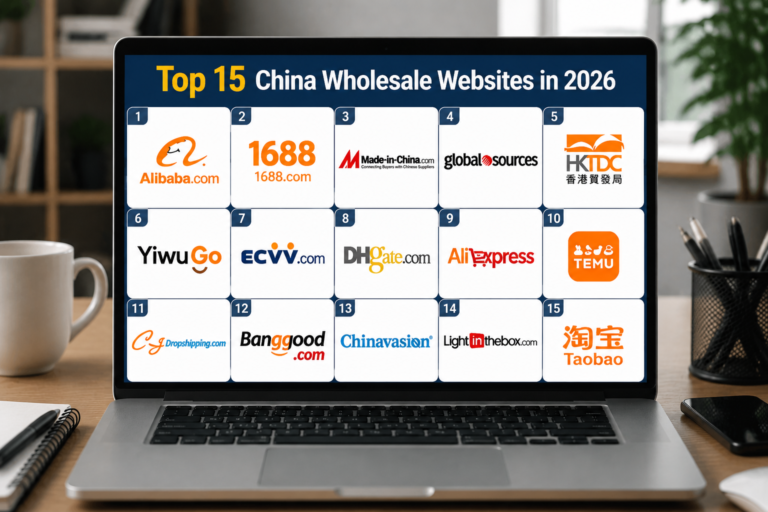
Top 15 China Wholesale Websites in 2026 Verified & Reviewed · Last updated May 2026 Sourcing products from China has become a key strategy for gl...
Read guide →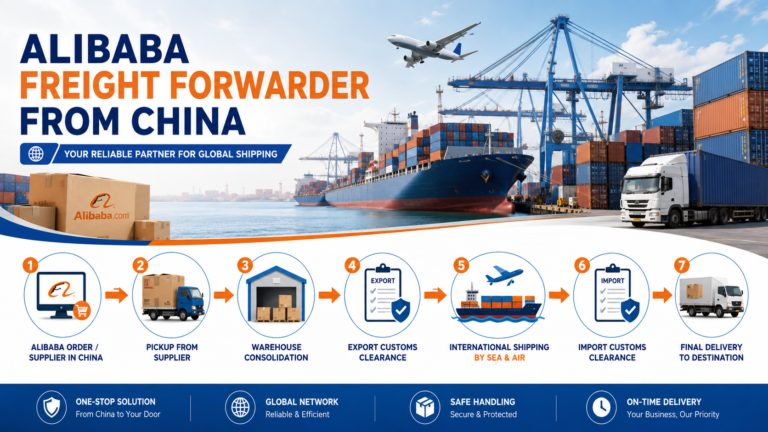
Alibaba Freight Forwarder from China Verified & Reviewed · Last updated July 2026 Finding a reliable Alibaba freight forwarder from China can mak...
Read guide →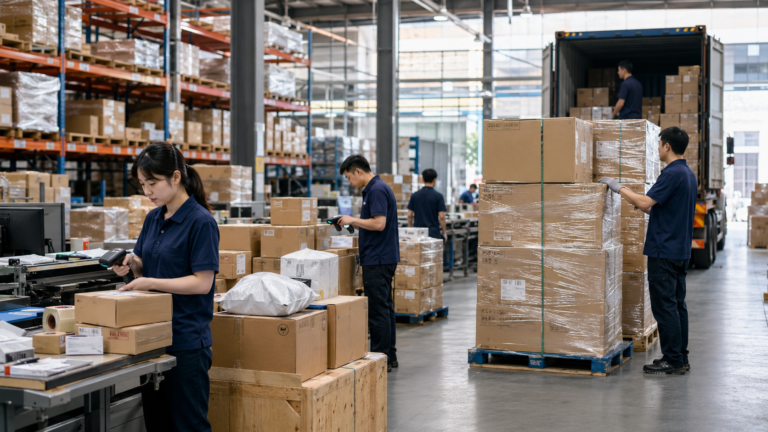
China Warehouse Consolidation Service Verified & Reviewed · Last updated May 2026 China warehouse consolidation service helps importers collect g...
Read guide →Shipping from Multiple Suppliers in China Verified & Reviewed · Last updated May 2026 Shipping from multiple suppliers in China can be difficult...
Learn more → Useful Resource Documents Required to Import from China (2025 Guide)Importing goods from China can be highly profitable—but only when you understand the necessary documents and import requirements. Whether you’re...
Learn more →WhatsApp us