Customs & Shipping process


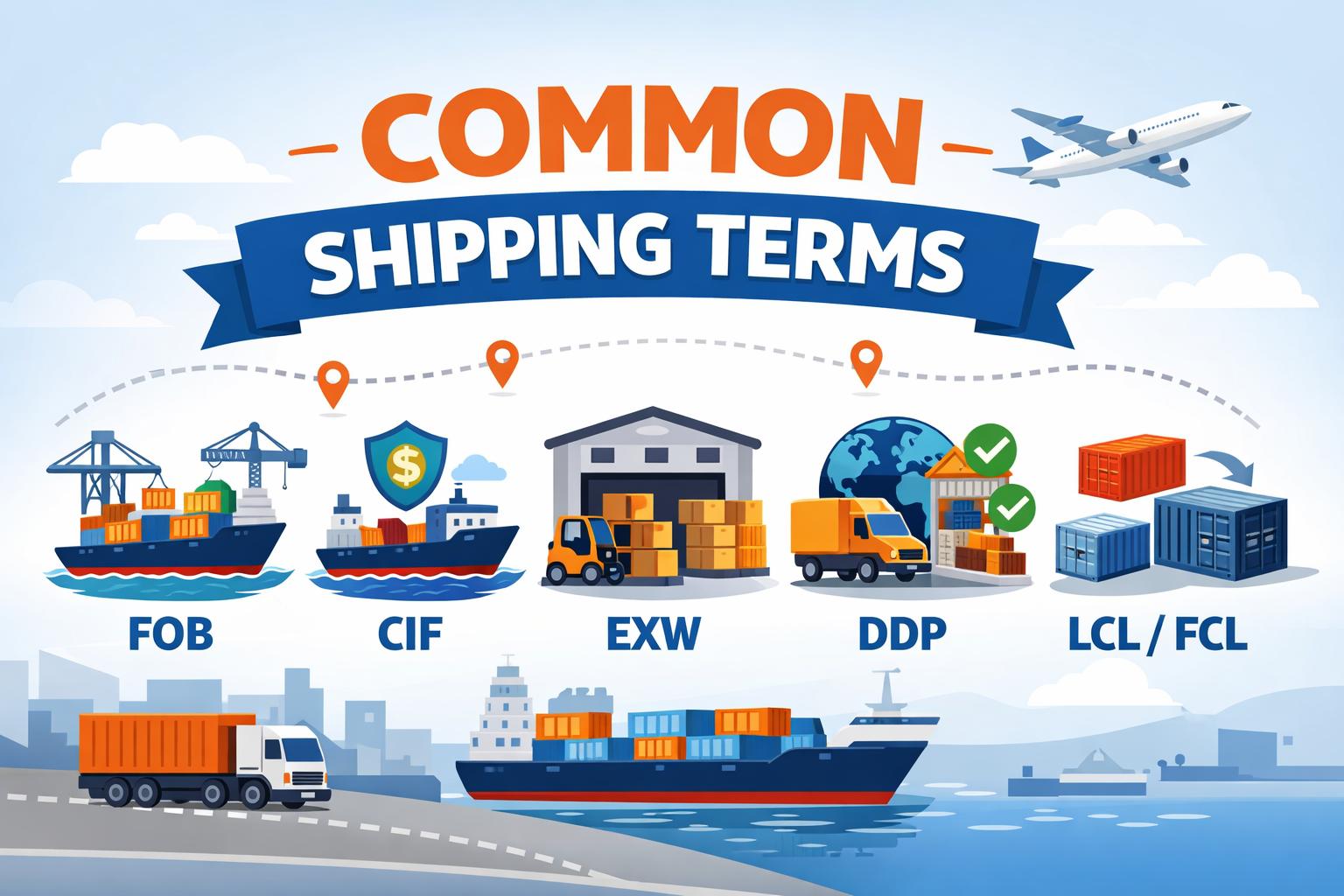
Common Shipping Terms: A Practical Glossary for Shipping Internationally
- Verified & Reviewed · Last updated February 2026
Understanding common shipping terms helps you control shipping costs, avoid confusion with customs authorities, and keep your supply chain stable from pickup to final destination.
This 2026 glossary explains the shipping terms importers, freight forwarders, and carriers use every day—covering Incoterms, key documents like the bill of lading and commercial invoice, plus ocean freight, air freight, and customs duties—so you can compare quotes accurately and ship internationally with fewer delays.
Shipping terms
Bill of lading & Documents
- Experienced China-based logistics specialists
10,000+ international shipments handled Global sea, air & DDP shipping solutions 24/7 shipment tracking & customer support
Table of Contents
How Shipping Terms Fit Into the Shipping Process
A typical freight shipment involves several handoffs:
Origin pickup and export handling
Main transport freight by ocean shipping or air cargo
Arrival handling at the port, a container freight station, or a warehouse or fulfillment center
Customs clearance and release
Delivery to the final destination
If you can identify which shipping terms control each step, you can compare quotes faster, prevent delays, and reduce unexpected transportation costs.
Incoterms and Delivery Terms That Change Responsibility
Incoterms are shipping terms that define who pays, who manages each step, and when risk transfers. They matter most when a local or foreign buyer compares two offers that look similar but include different scopes.
The terms you will see most often:
FOB: The seller delivers goods on board at the port of shipment. After loading, the buyer typically takes risk and pays main carriage.
CIF: The seller pays ocean freight and marine insurance to the destination port, while risk usually transfers earlier once cargo is loaded.
Free alongside ship: The seller delivers cargo alongside the vessel at the port; the buyer handles loading and main transport.
Delivered duty paid: The seller arranges delivery to the final destination and handles import duties and taxes under an agreed setup.
Delivery duty paid: A common phrasing in emails and quotes; confirm scope and who acts as importer of record.
Delivered duty unpaid: The seller delivers to a named place, but the buyer pays customs duties and taxes and manages import steps.
Delivery duty unpaid: Another common phrasing; always clarify who pays duties and who interacts with customs authorities.
A simple rule: you cannot compare shipping costs until the Incoterm is the same.
Key Parties in Shipping Internationally
International shipments involve multiple roles, and unclear responsibility creates expensive delays.
Freight forwarder: Coordinates shipping freight end to end, including documents, booking, and delivery planning across carriers.
Air freight forwarder: A freight forwarder focused on air freight, airline booking, screening, and fast export workflows.
Freight broker: Typically arranges trucking capacity, often for domestic legs such as LTL freight.
Shipper: The party sending the goods shipped, usually the supplier or exporter.
Consignee: The party receiving the shipment, usually the buyer.
Customs authorities: Government bodies that regulate import/export compliance.
Customs officials: Officers who inspect, question, and release cargo.
If a shipment gets stuck, 80% of the time it’s because the shipper, forwarder, and buyer did not align on responsibilities early.
Shipping Container and Load Terms You’ll See on Quotes
Container terms matter because they control handling, risk, and a large part of the cost structure.
Shipping container: The equipment used for ocean freight and many inland moves.
Shipper owned container: A container supplied by the shipper rather than the carrier, which can change handling and return rules.
Container load: How cargo is allocated inside a container, especially in shared shipments.
Full container load: One shipper uses the entire container. This usually reduces handling touches and damage risk.
Entire container: Common casual wording for full container load.
Loose cargo: Cargo that is not palletized or not packed into stable units, which increases handling and the chance of damage.
Forty foot equivalent unit: A capacity unit used across the shipping industry to compare volume.
If you’re shipping fragile goods or high value products, full container load is often a safer choice than sharing a container load.
Ocean Freight Terms: Carriers, Vessels, and Shipping Lines
Ocean freight is the default choice for bulky cargo, raw materials, and steady replenishment.
Ocean freight: The main sea transport cost and service.
Ocean shipping: The end-to-end sea shipping process, including schedules and terminal handling.
Ocean vessel: The ship that carries the cargo.
Ocean carrier: The company operating the vessel service.
Shipping line: Common market term for the ocean carrier and its network.
Ship owners: Entities that own vessels or charter them; their decisions impact capacity and pricing.
Cargo space: The capacity available on a vessel; reduced cargo space often leads to surcharges.
Gross tonnage: A vessel measurement used in port and regulatory contexts.
Most ocean shipping issues come from cut-off timing, documentation mismatches, and poor pickup coordination—not from the vessel itself.
Air Freight and Air Cargo Terms That Drive Price
Air freight is faster, but the pricing rules are different and less forgiving.
Air freight: The mode used for urgent shipments and high value goods.
Air cargo: Goods shipped by air, often subject to screening and commodity restrictions.
Air delivery: A general phrase for urgent replenishment; confirm service level and cut-offs.
Air freight forwarder: The party coordinating bookings, screening, and routing for air shipments.
Estimated weight calculated: A placeholder used in early quotes; if final figures change, the total can be re-rated.
If you want stable air freight pricing, lock down packaging, weights, and dimensions before booking.
If your documents are inconsistent, your cargo can arrive but still not be released.
Bill of lading: The core ocean freight document used as receipt and sometimes a title document for release. Many teams shorten it to b l in chat.
Commercial invoice: Declares value and product description for customs authorities.
Customs invoice: Required in some destinations or scenarios; confirm if it is needed and what format is accepted.
Packing list: Lists cartons, weights, and pieces; it must match the cargo.
Shipment’s arrival: A status phrase; it does not mean cargo is released. Release depends on documents and clearance.
The most common mistake is using vague descriptions on the commercial invoice. Specific wording reduces questions from customs officials.

Warehousing, Fulfillment, and Inventory Management Terms
Shipping internationally is closely tied to how you handle incoming inventory after arrival.
Inventory management: Planning inbound timelines and stock allocation across channels.
Incoming inventory: Stock arriving into your network; delays here often force air freight later.
Store inventory: The stock available to sell; stockouts usually cost more than transport.
Stock keeping unit: SKU-level tracking that prevents receiving errors and fulfillment mistakes.
Order fulfillment process: Receiving, putaway, picking, packing, and dispatch.
Batch fulfillment: Processing orders in groups to improve speed and consistency.
Fulfillment center: A facility optimized for storage and outbound shipping.
Warehouse or fulfillment center: Planning phrase; confirm receiving rules, appointments, and labeling requirements.
For e-commerce, a clean order fulfillment process matters as much as the freight booking.
Container Freight Station and Bonded Warehouse Terms
Some shipments go through special facilities that affect cost and timing.
Container freight station: A facility where shared cargo is consolidated and separated. It is common in LCL workflows and can be a source of delays if labels or documents are missing.
Bonded warehouse: Customs-controlled storage that can defer duties until goods are released. It is useful for staged distribution and cash flow planning.
If your cargo will touch a container freight station, plan extra time for processing and documentation checks.
Customs, Duties, and Compliance Terms
Customs is where shipping terms meet legal responsibility and real risk.
Customs duties: Taxes assessed based on classification and value.
Customs authorities: Set requirements for documents and restrictions.
Customs officials: Apply those rules, request inspections, and release cargo.
Goods shipped: A phrase used in declarations; keep descriptions consistent across all paperwork.
Transport vehicle: The truck or chassis used inland; poor scheduling can increase storage and re-delivery charges.
Transportation services: The combined services used across the shipping process.
A smooth clearance outcome comes from consistency, not speed.
Insurance Terms: Marine Insurance and Cargo Insurance
Insurance terms are often ignored until damage happens.
Marine insurance: Coverage commonly used for ocean freight risk profiles.
Cargo insurance: Coverage for loss or damage; choose coverage that matches how the cargo is handled.
Hazardous materials: Goods requiring special handling rules, documentation, and sometimes packaging.
If hazardous materials are involved, confirm requirements before booking and keep document language consistent.
Frequently Asked Questions
What are common shipping terms?
Common shipping terms include delivered duty paid, delivered duty unpaid, freight forwarder, bill of lading, commercial invoice, ocean freight, air freight, full container load, container freight station, and bonded warehouse.
What is the difference between a freight forwarder and a freight broker?
A freight forwarder manages end-to-end shipping internationally, including documents and coordination across carriers. A freight broker usually arranges trucking capacity, often in domestic segments such as LTL freight.
Why can a shipment arrive but still not be released?
Shipment’s arrival does not mean release. Cargo may wait due to document inconsistencies, missing customs invoice requirements, facility delays at a container freight station, or questions from customs officials.
How do shipping terms affect inventory management?
Poor planning leads to delayed incoming inventory and stockouts, which often forces air freight and higher transportation costs. Clear shipping terms help align inbound timing with the order fulfillment process.
When should I choose air freight vs ocean freight?
Ocean freight is best for planned replenishment, heavy cargo, and raw materials. Air freight is best when speed protects sales or prevents supply chain disruption. Many supply chains use both to balance cost and reliability.
Related Incoterms & Shipping Guides
Get Help With Shipping Terms Before You Book
Understand Incoterms and who pays what
Avoid document mistakes on the bill of lading and commercial invoice
Reduce customs delays and surprise destination charges
Send your cargo details and destination—our team will confirm the right shipping terms and provide a clear door-to-door option.