Related Guide
Shipping From Shenzhen China to UK
A practical guide to shipping from Shenzhen China to UK, including freight options, transit times, shipping costs, and UK customs clearance.
Read guide →

Shipping from Shenzhen to Southampton can be done by sea freight, air freight, or door-to-door service. The right option depends on your cargo volume, delivery time target, and how much support you need for UK customs clearance and final delivery.
This updated 2026 guide explains shipping options from Shenzhen, Guangdong to Southampton, including typical transit time ranges, key freight rate drivers, and how FCL and LCL container load choices affect total cost. It also outlines the end-to-end logistics process so your shipment moves smoothly from Shenzhen port to your final destination in the United Kingdom.
Shipping method / Mode
FCL vs LCL
Customs Clearance
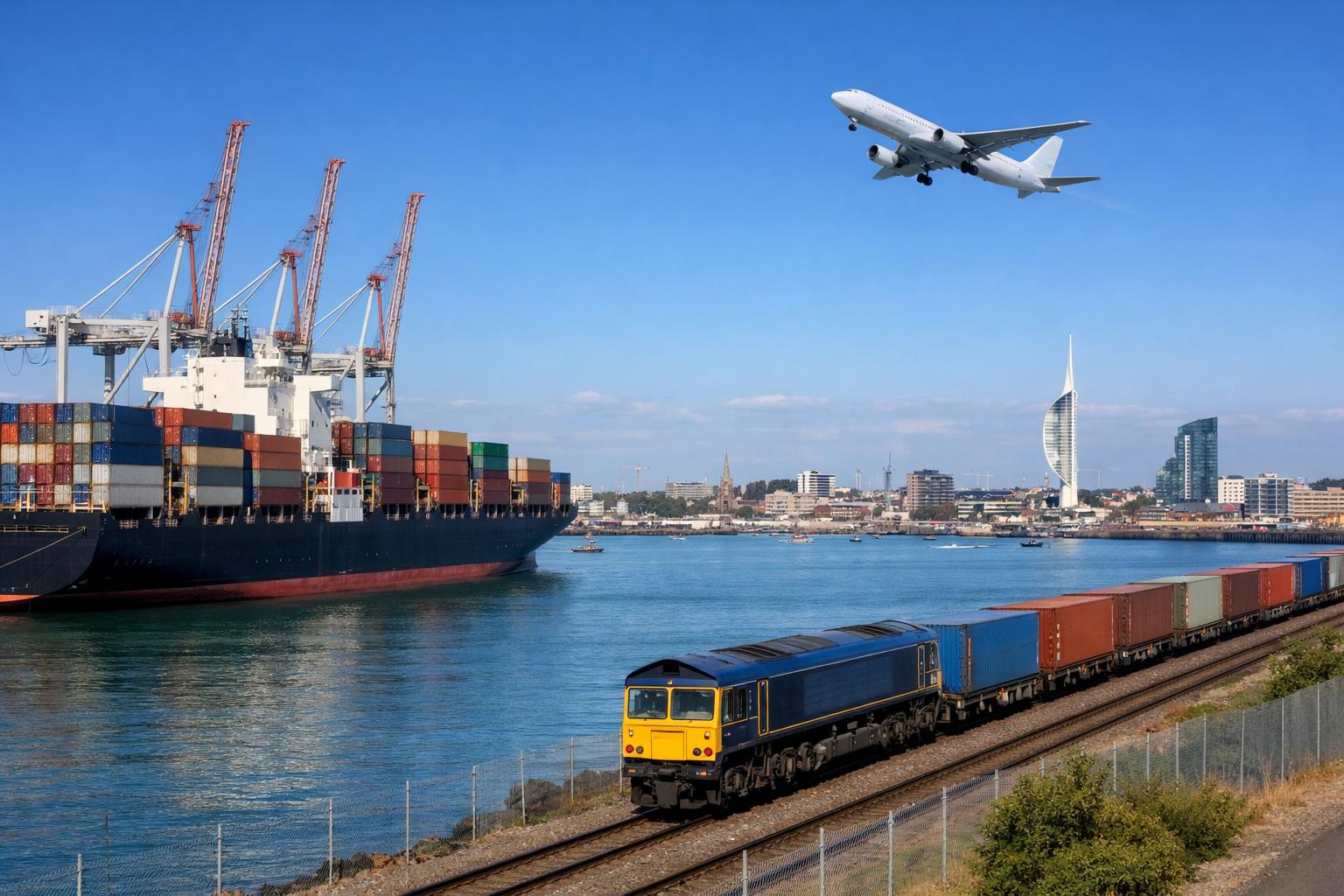
Shenzhen is one of China’s largest export hubs. For Shenzhen sea freight, cargo commonly moves through the Shenzhen port area, with Yantian frequently used for export sailings. For air freight, goods move as air cargo from Shenzhen or nearby airports and connect into the UK air network before inland transportation to Southampton.
It helps to track two timelines from the beginning:
Main-leg transit time by sea shipping or air cargo
Door to door delivery time, which includes origin handling, customs clearance, and final-mile delivery
Two shipments can share the same ocean transit and still arrive days apart because cutoffs, documentation issues, and delivery appointments affect the full timeline.
Sea freight is the most cost effective option for larger volumes, heavy goods, and non urgent shipments. It is the most common form of freight shipping on this lane because unit cost stays low as volume increases.
Typical planning ranges:
Ocean freight transit time: 25–37 days port-to-port
Door to door delivery time: 40–60 days depending on UK customs clearance and trucking schedules
Sea shipping is especially strong when you are planning regular replenishment. If you ship in peak season, earlier booking helps avoid higher rates and space shortages.
Air freight is the fastest option when you need faster transit. It is often used for urgent replenishment, high value goods, samples, time-sensitive launches, and parts that protect production schedules. Air cargo typically moves on cargo flights or belly capacity, then transfers into domestic delivery.
Typical planning ranges:
Air freight transit time: 3–8 days airport-to-airport
Door to door delivery time: 5–15 days depending on routing and final destination requirements
Air freight rates are driven by chargeable weight, so carton dimensions matter as much as scale weight.
Road freight and rail can be mid-speed shipping options when routing is available. They can sit between air and ocean on delivery time and cost, but route stability and policy constraints vary, so they are best evaluated for a specific shipment with clear cargo details.
| Mode | Main-leg transit time | Typical door-to-door | Best for |
|---|---|---|---|
| Sea freight service (FCL/LCL) | 25–37 days | 40–60 days | Bulk cargo, heavy goods, stable landed cost |
| Air freight | 3–8 days | 5–15 days | Urgent shipments, high value cargo |
| Road freight | 18–21 days | 20–25 days | Mid-speed option where available |
| Express courier | 1–3 days | 3–5 days | Small urgent parcels |
Full container load means you book an entire container for your cargo. FCL is usually preferred when you ship full containers, need lower risk, and want fewer touch points. It can also deliver better pricing per unit as volumes grow.
When to choose FCL:
You ship larger volumes or repeat orders
You want cleaner loading and fewer handling steps
You need more predictable delivery and lower damage exposure
Typical reference ranges used for planning:
20ft container: $1,755–$2,145
40ft container: $2,790–$3,410
These prices shown are reference ranges for planning. Final freight rates depend on carrier space, seasonality, and your service scope.
Less than container load means your cargo shares space with other shipments in a consolidated container. It is a flexible way to start importing when your volume is only a few cubic meter, or when you want frequent shipping without waiting to fill a container.
When LCL makes sense:
Small volumes measured in cubic meter
Mixed SKUs and frequent purchase cycles
Multiple shipments that benefit from consolidation
For LCL, compare quotes using total landed cost. Destination handling and deconsolidation can be meaningful, even when the base ocean freight looks low.
When you buy ocean freight services for this lane, the service quality is often defined by how the forwarder manages cutoffs, documentation accuracy, and destination handling coordination. The ocean shipping segment itself is only one part of what makes delivery reliable.
Key operational points:
Cargo must meet terminal and warehouse cutoffs
Container load planning should match the packing list exactly
Export documents must be consistent before the vessel departs
Destination appointments and unloading rules can affect the last-mile schedule
This is where many delays happen, especially for first-time importers.
Air freight is priced by chargeable weight. Bulky cartons can raise cost even when the shipment is relatively light. That is why confirming carton dimensions early is part of controlling air freight rates.
Reference planning range:
$7.30–$13.82 per kg for standard air freight rates
Common causes of higher rates:
Tight capacity and short-notice bookings
Cargo that needs special handling
Unconfirmed dimensions that trigger reweighing and rerating
If your goal is faster transit without uncontrolled cost, reduce wasted carton volume and keep packaging consistent.

UK customs clearance is usually smooth when importer setup and documentation are correct. Problems often come from vague product descriptions, inconsistent packing data, or missing importer information.
An EORI number is required for importing into the United Kingdom. If the EORI is missing or incorrect, customs clearance can be delayed and delivery time extends.
Most shipments need:
Commercial Invoice with clear product description and declared value
Packing List listing carton count, weights, dimensions, and packing method
Bill of Lading for sea freight or Air Waybill for air freight
A Certificate of Origin may be requested for certain cargo types, but it is not mandatory for every shipment.
To calculate import duty, customs primarily uses:
Declared customs value
Product material, function, and intended use
If you want accurate duty estimates, avoid generic terms such as parts or accessories. Provide enough detail to support correct classification and reduce customs questions. For well-prepared shipments, customs processing often adds 1–3 days to the overall delivery time, although inspections can extend it.
If your cargo has batteries, liquids, sprays, chemicals, magnets, or anything flammable, tell the forwarder before booking. These items are often treated as dangerous goods or restricted cargo on the Shenzhen to Southampton route.
What usually needs extra checks:
Lithium batteries / power banks / battery devices
Liquids (cosmetics, paint, ink, detergent)
Aerosols (spray cans)
Chemicals / adhesives / solvents
Magnets / magnetic parts
What you may be asked for:
SDS/MSDS (from the supplier)
Correct packing and labels
Why it matters:
Fewer sailings or cargo flights can take it
Rates may be higher and transit time can be longer
If declared late, the booking can be rejected or delayed
A predictable process is the main difference between smooth delivery and repeated delays.
Confirm cargo details
Cartons or pallets, dimensions, gross weight, packing method, and photos.
Choose your shipping option
Sea freight for cost effective bulk shipping, air freight for faster transit, and mid-speed transportation where routing fits.
Confirm service scope
Port-to-port or door to door delivery, including the final destination postcode and delivery requirements.
Prepare documents early
Invoice and packing list must match the actual cargo. Consistency is critical for customs clearance.
Book and handover correctly
Meet warehouse and Shenzhen port cutoffs, confirm carrier schedule, and track the shipment through transit.
Clear and deliver in the UK
Complete customs clearance, then arrange delivery appointment and final-mile transportation to Southampton.
Done well, this workflow produces successful shipments with fewer reworks and fewer surprise fees.
A freight forwarder should do more than offer a low rate. The best forwarders prevent delays before the cargo moves by validating packing details, confirming documentation, and managing destination handling cleanly.
When comparing a freight forwarder, look for:
Clear scope and transparent pricing
Experience with sea freight service for FCL and less than container load
Ability to coordinate UK customs clearance and delivery schedules
Operations discipline, including promptly responded updates during exceptions
A strong forwarder protects shipping time and delivery time by reducing avoidable errors.
Sea freight transit time is typically 25–37 days port-to-port. If you choose door to door delivery, the delivery time is usually 40–60 days, depending on carrier schedules, UK customs clearance, and inland transportation to your final destination.
Air freight is the fastest shipping option. Airport-to-airport transit is commonly 3–8 days, and door to door delivery time is often 5–15 days depending on cargo flights availability, routing, and last-mile delivery requirements.
Choose less than container load when your shipment is only a few cubic meter or you have mixed SKUs and want flexibility. Choose full container load when you have larger volumes, want lower risk from fewer handling steps, and prefer cleaner loading for full containers.
For most freight shipping, you will need a Commercial Invoice, Packing List, and Bill of Lading for ocean freight or an Air Waybill for air cargo. You also need a valid EORI number for importing into the United Kingdom. Clear product descriptions and consistent packing data are key to smooth customs clearance.
To calculate import duty, you need the correct HS code, declared customs value, and product details such as material and function. Duty and VAT rules vary by product category, so accurate classification matters. If the HS code is uncertain, provide detailed product information early to avoid customs delays and unexpected charges.
Useful freight, customs and importing resources related to this shipping guide.
A practical guide to shipping from Shenzhen China to UK, including freight options, transit times, shipping costs, and UK customs clearance.
Read guide →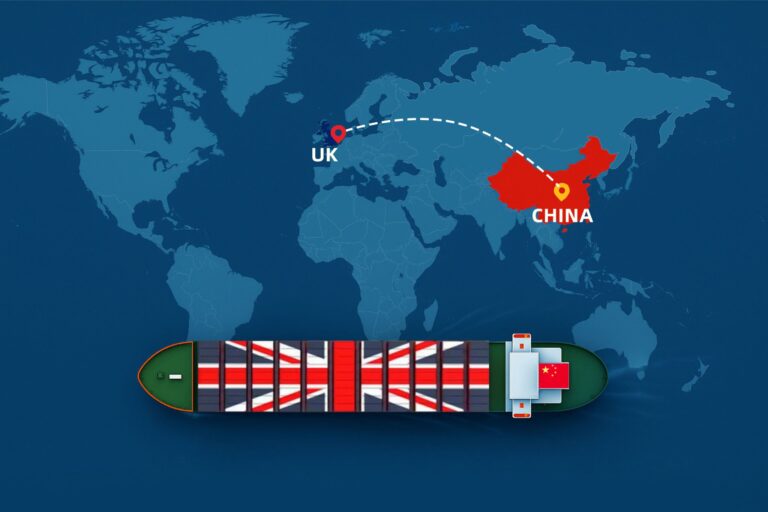
Shipping from China to the UK offers flexible air and sea freight solutions. Learn about delivery time, shipping costs, and customs clearance.
Read guide →
Shipping Cost from China to UK (2026 Guide) Verified & Reviewed · Last updated June 2026 Shipping cost from China to UK in 2026 typically ranges...
Read guide →
Explore sea freight from China to UK, including sea freight costs, transit times, ocean freight options, customs clearance, full container load...
Read guide →Biggest Ports in the UK for Imports from China Verified & Reviewed · Last updated July 2026 The biggest ports in the UK for imports from China in...
Learn more → Useful Resource DDP Shipping from China to UKShipping from China to the UK has become increasingly efficient and accessible, thanks to international logistics innovations and the rising popu...
Learn more →WhatsApp us