

Biggest Ports in the UK for Imports from China
- Verified & Reviewed · Last updated July 2026
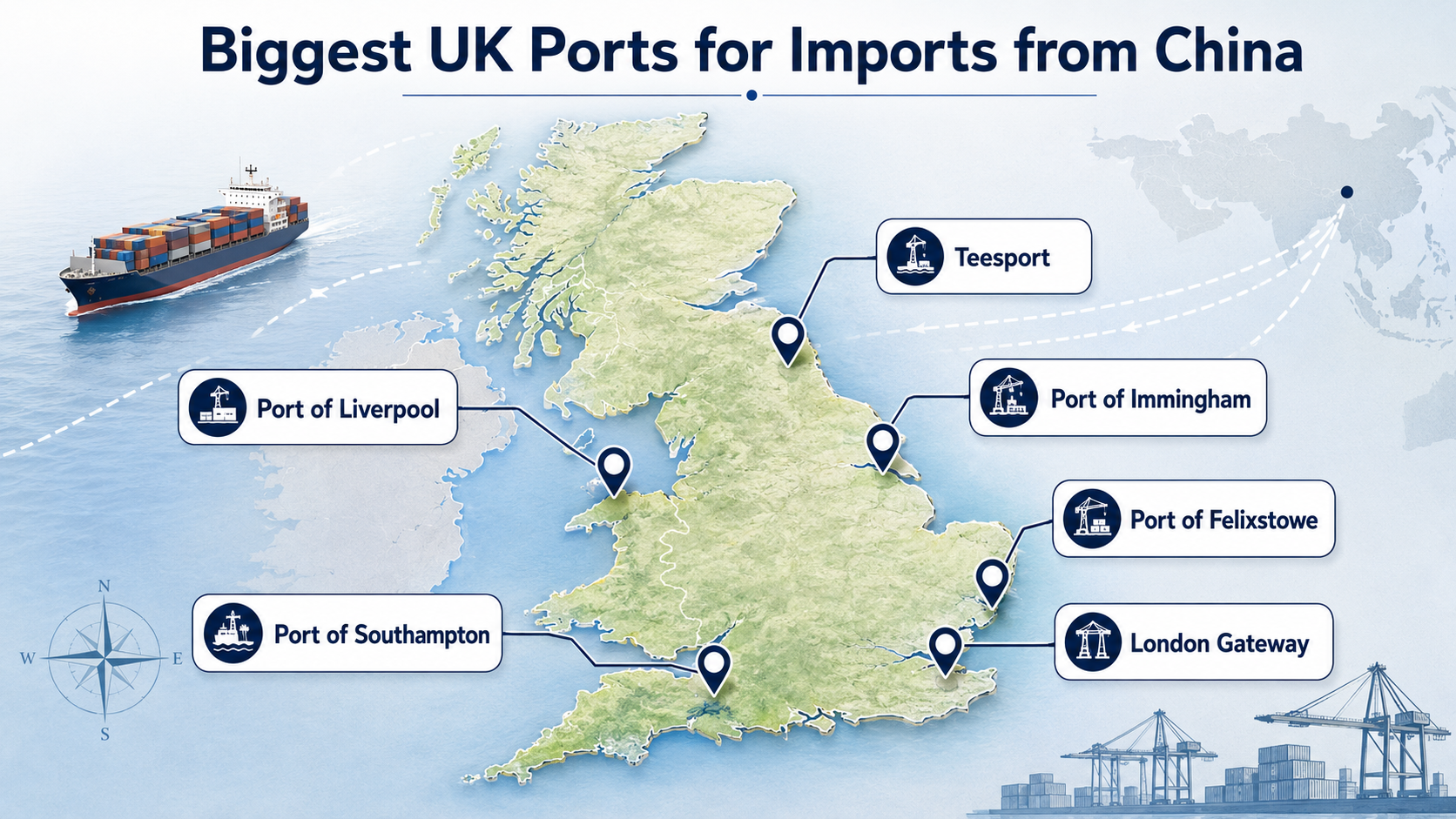
The biggest ports in the UK for imports from China include Felixstowe, London Gateway, Southampton, Liverpool, and Teesport. These UK ports handle major container shipments, consumer goods, electronics, machinery, furniture, textiles, and e-commerce cargo from China.
This guide explains the main UK shipping ports for China imports, comparing container volume, cargo type, customs clearance, rail connections, transit time, and final delivery areas across the United Kingdom.
UK ports
Shipping routes
Customs clearance
- Experienced China-based logistics specialists
Table of Contents
What Are the Biggest UK Ports for Imports from China?
The biggest ports in the UK for imports from China are Felixstowe, London Gateway, Southampton, Liverpool and Teesport. For containerized cargo, Felixstowe is usually the busiest container port, while London Gateway is growing quickly because of its strategic location near London and its direct access to modern logistics facilities.
| UK Port | Best For China Imports | Main Cargo Type | Best Delivery Area |
|---|---|---|---|
| Port of Felixstowe | Standard FCL and LCL container imports | Consumer goods, electronics, furniture, textiles | London, Midlands, East England |
| London Gateway | High-value containerized cargo and e-commerce goods | Retail goods, FMCG, Amazon FBA, electronics | London, Southeast England |
| Port of Southampton | Containers, vehicles and high-value cargo | Consumer goods, automotive cargo, reefer cargo | South England, West England, Midlands |
| Port of Liverpool | Northern UK distribution | Containers, Ro-Ro, general cargo | Manchester, Liverpool, Leeds, Scotland |
| Teesport | Industrial and construction related cargo | Containers, bulk cargo, project cargo | Northern England, Yorkshire, Northeast UK |
For most China to UK importers, the best destination port is not always the biggest port by total tonnage. The better choice depends on cargo type, container volume, transit time, customs clearance needs, rail connections and final delivery address.
Why UK Ports Matter for Imports from China
China is one of the UK’s most important import markets. UK government trade data shows that total UK imports from China reached £73.4 billion in the four quarters to the end of Q4 2025, and goods accounted for £69.7 billion of that amount.
This makes UK ports critical for international trade between China and the United Kingdom. Every container that arrives at a UK port must be unloaded, checked, declared, cleared and moved to its final destination. A good port choice can help importers save time and reduce shipping costs.
The right UK port can affect:
Port congestion and container availability
Customs clearance speed
Inland trucking or rail delivery cost
Delivery time to warehouses and customers
Handling risk for fragile or high-value cargo
For example, a container delivered to Birmingham may work well through Felixstowe or Southampton. A shipment going to London may be more suitable for London Gateway. Cargo for Manchester, Leeds or Scotland may be cheaper through Liverpool, depending on the vessel schedule and inland transport cost.
Port of Felixstowe: The Busiest Container Port for China Imports
The Port of Felixstowe is the UK’s leading container port and the most important gateway for many imports from China. It handles more than 4 million TEUs every year, receives around 2,000 ship calls annually, and offers mega-ship access for vessels up to 24,000 TEU. The port also has strong rail connections, with up to 58 trains per day to multiple inland destinations.
For China to UK shipping, Felixstowe is often the first port to compare because it receives regular deep-sea services from major Chinese ports such as Shanghai, Ningbo, Shenzhen, Yantian, Xiamen and Qingdao.
Why Felixstowe Is Important
Felixstowe is suitable for importers who need stable container services, frequent sailings and strong inland distribution. It is especially common for retail goods, electronics, furniture, textiles, home products, machinery parts and general cargo.
Felixstowe is a strong choice when:
The shipment is FCL or LCL from China
The cargo is going to London, the Midlands or East England
The importer needs regular sailing options
The cargo requires reliable customs clearance and inland delivery
The shipment includes consumer goods or e-commerce stock
For many freight forwarders, Felixstowe is the main port used for standard container imports from China because it offers scale, carrier choice and strong inland transport connections.
London Gateway: A Fast-Growing Port Near London
London Gateway is one of the most important modern UK ports for container imports from China. Located around 28 miles from London, it combines a deep-sea container terminal with a large logistics park, giving importers direct access to warehousing, transport networks and port-centric distribution.
This port is especially attractive for businesses shipping to London, Essex, Kent, Southeast England and nearby distribution centres. It is also a strong choice for e-commerce sellers, Amazon FBA shipments, retail stock and high-value containerized cargo.
Why London Gateway Works Well for China Imports
London Gateway is designed for efficient container movement. It provides container handling, FCL and LCL ocean freight support, buyer consolidation, import warehousing, transportation and customs clearance services.
London Gateway is a good option when:
The final destination is London or Southeast England
The cargo is high-value, time-sensitive or retail-focused
The importer needs nearby warehousing
The shipment requires customs clearance and fast collection
The supply chain depends on direct access to road and rail networks
Compared with some traditional UK ports, London Gateway’s advantage is its port-centric logistics model. This can reduce handoffs and improve delivery speed from ship to warehouse.
Port of Southampton: Containers, Vehicles and Rail Connections
The Port of Southampton is another major port for imports from China. It is well known for container cargo, automotive logistics, reefer cargo and strong inland transport links. Southampton is also important for shipments going to South England, West England and the Midlands.
One of Southampton’s biggest advantages is rail freight. Network Rail reported that Freightliner averaged up to 24 container trains per day in and out of the Maritime Terminal at Redbridge, while DB Cargo and GB Railfreight also handled intermodal containers, vehicles and gypsum.
When Southampton Is the Best UK Port
Southampton can be a better destination port when the importer’s warehouse is closer to the south or west of the UK. It may also be suitable when shipping lines offer better transit time, lower congestion or more competitive rates into Southampton.
Southampton is often used for:
Consumer goods from China
Automotive parts and vehicle-related cargo
High-value imports
Reefer and temperature-sensitive cargo
Cargo delivered to Southampton, Bristol, Birmingham and South England
For importers comparing Felixstowe vs Southampton, the final decision should be based on total landed cost, not only sea freight rate. A slightly higher ocean freight rate may still be cheaper if inland delivery is shorter.
Port of Liverpool: A Northern Gateway for China Imports
The Port of Liverpool is a major port located in the North West of England. It sits on both sides of the River Mersey and provides access to container terminals, Ro-Ro services, bulk cargo handling, warehousing and road and rail connections. Peel Ports describes Liverpool as a west-coast hub with deep water berths, two container terminals and strong access to the North West region.
For imports from China, Liverpool is useful when cargo is destined for Manchester, Liverpool, Leeds, northern England, Scotland or Ireland. It can reduce inland delivery distance compared with routing everything through southern ports.
Why Liverpool Can Reduce Inland Costs
Liverpool is not always the first choice for every China to UK shipment, but it can be very competitive for northern distribution. Importers with warehouses in the North West may save time and money by avoiding long trucking routes from Felixstowe or Southampton.
Liverpool is suitable for:
Cargo delivered to Manchester, Leeds or Liverpool
Retail goods for northern UK distribution
Containers that need road and rail connections
Ro-Ro cargo and general cargo
Shipments linked to the Irish Sea, Scotland or Ireland
For northern importers, Liverpool should always be compared with Felixstowe and Southampton before booking.
Teesport: Useful for Industrial and Northern Cargo
Teesport is an important port for northern England and industrial supply chains. It is not usually the first port people mention when discussing China imports, but it can be useful for specific cargo types, especially industrial goods, machinery, materials and construction related cargo.
For businesses importing into Yorkshire, the Northeast or Scotland, Teesport may reduce inland transport distance. It can also be suitable for cargo that needs bulk handling, project cargo support or access to industrial zones.
Teesport is practical for:
Industrial products from China
Steel, parts and project cargo
Cargo delivered to northern England or Scotland
Importers should consider Teesport when the destination is far from the southern container ports or when the cargo type does not fit a standard retail supply chain.
Biggest UK Ports by Tonnage vs Container Imports
A common mistake is to confuse the largest port by total tonnage with the best port for imports from China. These are not always the same.
London leads UK ports by total tonnage, while liquid bulk accounted for 39% of all tonnage handled at UK major ports in 2024. Milford Haven handled the most oil products, and ports such as Grimsby and Immingham are highly important for bulk cargo, energy cargo, oil products, dry bulk and industrial freight.
However, China imports are often containerized cargo. That means container volume, deep-sea services, customs clearance and inland delivery matter more than total tonnage.
| Port Type | Example UK Ports | Main Cargo | Relevance to China Imports |
|---|---|---|---|
| Container ports | Felixstowe, London Gateway, Southampton, Liverpool | Containers, consumer goods, electronics, retail stock | Very high |
| Bulk ports | Grimsby and Immingham, Port Talbot, Teesport | Dry bulk, scrap metal, materials | Medium for industrial cargo |
| Energy ports | Milford Haven, Forth Ports, Scapa Flow | Liquid bulk, LNG, oil products | Low for standard container imports |
| Ro-Ro ports | Dover, Liverpool, Southampton | Trucks, trailers, vehicles | Useful for vehicles and fast European links |
| Regional ports | Northern Ireland and Irish Sea ports | Short sea shipping, regional cargo | Useful for UK and Ireland distribution |
For standard FCL and LCL shipping from China, container ports are the most relevant. For energy production, liquid bulk, dry bulk, scrap metal or oversized industrial cargo, a different UK port may be more suitable.
Main Shipping Routes from China to UK Ports
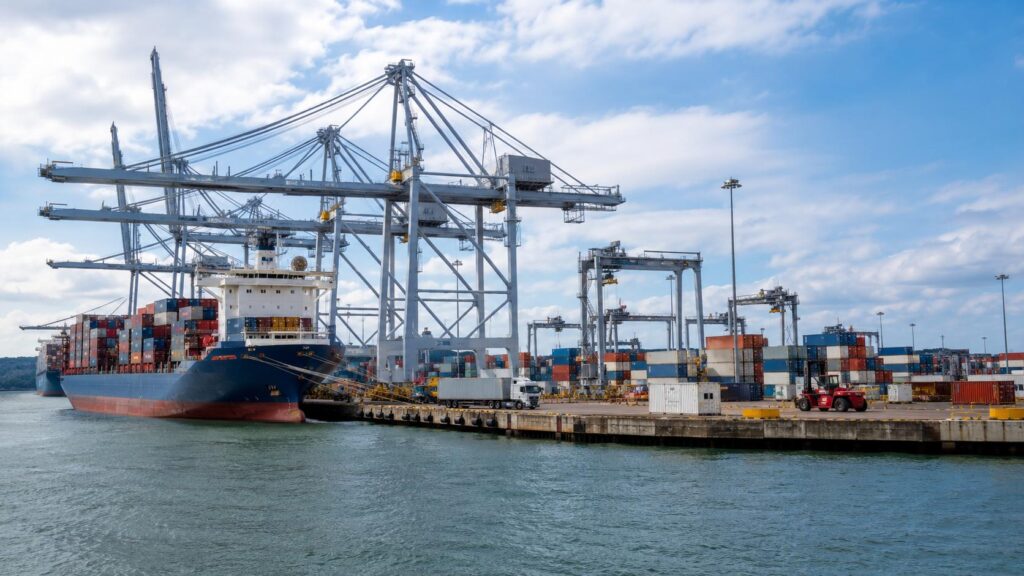
Most shipments from China to the UK depart from major Chinese ports and arrive at major UK deep-sea container ports. The route may be direct, especially from large container hubs, or may include transshipment through a European port depending on the carrier schedule and destination port.
Main China Origin Ports
China has many export ports with regular services to the United Kingdom. The most common origin ports are located in East China, South China and North China, depending on where the supplier or factory is based.
Common China origin ports include:
Main UK Destination Ports
On the UK side, most containerized cargo from China arrives at major ports with deep-sea container handling, customs clearance facilities and inland transport connections. The right destination port depends on the final delivery city and cargo type.
Common UK destination ports include:
Felixstowe
London Gateway
Southampton
Liverpool
Teesport
Transit Time from China to the UK
Sea freight from China to the UK usually takes about 25–40 days, depending on the origin port, destination port, carrier schedule, routing, weather and port congestion. Direct services are usually faster, while transshipment routes may take longer.
Air freight from China to the UK is much faster, usually around 3–7 days, but it is more expensive. It is mainly used for urgent, lightweight or high-value cargo.
FCL and LCL Imports Through UK Ports
Most imports from China arrive at UK ports by either FCL or LCL shipping. These two methods are both used for containerized cargo, but they are suitable for different shipment sizes, budgets and delivery requirements.
FCL Shipping Through UK Ports
FCL means full container load. It is suitable when the importer has enough cargo to use a full 20ft, 40ft or 40HQ container. The container is loaded for one importer only, which reduces handling and gives better control over the shipment.
FCL is usually the better choice for large orders, regular imports and goods that need lower handling risk. It is commonly used for furniture, machinery, electronics, textiles, building materials and bulk retail stock shipped from China to the UK.
FCL is suitable when:
Your cargo volume is large enough for a full container
You want lower handling risk
You need more stable delivery planning
You are importing from one or several Chinese suppliers
Your goods are going directly to a UK warehouse or distribution centre
LCL Shipping Through UK Ports
LCL means less than container load. It is used when your cargo is not enough to fill a full container. Your goods are consolidated with other shipments in China and shipped together to the UK.
LCL is useful for small shipments, trial orders and e-commerce inventory. It can help reduce upfront shipping costs, but it usually involves more handling because the cargo must be consolidated before departure and deconsolidated after arrival at the UK port or warehouse.
LCL is suitable when:
Your shipment volume is small
You do not need a full container
You are testing a new supplier or product
You are importing mixed goods from China
You want a flexible option before moving to FCL
Customs Clearance at UK Ports
All goods imported from China must clear UK customs. Customs clearance is one of the most important steps after the vessel arrives. Incorrect documents, wrong HS codes or unclear cargo descriptions can cause delays, inspections and extra charges.
Common documents include:
Bill of lading
Import declaration
Product certificates if required
Import licence if required
The importer should also consider customs duty, import VAT, port charges, storage fees and delivery costs. For regulated cargo, extra checks may be required before release.
Why Work with Tonlexing for China to UK Shipping?
Tonlexing helps importers ship goods from China to the UK by sea freight, air freight, rail freight, express courier and door-to-door delivery. We help compare the best UK port based on your supplier location, cargo type, shipment volume, delivery address and budget.
Our China to UK shipping services include:
FCL shipping from China to UK ports
LCL shipping from China to the UK
UK customs clearance support
Cargo consolidation from multiple Chinese suppliers
Pickup and export customs declaration in China
Final delivery to UK warehouses, businesses and homes
Whether your cargo arrives at Felixstowe, London Gateway, Southampton, Liverpool or another UK port, Tonlexing can help you choose the most cost-effective route and avoid unnecessary delays.
Frequently Asked Questions
Felixstowe is generally the biggest and busiest container port for imports from China. It handles large container volumes and has frequent deep-sea services from major Chinese ports.
The main UK shipping ports for China imports are Felixstowe, London Gateway, Southampton, Liverpool and Teesport. Felixstowe and London Gateway are especially important for containerized cargo.
London Gateway may be better if your cargo is delivered to London or Southeast England. Felixstowe may be better for many standard container imports going to the Midlands, East England or wider UK distribution networks.
Liverpool is often a strong option for Manchester and northern England because it can reduce inland delivery distance. However, Felixstowe and Southampton should still be compared based on freight rate and sailing schedule.
London is the largest UK port by total tonnage, but total tonnage includes many cargo types such as liquid bulk, oil products, dry bulk and general cargo. For China container imports, Felixstowe, London Gateway and Southampton are usually more relevant.
Related China to UK Shipping Guides
Get the Best UK Port for Your China Shipment
- Compare Felixstowe, London Gateway, Southampton and Liverpool
- Reduce inland delivery and customs clearance delays
- Choose the right port based on cargo type and UK destination
Get tailored China to UK shipping options, port routing advice, transparent pricing, and expert support for your shipment.